The Self, and No Self

Who am I?

Philosophers, religions, spiritualities and people all over the world have asked themselves this question. Lately, I too have been asking myself this – and looking into the meaning of the self, to see if there truly is a Self there to begin with.

The Materialists would say that there is no self at all – that there is no consciousness, that we are simply matter and energy and the result of material interactions.  Descartes stated “I think therefore I am”, to which the Materialists refuted Descartes dualism of a separate mind and body, ridiculing it as “ghost in the machine”.  Zen and Buddhism talks about a True Self that can only be realised by dropping all ideas of the self and achieving a pure state of being in the moment, a state of total selflessness in every sense of the word.

Nietzche stated that “We have never sought ourselves, how could it happen that we should ever find ourselves?”  Like the Materialists, he believed that we are a result of our experiences and actions, but that there still was a Self, a consciousness.  In order to be complete, Nietzche said that we must learn acceptance – to accept everything we have ever done.  I find this fascinating, because how many times have we done things our lives, stating that we were out of our minds, or did something “that was not me at all” – stepping outside of the core idea of what we are.  This acceptance, instead of avoidance, is key to the deeper understanding of the self, in my opinion.  Acceptance doesn’t mean liking everything that we may have done in the past, nor does it define us in the present moment, but what it does allow is a total non-judgemental overview of the self, and in doing so, a deep awareness that we might not achieve by avoidance of the subject.

Before Nietzche, Kierkegaard put forward the notion of choosing to be self-aware.  We are homo sapiens, after all – in fact, I believe the proper term for our species is homo sapiens sapiens – the beings that are aware that they are aware.  Kierkegaard stated that when we choose to be self-aware, we are both aware of our self and, at the same time, aware that we are aware of our self.  Observing the observer who is observing.  Yet, we choose not to observe, because we often don’t like what we see, or experience, either in the past, present or future.

This is all fascinating. And also requires some very deep thinking.  I’m currently exploring the theory of No Self from Zen Buddhism, which is a paradigm of course, as is much in Zen.  The No Self is also the True Self.  It states that our real self is in existence, always, and always has been.  It is pure, and shining free – we only distract ourselves from it to such an extent that we never see it.  Zen states that we are already complete, already whole, already perfect.

This is pretty simple to understand, and it makes sense.  The difficulties, the suffering in our lives detract us away from spending time in the pure moment, in which the True Self resides.  We suffer because we want things to be different, because we desire things, people, etc – and are not happy with the present moment as it is. If we are happy and accepting of the present moment as it is, without judgement of good or bad, or any attachment to it at all (see previous blog post on understanding, not judgement) then we can rediscover this True Self.  By letting go of all notions of the Self, we return to the core, essentially.

In Zen Buddhism, the term mu can mean a multitude of things – it essentially, and paradoxically, means “nothing”.  It can be termed as “no self”, “no ego”, “no holiness” and “impermanence”.  It is the transcending of all things, the enlightenment experience, the complete and utter letting go of affirmations and negations.  It is an answer to some Zen koans (questions asked to break apart the mind and let in a new way of understanding).  Zen master Keido Fukishima, like Kierkegaard, promotes the self-inquiry into our own being and mind, to be aware that we are being aware.  In Zen, this has the goalless goal of letting go – once we have found our mind, we lose it (not in an insane way, I might add) and in the losing, in the understanding of the impermanence of all things, including the mind and the self, we rediscover the True Self.  Keido Fukushima says, “Zen teaches us how to live by inquiring into and clarifying ourselves. This self-questioning is well suited to our contemporary ways of thinking. Rather than seeking salvation through an “other” or through grace, we achieve it on our own.”

Fukushima delves further into this idea, stating “The experience of mu may at first glance seem purely negative or passive,” he says, “but it is not so at all. Being mu, or empty of self, allows one to actively take in whatever comes. Our world today and all in it are separated into dualistic distinctions of good and evil, birth and death, gain and loss, self and other, and so on. By being mu, not only does one’s self-centeredness disappear, the conflicts that arise with others dissolve as well. Here is a simple example: When we look at a mountain, we tend to observe it as an object. But if we are mu, we no longer see the mountain as an object; we identify with it; we are the mountain itself. This transcendence of duality may sound like some psychic ability or spiritual power someone possesses. But that is not true. Rather, it is simply and naturally a case of being free, creative, and fresh. We become human beings full of boundless love and compassion.”

This rejects the dualists’, such as Descartes, theories and instead breaks down all barriers, which is both liberating and frightening at the same time.  There is no Us and Them, no Self and the Other – if we truly let go of all attachment we become one with everything.  Are we willing to do that, or do are we too attached to our sense of self to experience that? Can we truly dissolve into everything?

It comes in small flashes, in glimpses, for me so far.  The world, wrapped up in an apple, in a drop of rain, in the flight of a hawk.  Barriers have dropped, ego and self has fallen away, and we see the multitude of the universe (another paradox!).

This is passing through the Gateless Gate – I’ve also heard it called the groundless ground.  In realising the impermanence of everything, including the Self, we have a platform from which to jump off and into real living, where every moment counts and is never the same.  The Self changes from moment to moment.

This is hard, for we have spent our whole lives creating this sense of self, this timeless sense of self that we think defines us.  After seeing Taylor Swift’s new video, Trouble, in which she states “…I don’t know if you know who you are, until you lose who you are” really hit home.  I don’t think she meant this in a Zen sense, as she seems pretty attached to her past experiences (and boyfriends) but the statement really hit home.  She talks about losing her balance.  I really identified with this statement, having recently lost my balance in these last few months.  But what did I lose my balance from? Is the concept of balance just another distraction? I’m still working on it.

Starting with acceptance, and then moving on, letting go, without attachment, is crucial.  Maybe then the True Self will shine again, for longer and longer moments, ever shifting, ever changing, always truthful.

However, as Freud said, “It’s just a theory.”
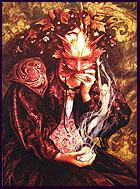
The Dying of the Light

Dylan Thomas’ poem, “Do not go gentle into that good night” is often in my thoughts at this time of year, when the winter solstice is approaching and the ever increasing night draws close, the cold winds howling outside.  Yet I do not agree with the poem’s repetitive line – “Rage, rage against the dying of the light“.  

Though wise men at their end know dark is right,
Because their words had forked no lightning they
Do not go gentle into that good night.

Good men, the last wave by, crying how bright
Their frail deeds might have danced in a green bay,
Rage, rage against the dying of the light.

It would seem that the wise know dark is right, and yet their pride, hubris or egos get in the way of going gently into that good night, as their words “had no forked lighting” – they want to be remembered for their wise words, at least, is the suggestion. The true wise person has no need of such external gratification – wisdom is inherent, not granted externally. Written for his father, whom Dylan Thomas wanted to die raging instead of quietly, perhaps for his own selfish attachment or whatever reason, is still spoken of today when the nights are long and we seek illumination in every sense of the word. 

It’s all around us – gaudy, flashing lights – some set at incredible speed settings that I can only assume is to disorientate the viewer, often going up before the leaves have fallen from the trees and the ground not yet frozen.  Many, many people are raging against the dying of the light, putting up the Christmas or Yule lights, lighting the darkness and consuming considerable amounts of energy at this time of year in a display that is somewhat missing the point.  As pagans, we celebrate the return of the sun after the winter solstice, certainly – but we should also honour the darkness in the days leading up to the solstice with equal measure. 

Christmas or Yule lights can certainly be very pretty – if done tastefully, and using very low energy lights, turning off others that we would normally have on at this time of year to offset the energy.  But first we must come to grips with the darkness before we light the lights.  We must look into ourselves to see why and what it is that we fear, loathe, or deny in the darkness – why we are so hesitant to look into the abyss.  Is it because we, as Dylan Thomas did, equate darkness with death?

Yet it is the time of year when death is all around us.  One look at our gardens instantly confirms this – very few things are still alive above ground.  A cycle has ended, and the seeds of the next generation lie below ground to await the return of the light – but they know that this does not happen instantaneously on the winter solstice.  They respond to the growing light and warmth slowly, in the months after the solstice, in their own time, and hopefully not too soon, like some of my daffodils did last January…

Acceptance of death is key here.  We should not rage against it, but embrace it as part of the cycle.  Many people think that death is the opposite of life – yet death is a singular event, and as such its opposite would be birth.  Life has no opposite.  We do not rage against a birth – why should we rage against a death? 

Taking inspiration from the natural world around us, we follow its rhythms and cycles and turn inwards to nurture that which is most precious to us, to guard it for the coming year ahead. It is in that darkness where we can truly know ourselves, our thought patterns, our behavioural tendencies.  Looking inwards into our own darkness we can find that small spark of light that needs to be kept safe in the darkness until it is ready to come to light, and not be snuffed out like a candle in the winter wind. It is time to cease looking for a distraction from the darkness all around us, and instead focus on our own wellbeing, and nurturing that seed of inspiration within, as well as facing our own death and fear.  It is all too easy to lose that in the crowds doing late-night shopping amidst chintzy tinsel and bright lights, with tinny music being piped into the stores that are overheated because they leave the door open to attract more customers into the lure of consumerism.  If we must, we must, but then seek the darkness to recoup and recover. 

Honour the darkness for the wonderful rest that it brings.  Without it we would have no spring.  Celebrate the darkness – turn off all the lights and central heating during the evening of the winter solstice, if you can, and truly experience the time of year. At midnight, light the fire in the hearth or candles in the house to honour the change, slowly, very slowly, lest we become blinded by the artificial return of the light and stumble around unable to see.  Do not rage against the dying of the light – for all the rage in the world will not stop death or the darkening days leading up to the solstice. Embrace, embrace the dying of the light.


Compassion for the Self

It’s easy to have compassion for others, for the most part.  In doing so, we feel we are making the world a better place.  What we fail to realise is that compassion must first start with our self – that is where the change in the world begins.

A lot of people don’t take the time out of their lives to look at their own self, at least not without using some form of judgement.  And even if they do so, often they can feel guilty about it – they should be helping the kids with the homework or working at the local animal shelter instead of perhaps meditating on the nature of compassion.  What I would suggest is that perhaps this taking time out for yourself is the very best thing you can do, for yourself and for the world.

Compassion for others is often seen as noble – when all it really is, is simply compassion.  There is nothing noble about it at all – it is merely a way of viewing the world not merely as an exercise in inter-relatedness, but of a deep knowing that everything is connected to each other.  The iron in our blood comes from star-stuff, the computer I write upon is made of plastic and metal, which in turn is made up of a myriad things that can relate back to sunlight, water, human and other animals.  Compassion is seeing this in everything, and in doing so letting the barriers of the self and the other fall away so that we can see clearly, and in doing so, empathise and act accordingly with the world around us.

Not too terribly hard to grasp, that.  But what of compassion for our selves? We are taught, at least in the Western world, to judge anything and everything.  I’ve heard it said that this is what makes us human, different from the rest of the animal kingdom. It’s an interesting thought.  We can judge others fairly, harshly, unfairly or with loving kindness.  However, it is still a judgement.  We cannot have a judgement without having a sense of self – and yet how many of us have looked in the mirror at some point in their lives and said “Who is that?”.

There are many theories as to what makes up the sense of the self – from a mere collection of thoughts that we have repeated over and over until we believe them, the loudest pushing forwards, to an eternal and changeless core of existence that we try to return to again and again.  I can offer no ideas – I’m still searching. What I do know is that this sense of self, however we view it, can get in the way of compassion.

Believing in a self, means that we believe in a separate entity to all other things.  That’s not so bad – but it’s also where a helluva lot of conflict, judgement, and bad-behaviour can arise.  I can judge something because it is not me – or in a lot of cases, because something reminds me of what I don’t want to be, I shall judge it, and judge it either wisely or harshly depending on my mood.

I’m not sure I’ll ever be able to fully drop the sense of self, but what I can and am trying to do is to drop the judgement that comes from the sense of self.  In an earlier blog, I wrote about ceasing to expect things from other people – and how this can only be a good thing.  This leads on to a life without judgement as well. I’m getting better at it when it comes to other people. But when it comes to myself?  I am my own worst critic. How many of us have said those exact words? How many of us judge ourselves more harshly than we could ever judge others, or even worse, project these judgements of ourselves unconsciously onto others in order to feel better about ourselves or to outpace our own demons?

The key lies in finding compassion for your self.  To sit with your self, to see your self in all reality, in the “good” and the “bad” – whatever those may be.  In acknowledging all that you have done, and realising that, as in a Taylor Swift song, that “who you are is not where you’ve been” or “who you are is not what you did”.  Pretty deep stuff from a 19 year old in her song, Innocent.  I also really like the lyric “Lost your balance on a tightrope, it’s never too late to get it back”.  We have all made mistakes – we can stop judging ourselves and simply get on with living life to the fullest with all compassion, for ourselves and for others (which is really one and the same).

This last month has been a deep, introspective month for me, of looking deep into my soul and seeing the good, the bad and the ugly.  Coming to terms with all of this, with all past mistakes and glourious achievements, and realising that these are not what constitute my being – they are simply my past – has led to a mini-breakthough in the way I view the world.

I have compassion for my Self.

Getting to know your Self, in understanding, not in judging, is the key to compassion.  If we all simply tried to understand everything and everyone, instead of judging – as Sam Cooke sang, “what a wonderful world this would be”.  See your faults, see your errors, see your successes and your triumphs. And let them go. Return to the Self of the present moment, instead of living in the past, and letting the past define you.

Equally – stop living in the future. Stop judging your Self for not being where you want to be. Stop being so harsh for having dreams, even.  Let the future go, much as the past.  Sure, it’s okay to plan, but hold onto those plans lightly, for everything in this world changes. It’s the one constant, paradoxically.

Get on with life now – by having compassion for your Self.  It’s the best thing you can do, for yourself and for the world.  If we can let go, we can truly live in a world of love and peace.  End the judgement, and begin the understanding, both of your Self and the world around you. Have some compassion – for your Self.

Excerpt from new book, Zen Druidry

We are not “away with the faeries” in meditation – we are truly and more aware of what is going on around us than most people at that moment.  We are also aware of our own bodies – any tightness, any pains, where we are relaxed and where we are tense. We can adjust our bodies, again without attachment, releasing tension and the moving on to full awareness of everything. 


This first phase of meditation is exceedingly important.  Once we have attained a modicum of discipline, we can then open ourselves up to what is going on around us without instantly jumping into thoughts about everything we see, hear or smell.  We have already modified our behavioural patterns into something much simpler, much more integrated with the world around us. 


The next phase is to allow the thoughts that arise, releasing the focus on our breath and our environment.  We do not become absorbed in these thoughts, however.  We let them bubble up, notice them, and then without paying any more attention to them let them go.  This is the key – like an angry child with a temper tantrum, the more attention we give to our thoughts, the louder they will become, until they have completely absorbed us into their own little world.  We must realise that their little world doesn’t even exist – we must learn to stop living inside our heads.


Some of the thoughts that arise might be full of emotion, leading us to joyous recollections or into the pits of despair.  Again, we must simply see the thoughts that arise in these first stages of meditation, and later find the space to deal with them should they need to be dealt with.  The idea of mindfulness is not to push aside the feelings, not to suppress them in any way. You truly have to feel them – and with such feelings like rage, it can be difficult. But it is possible to feel these emotions without acting upon them. It’s why I haven’t murdered anyone – and I hope I never will! Because we live in honorable relationship to the world, we know that to act on certain feelings is morally unethical. We can still feel them, acknowledge them – hell, we’re only monkeys with car keys after all. We honor the feelings of our own human nature, dance with them, surrender into their flow for a time, but never ever submit, for to do could quite possibly mean our death, or the death and harm of others.

An Enlightened Druid?

Many people ask – what is enlightenment?  Oh for an easily explained answer.  The Buddha, when choosing his successor, simply held up a flower and one of his disciples was enlightened and smiled – he then became the successor.  There are many stories in Zen philosophy and spirituality about enlightenment, but none of these stories actually tell you just what it is. And nor should they – it is something to be experienced, not read or talked about.

Outiside of Japan, most Zen practioners experience enlightenment gradually, as opposed to the full smack upside the head that satori can create.  It is through meditaiton, and being completely aware that you gradually gain enlightenment.  As the ego starts to fall away, the so-called “real” self emerges.

To allow the ego to fall away, one technique is to use the “Don’t Know” mind.

“Everybody says, “I” — “I want this, I am like that…” But nobody understands this “I.” Before you were born, where did your I come from? When you die, where will your I go? If you sincerely ask, “What am I?” sooner or later you will run into a wall where all thinking is cut off. We call this “Don’t know.” Zen is keeping this “Don’t know” mind always and everywhere. When walking, standing, sitting, lying down, speaking, being silent, moving, being still. At all times, in all places, without interruption – what is this?” – taken from http://zen.buddhism.org/about-zen.html

It’s a hard thing to admit that we don’t really know anything.  And yet, any true scientiest will tell you that it is impossible to know 100% about anything – there is always margin for error.  When we embrace the fact that we don’t really know anything, whole worlds open up for us.  We can examine ourselves more deeply, and then ponder even on the notion of self if we were to take it one step further.  Enlightenment is said to strike when we realise that there is no self – that we are all part of everything else. In Zen, the term “oneness” is often used, but I don’t like the monopoly that this word invokes – instead I think of it as a “wholeness”.

When we are completely in the moment, when our chattering minds are stilled, when our sense of self falls away and there is only the now, we become enlightened.  In this state, many great things can happen – the perfect haiku is written, the archer and the target become one and the bullseye is hit without thought, the music simply flows, the painting emerges.

This reminds me of a similar term in Druidry, which is awen.  Many people now believe the Welsh word’s translation to be something akin to “flowing spirit” or “flowing inspiration”.  Is this any different to the Eastern version of enlightenment?  As Druids, we gain awen from the world around us, which inspires us to create or to be still, to act or to remain passive, to be in complete and total relationship with the world around us.  Not so different to satori, is it?  Again, to be in a perfect relationship with the world around us, we must learn not to separate the I from the It – instead viewing the world as a whole rather than as separate.  In this way, the inspiration or flowing spirit can flow freely down all channels directly into our soul and out into the wider web of the universe.

So, am I enlightened?

Don’t know.

Mindtraps

Every day we are caught in mind-traps – little prisons of our own making.  We are constantly hijaked by our thoughts and feelings, our attachments to them and our egos, that we spin endlessly in circles until we fall down upon our butts.  The key to breaking free of these mind traps is through observation.

When we meditate in the Zen style, or do zazen as it is called, we become aware of our bodies and our thoughts.  We do not “zone out”, we are not “away with the faeries” or pondering the mysteries of life – in zazen we focus on pure experience.  This focus helps us in our lives when we are not in zazen. We are aware of how our bodies are feeling – whether our breath is shallow or deep, that twinge in our back, whether our facial muscles are tense or relaxed.  We also turn that awareness to our surroundings, listening to the birdsong outside, or the traffic, feeling the breeze or the sunlight upon our shoulders.  We are aware as much as is humanly possible of everything that is around us and within us.  It is no easy task.

Our thoughts are constantly seeking to distract us from the comfortable reality that we have created. Even though this reality may be a false reality, still it is more comfortable than sitting, thinking about our headache or the plain “boredom” of doing zazen.  We daydream, we think through all our life’s problems, we spin off in attempts to do anything but simply be in the moment, because we feel that we deserve otherwise. Remember that old saying, “there is no time like the present”?  Similarly, there is no experience other than this present moment – mayhap the best thing you could be doing is simply experiencing it right now.

We like to think. There is nothing wrong with thinking – we can solve problems, work out situations with a little forethought. We plan – and again, there is nothing wrong with having life plans. It is our attachment to these plans that sets us off in another mindtrap – where if we don’t achieve them our life can feel in ruins.

In zazen, we learn to observe.  We sit, and we observe our bodies’ attempts to defy our intention of just sitting still and being in the moment. Why do our bodies do this? Because they reflect our thoughts – our thoughts don’t want to sit still – they want to run riot.  In zazen, it is not so much controlling our thoughts, pushing them away or yelling at them to be quiet like unruly children – we observe the thoughts and gradually, through observing them, they become quieter.  A new thought is a wonderful, shiny thing that we want to explore – whether it is a “good” thought or a “bad” thought.  When we have observed that thought 100 times, it becomes a lot less interesting.  This is what zazen is about.

If we think about what happened to us that upset us during the day, we can easily become lost in our emotional attachment to it.  If we simply observe the thought – “Oh, I’m having a thought about this again” and then return our attention to simply sitting and being in the moment, then we are on the path to freedom from these mindtraps.  Again, it is not easy – we may have to do this 10, 100 or 1,000 times before the thoughts settle down and we tire of them.  With persistence, they will.

We must be careful, however, to simply observe, without “being” the observer.  If we become the observer, then we have created a separate entity that does not exist. If we are simply observing, then we are the pure moment. The past does not exist, neither does the future. It is only this moment, that is constantly changing, that exists.  If thoughts about the past occur, you can observe them, but then ask yourself – “where is the past right now?” It does not exist. When we worry about the future, we can ask ourself “where is the future right now?”. It does not exist. Only this present, everchanging moment exists.

I love to daydream – but not when I am in meditation.  I set aside a time in the day to daydream, to come up with wonderful stories that may see the light of day in future novels or short stories.  There is nothing wrong with imagination – it is a gift that should be used every day. We must learn, however, not to become lost in it, this imaginary world, as it is so much better than our reality can seem.  Living in a pure moment does not leave us unthinking, mindless zombies.  We are totally and completely present, truly living life to the fullest.  That is the greatest gift.

It is time to break free of your mindtraps – look at what thoughts keep occurring, what keeps rising to the surface when you are being silent and still.  By observing them you will notice them, notice the patterns that are created, the emotions and physical pain that may be attached to these thoughts and how they so easily control your life.  Once we see the pattern, we can weave our way out into a new pattern, into a new cycle.  Through zazen, we can take this into our everyday lives, and so, when someone upsets us, or hurts us, or brings us joy – we can see the pattern that is created and either choose to remain within it, or weave a new pattern upon the web of life.  We can either live in this very moment, or stay within our mindtraps. The choice is ours.

The non-dramatic druid

by Brian FroudDrama. We all enjoy a bit of it every now and then. Influenced by television, film and books, we act in a similar fashion to people in those tales – or how we think they would act. Life is not at all like EastEnders, and yet, how many people do you know who try to make their lives just like that particular show? I have known plenty in my brief time on this planet so far, for various reasons – boredom and low self-esteem ranking high.

 
Why do we enjoy the drama in our lives so much? Various reasons – it gives us attention, it makes us feel important, it turns our attention away from other things. When something is happening to us, we enjoy the opportunity to extol upon this, whether the situation was a positive or negative one (yet, in reality, there are no positive or negative situation, merely situations).

 
The culprit for all personal dramas is the ego. Remove the ego, and all drama ceases to be.
Remove the ego? Who would I be then?

 
We are all under the false assumption that we are our egos. In effect, our egos consist of patterns of ingrained beliefs and behaviours. All of these can be changed. If all of these can be changed, then who are we? Is there a core person in the first instance, if we all have the ability to change? What would you say if I told you that you were not the centre of the universe? You would probably agree with me (I hope). What if I told you that you were not the centre of your own universe?

 
It is only our perception of ourselves as the centre of our little universe, our dramas, that continue to lead to suffering and dissatisfaction in our lives. When we realise that, in fact, our own universe does not even exist, we can move away from both it and the drama that we create to sustain it – just think about all the energy that we pour into something that doesn’t even exist. We cannot have our own universe, for we are sharing it all the time with everything on this planet, indeed in this universe. Uni – one. Not separate. When we realise that, our worldview shifts dramatically.

 
Not being the centre of our own universe means not reacting to every little or large thing that happens in our lives. If someone upsets me, who is the “me” that they are upsetting? Why am I reacting, getting upset? For comfort from someone else, for attention, to be told that I am right and that they are a horrible person? Who is this person that is upsetting me? Who am I?

 
By combining Zen and Druidry in my spiritual path, I have come to realise many things about myself, whoever this self is. I don’t have to react to everything. Things will happen, I have no control over them. What I do have control over is my reaction to them, or lack of reaction. Much like in nature – the daffodil rises early in January, and then dies from killing frosts in February. Does it get upset about it? Why do we let our human consciousness impede our lives so much in this way, when all of nature seems to cope without the drama? The daffodil will bloom again when it can – as simple as that.

 
Seeing how nature copes, combined with the principles found in Zen (of no separation, the destruction of the “self”) has really opened my eyes over these last two years. Zen teaches us that when we see Buddha on the road, we should kill him. Why is this? Because there is no Buddha external to us – it is inherent in all of us. To believe otherwise is to believe in fallacy. When we realise that Buddha is in everyone, why be all dramatic about anything? As Charlotte Joko Beck stated, and titled a book – Nothing Special.

 
Living with this mindset, that life is nothing special, has, paradoxically, the effect of seeming to make everything special. Life becomes special, when we take our egos and the drama out of it, and see it for what it really is. It becomes real, as opposed to the imaginary world that we create to indulge our egos, our imaginary universe where we are the centre of existence. Which would you prefer to live in?

 
Note: Zen Druidry is a book that I am writing for Moon Books, looking at how Zen and Druidry can combine to create a worldview that awakens one to the natural world with full awareness. For more wonderful titles from Moon Books, please see their website at http://www.moon-books.net.