Letting the Universe Have a Say…

Reaching into the bowl at the little metaphysical shop a few villages over from my parents’ place in Quebec, I expected some trite little reading to appear on the papers that filled the bowl on the counter. Some sort of New Age fortune cookie-type deal, I snarked silently to myself. I handed one to my mother and took one for myself.

That piece of paper is now sitting in front of me here in Suffolk, England, on the base of my laptop, a daily reminder of something that I often forget.

“Lorsque tu fais tes demandes á l’Univers, ne te soucie pas du quant ni du comment. Lâche prise. L’Univers se charge du reste.”

When you make your requests to the Universe, don’t worry about the when or how. Let go. The Universe will take care of the rest.

As a Virgo, I like to take charge of my life, and sometimes, that of others. As a Witch and a Druid, I also have abilities to influence and nudge certain things, to create a better environment around me. But there always comes a point when I must admit to myself that it’s time to let go, to drop the imaginary reins that I am holding on to in my life.

There are so many external factors in everything that comes our way, that it is simply impossible to be in control of everything. Heck, it’s damned-near impossible to be in control of anything, in all honesty. I’ve come to realise that the only thing we can truly control is ourselves and our reaction to things, and even then, we all fail miserably more often than not.

In my work, it’s actually only the writing that I have any control over, and even then, it’s sometimes tenuous. Because the muses are flowing through me, and as I never quite know what is going to happen each time I sit down to do a little more of my book, it’s a form of letting go, even though I am typing away at the keyboard, and I am doing the work. But it’s a shared work, partnering with something bigger, or at the very least, just different from my physical form. It’s like an athlete getting into the zone and becoming their sport, or the artist becoming their painting. It’s not just them, but something else, too.

And it’s in that letting go where that magic happens.

That being said, there’s also a huge other side to being an author. It’s doing all the marketing, budgeting for the marketing, recording sales, etc., that crashes in on the wonderful artistic side of the craft. And that is where I have a much more difficult time in letting go. I want to understand algorithms so that I can use them to my advantage (hot tip: no one understands any algorithm. No matter what they try to tell you, or sell you.) I want to understand the numbers and the sales around the world, so that I can approach different audiences and expand my creative outlet. But there is only so much that I can do, and then allow the universe to take care of the rest.

Returning to my meditation practice is probably the best thing to help me let go, to just be for a little while, without the thought, the struggle, the work. It’s a time for me to set down all those heavy bags of worry, of plans, of to-do lists and just be.

It’s bliss.

And it’s something that I’m trying to incorporate more into my life, in all aspects and not just in my writing. Because, in all honesty, isn’t that what living is all about?

Why Do I Write?

Why do I write?

It’s an interesting question. I’ve always been a passionate person. About life. Love. Freedom. Respect. Accountability. Equality. And though I’ve dabbled in music and art, writing is where I feel that I can truly express myself without any barriers. It comes as naturally to me as breathing. I think in writing, in prose, in poetry. It just doesn’t stop. Ideas, stories, phrases come to me in the middle of the night, or while taking a bath, or going for a walk, or making love. Much as a musician can’t breathe if they can’t make music, I can’t function if I can’t write. Whatever muse or muses stand at my shoulder, they keep providing me with the energy and inspiration to write, to inspire others, and for that, I am utterly grateful each and every day.

I began writing fiction at the age of thirteen. I had read The Lord of the Rings, and my world opened to a vast realm of possibility. I saw myself in the books that I read, and created new stories around those ideas. But by the age of twenty-three, after I had been rejected by publishers who stated that the stories were “too advanced” or that they were looking to sell books “for sixteen-year-old boys”, I gave up.

In my thirties, I returned to writing, but this time it was non-fiction. I became a published non-fiction author, writing about different aspects of Druidry and then in my forties about Witchcraft. I was able to share my personal path, walked over decades and miles of forest, countryside and city jungles. I was able to inspire others, and every email, message or comment on how someone’s life had changed because of the words—it meant everything to me.

My life took a completely different route in 2024. My love for fiction never left me, and the self-publishing industry allowed me to write what I wanted, for whoever wanted to read it. It levelled the playing field, so to speak, for writers to not have to kneel before whoever decided who the readership would be.

We simply got the chance to write the stories that flowed through us.

And it was the best thing that I have ever done.

For I had never, ever left my true love. I couldn’t—creating stories is who I am as a being. I am a storyteller, and even in my non-fiction, I wove real-life narratives and tales into the work. But now, well, now the sky is the limit, and my muses are one hundred per cent behind me.

My Witches of the New Forest fiction series has really taken off, and has a dedicated audience that I am so blessed to interact with. When I write for them, I often don’t know where the story will go; I only have a vague inclination as to the paths the characters will choose. I simply sit down and write, allowing the muses to speak and flow through me. All that I know is that I want to create tales of women coming into their own power, and discovering love, loss, mystery and adventure along the way. It’s been a long, roundabout journey for me to return to my first love, and I am eternally grateful for the opportunity to do so.

My writing is a reflection of who I am. They are my stories that I am telling, as well as the stories of other women, both fictional and in real life. They are all through the lens that I view the world through, in all its Mystery. It is the breathing in and the breathing out, the taking in and releasing, the cycles of the ebb and flow of the vast oceans and the turning of the seasons.

They are stories of hope.

And this is why I write. It is a part of me, it is who I am, and what the muses encourage me to do.

I Stopped Meditating

I stopped meditating for a few months.

Sometimes, when everything in your life just seems so much bigger than before, we can often set aside the so-called smaller things in order to focus and cope with the larger things.

But here’s the thing: it’s the small things that add up over time, which help us to deal with the big stuff.

From December until now, in mid-March 2026, my daily routine and ritual consisted of a short prayer to my goddess, and occasional walks when I had the time out on the heath. Over the winter holidays, when I was travelling, even this fell by the wayside until I returned home. Daily meditations went out the window because I thought I just didn’t have the time.

What I forgot was this one essential truth: we can always make time for the things that really matter in our lives.

It was the end of February, and after a long, hard day editing my latest book, Lovers and Lies (Witches of the New Forest, Book 5, coming out in April), I went upstairs to sit at the window in my disused meditation space. This seat offers me a wonderful view of the back garden and beyond, down the little valley that leads to the stream at the end of the lane that eventually flows out to the sea. My mind was a mess of worry, busy thoughts, and more.

And then I put them all down for ten brief seconds.

I watched the pine trees swaying in the breeze, and heard the blackbird singing in the evening light. And for those ten seconds, seeing the natural world just outside my window, just being, doing its own thing, I left all my mental baggage and enjoyed a moment of just existing, quietly, in that very moment.

It brought tears of relief to my eyes.

It is so difficult to describe that feeling in words. It was like I was carrying heavy luggage around in my mind and body, and I had simply set it down and taken a long, steadying breath.

And I then realised that I didn’t want to pick up those heavy bags again.

On and off, when I could, at the end of each working day, I went upstairs to look out that window and reconnect for a few minutes. Sometimes I was successful. Most of the time I was not. And then I knew that I had to do more. I had to reinstate my daily meditation practice.

And so I am. For fifteen minutes a day, to begin with, I am going to just sit and release all the thoughts that are whirring around in my brain. I want to feel that beautiful release of setting down that baggage and instead walking through life with just my carry-on. Light, easy to carry and easy to set down, this is how I want to move through the world again. We can lose sight so quickly of what really matters to us. There are so many distractions, so many so-called refuges that are anything but. For me, I know what works. And that is sitting quietly, observing all my crazy whirlwind thoughts, and then letting them go, one by one, as I set down my baggage for the day and walk into the world slightly less mentally encumbered.

Just as whenever I fly back to Canada to visit my family, I only ever take carry-on luggage. Easy to move, small and lightweight, no extra expenses. No worries about lost luggage, no waiting in the luggage area after a flight, I can just walk out of the airport and get on with my holiday. This is how I plan to move through life. It’s only the essentials that matter.

I’d like to thank that pine tree and blackbird, who reminded me of what it is that I needed to focus on in my life right now, when I had lost my way.

And I will meditate and give myself the time to remember this valuable lesson.

More Peace and Less the Joy of Viciousness

Being a bit of a hermit living out on the far eastern edges of England and not engaging all that much online in favour of working with the land and the local people around me, I miss a lot of the intensity, drama, and other goings-on in the Pagan/Witchcraft/Heathen/Druid community. The online community is but one of many communities in which people can gather, and yet for the last decade or two seems to have taken prominence over others. Whether this is a good thing or not I am not going to judge. What I will comment on in this blog post, however, is the validity of one’s own practice, religion, or path in light of the divisiveness that communities can create, which in today’s day and age the loudest seems to be the online community.

This is nothing new. Communities are where people gather, and where people gather there will always be shit-talking. People are people. They are wonderful and loving, they are kind and compassionate, they are cruel and mean, and they are stirrers and troublemakers. There’s nothing you can really do about other people, online or off, and the only real changes you can make are to your own life, letting that be an example for others.

In a magical community, there are extra forces at work, different powers at play, and yet at the heart of it all is simple humanity. There is good and bad in the world, there are good and bad people and everything in between. We all have actions, deeds, or thoughts we regret, as well as beautiful acts of generosity and love. What we need to remember, and indeed foster, is something that I heard Maxine Sanders say in an interview with the Museum of Witchcraft back in December 2017.

She stated that we need more peace and less of the joy of viciousness in our lives. That there is nothing worse that sanctimosity without the holy. These phrases have really struck a chord with me, and make me think of what so many people tell me about the online community today, and what little I have myself experienced over the last twenty years. Before we had the internet these things still occurred, and as I have already stated, people are people. But the far-reaching abundance and ease with which sanctimosity and viciousness can occur online behind a screen of anonymity is something totally new to humanity, and is indeed changing the way that we humans think and behave in the world at large. And it is something that does indeed frighten me.

The main point that I am trying to reach in a rather circumventuous (yes, I just made that word up and I like it) route is that I feel there is a real need to concern yourself less with what others are doing in their own spiritual practice/Craft/religion and to focus on your own work more. It is far easier to belittle, attack or comment on other people’s work than to take a good, hard look at your own. Looking outwards is usually always simpler than looking inwards. But understanding your own self will help you to better understand others far quicker than focusing outwards all the time, in my opinion.

I wrote a blog post at the end of last year about what your life is like when no one is watching, and I feel that ties in neatly with what I am trying to say here. Concern yourself less with what other people think, and take the time to really know and understand what it is that you think, feel, and should work towards. In a magical life and practice, this will certainly be different for every individual, based on their life circumstances such as upbringing, environment, culture and society, economic stability and a whole host of things that fit within Maslow’s Hierarchy of Needs (although needs don’t necessarily form a hierarchy). If each person’s practice is unique according to each person’s life experience, then how on earth can anyone tell another that they are doing it wrong? Is this not an ego and control issue, rather than trying to further the Craft/spirituality/religion?

Let’s take Maxine’s advice to heart. Let us find the holy in our own lives, without being sanctimonious about it. Let’s leave off the joy of viciousness in favour of more peace in our own lives. Let’s focus on ourselves and our own practice, and stop comparing them and our lives to others’ on the internet or in the real life community, because we are not getting the full picture in either situation. We can be inspired by those whose words and actions lift us up, and open up new pathways of being, for sure. But living a life of comparison is an empty one.

Live your life, and work your magic as it best works for you.

Because that’s all that you really can do.

Feel the magic…

The Spooky Season and the Weirdos (and the Exhaustion of it All)

It’s at this time of the year when we Witches, Druids, Heathens and Pagans come to attention of many, especially in the media circles. Some are genuinely interested in our way of life, our beliefs and how we interact with the world. Most, however, just see us as a bunch of kooks to be brought out into the light of the jack-o-lanterns of Hallowe’en.

I have wondered lately how long this perception of us as crazy, misguided, weird or strange will last. How is it that believing in deities that are associated with nature is considered bonkers, but a dead guy claiming to be the son of God being resurrected is totally sane? Other religions (because for me, Witchcraft is a religion as well as a Craft) are, for the most part, not treated in a similar manner. Hinduism, Buddhism, Jainism—most of “isms” apart from Paganism—are treated with more respect. The constant mockery of our own past and attempts to reconnect to it just doesn’t make any sense whatsoever to me.

Do some of us like to dress up in robes and carry out ritual observances? Sure, but so does the Catholic Bishop, the Buddhist monk and the Taoist priest. Is it because we Pagans are not considered ordained clergy in the same regard (even if some of us have gone through legal ordination where we live?) and are just “play-acting” at being something we are not? That doesn’t make sense given our huge cultural influence of Protestantism, where one does not have to be a priest in order to connect with deity (or ancestors, spirits of place, whatever one chooses to have a relationship with). One can deny it all they want, but threads of Protestantism are rife within Western culture, from the work ethic to the ideas of self-sufficiency, both in the mundane and in the spiritual sense.

I am so tired of being considered an “outsider” simply because I want to research and recreate a spiritual tradition based on my pre-Christian ancestors and cultural roots. In the grand scheme of things, Christianity is so young, and we as a society have barely even begun to be Christianised, let alone stop being Pagan. We anthropomorphize non-human beings and objects, we have folklore and superstitions that are embedded in every culture, and we have such a real, visceral need to connect to nature that nowadays, when we cannot, we are medically diagnosed as suffering from “nature deficit disorder”.

When will the time come when at a party or gathering if someone asks you about your personal life and you tell them that you are Witch, or a Druid, or a Heathen, you don’t get a strange look, a raised eyebrow, or an instant dismissal of some kind? That people won’t question your intelligence or your sanity because you choose to follow a spirituality that is earth-based, or that incorporates ancestral veneration, or that you have relationships with more than one deity? That won’t scoff when you say that you practice the magickal arts, even as they go to church and take part in the Eucharist where the wine becomes the blood of Christ through consubstantiation? When will all aspects of Paganism become “normal”?

Then again, do we want to be normal? Is there even such a thing? I certainly don’t think so. But it would be nice to not have to explain that we are not worshipping the Devil (unless you are, in which case, it should make for an interesting conversation to say the least, if the person you are talking to doesn’t go running and screaming for the hills), that we don’t dance naked around a fire (unless that’s your thing, but it’s usually too bloody cold or buggy here in the UK for that), or that you can turn people into toads (if only). That the jokes about all these things would be considered politically incorrect, and that we would no longer have to put up with this nonsense. That we wouldn’t be considered freaks, weirdos or nuts. That we just want to practice what our ancestors have done, and try to recreate some of the old ways as much as we possibly can so that we don’t forget our heritage. That we find new ways to practice and adapt the old ways in order to fit into a modern life.

There are some benefits to being an outsider. You can look at things more objectively, when you are not right in the thick of something that is considered culturally normal, even superior. That you are transgressive, in some way, which kind of makes you a little dangerous (and who doesn’t like that feeling every once in a while?). But it is also a constant battle of wills, to try and be seen and heard for what you are without the ridicule, mockery, disbelief and sometimes outright hatred. We think we have moved on from the witch hunts, but just how much have we progressed? And how far do we have to go?

The layers of Christianity and patriarchy that underly all of Western society certainly doesn’t help. But we are in 2025, for the goddess’ sake. In my lifetime alone, we have seen amazing advances in technology, society and psychology. But there is still so much more that needs to be done. And I often wonder if I will ever see a significant change in my lifetime. Will I ever be able to meet someone new, and not feel awkward about telling them about my spiritual life, if they should ask? Will it ever just be easy?

Maybe it’s just not supposed to be easy, at least not yet. There are still many mountains to climb, both literally and figuratively. Maybe we still need to the be the ones who wake others up to a world that lies beyond their own.

But dammit, some days it’s just friggin’ exhausting.

Happy Hallowe’en, Witches!

The Aesthetics of Our Traditions

It had been a busy couple of weeks. I finally finished the manuscript for the third book in my new fiction series, Witches of the New Forest. I also had another book published with Llewellyn Worldwide released on Saturday, which quickly hit the top of the charts in its category. I was absolutely thrilled, but I also needed some downtime.

I went to my special reading/relaxation room (our spare room is a devoted, sacred space) and rearranged my altar. I do so every few weeks, to match both my mood and my needs, and what I see reflected around me in nature. After I had settled down, I meditated for a while just to reset myself and find my centre. And then I opened my eyes.

I was instantly struck by the beauty and wonder of my spiritual path, of my religion. There on my altar, the candles flickering, the statues of my deities gathered round, the plants, stones, and tools of my Craft were laid out before me. The aesthetics of its hit me like a ton of bricks. And it was then that I realized the huge importance of aesthetics in both Witchcraft and Druidry, and how it shouldn’t be dismissed so easily.

Because too often we can dismiss these things as superficiality. “It’s all just surface, and the real stuff, the real work is what matters most.” But right then and there, I got it.

I got it.

It was what drew me to Witchcraft and Druidry in the first place. The tools, the beauty of the natural world, the images of deity, the rocks, stones, and crystals collected on my journeys, the sight of a plant sprouting new leaves, the flicker of a candle flame, the scent of the oil burner, the music gently playing in the background: I understood the importance of these things on a visceral level.

Because we need beauty in our lives. We need joy, and wonder, and creativity. We need that which makes our hearts sing, in order to continue this journey through life.

Many of us in the Western world are still under the influence of Protestant Christianity. Buddhists have their temples and incense, Roman Catholics have their mass and cathedrals, First Nations peoples have their art and their ceremonies. But the austerity found in many sects of Protestantism has been passed down through generation upon generation here in Britian and also throughout North America. The churches are stripped down to bare essentials, the incense is gone, the choirs are absent. The beauty of the rituals is harder to see with the naked eye, and stripping away all of that, I believe, has led us towards a reunification and a deep longing to reconnect with beauty and aesthetics. Much as I adore the beauty and simplicity of the functional Shaker style, my heart still years for more. More ceremony, more ritual, more pageantry.

We can get just as much out of these things as we can in one to one communication with our deities, the spirits, the land, or whatever it is that we work with and have deep relationship. While my own tradition still favours simplicity in all things, I can still appreciate the robed rituals, the poetic words chanted under the full moon, the drift of the incense smoke on the wind. These are the things that first caught my eye when I was seeking a religious and spiritual path that resonated with my soul. These are the things that still draw me back, time and again.

We are visual creatures; we cannot deny that. We see in colour. We need to indulge in that sense sometimes, to make our hearts sing once again. We need to feel the rich textures, to taste the indulgent flavours, to hear the sweet music, to smell the scents that fill us with passion.

There is nothing wrong with enjoying a ritual simply because it was visually stunning. What our eyes see, also goes to our hearts. Those memories will carry us through hard times. They will bring us back when we’ve lost our way. They will connect us to like-minded people. The aesthetics of our Craft and our tradition are not just surface value: they are essential.

Does that mean that every ritual has to be filled with these things? Of course not. We do what we can, when we can, and however we can. But in our hearts, we carry the feeling of those beautiful rituals into every other ritual that we do, that sense of wonderment and enchantment when we were truly moved in a previous experience. Although not every ritual will have that same result, we still have that within us, and can still seek it out, in both ritual and in our lives.

It’s not shallow to love the aesthetics of our tradition. It’s a part of our heritage, and instead, we should celebrate it, in all its various forms.

She Sings to Vultures

It’s another hot but dry day, without humidity for the first time in weeks. I am so grateful for the respite from the oppressive, thick air that makes it hard to breathe. And so I am outside, having wandered the hills and down the forest ridge to the middle of the valley below. The wildflowers are blooming all around me, the bees buzzing and the brilliant blue sky stretching out all around me.

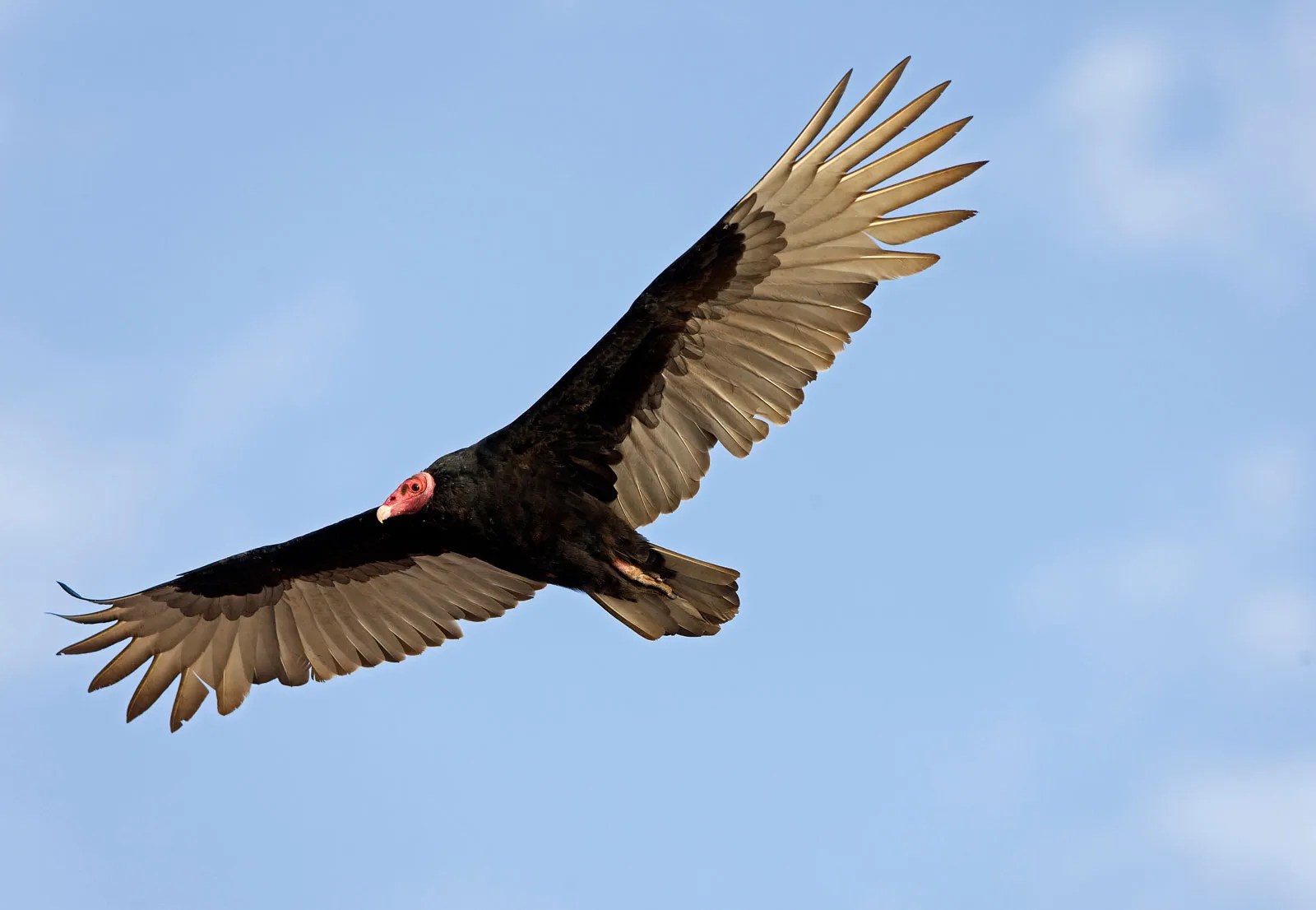
I notice a bird, circling over the edge of the valley. I study its flight, and see that it is a turkey vulture. These birds have been moving northwards into Canada for the last 50 years, as the climate changes and the mass use of pesticides has been banned. Their silent, lazy, teetering circles on the thermals and the breeze are now a common sight in the area. But for many they are still an enigma, a threat, or even mistaken for eagles.

I have always welcomed these birds, though they are feared and mistrusted by others. I spent a long time in that valley, watching the flight of the bird, thinking about how it teaches us of the things that we would rather ignore in our lives. As carrion feeders, they teach us first and foremost about death.

In Canada, there aren’t any First Nations stories about these birds, as they are a recent addition to our landscape. There are a few from further south in the US, both positive and negative. But anyone with a little time can do some research to find out how they fit into the landscape, and how they can teach us their knowledge and wisdom of being.

They aren’t pretty birds, though in flight they are certainly imposing, and even majestic, with their long wingspans. They eat the flesh of animals that have died, and so are like nature’s clean-up crew, saving the spread of bacteria and disease by disposing of rotting corpses. The acid in their stomachs is strong enough to kill harmful bacteria, and so they are very much an important part of the ecosystem by taking care of things that would be harmful to other living creatures, ourselves included.

Their bald, red heads can look menacing, but are well-adapted to eating rotting corpses. Feathers would get in the way and be difficult to clean of harmful bacteria, and so their featherless heads make it much easier to get in and eat the flesh and then be cleaned afterwards, in rivers, lakes or streams as they drink, or in the rain. They defecate on their legs, which for many people is quite disgusting, however they are not the only birds who do so. The reason that vultures specifically defecate on their legs (bird poo and pee comes out together from one orifice, by the way, which saves water loss) is so that they can kill bacteria on their legs with ammonia after feeding on corpses and walking over them.

Their sense of smell is what alerts them to food. They have the largest olfactory system of any bird. They can smell carrion from over a mile away! Very handy to mother nature’s clean-up crew. They can also spot carcasses from up to a mile away, though they have trouble seeing in the dark and so are daytime flyers. Incredible birds.

And yet they are feared, or mistrusted, or reviled. I stand in the middle of the valley, watching the vulture’s flight. A chant bubbles up in my mind, one that I had created early this year. The tune seemed to reflect the soaring freedom of the bird’s flight, and my happiness at its existence. I sang, watching the circles it made in the sky, willing the bird to hear my voice and my songs of praise.

And it came nearer. Immediately responding, it heard me and came, following the notes of my song. I felt that it could feel the love that I had for it, the wonder and joy of its existence and the freedom of its flight. I poured my emotion into my song, letting it know of my joy in its flight. Closer and closer it came, lower and lower, listening to me and drinking in my love. Over my head it came low, and circled beneath the sun, in a dance of light and darkness that reflected its very being. I raised a hand to my eyes, sheltering them from the light of the sun to watch the bird glide in the white brightness of the sky right overhead. The long, dark wingspan stretched over me, and my heart touched that bird with joy and love and peace, and that emotion was returned to me from this incredible bird.

It made one final low circle around me as I stopped my song. It then bid me farewell, and thanked me for the song as it moved over to the other side of the valley, find new thermals and a new vista. The experience of the vulture is something that I will cherish and carry me throughout my lifetime.

As the bird flew off, I spoke these words from my heart:

Your flight is my inspiration

And the knowledge that upon my death,

You will take care of my body

Is my sanctuary

For in death there is life,

In life there is death

So has it always been

So shall it always be

I will always sing to the vultures.

July Musings

The hot summer sun beats down, and the humid air lies heavy all around. To go into the forest during the day would be to invite all the biting insects to a feast, and to sit indoor feels almost like sacrilege on these summer days. But it is so hot. The kind of heat where just moving makes you break out in a sweat. Sitting still seems to be the best thing to do. The cat knows and understands this, and so I take my cue from her wisdom of being.


Even the birds have stilled their song in the midday heat. Earlier, the cardinal sang his heart out to his love, who is always nearby. The crows still caw occasionally, but apart from that, all is still except for the long, drawn out trill of the cicadas cooling off. The mosquitoes are all hiding in the woods from the heat, and the black flies have mostly died off. It’s the heat of an August day, in the middle of July, and we have been in this heat wave for two weeks now. Everyone is tired.


Still, my love for nature calls to me. I seek out the shade, and listen and watch the life that exists all around me. It’s in my nature, and was a big part of my Druid training. Be still. Watch. Listen. Learn.


When we still the voices in our minds, those stories of the humans that are part of our lives, we are then open to receive the stories of the other than human world. Whether we are in a city or on a remote hillside overlooking a vast plain of grasses shimmering in the breeze, there are stories all around us. In the flora and fauna, we learn of the countless ecosystems, micro and macro, and how we fit into them as living beings. And hopefully how to do so with love and respect.


The cycle of the seasons is shifting, from the height of midsummer and the ectastic, dancing energy of the tide of highest light, to the slower, more thoughtful tread of the harvest. The wheat is ripening in the fields, the seeds hanging in the trees and the late summer flowers are blooming. The greening is no longer vibrant, but heavy with the responsibility of continuing the legacy of growth, death and rebirth.


What lessons can I take from this oppressive heat, this heavy time, this long outbreath after the days of midsummer? Lammas or Lughnasadh is fast approaching: the first harvest. But we are still in an in-between state; the calm before the storm. It feels like a time to rest, recoup and prepare for the heavy labour that lies ahead when we collect in our dreams of the winter and spring, and which we have brought out into the world and into the light of summer. It’s that morning cup of coffee before the kids awake, or that few minutes in the bathroom of the office where you just need to be alone and regroup. It’s a stroll along a lakefront, the heavy stormclouds gathering overhead.


And so I rest, here with my family, as best I can in the 30+ degree celsius heat. I have just under two weeks remaining to gather up my strength again and reap the harvest that I had planned and worked for all this year. The books are coming along nicely, and the fiction has been especially rewarding. Finalsing that text in August and September will be a joy, and in readiness possibly for a Samhain release.


The breeze blows softly through the leaves of the oak tree my grandfather planted in the backyard. Now huge, its overhang shades the house from the relentless southerly sunshine, as well as standing as a proud reminder of our heritage and our life here in this part of Canada. Many other trees that I grew up with have long since gone, having lived out their life span or destroyed by storms or harsh winters. But the tall oak tree still stands, its large green leaves and developing acorns towering over this end of the village, and looking out towards the great expanse of the valley that is hidden from us humans by a large cedar hedge. This oak tree is part of both worlds: that of the human family that has lived under its boughs for over 50 years, and also that of the surrounding landscape, with the forest and valley, the hills and clouds, the rain and sunshine, sleet and snow that has blessed this landscape since it was formed.


Settling into my roots, deep like the oak tree, I can find the sustenance I need to carry me through.

New Video: The Tapestry of Life

After my hard drive crashed (and is not repairable) I finally got out again and did some filming this week. I hope you like it!