Self-Governance

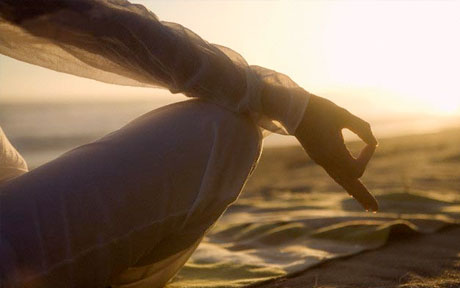
mudraFar too often we allow our emotions to control us, dictating how we react and respond to situations and perhaps not in the best way. Some would argue that our emotions are what gets things done, however, something done with anger, for instance, may not always be the best way forward.

Discipline has become a bad word in our society. What we need to do is to reclaim this word, along with duty (which I will elaborate more on in another blog). We need to sit down with ourselves and take a good, long, hard look at our emotions and the roots of these emotions, finding out why we react to situations the way we do, discover underlying patterns and unravel the threads that are loose, or about to snap, reworking them into something more harmonious.

If we work on a situation based on an emotion of anger, hate or jealousy, then the outcome will most likely not be conducive to creating compassion and harmony with the world. Exploring the roots of these “negative” emotions, we will realise that the underlying thread is one of fear. Anger is another expression of fear. We become angry at our partner for not behaving in a manner that we think he should. In reality, we may be fearful of losing our partner, or of changing feelings for him, of not having enough control in our own lives, etc. Hate is based in fear, as we fear that which is the Other, separate from ourselves, the unknown. Jealousy is based on fear of change, our own insecurities and fears created out of past experiences.

What we need to do it to sit down with our feelings, to better understand them and in doing so, better understand our selves. In creating a safe space to sit with our feelings, we can engage with them openly and honestly. Creating a haven, a sanctuary in which to perform this task, we can explore the deepest corners of our minds. For me, the goddess Nemetona helps in this exercise.

She is a goddess of sanctuary and sacred space. She is present in my home and in my heart. Human beings have such a craving for safety and security, and within this goddess we can find that wherever we are. Not only does it help with emotional discipline and self-governance, but the two are intricately woven together, with self-governance creating that safety. Let me explain.

If we are ruled by the tides of our emotions, we will never settle, never find a place that we can call a sanctuary. We are subject to the peaks and valleys of an emotional long hard slog, and never really find a good breathing space in which to find some respite. If we do not have that sanctuary, we have no place to breathe and to truly connect with our emotions. And so an endless cycle of repetition is created.

Finding time every day to simply sit and breathe is a great way to begin. In a safe, comfortable place, whether indoors or out, we focus on our breath, in and out, breathing in the air that our ancestors breathed, that all living things breathe. We breathe out into the world, exhaling even as the trees exhale in the deepening twilight. Sharing this beautiful moment, this sacred breath, we come to an awareness of ourselves, of our self and how we currently feel in the world at this particular moment. We can call upon Nemetona to hold this space while we simply sit and breathe, honouring Her for all that She is with a return to the stillness at our core.

It’s not easy, taking the time to simply breathe, to meditate on our breath. Our minds will try every trick in the book to distract us from this present moment and this one little act. It is with discipline that we return to our breath again and again, each time we find ourselves wandering off mentally, or shifting our bums restlessly. You have to really want to find stillness – it doesn’t just happen. You have to be disciplined enough to achieve it. It won’t simply suddenly appear out of nowhere, nor can it be spoon-fed. Discipline will not allow any passivity. We must take full responsibility for our selves and for our world.

After breathing, we can take some time looking at our feelings and emotions without attaching to them. Again, we can ask Nemetona to help us, to hold the space and to guide us to explore our feelings without getting too involved, wrapped up once again the in the emotion. She won’t do it for us, however. We can look at our fear, at our anger, our impatience, our joy and our happiness. We can find the roots of these if we don’t let them take control over our minds, and therefore live in better awareness.

For not only do we have to be careful of the negative emotions ruling our behaviour, but we must also become aware of the more pleasant emotions. Far too often we experience a beautiful emotion, and crave that emotion for the rest of our lives. We will never be able to recreate that experience, for it has happened and exists only in the past. All we have is this present moment, which is always changing, moving forwards. If we try to regain the feeling of joy that we had on our wedding day every time we look at our loved one, we disregard other emotions and feelings that will eventually come and bite us on our backside. We may not notice the present moment. Focusing only on positive emotions doesn’t work – we are human and we have negative emotions too. Those who deny them, who suppress them, will face some pretty hard demons at some point in their life.

So we sit, and we meditate day after day, breathing and coming to an awareness of the present moment. We are able to take the time to look at our feelings and get to know them better, thereby allowing ourselves the opportunity to break from negative patterns of behaviour into more purposefully led lives. Discipline and self-governance are not things to be afraid of, nor are they something to shun as not in keeping with our freedom of expression. We are better able to express ourselves when we are not ruled by our emotions, allowing us to see what lies at the root of our souls, and thereby what lies in others’ souls as well.

This is the heart of compassion. When we understand ourselves we can better understand others, and see their fears, their patterns being created. We can work with them to help create new patterns, or we can simply walk away with respect and not have their patterns reflected in our own. We can only help those who want to be helped, and this includes our own self.

So please do take the time to sit, every day, and be in the present moment. Become aware of your breathing. Call upon Nemetona or any other god to help you find that peace, that space to explore your feelings, should you so desire. Look at your feelings and better understand them for what they are. In doing so, you will no longer be ruled by them, but instead be able to respond in the world with an awareness and mindfulness that can only create harmony. We come to understand each other in a very deep and meaningful way when we take what we learn of ourselves and relate that to others. In this, we can see that we are all related.

We are not restricting ourselves with self-governance, but allowing ourselves to open to the world with the eyes of compassion and hearts that are true.


For more about the goddess, Nemetona, please see my book, Dancing With Nemetona: A Druid’s Exploration of Sanctuary and Sacred Space

Reblog: Nemetona and Sanctuary

This is a reblog from my post at Druid Heart, at SageWoman’s channel on Witches and Pagans.

524734_640754085941583_54399955_nSometimes one has to retreat from the world, in order to better understand it. Finding sanctuary, a sacred space where we can open our souls without fear, where we can simply be, is a glorious experience. It happens a lot less than we need in our lives, in my opinion.

A goddess of sanctuary, Nemetona is an elusive deity. Not much is written or recorded about her in Classical texts or history. Just the barest hints and place names, some tribe names and a couple of inscriptions. Who is this goddess to whom we can bare our souls, in complete soul truth, knowing that we are held?

In our modern day world, so often we feel we have to close ourselves off in order not to be overwhelmed – by people, media, technology. For sensitive souls, it sometimes is pure hell. We need to allow our soul truths to emerge, otherwise as caged birds we function behind bars, never truly spreading our wings and knowing what it means to fly. We feel we have to be careful not to be too open, too emotive, too sensitive to what people are saying or what is happening in the world around us. We are not allowed to be offended, we are not allowed to speak out without fear of being shot down a lot of the time. We are told that we shouldn’t be so sensitive. Our souls grow smaller with each experience of shutting down, never letting anyone or anything in.

That physical space around us, where we feel uncomfortable if someone we do not trust enters, is a valuable space. It is our personal nemeton, a space where our energy exists outside of our bodies. Many liken it to your aura. Some nemetons are strong and radiant, some wounded with gaping holes, others barricaded with steel. What we have to learn, or relearn, is how to open this space in love and trust – that is what Nemetona provides, often in a world wherein we feel no other human is able to provide this for us…

To read the full post, click HERE.

Pagan Relationship

Paganism is all about relationship, and is central to my Druid path. Everything is interconnected – we simply could not exist were it not for the countless forms of other life on this planet. All life, in scientific circles, came from single-celled organisms that evolved into life as we know it; we all, everything on this planet, have a common ancestor.

Yet we are constantly bombarded by the dualistic thinking that has so plagued our species for many, many years. We often feel separated from nature, from the world, from other human beings, from our ancestors. It is often reinforced through marketing, various theologies and psychology, in most cases to ensure that there is repeat business, power and normalisation.

How many of us have come across the “food chain” concept when we were at school? Humans at the top, able to consume and control all beneath us. Whoever came up with this concept has not slept a night out in Canada, where the bears or cougars can get you, or swam in an ocean that has sharks, or paddled a river with crocodiles, or suffered from a debilitating or deadly virus. We are, most definitely, not the top of any chain whatsoever. We all become food for something, in time, whether it is before or after our physical death.

We are, however, all connected, and it is through personal relationships with place that the Pagan creates their worldview, learning from the land upon which they live, the ancestors and the gods. There is no such thing as a “thing” – we cannot look at anything (pardon the pun) in such regards. When we use the term “thing” we can often objectify it, not giving it the inherent right to existence that animism honours. Many native traditions use the term “brother”, “sister”, “grandmother” or “grandfather” when speaking of a life form that is non-human, whether it be non-human animal, the moon, the sea, a tree, the sky. In that way, relationship is acknowledged and inherent respect is created. A community is created, an ecosystem in every sense of the word. We are all descended from a few ancestors. We are all family. We have the stuff of stars in our blood and in our bodies, minerals found in distant galaxies.

As Pagans, we have to remember this in everything that we do. We have to ensure that we are not falling into the traps of dualism, marketing, secular culture. We have to see the beauty and awe in everything, and live a life that is filled with awareness of what lives and what dies, what threads connect us to the world. These threads will then shimmer with profound awen, where soul touches soul and relationship, true relationship, sacred relationship, is created.


Lessons in Pain

These last three months have been quite challenging, and I rarely talk about it, but today I would like to share some views on dealing with physical pain.

I have had rheumatoid arthritis for about twenty years now. Usually it’s just a day or so of aching hands and swollen fingers, but this year it has been different. At the end of May, a “trapped nerve” in my hip rendered me nearly incapable of walking – even sitting was painful. After a month long recovery (and a good osteopath) we managed to work it out, only for me to experience the worst arthritic flare up I have ever experienced. This lasted nearly a month.

Painful hands, fingers so swollen, sharp aching elfshots running down the fingers. Unable to make a fist or hold a coffee cup with one hand. Hands just held on my lap, tingling, tired. Unable to write very well with a pen or pencil. Typing was difficult, but better than writing. Not sleeping due to pain.

When that flare up died down at the beginning of this month, my back then went out. Now, this too isn’t a rare occurrence – I have fallen off too many horses in my lifetime, and it’s always a weak point. But this time was different. This time the pain was so severe my legs were shaking, I felt dizzy and sick. I have a high threshold for pain, and this tested that limit.

The back is now on the mend, and I am able to sit here at my computer and type this. I can only sit for about 15 minutes – but that is better than yesterday, by a whole five minutes. Little steps.

Pain is not just a physical challenge, but a mental one as well. It can so easily lead to depression, our human minds unable to see beyond the day when the pain will ever stop. Luckily for me, right now I know that there is a light at the end of the tunnel, but for those whom constant pain is their life, and for whom there is no end in sight, I have the utmost sympathy and empathy. I have come to terms with the fact that as I age, this too may be my plight in life.

Pain can be a great teacher though. It can teach us of our limits. It heightens our awareness, if we are not pushing it away. Being in the moment with your pain is the last thing your mind wants to do, but may just be the best thing you can do at that moment.

Pain also teaches us to slow down. This past week I have not been able to sit upright for five days. I’ve learned a whole new way of looking at things – from a horizontal perspective. I’ve learned patience. I’ve learned the resolve needed in order to heal.

My husband set out our inflatable camping bed in the backyard on Sunday, so that I could go outside and lie down (I tried on the grass, but needed cushioning for my hip). I spent all afternoon lying on my side or on my back, underneath the beach tree that shelters my altar, communing with the tree and learning lessons of what it means to stay in one place, to be unable to move. Glorious insights, and the blessings of the world around me filled me with such awe. I always knew trees were great teachers.

The pain is now coming back, into my lower spine, and I will now be signing off, to lie down and let the muscles and spine stretch out again. Learning, listening, patience and endurance. Lessons in pain.

Reblog: Wonder on the Wing, from Holy Wild

Here is a short excerpt from Alison Leigh Lily’s blog, Holy Wild, which deeply resonated with me. You can read the full article HERE.

Sometimes the very concept of “wildlife management” seems problematic to me. The desire to have a positive impact on the environment can be twisted into the beguiling belief that “technological progress will save us” from the consequences of our past and we need only sit back and enjoy our supremacy. Sometimes I think what we really need is a bit more human management: more self-restraint, more humility in the face of natural forces whose consequences we don’t (perhaps never can) fully understand.

30-Day No Plastic Challenge – The Results!

So, the last week of my “No Plastic for a Month” challenge and it’s been harder than I anticipated. I didn’t manage to get through the whole month without buying food that had been packaged in plastic: there were three exceptions. I had to make a rice dish for a wedding, and simply could not find rice that didn’t come in plastic packaging (where I live in Suffolk there are no big bulk food suppliers, sadly, not even at large food chain superstores. I shall be writing letters to them all about this.) I also had to buy some hazelnuts and sunflower seeds (vegan diet, my protein intake) and these too were unavailable without plastic.

All in all, I’ve looked at the waste that I produce, and it’s seriously overhauled. I thought I was pretty good at not having too much rubbish to collect every two weeks. I know that even the bag of rubbish that I was throwing out a week was too much, and since the challenge this has reduced to half, or even less than half a bag of rubbish a week. An eye-opener. The plastic that a lot of packaging comes in, the bendy but not stretchy plastic, is not recyclable in my area. I didn’t realise quite how much I was still using.

There is no such thing as “away”. We do not throw our rubbish “away” – it simply ends up in another place. With dwindling oil supplies and the rate that plastic biodegrades, we seriously need to re-evaluate our relationship with it. We do not live in a disposable society, no matter how much marketing in companies try to tell us otherwise. We only have one planet, one place to live, and we must treat that with utmost respect.

I shall continue in my search to find food that isn’t wrapped in plastic, and to keep my waste as low as possible, or even lower. Shopping is now not only concerned with ethical and organic implications, but also packaging to an even higher degree than before. Working on an ethical principle that asks the question, “What if everyone did the same?” is the best guideline I’ve ever come across so far.

To all those who took this challenge with me, well done, and long may you continue. If you’d like, please share your thoughts here on this blog, or write your own blog post and ping back to me – I’d love to hear from you!

Awen blessings,

Jo.x


Reblog: Sacred Spaces

This is a reblog from DruidHeart, my blog on SageWoman Magazine’s channel at Witches and Pagans. Photo credit from The Sleepy Backpacker’s blog HERE.

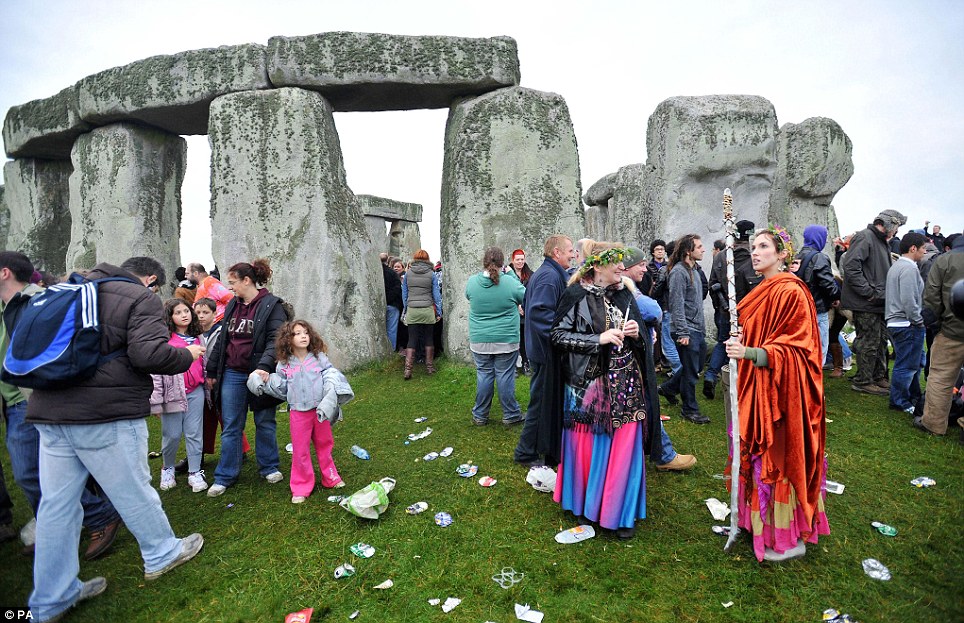
stonehenge2014Moonhenge, in Cambridgeshire, is a brilliant example of new Pagan sacred spaces being created. With so much controversy over some of the megalithic stone circles and other sites around Britain, why should we not be creating more new spaces in which to celebrate, should we so wish?

Every Western Pagan knows about Stonehenge. They all know about the summer solstice celebration there. A loud and rowdy affair in which the public join in, it is more a rave than a sacred celebration. Though we cannot know for certain what the ancestors did in that ritual space, to me personally it just seems wrong to have people getting drunk and shouting loudly, climbing on stones and partying all night in a temple so closely linked to the dead as well as the sunrises throughout the year. I may be entirely wrong.

However, it just seems like sacrilege when the spirits of place are not honoured in a respectful way. To make something sacred is to honour and respect it – it is connected to such words as dedication, devotion and veneration, three things which most of the partygoers at the high point in summer are not terribly concerned with at Stonehenge.

The creation of sacred space is a key tenet of Druidry and many other Pagan religions. It is an invasion to have people that you do not know enter your sacred space and act out of accordance with the intention of the rite or ritual being performed. Out of hours access permits are available to those who wish to use the particular temple of Stonehenge for more private use, however, during the actual time of the sunrises and sunsets at various times of the year, this temple space must be shared with those who are not in tune with the intention.

Other sacred sites around the world do not seem to suffer as much from this intrusion. We would not party in Chartres Cathedral, for instance, or rave all night in the Temple of Athena….

To read the full article, click HERE.

Reblog: Pagan Ethics

Here is my latest blog post for Moon Books…

How much of our Paganism do we allow to be defined by others? If we follow a specific or established spiritual tradition within Paganism, we look to those who have gone before, and those who are a part of it now, to inform our ideas about the path that we are journeying on. We can find great inspiration in doing so, finding relevance in the ideas of others that resonate deep within our souls, through the words and actions of those whom we may look up to, or feel a sense of rapport with. Equally, we may become frustrated and disappointed when those who follow the same spiritual path are at odds with our own beliefs, behaving badly, seeming to work in opposition to the very ethics that Paganism, by virtue of its deep-seated root in respect and love for nature, provides.

What are the ethics of Paganism? More and more, this topic is being discussed by prolific Pagan writers, teachers, organisations, established members of the community and newcomers to Paganism alike. We could look at what defines the Pagan community, but this is just too vast to cover in a blog post, as Paganism itself is so vast a subject. Therefore, the ethics that surround such a vast subject are numerous and varied according to each individual, if not organisation. For some, this is the brilliance of Paganism – for others, it is the downfall.

When the ethics that we hold dear to our heart are not being followed by others who claim to be a part of our tradition or spiritual path, we begin to question our path on so many levels. How can I be a part of this, when people behave like that? Issues with Pagans whom the media court may frustrate us, as we may feel we are not being represented properly or with due respect. Issues arising on social media, where wars with words are carried over into many different spheres can confound or simply clutter one’s newsfeed – these are all a part of being a modern Pagan, should you wish to use the term. Gossiping, griping, flaming, bullying – all these issues can make us question whether we want to be a part of this whole Pagan thing at all…

To read the full article, click HERE.


Reblog: Paganism, Anthropomorphisation and Anthropocentricity

Reblog from my channel, Druid Heart,  at SageWoman, on Witches and Pagans

Gender roles can easily become too prominent within modern Paganism. In Wicca, the Great Rite is often enacted between High Priest and Priestess, symbolically or physically. Within Druidry, the focus is often on the product of the union, as opposed to the union itself. Where my spirituality differs is in the releasing of gender roles, and developing an exquisite and often ecstatic relationship with the rest of world. It is in that relationship, where soul touches soul, in the process of creating something wonderful which is first and foremost. It is not the union nor the product, but the constant act of creating and creativity, seen in the world around me that is at the heart of everything I do.

So much within nature is not defined by gender – scientifically or socially speaking. There isn’t always a male/female coupling in the natural world – there exists gender neutral or genderless beings, hermaphrodites and homosexuality throughout. Too much focus can be placed on a male/female union, or ritual, wherein we essentially become defined based upon what plumbing we are born with. For me, it is far too restrictive.

Some of my deities are gendered, some aren’t – I am inspired and learning from Brighde at the moment, but then there is also the deity of the heathland and forest where I live. This local deity has no gender – it simply is. It is everything, therefore how can it be gendered? The clouds – are they gendered? What of the sun and moon – so often gendered within Paganism (and of different genders, depending upon the tradition). Why do we feel the need to engender such entities?

To read the full article, click HERE