Druidry and the Ancestors of Tradition

In Druidry, often the  ancestors are honoured from three different spheres that can overlap each other. These spheres are the ancestors of blood, who share our bloodlines; the ancestors of place, with whom we now share our physical space; and ancestors of tradition, those who have practiced in the same vein as we do.

Often, the ancestors of tradition can become relegated to the back-burner; most often when people think of ancestors it is those of their family lines that they think of.  Also, ancestors of place can take precedence in a setting where their songs are still widely sung and heard in the deepening twilight.  The ancestors of tradition, however, will always hold a special place in our hearts if we make room for them.

Some people may have inspired us on our spiritual and religious path. They may not even have been of the same spirituality or religion, but share ideals held in common.  Oftentimes, these can be seen as the more prominent people of the traditions, those who have garnered a supposed “higher” status due to their position, their accomplishments and their deeds.  The cult of celebrity is rampant even among us pagans.  Some are widely known not only for their virtue, but because of who they are – the Dalai Lama for example. Others have been known by the virtue of their deeds (not to say the Dalai Lama isn’t worthy) and an example that springs to mind is Mother Theresa, or Dr Martin Luther King Jr.  All these people can be ancestors of tradition if we hold the same beliefs, morals and attitudes as they do, even though they are not necessarily, or essentially pagan (whatever that may mean!).

Celebrity pagans abound, now due to social media, the increase of pagan books being published and television and radio appearances.  These people to whom the media seek out for whatever reason can be seen as an ancestor of tradition. We may not like what they are saying or representing, but they have become the spokespeople that others are listening to. This can be disheartening when you don’t agree with their principles or the execution of shared principles. It can also result in elation when there is agreement – yes, someone “important” is saying what I’ve been saying all along, what needs to be said, what needs to be done, etc.  Whether we choose to honour them or not is our decision.

Just because someone has written a book, or ten books, or appeared on television or the radio, doesn’t make them any more noteworthy than the pagan who quietly picks up litter by the roadside and sings to the sunset in her organic garden.  It is the cult of celebrity that has changed our perceptions.  Our ancestors of tradition incorporate all ancestors of tradition, from the inspiration gained from the wailing women in black on Anglesey who stood alongside the others to oppose the Romans, to the RSPB volunteer who speaks out against those who wish to harm birds of prey out of fear and ignorance.  We may take inspiration from acclaimed authors whose words strike a chord in our hearts – equally, we may take inspiration from the pagan family in the next town over who host seasonal celebrations in their backyard for all in the community.

Honour should not be bestowed simply because of celebrity.  Equally, honour should be bestowed from within as well as from without.  In honouring your very own self as part of a spiritual or religious tradition, you also honour those in whose footsteps you may follow, whose words we listen for on the dawn’s solar wind.

The ancestors of tradition are a vital part of my own Druidry, and consist of people from all over the world who share the same worldview as I do.  Some of them are considered celebrities, some no one has ever heard of. What matters most is that in honouring them I am also honouring the tradition itself, its values and what it means to be a pagan.  It is all too easily forgotten.

P.S. I would like to take this opportunity to thank the people of Melange Magique, a pagan supply store in Montreal who have recently had to close down. That shop started me on my pagan path, and I will always be grateful, as I’m sure thousands of other pagans are for what they achieved these last few decades.

Beware of Trolls

Can we look for reasons behind why some people behave the way they do?  Psychologists have been attempting to do that for hundreds of years, perhaps priests and other members of the community who wanted to help said before that.  In today’s day and age, we have the internet phenomenon of “trolling”.

According to Wikipedia, trolling is when someone attempts to sow discord on the internet by trying to start arguments and upset people.  They can do this in a variety of ways – posting off-topic messages to detract from the original intention, or posting inflammatory words on groups and online forums in the hopes of kicking things off.  From the wiki site:-

“Early incidents of trolling were considered to be the same as flaming, but this has changed with modern usage by the news media to refer to the creation of any content that targets another person. The Internet dictionary NetLingo suggests there are four grades of trolling: playtime trolling, tactical trolling, strategic trolling, and domination trolling. The relationship between trolling and flaming was observed in open-access forums in California, on a series of modem-linked computers in the 1970s, like CommuniTree which when accessed by high school teenagers became a ground for trashing and abuse. Some psychologists have suggested that flaming would be caused by deindividuation or decreased self-evaluation: the anonymity of online postings would lead to disinhibition amongst individuals Others have suggested that although flaming and trolling is often unpleasant, it may be a form of normative behavior that expresses the social identity of a certain user group  According to Tom Postmes, a professor of social and organisational psychology at the universities of Exeter, England, and Groningen, The Netherlands, and the author of Individuality and the Group, who has studied online behavior for 20 years, “Trolls aspire to violence, to the level of trouble they can cause in an environment. They want it to kick off. They want to promote antipathetic emotions of disgust and outrage, which morbidly gives them a sense of pleasure.” Adams, Tim (24 July 2011). “How the internet created an age of rage”. London: The Guardian (The Observer).

“Trolling is a game about identity deception, albeit one that is played without the consent of most of the players. The troll attempts to pass as a legitimate participant, sharing the group’s common interests and concerns; the newsgroups members, if they are cognizant of trolls and other identity deceptions, attempt to both distinguish real from trolling postings, and upon judging a poster a troll, make the offending poster leave the group. Their success at the former depends on how well they – and the troll – understand identity cues; their success at the latter depends on whether the troll’s enjoyment is sufficiently diminished or outweighed by the costs imposed by the group. Trolls can be costly in several ways. A troll can disrupt the discussion on a newsgroup, disseminate bad advice, and damage the feeling of trust in the newsgroup community. Furthermore, in a group that has become sensitized to trolling – where the rate of deception is high – many honestly naïve questions may be quickly rejected as trollings. This can be quite off-putting to the new user who upon venturing a first posting is immediately bombarded with angry accusations. Even if the accusation is unfounded, being branded a troll is quite damaging to one’s online reputation. “ (Donath, Judith S. (1999). “Identity and deception in the virtual community”. In Smith, Marc A.; Kollock, Peter. Communities in Cyberspace (illustrated, reprint ed.). Routledge. pp. 29–59. ISBN 978-0-415-19140-1. Retrieved 2009-03-24.)

The term trolling these days can refer to not only those people who have a clear agenda in creating discord or playing identity games, but also those for whom bullying is an enjoyable pastime.  Online bullying tends to fall under the category of trolling, perhaps because it is simply easier to call all those who misbehave on the internet with a single label.

I have been subject to various trolls over my online lifetime – both those who simply wish to sow discord on online forums, those who have a hidden agenda and those who are simply bullies.  The question remains – why on earth would someone want to do such a thing?

In a way, I’m not sure this question can ever be answered, for we cannot get inside someone’s head. We can understand some of their motives, but unless we have access to every single second of their lives which may have influenced their behaviour, we are still making assumptions, which may never be proved.

Some of “my” trolls have sought to change the topic of conversation, for reasons only known to them. I can speculate that they didn’t like my opinion, or that they may be working with those who are on the “other” side of the situation, debate or discussion.  Trying to return back to the subject time and again can be futile, especially when there are several trolls working together. In this case, I have simply walked away from that discussion, forum or group if I feel that the moderators are not doing their job correctly in keeping things going forward on topic, troll-free.

Other trolls have been bullies, such as on this blog where a particular troll was attempting to silence me from any further posting for whatever reason.  Swearing and telling me that I should seek psychiatric help among other things led me to believe that the individual in question was projecting their own fears and anxieties onto me, a faceless person (they may or may not have known me personally).  At any rate, any of my thoughts on this person’s behaviour would simply be speculation.

So, what can we do about it? Are we simply to accept that there are trolls online, and we are to ignore them, as many people have suggested – “Do Not Feed The Trolls”? Or is there something that we can do?

For moderated online communities, I feel the responsibility should like with those who claim to be moderators. Some moderators may have their own agendas, however, and so are perhaps not the ideal people to perform such a task.  If a moderator on an online forum, group or community was part of a company, and a discussion was taking place in where the objectives of that company were in question, they may simply close down the thread or delete it for no apparent reason.  In this instance, freedom of speech is being impinged upon, and there is very little we can do about other than try to work around said moderators, to try and go over their heads to a “higher source” who may or may not listen to our opinions, suggestions or queries.

If it is a “personal” attack, such as on a personal blog, what can we do? Do we delete all the posts that this person has made, and simply ignore it?  I haven’t – I have left these person’s posts in place to show how life is for some people – it is a testament to human interactions, to human behaviour and to society and culture as a whole.  Only when the remarks have become so antagonistic as to resort to swearing and using violent terms have I decided to no longer accept posts from these people.  I am using these trolls as an example to other readers as to how some people behave, either in an online community or, heaven forbid, in real life.

In a way, I have a very real sympathy for these trolls.  This may be totally imagined, and it is only a personal assumption, but I believe these people to have very unsatisfying lives in general.  Why else would someone want to do such a thing?

In our world of ever-increasing virtual interaction, it is my fear that more and more people will not be able to engage with others in a respectful and honourable way. Without that face to face interaction, will we see an ever-growing increase in such bad behaviour, which could also impact upon real-life situations?  Will this bad behaviour, ingrained and learnt from an early age be taken out into the real world, where this will occur more and more in face to face situations? I sincerely hope not – it’s bad enough that it is occurring online.

So, what can we do about it?  We can make people aware of what is occurring, for starters.  We can then deal with each interaction with as much respect and honour as we are able.  We can make points known, and then if the discussion falls into chaos and disrespect due to trolls, we can refuse to engage, simply stating why we are refusing and then walk away.

Sometimes walking away from a bully doesn’t work, however. Sometimes they get their best shot when your back is turned.  All we can do is to remember that, as the heathen saying goes, “We Are Our Deeds”.  Whether these are online opinions or not, I feel that this saying is applicable to everything that we do in our lives.  Sure, not everyone of us is a shining example of humanity, and simply because we have done less than honourable deeds in the past does not mean that we continue in dishonour – we can work to gain that back through everything that we say and do today.

And so, for all the trolls out there who may be reading this – remember this saying. We are our deeds.  It’s not too late.

And for those who are being plagued by trolls, I offer up a previous blog post which may help to overcome any feelings instilled by this abhorrent behaviour:  https://downtheforestpath.wordpress.com/2012/04/17/is-that-so/

Midsummer Madness?

The summer solstice is fast upon us.  Energy is running high, even though our British summer has been late in coming. I hesitate to call this a midsummer celebration, for summer has yet to start!  Yet, the sun’s course remains the same, and the time of the longest daylight is soon here.

There have been many studies on the effect of the sun upon our bodies – we know that people in these northern latitudes can often suffer from Seasonal Affective Disorder, or SAD during the long winter months when there is very little sunlight.  I would posit that SAD can also affect us in the time of greatest light. I’m no scientist, but it makes sense to me.

While not the reverse or polar opposite of SAD’s depressive symptoms, Summer SAD (or SSAD as I shall call it) can affect us in much the same way.  There is always so much to do, everyone is buzzing with high energy, and we can often feel tired.  All the time. It’s a case of surfing that energy, or fighting against it, or letting it roll over your head in drowning waves.  In the latter two, we can succumb to apathy – after fighting for so long we just give up, let people do as they will, let the fates decide.  The high amount of daylight can make us yearn for a dark, quiet place to be at times.  Retreat to the cool shade, to the darker cave, back to the womb, back to mother…

The days are so long – there is so much that we can accomplish, that we can achieve with this amount of light.  We can be even more productive, riding the cresting waves of light. Or we can take a step back and look to our ancestors at this time of year.  In an agrarian year, this would normally be the time of year when there is a brief respite;  the crops have been planted, and now it is up to nature to do as she will until harvest-time.  A time to rest, to recoup, to gather our energy together in anticipation of a long hard harvest.  A time for celebration.

So, a kind of meeting-in-the-middle is currently where I am – burdened by so many things to do and so much activity going on all around me, festivals and dance performances and weddings, people with demands, all of them – I want to retreat into a cool, dark place and hide while at the same time stretch out lazily in the sun, or move my body in joyous ecstasy in the few hours of star-filled darkness that we get between the hours of midnight and 3am here on these isles.  I want to take a break, but it’s not time, not yet. There is still too much to do.  Feeling SSAD quite strongly at the moment, I have a summer holiday coming up at the end of June, which I am very much looking forward to.  Time to do nothing, until it all explodes again in the autumn with work, our biggest dance show, and a very important wedding and celebration.

I haven’t experienced SAD, the winter version – I have always loved winter.  I love all the seasons equally, actually.  Summer just seems to go by so quickly, these days, trying to fit too much in each and every day.  Feeding the energy that’s creating these rises and swells in the tides of summer, we can create havoc in our lives.  So, time to look towards creating the calm, to release the energy to avoid the tidal wave, to find an outlet and to dream long and deep in the brief hours of darkness.


A great book for all Pagans…

Starcat’s Corner: Essays on Pagan Living is a great little book.  Based on small essays written over the years, each one is based around a festival of the year. Within the essays are helpful hints, great practical information and things to try.  This book really does what it says on the tin –  bringing a more “pagan” feel into your everyday life.

Each short essay is very easily digestible and well-written.  If you are pressed for time, then this is the perfect book for you. You can read an essay or two and then come back to it without fear of “losing the thread” so to speak.  The author is clear and concise, and the writing is from the heart.

A great addition to the pagan’s bookshelf!

http://www.moon-books.net/books/starcats-corner-essays-pagan-living

starcat

Five Star Reviews of Zen Druidry!

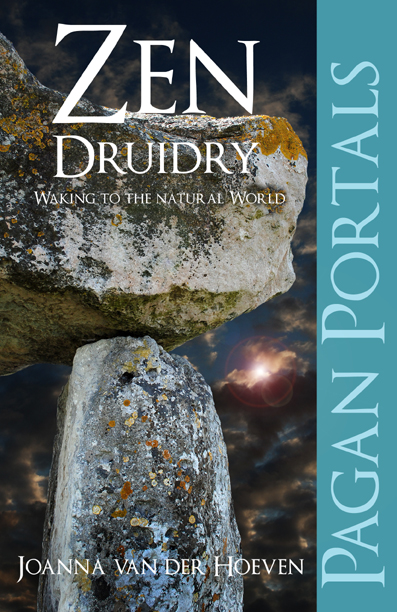
I’d like to take this opportunity to thank you all for your kind words on my new book, Zen Druidry, and for SEVEN 5 star reviews on Amazon!  Big love to the community out there. Many, many blessings to you all. x

http://www.amazon.co.uk/product-reviews/1780993900/ref=cm_cr_dp_see_all_btm?ie=UTF8&showViewpoints=1&sortBy=bySubmissionDateDescending

zen druidry low res

caffeine galore

Reblog from “From the Edges” site – a good post that makes you think!

angharadlois's avatarfrom the edges

For my payday treat each month, I head a little way inland to one of the city’s finest patisseries, and order cake and coffee.  Their coffee is wonderful – roasted in small batches, ground only as needed, prepared with care – and utterly addictive.  And so it comes to pass that I am sipping a long black Americano when I read these words:

“caffeine levels [in the sea] are so high in some coastal areas that it’s used as a marker to determine general water quality”

Caffeine seeps into the sea.  But of course.  Where did I think it went?

I am a caffeine fiend.  Every year, in the Spring, I try to break the cycle of addiction; I usually manage a few days, sometimes weeks, before I succumb to the lure of a hot, bitter coffee in the morning, or a comforting cup of tea at work – in thrall…

View original post 316 more words

The Spirits of Place Within Me

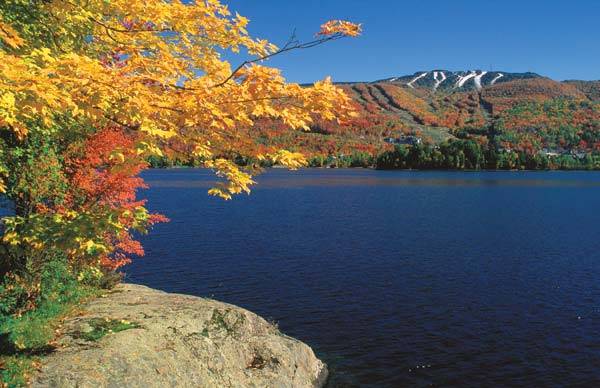
mont_tremblantAfter having had wonderful conversations with an old friend of mine, and currently reading “Pagan Visions for a Sustainable Future” the concept of the spirits of place has gained an even greater standing in my Druidry.

I have always loved the hills and mountains, the forests and rivers where I grew up in the Laurentians.  These ancient volcanic hills, softly rounded ,weathered and tree-covered sing to my soul.  They are not only a part of the landscape in which I grew up in – they are a part of very own self as well.

The water that I drank flowed from the rivers than ran between the mountains, fast in the spring with snowmelt, crashing over rapids and making its way southward through towns and villages.  This river fed the many lakes, along with mountain streams that flowed down the granite hills, bubbling and jumping merrily through moss-covered stones.  This is the water that I drank – it was a part of me, the rivers and the lakes, the mountain streams.

The clouds that scudded the hilltops gave rain that added to those mountain springs and rivers.  Those clouds were a part of me.

The sandy plateau in the midst of these mountains is where our house was built. It was the literal foundation for a very happy childhood.  Upon this soil I grew up. I tasted it upon my skin after a day spent outside, I inhaled the scent after a summer rain, smelt it on the cat’s fur when she came inside after rolling in the sand.  This soil is a part of me.

The sunlight beaming down upon my warm skin as we sat on the lakeside beach, slowly browning or freckling skin, drinking it in – that sunlight is a part of me.

The thunder and lightning storms that raged across the skies in the heat of August, restoring the balance and refreshing the body after the humidity of the day – those storms are a part of me.

The dairy cows in the lowlands fed by the river and other rivers gave us milk and cheese as we were growing up.  Those cows, the grass they fed upon, are a part of me.

The mulch thick and deep in the forest floor in late autumn, with mushrooms poking through and the wonder of life all around – that is a part of me.

Though I may now live thousands of miles away, all these things are still a part of me.  If we think about it even further, the minerals in our blood, the iron from stars in galaxies far away are a part of us – there is everything in us and we are in everything.

Go deep enough, feel all these things in your soul, have your mind blown time and again.  It begins to make sense, offers some comfort in our sometimes senseless society.

Words can give us glimpse – it is in the experiencing and relationship where the magic happens.


Druidry and Choices

Sometimes we have to make choices in our lives that don’t give us pleasure, that don’t make our lives easier, that go against the popular majority.  If we are to live with a strong moral and ethical code, we will have to make a stand somewhere, even if we are standing alone.

In my Druid practice, there is a very strong ethical stance with regards to the environment.  It’s why I’ve been vegetarian for nearly twenty years, and why I’ve since gone vegan.  I’ve made a vow not to buy any new clothes for over a year, in order to learn to make do with what I have, or to buy second-hand items when necessary.  I use organic, SLS free bath and beauty products as much as I can. I recycle.  I use vinegar and water to clean my house, sometimes scented with an essential oil. My garden is organic.  These choices have not made my life any easier – in fact, rather the opposite.  But it’s a choice that really wasn’t a choice – I couldn’t follow my religious path without making those changes in my life.

This weekend I had to make a choice about one of my many hobbies as well – LRP, or LARP (live action role-playing).  This system runs its events on land that is leased from other landowners, which has several large fields and a patch of woodland – a great site. However, this spring, the event held battles in the woods, which were in full bloom with bluebells.  Large sections were trampled underfoot by hundreds of people.

An active member of The Woodland Trust, this shocked me to the core.  Bluebell woods are protected, but this was still happening.  After writing to the company owner, I’m still not certain anything will change, or be done about it.  I am sincerely hoping that they will get in touch with the landowners, The Woodland Trust and Natural England about the issue, and how it can be resolved.  I have written to all concerned about the issue. Until then, I cannot give the company any more of my money, for that would be condoning the destruction of bluebell woods.  It’s terribly sad, for I have a lot of friends within that community, but I cannot compromise my principles in this regard.

Druidry is all about relationship, and we can easily forget that relationship is not only with each other as human beings, but with the earth as a whole.  To run through bluebell woods, destroying them underfoot as I “play” out a battle is completely disregarding any relationship to the woods, the protected flora, and all future sites as well.  We must make a stand for what we believe in, when things aren’t right – and especially for those who cannot speak for themselves, whether it be a bluebell, a dog being kicked by its owner, violence towards women, a teenager throwing a soda can onto the verge.

Balancing strong environmentalism whilst living in the 21st century is difficult.  I still have to drive a car fuelled with a non-renewable resource.  My house is heated with oil.  Our electricity is from coal-fired power stations and nuclear power stations.  However, I strive to do the best I can – it’s better than doing nothing at all.

A good resource for living ethically within the Druid Tradition can be found on The Druid Network’s website here – http://druidnetwork.org/what-is-druidry/ethical-living/