Where there is no cold and heat…

A monk asked Tozan, “How can we escape the cold and heat?”

Tozan replied, “Why not go where there is no cold and heat?”

“Is there such a place?” the monk asked.

Tozan commented, “When cold, be thoroughly cold; when hot, be hot through and through.


On a day like this, when it is around 44 degrees C with the humidex, and you sweat just sitting still, this Zen saying comes to mind.  So many people try to escape the heat, much as they try to escape other less than pleasant aspects of their lives.  Some people even try to escape the “good” things that happen too.  We have developed all sorts of energy wasting devices in order to maintain our “comfort” levels. Now, I realise that I have central heating and drive a car to work in the countryside, and so contribute to the energy consumption that these devices use.  But I will never, ever get air-conditioning, for example.

Growing up in Canada, I loved the summers as much as I loved the winters. It is -30 in the winter, +30 in the summer – quite a temperature extreme.  In the UK, where I now live, there isn’t as much of a temperature flux between the seasons, but we do occasionally get a hot spell in the summer, and a cold spell in the winter, which does get everyone talking about (or complaining about).  However, I digress – I always found it odd that people wanted to escape the season.

In the wintertime, we long for those hot summer days, and vice versa. We always want, or always think we want, something else.  That something else will make things better.  In the sticky, sweaty heat of summer, it will always be better if we have air-conditioning.  What I propose is that it isn’t – it’s just cooler.

I know a lot of people would say that being cooler IS better, but it isn’t – it’s just cooler.  Problems that we have are still with us, and the air-con has its own problems as well, with health and well-being that affects some more than others.  I know also that for some it is a godsend.

However, what if we spent all the energy we put into fighting the heat into simple acceptance of the heat? On a sweltering, sticky day, instead of running to the air-conditioned stores, what if we just accepted the sticky, sweatiness of it all?  I often find that when I do, I’m a lot cooler, even though that isn’t my goal.  When I’m hot, I just be hot. Then it isn’t a problem for me anymore, because I’m not trying to be anything else. I have a little more trouble being cold – if I’m cold, I do put on an extra sweater, for example.  The zen saying doesn’t advocate hypothermia, or heatstroke – it’s more of an analogy to life, perhaps not to be taken so literally, but still darned good advice.

Instead of trying to escape our lives, if we totally immersed ourselves in them, and accepted them for what they are, then perhaps things would be a little different for us. And in a good way.  What do you think?

You Are Doing It Wrong…

bunneh powaIn my 20+ years of being a Pagan, I have met the most wonderful, inspiring people. I have also come across my fair share of people who seem to revel in trying to take other people down.  A lot of this, I’ve found, stems from the thinking that “you’re doing it wrong”.

For me, in anyone’s religion or spirituality, there is no right and wrong way of doing whatever inspires them, whatever heals their soul and whatever helps them to establish that connection with the songs of life.  I liken it to creating art, for it is an expression of one’s soul, one’s inspiration.  Would Da Vinci tell Jackson Pollack that he’s doing it wrong? Maybe, but both are equally an expression of the artist, both are equally art.  I must confess, I have in the past walked around art museums, seen a painting, and thought “I can do that – that’s not art”.  I’ve since seen the error of that thinking, and the divide that it creates.  Is a six-year old’s expression of a drawing of their mother any less worthy than a piece by Donatello? However, I digress.

Believing that there is only one way of doing things leads to all sorts of problems within the human psyche.  Out of that stems arrogance, division, and narrow-mindedness, just to name a few.  We would not have the wonders that we know today had everyone thought there was only one way of doing things.  We would not have a wealth of theologies from which to delve in and expand our human awareness, and awareness of the planet.  We would not have the wonders of the modern technological age.  We would not have impressionists, or the romantics.  We would not have haiku and sonnets.

The people that have inspired me have been those who have had the courage to follow their own path.  Figures in Druidry such as Emma Restall Orr (http://emmarestallorr.org) come to mind, people who couldn’t find what they needed to nourish their souls in what they found already existed, and so blended what mattered most to them with existing ideas, creating new ways of doing things.  Twenty years ago, Emma’s mud and blood approach to Druidry was unique, and she had her fair share of people telling her that she was “doing it wrong”, I’m sure.  Now, she is one of the most prolific writers and public figures in Druidry, inspiring millions with her approach, and making them find their own way through the forest.  It’s bloody marvellous.

I have seen some pagan groups or individuals put another group or individual down, because They Are Doing It Wrong.  Oftentimes as well, some pagans will use the term “fluffy bunny” to denigrate someone else’s path when it differs from theirs.  The fluffy bunny syndrome I find fascinating – not in the bunnies themselves, but in the way that people use this approach to make their path seem more valid.  Why on earth would anyone want to do such a thing?

A lot of this stems from the fact that assumptions are made about people. This is especially rife on the internet, where one can judge another without ever even meeting them in the flesh. These assumptions become rapid fire judgements, in which their path is better, their way of doing things holding a greater validity. This is expounded by the fact that they feel they are free assume and judge others in front of the watchful gaze of thousands.

Simply because one does not share the same opinion as you, doesn’t mean that theirs lacks validity.

I could equally assume that the people making such comments have deep-seated fears about their own path, or have had troubling experiences in the past that makes them lash out, that they lack self-esteem and this makes them feel better about themselves – but again, these are all assumptions.  We have no idea why people do the things they do. We cannot get inside people’s heads.  What we can do, however, is realise that everyone is on their own journey.

Each spiritual path, each way of doing things, is as unique as the person who is travelling along in this journey of life.  Instead of denigrating people who choose a different path, another way of doing things, differing from the norm or not following the traditional way of doing things, how about celebrating this as wonderful expressions of the soul? We celebrate art in museums in the same way, why can we not do so with spirituality? Both are expressions of the soul.

If someone wants to wear black from head to toe, cover themselves in tattoos and piercings and do ritual with the Sisters of Mercy playing in the background, then that’s brilliant – if it opens their soul to the experience and gives them what they need, the connection that is at the heart of all religions and spirituality, then let them do so without criticism and judgement. Equally, if someone wants to cover themselves in glitter and wear fairy wings, channelling white light energy into their hamster, Brutus, to clear his conjunctivitis alongside with the prescription drugs from the vet, then that is equally fabulous.  To each their own.  Remember The Rede – An it harm none, do what ye will.

In Paganism, there is no one right way of casting a circle. There is no one right way of meditation.  There is no one right way of soul retrieval.  There is no one right way of invoking the gods and goddesses.  There is no one right way of making an offering, of praying, or dancing.  This also applies to all religions, not just Paganism.

I have recently been tagged into the “category” of “New Agers” looking for the next new and best spiritual thing.  It can be frustrating at first, being looked down the nose at by some people. It is also completely bemusing.  Comments such as these are always made by people who don’t know me personally.  Assumptions and judgements abound.  I have seen and experienced things that would make some people wet their pants.  I also *heart* faeries and unicorns.  Does that make what I do any less valid than anyone else? Does it make my way better? I don’t think so.

My Way Of Doing Things Is Better Than Yours has led to all sorts of horrific things; war and strife, racism and sexism, just to name a few.  Condemning other paths because they do not adhere to what you think is the right way of doing things is, quite frankly, a waste of time.

And so I salute all those who sing their soulsongs freely, and let their true selves shine through, whatever their path, inspiring others.  And I would also say, do not let others tell you what is the “correct” way of doing things.  Do not let others denigrate your path – let them say what they will, then smile, shrug, and keep going.  We all must walk our own paths, and no one else can do that for us.  Sure, there are plenty of people who can guide us along, and become great teachers – but be wary of those who tell you that you should trudge silently along the path when you feel you should dance, skip, or cartwheel.

I look forward to seeing you along the journey!

Soul Retrieval and the Essential Self

In many of the works that I am currently reading, and most recently understood in Nimue’s Druid mid-life crisis blog http://druidlife.wordpress.com/2013/07/02/midlife-crisis-druid-style/#comments, I am coming across the words and the ideas of “soul retrieval” and the “essential self” more and more.

Having recently undergone a “dark night of the soul” this autumn and winter, perhaps it is fitting that I should now be coming across this soul retrieval business.  I feel a longing, a kind of hiraeth (not of Wales, but of the past) for the person that I used to be.  Maybe it is being now in a mid-life awareness (I hate the word crisis, it’s not like it’s life threatening).

At the age of fifteen and sixteen, I knew that my life would be changing in so many ways.  College was just around the corner, and I would be leaving home, leaving behind my family, the home I grew up in and the mountains in which my soul had nestled, sheltered within their softly undulating, forest-covered beauty.  I would be leaving for the city, for places with public transport and concrete, full of people and movement, filled with the songs of humanity.

Knowing that this change was fast upon me, I spent every wakeful moment I could embedding in my memory the beauty of those times.  The way the setting sunlight hit the walls in my peach coloured bedroom, the smell of our house; the sounds and sights that were so familiar to me I actively opened myself too again in order to preserve them forever. Perhaps, without knowing it, preserving them again for when I had need.

I spend as much time as I could outside in my old haunts, the woods that rolled along the mountainsides, the valley where the horses spent the summer, along the river edge watching the undines.  Walking around the house, I would talk to the trees and the plants, thanking them for what they meant to me growing up surrounded by their embrace – the cedar hedge, the birch and oak trees, the rowan and the blue spruces, the yew beneath my window.

I also recalled and burned into my mind the memory every bit of the long-haired boy that I loved, not knowing what would be in store for us in the future.

It was a time when I knew who I was, and knowing that it was all about to change made it that much more important to remember.  I was a dreamer, a writer, a poet.  I had a strong set of ethics and ideals on which I would not compromise.  I was a thinker, a fey, one who watched from the edges.  It was a time when I let my essential self shine through, without barrier, without fear. Perhaps it was in naivety, perhaps it was in courage, but it was there for the world to see.  The ego, driven by past experiences, had not yet been coloured yet by the hardships to come, the highs and the lows.  It did not know better.

Lately I’ve felt a strong sense of wanting to return to her, to that girl in the mountains with her hopes and dreams, who allowed her essential self to guide her.  Funnily enough, some of those dreams have come true.  I am a writer, but I also feel the need to return to the dreamer.  To return to a time in life when I deliberately slowed everything down, in order to savour each and every moment.  To be utterly connected with everything.   It was a wise decision then, and I am so glad to my former self that I did it, for now I have such beautiful memories.  A lot of my friends seem to be on similar journeys as well right now.  Is it because we are all of an age?  Synchronicity? Or something else?

I’m shortly going on a two week vacation back home to Canada, and feel that this trip will be encompassing all those ideas, of returning, of remembering, of soul retrieval.  I left a part of her back there, while I was so focused on my intent.  I left a part of her there when I moved to the city, then across the country, then to another country altogether.  Maybe I need her back.

At any rate, I look forward to meeting her.

The essential self is innocent, and when it tastes its own innocence knows that it lives forever. – John Updike

Excerpt from upcoming book, Dancing with Nemetona

From Lady of Boundaries and Edges Chapter…

Opening our nemeton requires a level of ability and trust.  We close ourselves off on so many levels each and every day simply because of the sensory overload that we are exposed to through people, media and more.  We have so many demands on our life that if a stranger came up to us in need after a hectic day, we may shut ourselves off completely from them and not provide the help that they might need, however simple and genuine their request may be.  Our cat may come to us for a cuddle, and we don’t even notice as we are too busy distracting ourselves with television and high fat food.  We switch off constantly, and we must relearn how not to do this, and instead be aware and mindful of our nemeton and how it interacts with others.

I am writing on the computer upstairs, my fingers clacking the keyboard in the late evening sunshine.  I vaguely hear my husband’s car as he drives down the street and into the driveway.  Absorbed in my work, I don’t really hear the front door opening.  He shouts “Hello!” as he enters – I mumble something incoherently as I try to keep my train of thought and the words spreading out onto the white computer screen in front of me.  He comes up the stairs and I don’t even hear that.  He enters the room, kissing my right cheek, then my left.  His nemeton extends to wrap itself around me.  And yet I withdraw, fully engaged in writing, and my nemeton snapping shut.  He kisses the right side of my neck, then the left, and I am barely able to refrain from sighing aloud in frustration as I need to finish this piece.  My nemeton, unbeknownst to me now, sends sparks of shooting energy, pushing him away. He kisses me once more, I cannot even remember where now, and then goes to sit on the bed where the cat has come in to greet him. I continue typing, getting it out, needing a last little bit of concentration. I have no knowledge yet of how I have dishonoured him and myself, and even the cat. 

As he sits on the bed and fusses the cat, I turn around and see his nemeton, a little wounded, withdrawn around his chest.  But as he scratches the cat, and sees the bliss on her face, his soul opens to her little soul and once again his nemeton is where it should be, open and joyous in his own home.  I apologise and stop typing, coming over to sit within his arms while together we stroke the cat and share in the embrace of Nemetona.

Grab that strawberry!

The wild strawberries are now out in my garden, and I am reminded of this Zen story.

A man traveling across a field encountered a tiger. He fled, the tiger after him. Coming to a precipice, he caught hold of the root of a wild vine and swung himself down over the edge. The tiger sniffed at him from above. Trembling, the man looked down to where, far below, another tiger was waiting to eat him. Only the vine sustained him. Two mice, one white and one black, little by little started to gnaw away the vine. The man saw a luscious strawberry near him. Grasping the vine with one hand, he plucked the strawberry with the other. How sweet it tasted!

What if I told you that we choose to let our emotions, our grief, the struggles of living day to day affect us?  Who on earth would willingly choose to allow these to happen? Those who are afraid to face them, to engage with them. They are often the people who believe that mediation is all about pushing your feelings away for a space in time in which to breathe. While this can be a short-term coping mechanism, in the long term it achieves nothing. We must choose to face the abyss, and have the abyss stare back at us (Nietzche).

So many people believe Zen or Buddhist meditation is all about emptying the mind, to achieve nothingness. To wilfully push out everything and focus on nothing. However, in doing so, as soon as when we stop focusing on nothing, everything else comes rushing back in.

If, instead, we focus on issues that we are facing when we meditate we can resolve them – perhaps not all in one sitting, but over time, getting to know our fears in order to work with them.  We’ll never know how to break free of our demons until we can name them.

Simply sitting, zazen, is a brilliant tool for focusing the mind on the here and now. Laying aside the past and future for a session, we immerse ourselves in the present moment, fully aware of everything going around us.  Sometimes when we do this, feelings come up, of sadness or despair, joy or tranquillity.  We can ignore these feelings, and see them come back and back again, or we can engage with them.

Engaging with them does not mean to fall utterly within their tantalising spell, however. Through our previous sessions of simply being in the moment, focused, we have developed two great tools – the power of concentration and the power of detachment.  Think of them as your power tools 😉

Using concentration, we can fully focus on the emotion, the memory – whatever it is that pops into our head, giving it our full attention. With detachment, we see it for what it is – something that exists in our minds only, that has no substance.  Using both tools, we can delve even further if we so wish, looking to where the thoughts may stem from.  Then, equally with both tools, we can see that it is a choice as to whether we allow the thought or memory to control our lives, or whether we choose otherwise.

It’s our choice as to whether we hold on to things, or whether we engage with them.  You can’t fight what you don’t know. Face the fear, the emotion, and come out the other side, naming it, staring straight back at it, knowing that it no longer has a hold over you. Some demons never go away, but are silenced for a time, and letting go is never a one-time process. We have to let go each and every day, face our fears, our emotions, stoically in order to understand ourselves and others.  Enjoy the present moment.

It’s your choice.


Druidry and the Ancestors of Tradition

In Druidry, often the  ancestors are honoured from three different spheres that can overlap each other. These spheres are the ancestors of blood, who share our bloodlines; the ancestors of place, with whom we now share our physical space; and ancestors of tradition, those who have practiced in the same vein as we do.

Often, the ancestors of tradition can become relegated to the back-burner; most often when people think of ancestors it is those of their family lines that they think of.  Also, ancestors of place can take precedence in a setting where their songs are still widely sung and heard in the deepening twilight.  The ancestors of tradition, however, will always hold a special place in our hearts if we make room for them.

Some people may have inspired us on our spiritual and religious path. They may not even have been of the same spirituality or religion, but share ideals held in common.  Oftentimes, these can be seen as the more prominent people of the traditions, those who have garnered a supposed “higher” status due to their position, their accomplishments and their deeds.  The cult of celebrity is rampant even among us pagans.  Some are widely known not only for their virtue, but because of who they are – the Dalai Lama for example. Others have been known by the virtue of their deeds (not to say the Dalai Lama isn’t worthy) and an example that springs to mind is Mother Theresa, or Dr Martin Luther King Jr.  All these people can be ancestors of tradition if we hold the same beliefs, morals and attitudes as they do, even though they are not necessarily, or essentially pagan (whatever that may mean!).

Celebrity pagans abound, now due to social media, the increase of pagan books being published and television and radio appearances.  These people to whom the media seek out for whatever reason can be seen as an ancestor of tradition. We may not like what they are saying or representing, but they have become the spokespeople that others are listening to. This can be disheartening when you don’t agree with their principles or the execution of shared principles. It can also result in elation when there is agreement – yes, someone “important” is saying what I’ve been saying all along, what needs to be said, what needs to be done, etc.  Whether we choose to honour them or not is our decision.

Just because someone has written a book, or ten books, or appeared on television or the radio, doesn’t make them any more noteworthy than the pagan who quietly picks up litter by the roadside and sings to the sunset in her organic garden.  It is the cult of celebrity that has changed our perceptions.  Our ancestors of tradition incorporate all ancestors of tradition, from the inspiration gained from the wailing women in black on Anglesey who stood alongside the others to oppose the Romans, to the RSPB volunteer who speaks out against those who wish to harm birds of prey out of fear and ignorance.  We may take inspiration from acclaimed authors whose words strike a chord in our hearts – equally, we may take inspiration from the pagan family in the next town over who host seasonal celebrations in their backyard for all in the community.

Honour should not be bestowed simply because of celebrity.  Equally, honour should be bestowed from within as well as from without.  In honouring your very own self as part of a spiritual or religious tradition, you also honour those in whose footsteps you may follow, whose words we listen for on the dawn’s solar wind.

The ancestors of tradition are a vital part of my own Druidry, and consist of people from all over the world who share the same worldview as I do.  Some of them are considered celebrities, some no one has ever heard of. What matters most is that in honouring them I am also honouring the tradition itself, its values and what it means to be a pagan.  It is all too easily forgotten.

P.S. I would like to take this opportunity to thank the people of Melange Magique, a pagan supply store in Montreal who have recently had to close down. That shop started me on my pagan path, and I will always be grateful, as I’m sure thousands of other pagans are for what they achieved these last few decades.

Beware of Trolls

Can we look for reasons behind why some people behave the way they do?  Psychologists have been attempting to do that for hundreds of years, perhaps priests and other members of the community who wanted to help said before that.  In today’s day and age, we have the internet phenomenon of “trolling”.

According to Wikipedia, trolling is when someone attempts to sow discord on the internet by trying to start arguments and upset people.  They can do this in a variety of ways – posting off-topic messages to detract from the original intention, or posting inflammatory words on groups and online forums in the hopes of kicking things off.  From the wiki site:-

“Early incidents of trolling were considered to be the same as flaming, but this has changed with modern usage by the news media to refer to the creation of any content that targets another person. The Internet dictionary NetLingo suggests there are four grades of trolling: playtime trolling, tactical trolling, strategic trolling, and domination trolling. The relationship between trolling and flaming was observed in open-access forums in California, on a series of modem-linked computers in the 1970s, like CommuniTree which when accessed by high school teenagers became a ground for trashing and abuse. Some psychologists have suggested that flaming would be caused by deindividuation or decreased self-evaluation: the anonymity of online postings would lead to disinhibition amongst individuals Others have suggested that although flaming and trolling is often unpleasant, it may be a form of normative behavior that expresses the social identity of a certain user group  According to Tom Postmes, a professor of social and organisational psychology at the universities of Exeter, England, and Groningen, The Netherlands, and the author of Individuality and the Group, who has studied online behavior for 20 years, “Trolls aspire to violence, to the level of trouble they can cause in an environment. They want it to kick off. They want to promote antipathetic emotions of disgust and outrage, which morbidly gives them a sense of pleasure.” Adams, Tim (24 July 2011). “How the internet created an age of rage”. London: The Guardian (The Observer).

“Trolling is a game about identity deception, albeit one that is played without the consent of most of the players. The troll attempts to pass as a legitimate participant, sharing the group’s common interests and concerns; the newsgroups members, if they are cognizant of trolls and other identity deceptions, attempt to both distinguish real from trolling postings, and upon judging a poster a troll, make the offending poster leave the group. Their success at the former depends on how well they – and the troll – understand identity cues; their success at the latter depends on whether the troll’s enjoyment is sufficiently diminished or outweighed by the costs imposed by the group. Trolls can be costly in several ways. A troll can disrupt the discussion on a newsgroup, disseminate bad advice, and damage the feeling of trust in the newsgroup community. Furthermore, in a group that has become sensitized to trolling – where the rate of deception is high – many honestly naïve questions may be quickly rejected as trollings. This can be quite off-putting to the new user who upon venturing a first posting is immediately bombarded with angry accusations. Even if the accusation is unfounded, being branded a troll is quite damaging to one’s online reputation. “ (Donath, Judith S. (1999). “Identity and deception in the virtual community”. In Smith, Marc A.; Kollock, Peter. Communities in Cyberspace (illustrated, reprint ed.). Routledge. pp. 29–59. ISBN 978-0-415-19140-1. Retrieved 2009-03-24.)

The term trolling these days can refer to not only those people who have a clear agenda in creating discord or playing identity games, but also those for whom bullying is an enjoyable pastime.  Online bullying tends to fall under the category of trolling, perhaps because it is simply easier to call all those who misbehave on the internet with a single label.

I have been subject to various trolls over my online lifetime – both those who simply wish to sow discord on online forums, those who have a hidden agenda and those who are simply bullies.  The question remains – why on earth would someone want to do such a thing?

In a way, I’m not sure this question can ever be answered, for we cannot get inside someone’s head. We can understand some of their motives, but unless we have access to every single second of their lives which may have influenced their behaviour, we are still making assumptions, which may never be proved.

Some of “my” trolls have sought to change the topic of conversation, for reasons only known to them. I can speculate that they didn’t like my opinion, or that they may be working with those who are on the “other” side of the situation, debate or discussion.  Trying to return back to the subject time and again can be futile, especially when there are several trolls working together. In this case, I have simply walked away from that discussion, forum or group if I feel that the moderators are not doing their job correctly in keeping things going forward on topic, troll-free.

Other trolls have been bullies, such as on this blog where a particular troll was attempting to silence me from any further posting for whatever reason.  Swearing and telling me that I should seek psychiatric help among other things led me to believe that the individual in question was projecting their own fears and anxieties onto me, a faceless person (they may or may not have known me personally).  At any rate, any of my thoughts on this person’s behaviour would simply be speculation.

So, what can we do about it? Are we simply to accept that there are trolls online, and we are to ignore them, as many people have suggested – “Do Not Feed The Trolls”? Or is there something that we can do?

For moderated online communities, I feel the responsibility should like with those who claim to be moderators. Some moderators may have their own agendas, however, and so are perhaps not the ideal people to perform such a task.  If a moderator on an online forum, group or community was part of a company, and a discussion was taking place in where the objectives of that company were in question, they may simply close down the thread or delete it for no apparent reason.  In this instance, freedom of speech is being impinged upon, and there is very little we can do about other than try to work around said moderators, to try and go over their heads to a “higher source” who may or may not listen to our opinions, suggestions or queries.

If it is a “personal” attack, such as on a personal blog, what can we do? Do we delete all the posts that this person has made, and simply ignore it?  I haven’t – I have left these person’s posts in place to show how life is for some people – it is a testament to human interactions, to human behaviour and to society and culture as a whole.  Only when the remarks have become so antagonistic as to resort to swearing and using violent terms have I decided to no longer accept posts from these people.  I am using these trolls as an example to other readers as to how some people behave, either in an online community or, heaven forbid, in real life.

In a way, I have a very real sympathy for these trolls.  This may be totally imagined, and it is only a personal assumption, but I believe these people to have very unsatisfying lives in general.  Why else would someone want to do such a thing?

In our world of ever-increasing virtual interaction, it is my fear that more and more people will not be able to engage with others in a respectful and honourable way. Without that face to face interaction, will we see an ever-growing increase in such bad behaviour, which could also impact upon real-life situations?  Will this bad behaviour, ingrained and learnt from an early age be taken out into the real world, where this will occur more and more in face to face situations? I sincerely hope not – it’s bad enough that it is occurring online.

So, what can we do about it?  We can make people aware of what is occurring, for starters.  We can then deal with each interaction with as much respect and honour as we are able.  We can make points known, and then if the discussion falls into chaos and disrespect due to trolls, we can refuse to engage, simply stating why we are refusing and then walk away.

Sometimes walking away from a bully doesn’t work, however. Sometimes they get their best shot when your back is turned.  All we can do is to remember that, as the heathen saying goes, “We Are Our Deeds”.  Whether these are online opinions or not, I feel that this saying is applicable to everything that we do in our lives.  Sure, not everyone of us is a shining example of humanity, and simply because we have done less than honourable deeds in the past does not mean that we continue in dishonour – we can work to gain that back through everything that we say and do today.

And so, for all the trolls out there who may be reading this – remember this saying. We are our deeds.  It’s not too late.

And for those who are being plagued by trolls, I offer up a previous blog post which may help to overcome any feelings instilled by this abhorrent behaviour:  https://downtheforestpath.wordpress.com/2012/04/17/is-that-so/

Midsummer Madness?

The summer solstice is fast upon us.  Energy is running high, even though our British summer has been late in coming. I hesitate to call this a midsummer celebration, for summer has yet to start!  Yet, the sun’s course remains the same, and the time of the longest daylight is soon here.

There have been many studies on the effect of the sun upon our bodies – we know that people in these northern latitudes can often suffer from Seasonal Affective Disorder, or SAD during the long winter months when there is very little sunlight.  I would posit that SAD can also affect us in the time of greatest light. I’m no scientist, but it makes sense to me.

While not the reverse or polar opposite of SAD’s depressive symptoms, Summer SAD (or SSAD as I shall call it) can affect us in much the same way.  There is always so much to do, everyone is buzzing with high energy, and we can often feel tired.  All the time. It’s a case of surfing that energy, or fighting against it, or letting it roll over your head in drowning waves.  In the latter two, we can succumb to apathy – after fighting for so long we just give up, let people do as they will, let the fates decide.  The high amount of daylight can make us yearn for a dark, quiet place to be at times.  Retreat to the cool shade, to the darker cave, back to the womb, back to mother…

The days are so long – there is so much that we can accomplish, that we can achieve with this amount of light.  We can be even more productive, riding the cresting waves of light. Or we can take a step back and look to our ancestors at this time of year.  In an agrarian year, this would normally be the time of year when there is a brief respite;  the crops have been planted, and now it is up to nature to do as she will until harvest-time.  A time to rest, to recoup, to gather our energy together in anticipation of a long hard harvest.  A time for celebration.

So, a kind of meeting-in-the-middle is currently where I am – burdened by so many things to do and so much activity going on all around me, festivals and dance performances and weddings, people with demands, all of them – I want to retreat into a cool, dark place and hide while at the same time stretch out lazily in the sun, or move my body in joyous ecstasy in the few hours of star-filled darkness that we get between the hours of midnight and 3am here on these isles.  I want to take a break, but it’s not time, not yet. There is still too much to do.  Feeling SSAD quite strongly at the moment, I have a summer holiday coming up at the end of June, which I am very much looking forward to.  Time to do nothing, until it all explodes again in the autumn with work, our biggest dance show, and a very important wedding and celebration.

I haven’t experienced SAD, the winter version – I have always loved winter.  I love all the seasons equally, actually.  Summer just seems to go by so quickly, these days, trying to fit too much in each and every day.  Feeding the energy that’s creating these rises and swells in the tides of summer, we can create havoc in our lives.  So, time to look towards creating the calm, to release the energy to avoid the tidal wave, to find an outlet and to dream long and deep in the brief hours of darkness.


A great book for all Pagans…

Starcat’s Corner: Essays on Pagan Living is a great little book.  Based on small essays written over the years, each one is based around a festival of the year. Within the essays are helpful hints, great practical information and things to try.  This book really does what it says on the tin –  bringing a more “pagan” feel into your everyday life.

Each short essay is very easily digestible and well-written.  If you are pressed for time, then this is the perfect book for you. You can read an essay or two and then come back to it without fear of “losing the thread” so to speak.  The author is clear and concise, and the writing is from the heart.

A great addition to the pagan’s bookshelf!

http://www.moon-books.net/books/starcats-corner-essays-pagan-living

starcat

Five Star Reviews of Zen Druidry!

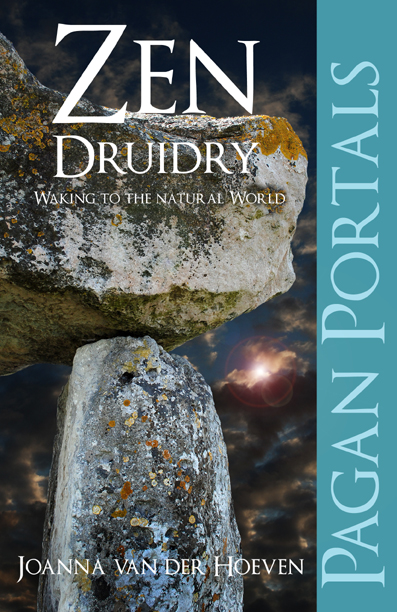
I’d like to take this opportunity to thank you all for your kind words on my new book, Zen Druidry, and for SEVEN 5 star reviews on Amazon!  Big love to the community out there. Many, many blessings to you all. x

http://www.amazon.co.uk/product-reviews/1780993900/ref=cm_cr_dp_see_all_btm?ie=UTF8&showViewpoints=1&sortBy=bySubmissionDateDescending

zen druidry low res