A Most Excellent Book by Thich Naht Hanh

“Promise me, promise me this day, promise me now, while the sun is overhead exactly at the zenith, promise me: … Even as they strike you down with a mountain of hatred and violence; even as they step on you and crush you like a worm, even as they dismember and   disembowel you, remember, brother, remember: man is not your enemy.
The only thing worthy of you is compassion – invincible, limitless, unconditional.   Hatred will never let you face the beast in man.
One day, when you face this beast alone, with your courage intact, your eyes kind, untroubled (even as no one sees them), out of your smile will bloom a flower.
And those who love you will behold you across ten thousand worlds of birth and dying.
Alone again, I will go on with bent head, knowing that love has become eternal.
On the long, rough road, the sun and the moon will continue to shine.”
~Thich Nhat Hanh
Here is an article and book promotion of Thich Naht Hanh’s view on understanding our enemy, and working towards love and peace. http://mettarefuge.wordpress.com/2010/08/06/thich-nhat-hanh-can-we-understand-the-suffering-of-our-enemy/
Peace out. x

Paperback edition of new book now available!

Paperback version of my new book is out today – ebook will be ready soon! A big thank you to the Druid, Buddhist and Pagan community, who continually inspire me – may we be the awen!  http://www.amazon.co.uk/Pagan-Portals-Druidry-Natural-Awareness/dp/1780993900/ref=sr_1_1?s=books&ie=UTF8&qid=1365503883&sr=1-1&keywords=zen+druidry

BOOK

Some lovely reviews of my latest book, Zen Druidry!

“This is a fascinating book that lays out the core concepts of both Zen and Druidry, exploring the points of overlap and the ways in which these two traditions compliment each other. The writing is precise, lucid and beautifully accessible whilst managing to put across a vast amount of information in a very small space. I would say that even if you aren’t attracted to the idea of Zen, this book is still well worth your time, because of what it shows through the contrast between the two traditions. Joanna draws attention to the importance of being as present in the moment as we can be, and as open to life as possible. That’s an issue for Druids of all flavours to consider. Druidry is very much about here and now, and what we do from moment to moment, after all.

If you’ve been attracted to both traditions all along, this is, quite simply, the book you have been waiting for.” –  Nimue Brown, author of Druidry and the Ancestors and also Druidry and Meditation


“Back in the distant past when I was taking early steps along the Druid path, I was also studying Eastern ways – Buddhism, Daoism, Confucianism, Brahmanism, and the like. I stayed on the Druid path and became Druid because I better understood the imagery and symbolism which allowed me to better shape my own metaphysical stance. But I have never ceased to be a student of those other ways.

It was a pleasant surprise, therefore, to pick up this little book which outlines both Zen (a school of Mahayana Buddhism that developed in China during the 6th century) and Druidry (the modern name given to a spiritual path developed from that overseen by ancestral Druids) and shows how they can work together. It is a little book, so you might not expect too much of it. You will, however, be pleasantly surprised. It manages to pack a lot into its 74 pages, largely because it is written without fuss or pretensions – indeed, very much in keeping with the subject matter. That alone speaks to me about how valuable this little book is. The author not only knows her subject inside out, she clearly practises what she preaches.

I found the application of the Buddhist Eightfold Path to the eight annual festivals of the Druid way to be of particular interest. Meditation is important to Zen and I have long felt that following the ritual year is a form of extended meditation. And here we have an extra layer to contemplate, integrate, and practice as the seasons revolve.

The greatest connection between Zen and Druidry (for me, at least) lies in mindfulness. It is, perhaps, an attribute common to all spiritual paths, but it is of especial interest to those who recognise their rootedness in this world, who recognise that the worlds of spirit and matter are as integrated as everything else. From the extempore prayers said by Celtic peoples over everyday tasks and events, words that spring from an awareness of working in the now, to the formal ritual built up around significant events in the life of the planet, the individual, the family, and the community, a Druid needs to be mindful. But it goes well beyond word into every aspect of our being – our thoughts, our dreams, and our every action. All this is simply and powerfully highlighted by this book.

So what we have is an engaging and thoughtful introduction to a pertinent fusion of ideas. A book which beautifully illustrates that when you strip away the fluff, the images, and the symbols there is very little that is different between the paths. And whilst it is something you could read at a single sitting (as I did), it is worth revisiting on a regular basis so as to be able to return to that clear and simple vision on which it is based. A book I would willingly recommend to anyone.”  – Graeme K Talboys, author of The Druid Way Made Easy, The Path Through the Forest: A Druid Guidebook and Arianrhod’s Dance: A Druid Ritual Handbook


“This little book gives an outline of druidry, what it is and how it works, followed by an introductory tour of Zen teachings and then shows you how to bring both ‘traditions’ together to form Zen Druidry.  Very intriguing concept, well written and interesting for anyone on a spiritual path.” Rachel Patterson, author of Kitchen Witchcraft, Grimoire of a Kitchen Witch and Hoodoo Folk Magic

Druidry and the Ten Bulls

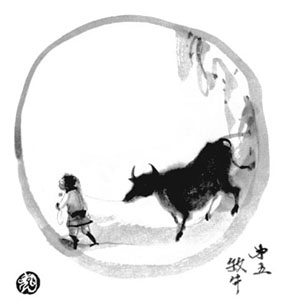
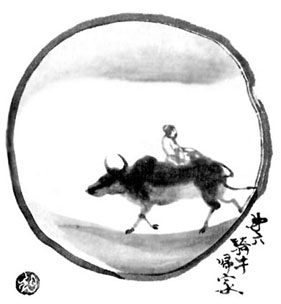
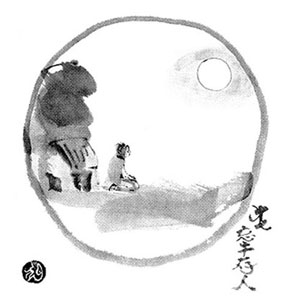
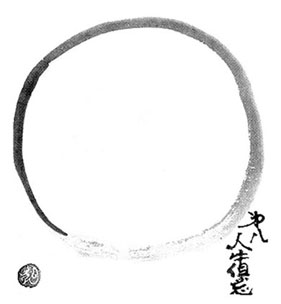
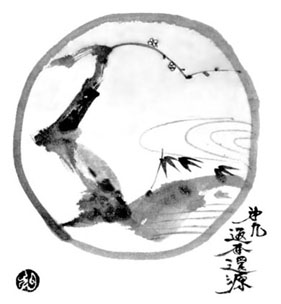
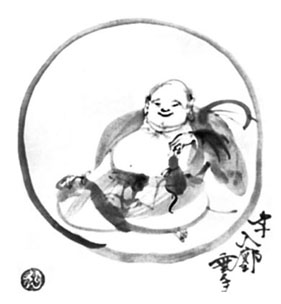
The Ten Bulls is an illustrated poem used by followers of Zen Buddhism to explain the search for enlightenment.  For me, it also represents the search for meaning in my own Druidry and indeed, in my own life in general.  It can be applied to everything, but for the purposes of this blog I’ll stick to Druidry. To see the Ten Bulls, otherwise known as the Ox-herding pictures, you can follow this link:- http://www.sanbo-zen.org/cow_e.html.

The search for enlightenment, the search for the Self and meaning is a major part of any religion or spirituality.  What will explain that sense of something missing, that lacking? What will fill it, or guide us to fill it in? What will help us to realise our full potential and live according to our True Self?

For me, this has been blending Zen with Druidry, and in the Ten Bulls can be encapsulated quite neatly.  They are, as follows:-

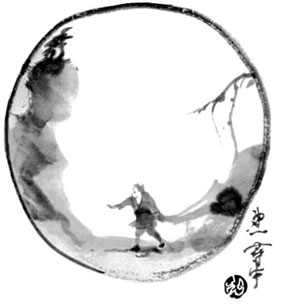
 1.In Search of the Bull

1

When we first come to Druidry, we do not really know what it means, for there are no long-established formal schools or training that we know of.  We can look to history, and then find out about courses now offered in Druidry through various organisations, but is this Druidry? It is certainly a version of it – Druidry is what it is, to each and every person. Moreover, to each and every person, it is different, yet still falls under a single banner. Confusing? Hell yeah. In a way, I think it’s meant to be. It encourages us to get out there, and find out more – beginning the adventure.


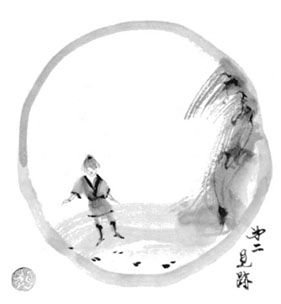
2.Discovery of the Footprints

2

We have begun our adventure, and are searching now for what Druidry is.  We catch glimpses of it in the works and writings of others, yet we still have not experienced Druidry for ourselves.  Like the wind, we can’t see it, we can only see its effect on other things.  We continue and go deeper into our Druidry to find out what it really is.


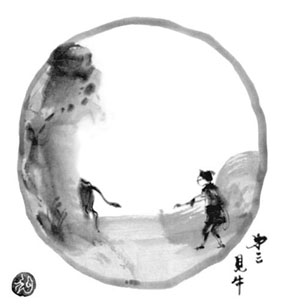
3.Perceiving the Bull

3

We’ve caught a glimpse!  We’ve had an insight into what Druidry is – we know that we’re now on the right path in our journey of self-discovery. Yet it is still not entirely clear – the experience is not yet full.  We run after the bull in the hopes of understanding.


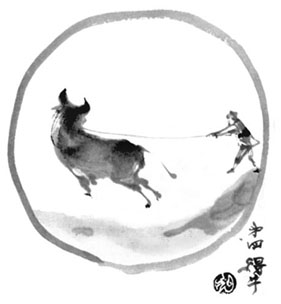
4.Catching the Bull

4

We’ve found our Druidry!  After many twists and turns, we’ve come across a path, or developed our own, that seems to flow with the essential spirit that we call the Self.  We may find several bulls, even, until we find the right bull, but eventually we come across a method, training, or experience that reflects our inner core. We harness that energy, but what do we do with it now?


 5.Taming the Bull

5

We learn that knowing what Druidry is, is simply not enough. We must practice with it, again and again, experience it and not simply read about it.  We hold rituals, we meditate, we get our fingernails dirty.  We do the work necessary, and learn discipline.


6.Riding the Bull Home

6

This is Druidry! This is what it means, and it is a joyous expression of our inner souls.  We have a sense of “coming home” – we know how to celebrate the seasons and each other, and we may find the beginnings of an inner peace hitherto unknown.


 7.The Bull Transcended

7

We then realise that Druidry is not something external, nor even internal – that it is something to be lived.  There is no separateness, no duality to Druidry – it is not a way of life, but it is life itself.  There is a stillness to it.


8.Both Bull and Self Transcended

8

We are no longer separate from the world and from Druidry either.  Druidry is us, it was always us.  We experience each and every moment with the same reverence we would to ritual – everything becomes sacred.


 9.Reaching the Source

9

We have reached the source of life itself, and find that meaning or no meaning have no place – only life itself. There is no Druidry. There is no Self. There is no separateness.  All is unified under the banner of Life, changing moment by moment, unconcerned with meaning or no meaning.


10.Return to Society

10We return to integrate what we have learned from our experiences, to share them and to help others who may be seeking.  We do what we need to do for ourselves, our family, the environment without any selfish thoughts – we simply do.  With the knowledge that we have gained that so expresses ourselves, and which is known as Druidry, we live as best we can, in the world, present, awake and aware.


Kierkegaard and the Bullies

Perfect love means to love the one through whom one became unhappy – Soren Kierkegaard

Following on from a recent blog post about forgiveness, putting into practice the habit of it is, as is everything, much easier said than done. So I’m going to share some personal things in this blog post, which I don’t often do, but which I think is necessary to give it some context, and to perhaps allow for people in their own situation to relate to it in some way.

Kierkegaard’s reflection on forgiveness inspired me today to do something which I have never been able to do.  Forgive the bullies.  Thinking about forgiveness a lot lately, I have decided that the best place to start was at the beginning, when the first people who treated me badly first made an impression on my mind and my life.

I had a really happy childhood, growing up in beautiful countryside in a very loving family.  I exceled in school – primary school was a breeze.  I was top of the class in both academia and athletics – I loved them both. I was confident and happy – it was a great time for me.  However, things changed when I went to secondary school.

The first half of the first year went well – though it was a shock moving from a Grade Six class that had five people in it to class sizes of twenty to thirty children.  The school was enormous compared to my primary school, but I adapted pretty well (and much thanks to a map my sister drew especially for me to find my classes in the many halls, which was my saviour that first month!).  I was confident and smart and making new friends under quite difficult circumstances to a very sensitive child.  And then came the bullies.

They were two years older than me, and came from the same region, so we shared the long bus journey together (an hour each way, a total of two hours a day). That was where it all started.  Name calling on the bus – for whatever reason, began the whole affair.  I assume that it was because I was tall, pretty, blond and happy – though I can never truly know the full reason behind it.  Sometimes people simply think that blowing out another person’s flame will make theirs shine all the brighter, but that just isn’t the case – everyone knows two flames are brighter than one alone.  For whatever reason, the bullying started.

Being confident, I decided to fight back.  I was smart, and could have a comeback for anything. Everyone, from television and film and books, said that if you fight back, the bullies will leave you alone.

That is not the case.

I fought back, with words, not allowing them to see that they were hurting me – throwing it back at them, and also hoping that others around me would rally to the cause and that we would all overthrow this minority of bullies who seemed to control “the bus”.

That was not the case either.

People didn’t stand up for me. But I still persevered, fighting back as best I could. Eventually it did get me down, and I started to doubt myself. But I stayed as strong as I could. They put glue in my hair. They threw food and garbage at me. They called me names. They threatened me.  They taunted me every time we passed in the hallway until I avoided all the main halls and used the back stairs, entrances and exits as much as I could. I still held fast to the belief that it was because they were jealous – I stayed strong in my convictions, but it really, really started to get me down. I dreaded going to school every day, and dreaded the bus ride there and back.  I joined after school clubs just so I wouldn’t have to take the same bus as they did home – I could take a later bus. I longed for the two days of respite that the weekend brought – Fridays after the bus dropped me off was like a whole new world of freedom to be me again.

It became so bad one day though, that I had had just about enough of it all and, with no holding back, turned around to where they had moved up in the now almost empty bus to sit directly behind me and taunt me ceaselessly.  I let it rip, verbally, with all the hate, spite , viciousness and intelligence that I possessed. Their faces were shocked, and then anger took over. One girl grabbed me by the hair and started banging my head against the bus window, over and over again.  An older boy came down from the back of the bus and pulled her off of me – I had started physically fighting back – and we were separated.  I got off the bus seconds later at my stop, adrenaline bursting along with tears as soon as the bus was out of sight – I wasn’t going to let them see me cry.  I hated myself and my life.

The next day we were, of course, called into the Principal’s Office.  After a few minutes, where I (with seething calm) stated my case and then the other girl was allowed to state hers, she simply began to cry.  I was too angry to care about why she was crying – she had made my life a living hell.  I sincerely hoped the Principal was not “duped” by her show – though on reflection I do believe that she was a truly unhappy girl in an unhappy situation, the details of which I still am not aware of to this day – only rumours.

Nothing came of it for me – but I think she may have received a three-day suspension or something similar, though the memory of that is a little fuzzy.  What I do remember is that evening she called my house, and my mother answered the phone.  The girl threatened my mother and family, and also said that she didn’t care if she got expelled from school – she could always transfer to SAA.   My mother said, “Go ahead, please do.  BECAUSE THAT’S WHERE I WORK.” We never got a phone call from her again.

The bullying eased off from then on – just some taunts and words passing in the hallway. By this point, I saw the light at the end of the tunnel – the bullies were graduating that year, and once they were gone the school “was mine” again, in the sense that I could live, learn and do as I pleased and enjoy every second of it.  They graduated, or failed – I don’t really know, but they left. Those last two years of my high school life were some of the best years of my life.

I still suffered from confidence issues – walking past a group of people laughing, I would assume they were laughing at me.  Sometimes I still do – though now I catch myself and, with a wry grin, shrug it off.  But one thing I’ve never been able to do is to forgive them for the years and years of torment that they put me through.  Well, today I decided that enough is enough.

I have carried these bullies with me for 27 years now, and I’m more than ready to put them down.  As in my previous blog post, the story of the monks and the sack of potatoes, I really don’t want to carry anger and hate to these people anymore – I’m going to empty the sack, and maybe one day lose the sack altogether so that it can never be filled with anger again.  For anger is the cause of pain and suffering in the world – it is the root behind most, if not all, sufferering and “evil”.  So, no more, thank you very much.  I forgive you, CB, KJ, WG, D and A – I don’t want to carry you around any more.  I hope that your lives are much happier now, and filled with love.  Tears are welling up in my eyes even as I write this – the release is overwhelming.  I have compassion for myself and for you.  May you live well.

And so, I aim for what Kierkegaard wrote – for love is compassion and forgiveness.  I am emptying my sack, one by one, and looking for perfect love with every person who has made me unhappy.  In this way, I believe, the world can and will be a better place.  Namaste.

No Hope

It is so hard to live life as it is, to accept life as it is.  Our mind does everything it can to avoid it, for various reasons.  In Zen, we often see the mind often trying to avoid suffering in any way it can. This could be suffering in the conventional sense, but it also has a deeper meaning – dukkha, a Sanskrit word which in Buddhism means dissatisfaction, or a sense of unease, or even dis-ease.  We are all dissatisfied with some aspect of our lives, and it is so easy to live in the “if only” reality – the world of possibility instead of the world that is. Why? It’s nice in there.

Yet, to achieve enlightenment, one of the main ways to banish dukkha from your life is to simply live in the present moment, to accept it for what it is. Neither pessimistic, nor optimistic – just life as it is.  When judgements of good or bad are seen for the illusions that they are – things that make us attach to a situation – then they simply fall away and we can truly see clearly.

Surya Das emphasizes the matter-of-fact nature of dukkha:

Buddha Dharma does not teach that everything is suffering. What Buddhism does say is that life, by its nature, is difficult, flawed, and imperfect. […] That’s the nature of life, and that’s the First Noble Truth. From the Buddhist point of view, this is not a judgement of life’s joys and sorrows; this is a simple, down-to-earth, matter-of-fact description.

This was brought home to me over 10 years ago when, after visiting her dying sister in the hospital, my mother came home and told me something that really changed her viewpoint and mine on the situation.  She said to my aunt, “But why you?” to which my aunt simply replied – “Why not me?”

This simple acceptance of life as it is, instead of railing against it, led to a life of less suffering.  I still carry those words with me today, when I think that things or life is happening “to me”, instead of just happening.  Life isn’t good or bad, it simply is. Things aren’t happening to me, things are happening.  Good and bad are judgement calls that we make to avoid living in the present moment most of the time.

Charlotte Joko Beck wrote of No Hope in her book, Everyday Zen.  This wasn’t the same as hopelessness – it simply meant not wishing for things to be other than they are, for the moment we are doing that we lose the gift of the present moment. Now, while a prisoner of war might wish not to be tortured at this very moment, most of us aren’t living in that situation.  Even as my aunt was dying, she accepted the situation. It simply was. It was stepping outside of the mind trap of living in an alternate reality where our dukkha doesn’t exist and seeing that it is a part of life that we cannot “escape” from. All the wishing in the world cannot change the world.  Only actions taken in the present moment can change the world.

So it isn’t a passive response to the world – oh, there is nothing I can do, I should live without hope.  If we are in a harmful situation, then we take action in the present moment to change it if we can. If we are being abused, mistreated, see others being hurt, we take action in the present moment to change that. We have the ability to respond – responsibility.  Life is constant change. We can also work to sustain that change for future generations. But it requires us to live with the courage to be fully present in our lives as they are.  Step outside of your head for a moment, and take a look at the world around you, without judgement, seeing things clearly.  It could change your life.

An Enlightened Druid?

Many people ask – what is enlightenment?  Oh for an easily explained answer.  The Buddha, when choosing his successor, simply held up a flower and one of his disciples was enlightened and smiled – he then became the successor.  There are many stories in Zen philosophy and spirituality about enlightenment, but none of these stories actually tell you just what it is. And nor should they – it is something to be experienced, not read or talked about.

Outiside of Japan, most Zen practioners experience enlightenment gradually, as opposed to the full smack upside the head that satori can create.  It is through meditaiton, and being completely aware that you gradually gain enlightenment.  As the ego starts to fall away, the so-called “real” self emerges.

To allow the ego to fall away, one technique is to use the “Don’t Know” mind.

“Everybody says, “I” — “I want this, I am like that…” But nobody understands this “I.” Before you were born, where did your I come from? When you die, where will your I go? If you sincerely ask, “What am I?” sooner or later you will run into a wall where all thinking is cut off. We call this “Don’t know.” Zen is keeping this “Don’t know” mind always and everywhere. When walking, standing, sitting, lying down, speaking, being silent, moving, being still. At all times, in all places, without interruption – what is this?” – taken from http://zen.buddhism.org/about-zen.html

It’s a hard thing to admit that we don’t really know anything.  And yet, any true scientiest will tell you that it is impossible to know 100% about anything – there is always margin for error.  When we embrace the fact that we don’t really know anything, whole worlds open up for us.  We can examine ourselves more deeply, and then ponder even on the notion of self if we were to take it one step further.  Enlightenment is said to strike when we realise that there is no self – that we are all part of everything else. In Zen, the term “oneness” is often used, but I don’t like the monopoly that this word invokes – instead I think of it as a “wholeness”.

When we are completely in the moment, when our chattering minds are stilled, when our sense of self falls away and there is only the now, we become enlightened.  In this state, many great things can happen – the perfect haiku is written, the archer and the target become one and the bullseye is hit without thought, the music simply flows, the painting emerges.

This reminds me of a similar term in Druidry, which is awen.  Many people now believe the Welsh word’s translation to be something akin to “flowing spirit” or “flowing inspiration”.  Is this any different to the Eastern version of enlightenment?  As Druids, we gain awen from the world around us, which inspires us to create or to be still, to act or to remain passive, to be in complete and total relationship with the world around us.  Not so different to satori, is it?  Again, to be in a perfect relationship with the world around us, we must learn not to separate the I from the It – instead viewing the world as a whole rather than as separate.  In this way, the inspiration or flowing spirit can flow freely down all channels directly into our soul and out into the wider web of the universe.

So, am I enlightened?

Don’t know.

Charlotte Joko Beck Interview

I really enjoy Charlotte’s way of looking at life.  I’ve copied an interview with her and the original can can be found here:- http://www.oxherding.com/my_weblog/2009/03/charlotte-joko-beck.html

Look up her books on amazon.  Then stop reading and just do it! x

Charlotte Joko Beck

Shambhala SunSpace recently published an interview with Charlotte Joko Beck, conducted by Donna Rockwell.

In my experience, few teachers have Beck’s willingness to jettison all the trappings and traditions of Buddhism, in order to express themselves without disguise. I hope you’ll read the entire interview, below.

Beck

How old were you when you started meditating?

Charlotte Joko Beck: Thirty-nine, forty, somewhere in there.

Did you have any realization through meditation?

No. Of course we have realizations, but that’s not really what drives practice.

Will you say more about that?

I meet all sorts of people who’ve had all sorts of experiences and they’re still confused and not doing very well in their life. Experiences are not enough. My students learn that if they have so-called experiences, I really don’t care much about hearing about them. I just tell them, “Yeah, that’s O.K. Don’t hold onto it. And how are you getting along with your mother?” Otherwise, they get stuck there. It’s not the important thing in practice.

And may I ask you what is?

Learning how to deal with one’s personal, egotistic self. That’s the work. Very, very difficult.

There seems to be a payoff, though, because you feel alive instead of dead.

I wouldn’t say a payoff. You’re returning to the source, you might say – what you always were, but which was severely covered by your core belief and all its systems. And when those get weaker, you do feel joy. I mean, then it’s no big deal to do the dishes and clean up the house and go to work and things like that.

Doing the dishes is a great meditation — especially if you hate it…

Well, if your mind wanders to other things while you’re doing the dishes, just return it to the dishes. Meditation isn’t something special. It’s not a special way of being. It’s simply being aware of what is going on.

Doesn’t sitting meditation prepare the ground to do that?

Sure. It gives you the strength to face the more complex things in your life. You’re not meeting anything much when you’re sitting except your little mind. That’s relatively easy when compared to some of the complex situations we have to live our way through. Sitting gives you the ability to work with your life.

I read your books.

Oh you read. Well, give up reading, O.K.?

Give up reading your books?

Well, they’re all right. Read them once and that’s enough. Books are useful. But some people read for fifty years, you know. And they haven’t begun their practice.

How would you describe self-discovery?

You’re really just an ongoing set of events: boom, boom, boom, boom, boom, one after the other. The awareness is keeping up with those events, seeing your life unfolding as it is, not your ideas of it, not your pictures of it. See what I mean?

How would you define meditation?

Awareness of what is, mentally, physically.

Can you please complete the following sentences for me? “The experience of meditation is…”

“…awareness of what is.”

“Meditative awareness has changed my life in the following way…”

“It has changed my life in the direction of it being more harmonious, more satisfactory, more joyful and more useful probably.”Though I don’t think much in those terms. I don’t wake up in the morning thinking I’m going to be useful. I really think about what I’m going to have for breakfast.”

“The one thing awareness has taught me that I want to share with all people is that…”

I don’t want to share anything with all people.

Who do you want to share with?

Nobody. I just live my life. I don’t go around wanting to share something. That’s extra.

Could you talk about that a little bit?

Well, there’s a little shade of piety that creeps into practice. You know, “I have this wonderful practice, I want to share it with everyone.” There’s an error in that. You could probably figure it out yourself.

I think that’s something I need to learn.

You and I know there’s nothing that’s going to make me run away faster than somebody who comes around and wants to be helpful. You know what I mean? I don’t want people to be helpful to me. I just want to live my own life.

Do you think you share yourself?

Yeah, but who’s that?

Working on excerpt from upcoming book, Zen Druidry

Hi peeps! Just to give you an idea of what I’m working on, here’s a short excerpt from one of my chapters from my new book, Zen Druidry. It’s all about combining the philosophy and spirituality of the two, where east meets west and flows into one path that leads to a life of awakening to the natural world, with full awareness. Enjoy!

Zen easily blends in with any form of religion, for it uses the gifts that you already possess, and emphasises the fact that you are perfect and perfectly who you are at this given moment in time – you can be no other.  As we saw, Zen is about living in the here and now, this very present moment, which does not exclude any higher or other powers should this be your belief system.  You could be a Zen Celtic Druid, a Zen Christian Druid, a Zen Animist Druid – the path is open to you and you only.  Each path is different.  You can make full use of the here and now and appreciate the natural world around you, its rhythms and sounds, smells and sights.  The main point is that Zen does not contradict any religions – in fact, it adds new dimensions.

While most Zen practitioners may be Buddhists, this need not restrict you to the teachings of Buddha.  If, like me, you find them beautiful and informative, feel free to incorporate them into your Druidry.  There is no monopoly on wisdom.  That wonderful saying about killing Buddha on the road when you meet him, for you are already perfect and Buddha cannot exist outside yourself, relates to Druidry on so many levels.  Each living thing is simply living, doing the best they can at that particular moment.  Realisation, perfection – it’s already there within each living thing.  Like a seed, you already carry that potential within your very self, and with the right nourishment and conditions, will blossom.

Zen, like Druidry, is in the living; in the doing.  It’s not an intellectual exercise.  We all have jobs, families, obligations. Many of us have felt a call to enrich these with devotion to causes, gods or goddesses, art.  There is nothing wrong with that – equally, there is nothing wrong with simply devoting oneself to living in the present moment with no external obligations.  It is in the doing that we create the most change in our lives, not in the thinking, or praying, or anything similar.

Let’s look at Buddha’s five noble precepts once more, and see how they relate to Druidry:-

  • The destruction of life causes suffering, so we learn compassion for all things and protect all that we can, whether it be the lives of people, plants or animals.  We refuse to kill, or to condone any acts of killing.

Many who follow the path of Druidry are vegetarian, seeing in our present day and culture no need to eat meat. The meat industry is so wasteful and so far from compassion that is abhorrent to many – any visit to a slaughterhouse will testify to this.  While there are Druids who eat meat, many of them have raised the animals themselves and can vouch for their living conditions, ensuring that there is the least amount of suffering possible.  More and more Druids have allotments, if there is not enough space in their own gardens, to grow and tend their own vegetables, and so to live with minimal impact upon our agriculture and our community.

There are also many Druids who do not condone any acts of war or violence.  Druidry acknowledges the spirit in each and every thing – though many find it harder to see that in humanity than in the natural world around us.  We close ourselves off to other humans in particular, for they appear to have much more power to hurt us than the tree at the bottom of the garden, or the grasshopper in the fields where we picnic.  By seeing that there is no “other”, that we are all related and connected, any act of violence is also done to ourselves.  Druidry is about opening to all forms of life and seeing the sacred in them all – yes, even in David Cameron or Margaret Thatcher.  We never said Druidry was easy!

  • Injustice exists in the world, and we vow to learn loving kindness so that we may work for the well-being of all, whether they be a person, a plant or an animal.  We learn the value of sharing, of helping the community, and refuse to steal or harm in any way.

We can’t escape it – the world is unfair. It is unjust.  Many people seek out justice to right this supposed wrong.  However, this justice can often be at the expense of others.  We involve other people in our “fight” for justice.  I’m not saying that we shouldn’t upset the applecart every now and then, as long as it’s our own cart and no one else’s.  What we can do instead is to cultivate the attitude of loving kindness, which in Buddhism is termed as compassion.  In Druidry, I find that the word that most fits is empathy.  Much as we find ways to relate to the bee, the ant, our grandfather, so too should we find ways to relate to everyone else in this world, whether they are being unjust towards us or not. 

This is not pacifism.  This is taking an active role in bridging that gap between “us” and “them”.  We do not even have to like them, per se – we merely have to empathise with them.  It brings a whole new world view into focus, where we are all walking towards a path that sees the relativity in all living things.  In that relativity, we will only want to do good, to help others and the community. We realise that stealing is only stealing from ourselves.  And so, while we may try to walk a mile in someone else’s shoes, therefore ending up being a mile away and with their shoes – this doesn’t quite work, though it is a funny thought!  We can’t escape injustice, we cannot escape each other.  We can only learn how to live fully with empathy for all living things.  We’ll have to give them back their shoes.  They’re our own shoes after all.

  • Sexual relationships must be treated with full respect, and we must not engage in any sexual misconduct, for this causes suffering.  We must protect ourselves and others from sexual abuse and any other sexual misconduct. 

Many within Druidry see a sexual relationship as a very sacred thing.  It is not to be misused or abused in any way.  It is also a very natural thing and a very natural human tendency to want to express our feelings for others in a sexual manner.  For us humans nowadays, sex is not about procreation so much as an expression of our feelings for one another.  As such, we must be fully aware of each other’s feelings, and not hurt each other in any form, sexual or otherwise.  It a paradigm – both sacred and mundane.

If we have cultivated an attitude of empathy, of loving kindness, then we fully allow others to choose their own sexual path that causes no suffering to each other within the relationship.  We must also protect others who are being abused by a sexual relationship – we cannot condone acts such as paedophilia.   To each their own, as long as it harms none, whether that be a same sex relationship, a polyamorous relationship, or even a life of celibacy.  We cannot discriminate towards others in this very personal sphere, so long as there is no suffering involved.

  • Speech is a powerful thing – words have power.  We must speak with attention to what we are saying, with loving kindness and working to resolve conflict.  We must also listen with full attention to what others are saying.

We live in a verbal society.  Words, whether spoken or written, have power – hence the phrase “the power of the written word”.  We attach truth to the written word in many cases.  In Druidry, we recognise the gift of speech and the power that it has.  In Zen, we have learned how we often simply react to a situation, rather than engaging fully with it.  We must think before we speak, and be mindful of what we say.  The Druids, as we have seen, were often the resolvers of conflict, and what better way than through the power of speech.  Words cause conflict as often as they resolve it, and we must work towards the latter, for there is certainly enough of the former already! 

In Druidry, we learn to listen – to the blackbirds singing at dusk, to the airplane overhead, to the bee buzzing amongst the daisies.  So too should we learn to really listen to each other, and not merely hear them.  As stated before, too often we are “listening” to someone while already forming a reply in our own heads before they have even finished speaking.  Engaging fully with the moment means fully listening when someone is speaking.

  • Seek out the middle way – unmindful consumption causes suffering.  We vow to create good physical health in ourselves and others by being mindful of what we eat, drink, and consume in our society to create the least amount of suffering.

This is a big one in Druidry – being mindful consumers.  We see too many people, especially at Christmas time, engaging in a frenzied consumer state that doesn’t really benefit anyone at all except the corporations that prey upon a newly created meaning of that particular time of year.  We become aware of who we are buying from, if we cannot make or grow it ourselves. We become aware of the practices involved in getting the product to our doorstep, every step of the way.  We learn where our water comes from, how many food miles are in our bananas, whether they are organic or not.  It is a cultivated awareness of every aspect of our life, in the same way that Zen is.

Druidry is pretty much the antithesis of being wasteful – for that is sacrilegious towards Druidry.  Every disposable, non-organic diaper being thrown into a landfill is an affront to our world and to Druidry.  It is not only the external world around us that affects our Druidry – it begins with our own physical body.  Drinking, smoking, eating, taking drugs – these all are not “forbidden” in Druidry. It is in the excess of these things that causes suffering – alcoholism, cancer and emphysema, obesity and addiction.  Seeking out a middle ground – avoiding asceticism, for that is simply the other end of the spectrum of excess – gives us the best platform to ground ourselves and live a fully integrated life. 

These five precepts are an excellent starting point for merging Zen and Druidry. Yet we should remember that in Zen and in Druidry, our lives have already started, and we must live them fully! Right now!