Rise in Druidry

There is a marked increase in the rise people who follow a Druid path and, indeed, all Pagan paths. Why should this be?

In today’s society, we can become so distanced from nature that we feel we need to do something to return to it; something that will connect us once again with the rhythms and flows of life.  However, this separation is in itself an illusion that we have created, for we can never be separate as long as we are living and breathing in this world. By mere fact of our existence, by the breath that we share with all other beings on this planet, we have a shared existence and a shared experience. We are never disconnected; we are never truly alone.

The illusion can be very convincing though.  It is supported with lifestyles and gadgets that seem to help fund the energy of the illusion.  We commute to work on a train with hundreds of people and feel lonely, as everyone is reading a paper, on their phones or listening to their music, shutting out everyone else. For some highly sensitive individuals, this is even a self-preservation technique.  We have mobile phones that can connect us with thousands of people anytime, anywhere (apparently) and yet we have very little human interaction with most of them.  We live in smaller and smaller family units where interaction with grandparents, cousins, aunts and uncles is ever decreasing for whatever reason – time, distance, etc.

Paganism and Druidy in particular can serve to address this need to reconnect, illusion or no.  It can offer us a group of like-minded people who share certain worldviews, or who like to perform ritual a certain way, or support environmental or political causes alongside their spirituality.  It may be discussion groups and forums, moots, talks, workshops, camps and retreats that we share and find inspiration in.  It is looking for that connecting thread that says we are part of a tribe.

With so many technological advances, someone might be drawn to Druidry to get away from their machines, the hum of electricity and the constant noise in an attempt to return to the natural cycles that are reflected in our environment.  Some may be called by poetry of the Romantics, or through historical references or self-actualization.  Some may be following their blood lineage of a Celtic heritage, others might feel called by the land upon which they live and use Druidry as the language with which to communicate.

For me personally, the draw to Druidry was in its simplicity. There are so many forms of Druidry, some highly ceremonial, some more ‘mud and blood’.  It is to the latter, the experiential Druidry, the simple but not simplistic view of the world and its rhythms and cycles that calls me further in.  With no need for magical spells or intricate ceremonies, no regalia or ritual items necessary, just plain and simple communion and communication with nature is what called me.  A fondness and easy way with animals and plants almost made the choice for me. Service to the land, the ancestors and the community is the key tenet of my practice, in that order.

More and more, people are choosing to follow a nature-based spirituality.  Their reasons may be legion, but love of nature is at the very heart.  For me, to be a Druid means not only a love of nature, but service to nature, to the world. We cannot take with abandon – we must give back. We must work hard to protect the things we love from our ever increasingly secular society and its rampant technological advances that do not take into consideration the impact on the rest of the world and indeed, the bigger picture. It is about seeing the sanctity and the sacredness in all things, using the language of Druidry to help us relate.

Druidry is all about the bigger picture. It is about our legacy and what we will leave to our ancestors of the future. It is learning from the past and living fully in the present, mindful of how we live and how we love. It is an ever evolving tradition that works with the talent and energy of the individual in service to the whole.

With the rise of numbers in Druidry, we need to remember this service to the world.  It is not only something for us, but something for the entire planet. We do not practice Druidry for our selves, but for the benefit of all.  This is not altruistic, merely an outcome of service to the land.  In service we grow in our selves, not the other way around. We must look deep within to find our reasons for our Druidry, taking a long hard look at our selves. We must also remember to look outside our selves to the world at large.

We practice, we work, we serve, we step back and regroup in order to practice, to work and to serve. It is a cycle that is represented in the seasons, in the life cycles of everything around us.  It is the awen. It is courage. It is Druidry.

The Sensitive Soul

Being quite sensitive, as in having senses that are very much alive, awake and aware, can leave someone shaking with overload or feelings of being overwhelmed. Working with the senses we find that it is truly a gift, not a curse.

I am a very sensitive person. Not just in the emotional sense but also in my physical senses.  I have very acute hearing (though sometimes selective, my husband says).  I am very sensitive to light levels.  I am extremely sensitive to changes in the weather, barometric pressure changes often giving me headaches or feelings of nausea. I have very delicate tastebuds – food that is barely spicy for most people sets my mouth on fire.  My sense of smell is such that it can often hinder as much as help me in my life – I find it hard to overcome any smell that I find unpleasant.  As for touch, perhaps it has to do with living with practical awareness as much as possible that allows me to really feel things – when I’m typing on the keyboard I really feel the keys, when I am driving I feel the road through the steering wheel – I have very vivid memories relating to the sense of touch.

I can easily be overwhelmed by today’s society.  Walking in the local garden centre a few months back, I had to leave as I was bombarded with visual displays in every aisle, each one making a different noise, talking about a different product, clashing with each other and taking attention away from other things. It became one big not-so-background mess of noise and sound and sight that I had to leave. I later emailed the garden centre to tell them of this – they agreed that others had complained as well.

If a thunderstorm is coming, I know it. If it will soon clear, I know it. I can feel it in my bones.  It can leave me on the bed, nauseous.  However, when it does arrive, I can also revel in the glorious energy that it brings. It needn’t always be a detriment.

When walking in the woods, the slightest sound or flicker of movement makes me aware of the presence of deer, ghosting through the trees.  My fingers touching the bark of an old friend, an old oak, I can feel the years of its growth, its songs and its stories. Listening to the waves of the North Sea lapping upon the shingle beach, I can hear the songs of my ancestors.

Like all things, I’ve simply learned to adapt my sensitivity and to avoid situations where I become overloaded.  Large cities are difficult for me, so I tend to stay away from them.  Cinemas are far too loud and so, if there a movie I must see in the cinema and cannot wait for the dvd or television release, I bring earplugs.  Similarly, I can use those earplugs when at the garden centre, though they seem to have toned down on their visual displays since I last contacted them.

I see my sensitivity as a blessing.  I can smell winter approaching. I can feel the point when the sun has set past the horizon.  I can stroke my cat’s fur in full awareness.  Work with the gifts that you are given.  Nothing is great and glorious, everything has a shadow side. Learning that the shadow is not something negative is truly freeing and enabling.

Beware the Green-Eyed Monster…

Social media can be a very good thing. It’s good at getting the word out, or for sharing ideas. It can also be a place where we can feel inadequate, where jealous feelings of other’s lives can creep into our thinking and affect how we live.

First of all we must remember that what we see online is not the 100% truth.  What people post on Facebook or Twitter or any other media or forum is not the whole enchilada. We look up someone on Facebook who doesn’t post anything negative, has beautiful photos and deep insights and feel that we are inadequate in our own lives.  What we have to remember is that this is simply a portrayal of a person and not the person themselves. To know the person, we must know them in person, spend a lot of time with them and connect, soul to soul. You can’t do that on a computer in my opinion. You can find a lot of commonalities with what you both have decided to put out there, however it is not the big picture.

Jealousy is an interesting beast.  What causes it? More often than not, it is through experiences that we have gone through that reflect upon our current and future situations.  Something may have happened to us in the past, an emotional pain that casts its pall over everything.  If we are jealous of what we perceive to be someone’s great life on the internet, what is it that is making us jealous? What is causing feelings of inadequacy, or anger, or resentment? Could it be someone in your past that you didn’t live up to, or dreams that you haven’t fulfilled, failings that have been brought to light?  Do they reflect our inner demons, perhaps of low self-esteem or external validation?

Catch yourself the next time you feel jealousy creeping in. Examine it. Why are you jealous? What is the root cause? It is not the person causing the feelings but your own inner self. Why should that be? The person is not the root of the problem – what’s happening in the mind is.  We cannot blame other people’s lives for our feelings of jealousy for they all stem from within.

Wouldn’t it feel better if we let go of these jealous feelings? What if we celebrated others’ successes instead of wallowing in inadequacy? What if we realised that others’ lives are not a reflection of our own? What if we stepped outside our narrow worldview, our egocentric perspective and honoured others for being what they are? The world does not revolve around you, so why persist in these feelings?

Letting go of jealousy is hard. It requires a lot of investigation into the darker regions of the mind but it is well worth it.  We can lead happier, more satisfying and positive lives when we are aware of the green-eyed monster and lay it to rest. So, the next time you are on Facebook and think “my life sucks compared to hers/his” remember, not only are you not seeing the bigger picture; you are also not seeing your self.

Looking inwards

“Not until we are lost do we begin to understand ourselves.” -Henry David Thoreau

As I have begun my journey into the descent of both the self and the dark half of the year, thoughts and feelings have arisen which require acknowledgement. It has often been said that those thoughts that we are unaware of, control us. Quite.

Just as we are not our jobs, our familial roles or any other singular label, so too are we not our past, nor our future. We can only be our present.  All too often I have beat myself up about what I have done in the past. After a couple of months of looking inwards and discovering these thought patterns, I have realised that I have to let go of what I thought of myself in the past.

In the past I have been selfish. In the past I have done things I am not proud of. However, that does not mean that I am selfish now, or that I will do these things again, now or in the future.  What happened does not define me in the present moment so much as inform me of how I got here. I am only the person I am now, typing up this blog post trying to make sense of the self and how it works.

It is a season for letting go and so, every time I have a thought on how I have failed, I remind myself that this was something that happened in the past and, in truth, is not who I am now. It is extremely liberating, and enables me to be the best person I can be right now, as opposed to living in destructive and judgemental behaviour about what I have done.  I can certainly be critical of things, looking at them with detachment and learning from it, however no condemnation can be made because it no longer exists.  Often in Zen we hear of teachers asking students who bring up past faults and issues “Yes, but where is this now?”  Baffled, the student cannot answer, for it does not exist in the present moment. They are memories and lessons learned. They existed in the past. They inform us of the future.

Sometimes the best thing to do is to lose that sense of self in order to be able to look inwards critically.  Putting aside the ego and simply seeing thoughts for what they are is extremely difficult. The ego jostles for attention at any possible chance, with thoughts of “I am this” or comparisons to other people, opinions on the world at large and a deep-seated fear of annihilation. When we put all these aside we are simply left with our own personal truth.

Animism Today

P1040954 (1024x768)What does it mean to be an animist in today’s world? Druid Emma Restall Orr describes animism as that which acknowledges the inherent value in all things.  This description, for me, is the best offered so far.

Many people can see animism as a throw-back to times when people were not so intelligent; the cavemen who believed in spirits imbuing inanimate objects. What I would offer is a redefinition of inanimate for, in my worldview, nothing could be inanimate.

How is this so? Well, I’m not a physicist however I’m pretty sure that everything is composed of atoms that are constantly moving (atomic theory).  Ancient philosopher Heraclitus theorised this yonks ago, claiming that everything is in a state of flux. Therefore, how could anything be inanimate? Most people, when considering the word inanimate, seem to think of things that don’t move, that aren’t “alive”.

So how does the dictionary define inanimate? There are a few: 1.not animate; lifeless. 2.spiritless; sluggish; dull. Synonyms: inorganic, vegetable, mineral; inert, dead. 2. inactive, dormant, torpid. Considering these descriptions, we must also consider the word “alive”. Oxford English dictionary describes it as 1.(of a person, animal, or plant) living, not dead; 2. continuing in existence or use.  Not very helpful, is it? Animate is something that is not lifeless, and alive is something that is not dead. So what is dead then?

I could go on.  Is the desk that my computer on dead? When did it cease to live? It is still in existence and continuing in existence and use, as the OED states something that is alive does.  The only change has been in the form of the matter. When someone dies, they change through the processes of decay, returning to the earth.  So have they truly died, or merely changed form?

If we cannot define what is alive and what is dead, what is animate and what is inanimate, then in essence everything should be treated equally.  With such loose terms we cannot and should not push aside what we do not fully comprehend.  Yet every single day millions of people do so, declaring that something is merely a tool, a resource, something to be used for their personal benefit.  The inherent value in something is in relation to its usefulness. Again, usefulness is such a broad and subjective term.

If the oceans are merely a resource, if a chicken is only a resource, then it loses its inherent value in the fact of it simply being.  We can then abuse it to our own purpose – mostly selfishness and greed.  We are able to pollute the seas because we no longer respect them. We cage hens and kill them once their usefulness in egg-production is up, or dairy cows when they have “dried up”.  They no longer have any value.

Animism honours each and every thing for what it is, whether it is bird or bee, human or cat, tree or rock, mountain or lake.  Each thing is made up of millions of other things. Each individual thing on this planet contains parts of other things.  Not only is everything inherent in its own being and value, but everything is interconnected.

Everything is made up of nothing – the essential building blocks of everything is nothing, if we go deeper in physics.  In this, we are all connected. We are all made up of things that are constantly in motion – energy always moving and creating different forms that we recognise as sibling, house, lorry.  For me, this blows my mind.

So does this mean that I need to bow down and worship the lorry that takes away our recycling?  Well, no, not really, though it’s an interesting concept.  Many pagans who also are animists have an apprehension or dislike for bowing down to anyone – but that is a separate issue. I have no problem in bowing to my gods.  We then have to define what constitutes deity. Again, I digress.

Recognising the inherent value of everything does not mean worshipping it. So, in seeing that the blackbird is energy taken form as a black-feathered bird with glorious song, I can see its inherent beauty and value.  But what of things we do not consider to be beautiful? I would posit that as beauty is so subjective, there can again be no limits on value.  Is a virus beautiful? For me personally, I think it is a remarkable thing. For someone who is dying from one, they may not see it in such a light.

Animism today is not walking around believing that the Moon is a goddess (though it may be for some, to each their own). It sees the inherent value of the moon and acknowledges it. We can honour as deity what the moon does to our planet, to ourselves. We can attach godlike qualities to these phenomena, creating a relationship with it through seeing them as archetypes.  We can lose the whole archetype consideration altogether and think of gods as things that can kill. Deity has far too many definitions and is again so subjective. It can be hard to have a relationship with something as vast as a mountain, so we create gods that we can relate to on a human level. It is difficult to have a relationship with an abstract, such as love, or anger. We relate to these as gods when we see the value of them and how they affect our lives.  The thunderstorm is simply a thunderstorm, yet it is also a wondrous coming together of energies that can change our lives forever.

In Druidry, we often hear the term “the song”. This is a poetic phrase to mean the energy and quality of a certain thing, whether it is the song of the wind through the leaves, or of the cat hunting in the backyard. It is the coming together of energies creating something that has its own inherent value simply by its matter of being. In animism, the song is what defines something as different from other things.

Through animism today, we can learn to create better relationships with the world around us. We learn of compassion and understanding, of differences and similarities.  We learn a new sense of gratitude and wonder. In my opinion, these things are not childlike or primitive, but the essential parts of being an evolved being.

This blog post is my contribution to The Animists Carnival: http://lifthrasirsuccess.wordpress.com/animist-blog-carnival/

(This month, blog Eaarth Animist is the host)

Reblog: Courage

Reblogged from my blog on SageWoman’s channel at Witches & Pagans: http://www.witchesandpagans.com

As the darkness approaches, I find myself thinking more and more about courage. What is courage? Personally, I think courage is so subjective – there is no one definition that would suit everyone. Yet I shall give it a go in any case.

The dictionary defines courage as: the quality of mind or spirit that enables a person to face difficulty, danger, pain, etc., without fear; bravery. I would posit that courage is the quality of mind/spirit that enables a person to face difficulties, etc in spite of fear. It is just not true that the brave know no fear – I believe that they simply get on with it. There is no such thing as a fearless person, unless that person has not the mental capacity for it, having suffered physical brain or emotional trauma.

What causes fear? For the most part, fear is the unknown. As humans, we crave constancy, security. We’re not especially fond of change, at least in great quantities. We fear what we cannot see – many are afraid of the dark. Is this an instinctual fear, based on what could attack and eat us from the shadows? I had an experience a couple of weeks ago, in my own backyard, where I went to offer some food at my altar – a large dark shadow that was not usually there made me stop in my tracks. A bear, my first thought was. Then my brain worked through the processes of logic – there are no bears in Britain. I’m not in Canada anymore. What animal would be big enough to create this? A stag? Would he attack me in this, the rutting season? No, he couldn’t get through the hedge with his rack at this time of year… After going through these thought processes (which probably took less than a second) I simply stepped forward to investigate, and found it to be a large branch from the beech tree that came down in the high winds. I smiled at the brain’s way of dealing with it and made my offering, honouring the darkness and shadows as well.

Growing up in Canada, in bear country, you are taught to be afraid of large, dark shapes at night and early morning. You stay away from them. That learned behaviour has stayed with me even though I have lived in the UK since 1998.

So, what is the great thing about learned behaviour? It can be unlearned. My fear of the dark, of the unknown, can be investigated, experienced fully. Now, of course it is healthy to have a certain instinctual fear of large shadows in the dark, just in case I find myself alone in the woods when I get back to Canada for a visit. I can’t expect my brain to make these logical leaps in time to deal with the situation of a real bear being there – my brain would rightfully tell me to leg it. However, dealing with a fear of the unknown can be unlearned.

In new situations, I don’t have to automatically feel apprehension. I don’t have to worry. I don’t have to react. I can breathe, and work with what is actually happening at the moment, rather than living in the past or fast-forwarding to the future. In the present moment, we cannot know fear – we can only fear outcomes. When we are hurt, when we are in pain or in danger, if we are thinking in the future, “when will this stop!” then we are not in the present moment – we have given over to the future. Facing the current moment of pain, of danger, requires us to be totally present. This very easy to say, not so easy to do. Still, it is worth the effort, I think.

While working on this concept, in the meantime one can learn to live with the fear, in the form of taking on the notion of courage and running with it. Face the darkness in spite of your fears – they may only be tree branches anyway. Fear is a very human emotion, one that has kept us alive for millennia.

For me, fear is a god. Fear can be crippling, fear can drown us in its depths; it can suffocate us until we know no other escape. As such, fear can kill. Yet, like most gods, only in submission to these raw flows of energy would we risk death. By working with the flows, riding the currents of fear, developing a relationship with it, we can better understand it as well as its place in our lives, and the rest of the world. In the meantime, may all your shadows only be deadwood. You’ll only find out by checking it out, at any rate…

Great Reviews for Zen Druidry!

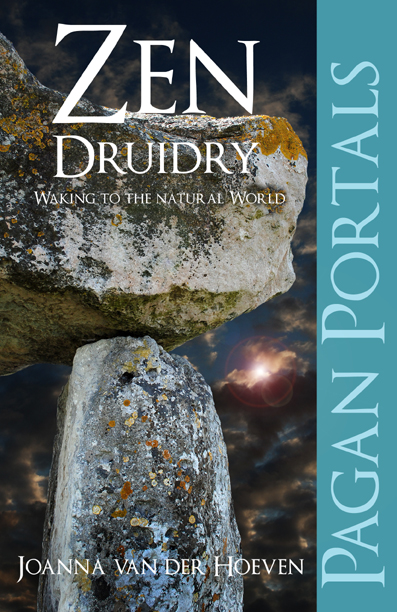
Great reviews still coming in for Zen Druidry – you can still pick up a Kindle copy for only £1.23, or a paperback version from other sellers on Amazon for only £1.03! In North America, Kindle versions are only $1.97, and paperbacks start from $3.20 – a great deal…

Zen Druidry

zen druidry low res

Darkness and Mystery

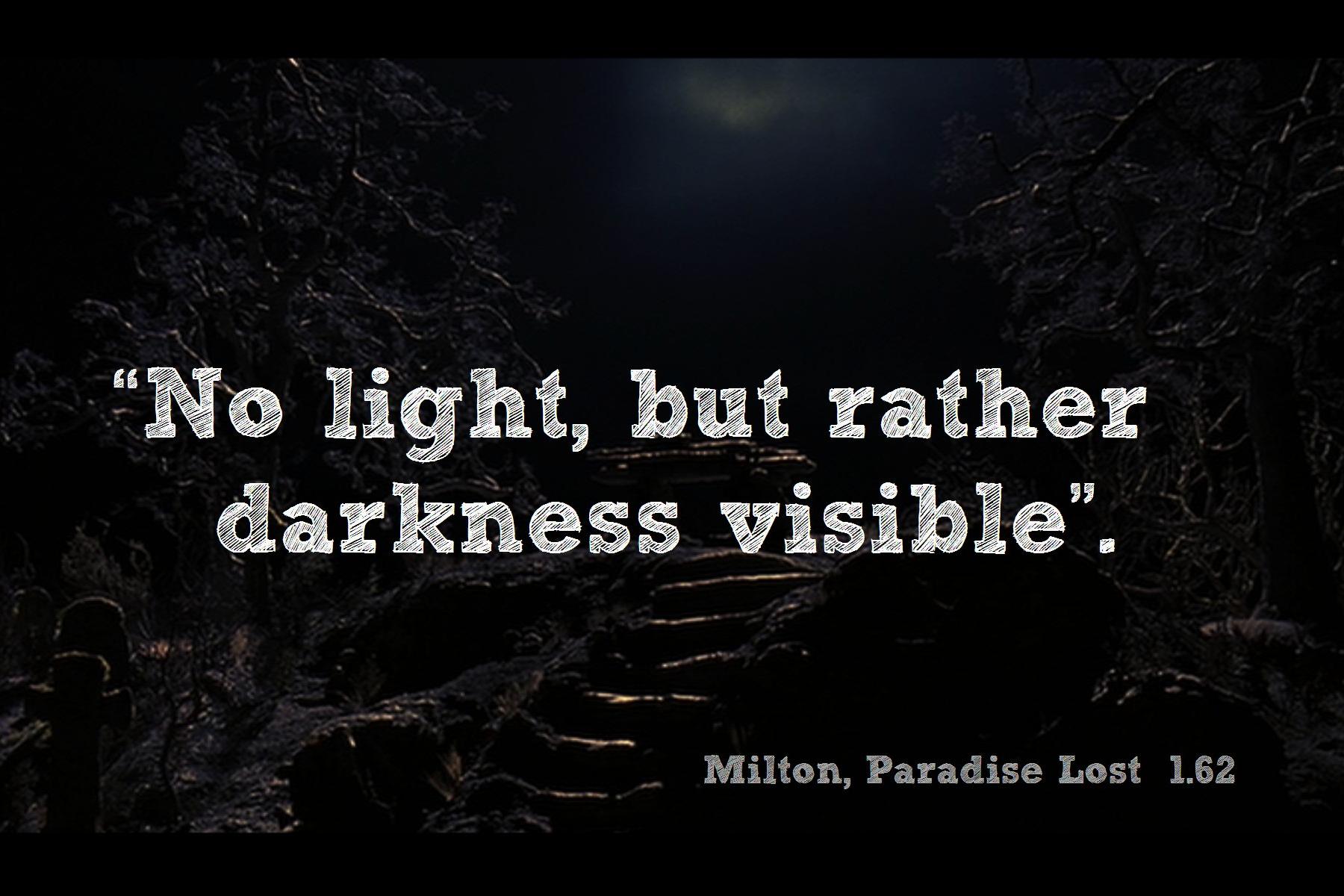
milton paradise lostThe evenings draw in closer, the darkness growing as we make our way towards the winter solstice.  It is a time for deep thought, reflection and understanding – thinking and understanding so deeply you are hardly doing it at all.  In the darkness our minds are much less distracted by visual stimulation.  We can explore the darkness both within and without, as well as the great mystery of the unknown.

In Zen Buddhism, along the Eightfold Path we learn about Right Mind.  At this time of year, I apply it when journeying ever closer towards the rebirth of the light. It is in the darkness that the mind is truly explored. It is in the darkness that the world outside is truly confronted.  It is in the darkness where we find the greatest mystery of all.

Right Mind requires an understanding of the self, in order to see that the self is really not all that important.  First we must learn about our reactions to the world – how we relate to it, what is automatic and what is intentional.  By studying our selves and studying our navels, we look deep within to see where we might be able to work on living in full awareness of our actions in our daily lives.  If we have an understanding that we instantly react to the person on the social networking site who criticises us, we can then work on that so that there isn’t attachment to it.  We learn that we don’t even have to react – that it is within our power as to how we behave.  When our co-worker in the office won’t help us even when we ask for it, we learn not to instantly react and let it ruin our day. We simply get on with the job at hand, perhaps asking for help elsewhere.

We are not owed anything. Learning this lesson can be of great value in our own spiritual awakening.  People do not have to act as we would wish them to. Not everyone has to agree with us. People will have different opinions.  We don’t have to comment, criticise or even give it second thought if we do not wish to.  Our emotions, our passions should be the spark of inspiration. They should not be the raging inferno that takes over.

By looking deep within to see how our passions and emotions play through our daily lives, we come to an understanding of them. We cannot ever develop a relationship with anything, be it person, tree, mountain or deity without first understanding them to a certain degree.  We often do not understand ourselves, to our detriment.  Why do we behave the way we do? How can we live more intentionally?

Through daily meditation we can come to a greater awareness of our selves.  Once we have attained that awareness, it is best to let it go.

You may ask – why spend all that time learning about our selves, only to let it go?

If we are constantly looking inwards, we will neglect to look outwards.  Druidry and much of modern day Paganism are at the risk of becoming too self-involved, too inwardly focused.  Five words remind me of this on a daily basis. It’s not all about you.

We can become so self-absorbed in looking at our navels that the world passes us by.  There is so much out there that we need to become aware of, just as previously there was so much inside that we needed to be aware of.  Once we have achieved a level of competency in knowing ourselves, the best thing we could do is to lose that sense of self in order to understand the bigger picture.

This dropping of the ego, this letting go is not an annihilation of the self. It is not negation. It is immersion, integration – utterly being.  It shows us the boundaries between the worlds, between us and other humans, between us as the natural environment. It also shows us that these boundaries are simply illusion. We are all just energy.

We can then begin to explore the greatest mystery of all, within the nurturing darkness – that of not knowing.  After learning to understand our selves and the world, we lose understanding as well, realising that we really do not know very much at all.  In such a vast landscape, both inner and outer, how can we truly know anything at all?  Often in Zen this is referred to as Mu, or nothing.  In the not knowing we are open to everything, our minds not being closed off.  The great mystery of not knowing is where the true potential lies.  In not knowing, we are free.

Deep within the darkness, the journey continues.

Reblog: November Skies

Here is a link to my latest blog for SageWoman at WitchesandPagans…

Nov skyThere’s just something about a November sky.

For many, November can be a month of hard coping, with the clocks changing, the nights drawing in, the colder air and wetter weather.  Yet we often miss the beauty of this month, lost in our own solipsism.  Looking around us, we see that there is so much more than our own worlds, than our own lives. As Bjork said, “nature is ancient and surprises us all”…

To read more, please go to http://witchesandpagans.com/SageWoman-Blogs/november-skies.html

Spiritually Ill

At Samhain, by sunset I was in bed, the world was spinning.  I had just gotten off the phone to cancel the evening’s ritual. I had doggedly worked through the previous two days with a headache that just wouldn’t go away, and an all over body ache that I attributed to overdoing it in yoga.  Now nausea took over; I closed my eyes and tried to sleep. This was something different.

My blood boiled and the fever took over, running for the next three days.  Then blisters began to appear, and I knew – I had chicken pox.  I had managed to elude it for 39 years, and it finally caught up with me. My immune system was already weakened from a previous virus and an unrelaxing but still enjoyable holiday.

Halfway through the night we had to get up to change the sheets.  The fire in my body was trying to be quenched with sweat. The pounding in my head was almost unbearable.  As I dragged my aching body back into bed and into the blessed darkness, I wondered how I could deal with this illness on a spiritual level.

Using meditation techniques to calm the body and ease the headache, it was pretty easy at first. But then the rash came out, and all thoughts of coping with meditation flew out the window.  The fever comes and goes, a rush of fire through the body and that is quite easy to follow along, feeling it along my body and in my bones, through my hair and rising off my body.  It’s the stillness that is difficult in these circumstances.  I thought my Zen and meditation training would help to ease this. I was wrong.

It was impossible to sit still.  It was impossible to sleep. It still is.  Lying down, you feel all the nerves reacting to the virus, sending sharp little elf shots throughout the body and into the blisters.  You twitch. Even now, the twitching doesn’t stop.  The mind is doing all it can to get away from the pain, from the discomfort. Trying to type these words and form a cohesive thought pattern is a real challenge.

So what to do? How to deal with the chicken pox virus spiritually as well as physically? I’ve found that my skin is soothed outside, by sitting in the backyard, letting the sun and the wind ease the pain.  It doesn’t last for long – when I go back inside again it returns, but I am reminded of the moments of normalcy, of nature all around me, continuing on even as the fires rage within my body.  It is a reminder that the world is bigger than you are – when we are ill, we can so easily become despondent, self-absorbed ( I know – writing a blog about this is a tad on the solipsism side, but bear with me).

I look at my cat, who has been fighting with a stomach infection for months now.  She doesn’t seem terribly bothered by it – animals deal with pain and illness, death and dying so much better than most humans. They have an innate grace when it comes to it, all things considered.  And so I take inspiration from nature to help me combat the mental and physical challenges that lie ahead this week.

I let the awen flow.

I also hit the bottle of calamine lotion, and take some white willow bark.

I feel that this is also a turning point – the Celtic New Year has begun.  My body is undergoing some serious trials right now, and I feel that at the end of this journey I will have learned something valuable.  I was not able to perform any Samhain rituals, but did light a candle for the ancestors and leave it in the front and rear windows of the home, like I do every year, to guide the dead on their journey.  A couple of days later I was able to sit in my altar room and, after trying and giving up on meditation I turned to my oldest set of cards for inspiration.  What did I need to learn from this, I asked? The card I drew was Initiation.

And so, I feel that this is telling me to stop, to slow down even, to see the new phase in my life.  To literally do nothing. To deal with pain.  To deal with suffering.  To get on and be inspired by life.  To let go of all concepts related to my looks.  To let go of all thoughts of the future. To enjoy the moment. To simply be.  There is nothing like pain to get you in the present moment, if you truly open yourself up to it.

It has showed me that even though I talk about slowing down, and not taking on so many commitments, that I need to walk the talk.  I have talked about slowing down for months now, and yet keep accepting new work, birthing new ideas and letting the awen flow.  What I need to do is to retreat, to stop for a bit, to perhaps stem the flow of awen pouring out, and focus on it pouring back in.

This illness has really highlighted that for me.  Exchange, relationship. I talk about this a lot, and yet now see how unbalanced I was in it.  And so, learning from this episode in my life, I start the new year unable to do much except sit and read, or watch the birds as the sun sets a little closer each evening.  There are books to read, sacred places to visit.  A retreat from the world in order to better engage with it – this is what the monastic tradition is all about.  It’s calling to me at the moment. Time to ponder on thoughts of the self, to chop wood and carry water.  The cool breeze from the open window beside me is so delicious on my hot and blistered skin.

Is this how to deal with illness as a Druid? Maybe – each person’s journey is different, and sacred. May yours be walked in balance and harmony, in darkness and in light with equal joy and yes, pain.