Reblog: Trees as Teachers

Here is my latest blog post for my channel Druid Heart at SageWoman on Witches and Pagans. Welcome to the greening of the land!

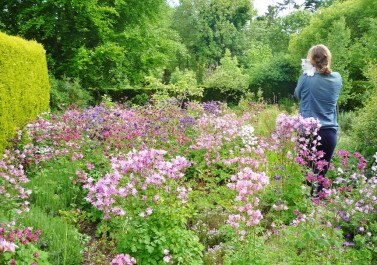
P1070665 (1024x666)The trees are almost in full leaf now, with only the ash and aspen yet to join in the greening. It’s been an odd Spring, with the oak trees in leaf before the hawthorn has come into flower here in Suffolk. Only now are the first blooms of the May tree coming out, and with it the signs that herald for me the coming season. The warm days have certainly been a blessing, and the light rain that falls today is equally welcome after long hot days of full sunshine and cool sea breezes.

It’s at this time of year that I am reminded of just how important trees are to me, not just in their life-giving properties but also in their spiritual presence. The deciduous trees with their lush foliage always bring a smile to my face, and after a long winter of sleep to see the beech tree at the bottom of my garden joining in the party that the younger birch trees have started fills my heart with joy. The grass is lush and green, and everything just feels so very much alive. I welcome the greening with all my heart and soul.

Trees are magnificent teachers. They are so much larger than we are, both spiritually and physically. They remind us of what it means to live a life in service to the whole, to live a life filled with integration and harmony, sustainable and at peace. Trees teach us of communion and integration, both at the deep root levels of our soul and reaching out towards the heavens of our soul’s awakening. They teach us of symmetry and asymmetry, of co-operation and anarchy. They are a legion of souls across this land, swaying in the wind, living their intention and benefiting all those around them by doing so. There is no sense of “I” with a tree; rather, it can instigate a better sense of “You” (or “yew”, pun intended).

When we develop a relationship with trees, we think about ourselves less, rather than think less of ourselves. We are reminded that we are a part of an ecosystem, that the ecology of our spirituality is all important to our everyday lives. This ecology is absolutely integral to who we are as a species, and part of a place and environment, as part of life on this planet. We cannot separate this ecology in any shape or form. It is in everything that we do.

We are not far removed from our cousins who still live in the trees. We’re all just monkeys with car keys, after all.

Inspiration for a Zen Druid

What drew me into Zen Buddhism was the fact that it didn’t matter who you were or where you came from when it came to learning the wisdom of the tradition. The same goes for Druidry as well. Yes, there can be an ancestral link to the tradition that you might find will perhaps deepen either practice for you personally, but you don’t have to be from a particular place in order to practice either tradition. Zen Buddhism and Druidry may have common roots in India’s Vedic tradition, which goes some way to explaining the many similarities, however one does not need to worry about cultural misappropriation when following either tradition. They welcome one and all to their path, as long as it is walked with respect.

Both Zen Buddhism and Druidry are all about what you do: not who you are or where you came from. Working with compassion, deepening the connection to nature and the world around you, there is a holistic healing of the soul that happens when this is embraced, allowing an integration that just seems to flow easier, where the awen shines and peace of mind and body are attainable. Being utterly awake to the present moment, seeing the Buddha-nature of everyone, and remembering that Buddha-nature within our souls can help us to ease the pain of separation that modern culture and society seem to promote in a theology/philosophy of duality. When we realise that we are part of an ecosystem, systems within systems, we work better, understanding our part and working for the benefit of the whole rather than the self. It promotes a thinking where one doesn’t think less of the self, but rather thinks of the self, less.

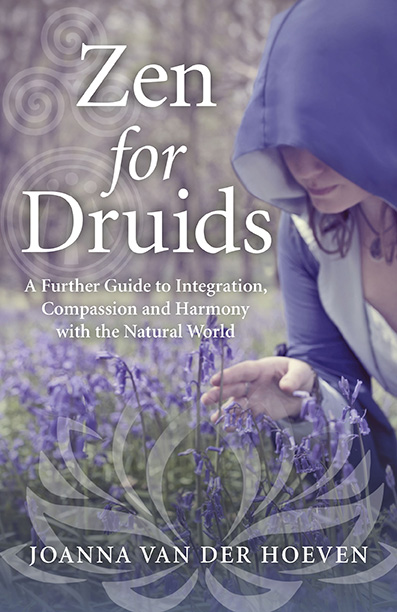
The magic and wonder of Druidry and the natural world, and the philosophy and practice of Zen Buddhism have allowed me a deep sense of peace and wakefulness to the world. They complement each other beautifully, each tradition having its own wisdom that is there for everyone to discover. If you’d like to learn more about either tradition, I’ve put together a reading list below from my upcoming book, Zen for Druids: A Further Guide to Integration, Compassion and Harmony with Nature. These are the tools that helped me on my journey (with some of my previously written books thrown in there too), and I hope that should they be of interest, you might also find them of some benefit as well.

Blessings on your journey, wherever your path may take you!

Bibliography and Suggested Reading

Adamson, E. & McClain, G. (2001) The Complete Idiot’s Guide to Zen Living: Alpha

Allen, R. (2002) Zen Questions London: MQ Publications Limited

Beck, C.J. (1997) Everyday Zen London: Thorsons

Beck, C. J. (1995) Nothing Special: Living Zen New York: Harper Collins

Carr-Gomm, P. (2002) Druid Mysteries: Ancient Wisdom for the 21st Century: Rider

Hanh, T.N. (2001) Anger: Buddhist Wisdom for Cooling the Flames: Rider

Hanh, T.N. (2012) Making Space: Creating a Home Meditation Practice: Parallax Press

Hanh, T.N. (2015) No Mud, No Lotus: The Art of Transforming Suffering: Parallax Press

Hanh, T.N. (2008) The Miracle of Mindfulness: Rider, Classic Ed Edition

Hanh, T. N. (1993) Interbeing: Fourteen Guidelines for Engaged Buddhism: Parallax Press

Hutton, R. (2011) Blood and Mistletoe: The History of the Druids in Britain: Yale University Press

Kirkey, J. (2009) The Salmon in the Spring: The Ecology of Celtic Spirituality: Hiraeth Press

Lama, D. (2005) Essence of the Heart Sutra: The Dalai Lama’s Heart of Wisdom Teachings: Wisdom Publications, U.S.

MacEowan, F. H. (2002) The Mist-filled Path: Celtic Wisdom for Exiles, Wanderers and Seekers: New World Libray

Matthews, C. (2004) Celtic Devotional: Daily Prayers and Blessings: Gill & Macmillan Ltd

Talboys, G. (2002) Way of the Druid: Rebirth of an Ancient Religion: O Books

Tzu, L. (2002) The Complete Works of Lao Tzu: Translation and Elucidation by Hua-Ching Ni: Sevenstar Communications U.S.

Restall Orr, E. (2004) Living Druidry: Magical Spirituality for the Wild Soul London: Piatkus Books Ltd

Restall Orr, E. (2007) Living With Honour: A Pagan Ethics O Books

Restall Orr, E. (2000) Ritual: A Guide to Life, Love & Inspiration London: Thorsons

Restall Orr, E. (2012) The Wakeful World: Animism, Mind and the Self in Nature: Moon Books

van der Hoeven, J. (2014) The Awen Alone: Walking the Path of the Solitary Druid: Moon Books

van der Hoeven, J. (2013) Zen Druidry: Living a Natural Life in Full Awareness: Moon Books


Internet Resources

Order of Interbeing http://www.orderofinterbeing.org

The British Druid Order http://www.druidry.co.uk

The Druid Network http://www.druidnetwork.org

The Order of Bards, Ovates and Druids http://www.druidry.org

Zen Buddhism http://www.sacred-texts.com/bud/zen/index.htm

Zen Guide http://www.zenguide.com

Zen for Druids…

Production is underway, will have a release date shortly! Stay tuned…

Zen for Druids front cover.jpg

What is the Awen? (Video Blog)

Fire in the Head

Well, the manuscript has been handed in for my next book, Zen for Druids: A Further Guide to Integration, Compassion and Harmony with Nature. I’ve just come back from a fabulous weekend of teaching at Druid College. It’s been a busy few weeks, to say the least! Everything is coming together, after the nourishing rains and sunlight, both in the inner worlds and the outer. The bluebells are out in full force, the awen is flowing and the sunlight every growing. Beltane is near.

These past few years I have learned so much about my local environment, having moved from the city to the country back in 2010. Being a country girl at heart, it was like a huge sigh of relief, getting away from the concrete and out into the sweet-smelling air of the rural countryside. I have explored the ancestors of place, finding ancient Celtic settlements, henges and tumuli. I have also discovered that my ancestry, with regards to ethnicity through DNA testing, is 56% British (“native” British people are usually 60%), which was a shock as I had pretty much thought all my ancestry would be Western European, seeing as I could trace my family history back to the Netherlands for at least 250 years. Does this give me a deeper sense of belonging to this land? It does, and it doesn’t. I feel less like a visitor, but then again I have been living here in the UK for nearly twenty years. When does someone become native? Is it justified by a length of time, by ancestry?

For me, I think it comes down to relationship. If I have soul-deep relationship with the land, if I am connected to it on every level, then I am home.

Where I live there are the songs of Celts and Saxons, Normans and Friesians. But it is the songs of the Celts that I find harmony with more than most, and being able to connect to these ancestors through blood, place and tradition brings an even deeper level of understanding to my being. I love living in Boudica country. I love learning more and more about the history, the theology. These have always got my fires burning, all throughout my schooling years as a child into adulthood. Now they feel a bit more solidified, a bit more a part of me than someone else’s stories.

Our teaching at Druid College combines the history and theology of both ancient Celtic and modern-day Druidry. I am blessed to have a co-tutor who is, in my eyes, the leading authority in this area (and many other world religions): Robin Herne. I feel that together we have created something that is truly special, truly unique. I have the most amazing students this year, our inaugural year, who inspire me in a beautiful cycle of awen and creativity.

Everything feels like it is coming together in wonderful synchronicity, in beautiful symbiosis. Flowing with the currents of awen, walking with honour and responsibility, ever inspired by the wonder of existence I simply cannot take anything for granted. The fires of Beltane will soon be lit. The fire in the head simply will not quit.

And so this Beltane I hope to travel out to the local ancient sacred spaces, to spend the night with the ancestors, lighting a fire and sleeping out under the stars, walking between this world and the Otherworld. The fire in my head will not allow me to do otherwise, it seems. The fire in the belly keeps me stoked. The fire in the cauldron brings potential and awen.

And if I’m not back in a hundred years, you’ll know where to find me!

The Song of Wandering Aengus

By William Butler Yeats

I went out to the hazel wood,
Because a fire was in my head,
And cut and peeled a hazel wand,
And hooked a berry to a thread;
And when white moths were on the wing,
And moth-like stars were flickering out,
I dropped the berry in a stream
And caught a little silver trout.
When I had laid it on the floor
I went to blow the fire a-flame,
But something rustled on the floor,
And someone called me by my name:
It had become a glimmering girl
With apple blossom in her hair
Who called me by my name and ran
And faded through the brightening air.
Though I am old with wandering
Through hollow lands and hilly lands,
I will find out where she has gone,
And kiss her lips and take her hands;
And walk among long dappled grass,
And pluck till time and times are done,
The silver apples of the moon,
The golden apples of the sun.


Excerpt from my upcoming book, Zen for Druids

This is an extract from my upcoming book, Zen for Druids: A Further Guide to Integration, Compassion and Harmony with Nature. It is the follow-up to my introductory book, Zen Druidry, which is part of the Pagan Portals series with Moon Books.  This book delves deeper into incorporating Zen philosophy into a Druid tradition, allowing us to find deep integration with nature, flowing along the currents of inspiration, of awen.

Chapter One

The Three Treasures

The Three Treasures (sometimes called The Three Jewels) are what all Buddhists can take refuge in, in order to alleviate suffering. They are:

  1. That everyone has a Buddha nature: taking refuge in the Buddha
  2. The dharma reflects ultimate truth: taking refuge in the dharma
  3. There is a community (known as sangha in Buddhism): taking refuge in the community

In today’s society, we often take refuge in that which causes us harm: drugs; alcohol; high fat foods and so on. We take refuge in violent or mind-numbing television shows. We may even take refuge in abusive relationships. All of these do not help to alleviate suffering, but only increase suffering. We need to re-evaluate what it is that we take refuge in. Let us look at the Three Treasures that Buddhists take refuge in, and see how they are reflected in modern Druidry.

Taking refuge in the Buddha: Everyone has a Buddha nature – In this teaching, we see that everyone has the essence of the Buddha within them. This means that everyone can achieve enlightenment. When we recognise the Buddha nature of a stranger, for example, our behaviour and attitude towards them will shift. We will act with more compassion, because we see that which is in ourselves, our own Buddha nature, is also within them. Within Druidry, as mentioned above, the sanctity of all nature is at the heart of its teachings. There is no hierarchy within Druidry; we are aware that we are a part of an ecosystem, part of a planet, part of the universe and part of the whole. Through the wonders of science, we know that we contain star stuff within our blood and bones. When we realise that we are made up of so many different elements, non-human elements, we are able to recognise the greater pattern that makes up life, and our part within it as a strand of the web of creation. We have rivers and oceans within us, for we drink water every day. We have the sun within us, in the food that we eat, the light upon our skin. We realise that the illusion of separation is just that: an illusion. When the boundaries of this illusory divide fall away, we can become fully integrated into the world around us. There is no human and nature, there is only nature.

There is a Zen story that states: “If you see Buddha on the road, kill him!” This means that anything that we conceive as being external to ourselves is only an illusion, for the Buddha is within. The Buddha is our potential to live our lives in our own perfect truth, awake and aware to life all around us, fully participating in life rather than being passengers on the journey. By recognising our own Buddha nature, we see it in others. The sanctity of life and all creation directs us to live our lives accordingly.

Buddha was/is a great teacher. He exists today as he existed thousands of years ago. He is an inspiration to all who honour the Buddhist tradition. In the Buddha we are inspired to great healing, great peace. We can honour our teachers from all traditions that speak to our soul. In Druidry, we work with the ancestors: ancestors of blood, ancestors of place and ancestors of tradition. Buddha can be a great ancestor of tradition – so can the Dalai Lama, or Zen Buddhist monk and activist Thich Nhat Hanh just as much as Taliesen, Boudicca or modern-day writers and Druids such as Emma Restall Orr or Phillip Carr-Gomm.

Taking refuge in the dharma: The dharma reflects ultimate truth – Truth is a tricky word in modern-day society. Yet it is central to both Buddhist and Druid teachings. In Buddhism, we drop the illusion of separateness; we step beyond suffering created by duality and merge into our own truth. Within modern Druidry, there is a saying: “The truth against the world”. The truth is our own self, our true self, without the conditions and restrictions placed upon it by the ego and others. This self works in the world to create peace and harmony, for it is at peace and harmony. The world is that which tries to impose illusions of duality or conditions of existence upon us. We are told that we need this or that in order to be happy. We are told what to eat, wear, what car to drive. We are told that we are superior to others, human and non-human. We often believe that we will be happy in the future, as we set a condition upon our lives for our own happiness. When we drop these conditions and really pay attention to life, we find out what we really need in order to have peace and happiness. When we follow our own nature and listen to the truth within, we are able to find our place in the world. We are better able to hear our own soul’s truth, and that is the truth against the world. We find wisdom in the teachings, in the dharma, and we know that through experience of the teachings we can understand the truth for ourselves. Within Zen Druidry we realise that there is no monopoly on wisdom. By combining the teachings of both Druidry and Zen Buddhism each are complemented and enhanced.

Taking refuge in the dharma, we recognise for ourselves that the real cause of suffering stems from within, as does the real cause of joy and peace. Taking refuge in the teachings of Druidry, we learn about integration with the world, and how to live our lives as a reflection of our love and devotion to the natural world around us. Both lead us to living lives fully awake and aware, lives that are filled with responsibility towards everything that exists on our planet. It guides us to live in harmony and in peace, mindful of sustainability and honour.

Taking refuge in the community: There is a community – In Buddhism, the community (known as the sangha) is there for one to take refuge in, providing support through shared ideals and goals. They are fellow Buddhists, people you meditate with, perhaps even a monastic community. They are like-minded people, on the path to enlightenment, trying to ease suffering. They are people who can help you on the path, and people that may come to you for help.

This community has been taken further in modern Buddhism to incorporate the planet, seeing and knowing that the earth is our home, our community, and therefore we must take better care of it. Within Druidry, the community is our environment. Not just the land upon which we live, but our homes, our workplaces, the Druid community: everything that we are working with in the world. Druidry knows that life is all inter-connected, that we are all parts of a whole. Ecosystems function because everything knows its place in the wider context, fulfilling its role (living its truth) and thereby contributing to the benefit of the whole. We support the community and the community supports us. We can take refuge in this community, knowing on the most basic level that we are all in this together. It engenders a deep respect for the community, for the whole.

There is a Druid community throughout the world, as there is a Buddhist community. It may be difficult to find other Druids in your particular area, however, there are groups and groves, festivals and camps, Orders and organisations you can join in order to connect with other people following the Druid path, to find support in a community, or to support others within the community in a Druid context. Druidry also recognises the community as a whole, on this little rock we call planet Earth, hurtling through time and space.


Questions

  1. What is it that you currently take refuge in? Does it cause further suffering? If so, what can you do to change?
  2. Think about the concept of everyone having a Buddha nature, or seeing the sacredness of all things. In Druidry and in Animism there is no division, no one thing being holier or more sacred than another. Everything is simply a part of an ecosystem, part of a whole. Where do you place any dividing line within your own life? Is a grain of sand less sacred than a desert? A drop of water to a lake?
  3. What is truth? What do you feel to be your personal truth? Stripped away of ego and conditions, what would your true self feel like?

© Joanna van der Hoeven


Leaping Hare and Mind, Body Spirit

This weekend was a busy but fab weekend spent at two lovely events – the Leaping Hare Pagan Convention and the Woodbridge Mind Body Spirit Festival.

Leaping Hare was a packed day-long event on Saturday, 2 April in Colchester, Essex.  It began with Derek Starkswood’s talk Paganism in the Old Testament, which was rather enlightening. Then followed Robin Herne’s brilliant Celtic Poetry and Magic, delivered with his usual flair and wit that had the whole room engaged.  Robin also ran a Celtic Poetry workshop  and Samantha Elen Marks did her drumming workshop, which is always a high point for me each year.  We then had Oscar Kolkowski talk about Finnish mythology and poetry based on the Kalevala, looking at shamanism, magic and the art of storytelling.  Though I missed it, it was then followed by Nick Ford’s talk On the Death of the Gods.

The stalls were really good this year, with great diversity. Mike Carrington’s King of Cups stall had a busy trade, and he assured me that he had brought extra mead so as not to run out this year!  There was also a lovely soap stall that was new, by Bewitched Botanicals. Hedingham Fair were there as well, alongside a number of old and new faces trading second hand books, hand-crafted items and more.

It was a great day, made even more special by all the people that came up to me to congratulate me on my work, sharing their stories of how it has influenced their lives. I am so thankful to everyone for their continuing support, and I am humbled by the vast changes that people are able to make to their lives thanks to the sharing of inspiration. May we be the awen!

Sunday 3 April was the Woodbridge Mind Body Spirit Festival, which was a huge success thanks to the many people who pitched in when Chris Cozens, the organiser, was unable to attend due to health difficulties. He managed to come by on Saturday and was so delighted to see how everyone stepped up to the plate; it truly shows what people can do when they put their minds to it! We all wish Chris a speedy recovery.

The workshops on the Sunday were brilliant: I attended Secrets of Sound, Spelling and the Mind, which looked at words as spells: words do have power.  It was about healing your world and learning to use sound towards ‘heal-thy-living”. It was then followed by Greenstead Living Foods‘ workshop on how to turn your vegetables into probiotics to benefit the whole family, complete with demonstration. I’m now going to go through my fridge and find the old veg to prep for some yummy delights next week! Rami showed us some instruments for healing in the next workshop, and after trying a Sansula I just had to get one! After four hours spent in workshops and roaming the many stalls (including the Chakra Project, do check them out!) it was time to head home and flop on the sofa in the conservatory for a nice cup of tea and some time out.


A Valley and a Village Under Threat

This is an article that I have recently submitted to the paper, Main Street, that covers the local areas where I grew up in Quebec, Canada. If you know of anyone living in the Ste Adele area, or potential investors for this project, please make them aware of this article.

A Valley and a Village Under Threat by Joanna van der Hoeven
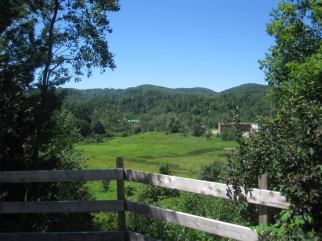
View from Linear Park Le Ptit Train du Nord

A Valley Under Threat

“You must teach your children that the ground beneath their feet is the ashes of our grandfathers. So that they will respect the land, tell your children that the Earth is rich with the lives of our kin. Teach your children what we have taught our children; that the Earth is our mother. Whatever befalls the Earth befalls the sons of the Earth. If men spit upon the ground, they spit upon themselves.  

This we know – the Earth does not belong to man – man belongs to the Earth. This we know. All things are connected like the blood which unites one family. All things are connected.  

Whatever befalls the Earth – befalls the sons of the Earth. Man did not weave the web of life – he is merely a strand in it. Whatever he does to the web, he does to himself… 

But in your perishing you will shine brightly… That destiny is a mystery to us, for we do not understand when the buffalo are slaughtered, the wild horses tamed, the secret corners of the forest heavy with scent of many men, and the view of the ripe hills blotted by talking wires. Where is the thicket? Gone. Where is the Eagle? Gone. It is the end of living and the beginning of survival.”

  • Chief Seattle, 1854


These words ring in my mind as I look out over the beautiful valley of my home where I grew up. This land has become threatened by developers who seek to flood the valley, raise a giant monstrosity of an indoor water park and recreation centre, and ring the newly created lake with large condominiums. As if this wasn’t enough, they also want to extend further up into the virgin forest, with gondola access to upper hamlets, destroying the beauty of the deciduous boreal forest that so delights the eye, especially in its autumn splendour.

Maalouf International have bought the historical Rolland Paper Mill and land that borders the North River in Ste Adele (previously the municipality of Mont Rolland). Together with an extended loan from the Ville de Sainte Adele they hope to develop the land into a great tourist attraction which they claim will create 240 million in investments, thousands of jobs and economic joy for the region. They call this project La Rolland, and the website is http://www.la-rolland.ca. They are working with M2 Leisure who are drawing up the plans for the project, which you can see along with a video of the proposed development at http://www.m2leisure.com/projects/la-rolland-green-holiday-resorts.
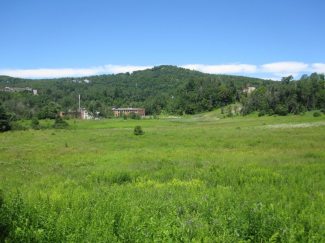
Valley in Summer 1

The Valley as it is now…

Where to start? The problems with this development are manifold. Let’s begin with the most important, in my view: the destruction of our rural countryside. La Rolland project will flood the entire valley, which currently consists of a wildflower and grass meadow adjacent to a water meadow that lies next to the North River. Flooding this land will have a devastating impact upon the flora and fauna, which includes deer, hawk, toads, mice, snakes, turkey vultures, porcupines, and skunks, not to mention the flowers, grasses and trees that will be utterly destroyed. No ecological or environmental survey of the land has been done to date, and this really needs to be addressed first and foremost in order to protect the wildlife.


Development Where Are The Houses of the Village (1024x427)

The proposed development – where has the village gone that lies above the domed buildings? There are hundreds of homes deleted from this picture…

Next we have the false economy spin. They claim that this development will generate millions for the area, but in a time of economic uncertainty, coupled with the fact that two previous water parks in the region (Cascades d’Eau and Super Splash) have gone under makes this claim seem dubious at best. The plan is to build a great waterpark and resort, with an indoor recreation centre and waterslides, as well as outdoor water activities around which accommodation will be built. There will be shops and restaurants in a “mall” adjacent to the recreation centre. This will negatively impact upon the shops and restaurants currently in the area, as they will see their tourist trade fall away as it is being centred upon a single area and the profits of which going to a single entity. What will become of all these independent traders in the actual village/town of Sainte Adele?

Also, what happens if/when the project fails (as other water parks in the area have) to the valley itself? Will the buildings lie derelict along the false lake as a testament to a poorly conceived project? Will Ville de Sainte Adele have to pay even more money just to get rid of it if/when it all goes bust? Will the destruction of a beautiful ecosystem and view from the popular linear park and residential properties all be for nothing, leaving behind the scarred and derelict remains of an outsider’s failed plan?
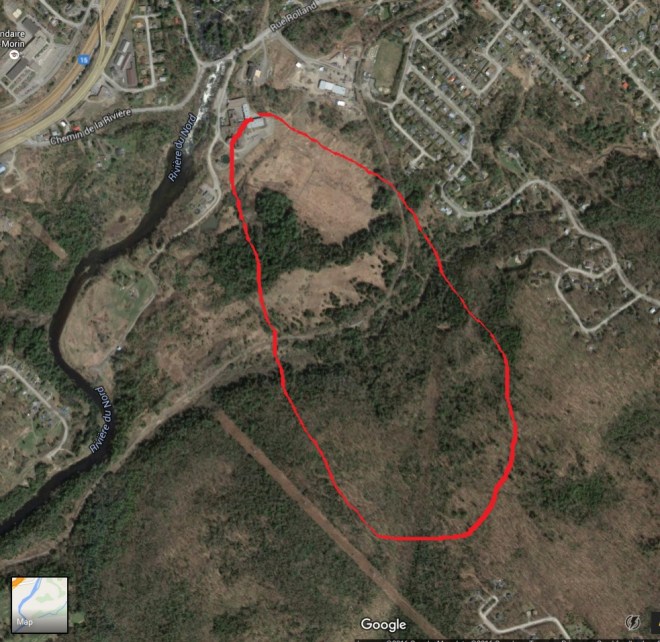
Area to be Developed

Area to be developed, showing the village right next door…

Now we move on to the residents living in the area. Overlooking the valley are the residents that live upon the plateau, namely those who live upon rue Lepine. These houses were built in the 1950’s, and residents have lived there all their lives. Their backyards open out to the beauty of the valley and the hills beyond, and if this monstrosity is built then their privacy will be seriously invaded. Also, the Municipal Garage backs onto the valley, where their piles of grit/sand for the roads in winter and the heavy machinery that moves them can be seen and heard from most of the valley. Not exactly ideal for visiting tourists, though the buzzards and deer don’t seem to mind. There is also the consideration of noise and light pollution to take into account, for the amount that will be generated by this development seriously questions M2 Leisure’s whole “green holiday resort” idea, let alone the devastation that it will have upon the local flora and fauna. Then we also have the issue of property value; when it comes to selling any of these properties that overlook the proposed development, their value will be seriously compromised because of the huge eyesore adjacent. Who will want to buy a property that has no privacy and overlooks a massive recreation centre and a small town of condos, not to mention a gondola in constant use going up and down past your house?

Finally, we have the problem of infrastructure. There just isn’t the capacity in this part of Ste Adele to accommodate the influx of traffic to the area. To get to this area, you have to cross a bridge, for the North River divides Sainte Adele into two parts (which were Sainte Adele and Mont Rolland). The main route into the sleepy little village is via the 117, at the traffic lights where rue Valiquette meets the 117. The bridge that crosses the river towards Rolland Paper is a small, one lane on either side affair that was built in the ’60’s or 70’s, and we all know what is currently happening to all these bridges in Quebec at the moment: they’re falling apart. The amount of traffic that would be crossing this bridge to get to the proposed resort would not only greatly compromise the integrity of the bridge, but create huge traffic build-ups going into and out of that district. On weekends and summer holidays, we can easily envision a queue of cars spanning the entire bridge, back into the village itself and simply creating havoc. At the moment, during peak cross-country ski season and in high summer for cycling the number of visitors for the linear park Le P’tit Train du Nord has already maxed out the road capacity. The residents who live along these roads in and out of the village will have to content with even greater noise and pollution. The roads cannot be widened to accommodate more traffic either, because of the houses built all along the roads in and out of the sleepy little village.

The second route into Rolland Paper is from the previous exit on the 117, which takes you by the back way into the area. This route has even smaller roads that cannot be widened, because it runs right along the North River. An historic old bridge spans the river here, a bridge that should, in my opinion, have a national landmark and heritage status. It is tiny bridge that many people have stood upon to admire the rushing rapids below, taking the breath away with its excitement and energy. This bridge would have to be destroyed, for it is an old and weak bridge that simply couldn’t take an increase in traffic.

These are just some of the problems involved with the destruction of a peaceful village in the Laurentian mountains. The issues raised are but the tip of the iceberg on the negative impact that this will have on the region. We need to protect our villages from such eager and ill-informed development. The package being presented to investors shows nothing of the houses that overlook the development, or the fact that it will be created right next to a historic village. The plans show nothing of the village or surrounding areas that will be affected and, in fact, the houses are replaced with trees and empty countryside in all the drawings. The people of the village have been blotted out in order to create the illusion of a remote, secluded space to develop their idea of a holiday park. The reality is, of course, very different.
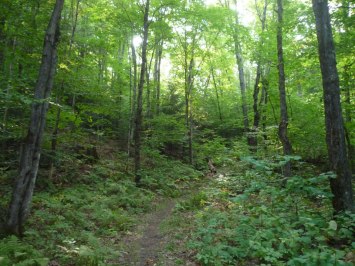
Forest on mountain 1

Forest on mountainside under threat, which has been a popular walking/snowshoeing trail for over 40 years

I, like many others who grew up in the area, spent many long hours in that valley and in those woods, letting my heart soar free in the mountains, letting my soul sing in the beauty of the valley that was my home. Even visitors to this area who travel along the linear park stop and take a moment to look upon this valley from the wonderful vantage point that the old railway track provides, admiring the beauty and knowing that this is why they have come here. This unspoilt place was my rooting ground, the place that always drew me back. I now live abroad, but visit my parents who still live on the plateau once or twice a year, as often as I can. I visit the valley that is so much a part of who I am. And so I write this article, hoping that I can instigate people to action against this development, people in the area who will be able to keep on Ville de Sainte Adele’s case, who will be able to keep abreast of any further news of the development. We need to know when the planning is submitted to Sainte Adele, and ensure that there is a town meeting where residents can express their views. We need to make local residents aware of what is going on, and to organise a committee of people dedicated to preserving the valley and the surrounding forest. We need computer-literate people who can keep abreast of notices posted online by Ville de Sainte Adele. We need to notify local environmental agencies to what is happening so that they can help assist us in protecting the area.


Earlier this month, soil samples were taken in preparation for planning submission to the town council. The sight of those people in their high-vis vests in the valley was devastating, and the reality of the proposed development really hit home. Literally. This is no project to be shrugged off, but something really serious that could utterly destroy a landscape and a village should it be allowed to go through. I hope that this article helps to start a grassroots movement against this destruction, so that the people of the region can continue to live their lives in the peace and harmony that is the wonderful Laurentian landscape. It’s hard to do more when I live thousands of miles away, and so I pass the baton over to you, to begin the fight against further development of our rural landscape and the destruction of our heritage landmarks.