Reblog: Autumn Equinox and the Serpent Energies of Albion

This is a reblog from my channel, DruidHeart at SageWoman Magazine’s section on the Witches and Pagans website.

__________________________

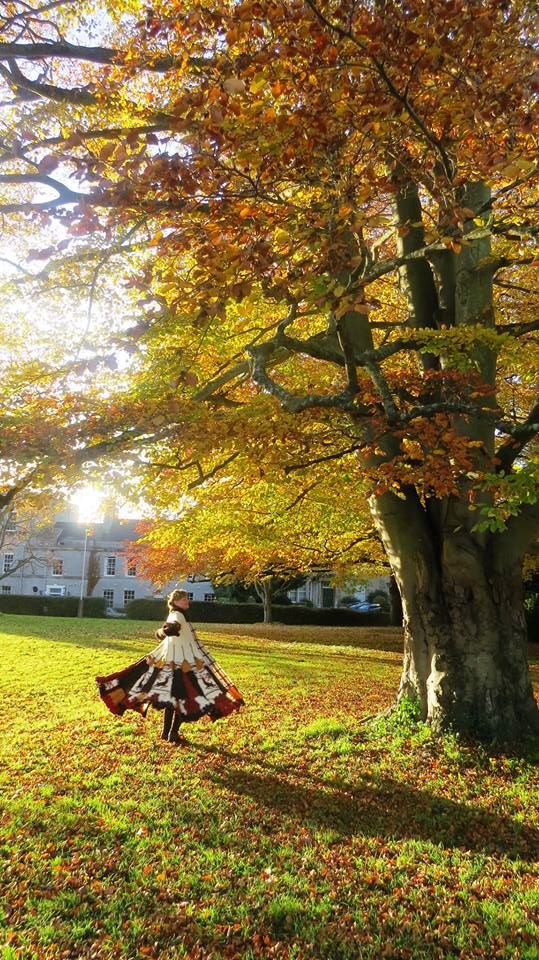
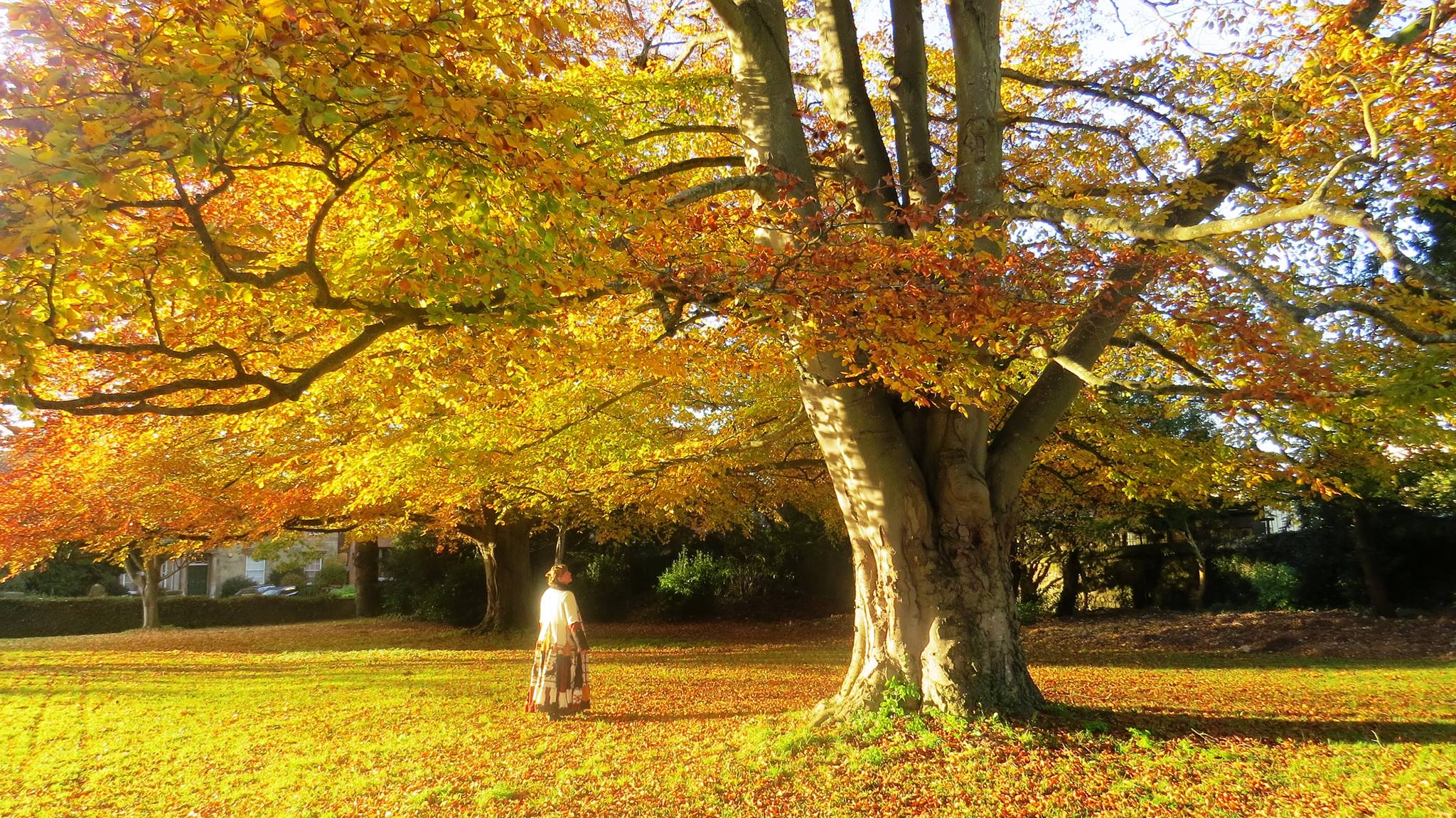
The autumn equinox is upon us today, and we stand on the knife’s edge, leaping, stumbling, tumbling or diving down into the long nights. I love this time of year, as many of you know. The scents of leaves decaying in piles on the forest floor, the brilliant colours and the crisp air fills my heart with such joy. It is a wild cacophony to the senses, one last “hurrah!” before the silence of winter descends.

 
I love the retreat back into the earth, feeling my energy sinking back into my roots. The crazy time of summer and festivals, camps, parties and revelry has passed, and now it is time of reflection. We turn ourselves inwards, away from the social gatherings and noise, and focus on our own inner selves and what we have achieved. We take stock, we sum up, we begin the journey down into the darkness where one by one our senses are lost, eventually dreaming into the winter and letting go during the peaceful rest of deep sleep.

 
During the spring months, when the earth was warming under the eye of the sun, I felt Brighde’s energy rising, a large white dragon/serpent beneath the land that connected all of Albion. Dancing in the energies of midsummer, she then slowly began her retreat back into herself, and now at the equinox I feel her pulling back into the earth, the wild ride of her energy sinking back into the soil, the serpent retreating back into the cool nourishing earth, preparing for slumber. I too feel myself riding these serpent energies, ready to dream big this winter with wonderful new plans awaiting me.

 
Brighde is ancient. She is, for me, the British Isles. She is the bones of this land. She is not a mother goddess. She does not follow cycles of maiden, mother, queen and crone. She always was and always will be. She is as young as the snowdrop and as old as the hills. She has no relation at all to the Bridget of the mixed, revealed Christian and Pagan mythos. She is not all loving, she is not a warrior queen, she is not human in any way. She is the land, in a vast and exceedingly simple but elegant way…

_______________________

To read the the full article, please click HERE.

Blessings of the Autumn Equinox!

Many blessings to you as we tumble into the darkness. May you find your roots and take comfort in the coming winter, resting in the twilight and preparing to dream. May your harvests be fruitful, and may you let go of all that is unecessary.  Joy and happiness to you all, swishing in the dry leaves and smelling woodsmoke on the wind! xoxo

Yoga, Animism and the Nature of Evil

During yoga last night, halfway through the class and moving to another pose, a loud “wham!” sounded in the room. In the middle of the class, a woman had squashed some spider or insect with her shoe on the wooden floor. “Did you get him?” the yoga teacher asked.

“Yep,” the lady replied, pleased with herself.

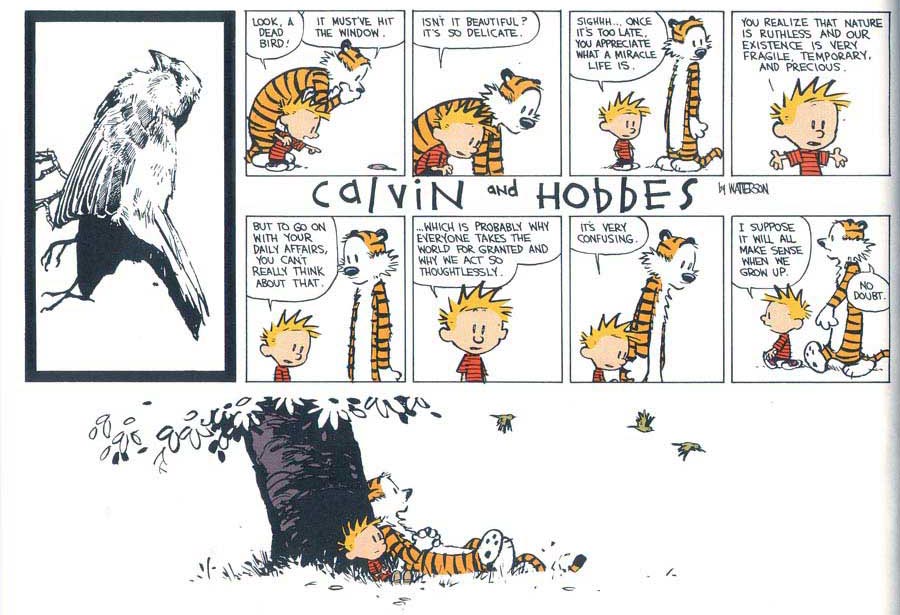
My heart fell. I was saddened, not only by the loss of life, but more by the wanton destruction of said life, as if it had no right to existence. For one such as myself, intentional killing of another animal is tantamount to murder, when it is completely unnecessary. The class carried on as if nothing happened.

I’m still thinking about it. I know that I personally could not squash a spider or bug, snail or slug, no matter how yucky they might appear to my preconceived human perception of what is beautiful and what is not. Driven since a very young age, we are told that wasps are evil, spiders are scary and snails are gross and destructive in our gardens. They all deserve to die because of these things. It is utterly absurd.

I have sat down to a meal at a pub, outside in their beer garden, where customers could request a can of insecticide to kill the wasps that came looking for food, tantalised by the sweet smell of beer. Horrified, not only by the wanton killing but by the thought of such chemicals near food, I have not been back since. The way the human mind works both disgusts and challenges me sometimes.

I’m not overly fond of worms or slugs, slimy things or creatures that live in the ocean that I cannot see beneath me when I am swimming. Big spiders are slightly frightening, only because I know that they can bite (I’ve yet to be bitten). That doesn’t mean that I seek to eradicate spiders, or all slimy things from my garden, or cull sharks when I want to swim in their waters. We really have to get over our ideas of what is good, what is beautiful and what has a right to existence, and what doesn’t. Who the hell are we to say?

I’ve been an Animist all my life. I have known on a very deep level that all things have a right to existence. This was not instilled in me by my parents, per se – it just seems an inherent part of my personal nature. I know that all things are connected on both a spiritual level and also on a scientific level. We live in ecosystems, where one part relies on another part to function. We often forget that we are part of such complex systems, or we believe we are above them. I recently wrote to my local newsletter in response to a letter to the editor asking for the eradication of ragweed near his home. He saw the dangers of the toxic plant, however he also failed to recognise the many lives are dependent on this one species of plant. For himself, he saw no benefit in this plant. He saw himself as above and more valuable to the ecosystem in which this plant existed. This is the nature of evil, in my opinion – belief that we are separate and therefore we can do as we please.

Philip Carr-Gomm has recently shared his queries and thoughts on the nature of evil in a recent social media status update. He states:

“Humans can be so unspeakably destructive – either to their fellow humans or the Earth, perhaps the ‘unthinkable’ needs to be thought – that human nature is not naturally beneficent, and evil acts therefore the result of aberration, but that it is in its essence a mixture of beneficent and maleficent, and that only some sort of training, discipline, spiritual practice, psychotherapy or education that can help us ensure our beneficence rules our head, heart and actions, rather than the reverse.

What do you think? Have you sometimes thought ‘perhaps they got it right when they came up with the idea of Original Sin’?”

The idea of Original Sin to me is abhorrent as killing things without thought. It is used to guilt people into behaving in the way that those in power think they should, to keep those in power in the status quo. This is not a criticism of Christianity as a whole, but of those who use it to further their own purposes. There is much within Christianity that is beautiful and inspiring. This abuse of power is not limited to Christianity, but can found in religions and communities all over the world.

I personally do not think that people are born evil. When I look at human beings, I see monkeys with car keys. Sadly, these monkeys have forgotten their roots, forgotten that they are just monkeys, forgotten that they are a part of the world and a part of an intricate web of existence. This is where the nature of evil occurs, the sin that divides and separates. This is where the destruction occurs, because we believe we are separate, that we are in control, that we have power over other beings.

I would argue that nothing in nature is beneficent – everything simply is what it is, neither good nor bad. The sun is not being beneficent in providing us with light and life – it is just being what it is. The clouds are not being beneficent by providing us with rain – they are just being clouds. Beneficent seems to imply a focused and intentional act of giving. While nature has its own consciousness, how intentional is it? This leads us to the ultimate question – what is the meaning of life?

For me, life has no inherent meaning – it just is. Things are alive because the appropriate conditions were available for life to be. This includes humans and all other beings. There is no master plan. It is a wonderful, beautiful, freestyle weaving of a web of life.

We are not born evil, or with evil intent. We are not born good, or with good intent. We are simply born, and the lives that we live, the circumstances of those lives and the environment that we live in all provide us with a path that we take. We have a choice to cut ourselves off from our inherent nature, of living in harmony with the rest of the world. We choose to do this for the most part out of desire for personal gain, whatever the cost to other lives and the planet as a whole. When we believe in the lie that we are separate, we can commit the worst atrocities.

We don’t even need a religion or spirituality, psychotherapy or other means to find some sort of return to harmony. We just need to wake up and shake off the lie, the belief that we are separate. We need to see things how they are, not how we think they should be. We need to see our place in the warp and weft of the tapestry of life. We need to sing in tune with all the other songs of existence. We need to remember what it is to be truly alive.

When we awaken, we also find the proverbial return to the garden. We understand life in all its forms. By living with eyes open, we walk the earth with compassion for all things.

When we return to our place in the web, the end result is deep and lasting peace.

Duty

Recently I wrote a blog post about self-governance, and mentioned that another word that we need to reclaim in Druidry and Paganism in general is “duty”.

The concept of duty can go against the grain of some the Pagans and Druids out there who feel that it compromises their expressions of freedom. Duty seems to allude to the fact that we MUST do something, and being told to do anything can make many a pagan balk. However, duty is central to my Druidry, and there are many things that I must do to maintain my focus on a path and journey of honourable relationship and discovery.

As a Pagan and Druid who seeks a deep, sustainable, meaningful and honourable relationship with the land and the world around me, the concept of giving back for all that I have received is key. That giving back is my duty, my obligation to see that sustainability is kept, otherwise the whole thing might fall apart. I see it as my duty to recycle, to reduce my consumption of material goods, to be vegan, to organise litter clear-ups, to promote environmental activism, equality and rights for both human and non-human animals. I see it as my duty to act as priest for my community, to serve them in the best way that I can, whether that is as ritualist or celebrant, author or dance director, eternal student of nature and life. All of these I see as part of my dedication to my community, my gods and my ancestors. But it goes deeper than that. That is simply the work and the life path’s that I have chosen to embark on to live in a more meaningful, inspired and honourable way.

There aren’t really words to describe the depth of my duty towards my Druidry. It is something that is lived, is felt deep within the heart and deep within the gut. It is expressed dancing in the wind and collecting wild mushrooms. It is writing letters to the local council against the proposed housing development that will eradicate delicate and endangered species. It is a dedication to learning all about where I live, from where my water comes from to how I generate my own electricity. It is about learning to run with the deer on the heath and sing with the bees in the thick clumps of heather. It is about not settling for “good enough” or resting on your laurels. It is about constantly learning, experiencing and awakening.

Duty is tied with responsibility – the ability to respond. In keeping with the previous blog’s message of self-governance, we can use this to help us respond to situations better, more efficiently and with more compassion.

Duty is described in the dictionary as something that one is expected or required to do by moral or legal obligation. Indeed, my morality dictates my duty, however, the legality side is guided by my morals (and not the other way around). It is my civic duty to report abuse, or stop when I witness a car crash, yet I would do this regardless of whether there was legal obligation. Often duty is considered as something we are “forced” to do, yet I can think of no other way to be in the world. I am not being forced by anyone do live the way I do. I choose to live my life in service and in constant awe of the power of nature.

The nature and etymology of word duty is long and complicated. From Anglo-French deute and Old French deu, it means what is owed, due, proper and just. Go back further to the Latin, and we have debitus, the past participle of debere, which means debt, or to owe something. This ties in nicely with what I stated earlier, in the giving back for all that I have received in my life. I cannot simply take and take without giving anything back. Look at what that has already done to the world.

And so, duty is not a bad word in my vocabulary. It fits in my world view of being of service. It is about sustainable and honourable relationship within the cycles of life. We are never distanced from nature or life, but ever dancing within the wheels of time and the tides of life and death, entwined in each other’s arms and lives like Celtic knotwork. There is no separation, no Other. When we realise that, we realise our duty.

Reblog: The Coolest Kids on the Playground

This is a reblog of my post, The coolest kids on the playground, for my blog channel DruidHeart at Witches and Pagans.

There is a favourite saying of mine, “You do not have to blow out someone else’s candle for yours to burn more brightly”. Sadly, it seems that in our modern society, this is the way things “work”.
Watch a political debate. It’s just tossing around attempts to besmirch the other party, rather than actually getting things done. It’s infuriating. Sound bites on the news are all about how another party is crap, and theirs is better, without actually talking about the issue at hand.
See what happens on a school playground. Those who are different, who don’t fit in with the popular kids, are usually pushed around or gossiped/rumour mongered by those who are a part of the elite popular gang. I have no idea why it happens, but it happened over thirty years ago when I was in elementary and high school, it happens now and it will happen in the future, most likely. I don’t know if kids learn this from their parents, or television, or society – all I know is that kids can be cruel.
Even in Pagan circles, people put down or condemn others for various reasons: the “newbie”, the “fluffy bunny”, the rival coven, hearth or Order. All it comes down to, basically, is this playground mentality. Some people never got out of it. Even the most intelligent, articulate person can fall back into this frame of mind, to make themselves feel better.
This is not to say that we shouldn’t look critically at others’ behaviour, and especially our own. What I am trying to say is that we do not need to belittle anyone whose path may be different from our own.
I have known some popular Pagan leaders to put down other Pagans in front of their own group. This always leaves me with a bad feeling in my mouth – it is utterly distasteful. It does a disservice to everyone involved. Even the most militant, ethically-minded person I know has failed in this regard on at least one occasion, shuddering at the thought of once belonging to another group and verbally putting them down in front of a gathering of about a dozen individuals. This shocked me, but then I realised that we are all human, and we all have failings. We can all regress to the playground.

To read the full article, click HERE

Solitude and Serenity

I spent a wonderful couple of days by myself, “glamping” in a yurt for my 40th birthday. It was heaven.

I love spending time by myself. I always have. Don’t get me wrong, I love my friends and family, but I am entirely comfortable in my own company for long periods of time. Growing up as a teenager, I didn’t have any close friends nearby – my boyfriend was about 20 miles away, and so I only saw him about every other weekend when not at school. My other school friends were over 60 miles away. After school and weekends then were spent by myself, alone in the woods or wandering the village, immersed in the songs of the place.

Turning 40 gave me the perfect excuse to hole up away from everybody for a couple of days. It was time to be entirely selfish – time to spend solely on me, on thinking about my past, present and future. Looking over the last 40 years, and thinking about where I am now, I am very hopeful and content about the future, whatever it will bring. Looking at myself from a different viewpoint as well helped to confirm my sense of self; I thought about how my family see me, my friends, my colleagues, my peers, my cats, etc. Fully grounding in my sense of self, of knowing who I was, I was then able to let that go.

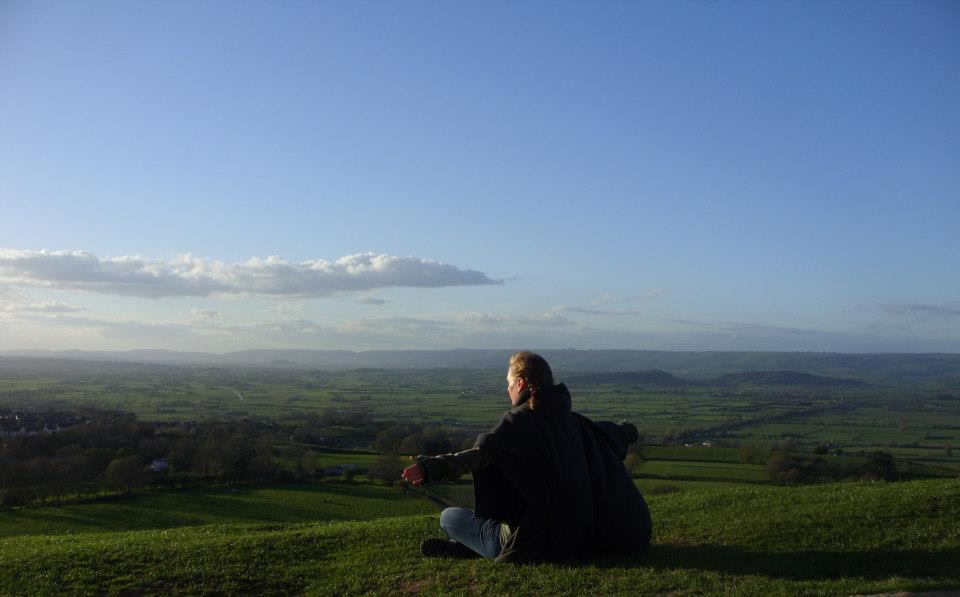
Sitting vigil at night in front of the campfire, with the stars shining brightly overhead and the fire burning merrily, I was able to let go of the past, be in the present and not worry about the future. I knew who I was, and I was able to let that go as well, to simply be in the moment with the darkness, the owls, the crickets and the night air. It was wholly freeing.

We do not spend enough time alone, in my opinion. Four days without phones, television, radio or internet was lush, with time spreading out before me in a lazy spiral. I ate when hungry and slept when tired, not matter what the time of day was. I was able to allow my thoughts to slowly dissipate in the wind, and I found myself becoming more and more a part of the landscape. I no longer thought about Facebook or the emails that awaited me. I was free.

Of course now I am back, and there are business emails to deal with, blogs to be written and thoughts to be shared with friends and family. But these moments of stillness, when utterly alone I was able to let go into the world has carried with me to an even greater extent than I thought possible.

The thought of going on social media gave me a slightly sinking feeling. I had emails and deadlines to meet. I did not want the television on. But I share my life with others, with my husband and my friends, and I cannot retreat entirely from the world. What I can do, however, is to re-prioritise how my time is spent, both with others and by myself.

The monastic life is all about retreating from the world in order to better engage with it. Time spent alone is finding solace for the soul, slowing down thoughts and finding out what really matters. Put away your phone. Get off the computer. Turn off the television and the radio and simply sit, wherever you are. Be in that space. Let that space get to know you. Go outside, alone, for hours at a time and feel yourself slowing down, thoughts receding until you are simply in the present moment, awake and aware to the world around you.

It was the greatest gift I could ever have received on my birthday.

Reblog: Nemetona and Sanctuary

This is a reblog from my post at Druid Heart, at SageWoman’s channel on Witches and Pagans.

524734_640754085941583_54399955_nSometimes one has to retreat from the world, in order to better understand it. Finding sanctuary, a sacred space where we can open our souls without fear, where we can simply be, is a glorious experience. It happens a lot less than we need in our lives, in my opinion.

A goddess of sanctuary, Nemetona is an elusive deity. Not much is written or recorded about her in Classical texts or history. Just the barest hints and place names, some tribe names and a couple of inscriptions. Who is this goddess to whom we can bare our souls, in complete soul truth, knowing that we are held?

In our modern day world, so often we feel we have to close ourselves off in order not to be overwhelmed – by people, media, technology. For sensitive souls, it sometimes is pure hell. We need to allow our soul truths to emerge, otherwise as caged birds we function behind bars, never truly spreading our wings and knowing what it means to fly. We feel we have to be careful not to be too open, too emotive, too sensitive to what people are saying or what is happening in the world around us. We are not allowed to be offended, we are not allowed to speak out without fear of being shot down a lot of the time. We are told that we shouldn’t be so sensitive. Our souls grow smaller with each experience of shutting down, never letting anyone or anything in.

That physical space around us, where we feel uncomfortable if someone we do not trust enters, is a valuable space. It is our personal nemeton, a space where our energy exists outside of our bodies. Many liken it to your aura. Some nemetons are strong and radiant, some wounded with gaping holes, others barricaded with steel. What we have to learn, or relearn, is how to open this space in love and trust – that is what Nemetona provides, often in a world wherein we feel no other human is able to provide this for us…

To read the full post, click HERE.

What Druidry Is Not…

abbeyFor me, Druidry is not a white-robed affair. Crawling under low scrub pines and getting inside secret places of gorse bushes where only the deer trod, or standing on the seashore in the howling rain, or in the heart of the forest with the badgers and mosquitos – it just doesn’t work.

Druidry is not clean. It’s not an exercise only for the mind. It requires experience to turn what you have learned into real wisdom. It’s not just book-learning. Until you get out there and commune with the landscape, it’s not felt in the soul. It cannot live in the head. It will get you dirty, wet, hot, sweating, cold, scratched, bitten. It is dirty fingernails and peering under bushes. It is a return to the curiosity and wonder of the child, yet it is not child-like. It is deep learning, deep experience.

Druidry is not a male-centred religion or spirituality, nor is it female-centric. It is about equality and egality, anarchic and subject first and foremost to the teachings of nature.

It not just about standing in stone circles waving swords and reading off of sheets of paper with a group of other people, the media and tourists alike taking photographs. It is doing work in the heart of where you live, often without thanks or regard of any kind. It is giving back to the land, honouring the cycles and working for the community – and by community, I mean each and every living thing in that area wherein you live and call home, not just human. It is not about power and ego, but about communion and deep relationship. It is about dropping ideas of the self to better fit in the landscape.

It is not about writing loads of books and offering courses, achieving kudos through output, students and media. It is about the sharing of inspiration, acknowledging the inspiration of others and allowing the awen the flow through you in whatever way you see fit. One may be a teacher, or an author, or someone with whom the media interact – but they are not a spokesperson for all Druidry, nor a guru of any sort, and have no monopoly on wisdom. There is little room in deep Druidry for ego.

There are no titles, save those bestowed either by a person on him or herself, or by a group of people following a shared path and learning. These titles are not relevant to all Druids – just to the person or the group. Claiming to be an arch-druid of so and so has no bearing on those who are outside of the group. There is no central authority in Druidry.

Druidry is not about having things – it is about doing things. It is being utterly mindful of personal and global consumerism. It is about looking at everything that you do, everything that you have, everything that you take and everything that you give back. It is not about doing the bare minimum. It is about sacrifice, of time and ignorance, of ego and of desire. It is about constant re-evaluation of ethics, values and honour. It is about constant learning.

Druidry is not about attaining levels of initiation or ordination within learning, however. Courses and instruction may guide us, may open our minds and shatter pre-conceived notions, expanding awareness – but they are not there to gratify the ego through the bestowing of grade or rank. Druidry is also not about a specific point in time, where to call oneself a Druid means to have studied for twenty-some years, learned the genealogies of kings, etc. The Druidry of the past is not the Druidry of today. The Druidry of a small frame in time within the past and from a small, specific region is most certainly not the Druidry of today. Its wisdom can guide us, but it is just one window in a mansion of many halls. The Classical Druids were the Classical Druids – we are not, nor can ever be, Classical Druids.

Druidry is not just an exploration of the self. It goes beyond the self, to a life lived in service to others.

These are just a few things of what Druidy is not.

So what is Druidry?

It is allowing the wisdom of the oak to guide you in all that you do.

Pagan Relationship

Paganism is all about relationship, and is central to my Druid path. Everything is interconnected – we simply could not exist were it not for the countless forms of other life on this planet. All life, in scientific circles, came from single-celled organisms that evolved into life as we know it; we all, everything on this planet, have a common ancestor.

Yet we are constantly bombarded by the dualistic thinking that has so plagued our species for many, many years. We often feel separated from nature, from the world, from other human beings, from our ancestors. It is often reinforced through marketing, various theologies and psychology, in most cases to ensure that there is repeat business, power and normalisation.

How many of us have come across the “food chain” concept when we were at school? Humans at the top, able to consume and control all beneath us. Whoever came up with this concept has not slept a night out in Canada, where the bears or cougars can get you, or swam in an ocean that has sharks, or paddled a river with crocodiles, or suffered from a debilitating or deadly virus. We are, most definitely, not the top of any chain whatsoever. We all become food for something, in time, whether it is before or after our physical death.

We are, however, all connected, and it is through personal relationships with place that the Pagan creates their worldview, learning from the land upon which they live, the ancestors and the gods. There is no such thing as a “thing” – we cannot look at anything (pardon the pun) in such regards. When we use the term “thing” we can often objectify it, not giving it the inherent right to existence that animism honours. Many native traditions use the term “brother”, “sister”, “grandmother” or “grandfather” when speaking of a life form that is non-human, whether it be non-human animal, the moon, the sea, a tree, the sky. In that way, relationship is acknowledged and inherent respect is created. A community is created, an ecosystem in every sense of the word. We are all descended from a few ancestors. We are all family. We have the stuff of stars in our blood and in our bodies, minerals found in distant galaxies.

As Pagans, we have to remember this in everything that we do. We have to ensure that we are not falling into the traps of dualism, marketing, secular culture. We have to see the beauty and awe in everything, and live a life that is filled with awareness of what lives and what dies, what threads connect us to the world. These threads will then shimmer with profound awen, where soul touches soul and relationship, true relationship, sacred relationship, is created.