
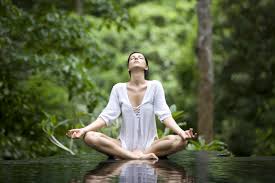
 Meditation is a very important part of my spiritual path. I remember when I was a student with Bobcat (Emma Restall Orr) back in 2007, and the amount of meditation that she suggested was the minimum we do each day – it had seemed like a lot at the time (I had only begun to delve in Zen meditation at this point). She said that we should spend more time at our altars, at least with two twenty minute sessions per day. At first it was hard to get into, but then became easier at it became part of my life, part of my daily routine.
I took the sessions to longer periods of time, two thirty minute sessions. It meant getting up earlier and finding time when I came home from work before cooking dinner, or if that wasn’t possible finding time in the evening whenever it could fit in. There was great value in spending time before my altar, sitting in silence and communing with the gods, the ancestors and the spirits of place. It is often said that prayer is talking, and meditation is listening.
Learning more and more about meditation in its various forms, I realised that it could be done anytime, anywhere really – it didn’t have to be in front of the altar in a seated position. Seated meditation is still, for me, the best form, as quieting our bodies and our minds allows us a chance to get beyond our talking selves and into a space of pure being, where in stillness we settle even as the dusk falls upon the land. Like mud being churned in a pond, if we allow it to settle things become clear.
However, meditation could be taken out of that space and into the wider world. If I was away from home, and had no altar, I could take a walk and do some walking meditation. Lying in a bath, I could meditate there, fully aware of the water against my skin, the sounds and scents. In essence, meditation is simply giving your full attention to something, whether it is a stillness of the mind, the working through of a problem, walking down the street or paying attention to your breath. Work can become meditation – washing the dishes is meditation for me, as are other house chores. They are much more pleasant that way.
Riding my bike, driving my car, paddling my canoe – all these can be meditation. With meditation, if you are doing mindfulness meditation, you are not “zoning out” so to speak – you are fully aware of everything, allowing the illusion of the self to fade away in order to hear the wider world around you. Stopping the incessant internal dialogue, we step beyond our selves, allowing us a break from our egos. The more we do this, the more we are not ruled by our egos, living a life that is not reactive but completely and fully active: lived with intention.
Meditation is not all about sitting on a cushion chanting Om. It is living with full awareness, using techniques such as seated meditation to help you begin your journey. I would always advise seated meditation first, and then take that into other aspects of your life. Pretty soon you will find that you are living with much more awareness, much more mindfully. It’s not difficult to do.
Often people say that with the raising of a family they do not have the time to meditate. What I would suggest is that raising your family becomes a meditation. Pay attention to cooking the meals, when your children are speaking, when you are reading them a bedtime story. Be fully present with them and you are meditating. Be aware of your actions and reactions and you are meditating. Be aware of your breathing and you are meditating. You can do it.
Explore the many ways you can meditate. From finding that still centre, explore journeying, guided meditation, trancework and so on, keeping coming back to the simpler forms and the still centre. It will be well worth it.


 Down the Forest Path