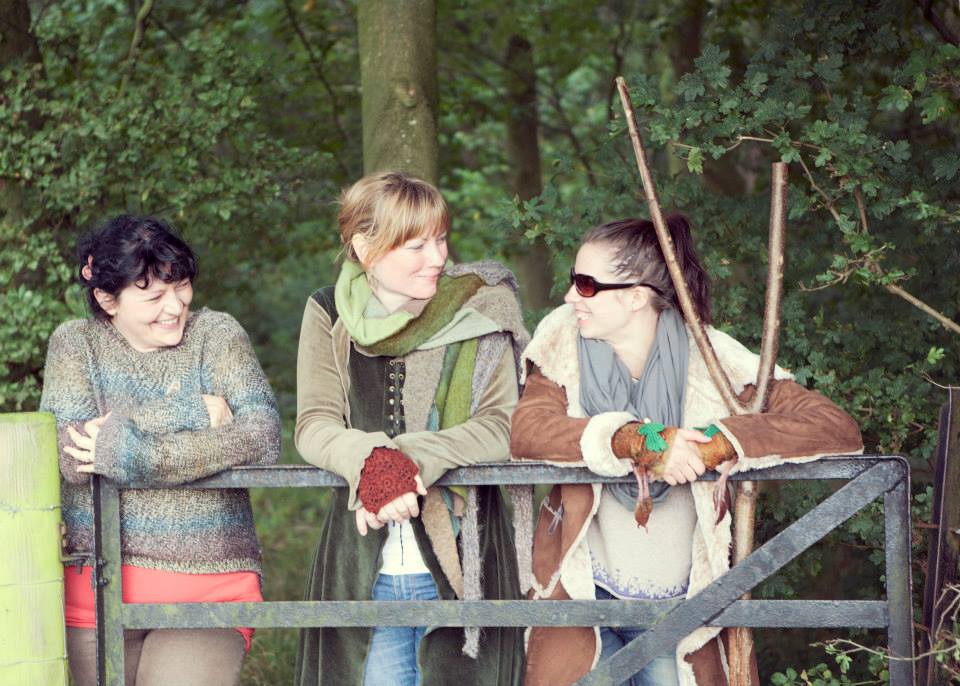
So, we attempted to change the blog name to Flowing Spirit, but couldn’t get the URL to match, so we have discarded that name. We are looking to transfer over to “Down the Forest Path” – we hope that the transfer takes all followers and subscribers smoothly, and we will also have at least a year’s worth of redirection from octopusdance to the new site name. Everything else will remain the same.
Fingers crossed, wish us luck, and hope to see you on the other side! We have no idea how long this is will, as it’s our first time, but we hope it won’t be long.
So, as you can see, we have changed the name of this blog site to ” The Flowing Spirit”, what is often referred to in Druidry as “awen”. We hope that you like the change, and that it helps to reflect the content of the blog better!
When we have a new URL we will let you know – we hope to transfer everything over smoothly.
Riding the tides of perimenopause, I find that my sense of self, ideas and concepts that I held about myself are shifting like pebbles on a shingle beach, never in the same place twice, forming new solid banks and spits jutting out into the vastness of the ocean. I live right on the coast of the North Sea, and am finding inspiration and a sense of kinship with the ocean that I have never felt before.
Swells and surges of emotion run through me as hormones find their way to the balance point in the dance of change and impermanence. My body is changing, the elasticity in my skin fading, laughter lines showing, cellulite appearing in new places. The curves in my body are becoming softer, gently changing over time. My breasts sometimes ache as my body tries to find a new way of being. Periods are nearer to each other, sometimes only two weeks apart, sometimes light, other times so heavy I cannot leave the house. Sometimes I feel like I did in my teenage years, without the skin breakouts!
It’s not only my body changing – emotions run deeper than ever before. Awareness of the emotions keeps them in check, allowing myself to truly feel them without too much attachment. They are sometimes like a knife, cutting through the dross to reveal the jewel beneath; instinct and empathy allowing me to connect with the world on a much deeper level than previously imagined.
My attachments to my body are also becoming less and less. I am ever thankful for this healthy body, that can dance and run and sing with abandon. Thoughts about how others relate to me are changing as my body changes. I notice people interacting with me differently – or is it that I am the one who is different? In our dance troupe, when we are performing, I notice that the attention is gently shifting away from myself to younger ladies in the troupe. I smile to myself as I notice this, seeing how this makes me feel. There is a tinge of sadness, as I release the undercurrents of vanity, as well as the newer notes of joy in not being wrapped up in the notions of youth that our culture is so focused upon. My heart goes out to the beautiful young dancers in our troupe, who have to deal with the extra attention. My soul connects with the beautiful older women in our troupe, whose sense of self pervades a solidity that wholly and utterly inspires me. I am seeing beauty where I never saw beauty before – it is truly remarkable.
I don’t crave attention in the same way as I used to. What others think matters a lot less than before. What does matter is how my life is lived, inspired by the world around me and walked on a path of honour and integrity. I see this reflected in the older women in my life, how comfortable they now appear. I wouldn’t want to be young again – in looks or age. I am at home in my body. Some women are blessed with this from an earlier age, others like me perhaps find it during the hormonal shift. What is important is that we find that stillness within, like a pool of water that becomes clear when all our doubts and worries about our self finally settle, allowing us to mirror the wonder of the heavens.
One beauty is not better or worth more than any other form of beauty – all forms of beauty are simply that- beautiful. Our soul takes form in our bodies, an impermanent expression of our being. Learning to love the impermanence allows us to see the beauty in all stages of life and death, growth and decay. It can allow us to be comfortable with who we are, no matter our age, what condition our bodies are in, what life throws at us.
This latest journey has just begun, and I have to say, I am loving the steps along the way. I breathe with mindfulness and take each step with love and joy even as I feel sadness and release. Life is precious, and impermanent, and in our awareness of impermanence lies our ability to truly live.
I’ve recently watched Dan Snow’s latest expedition, to travel down the Colorado River through the Grand Canyon in three boats from the late 19th century, just as Powell did. It was a really interesting show (not just because of the equally gorgeous and intelligent Mr Snow) that not only demonstrated the awesome power of the elements, but also those of human nature.
Each boat has three people in it – an experienced helmsman, an experienced boatman and a novice. The three novices were Dan, Mike (you may know him from Springwwatch) and another chap whose name eludes me – historian, ecologist and geologist respectively. They all had to work together as a team to see it through to the end – 18 days of incredible physical and mental challenge amidst one of the world’s most beautiful and dangerous environments.
Each person had to pull their own weight, despite their experience, and each person did so without fail. They all tried their hardest and it was inspiring to see. What was not so inspiring was another aspect of human nature that arose from one of the boats – namely, the blame game.
In one of the three boats, Mike was having a harder time than the other novices. Whether that was simply his lack of skill and learning, or insufficient support and teaching from his colleagues, is up for debate – we could not see everything that happened in this edited television show. What I did see however, was an aspect of human nature that really opened up my eyes not only to how other people treat each other, but how I’ve treated others in the past as well.
It started with the “expert whitewater kayaker” beginning to complain to the camera about Mike and his lack of ability. It would seem that instead of taking extra time to help the novice and support him, he would rather complain to the camera away from the group. He blamed Mike for the difficulty their boat was having in the rapids. However, what we all saw was at the first set of rapids, the kayaker falling out of his seat pretty much at the first bump. Whether this started off something in his mind that needed to help him save face, changing the focus from his own inability, mistake or accident, and blaming someone else for it we can never know for certain. It certainly appeared that way to me.
Since then, he complained on several occasions to the camera in isolation. Then his helmsman made a mistake, taking the boat down backwards in the hopes of having better steering in one section of rapids. The boat that went through before managed it. I’m not an experienced boatman, but I could see in those churning waters that the oar would snap like a twig if caught on a rock, which it did. After that, the helmsman began to complain to the camera as well about Mike, who was simply doing his best to row and keep the boat going straight and bail when he needed to – there really was nothing else he could do. At one point we saw the helmsman shout at Mike to bail, and Mike’s pail got caught up in part of the boat’s rigging – not that it would have mattered, for bailing in the middle of those rapids was, to me, pointless – the boat was already full at and the mercy of the river. Mike began bailing as fast as he could, but another wave just crashed right in. He would have been better off rowing, but he still got yelled at.
This all made me very uncomfortable. I hate seeing people getting picked on when they are trying their best. But I was also inspired by Dan’s boat, which seemed to have some sort of Zen Master at the helm. This chap was brilliant – he was so calm, so peaceful, never shouting orders and seeming at one with the river – when he took his boat down the rapids, he steered it down the path of least resistance, without effort. A beautiful thing to witness. Soft spoken and mild-mannered, and an accomplished musician, his calming influence was a gentle reminder to me to keep my Zen on and have compassion, even for those who were irritating the hell out of me on the show.
That’s not to say that the Zen Master Helmsman’s boat didn’t make any mistakes. His boat came the closest to capsizing in one of the most difficult rapids. They didn’t make the line they were going for down between the rocks, and got swept away down a fast sluice heading straight towards the canyon’s rock walls. His oar got ripped from his hands in the roiling water, and they were at the mercy of the river. The other helmsman would have shouted his head off at this point, but Zen Master Helmsman kept his cool – it was a beautiful thing to behold. He had lost his oar, all manner of steering, and the boat swept into the curve of the canyon (you can see it on the video). The boat kept to the curve, the water sweeping it close but not up against the canyon wall. Then the boat began to tip over on its right side. Dan lost his seat and fell into the right side wall, nearly out of the boat. ZMH calmly reached for the left side of the boat, push against it with his body weight, counterbalancing the tipping boat, and it righted itself. You can’t hear it on the video, but he was also calmly talking and encouraging his fellow crewman throughout, saying “Stay calm, just stay in the boat, take it easy”. They made it through, without yelling, without panic, without blame.
Everyone makes mistakes. With three people in a boat, you cannot blame one person for the boat going wrong. Everyone is in it, working together to try and go in the same direction. There are so many variables that to blame one person it pointless. Staying calm, looking out for your crew members and acting with compassion is the way forward. By observing this, the three simply followed the river’s flow. There was nothing else they could do, so why increase suffering?
Compassion is all about reducing your suffering. The two complainers in the other boat did not seem to grasp this. Instead of helping they made things worse. I hate to think what would have happened had it been their boat that nearly capsized. However, their boat did not escape unscathed of a terrifying experience.
On the next section of these last, and most dangerous rapids, Mike’s boat lost their helmsman as he was washed away in a giant wall of water that hit the boat. No one’s fault – you cannot blame crew or wave or river any more than you can blame the sun for shining. The helmsman managed to hang onto his oar under the water, and pull himself back to the boat, floating down the rest of the rapids with it, finally being pulled back into the boat at the first opportunity. This was the changing point for that crew.
The fragility of human existence hits hard when confronted with the very sudden realisation that you or someone you know could have died in a certain experience or circumstance. This realisation did indeed hit Mike hard, as we saw when the camera was on him when they were on the beach after these rapids – he was brought to tears by the whole experience. It also brought the crew together – the kayaker who originally tried to blame Mike for everything saw Mike’s suffering, and came up to give him a hug. Petty blame games mean nothing when you realise just how precious and precarious life really is. Alleviating suffering is much more conducive to peace than creating more suffering in this lifetime.
What I realised from this show is that blaming people does not solve anything. It does not even make you feel better – it increases your own suffering, because everything that person does upsets or annoys you from then on. Also, when you blame someone, you instantly block out any form of objectiveness in the situation. You have established a truth for yourself that blinds you to seeing the bigger picture. Believing in this truth is dangerous. Believing that one person is wrong and that you are right is what has caused innumerable amounts of suffering in the world. Opening your heart and mind in compassion, in trying to see the bigger picture and in trying to make the world a better place would be far more beneficial to all.
I looked back at the times in my life when I had played the blame game, making others the culprit for everything that had gone wrong. Like those boats in the river, there were so many variables that one person could not be responsible for everything. The only thing we can be responsible for is ourselves in this life. If we try to help others instead of break them down, if we see our own failings before we blame others, we might change our behaviour into something that is more compassionate.
Driving to the RSPCA today to visit a cat that I am adopting, I was cut off by a car speeding in a residential area. My reaction to it was simply to keep driving, and hope that the person in the speeding car finds peace within him or herself that could be reflected in their driving. Getting mad at the other driver would not solve anything except to make me suffer. (On the way home, I did see that they are now installing speed cameras along that stretch of road, for which I am glad).
We all make mistakes. We can blame others for what we perceive to have gone wrong with our lives. Or we can simply get on with making this world a better place, communicating with compassion towards everyone, even our enemies. We may then realise that we do not have enemies in the first place. We can even wallow in guilt, blaming ourselves for everything that has gone wrong instead of working out best to improve the situation – I know which I would rather engage with. We stand strong, we act responsibly – like ZMH we have the ability to respond to a crisis situation with calmness and grace, even when faced by enormous odds and potential life-threatening situations. We are all simply boats on a river, either working together or alone to stay afloat, at the mercy of the elements and each other.
I am taking a leaf out of Zen Master Helmsman’s book. He was a total dude.
Such kind words from a lovely lady – I am truly honoured to be numbered among these authors. Do check out their books, websites and blogs! Awen blessings to you all. x
I found Autumn Barlow’s guest post deeply resonant, yesterday. Partly because I’m crap at being told what to do, and the more strident the instruction, the more likely I am to prickle and resist. I hate being ordered about, and books are no exception.
Like Autumn, I read my share of magic books when I was younger, and I didn’t really get on with them. I had the advantage that there was Paganism rife in my family already, and I knew a few things. Most critically, I knew that magic is will, and that the methods of magic are therefore only a focus of will, so it really doesn’t matter what colour the candle is, and if needs be you can do it without one. I was not impressed by books of spells that were clearly more about prancing about looking witchy, than getting anything done. I also had philosophical…
The twentieth century saw some radical cultural shifts for the western poor. We moved away from self-sufficiency, and towards consuming low cost goods. We stopped cooking from scratch and bought processed food. Many of the skills that had historically been essential for paupers, became lost to the vast majority. We’d ushered in a new era of prosperity and ease, and no one would ever have to cut worn bed sheets in half again to re-sew them for a re-use.
Now, many people are finding they don’t have the money to support the lifestyle they’d once taken for granted. It comes as a shock. Being poor is very hard if you have no idea how to do it. Let’s just consider food. If you can grow your own veg and fruit, make jam from the fruit, keep a few chickens, if you know how to re-use your leftovers, how never to…
Wishing you all a very Happy New Year. Thank you all so much for your support with this blog – it has truly stunned me to see all the comments, views and other blogs posts shared here.
In 2013, Octopus dance had over 18,000 views, from 92 different countries. Thank you so much for sharing your creativity, for being the awen, and for allowing me to share mine.
Quotes from Mary Oliver come to mind:
“Instructions for living a life. Pay attention. Be astonished. Tell about it.” ― Mary Oliver
“to live in this world you must be able to do three things to love what is mortal; to hold it
“Keep some room in your heart for the unimaginable.” ― Mary Oliver
Many, many blessings to each and every one of you, and may your journey in 2013 be filled with the wonder that is truly living life, and filled with the awen. Remember – don’t just go with the flow – be the flow itself. x
The power of the word enough – to either stop that which you do not need, or to attain that which you need. In any case, it is about need – we should re-evaluate our needs from our desires to make ourselves better people, the world a better place. Nimue’s words here are good.
After some deliberation, I have come to the conclusion that I do indeed have a favourite magical word. It is a charm against abuse, ludicrousness, greed and exhaustion. It has the power to protect the planet from human predation if only we use it properly. As a charm it works in a number of ways, layered with meaning and possibility.
That word, is ‘enough’.
To recognise that we have enough, is a powerful thing. Many people in the world are out there grasping after bigger piles of stuff they cannot use, because they lack the magical insight an ‘enough’ charm will bring. The flip side of the same issue fails to recognise that far too many people in the world do not have enough, do not have food, clean water, shelter or peace. They too need the magic of ‘enough’ to lift them out of misery.




 Down the Forest Path