Make Tea

She lit the candles and incense, and sat down upon the cushions. Breathing deeply, she inhaled the fragrant scent, and allowed her gaze to wander over the items on the altar. She tried to focus, her gaze finally resting upon the image of Brighid, and the flame that the goddess held in her hands. As the darkness fell, both within and without, both figuratively and literally, she focused on the flame being offered. She took it within her heart, and for a brief moment it flickered, then died out as the darkness consumed it in a deep blanket of despair.

Breathe.

She focused once again on the image, this time on the watery vesica pisces symbol. Yet her mind would not focus, her thoughts filled with grief and anger, darkness and despair. She breathed through them, trying to remain in the present moment. But the darkness was overwhelming, and as she floundered, she cried out: “Help!”

The voice of the goddess spoke softly in her mind. “Make tea.”

She sat for a moment longer, determined to spend at least ten minutes at her altar. At last, she gave up and blew out the candles, allowing the incense to burn itself out. Make tea, the goddess had said. Alright. Let’s make some tea.

She went downstairs and put the kettle on. Let’s make tea, she said to herself. Mindfully. She prepared the small teapot with herbs known to lift the darkness and soothe the nerves: St John’s wort and skullcap. She also added some lemon balm, to ease tension and also for flavour. She inhaled the scent of the dried herbs, and mixed them together before placing them in the teapot. She looked out the window in the light of the setting sun, a small muntjac deer feeding alongside a magpie underneath the bird feeder.

She placed on a tray the teapot, strainer and saucer, as well as a small handmade earthenware cup. She brought these to the table, and laid them down with her full attention. The kettle had boiled, and she carefully filled her small iron kettle with the water, feeling the steam against her skin. She brought the iron kettle to the table, and placed it on a heat-proof mat. She sat down, her mind still battling the darkness around the edges, her thoughts seemingly not her own. She knew her hormones were swirling in a dance similar to that which she had experienced at adolescence, though now she was at the other end of the brilliant spectrum. She had to take care of herself, of her body as well as her mind.

She opened up the teapot and breathed. Mindfully, she took the iron kettle and filled the teapot with water, replacing the kettle with equal attention. She inhaled the scent of the herbs, and replaced the teapot lid. No other thoughts entered her mind, just these simple, small actions. Working with mindfulness, working with full attention to her actions, there was only the present moment.

She sat back and waited for the tea to brew. Slowly, she felt the darkness returning, crowding at her mind. Despair at the state of the world, at the constant struggle she faced with work, with others who could not do the simplest of tasks, with expectations from both strangers and friends, knowing that if she didn’t do something, no one would – stop. Breathe. Focus. Three minutes stretched to an eternity as the brew steeped in the teapot.

She took a deep breath, and the darkness receded an inch. She picked up the teapot, and concentrated on pouring the tea through the strainer into the small bowl. She kept up her concentration on her breath and on the pouring, and it filled her entire being. Nothing else mattered in that moment. Just pouring tea.

She put down the teapot and picked up the cup. The scent of the herbs brought back memories of a wonderful little shop called StarChild in Glastonbury. She allowed the brief memory to flicker, and then she refocused her attention on the cup in her hands. The heat radiated through the bowl, and she had to pick it up carefully, her fingers near the cooler end of the rim. Quietly, she took the first slurp, allowing the air to cool the hot water before it reached her tongue. She concentrated on nothing but drinking the tea, sitting alone in the dining room, with night falling outside.

She drank the first cup, and then brewed another in the teapot. She kept her mind focused on the present, acknowledging past wounds but not allowing them to flavour the present moment. She had worked hard to name them and transform them, and was working on it still. Three minutes again slipped past, and outside her dining room window she saw the Christmas lights from the house across the street go on.

She poured herself another cup, and drank it mindfully. A third cup was brewed and drunk, and when she finished she sat back and bowed to her tea set. She felt a little better, the darkness within relenting, though not wholly gone. She acknowledged and allowed the herbs to do their work on her body and her mind. With equally careful attention, she rinsed the kettle and washed the teapot, bowl and strainer, and then went upstairs with a lighter heart, to Skype with her mother and find even more comfort and peace, there in the moment, utterly in the moment.

Reviews for new book: Zen for Druids

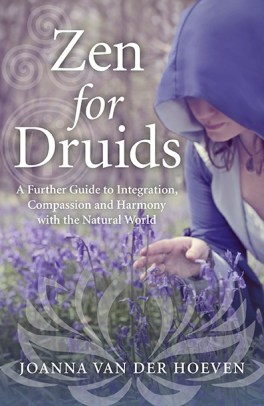
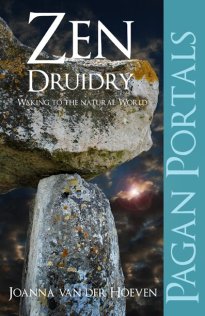
Zen for Druids front coverReviews are coming in for my new book, Zen for Druids: A Further Guide to Integration, Compassion and Harmony with Nature. This new book expands upon my first work, the introductory Pagan Portals Zen Druidry, and looks deeper into combining elements of Zen Buddhism and Druidry. Here are a few of the reviews!
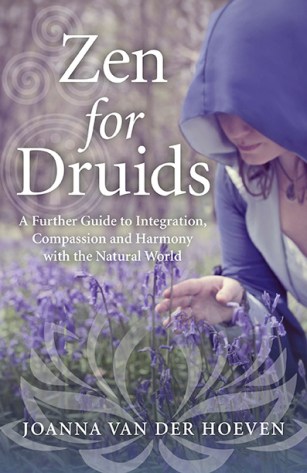

I am a massive fan of Joanna van der Hoeven’s books. They are wonderfully accessible whilst still conveying a depth and clarity that helps the reader to really connect with the wisdom of the subject. Her latest offering does just that. ‘Zen For Druids’ is a companion to her earlier work ‘Zen Druidry’, exploring Zen Buddhism and Druidry by illustrating how these spiritual paths can complement one another in practice. The book is written in five parts. The first explores Druidry and the Dharma giving an excellent overview of Buddhism’s Three Treasures; The Four Noble Truths; The Five Precepts; The Eightfold Path and The Sixteen Bodhisattva Precepts and how these relate to Druid philosophy. The second part takes us through the Pagan Wheel of the Year and how Zen Buddhism can enrich the understanding and honouring of these festivals. Joanna includes some really useful tips at the end of each festival section, with ideas to deepen your experience of each. Part three focuses on Meditation; part four on Mindfulness and part five on Integration, each section helping to both explain the underlying spiritual meaning of these practices whilst giving practical advice, exercises and encouragement. I particularly enjoyed the section on Integration where the author writes beautifully about Awen and Relationship as a connecting, compassionate force that reveals the interconnectedness of life. In her chapter on Ego, Self and Identity the author tackles the thorny issue of the Ego. In many spiritual texts, the Ego can so easily be labelled the ‘bad guy’ but Joanna skilfully explores the difference between Representational Ego and Functional Ego, redeeming the Ego’s useful functions whilst suggesting a compassionate approach to its more challenging aspects. The concepts in this book take some thoughtful pondering but the beauty of Joanna’s writing is that it cracks open what initially appear to be very complex ideas and gets straight to the heart of each. Obviously the real work is in the dedicated practice of a spiritual path but Zen For Druids offers a wonderful foundation to build upon. In every page you can sense that the author has learned these insights through experience, that she really understands and lives these principles from a place of deep heart-knowing. We move from a purely intellectual grasping of a subject to this heart-led living of a spiritual path through the constant connection and exploration of that path; Joanna van der Hoeven’s fabulous book is both an inspiring and deeply practical aid to help you on that journey. I highly recommend this book. It is proof of how seemingly different spiritualities can enrich each other, and for those of us who are drawn to both western and eastern paths, it’s a real gem! ~ Maria Ede-Weaving, from the office of the Order of Bards, Ovates and Druids

Zen for Druids: A Further Guide to Integration, Harmony, and Compassion with Nature by Joanna Van Der Hoeven is a look at integrating aspects of Zen Buddhism and Druidry into ones personal practices. We take a look at some of the basic principles of Buddhism such as the Four Noble Truths and the Eightfold Path and how they can be integrated with aspects of Druidry such as the sacredness for all things. There are questions which help us contemplate these concepts within the aspects of both Druidry and Buddhism. We take a look at meditation and mindfulness in both areas of practice. We are shown how to incorporate the eightfold path of Buddhism into the Wheel of the Year and Druid festivals. I liked how this book brought together both Buddhist and Druid practices to create a practice that is one with nature and enhances our spiritual practice. I learned a lot about both Druidry and Buddhism and how they can work seamlessly together to create a spiritual practice. ~ Rose Pettit, Insights into the Wonderful World of Books

In this user-friendly book, Joanna van der Hoeven further develops ideas already present in her earlier ones, especially Zen Druidry. On my reading, this book will work best for Druids committed to a modern eco-spirituality. I imagine readers already re-enchanted by their experience of the natural world, who want a harmonious relationship with that world, and to honour, protect and preserve it. Zen for Druids confirms this stance and adds something else: the interwoven ethical and attentional training of the Buddhist tradition. The author draws specifically on Thich Nhat Hanh, the Vietnamese Zen Master who founded the Community of Interbeing and is a leading model and exponent of ‘engaged Buddhism’. This cultivates personal, social and ecological levels of awareness. It recognizes the radical interdependence of all beings and a need to make ethical/political choices in line with this interdependence. Such Buddhism is not in any way world denying, in the way that Buddhist tradition has at times been in the past. I see Thich Nhat Hanh as a perfect source of influence for this book, and several of his own works are cited in the bibliography. Zen for Druids is divided into five parts. The first is a clear exposition of Buddhist basics, helped by that tradition’s own style of clear exposition and list making. It includes chapters on the three treasures, the four noble truths, the five basic precepts for lay Buddhists, the eightfold path and the sixteen Bodhisattva precepts. By age-old Buddhist design, there is a certain amount of repetition in these lists, with the same issues coming up again in slightly different contexts. Each individual chapter ends with a set of questions designed to engage the reader in their own reflections. The second part moves through the eightfold wheel of the year, frequently found as a festival year in Druid and Pagan communities. Each festival is given its own chapter, and each chapter combines traditional Druid and Pagan themes with a principle from the Buddhist eightfold path. The author starts at Samhain (right effort), moves on to the Winter Solstice (right mindfulness), Imbolc (right concentration), Spring Equinox (right intention), Beltane (right view), Summer Solstice (right action), Lughnasadh (right speech) and the Autumn Equinox (right livelihood). Each section is followed by a list of suggestions for practice. The book’s remaining three parts are shorter. They concern, respectively, meditation, mindfulness and integration. In two chapters on meditation, the first explores ‘mind traps’ – “those little prisons of our own making. We are constantly hijacked by our thoughts and feelings, attachments to them and our egos, such that we spin endlessly in circles until we fall down”. The second shows us to how do a brief meditation session in the Zen manner. The following section, concerning mindfulness in the world, suggests a practice of ‘mindful Mondays’ and explores the relationship between present time awareness and an animist world view. The final section, on integration, focuses on our integration with nature, looking at the issue of ‘ego, self and identity’ before reflecting on ‘awen and relationship’. For Joanna van der Hoeven, indeed, “awen is relationship and integration, the connecting threads that bind us soul to soul”. In Zen for Druids, one Druid shows how she has taken an iteration of Zen Buddhism into her life and practice, combining them into one path. She sets out her stall very clearly and offers the reader specific opportunities and resources for practice and reflection. This book does a valuable job well. ~ James Nichol, Contemplative Inquiry

I read Joanna’s “Zen Druidry” and it really helped add an extra layer of depth to my own Druidry. This book continues down that same path, with a lot more emphasis on how to incorporate aspects of both Zen and Druidry into one’s life. Not only does Joanna write in a way that is easily accessible, her approach to topics provides the reader with enough information to work with the topic or concept. The questions she asks throughout the book are definitely good moments of “food for thought” – and for me provide even more desire to dig even deeper into what she is presenting here. Is her book a be-all, end-all of Zen, Druidry, or the combination of the two? Not even, nor is it meant to be. Finding that kind of depth, in my opinion, is up to the individual bringing these concepts into their Spiritual practices. This book; however, is a definite strong start for those who are looking for ways to incorporate these two particular Spiritual disciplines into their lives at the same time. For me, this book is a timely follow on to the “Zen Druidry” title, providing more depth and clarity to the combination of these two Paths. Going further down that Path, will be up to the individual adherent and their own unique application of these disciplines to their own lives. If you are picking this book up first, set it down and get “Zen Druidry” and read that first. Then follow on with this one. The two flow together very nicely.  ~ Tommy van Hook, Life with Trickster Gods

Interview for Pagan Writers Community

Here’s a link to an interview that I did with Pagan Writers Community. Thanks, Piper!

Pagan Writers Community interview with Joanna van der Hoeven

cover high res

Interview for Pagan Pages

I was recently interviewed for Pagan Pages by Mabh Savage, and you can read the full article by clicking HERE.

Interview with Joanna van der Hoeven: Breathing the Ancient Breath

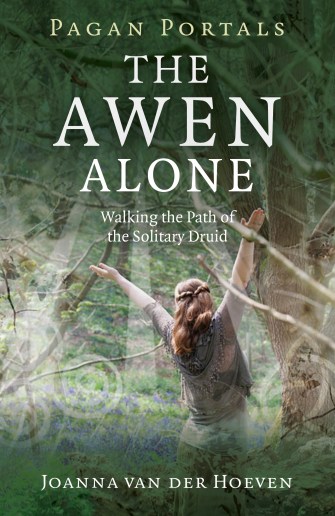
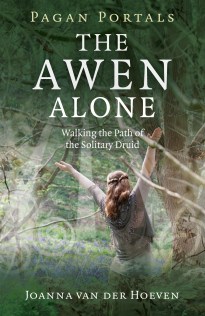
Mabh Savage: Pagan Portals: The Awen Alone has been an incredibly popular release. Tell us a bit about the book, and why you think it has such wide ranging appeal.

Joanna van der Hoeven: I’m absolutely delighted at the reception The Awen Alone: Walking the Path of the Solitary Druid has received. It’s a book in the Pagan Portals series, a lovely series of books that provides an introduction to a certain topic in around 100 pages or less, and which are subsequently very affordable. I’ve had so many emails from readers, from all over the world, thanking me for this work and telling me how it has resonated with them, how it’s helped them to find their own path. I feel so blessed to have been a part of their journey, to have helped in some small way. Perhaps its wide-ranging appeal has to do with the fact that Druidry is a religion or spiritual tradition rooted in nature, which is all around us, all the time, and accessible to us each and every moment of our lives. To learn to live in balance and harmony with nature can never be a bad thing! The tenets of Druidry also work brilliantly with other traditions, from all over the world.

MS: What was your biggest challenge when writing the book?

JvdH: Trying to fit it all into 100 pages or less!

MS: And what did you enjoy the most about the process?

JvdH: I think the feedback that I’ve received from readers is the most wonderful part of it, to hear their stories, to learn about them and how they have interpreted the work. To know that you’ve made a difference in someone’s life is so humbling, and so wonderful to experience. To have people take time out of their busy lives to write to you is simply heart-warming. If you’ve loved a book from an author, write to them, tell them! To have that human to human interaction, to hear that your words have been heard, can make all the difference to an author. A musician performing to an audience has instant feedback from the crowd, but authors often feel like they’re out there, writing and talking to themselves, not sure if there’s an audience out there listening or not. Writing can often be lonely. I enjoy working by myself, I enjoy solitude, but it’s still really nice to get feedback on your work.

Continued…. to read the full article, click HERE.

Remembering your story

I’ve just had a lovely two week vacation, not only from work but also from my computer. It’s essential, in my opinion, to detach one’s self from the constant noise and hub of media and communication, for however long a period, whether it’s a day or two weeks, a month or altogether. I’ve known people who have given up Facebook altogether, and been much happier for it. I can honestly say that I didn’t miss it at all on my two week vacation (no social media, no emails or online communication), and I actually dreaded going back on there today to check for messages. I know that I will be spending a lot less time on there from now on, as the pull and tug of getting into other people’s stories just isn’t all that appealing anymore. Heck, if I could give it up completely I would, but that would be marketing suicide for a mostly self-promoted, self-employed author.

Having two weeks to myself, spending time with myself and my family, has enabled me to see more clearly the stories that really matter to me. While most of social media is filled with noise, things that don’t really matter (alongside really great cat videos), it also has its benefits, such as putting us in touch with high school friends, keeping us up to date on our nephews’ first day at school, and so on. I do Facebook and Twitter, because I like to keep in touch with my family and friends that I physically can’t see, being 3,000 miles away across the Atlantic, as well as feeling obligated for business reasons. But the amount of noise on there is staggering.

We can get so lost in other people’s stories, in the noise that social media produces. Stories that are inconsequential to ours. Stories that have no relevance at all to our daily lives. Stories that have no meaning full stop. We fill our mind with them, drowning out the sound of our story, of our own life, or vainly trying to compare ours to this fictional recreation that social media has produced, which is entirely inaccurate to say the least. I am not my Facebook profile or pages, not by a long shot. Neither are my friends or family. It is a narrow window into one’s life, should one be honest about it, but only provides a miniscule view of the reality that is the whole.

My story is important, if only to myself. But I have to listen to it, in order to be able to change the story, should I so choose. While there are many external factors that help to decide how this story ends, there are also a lot that are completely within my control, if I am able to hear them. I feel an even deeper connection with myself than I had before, because I stopped filling my brain every morning with pictures of what other people had for breakfast, who’s pissed off for whatever reason, etc. I stopped the constant influx of other people’s stories. I feel more me.

I don’t have a smartphone that enable me to check emails and social media wherever I am. I have a mobile phone that lives in my car should I break down. I do all my emails and social media early in the morning, to get it out of the way so that I can get on with my work and my day. I honestly can’t imagine constantly checking on a smartphone for emails and Facebook; that thought is just too horrific for someone as unsocially mediated as myself. What little time I did spend on there, I now realised was for the most part a waste of time. And I haven’t got time to waste. There are weeds to be pulled in the garden, walks to be taken, words to be written, cats to be played with, friends to visit, life to live.

Don’t be lured into the dulling effects of social media. Don’t be pulled into other people’s stories so that your own is neglected. Stay in touch, but don’t be a slave to social media or online communication. Your life is yours to live, so truly live it, don’t let it pass you by in a blur of emails or status updates. And above all, remember and rediscover your story.


Review: Zen for Druids

Here is a review by Maria Ede-Weaving on Philip Carr-Gomm’s blog for my upcoming book, Zen for Druids: A Further Guide to Integration, Compassion and Harmony with the Natural World (due out this October, and now available for pre-order). Thank you, Maria, for your lovely words!

Zen for Druids front coverI am a massive fan of Joanna van der Hoeven’s books. They are wonderfully accessible whilst still conveying a depth and clarity that helps the reader to really connect with the wisdom of the subject. Her latest offering does just that. ‘Zen For Druids’ is a companion to her earlier work ‘Zen Druidry, exploring Zen Buddhism and Druidry by illustrating how these spiritual paths can complement one another in practice.
The book is written in five parts. The first explores Druidry and the Dharma giving an excellent overview of Buddhism’s Three Treasures; The Four Noble Truths; The Five Precepts; The Eightfold Path and The Sixteen Bodhisattva Precepts and how these relate to Druid philosophy.

The second part takes us through the Pagan Wheel of the Year and how Zen Buddhism can enrich the understanding and honouring of these festivals. Joanna includes some really useful tips at the end of each festival section, with ideas to deepen your experience of each.

Part three focuses on Meditation; part four on Mindfulness and part five on Integration, each section helping to both explain the underlying spiritual meaning of these practices whilst giving practical advice, exercises and encouragement. I particularly enjoyed the section on Integration where the author writes beautifully about Awen and Relationship as a connecting, compassionate force that reveals the interconnectedness of life.

In her chapter on Ego, Self and Identity the author tackles the thorny issue of the Ego. In many spiritual texts, the Ego can so easily be labelled the ‘bad guy’ but Joanna skilfully explores the difference between Representational Ego and Functional Ego, redeeming the Ego’s useful functions whilst suggesting a compassionate approach to its more challenging aspects.

Joanna van der Hoeven

The concepts in this book take some thoughtful pondering but the beauty of Joanna’s writing is that it cracks open what initially appear to be very complex ideas and gets straight to the heart of each. Obviously the real work is in the dedicated practice of a spiritual path but Zen For Druids offers a wonderful foundation to build upon. In every page you can sense that the author has learned these insights through experience, that she really understands and lives these principles from a place of deep heart-knowing. We move from a purely intellectual grasping of a subject to this heart-led living of a spiritual path through the constant connection and exploration of that path; Joanna van der Hoeven’s fabulous book is both an inspiring and deeply practical aid to help you on that journey.

I highly recommend this book. It is proof of how seemingly different spiritualities can enrich each other, and for those of us who are drawn to both western and eastern paths, it’s a real gem!

Zen For Druids is now available on Moon Books for pre-order. 

Interview with Future Primitive

Here’s a link to my most recent interview with Future Primitive Podcasts from last week. I hope you enjoy!

Letting Nature Live Through Us – Click HERE for the full interview.

Major milestone: huge love and thank you!!!

Well, May’s sales figures have come in from my publishers, Moon Books, and we have reached a new milestone – over 10,000 copies of my Pagan Portals books sold! (And The Awen Alone: Walking the Path of the Solitary Druid is still an Amazon No. 1 Bestseller!) I just wanted to thank everyone for their support in my writing, for your lovely emails, your encouraging words, and for being so awesome. May we be the awen!!!


Inspiration for a Zen Druid

What drew me into Zen Buddhism was the fact that it didn’t matter who you were or where you came from when it came to learning the wisdom of the tradition. The same goes for Druidry as well. Yes, there can be an ancestral link to the tradition that you might find will perhaps deepen either practice for you personally, but you don’t have to be from a particular place in order to practice either tradition. Zen Buddhism and Druidry may have common roots in India’s Vedic tradition, which goes some way to explaining the many similarities, however one does not need to worry about cultural misappropriation when following either tradition. They welcome one and all to their path, as long as it is walked with respect.

Both Zen Buddhism and Druidry are all about what you do: not who you are or where you came from. Working with compassion, deepening the connection to nature and the world around you, there is a holistic healing of the soul that happens when this is embraced, allowing an integration that just seems to flow easier, where the awen shines and peace of mind and body are attainable. Being utterly awake to the present moment, seeing the Buddha-nature of everyone, and remembering that Buddha-nature within our souls can help us to ease the pain of separation that modern culture and society seem to promote in a theology/philosophy of duality. When we realise that we are part of an ecosystem, systems within systems, we work better, understanding our part and working for the benefit of the whole rather than the self. It promotes a thinking where one doesn’t think less of the self, but rather thinks of the self, less.

The magic and wonder of Druidry and the natural world, and the philosophy and practice of Zen Buddhism have allowed me a deep sense of peace and wakefulness to the world. They complement each other beautifully, each tradition having its own wisdom that is there for everyone to discover. If you’d like to learn more about either tradition, I’ve put together a reading list below from my upcoming book, Zen for Druids: A Further Guide to Integration, Compassion and Harmony with Nature. These are the tools that helped me on my journey (with some of my previously written books thrown in there too), and I hope that should they be of interest, you might also find them of some benefit as well.

Blessings on your journey, wherever your path may take you!

Bibliography and Suggested Reading

Adamson, E. & McClain, G. (2001) The Complete Idiot’s Guide to Zen Living: Alpha

Allen, R. (2002) Zen Questions London: MQ Publications Limited

Beck, C.J. (1997) Everyday Zen London: Thorsons

Beck, C. J. (1995) Nothing Special: Living Zen New York: Harper Collins

Carr-Gomm, P. (2002) Druid Mysteries: Ancient Wisdom for the 21st Century: Rider

Hanh, T.N. (2001) Anger: Buddhist Wisdom for Cooling the Flames: Rider

Hanh, T.N. (2012) Making Space: Creating a Home Meditation Practice: Parallax Press

Hanh, T.N. (2015) No Mud, No Lotus: The Art of Transforming Suffering: Parallax Press

Hanh, T.N. (2008) The Miracle of Mindfulness: Rider, Classic Ed Edition

Hanh, T. N. (1993) Interbeing: Fourteen Guidelines for Engaged Buddhism: Parallax Press

Hutton, R. (2011) Blood and Mistletoe: The History of the Druids in Britain: Yale University Press

Kirkey, J. (2009) The Salmon in the Spring: The Ecology of Celtic Spirituality: Hiraeth Press

Lama, D. (2005) Essence of the Heart Sutra: The Dalai Lama’s Heart of Wisdom Teachings: Wisdom Publications, U.S.

MacEowan, F. H. (2002) The Mist-filled Path: Celtic Wisdom for Exiles, Wanderers and Seekers: New World Libray

Matthews, C. (2004) Celtic Devotional: Daily Prayers and Blessings: Gill & Macmillan Ltd

Talboys, G. (2002) Way of the Druid: Rebirth of an Ancient Religion: O Books

Tzu, L. (2002) The Complete Works of Lao Tzu: Translation and Elucidation by Hua-Ching Ni: Sevenstar Communications U.S.

Restall Orr, E. (2004) Living Druidry: Magical Spirituality for the Wild Soul London: Piatkus Books Ltd

Restall Orr, E. (2007) Living With Honour: A Pagan Ethics O Books

Restall Orr, E. (2000) Ritual: A Guide to Life, Love & Inspiration London: Thorsons

Restall Orr, E. (2012) The Wakeful World: Animism, Mind and the Self in Nature: Moon Books

van der Hoeven, J. (2014) The Awen Alone: Walking the Path of the Solitary Druid: Moon Books

van der Hoeven, J. (2013) Zen Druidry: Living a Natural Life in Full Awareness: Moon Books


Internet Resources

Order of Interbeing http://www.orderofinterbeing.org

The British Druid Order http://www.druidry.co.uk

The Druid Network http://www.druidnetwork.org

The Order of Bards, Ovates and Druids http://www.druidry.org

Zen Buddhism http://www.sacred-texts.com/bud/zen/index.htm

Zen Guide http://www.zenguide.com

Zen for Druids…

Production is underway, will have a release date shortly! Stay tuned…

Zen for Druids front cover.jpg