The Stoic Druid – Part Two

Running a little behind in my course on Stoicism, I’m now getting up to date on the second week’s programme. This section challenges me to live in accord with Stoic values (virtues) and to set consistent goals in my daily life. It focuses more on my intentions and actions, i.e., my behaviour throughout the day. The ancient Stoics viewed their ethics as the very cornerstone of their philosophy. I also see my ethics as the cornerstone of my Druidry.

Living in accordance with nature is the goal of the Stoic. While many see have translated this as “living in accordance with virtue” for me it is the same thing. To live a life in balance and harmony with the natural world is to live a life of virtue. But what is virtue?

The dictionary’s first two definitions of virtue are:

  1. moral excellence; goodness; righteousness.
  2. conformity of one’s life and conduct to moral and ethical principles; uprightness; rectitude.

There are other definitions, such as chastity and virginity, but these are irrelevant to the topic. What is important is that the Stoic definition of virtue is not the same as the modern definition that often is confused with righteousness, but is rather a striving for excellence in living in accordance with one’s ethical principles, a flourishing of that which makes us live well. Many people when they first hear the word “virtue” they think of someone who thinks they are better than someone else, and this is simply not the case in Stoicism. Valued living is often replacing virtue in both modern-day Stoicism as well as psychology, and this term is less confrontational as well as being more descriptive.

So, this week is all about learning what is under my control, and what is not. It’s a very Zen way of thinking, which I can relate to easily. Stoicism also throws in a few other concepts, such as when we act or behave well, we are working with virtue, and when we are acting or behaving badly, we are working with vice. Again, we have to remember the Stoic’s definition of virtue and vice, where virtue is living well and in accordance with nature, and vice is not. Everything not under our control is termed indifferent. The Stoic definition is something that we have no control over, fortune and misfortune. We might be striving towards personal excellence, and this is virtue, however, we might be working under conditions of illness or physical pain, over which we have no control. It is preferred, of course, to be hale and healthy, and the preferred does make an appearance in this section of the work. So, to sum it up, we have:

  1. Externals, such as health, wealth, and reputation, which are merely “preferred” and
  2. Virtues, such as wisdom, justice, courage, and self-discipline, which are considered the chief “good” in life.

So, this week I begin by working with “values clarification”. This is an exercise which I’ve fallen out of the habit of doing, as I have done it previously in my Zen Buddhist studies. It is asking “are you sure” or “is that so” when you react to a situation or when you define your life in general. It is realising that your perception is only a tiny point on the compass, and that there are 359 other degrees from which to view it. It is questioning everything that we say or do, questioning our goals and how we live, questioning very deeply, and requires a lot of attention and focus.

To quote Marcus Aurelius:

“To what use then am I putting my own soul? Never fail to ask yourself this question and to cross-examine yourself thus: “What am I making of this part of me they call the ‘central faculty’ of the mind? And whose soul do I have now anyway? The soul of a child? Of a youth? […] Of a tyrant? Of a grazing animal? Of a wild beast?” – Marcus Aurelius, Meditations, 5.11

And so, the fundamental questions that are posed to me on this course right now are:

  • What’s ultimately the most important thing in life to you?
  • What do you want your life to “stand for” or “be about”?
  • What would you most like your life to be remembered for after you’ve died?
  • What sort of thing do you most want to spend your life doing?
  • What sort of person do you most want to be in your various relationships and roles in life, e.g., as a parent, a friend, at work, and in life generally?

To begin with, what is the most important thing in life to me? It’s a hard choice, between my family and working towards creating a world where nature is honoured. In fact, the two are indeed a part of each other, for my blood relatives are an extension of my connection to the entire world – they are just more immediate to me DNA-wise. The most important thing is that the world we live in, nature and the natural world, is respected, not abused and is loved so that all future generations of beings can enjoy it.

What do I want my life to stand for or be about? I would like my life to stand for working together to create peace and harmony with the natural world, with each other, co-existing as we do on this little ball of rock hurtling through space. I’d like my life to be about re-enchanting our souls with the wonder of nature, of the gods and the ancestors, the spirits of place that have such meaning and provide us a context for our lives wherever we are in the world.

What would I like to be remembered for? I hope that in my work as a Druid, my words and deeds inspire others in their reverence for the land and for the past, present and future ancestors.

What sort of thing to I want to spend my life doing? What I am doing now, writing and sharing my experiences on the Druid path, hoping to gain a little wisdom and insight, and sharing the awen in a continuous cycle of inspiration and creativity.

What sort of person do I most want to be in my various relationships and roles in life? As a Druid, one works in harmony with nature. As an author, one whose words inspire. As a friend, someone who supports and is there for others. In life, someone who is genuine, living life to the fullest in harmony, and in doing so honouring the gods, the ancestors, my friends, colleagues, readers, neighbours, spirits of place and so on.

Now it’s my turn to consider these responses for the next few days, to see if they change, or how true they remain. To talk to friends and family, to share points of view. We then move on to more questions, to delve deeper into personal ethics, but first, I’m going to spend a good few days here, really defining my terms and finding the truth in the words.
 

Letting Go: Beware the Children of Anger

Letting go is truly a difficult thing to do, and yet seems so simple. Human beings, with their human consciousness, are just not that simple.

I’ve written before on how letting go is a process we have to repeat over and over again; it’s not a one-time event. We have to continually make the choice to let go, in order to truly live our lives in the present moment, in the here and now, emotionally responsible for ourselves and finding an ethically sound way of being in the world. I haven’t discussed the finer process of letting go, however, in any great detail and here are a few words from my own experience.

People are going to hurt us in one way or another, based upon expectations, behaviour, upbringing, environment and a whole host of factors that we simply have no control over. Our response to this is what is most important: our response-ability. When we have the ability to respond in a thoughtful, compassionate way then we are truly working to be a part of the world, a weave of the web that strengthens the whole.

Yet it is so hard to be compassionate when people deliberately hurt us, and sometimes even when it’s not deliberate but perhaps uncontrolled aggression from their past experience, current physical pain or more. But the ability to understand that there are more factors involved in any given situation that you are simply unable to perceive is at the heart of compassion. Compassion is a willingness to understand.

People have hurt me in the past, willingly and unwillingly. Colleagues and co-workers, lovers, strangers; there is no telling where the next experience will come from. However, noticing the stages that we go through when we are being hurt can help us on the path to letting go with an awareness that will allow us to not slip into the easy patterns of denial, whether that is of our own behaviour or that of others.

When we are hurt, usually our first response is anger. For most people, anger is something that time heals, though the length of time is relative to the person and their situation. Anger isn’t the most difficult thing to move through, as we can recognise anger much more easily than its children: pity being one of them. Often when we move through anger towards pity, we don’t know that we are still dealing with anger, with an abstract notion of the other person. Pity does not have empathy. Pity does not have anything to do with compasssion. Pity is the result of dualistic thinking, of an Us and Them mentality. We pity someone because we are separate from them. Pity is so often tinged with bitterness and anger that they are almost inseparable. When we have finished being angry with someone, we move on towards pitying them, in a passive/aggressive way of still attacking them. Pity the poor fool.

When we bypass pity through working around our anger, we find empathy instead, which holds no judgement of the individual.

Sometimes pity is replaced with its older sibling: contempt. We have been a victim of someone’s abuse, and though we realise we are no longer going to take their crap, we hold them in high contempt for putting us through that. They may have spent months trying to hurt us in various ways; we are so over that now and could they just get in with their own lives, please? So trapped in their little world, so lost…

Contempt is just as easy a trap to fall into as pity. Again, contempt has absolutely no compassion, no element of trying to understand involved in its process; it seeks only to make us feel better about ourselves. In the web of existence, we can’t just work on ourselves: we have to work on the whole.

We don’t have to stick around for further abuse, but we do have to be on our guard for feelings such as pity and contempt to flag up the fact that we haven’t actually moved on, we haven’t let go of our anger, we’ve only put a new hat on it and deceived ourselves with its shiny new appearance. When we find ourselves dancing with the feelings of contempt or pity, we can stop, untangle ourselves, bow and walk away, breathing into the wild winds of change. We know that we can choose our dance partners, and in that choosing find glorious freedom and self-expression. We know that we are part of an eco-system, part of a whole, where every part is acknowledged and sacred. The flows of the gods of humanity that we choose to dance with, however, it entirely up to us.

In the Key of Bee…

One of the perks of working for a music and arts organisation is the inside scoop on really interested projects.  One of my colleagues has just finished this video on one of our Artist’s Residency projects, and I had to share!

Rafting the currents of emotion

Tomorrow my students and colleagues gather round for our second weekend of Druid College in the lovely Essex countryside. During this first year, we are introducing and exploring the three realms of land, sea and sky, as well as sacred fire at the centre for the final weekend. This coming weekend, we move from the realm of the land to the realm of the sea.

A part of working with the realm of the sea is learning to work with emotions. As living creatures, we experience all sorts of things and transmute that experience into thoughts and memories, forming our worldview. We are creatures that feel, and feel very deeply, with a wide range of emotions. What I will be exploring with my students this weekend is the current of emotion that runs through humanity, and how we can better work in the world by rafting these currents with skill and compassion.

I’m sure we all know people whose emotions seem to rule their entire world: people who lead reactionary lives. If they are upset or experience any sort of negative emotion, they lash out, immediately trying to hurt another in response to a hurt that they have experienced themselves. This is a cycle that is self-perpetuating, but only if we engage with it. When we become actively involved in our emotions, rather than reactionary, we are better able to deal with situations that could otherwise cause harm both to ourselves and to others.

As Druids, we understand that we are part of a wider functioning of the world, that we are part of an eco-system. We know that in order for us to survive, we must work towards the benefit of the whole rather than just our own well-being and satisfaction. We must work together to create a cohesive, sustaining environment in which to live, and that will continue to ensure the survival of the whole. We know that there is no separation.

If we allow our emotions to rule us, we disassociate ourselves from this integrated perspective, and become self-centred in our point of view. Often it comes in the form of “saving face”, or seeking to undermine others, all the variants that our brilliant minds can come up with or order to justify bad behaviour. We are such intelligent creatures that we are able to delude ourselves in order for our egos to remain intact.

When we step away from this ego self-preservation in its abusive context, we are able to raft the currents of emotion with much better skill. We are not ruled by our emotions, but rather allow them to inform us of our experience in life, and then take the useful information and use it without prejudice in order to provide our lives with a balance and harmony that any healthy ecosystem enjoys. We know that this doesn’t mean that we don’t feel emotions, but rather we feel them even more deeply, because we are thinking about them as well as feeling them. We are able to put them into a context, seeing the reason why we do the things we do, and better able to understand others in the process. Even in the face of an emotional storm, we are able to see the situation more clearly, feel the emotion more deeply, and work towards a resolution that is not self-destructive or that perpetuates abuse in any shape or form.

It takes time, energy and skill to be able to do this, but the key component is compassion. When we see in others all that is negative in ourselves, we are able to understand and in understanding lies the heart of compassion. When we are able to see all that is positive in another being, we are inspired and in that inspiration lies the heart of the quest in Druidry: awen.

We think deeply, we feel deeply. Yet we are responsible for our actions, our behaviour. We take this responsibility very seriously, and work to stop destructive habits and emotions that threaten the wellbeing of the ecosystem in whatever shape or form it takes.

Being aware of your emotions is not something easily done. It’s so easy to think that we are self-aware, but even thinking that can be a delusion. What we can do is work to the best of our ability to be self-aware, and remember that the integration, the part of being a whole is at the heart of Druidry, enabling us to create long-lasting, deep sustainable relationships. We put aside our self-centredness and see the vast perception of a holistic worldview that is truly and deeply inspiring, allowing us a freedom that we never thought possible.

Exploring Pagan Ethical Codes

The brilliant writer and Druid, Brendan Myers and I were interviewed recently by The Wild Hunt for their new series on Pagan Ethical Codes. Click HERE for the full interview!


Black Friday

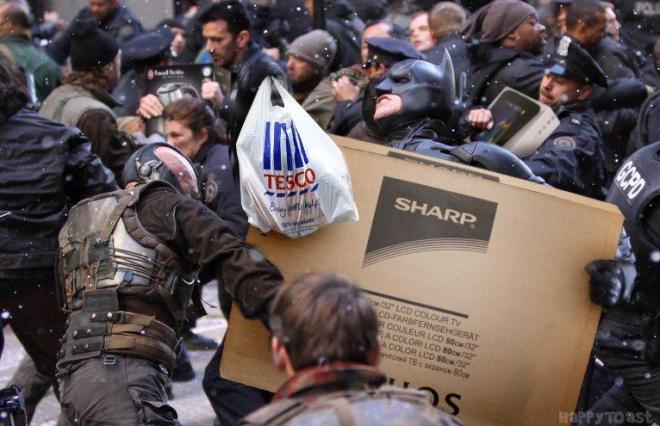
black fridayBlack Friday – it’s upon us. The day after the American Thanksgiving, Black Friday is a consumerist holy-day that for many heralds the start of the shopping season. Yes, a season dedicated to shopping, sometimes called “Christmas”. It’s usually a four-day weekend for many, with stores opened all that time offering supposedly amazing deals. It’s a celebration of all things consumerist.
In today’s society, it’s more important to have things than to do things. We seem to be defined by our possessions, yet the term possession isn’t correctly used: for the most part, we are possessed by them, not the other way around. This is not to say that it’s wrong to have possessions, but when the desire to have them, to increase them, to fight for them is all-consuming, we need to have a rethink. When we’d rather have “stuff” than time spent with family and friends, when we work to accumulate more stuff, to buy bigger houses for all our stuff, to buy storage for our stuff, it’s gone too far. Our stuff owns us. The real kicker is, and we all know it: you can’t take it with you when you die.

Black Friday is supposed to be a consumerist’s dream, with bargain offers that are only available at that time of year. In actuality it is a nightmare of epic proportions, where many people don’t realise that the “bargain offers” are still far in excess of what the item is really worth. It only reiterates how much profit is being made on consumer goods by capitalist middlemen.

To make matters worse, Black Friday has resulted in 7 deaths and 98 injuries since it began around 2000. Yes, 7 people have died. Customers and employees crushed when doors are opened. People being trampled to death. An elderly man collapsing and everyone around ignoring him. Guns coming out at Toys R Us and shootings while waiting in the queue. Pepper spray being used on fellow shoppers. People being shot over parking space disputes. The list goes on.

What is so wrong with our society that this would happen?

People are starving, homeless, fleeing war-torn countries with nothing but the clothes on their back.

Join me tomorrow for a Buy Nothing Day. No purchasing; not online, not in person. Say NO to the sickness in society that drives people to hurt one another over a “bargain”.

We can extend it further, looking at how we spend our money, on what, why and when. Look at what are necessities, and what is not. Before buying an item, think about whether you need it. Spend 30 days before you buy something – by then you will certainly know whether you need it or not, or whether it was a whimsical fancy. Spend your hard-earned money wisely on things that will last. You worked hard for that money, don’t fritter it away on what the media tells you that you should have. Decide for yourself.

There are bargains to be had all the time. Charity shops are amazing places to find treasures of all kinds. And the money is going to charity, to actually do some good somewhere. Make every penny you spend count. Make every penny a vote for what you believe in, whether it’s buying local and/or organic food, investing in green energy, buying clothes for work. If you can, really consider the impacts of online shopping too – often items are wrapped in so much plastic, and shipped worldwide that the cost to the environment is enormous.

Our money can be our most powerful weapon against the serious issues of today’s society. We can use it for good, for the benefit of all, not just for one. We can make the world a better place. Really, we can.

Instead of shopping for presents, if you have the time, make something. Cakes, jams, a poem or song for a loved one. Spend time with your family instead of shopping for presents in the evening or at weekends. Devote yourself to what is most important.

Blessings of peace.


The Mole Problem: Why Good Animists Make Good Neighbors

Another brilliant article by Alison Leigh Lilly…

The Mole Problem: Why Good Animists Make Good Neighbors.

Heaven, hell and Jeremy Clarkson

We are our deeds. It’s a popular heathen saying, and the title of a well-written heathen book by Eric Wodening. What we say, what we do is a reflection of our own self. How we behave is what defines us.

Our society is full of examples, however, of bad behaviour being rewarded, or being applauded. In Britain, famous television presenter Jeremy Clarkson was fired from the popular television show, Top Gear, because he had punched a producer in the face when he found out that there was no hot food available on set. No charges have been made against Clarkson’s assault, and indeed, he is making light of the whole situation, thereby condoning violence. In a recent spin-off live show in Belfast it opened with a video of him throwing a left-hook, as if it were right to punch a colleague in the face. Everyone cheered. When it was rumoured that comedian Sue Perkins would possibly replace Clarkson on the show, she had to leave Twitter because of all the death threats that she was receiving. Violence breeds violence.

What we think, what we say, what we do defines our self. When we live in a world that no longer seems to care about personal responsibility, about compassion, about just being nice to other people, it is even more important that we take up the reins and provide an example of how to be in the world in good, honourable relationship.

We are blessed with foresight. We can think about the outcomes of our actions. We have memories of the past to consider when making our actions. And yet some people still behave badly, willfully, out of spite and their own demons, or out of ignorance that there is a choice.

This is what it all comes down to: we always have a choice. We can choose to behave badly, remaining stuck in our bad habits, remaining trapped in our attachments, allowing our emotions to run riot over ourselves and others. Or we can choose to take up personal responsibility, to think about things that we have done and things that we are going to do, and how they will affect others. It’s not fun being mean to other people. It makes our hearts small. It tightens and constricts them until we become mere shadows of ourselves. We may hide behind comedy, delusions or the lies that we have told ourselves over and over again to justify our behaviour. Ultimately, however, we know on a deep level when we are doing things that are wrong, and we can choose to continue or not.

Take responsibility for your actions. Shrugging off bad behaviour doesn’t make it right, and you will eventually have to face it at some point in your life. Clarkson knows that what he did was wrong, which is why he’s making fun of it rather than face up to the fact that he was wrong. It’s all about saving face, about personal egos, illusions and delusions. How many other people do you know who are like that?

If nothing at all, these people remind us of who we do not wish to be. We can still have compassion for them, seeing that they suffer from their own demons. However, that does not mean condoning their behaviour. We can speak out against it, and still hope that they find peace in their own lives.

There is a Zen story about a samurai who asks a monk about heaven and hell:

Hakuin, the fiery and intensely dynamic Zen master, was once visited by a samurai warrior.

“I want to know about heaven and hell,” said the samurai. “Do they really exist?” he asked Hakuin.
Hakuin looked at the soldier and asked, “Who are you?”

“I am a samurai,” announced the proud warrior.

“Ha!” exclaimed Hakuin. “What makes you think you can understand such insightful things? You are merely a callous, brutish soldier! Go away and do not waste my time with your foolish questions,” Hakuin said, waving his hand to drive away the samurai.

The enraged samurai couldn’t take Hakuin’s insults. He drew his sword, readied for the kill, when Hakuin calmly retorted, “This is hell.”

The soldier was taken aback. His face softened. Humbled by the wisdom of Hakuin, he put away his sword and bowed before the Zen Master.

“And this is heaven,” Hakuin stated, just as calmly.

May all beings find peace.

The food debate

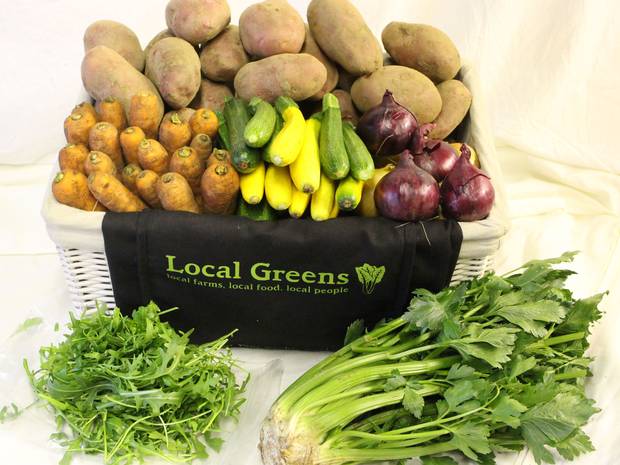
local greensThe ethics of food and diet is such a diverse and difficult topic to cover. For every ethical answer to a question, there are other equally valid ethical answers dependent upon differing circumstances, considerations and priorities. I have been a vegan for over a year now, and in the last month have been seriously reconsidering the ethical implications of my diet regarding the impact that I am having on the whole.

It’s easy to find statistics to back up pretty much any argument. It really depends on who is funding the research, for the most part. However, it is up to us personally to make out own choices, and to educate ourselves as best we can so that we make informed choices about our lives and the way we live them. I chose to be vegan because I thought that it was the most ethically environmentally sound option. However, now I’m not so sure.

The first thing to consider is food miles. Much of the vegan’s diet comes from lands thousands of miles away. The carbon footprint of air travel to bring these foods to the UK is considerable. The second thing to think about is what the growing of these crops is doing to these faraway lands and their people. Quinoa and rice are traditional crops for South America and China respectively, however, now that the West’s desire for these foods has grown the demand for growing them has increased drastically. This has caused the prices of these foods to soar, a lot of time to a level that the farmers themselves cannot afford to put what they grow onto their families’ plates. The third thing to think about is what effect these crops are having on the native land. As crops such as soy, rice, quinoa, lentils, etc are all grown “far away” we don’t really have an understanding of what it is doing to the land itself, as we don’t see it. Out of sight, out of mind. Soy is a great factor in the destruction of rainforest, whether through legal or illegal logging to create new monoculture crops. The monoculture crop itself has a great impact on the land as well – the earth loves and needs diversity. Monoculture is not sustainable, and susceptible to a great many attacks that a bio-diverse ecology would be able to fend off. There are hundreds of other factors to consider – these are just a few.

I’ve been studying permaculture these last few months, learning more about it and how it works. Working with the principles, it seems to me personally that the most ethical way that I can sustain myself it to eat local and organic, either growing my own or supporting those who do. I can check on what they claim, how they go about it as they are just down the road from me. What is happening is not happening thousands of miles away. I know that there are laws in place to protect people, land and animals. I feel like I have a little more control over my diet, knowing where it comes from, how it was grown, etc.

It’s not an easy choice. It requires a lot of research and investigation. It would be easier just to be vegan. I have to read food labels for everything. I have to check farms. I have to talk to neighbours and others in the village if I want to eat their surplus food. It requires an actual positive relationship with not only my food, but my environment.

We grow some of our own food, and will have a small vegetable garden this year. However, our garden is mostly a wildlife garden, dedicated to supporting birds, bees and other pollinating insects, hedgehogs, badgers and the occasional deer that come scrounging through. We decided not to grow the majority of our food, as there is an organic farm down the road that we would like to support instead. It’s their livelihood, and we want to ensure that it is as successful as can be. They grow organic crops, but also raise meat for livestock. It is an ethical consideration that must be taken into account.

Studying more and more about permaculture, I’ve found that I was quite ignorant about the keeping of livestock in small, organic flocks. Large scale industrial farming and monoculture crops are seriously threatening the earth, however, small scale flocks that are organic and actually benefit certain ecosystems, especially where crop growing isn’t a viable alternative. There are also ways to raise livestock alongside different crops that are beneficial to all involved – the very essence of permaculture.

While it’s beyond the scope of this blog to go into the details of permaculture, there are many good resources out there to find out more about the subject (see below).

So, after weighing the pros and cons of being vegan, I’ve decided to go local and organic, with a little dairy in the form of cheese from local farms and eggs from neighbours who keep and love their hens. It’s easy to just say that being vegan is the best thing for the planet, but it leaves out a lot of considerations for the planet that are perhaps “outside the box” in the usual arguments for making the switch.

As with everything, there is no black and white answer, no single answer to such a debate. All we can do is to enlighten ourselves with all the arguments, the pros and cons of each side, and make our own choices based upon what we know.

We also have to know that the choices we make are the choices WE make. We cannot make these choices for others. We cannot push our lifestyle on others. We can inform them of why we make the choices we do, but we cannot condemn them for the choice they make – we are not “better” for the choices we make. It is a trap that is easy to fall into, a sense of self-righteousness that we are definitely doing the right thing. No one really knows that the right thing is, really, or even if there is a right thing at all.

I remember being disappointed when my friend (and now Druid College colleague) Kevin made the switch to eating local meat that he had killed himself. I saw no need from my vegan perspective for the killing of another animal. Having spent time further researching the various implications of western diets on the rest of the world, I’ve changed my mind about his choice, and while I wouldn’t eat meat myself I applaud the well-researched and informed choice he made about Conscious Killing .

We all have to take responsibility for our lives. We have to walk our talk and work to make this world a better place for all, in any way that we can. We have to inform ourselves of the issues that our living has upon the rest of the planet. If like me you follow an earth-based religious or spiritual path, that is a major consideration and part of your path – otherwise why follow it at all?

I can say that after I made the switch two weeks ago (while still using up old foodstuffs like soy in the freezer) I feel a lot better physically. I feel like I have more energy. Whether this is because I’m eating food that hasn’t been treated for long world-wide journeys, eating food in season, eating local and organic I’m not sure – although I think that has a large part. I feel more connected to this land, its rhythms and cycles. So this will be the last month that I eat apples until end of August or beginning of September, providing that local UK apples will not be available in April (dependent upon quantities). There are even further issues that I need to look into, such as the amount of energy required to refrigerate apples throughout the winter from the various local farms. Spring greens in the form of soups are a staple this month. The nettles are growing in my garden – the perfect spring tonic. The sheep and goats are lactating – a new vintage of cheese will soon be available. Purple sprouting broccoli and artichokes will soon be out. Rhubarb is growing outside my conservatory, which will replace the apples in my baking and sauces. It makes the next variety of food available a real event, a real marker of the season.

Whatever your path, whatever your decision, I support you in making honourable choices for the benefit of the whole based on intelligent research and empathy for the land upon which you live. Talk to the gods, the ancestors and discuss these issues with them. Walk the land in reverence and find out how you can fit within that landscape with the least amount of impact. An earth-based tradition is all about relationship, whatever the path it is that we take. Let us take it right back to the earth in every shape and form, in every choice that we make.

What’s in season in the UK

The quinoa debate

Local and organic veg box scheme UK

The Earth Care Manual: A Permaculture Handbook for Britain and Other Temperate Climates

Universal ethics

The concept of universal ethics is the one that makes the most sense to me. How I live my life depends on one, simple question: “What if everyone did the same?”

Dismissing any notion or remarks of creating a totalitarian world by using such a universal concept as simply fear of making personal change, it is my belief that by asking ourselves this very question could greatly increase the quality of life for everything on this planet. Let me provide some examples:

  • What if everyone had a car and drove it everywhere?
  • What if everyone left all the lights on in their homes at night?
  • What if everyone turned off their televisions for half an hour?
  • What if everyone wanted to park their car/motorcycle next to Stonehenge instead of paying for parking?
  • What if everyone didn’t care about offending people, leaving aside any personal responsibility of creating peace?
  • What if everyone didn’t recycle?
  • What if everyone consumed the same amount that the average American consumes?
  • What if everyone paid higher taxes to ensure that the quality of life for all is kept, and no one seeks a way out to pay less?
  • What if everyone stopped looking for a bigger piece of the pie?
  • What if everyone planted a single tree in their lifetimes?
  • What if everyone stopped using unethical cosmetics and toiletries?
  • What if everyone stopped eating so much meat?
  • What if everyone grew some of their own food?
  • What if everyone decided to go to war?
  • What if everyone decided on world peace?

These are but a few examples of “what ifs” that could change the world. Some are small things, some are larger, but the impact on the whole is still considerable if everyone followed the same guidelines. Looking at the bigger picture, and thinking about our actions isn’t always pleasant. It can reveal some real hard truths about ourselves that we have ignored for years. It can turn our world upside down. Equally, it can create within us a lasting peace in the sense that we know that we are walking on the right path. It can provide a real sense of purpose, of integrity and of integration with the rest of the world.

Pessimistically, I don’t see it happening anytime in the near future. There are far too many humans out there whose egos are striving for attention, to fulfil their own desires and need for recognition. In our striving towards self-actualisation, we can become so focused on the self that when we have achieved a sense of self, we stop there. We need to broaden that sense of self, to extend it beyond the self into the whole, and from there gain a better understanding of the world. The best leaders are those who work creatively to make the world a better place for all. The worst leaders are those that use their power for their own personal benefit.

Universalist ethics could provide the way forward, a way of thinking beyond the ego and the self into a more holistic way of being. It requires the fear that lies behind all personal striving to be let go, to dissolve into the outbreath in order to breathe in pure awen, pure inspiration. Only then can we move forward, together, as a community, as a species and as a planet towards real actualisation and not mere pageantry.