What Druidry Is Not…

abbeyFor me, Druidry is not a white-robed affair. Crawling under low scrub pines and getting inside secret places of gorse bushes where only the deer trod, or standing on the seashore in the howling rain, or in the heart of the forest with the badgers and mosquitos – it just doesn’t work.

Druidry is not clean. It’s not an exercise only for the mind. It requires experience to turn what you have learned into real wisdom. It’s not just book-learning. Until you get out there and commune with the landscape, it’s not felt in the soul. It cannot live in the head. It will get you dirty, wet, hot, sweating, cold, scratched, bitten. It is dirty fingernails and peering under bushes. It is a return to the curiosity and wonder of the child, yet it is not child-like. It is deep learning, deep experience.

Druidry is not a male-centred religion or spirituality, nor is it female-centric. It is about equality and egality, anarchic and subject first and foremost to the teachings of nature.

It not just about standing in stone circles waving swords and reading off of sheets of paper with a group of other people, the media and tourists alike taking photographs. It is doing work in the heart of where you live, often without thanks or regard of any kind. It is giving back to the land, honouring the cycles and working for the community – and by community, I mean each and every living thing in that area wherein you live and call home, not just human. It is not about power and ego, but about communion and deep relationship. It is about dropping ideas of the self to better fit in the landscape.

It is not about writing loads of books and offering courses, achieving kudos through output, students and media. It is about the sharing of inspiration, acknowledging the inspiration of others and allowing the awen the flow through you in whatever way you see fit. One may be a teacher, or an author, or someone with whom the media interact – but they are not a spokesperson for all Druidry, nor a guru of any sort, and have no monopoly on wisdom. There is little room in deep Druidry for ego.

There are no titles, save those bestowed either by a person on him or herself, or by a group of people following a shared path and learning. These titles are not relevant to all Druids – just to the person or the group. Claiming to be an arch-druid of so and so has no bearing on those who are outside of the group. There is no central authority in Druidry.

Druidry is not about having things – it is about doing things. It is being utterly mindful of personal and global consumerism. It is about looking at everything that you do, everything that you have, everything that you take and everything that you give back. It is not about doing the bare minimum. It is about sacrifice, of time and ignorance, of ego and of desire. It is about constant re-evaluation of ethics, values and honour. It is about constant learning.

Druidry is not about attaining levels of initiation or ordination within learning, however. Courses and instruction may guide us, may open our minds and shatter pre-conceived notions, expanding awareness – but they are not there to gratify the ego through the bestowing of grade or rank. Druidry is also not about a specific point in time, where to call oneself a Druid means to have studied for twenty-some years, learned the genealogies of kings, etc. The Druidry of the past is not the Druidry of today. The Druidry of a small frame in time within the past and from a small, specific region is most certainly not the Druidry of today. Its wisdom can guide us, but it is just one window in a mansion of many halls. The Classical Druids were the Classical Druids – we are not, nor can ever be, Classical Druids.

Druidry is not just an exploration of the self. It goes beyond the self, to a life lived in service to others.

These are just a few things of what Druidy is not.

So what is Druidry?

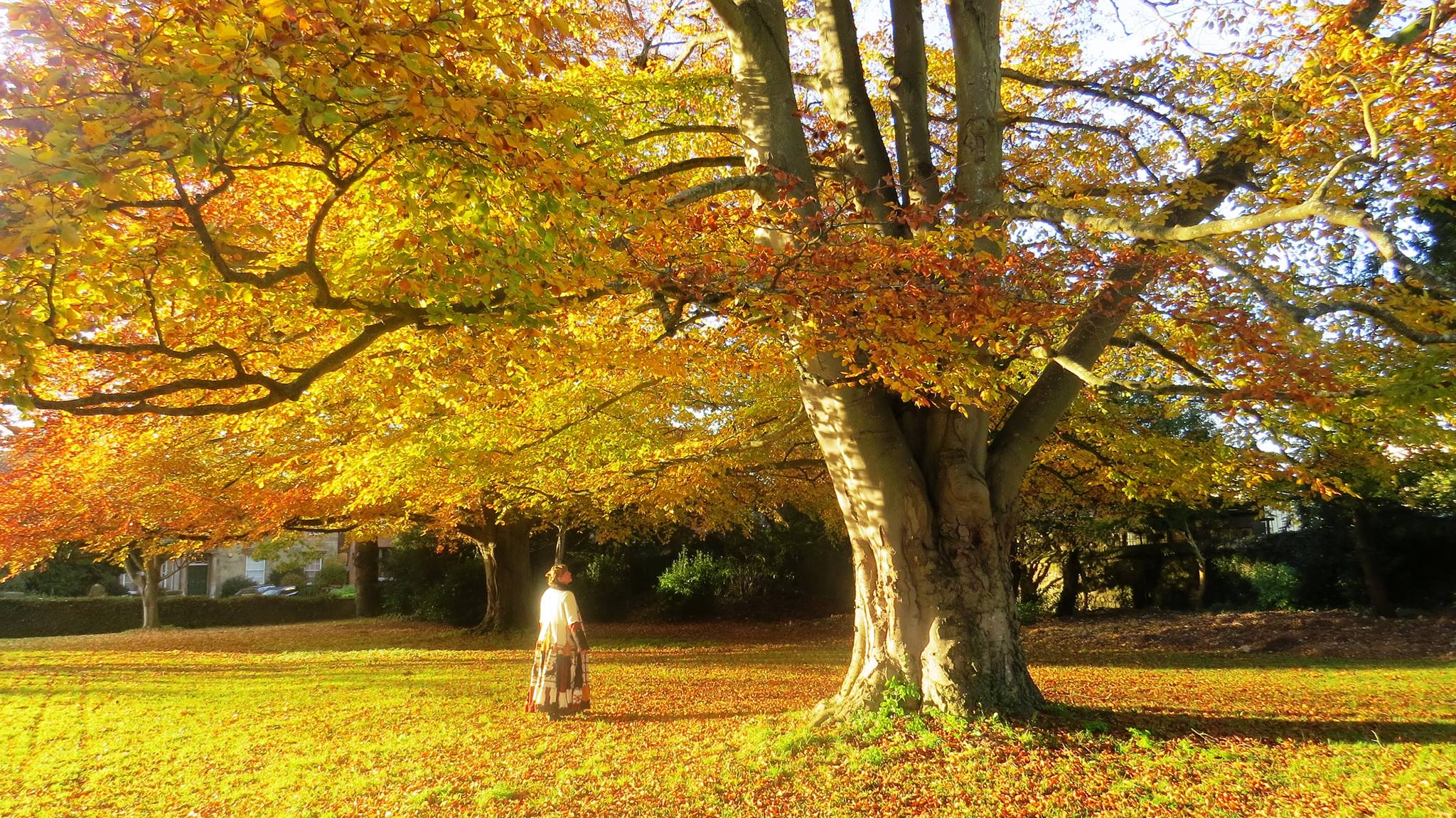
It is allowing the wisdom of the oak to guide you in all that you do.

Reblog: Pagan Ethics

Here is my latest blog post for Moon Books…

How much of our Paganism do we allow to be defined by others? If we follow a specific or established spiritual tradition within Paganism, we look to those who have gone before, and those who are a part of it now, to inform our ideas about the path that we are journeying on. We can find great inspiration in doing so, finding relevance in the ideas of others that resonate deep within our souls, through the words and actions of those whom we may look up to, or feel a sense of rapport with. Equally, we may become frustrated and disappointed when those who follow the same spiritual path are at odds with our own beliefs, behaving badly, seeming to work in opposition to the very ethics that Paganism, by virtue of its deep-seated root in respect and love for nature, provides.

What are the ethics of Paganism? More and more, this topic is being discussed by prolific Pagan writers, teachers, organisations, established members of the community and newcomers to Paganism alike. We could look at what defines the Pagan community, but this is just too vast to cover in a blog post, as Paganism itself is so vast a subject. Therefore, the ethics that surround such a vast subject are numerous and varied according to each individual, if not organisation. For some, this is the brilliance of Paganism – for others, it is the downfall.

When the ethics that we hold dear to our heart are not being followed by others who claim to be a part of our tradition or spiritual path, we begin to question our path on so many levels. How can I be a part of this, when people behave like that? Issues with Pagans whom the media court may frustrate us, as we may feel we are not being represented properly or with due respect. Issues arising on social media, where wars with words are carried over into many different spheres can confound or simply clutter one’s newsfeed – these are all a part of being a modern Pagan, should you wish to use the term. Gossiping, griping, flaming, bullying – all these issues can make us question whether we want to be a part of this whole Pagan thing at all…

To read the full article, click HERE.


Right, Wrong and the Self

Working with thoughts on the self, and release of the self these last few years (even more so since the publication of my first book, Zen Druidry) has been the focus of my studies and journey on the path of Druidry, yet has lately become the centrepoint in my vision of my own personal Druidry, ethics and the act of living with awareness.

We can appear, online at least, to be very focused on our individual selves, even to the point of megalomania. Social media comes from an individual’s personal viewpoint, or a company’s, a philosophy – it is an entity in and of itself. As an author it can appear even worse – we write, constantly, sorting out issues, celebrating life in all its glory with words spread across the screen if we decide to share those ideas and inspiration into the wider world.

Yet in my personal, living practice it is quite different. Yes, I do think a lot – but it is thoughts on the dissolution of the self in order to greater experience the world around me. Ironic, writing a blog post about it, but there you go.

Considering ethics within Paganism, there are many levels of “rightness” and “wrongness”, both morally, legally, socially and culturally. What matters most in our current culture here in Britain is legality, with social and cultural repercussions following the legal ones in order of importance (in secular circles) to consider. Morality can kind of get a back seat on this ride, all too sadly. However, what I’ve been thinking about is right and wrong and the ego, the sense of self that is always grasping to have its own expression heard, justifying itself and seeking validation any which way it can (yes, this blog is an irony in that, as well).

The most poignant thing that I have realised is that even though there is right and wrong, it doesn’t actually make anyone better if they are right, or worse if they are wrong. Just because someone is right doesn’t make them a better person, a better human being, nor vice versa. Even in a legal context, even if someone is found wrong, guilty of whatever transgression, it doesn’t make us better – it just makes us legally right.

Legally right may not even mean morally or ethically right. As a species, I don’t think we can actually live without a concept of right and wrong, as it is so ingrained into our psyche. That spark of human consciousness overrides the concept with the constant striving of the ego, the neocortical part of the brain laying down all manner of experience, assumptions, judgements, memories, possible outcomes etc. It’s often said that we instinctively know right from wrong, but does right and wrong have anything to do with instinct, or it is a purely human construct?

I know when someone is doing something wrong in my own social context, in my culture and society. I can condemn their behaviour as wrong, as something that needs to be addressed in order to fulfil our social contract with each other. I can report abusive behaviour, I can write letters of protest to local planning authorities, I can sign petitions and raise money to benefit those in need. All of these things do not make me a better person. They just make me, me.

The man who kicks his dog, I can report to the RSPCA. That doesn’t make me better than him though. The woman who abuses her child, I can also report to the authorities – that doesn’t make me better than her in any way. I may be right in thinking that these things are wrong, but it doesn’t make me a better person for not doing these things.

Ideas of right and wrong often include a judgemental factor that makes us feel that we are better than others. That is the striving of the ego for validation in any form, its screaming claws inside our head hoping for some sort of recognition. What we need to do is to be right, but not have the need to feel right, to feel better for being right.

In taking my inspiration, learning from the natural world around me, I am currently seeing things from a very different perspective. In a world where there is no human notion of right or wrong, and allowing my sense of self to dissolve slowly into that environment, whole new ideas on the nature of the human existence come blazing to the fore.

Stopping that chattering, self-centred mind to actually be in the world is time very well spent. Each time you do, you hear and learn more about the world, thus better defining your place within it. If you begin to lose even that, your sense of self, you come back less and less – the ego becomes smaller and smaller, and the true self has the opportunity to shine through.

Eventually, I hope to never come back at all.

ch2

Reblog: Peace – Knowing When to Speak Out and When to Keep Silent

This is a reblog from my latest post at SageWoman Magazine’s channel, on Witches and Pagans: for the full article click HERE

This past week I have had to hold my tongue. Sometimes it felt like I was holding my tongue so hard all I could taste was blood.

A few people have told me that I should have spoken up, said my piece right there and then, never holding back. However, what I have learned in my own life experience and in my Druid path is that there is time to speak up, and a time to hold your tongue. It all relates to one word – peace.

It has often been said that the Druids were not only the political advisors and religious authority to the Celts, but that they were also the peacemakers within society. They had the power to walk between the battle lines without being harmed, such was their honouring of the notion of peace and their own personal authority and control. As a student of Zen Buddhism as well as Druidry, I have come to know the concept of peace from another worldview that blends in beautifully with what I hold to be true in my path.

Peace is when there is no need. Peace is when we are able to step outside of our ego and relate to the world with loving kindness. Peace is when we are able to find compassion, both for ourselves and for others.

Peace and truth are inexorably entwined within the Druid tradition. Only when we have discovered the nature of truth are we able to find peace. Truth is our natural place in the world, in its cycles and rhythms, the flow of life itself. It is in the riding of the currents of awen that we come to know truth in all its forms. When we know truth, we find peace…

Continued HERE


Eating Vegan and Locally – the ethical debate

“Is it more ethical and sustainable to eat a vegan diet which relies on the oil industry or a vegetarian diet with small amounts of eggs and dairy products from locally produced organic sources where one can make a relationship with the creatures? Do you disagree that a balanced vegan diet relies on imported food and that I am just creating problems for myself?”

(Taken from the Meat Eaters, Vegetarians and Vegans Ethical Debate on The Druid Network’s Ethics Pages Here)

Some very good questions were raised during this ethical debate, which I have been pondering ever since I went vegan. With the world’s dwindling oil supplies and the other costs to food travel – ie. carbon emissions, it has played largely upon my mind. Is it more ethical for me personally to eat lentils and quinoa grown in a country far away and imported at the expense of the environment (and other factors) than it is to try and eat vegan locally? Is such a thing even possible where I live?

I live in a very small village. We do have a village shop, which stocks the basics. None of what it stocks is labelled organic. There is some local produce, but even the people who work there cannot tell me for sure which is and which isn’t. Some produce is labelled as ‘Heritage Farm – locally sourced’ but I cannot find out just who this company actually is. As far as I’m aware, the most local food I can honestly say I have eaten this winter has been the onions scrumped from the fields after the harvest was taken away and handfuls that had not been picked up by the machinery were left to rot or be eaten by the deer.

Now that Spring has sprung, and new foods are available in my very own garden (nettle, mint, spinach, dandelions – strawberry are already in flower!) I am thinking more and more about sourcing local food. There are a few farm shops in the area, but these seem low on actual produce over highly packaged goods such as cakes, cookies, biscuits, chocolates, etc. They’re not so much farm shops as they are ‘farm boutiques’.

It raises another question as well – how local is local? 1 mile? 5 miles? 10 miles? Food grown in Britain?

Take for example my work lunch today, brought in from home. I have some Munchy Seeds, a Suffolk company that does delicious seed mixes. I have scoured the packet and website and nowhere does it say whether they are sourced locally or not (I have sent them an email enquiry). My banana was not grown in the UK, and has many, many food miles behind it. My apple is from Italy. The Twinings tea I am drinking has cucumber, aloe and nettle. There is no information about sourcing of ingredients. I also have a bag of mixed nuts that I dip into – they say ‘produced in Germany’ but can you grow cashews in German soil, or is it that the end package was produced in Germany? My decaf coffee has lots of food miles behind it, and other ethical considerations; the workers pay, the rainforest, etc. The almonds in the almond milk that I drank with it were not grown in this country.

I am seriously going to have to rejig my eating habits if I am to reduce the food miles in my eating habits. Having already made the switch to vegan, it’s been difficult enough already – eating out is an especial challenge in the rural countryside around here. There is usually always a veggie option, but it always contains cheese. One cannot live on chips and salad alone (provided the chips are fried in oil separate to the fish that is usually served with them).

Living on the coast, you would expect that you could get valuable vegan goods like seaweed rather easily. Unless you wade into the ocean yourself though, they are not to be found on any supermarket or local shop shelf, nor even in the ‘health food’ stores. I can find samphire on the beaches around here, but that’s all the local coastal veg that I know of. I think a Food Safari is in order! I also need to look into mushroom foraging workshops – I’d like to eat more foraged food. I will always remember one canoe camping trip in Sweden, when we helped a lost local with his basket of chanterelles who stumbled across our campsite get back to the village via our canoe in the failing light. Europe are much more aware of foraging, of what can be eaten and what can’t. However, considering the huge population of Britain, not everyone could forage without a devastating effect on the local flora and fauna.

So many, many questions, so many answers that need to be sifted through in order to find out what works best, ethically, for me personally. This blog post is not a sweeping statement to all that “This is the Way It Should Be” but how I need to make it work for myself personally in accordance with my principles and worldview.

My own vegetables will be planted shortly in my garden – lettuce, tomatoes and cucumbers. Beans will also be planted, as well as peas. This coming winter I’m looking at growing potatoes, onions and carrots in pots or bags right up against the house where they will be warmer and hopefully keep going all winter long. It’s far from sustainable, but I don’t have the time to operate a fully sustainable food garden right now in my life. If my working hours are reduced, and most definitely upon retirement, things will change (if the planet is not totally screwed up by then).

So, is it more ethical for me personally to support the oil industry in my vegan eating, or to eat more locally sourced food that may include eggs from the farm down the road? I’ve already had to adjust my diet with a vegan vitamin and mineral supplement for health reasons; these are from the Vegan Society. Yet when you break it down, what industry or industries is that really supporting? Are we getting into the pharmaceutical debate here? I still don’t have an answer to this question, but I am aware of my eating habits now, and will use that to make the final decision.

Am I creating problems for myself? I would say no. What I am doing is sacrificing ignorance in order to be aware as much as I can of what I eat, why I eat it and what the result to the world is in my consumer habits. As a Druid, I have to scrutinise my consumerism in order to see if my relationship with the environment is an honourable one. For me, there is no other option – I could not live with myself by being wilfully ignorant of the various choices I may have. This is not a problem, per se, but the way that I already live my life. It’s making me consider choices more and more – problems arise when there is no choice to be made. As long as I have options, I do not have a problem. It is up to me to address it correctly in accordance with my beliefs.

There is still much more thinking and research to do…


Reblog – How Druidry Relates to the Environment

This is a reblog from my latest offering for this month’s Moon Books’ Blog – please note that in my opening sentence, I say “perhaps” with regard to Druidry taking the environment into deep consideration in the spirituality.  I am aware that those of other faiths hold it as dear as I do, but I am speaking from what I have seen and experienced within the pagan community in general…  For me as it is for many, many Druids, the environment is at the heart of everything that we do.

This article first appeared on The Druid Network’s website which I submitted few years ago.  The website is currently undergoing an overhaul, but there are still many articles on there to inspire! http://druidnetwork.org/what-is-druidry/ethical-living/environmental-awareness/environmental-articles/

Awen blessings!

Druidry, perhaps more than any other strand of Paganism in the wide weave of spiritual traditions, takes the environment into consideration on so many levels.  Druidry – most commonly believed to be from the old Irish words dru and wid meaning “oak knower”, or even the  Proto-European deru and  weid “oak-seeker” acknowledges this communion with nature in the very roots (pardon the pun) of the word.  Heathenry – one from the heaths, or Wicca (most commonly believed to be from the Saxon wicce, to bend or shape, as a willow branch can be bent or shaped into something quite beautiful) have similar nature-orientated origins, however, the communication between the natural environment and the Druid of utmost importance in the path.

How do Druids view their environment?  Many, if not most Druids are animistic, believing in the essential spirit of everything, whether it be rock or tree, raindrop, beetle, horse or the sea.  There is a sense of consciousness in everything.  When I use the word consciousness, I don’t mean in the scientific sense of the last two centuries, where it was used to differentiate between humans and other animals and also “non-sentient” beings.  Consciousness, to me, is a part of the greater whole web of life, where threads are woven together, separate but still connected.  It is what makes something what it is – whether it is the rose, a cloud or the moon.  It is its own inherent identity, or, more poetically, its own song that makes it what it is.

With that sense of consciousness in all things, it is much harder for the Druid to disregard any aspect of the environment.  No longer are wildflowers plucked for their beauty, to die within days on our dining room table.  No longer is it an option to squash the spider in the living room who seeking warmth from the coming winter. Our entire perception is changed once we view the environment both as having its own consciousness and as we do so conscientiously.  We gain both a greater and broader view of the web of existence, at the same time as finding our own place within it.  How wonderful is that?

That world view brings with it a responsibility.  No longer are we allowed to remain ignorant in the ways of our own environment. If we are to view it as a whole, then we must truly see every part that we also play within it.  If the whole of nature has a spirit, then issues arise such as the taking of a life for food.  Many within Druidry are vegetarian, if not vegan, and yet there are still many others who eat the flesh of an animal. Some do so, claiming that ethically raised and slaughtered animals for food are perfectly acceptable to put on our plates. In my own vision of Druidry, the damage caused to the environment by the raising of animals for food does not allow that luxury of thinking.  It takes much more energy and resources to raise animals for food than it does to plant in the same amount of land a sustainable, organic crop for food.  In giving up animal meat and animal products for both food and other commodities, we are caring more for our environment and also, at the same time, sacrificing our ignorance of the weighty issues behind such matters to become fully aware.  We must accept responsibility for our part.

The word environment has many meanings, however. Our immediate response to the word is the natural environment – nature.  There are many other environments, however – little worlds created by human consciousness. We have our work environment, our home environment, our villages, communities and cities.  There is the issue of human to human interaction as well as interaction with nature (though as humans are a part of nature, I realise that I am contradicting myself in some ways, but please bear with me).  Our own sense of self, or self-awareness, creates a thorny path through which we must navigate carefully, in order not to injure ourselves or others.  Unless one lives as a  hermit, the Druid will have interaction with other human beings, some Druids, some not.  As with the Druid relationship with nature, sensing the inherent consciousness within it, Druidry teaches us that same sense of consciousness in human interactions.  I admit – it is a lot easier for some people to respect an old oak tree than most human beings, however to be fully aware of our relationship with others we must act with a certain sense of honour, that same sense of honour, in fact, that we give to nature. We may not like some human beings, much in the same way we may not like broccoli, but we still acknowledge and respect their place in the wider web.

So how do we relate to our environment?  Within Druidry, there is a beautiful Welsh word, awen.  Various meanings range from flowing water to divine inspiration.  I prefer the inspirational route, however, this is not an “out of the blue” inspirational experience, but one that is crafted through time and dedication to one’s environment to develop a rapport with both nature and inspiration itself, until they both work hand in hand.  To the Druid, inspiration lies all around us in the environment, whichever environment that may be.

The word – inspiration – to inspire, breathe in.  Breathing in must, of course, be followed by breathing out – exhalation.  Breathing is the most primitive and simplest way we relate to our environment, and the most effective way of remembering that we are a part of it.  The air that we breathe is also the air our ancestors breathed 50, 100, 1000 years ago.  It is also the air that the willow, alders and yew trees exhaled 50, 100 or 1000 years ago.  The wasp breathes in the same air, the grasses and wildflowers exhaling into the deepening twilight.  We can relate to our environment by simply remembering how to breathe, what we breathe and how it is all connected.  From that, we literally gain inspiration, as well as being inspired by it.  The inspired Druid then exhales that inspiration, whether it be a song to the darkening skies before a thunderstorm, giving thanks before partaking in a meal, writing a symphony, throwing paint at a wall or dancing in the light of the moon.  This establishes a communication between the Druid and the environment – speaking to each other, even if it is without words.

We relate to our environment though inspiration, and we are all related, as the Native American proverb says.  It isn’t simply communication with our environment, but a soul-deep sense of relativity – we are all related.  By being related, this instills within us a sense of responsibility, of caring for the environment, whichever one it may be.  If we see that we are related to the badgers living in the brown-land area soon to be re-developed, then we also see that we must take action to ensure that they are safe.  If we see that we are related to the food that we eat, we will ensure that we eat organically and, if possible, grow our own food as much as we can to develop that relationship even further. If we see that we are related to our neighbour next door, we are more likely to establish an honourable connection to them and the rest of the community. It creates a sense of caring for the environment and all within it, and it is no easy task.

The challenge that faces the Druid is to see clearly these relationships, and to act honourably in all regards.  If this challenge is accepted, then the worldview is broadened considerably, as is the environment.  The web of life will shimmer with inspiration along every thread.  May it do so for you, all my relations.

http://moon-books.net/blogs/moonbooks/druidry-and-the-environment/


Being Pagan

Sometimes being a Pagan is simply not fun.

In my path of Druidry, I have to consider the ramifications of every action that I take, in order to maintain honourable relationship with the world around me.  I gave up eating meat nearly twenty years ago. I have since given up dairy altogether.  I recycle everything I can, even though that can be time-consuming and tedious.  I’m spending thousands of pounds on solar panels for my home instead of putting it into a personal savings account.  Every day I make choices based on my spiritual and ethical practice, most of which are “not fun”.

We as humans have been altogether far too selfish. Our endless consuming of resources, without thought for future generations, demonstrates this.  We as humans have the capacity for forethought, and yet we still destroy the planet, our future and the future of our ancestors yet to come.  The world population has doubled in the last 50 years, yet people are still having children, or visiting fertility clinics when there are millions of children already born who need good homes.  We believe in an economy that only works when it keeps growing, when we keep spending to keep this mythical beast alive, feeding it with our hard-earned cash.  We invest in nuclear and chemical weapons, sometimes unknowingly, through the banks we put our money in.  We take, take and take, and virtually give nothing back.

It’s easy to dismiss those people who take a stand for what they believe in, who care for the environment, for whom their religion would not allow them to do otherwise.  Call them overly dramatic, call them attention seekers, call them hippies, fluffy bunny new-agers, or just plain crazy.  De-humanize them, for it is easier to control them and dismiss their arguments then.  Their feelings don’t matter – they’re all just fluff and air.  We need to get on with having our fun, for crying out loud, and not listen to these whingers.

I have been called all these things.  I defy them all, and stand proud in my convictions.  I make my choices based on generations of humans and non-humans yet to come, not out of selfish greed.  I will take a stand against destruction of bluebell woods.  I will protest fracking.  I will sign any petition Greenpeace throw my way.  I will feed the badgers in my backyard and pray for their counterparts in the culling areas, and I will continue to write to MPs to ask them to stop.  I will eat as organically and as locally as I can.

This may mean that I have to give up a hobby with a certain company rather than see the destruction of a single plant, or give up a weekend away with my husband to go to a rally.  My internet time of looking at cute kittens will be limited.  My evenings will be spent ensuring the welfare of my animal cousins.  My food may not be as easy to get, or as accessible (being seasonal and all), but dammit – I don’t care.  This is my life, and this is how I am going to live it.

My Paganism is not limited to circles glowing in the candlelight, the swirls of incense drifting about my upraised arms as I pray to my Goddess.  My religion is in my every action in life.  It is not mystical in the least – it is real, it is practical and it is me.  Whether I am in my ceremonial robes or my pyjamas, my work is important, my connection to the world and my relationship with everything in it equally valid whether I’m waving a wand or not. I may stand at the clifftop and shout my thanks to the ancestors across the sea, or I may sit in the conservatory and stroke my kitty in the growing twilight.  Either act is an act of devotion, of dedication to the present moment, to this world, this time and this place.

I cannot leave my Paganism, my Druidry behind.  It is me.  It is my life.  Others may try to dismiss it, but with love and compassion for all things, I hear their words, and I smile, letting them know that I’ve heard them, and then get on with what needs to be done to spread peace, harmony and love in this world.

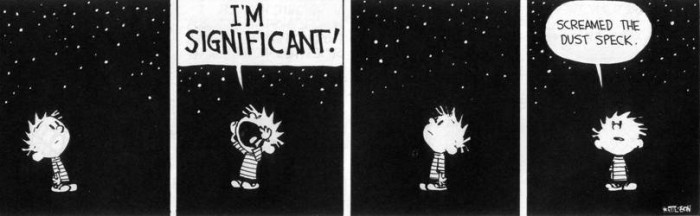
I stand proud in the starlight, gazing out at the Milky Way and knowing where my place is within that great spiral dance.


Reblog : Standing on the knife’s edge of the equinox

Here is a reblog of my post on the SageWoman’s channel at Witches and Pagans… http://www.witchesandpagans.com/SageWoman-Blogs/the-knife-edge-of-the-equinox.html

Now we are diving deep into the cool waters of the West, into autumn’s light.  The equinox is just around the corner, and the new moon of September passed.  This year we will be blessed by a nearly full moon over the equinox, which is at 21:44 on Sunday, 22 September (where I live in the UK).  The tipping point is near, the balance will shift, and we will enter into the fading times of restful thought, of dreaming in the dark.

This is a pivotal point of the year.  Relishing in that special moment, when day and night are equal, we can ride that wave of energy, humming with all that we bring to it, the sacredness of the time and place in which we celebrate.  Standing at the edge, looking over the horizon for a moment, maybe two; we breathe deeply before we fall forward into our lives once again, with its cycles and spirals.

As we plunge into the depths of the dark half of the year, what will we bring with us along the journey?  Now is the time to think about what it is that we wish to carry forward, and what it is that we wish to leave behind.  It is a time to think about honour, integrity, loyalty, courage and wisdom.  It is a time to look at our actions, at our lives, and see in what way we can live in a more truthful way to our own wild natures, yet still moving within the compass of compassion and awareness.

Are you living your ethical code?  Are you in tune with your moral ideal? If not, now is the time to address that.  Looking over the year, our lives, generations upon generations of souls, we see what seeds have been planted, and which are most beneficial for all.  We carefully collect these seeds, to carry them with us through the dark months, to plant again next year.  We hone our sense of ethics, we look deeply into the meaning of honour.  What actions have we made that have been dishonourable? What will we do to ensure that this does not happen again? How can we live in tune with our ideals, and support our community, our planet, and our universe?

I know I am breathing deeply of late, with prayers into the growing dusk and spending time reflecting upon what has been, what requires change.  For me, autumn is a time of reflection, the light upon the water. And as I stand on the knife’s edge, I hold close to my heart my inspiration, my awen, and laughing I will fall forward into the cool darkness of winter, knowing that the cycle continues.