So Happy

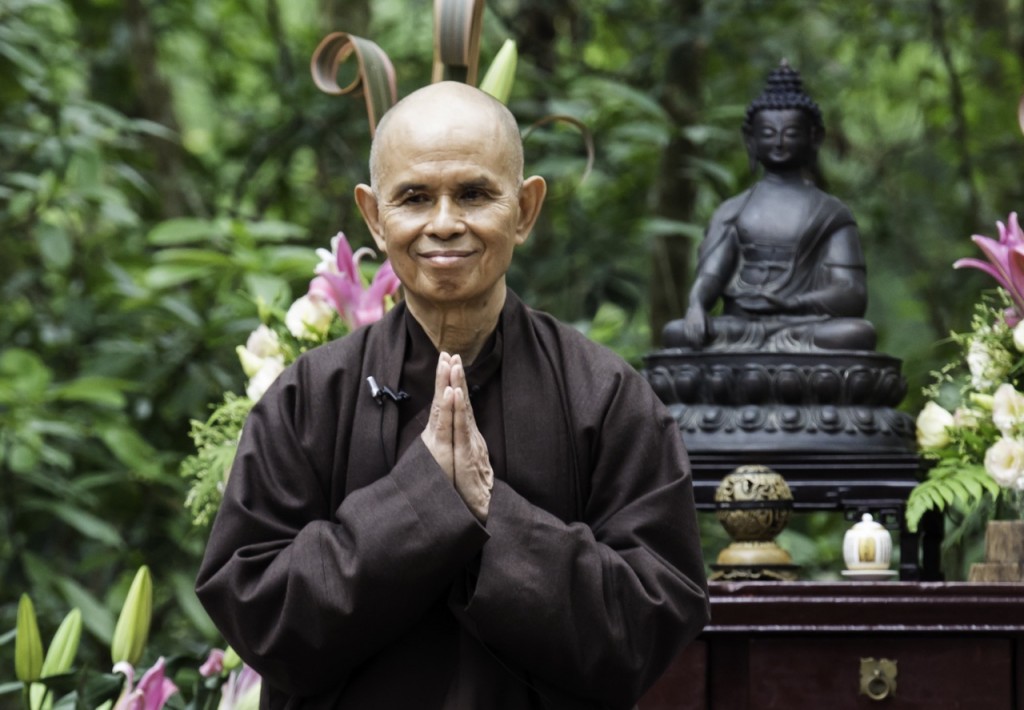
So happyZen Buddhist monk Thich Nhat Hanh suffered a massive stroke and brain haemorrhage last year, which left him incapacitated for many months. He is now able to move slightly, and recently managed to utter his first few words (pictured on the right). His joy for life, whatever suffering he may be going through, is an inspiration to all. He has changed some of his therapists’ lives through his example of mindfulness, one therapist even breaking down and crying when she realised just how she had never really seen the beautiful blue sky before in San Francisco. Thay couldn’t yet speak, however he did was point to the window to remind her of the beauty of the sky and the gift of opening our perception to it. It changed her world, and they were both happy.

The beauty and wonder of the present moment is there for us all. All we have to do is open our perception to see it. In the midst of great suffering there is the possibility of great compassion. In this compassion there is the power of love and beauty, two words that may be bandied about recklessly in our modern-day, but words, concepts and energies that have real power within them.

Through our suffering, we can make small steps towards awareness and mindfulness by becoming awake and aware, thereby easing our suffering and that of the world around us. We notice things that we wouldn’t otherwise notice in our suffering, as we turn our gaze outwards and perceive the world in its entirety rather than just our own suffering. Thich Nhat Hanh is a wonderful example of one who has seen and experienced the suffering of war, of exile, of persecution and physical trauma and still sees the power of love and beauty in the world around him. When I suffer, I shall breathe in and out, look at the sky, the trees, into the eyes of a loved one and know happiness and joy, there finding the deepest gratitude for my blessings.

Teaching without saying a word…

Thich Nhat Hanh by Kelvin Cheuk

Thich Nhat Hanh by Kelvin Cheuk

As Zen Buddhist monk, Thich Nhat Hanh’s health slowly begins to improve, he still provides an example of finding the joy, enchantment and wonder of the simplest things in life – eating a bite of food, taking a step upon Mother Earth, smiling at a friend.  Reading this latest update on his recovery, it really brought home the message that we can find joy anywhere, if we are able to open our hearts to it.  Despite circumstances that prove a tremendous difficulty, this gentle monk who has lived through war and exile continues to lead by example.  Thank you, and bless you, Thay for your teaching. May we be worthy students, and may we all find the joy and peace that is to hand in mindfulness.

Official Announcement

Plum Village, France
June 28, 2015

To all Plum Village Practice Centers,
To all Practice Centers and Sanghas World Wide,
To our Dear Beloved Friends,

We are happy to report that Thay’s health has improved greatly since he returned to his Plum Village Hermitage in early April. Every day Thay has been out in nature, enjoying the blossoms, listening to the birds and resting at the foot of a tree. Thay enjoys lying in his hammock next to the running creek, in the fresh cool of the bamboo grove he planted more than thirty years ago.

Doctors and nurses continue to visit Thay, and he receives physiotherapy, massage and acupuncture daily. The team of attendants continue to care for Thay and support his needs around the clock.

Despite his advanced age, Thay has been making remarkable progress.

One day, Thay decided for himself that he was ready to start swallowing solid food, and directed his attendants to prepare an apple, then a lemon and then an avocado. Thay enjoyed each bite with great delight, chewing each mouthful at least forty times before swallowing. Everyone was very surprised. Thay’s mindfulness, concentration and joy to really savor the food was remarkable. Since that day, with great concentration and determination, Thay has been able to enjoy feeding himself. The sisters have been investing their love and creativity in preparing diverse nutritious healthy food for Thay, which he eats with delight. As soon as Thay was able to nourish himself with several wholesome meals a day, he surprised all the doctors by successfully removing his own feeding tube, without any complications. Thay smiled, and we all smiled.

More recently, Thay has begun to develop his vocalisation, joining the attendants when they hum or sing. The first time this happened, one of the sisters was chanting in Vietnamese the name of Avalokita, the Bodhisattva of Great Compassion: Nam Mo Bo Tat Quan The Am. Thay suddenly pronounced the final sound “Âm” (pron. “um”) clearly and on cue. Miraculously, the word “Âm” actually means “sound”. Thay looked at those around him, his eyes gleaming, as if to say “everything is possible”. It was a very moving moment, and the attendants all gathered to continue to chant with Thay. Since that very first “um”, Thay now enjoys singing and humming every day, all the familiar Plum Village tunes in Vietnamese, English and French. At this point, Thay is able to voice the melody and, once in a while, he can form a word. He raises his arm in such a way as to express the meaning of each line, and has great joy and surprise every time he is able to produce a clear and accurate word.

Thay’s therapists have been struck by his extremely strong will to recover, and have pointed out to us that this is the most important factor in his rehabilitation. Thay has been very determined to train himself so he can recover his physical strength and regain his balance and posture. Thay is clear about what he wants to do, and what he does not want to do. He is now able to sit by himself, beautifully upright. In the last three weeks Thay has wanted to start walking, even though his right side remains paralysed. With the support of one attendant behind, and one at his right leg to help move it forward, Thay now practices walking meditation in the garden, several times a day. We can feel Thay’s delight and freedom at each step. Even though it takes great effort, we can see that, for Thay, each step is a step of victory, an affirmation of life and joy to be alive on this beautiful Mother Earth.

From time to time the whole monastic community of 150 monks and nuns has come to practice walking meditation with Thay. Last week we could feel Thay’s joy to see his disciples, and his happiness to lead the sangha in walking meditation. Thay pointed to the blue sky, the swaying bamboo, the smile of a brother, directing us to enjoy the present moment. Thay’s courage, determination and joy, despite his physical limitations, was a clear teaching for all those present as we walked behind Thay with our two healthy feet. With every step, Thay demonstrated that he will continue to practice no matter what the conditions. Thay was affirming that he would never desert the Path. He was encouraging us to stay on the path, and enjoy the wonders of life.

We would like to thank everyone for offering your loving support to Thay and the sangha through the past months. We are deeply grateful for your energy of compassion and prayers, and for your commitment to continue to practice mindfully and deeply for Thay. A special thank you to those who have sent us beautiful children’s drawings for Thay’s room and those who have sent us heartfelt donations to support Thay’s care.

The lotuses are blooming in our ponds, the plums are ripening in our orchards, and we are preparing our hamlets to welcome our guests for the Summer Retreat, around 800 people each week, for a whole month. The Summer Retreat is one of Thay’s favorite times of year. We will welcome families and children, and the Dharma Talks will be given by Thay’s continuation in the form of his Senior Dharma Teachers. Under the shade of the oak trees, bamboo groves and verandas in the late afternoon sun, we will see many circles of friends sharing deeply with one another. Hearts will be open, tears will be shed, as the sound of the bell reverberates.

Nine years ago Thay was asked,
“You will be 80 this year. Do you plan to retire as a spiritual teacher at any point?”

This is the answer he gave:

In Buddhism we see that teaching is done not only by talking, but also by living your own life. Your life is the teaching, is the message. And since I continue to sit, to walk, to eat, to interact with the Sangha and people, I continue to teach, even if I have already encouraged my senior students to begin to replace me in giving Dharma talks. In the last two years, I have asked Dharma teachers, not only in the monastic circle but also in the lay circle, to come up and give Dharma talks. Many of them have given wonderful Dharma talks. Some Dharma talks have been better than mine. I see myself in my continuation, and I will not retire. I’ll continue to teach, if not by Dharma talks then in my way of sitting, eating, smiling, and interacting with the Sangha. I like to be with the Sangha. Even if I don’t give a Dharma talk, I like to join walking meditation, sitting meditation, eating in mindfulness and so on. So don’t worry. When people are exposed to the practice, they are inspired. You don’t need to talk in order to teach. You need to live your life mindfully and deeply. Thank you.

These inspiring words are our compass as we prepare to lead retreats for thousands of people in the coming months: here in Plum Village this Summer, at the EIAB in Germany in August, and on the Miracle of Mindfulness Tour of the United States this fall. Please join us.

May you cherish the presence of those you love, and enjoy each step together.

With love and trust,

The Monks and Nuns of Plum Village

As Thay’s condition is now stable, and his path of recovery is long, we will post updates only occasionally. We will keep our global community informed of any major developments in Thay’s recovery. All official updates will continue to appear at plumvillage.orglangmai.orgvillagedespruniers.org, and www.facebook.com/thichnhathanh.

Healing Happens All Around

Just beautiful. Recorded in Plum Village Monastery (set up by Thich Nhat Hanh) by Tabea with the loving support of Sister True Vow.

Silence, the Author and Freedom

This long bank holiday weekend just gone has been spent mostly listening. I’ve stopped talking, for the most part; I’ve stopped the mental chatter to gain clarity. My aid in this exercise was drawing, working with coloured pencils where the only thing that mattered was the lines, the colours, the paper. My self had fallen away, and I was better able to see clearly. Art is liberation. Art is freedom.

As a writer, sometimes it’s hard to just stop. I’m usually always writing, at least in my head. Like a musician who writes their own music, who is always composing, I am always putting into words what is influencing me, what the muses whisper. It’s hard to turn that off sometimes. Through meditation I am able for thirty minutes to an hour to switch it off. Days of mindfulness. Through trancing I am able to leave it behind. Dancing also does it – especially dancing with my professional dance troupe, where when we are improvising we have to listen so hard to each other’s bodies that our own selves don’t get in the way. But this weekend the awen came through drawing and colouring.

When we’re quiet, when we’re still, we’re able to hear the world around us. When we stop that mental chatter, when we stop telling and retelling ourselves the story of our selves then we can hear the stories of others. We can be influenced and learn from the stories of others. We learn that we are not always right. We learn that we are not always wrong. We learn that we are never the same person every morning that we wake up. We change, we grow, we recede, we die and do it all over again the next day. In this exercise we learn that it is okay to differ from the person you were yesterday, that your opinions and thoughts will change over time, else they become dogma.

But essentially we have to learn to switch off first, before we can get to that head space. We need to find the silence, the void, the empty cauldron. Only when we are empty can we be filled. Only when we’ve poured out all the contents can we refill it with what nourishes us. We can’t subsist on the same old same old each and every day. We have to let things go, we have to have new ideas, new inspiration. Living in the present moment is what this is all about. Stuck in the past, we are not open to new ideas. Lost in the future, those ideas will never come. Here and now. Perfect freedom.

Tomorrow I will be a different person. Today I am different from yesterday. I question who this person really is, and then I let the question go. It doesn’t really matter. What really matters is freedom.

Mindful Mondays

Mindfulness is THE buzzword in self-improvement and New Age circles, but what does it really mean? If we go back to basics, we find that it is rooted in Buddhism, and can be easily explained in two simple phrases.

Chop wood. Carry water.

This is actually a pared down version of a slightly longer Zen story, wherein an enlightened monk recalls his process to enlightenment. He stated “When I was unenlightened, I chopped wood and carried water. When I became enlightened, I chopped wood and carried water.”

A lot of the time it can feel like we’re carrying wood and chopping water – not really getting anywhere, flailing around with a dripping axe. But when we stop, focus and concentrate, usually things become smoother, get done quicker and with little drama. Some may not want that – they enjoy the distraction that the flailing causes, or the drama, but after a while it can wear thin. Applying mindfulness, which is simply paying attention, can help alleviate any dis-ease that we may feel in our lives. That’s not to say that we’ll feel great all the time, but just by being in the present moment and not attaching to past experiences, dwelling on them or getting stuck in an emotion we can just get on with plain living.

So, with all that in mind, I’ve decided to dedicate an entire day to mindfulness each week. Ideally, I try to be mindful all the time, but I’m no Buddha. Having an entire day to focus on this will hopefully trickle down into the rest of the week, and all my thoughts, actions and their consequences. I’ve deemed this my Mindful Mondays.

So, what does this all mean? It means that when I’m eating breakfast, I’m just eating breakfast – not reading a book or article. When I’m washing the dishes, I’m just washing the dishes and not singing along to the latest Taylor Swift album. When I’m out walking, I am walking mindfully, at whatever speed, paying attention to my steps and my surroundings – not planning my evening meal. When I’m stroking my cat, I’m not thinking about writing the next chapter of my book. When I’m driving I’m really feeling the road beneath me, not dwelling on the driver that decided to overtake me on a blind summit. When I’m out for a meal with friends, I’m really paying attention to what they are saying, and not already forming a reply to their words before they’ve even finished talking.

Mindful Mondays are all about paying attention.

With that centred awareness, with that focus, we can simplify our lives immensely (part of my New Year’s resolution). People often fear that we will be less productive, but actually we will do jobs better, more efficiently, if we maintain that focus.

Being aware of your movements as well is doing a great kindness to your body. When we are walking down the stairs, we are focusing on our body moving. We will find that our movements may become less hurried and more graceful. A calm descends on our way of being. Like a leaf falling from the tree, we simply are in that moment, either floating down serenely or caught in a whirlwhind – either way it is done with grace.

So, like the monk who realised that life doesn’t change after enlightenment and that you still have to do the things you have to do, what you can change is how you do them. Mindfully, with awareness, focus and concentration. Give it a try, and let me know how you get on! Even if a day is too much, try an hour or half an hour each day. You don’t have to change your schedule, just do everything in it mindfully.

May you be peace as you chop wood and carry water.

ch5

The Present Moment

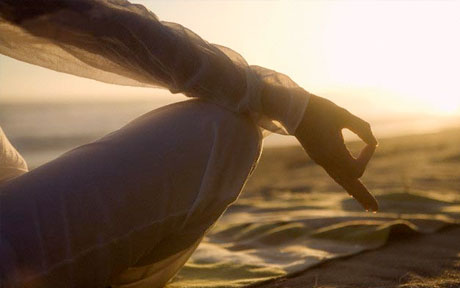
mudraThe present moment – it is a gift, and that is why they called it the ‘present’.

This quote is true on so many levels.  When we are awake, when we are aware to the present moment, we can see it for the very real blessing that it is. For the majority of people who aren’t living in fear through war or famine, who aren’t suffering from chronic pain or disease – simply being in the present moment is the greatest gift we can give to ourselves. Being aware of the present moment, even when faced with such conditions, may help to alleviate suffering.

When we wake up in the morning, we can become fully aware of that moment upon waking. We can lie in bed, feeling our selves in our bodies, listening to any sounds around us. We can do a mental body scan, to see how we feel, if there is any pain or stiffness, any tightness held through residual stress. We can consciously work to try and let that go, in order to start the day right.

We get up, we go to the bathroom.  We can do this with full awareness. When brushing our teeth, we hear the water flowing through the tap, we give thanks that we have clean water at our disposal when so many others do not.  We brush our teeth while concentrating on the simple task of brushing our teeth. So often our minds are already in a meeting at work, that when we brush our teeth, the whole meeting is there brushing our teeth with us!

Concentrating on one task at a time not only does a better job at the task itself, but can also help us to overcome areas in our lives when we are not at the best we can be – say, due to stress perhaps, or depression. If we focus on one task at a time, taking it and really being in each moment, we do not have the opportunity to be stressed, for to be stressed we need to be thinking ahead.  We alleviate our own suffering by being fully aware – in the case of depression, we may not see an end to the suffering, which brings it about in a continuous cycle. By being in the moment, we are not looking forwards or backwards, inwards our outwards – we are simply being.

By being, we are not mindless zombies – we are, in fact, more fully aware than most people by using concentration and focus in order to move about our daily existence.  We will make less mistakes, we will be less clumsy. We will brush our teeth so much better. We will be mindful of each step we take, and so we will trip less, stumble less, walking in total awareness to wherever it is that we need to go.

We eat our breakfast mindfully, thankful for having food to eat. We close the door to our houses, thankful  that we have a home, a sanctuary from the elements in which to live.  We drive our cars mindfully, thankful that we have such luxurious modes of transportation. We work, thankful that we have a job to provide us with the means for food and shelter, as well as the opportunity to work with others, be creative, make the world a better place – whatever it is that your job entails. We do our work with full attention, whether it is sweeping a floor or updating a database. We are mindful of our posture during the work, of our breathing – we take moments to simply be, to assess our bodies and our minds.

Try doing this for an hour or so a day, then a full morning.  Try to maintain awareness for as long as the sun is shining, or the rain is raining.  Become more aware not only of yourself but of your environment. By doing so, you will find that life may flow more easily and that you see where you can fit in more harmoniously.  Your actions will become more graceful, your movements filled with awareness and intention. Let your thoughts follow your body, flowing gracefully and with intention instead of running rampant through the mind.

Notice how this makes you feel – and if it feels good, keep doing it! May you all be gifted with the present.

Slow Down…

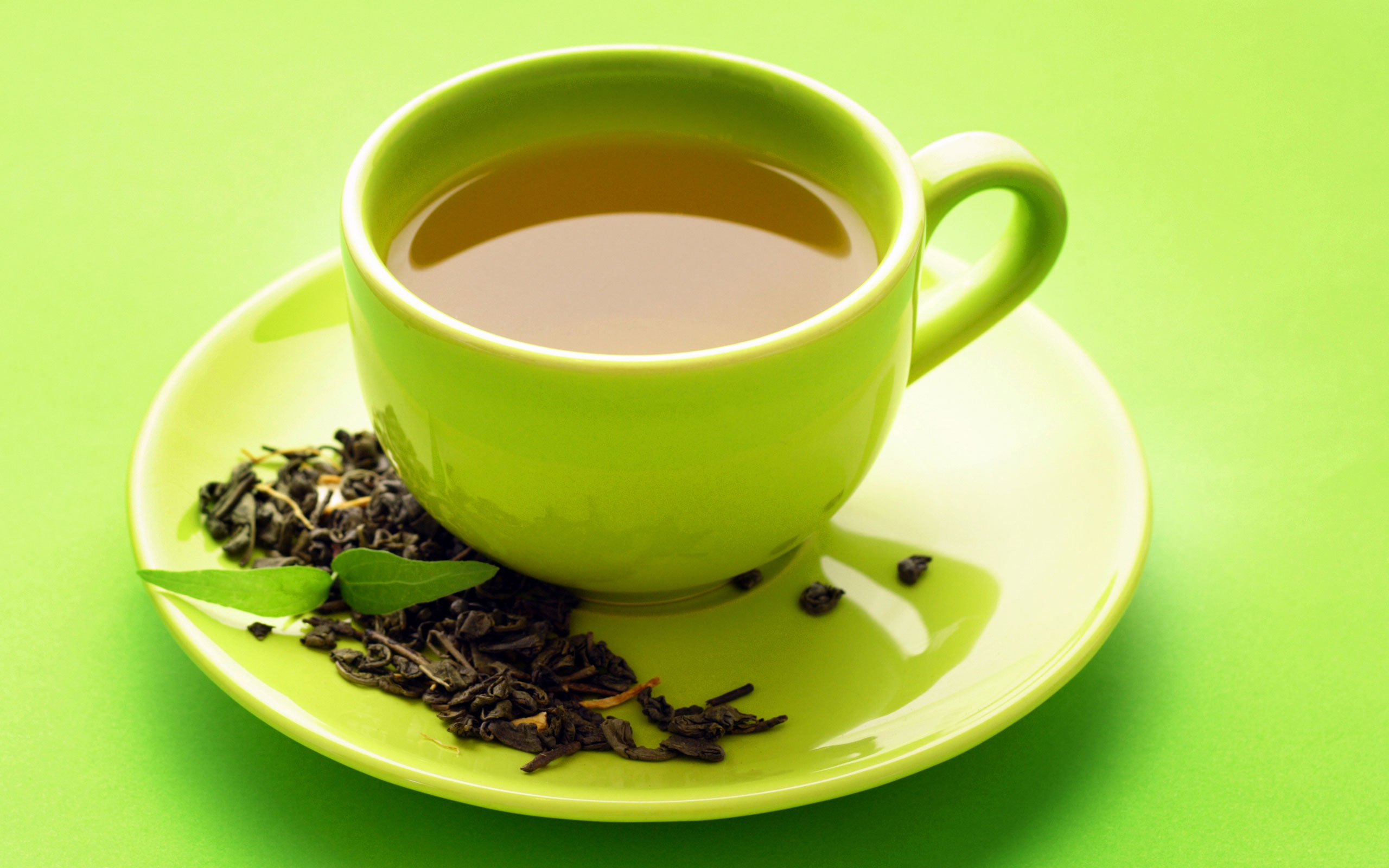
teaSlow down.

This little phrase may not only save your life, but can continue to make your life a lot easier.  I’ve been slowing down a lot this year, saying “no” to many things, acknowledging that there is already enough on my plate.  I’m taking time to simply be, to be in the moment, to stop the running around and to well and truly live.

Slowing down, physically, (and mentally, as a result – thoughts eventually stop racing around in your mind when your body slows down) can bring new joys in an otherwise missed-out world.  Eat your breakfast mindfully, slowly. Drink your tea mindfully, slowly.  Drive your car mindfully, slowly.  Just try these three things for the first week and you will notice a distinct improvement in how you feel. It’s amazing how changing small habits can have such a grand effect.

Eating and drinking too quickly, unaware of your food, can lead to stomach upsets, food waste, and over-eating just to name a few things.  Driving too quickly can result in loss of control of your car, and ultimately your life or the life of another.  Taking the time to really be in the moment of these “little” things, these everyday things, can bring a new awareness and gratitude for the small pleasures in life.

Feel the consistency of your breakfast banana, really smell it, touch it, run your fingers over it before you even peel it and begin eating.  Be thankful that you have that banana to eat. Savour each mouthful, chewing slowly, swallowing purposefully – it may sound silly, but just try it.  Drink your tea in beautiful china cups, taking the time to brew it carefully in a teapot, aware of every movement of your body as you do so.  Pour the tea with full awareness.  Raise the cup, feel the smooth porcelain on your lips just before the warm liquid dances on your tongue.  Be thankful that you have tea.  Touch your car before getting into it.  Sit down gracefully, feeling your body in the seat.  Start the engine mindfully, and drive with total awareness of the steering wheel beneath your hands, the road beneath the tires.  Be thankful that you have a car.

By slowing down you will may find yourself less stressed when you get to work, or when you arrive back home from work.  We are not meant to live under the constant stress that our everyday lives present us when we live un-mindfully.  By taking a few moments to slow down, to become aware of where we are and what we are doing, we can help heal and restore the balance in our lives.