Dancing with Nemetona available for pre-order!


Books

dwn smallAvailable for pre-order!

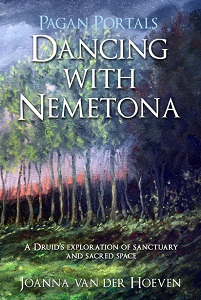
Dancing with Nemetona: A Druid’s Exploration of Sanctuary and Sacred Space

Nemetona is an ancient goddess whose song is heard deep within the earth and also deep within the human soul. She is the Lady of Sanctuary, of Sacred Groves and Sacred Spaces.

She is present within the home, within our sacred groves, our rites and in all the spaces that we hold dear to our hearts. She also lies within, allowing us to feel at ease wherever we are in the world through her energy of holding, of transformation. She holds the stillness and quiet of a perfect day; she is the stillness at the end of it, when the blackbird sings to the dusk. She is the energy of sacred space, where we can stretch out our souls and truly come alive, to be who we wish to be, filled with the magic of potential.

Rediscover this ancient goddess and dance with a Druid to the songs of Nemetona. Learn how to reconnect with this goddess in ritual, songs, chants, meditation and more.

Ellen Evert Hopman, author of Priestess of the Forest says “This lovely volume teaches us how to re-sacralize our life. In a sad and violent world we need to remember to find the sacred within all things; our room, our hearth, our home, our altar, our garden, and our sacred Grove. By doing this, ultimately we will find the sacred within all creatures; animal, mineral, plant and human. This is the lesson of Nemetona, divine protectress of the sacred enclosure, so wonderfully expressed within this book.”

Philip Carr-Gomm, chosen chief of the Order of Bards, Ovates and Druids says “For those of us upon the Druid path, Nemetona is an intriguing goddess. Joanna’s book welcomes us into Nemetona’s sanctuary that we might know her more intimately. With a combination of helpful exercises and the gentle but compelling wisdom born of Joanna’s relationship with this goddess, we discover that the concept of the Grove and the experience of Sacred Space is more rich and complex than we imagined.”

Encounters with unkindness

Can you remember the last time you were unkind to someone? Or thoughtless about something? Chances are, it doesn’t make you feel all that good – it probably makes you feel smaller, inside. When I remember acts of unkindness, either done by myself or done to myself, I feel a squirming inside, an uneasiness.

Still working on thoughts with compassion, exploring  words and acts of unkindness has been an enlightening experience.  Looking deeply at how it made me feel, what my reactions were, what others’ reactions were, what the outcome was, how it could have been prevented – all these I have meditated upon these last few months.  What I’ve come to realise is that no one likes to be unkind. There is no joy from it; perhaps if you are mentally ill, or there is a function in the brain that is not working as it should, then maybe you don’t feel bad, but on the whole, unkind acts do not produce any joy, any feelings of wellness.

Through our connectivity to each other, we perhaps have a deep-rooted empathy that we can acknowledge, if only we allow our ego to fall away, to quiet down and listen to what others have to say above the racket in our own brain.  We all share a life force; we all share a space on this planet, in this universe.  We are all thinking and feeling animals – if you are an animist, you also acknowledge a consciousness and inherent value in all things.  As humans, we all breathe the same air, air expelled from the lungs of others, turned into oxygen through various other life forms, breathing and sharing, breathing and sharing, the life breath that our ancestors breathed thousands of years ago, the life breath our lover breathes right now.

The word “kind” can mean a generous, benevolent, good person or deed, act or consideration.  It can also mean to be of a like group of individuals or objects – being of the “same kind”.  What I would posit is that the two meanings are entwined – kind thoughts, acts and deeds are a direct result of and inspired by being of the same kind.

Being unkind is distancing your self from others, making a distinct split in compassion from others, sometimes even diving into self-centredness in an anthropocentric world view.  Yet this distance, this separation is false – we can never be other than another life form on this planet. Another life form – we are surrounded by others all the time. Some are seen, some unseen – some are natural forces that create and destroy with violence or beauty, others are microscopic and surreal in their manifestation.  Yet we are never alone.

I think that the natural human tendency is to be kind towards others, for we have a specific consciousness that allows us to see and feel the repercussions of our actions.  We have the capacity of forethought, yet we use it all too seldom.  We are homo sapiens, the beings that are aware that we are aware. If we truly are aware, then unkind thoughts and deeds would not ring true in our heart of hearts.  Awareness is a journey towards the cessation of suffering.  If we are truly aware, then our suffering is eased.

Awareness comes in many forms, from simply being in the present moment to an understanding of the grander scheme of things, or seeing things from outside of your own personal perspective.  For how often has our perspective been wrong?  When we have been unkind to others, chances are it is because our perspective was skewed, and we reacted badly to a situation.  If we remember compassion, and strive to see the bigger picture, then with a little discipline and a lot of love we can change or modify our behaviour to help ease the suffering of all beings.

Those people who are unkind are trapped, and it may be helpful to remember that.  When someone is unkind to us, we can act with compassion. Sometimes that may mean seeing things from their point of view. Sometimes it may be walking away from a situation with honour and integrity.  When we find ourselves being unkind, or remember past deeds that are less than glowing, we can remind ourselves that it is up to us to choose freedom over chains.  We don’t have to let our behaviour rule us.  We can be passionate and loving without allowing emotion to skew our perspective. Emotion is such a personal thing, that it’s no wonder our wires get crossed all the time. It’s all about perspective.

In all things, I try to remember two words: be kind.  x

* Sparked by a conversation I had today with a lovely chap and artist (known as Bird Radio – do have a listen, there’s some really good stuff here! https://soundcloud.com/birdradio)  about perceptions, connectivity and many other things, this blog post simply poured out of me, and reminded me of the serendipitous nature of life and reality when it comes to, well, life!

New book coming out May 2014!

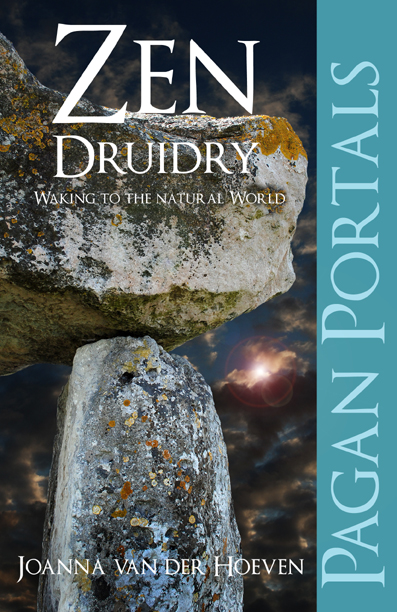
dwn smallMy latest book will be coming out in May 2014 with Moon Books Publishing, as part of their Pagan Portals series. This series is a set of introductory books, usually 25,000 words or less, on a topic that allows the reader to gain an foothold on a subject, and then inspire them to continue to find out more on their own personal journeys. This is the second book I have written for the series, the first being Zen Druidry (see my Books Page for how to buy).

Nemetona is an ancient goddess whose song has flowed from Europe into these isles, humming softly deep within the earth and also deep within the human soul. She is the Lady of Sanctuary, of sacred groves and sacred spaces. Not much has been recorded of her academically – we know of an altar in Bath that was dedicated to her by a Gallic artisan who felt her power and carved her elusive name for us to remember down through the ages.

She is present within the home, within our sacred groves and rites and in all the spaces that we hold dear to our hearts. She also lies within, allowing us to feel at ease wherever we are in the world, through her energy of holding, of transformation. She holds the stillness and quiet of a perfect day, she is the stillness at the end of it, when the blackbird sings to the dusk. She is Sanctuary, where we can stretch out our souls and truly come alive, to be who we wish to be, filled with the magic of potential.

Rediscover this ancient Goddess and dance with a Druid to the songs of Nemetona. Learn how to reconnect with this goddess of sanctuary in ritual, songs, chants, meditation and more.

Heaven and Hell

Blending Buddhist and Zen principles into my Druidry is integral to helping me find my personal spiritual path.  There is no monopoly on wisdom, and I find the teachings of both Buddhism and Druidry are universal.

One aspect of Buddhism that I find is often misquoted or misinterpreted is the idea that you push away your feelings, in order to function with a clear mind. What I have found is that within Buddhist training and discipline, you not only feel your feelings more, you also learn more from the feeling itself.

We are not taught to suppress our feelings within Buddhist teachings. Letting go of attachments is what is at the heart of Buddhism. That includes attachments to your feelings.  So, we feel our anger, our pain, our grief acutely – we give ourselves some time and space to truly feel these feelings, to express them if we need to with honour and compassion, and then to let go. It’s not easy to do at first, but not many things in life are…

I can be very quick to anger. But I have learned to try to not to act or react on that anger without truly feeling it first. In some situations, yes, you may have to make a immediate decisions. If you see an animal being abused, you act right away to stop it. However, you can feel your anger but not allow it to control you, thereby allowing you to act appropriately.  Anger can often to lead violence, physical or verbal, which only elevates the suffering in both parties and which resolves nothing. We should act to help each other and all other living beings on the planet.

When I get angry, if I feel I cannot react to a situation respectfully or honourably and I have the opportunity to take a moment, I do.  Taking a walk, or sitting and meditating with the anger is a great tool to use in order to gain a deeper understanding of it.  Learning how your mind works is an invaluable asset to living a life with greater understanding, or compassion.  If I can, I sit with my anger, or grief, pain, suffering and really feel it. I look it over from all sides.  I try to find root causes of it.  I see that anger reflected in others around me. I then place myself in the situation of the person that I am angry with.  Why am I angry with them? What has caused the anger within me?

Buddhism teaches that anger comes from within – it is not something that is bestowed from without. This is seen in the famous Zen story of the monk and the warrior:

The old monk sat by the side of the road. With his eyes closed, his legs crossed and his hands folded in his lap, he sat. In deep meditation, he sat.

Suddenly his zazen was interrupted by the harsh and demanding voice of a samurai warrior. “Old man! Teach me about heaven and hell!”

At first, as though he had not heard, there was no perceptible response from the monk. But gradually he began to open his eyes, the faintest hint of a smile playing around the corners of his mouth as the samurai stood there, waiting impatiently, growing more and more agitated with each passing second.

“You wish to know the secrets of heaven and hell?” replied the monk at last. “You who are so unkempt. You whose hands and feet are covered with dirt. You whose hair is uncombed, whose breath is foul, whose sword is all rusty and neglected. You who are ugly and whose mother dresses you funny. You would ask me of heaven and hell?”

The samurai uttered a vile curse. He drew his sword and raised it high above his head. His face turned to crimson and the veins on his neck stood out in bold relief as he prepared to sever the monk’s head from its shoulders.

“That is hell,” said the old monk gently, just as the sword began its descent. In that fraction of a second, the samurai was overcome with amazement, awe, compassion and love for this gentle being who had dared to risk his very life to give him such a teaching. He stopped his sword in mid-flight and his eyes filled with grateful tears.

“And that,” said the monk, “is heaven.”

(http://nathayogacenter.com/category-blog/106-spiritual-masters/86-inspired-zen-stories-the-secrets-of-heaven-and-hell)

When our emotions control us, when they are the ones that are raising the sword and not our true minds, that is when we are in hell. When we are aware of what we are doing, and in that awareness come to understand the nature of all beings, ourselves included, then we are in heaven.  Acting with intention, instead of reactionary living, is what can make this world a better place.

 My anger can fuel my fire to fight against injustices in the world. It is kept in check, it is a sheathed sword.  I know it is there, but I choose not to use it, instead working with compassion.  It is a conscious choice. Sometimes I fail, and when I do I notice where and how I have failed, and see the opportunity to work with that. I cannot blame others for my anger.  Their behaviour is nothing that I can control. What I can work on is my own behaviour towards them and to making the world a better place.  Giving like for like can be a very damaging thing to do.  When someone hurts us, our first reaction, our first desire is often to hurt them back.  It takes a lot of work to come out of this mindset, a lot of practice.

They say that practice makes perfect. So every time I let my anger rule me, as Thich Naht Hanh said, I am practicing being angry. Every time I practice awareness, mindfulness and compassion, I get better at those ways of being and living.  I know which I would rather aim towards!

Little Pagan Monastery Retreat

chalicwell1We are still taking bookings for The Little Pagan Monastery – if you would like to try a weekend away dedicated to the spiritual, and finding ways of incorporating that into your everyday life, then this may be just the thing! Set within the beautiful grounds of one of England’s most holy sites, Chalice Well Gardens, let this weekend inspire you!

Book your place here: http://www.autumnsong.org/talks-workshops-retreats.php

Death, Reincarnation and Impermanence

I haven’t sung for a while now. Sometimes when you’re sad or grieving, your body and soul just don’t want to sing.

Thankfully, I have friends and family who have been wonderful, who make me laugh and cry with tears of laughter alongside my tears of unhappiness. Both forms of tears are equally valid, and equally necessary during the time that you grieve.

Having spent the last few weeks thinking about death, I felt that I could now share some ideas with you that I have had about it.  I have been terribly upset at the loss of a very good friend, whom I will never see again.  There is a hole in my life where she used to be, and I still find myself looking for her after all these weeks. Good friends are deeply treasured, and a true blessing.

Meditating upon the nature of death, I have come to the same realisation that Alanis Morrissette came to in her song, “Thank You”.  At one point in the lyrics she states “How about not equating death with stopping”.  I have taken comfort in these words over the last few decades, but never really considered them deeply within my own soul – they were a kind hand on my shoulder from someone who empathises. Now I see the totality of the statement, with a little insight from the Buddhist notion of impermanence and the Druid views of both awen and animism.

The Buddhist view of life is that everything is impermanent, therefore we should try to not cling to anything, even our sense of self, with too much energy. Looking closer at this idea, we see that we are constantly changing, in our ideas, our opinions, our way of life, and we are not the same person we were, say 10 years ago. On a more physical level, we are also constantly changing, sloughing off old skin, our hair growing, our bodies changing shape as we grow older.  Clinging to one thing leads to suffering – if we simply accept that change is a part of life then our suffering will be reduced.

Meditating up on this over the last week, some core truths have sprung up for me that have helped with my suffering.

We are all made up of energy, energy that is in constant motion.  This energy did not spring out into being – you cannot get something from nothing.  This energy is in constant change and flux, according to the environment and circumstances it finds itself in.  Therefore, a Zen koan suddenly made sense to me: “What was the face you wore, before you were born?”

I realised that had never been born.  When we think of being born, we think of suddenly coming into being, but we have already been existing since the dawn of time. It is only our form that has changed with the millennia.  Can we really pinpoint the time we were born, or created? Is creation when egg meets sperm? I am contained in the blood of my father’s fathers and my mother’s mothers as well – can there be a cut-off point? I am the genetic result of thousands of ancestors – where do they end and I begin?  Thinking more laterally as well, I am made up of some of the minerals found in stars and galaxies far away. My blood contains water that I have drunk from all over the world in my lifetime. In this water is life and death of legion of beings. Where do I begin?

In Druidry, many Druids are also animists, believing in the inherent value of all things, whatever their form.  Nothing is more valid or worth more than another thing – they are simply existing in various forms that we perceive throughout our lifetime.  This worldview incorporates the smallest atom to the largest mountain.

If I cannot pinpoint the time when I began to exist, then there cannot be a point in time when I die.  I shall simply change form, the energy running on different currents and in different patterns. Thinking about my friend, I was blessed to know her in her most recent physical form for years, which was always changing anyway.  She has not died, per se – energy cannot simply cease to be.  We often think of death as annihilation. It cannot be so – energy moves but cannot be destroyed.  And so, her current form is undergoing a different process of change. The accepted concept of birth may find its opposite in death, but the term life has no opposite.

What happens to our souls when we die, if we believe in souls, is still the great mystery. But what I’ve come to realise is that at the very least, we can take inspiration from the physical and perhaps also apply that to the idea of the soul as well.  The physical form has now been returned to the earth, decomposing through the process of bacteria and other creatures that are working to change the physical form.  But the energy is still there, being changed into millions of different forms in the circumstance.  Flesh is being eaten by worms and turned into rich soil. That rich soil will feed the plants atop her grave. Those plants will release oxygen into the atmosphere. That oxygen will be breathed by all manner of creatures, or even combine with hydrogen to form water. So, my friend is there, in her grave, but she is also in the plants, in the air, in the clouds, in the water, and inside me.  Her physical form has changed, but it was always changing anyway. Impermanence.

Once I gained this insight, my suffering was eased somewhat.  Not only for the loss of her in my life, but also my own fears of death.  There is no such thing as stopping. Death is not annihilation. It is simply a process, like birth is, into a different and ever-changing physical form. Whether the soul follows some parts in this process is up for question – I like to think so.

Perhaps this is what reincarnation is all about.  The nature of change, the nature of being. Perhaps I have simply been looking at reincarnation too literally.  Reincarnation is simply the new physical form something takes when the circumstances are favourable to its existence. Myself included.

My friend is still here, for she can never go away.  All that has ever been is still here, in some form or another.  We can take comfort in that and ease our own suffering. We can take inspiration from that and live our lives in accordance with it, allowing us to not just to go with the flow, but to be the flow itself, whether that is of the river, the wind, our bloodlines, the Tao or the awen itself.

Thank you, dear friend, for the inspiration and the teaching.  You have taught me so much over the years, and I look forward to still many lessons to come.

Reposted from my blog at SageWoman: http://www.witchesandpagans.com/SageWoman-Blogs/death-impermanence-and-reincarnation.html

Craft Names

Autumn SongWithin Druidry, and indeed in modern Paganism, it is usual to adopt a craft name within your tradition.  It is not necessary, and if you feel that you don’t need one, or one doesn’t appeal, then by all means forego the craft name. However, choosing a craft name, or having one bestowed upon you can enhance your connection to your tradition, if you allow it.

Craft names can provide an air of mystery and magic.  We can choose something that reflects our work, such as Oak Seeker, Coll (hazel, if working with ogham), or Pathfinder.  We can choose something that reflects a part of the environment that we love – Alder, Willow, Rain.  We can put two words together that express a deep part of our soul, or a deep love that we have, such as Gentle Bear, Running Horse, or my craft name – Autumn Song.  We can adopt names of the gods and goddesses that we love, such as Nehalennia, Freya, Lugh, Branwen, Rhiannon, Bridget.  There are also mythological names like Merlin, Morgan and Nimue that might strike a chord deep within our hearts.  We can even choose names from fantasy books that we love – Gandalf, Radagast, Arwen, Goldberry, Eomer, Eowyn, Faramir (all Lord of the Rings names).  What matters most is that our name expresses a deep part of our soul; that when we utter it, write it, exhale it into the twilight it means something to us, connects us to the awen.

You can inscribe your craft name upon your altar, or your tools. You can sign correspondence with it.  You may even change your name to your craft name if you feel that better reflects who you are.  I like having both names, as I can honour my two grandmothers for whom I am named after, and honour my tradition with my craft name. Besides, it took me long enough to learn how to write my own name, and I’m sticking to it…

We might choose our craft name, or we might be gifted it by another. We could meditate, commune with the local spirits of place, or deity, and ask that they bestow us a name. In some magical traditions, a craft name is given upon initiation into the tradition, or upon completion of various grades.  When working alone, we do not have to wait to have a name bestowed upon us – we can seek it out ourselves from whatever inspires us whenever we feel ready.  We can ask our ancestors, our spirit guides, even friends and family for ideas and inspiration.

Our craft names may also change with time.  As we grow and develop in our spirituality, we might find that we outgrow our name, and thereby be inspired to choose another that better suits our current work.  We can include our naming in ceremonies, whether it is our first time or our fifth time in choosing a craft name.  Taking on a name is not something to be done lightly, however.  It requires much thought and meditation if you wish for it to be important to your work.

Whatever name you choose, or however you decide to be named, honour that name with all that you are.  Find ways of being that reflect your name in deep and compassionate ways, working to create peace and harmony in your life and in all life around you.

Zen and the Awen

The Celts had Indo-European roots, migrating across Europe and leaving their mark across many countries.  They share many similar spiritual beliefs to other traditions – Buddhist, Saxon and Norse just to name a few.  There are similarities in artwork and other modes of creative expression.  Finding something that is “pure” in any tradition is, at least in my opinion, unattainable. We are constantly being influenced by other people, whether it was 50 years ago, 500 or 5,000 years ago.

Incorporating Zen and Druidry has given me a personal life path that makes a lot of sense in my daily practice.  Simply because Zen Buddhism is an Eastern tradition doesn’t mean that it can’t work with what is commonly thought of as a Western tradition.  (For a more in depth look at Druidry and other Dharmic paths, including Buddhism, Jainism and Hinduism, Philip Carr-Gomm has written a brilliant page on The Order of Bards, Ovates and Druids’ website – http://www.druidry.org/druid-way/other-paths/druidry-dharma.)

Zen and Druidry blend together to form a life path that is utterly devoted to being in the present, giving the Druid a total immersion within nature.  This immersion, not just going with the flow but being the flow itself, is what makes it so special. Zen teaches us to let go of our sense of self, to silence our chattering minds in order to be able to pay attention to the world at large. It also teaches us of discipline, learning how our minds work and how we are so often ruled by our minds, through bad habits, reactionary living, destructive behaviour and so on.

With Soto Zen, the mind is brought under control through hours and hours of meditation, of learning to simply “be”, slowly and gently silencing our “monkey mind” so that we may better hear the songs of the universe.  This is what is meant by releasing the sense of self – it is not, as so many people assume it to be, becoming a mindless zombie.  It is allowing other songs, other voices to be heard above our own so that we may better integrate. We will still have opinions, but we will cherish them less, for we know that everything is in constant change and flux.  We will have a sense of self, but again we hold to it lightly so that we may better see where we fit in the world and where we can do the most good. It is not annihilation – it is immersion, awareness and mindfulness.

Within Druidry, we learn to work with awen, with inspiration and the flow of life itself to see where we fit in the grand scheme of things. We work to see how we can live with the least harm to ourselves and the planet, and also what we can do to make the world a better place.  We work to create peace within ourselves and peace in the outer world as well.  Using our natural abilities and skills, we may work with songs and poetry, or with visions or herbal medicine, with roles in teaching and counselling, in law or in environmentalism – the list is endless.  We are devoted to helping and conserving nature and our planet, sharing the awen and giving back for what we have received.

Using the techniques from Zen for training the mind and the love of nature from Druidry we can find a way to immerse ourselves in our spirituality that is so deeply integrated on so many levels.  When out walking in the forest, we can lose our sense of self in order to become the forest.  Once we are the forest, we are able to drink deeply from the flow of awen that is all life around us.  We become the trees, the deer, the fox, the boulder, the streams and the badger.  We can learn so much from this integration which can also rejuvenate us, providing us with even more inspiration.  We are not looking at ourselves being at one in the forest; we have lost even that in order to become the forest.  When we are fully immersed in simply “being”, we are fully in the flow of awen.

Our footsteps become lighter, our passage barely noticeable. Like the deer, we are able to bound through the trees, awake and aware to every sense.  Indeed, all our sense become sharper, clearer, for our minds are not running us ragged thinking about what to have for dinner, that paper that is due, the meeting we have on Monday.  Fully in the moment, we become the awen.

Zen Buddhism has also leant another aspect to my Druidry that has been rich and rewarding – the idea of compassion. Again, many people misinterpret compassion, seeing it as weak, or being a pushover. Why be kind to others when so few are kind to us?  Living with compassion is what enables us to connect once again to that all important word in Druidry – awen.  The songs of life can only be heard if we try to understand them. We cannot understand them unless we open ourselves to compassion.

In one of the Grail legends, Perceval reaches the wounded Fisher King, and is invited into his castle.  The knight does not ask the King why he is wounded, or how it happened. He shows no interest in learning the story behind the wounded King. Upon sharing a meal with the King, the knight also sees a courtly procession whereby a young maiden carries the Grail through the hall repeatedly throughout the night. Again, trying to appear worldly and nonchalant, Perceval does not ask about this.  These two incidents are the clues in which the Fisher King might be healed, and in which Perceval failed at his chance in finding the Grail.  If he had only asked the King “What ails thee?” then the King would have been instantly and magically healed.  If Perceval had only asked “Whom does the Grail serve?” he would have understood its purpose, and achieved the totality of his quest.

The simple question of “What ails thee” is the showing of compassion.  It is taking ourselves outside of our own minds and our own troubles and asking another person what is wrong, seeking to alleviate their suffering. Also, by asking our selves (the separation of the words, instead of writing ourselves is intentional here) “What ails thee?” we take the time to look within, to perhaps explore shadow aspects of ourselves.  Within many Eastern traditions, it is through meditation that we understand our selves better, and also understand and redirect our reactions to the world – ie. instead of simply reacting to an event, we act with intention, with mindfulness and awareness. With the Grail question, we can ask this of our selves as well as others in pretty much any situation, therefore eliminating a reactionary response for a more intentional approach. In doing so, we may just find the healing for our selves and the world that is so needed.

The second Grail question, “Whom does the Grail serve?” invites us to question our intention.  Whether we are experiencing pleasant or unpleasant aspects in our lives, we can ask our selves “who does this serve?”, thereby eliminating that which is no longer necessary, and bringing joy, awe and wonder back into our lives.  With old habits and patterns of behaviour that we wish to be freed from, we can simply ask this question over and over again until we have the answer that is required for spiritual growth.  We can ask this question in every aspect of our lives, from our weekly shopping (in order to make better choices not only for ourselves, but the planet) to our everyday interactions with other people.  If we are making a positive change instead of falling into negative, but comfortable patterns then we are on the road to spiritual progress. Reminding our selves of the Grail questions has been integral to my learning these past few months, becoming a mantra for everyday life.

In our quest for wholeness, we can either run around in circles, questing after the Grail through established means, or we can simply look within to gain a better perspective on compassion and the divine, whether it be male or female, or even genderless.  It is the deep exploration within that allows us to bring that knowledge out into the world – we cannot simply spend our lives gazing at our own navels – we must bring the Grail out for the benefit of others. We must offer the gifts of compassion and self-awareness. In this, the Grail Mysteries are best served.

In this way as well, both Eastern and Western traditions come together to allow us to help not only our own suffering, but that of the world.  We can learn the values of compassion and mindfulness, and we also look deep within for the inspiration to live an integrated life that reflects the natural cycles of the world around us.

We do not simply touch the awen every now and then – we become the awen ourselves.

(From my blog at Moon Books – http://moon-books.net/blogs/moonbooks/zen-and-the-awen/)

Zen Druidry

zen druidryZen Druidry still at the low Kindle price of UK  £1.23 – what a lovely number! Paperback copies available starting at £1.05, used copies from only 99p. In the US, copies start from $2.02 (another lovely number) and in Canada from $0.01!!!) . Read reviews by leaders and authors in the pagan community such as Philip Carr-Gomm, Graeme Talboys, Nimue Brown and more! Part of Moon Books‘ Pagan Portals series.

Buy in the UK here

Buy in USA here

Buy in Canada here

For other countries, please refer to Amazon provider associated.