Deep Paganism

Reblogged from my articles at Moon Books – http://moon-books.net/blogs/moonbooks/deep-paganism/

As Pagans I feel that we naturally tend towards a worldview that is less anthropocentric, especially if we follow an animistic path.  Our love of nature, whether it is the world around us, or human nature, or both leads us on a journey that can take us outside of our selves, and thereby gaining a wider perspective on the whole.

Deep ecology is about thinking less about the benefits towards humanity, and more about the benefits to the environment. Buddhism, with its tenets of compassion, is very much in a similar vein; we try to drop the ego in order to benefit the world, and by becoming less self-centred, are better able to help others.  Some spiritual and secular journeys can put too much stress on human relations, and not enough on the wider web of life.  Within Paganism, we can see that we are always connected, and that connection is what inspires us to lead a life more attuned to the natural cycles, or vice versa.

In my own Druidry, what I seek is total immersion in my natural environment. I strive to loosen my sense of self as an individual and instead seek to blend my song with that of the world around me, finding a harmonious union.  When out walking on the heath or in the woodland, I let the “I” drop away, and become totally immersed in the present moment. I feel that this gives me a greater connection to the world, allowing what Buddhism calls the dharma to flow.  Dharma is simply reality, which we so often tend to avoid at all costs. When we realise the beauty of the present moment, when we can truly live it in every sense of the word, then we are truly connected to everything.  We become part of everything, and in this I also see the Druid concept of awen, or flowing inspiration; the life force itself.

If I can free myself of myself, I can open truly to the songs of the universe.  There is no separation – I am the heath, the forest, the deer.  Movements are made in full awareness, and every step is taken in love and reverence. Every breath is a blessing. Everything my eye falls upon is a gift.

In living such a life, what is fundamental is a respect for all things. This is at the heart of animism, which sees the inherent value in all things just as they are.  No one thing is more worthy than another. Each thing is an expression of itself in full blossom, in full fruition.  Even my self, my physical self, is simply energy taking form as my body in this present momen t and perhaps even my mind), for however long or short a time span.  This body is in permanent change and flux, growing and changing shape, eventually dying. In death the change continues, and the form alongside the energy flows in different currents. My body will continue to change, as cells break down and bacteria work to return the physical form to the earth.  The process of life and death, of decay and regeneration is honoured within Druidry and within animism. No one process even is more important than the other. Birth is no more important than death. What we do realise is that life has no opposite – there is only flow, change, awen.

My sense of self is of little consequence in the grand scheme of things. What matters is that I pay attention to what is happening around me, and use that to inspire me to live my life accordingly, with honour and respect.  Paganism allows us to leave behind all the machinations of humanity to follow a different flow, one where we see where we fit in the puzzle.  The love of nature inspires us along the path, demonstrating that there is more to the world that our own human lives.  We are the country folk, the paganus. Even though we may live in cities, we still feel the pull and hum of nature around us, reflected in the sun’s cycles, the seasons, the flows of human nature.

Immersion is key.  If we can allow ourselves to not only ride the current, but become one with the flow itself, we are then blessed with a wholly different perspective not based upon human need and desire.  There is much more to the world than our anthropocentric view, and we honour that world with all that we are.

Riding the Tides of Perimenopause

Re-blogged from my channel at SageWoman:

SistersRiding the tides of perimenopause, I find that my sense of self, ideas and concepts that I held about myself are shifting like pebbles on a shingle beach, never in the same place twice, forming new solid banks and spits jutting out into the vastness of the ocean.  I live right on the coast of the North Sea, and am finding inspiration and a sense of kinship with the ocean that I have never felt before.

Swells and surges of emotion run through me as hormones find their way to the balance point in the dance of change and impermanence.  My body is changing, the elasticity in my skin fading, laughter lines showing, cellulite appearing in new places.  The curves in my body are becoming softer, gently changing over time.  My breasts sometimes ache as my body tries to find a new way of being.  Periods are nearer to each other, sometimes only two weeks apart, sometimes light, other times so heavy I cannot leave the house.  Sometimes I feel like I did in my teenage years, without the skin breakouts!

It’s not only my body changing – emotions run deeper than ever before.  Awareness of the emotions keeps them in check, allowing myself to truly feel them without too much attachment.  They are sometimes like a knife, cutting through the dross to reveal the jewel beneath; instinct and empathy allowing me to connect with the world on a much deeper level than previously imagined.

My attachments to my body are also becoming less and less.  I am ever thankful for this healthy body, that can dance and run and sing with abandon.  Thoughts about how others relate to me are changing as my body changes. I notice people interacting with me differently – or is it that I am the one who is different?  In our dance troupe, when we are performing, I notice that the attention is gently shifting away from myself to younger ladies in the troupe.  I smile to myself as I notice this, seeing how this makes me feel.  There is a tinge of sadness, as I release the undercurrents of vanity, as well as the newer notes of joy in not being wrapped up in the notions of youth that our culture is so focused upon. My heart goes out to the beautiful young dancers in our troupe, who have to deal with the extra attention.  My soul connects with the beautiful older women in our troupe, whose sense of self pervades a solidity that wholly and utterly inspires me.  I am seeing beauty where I never saw beauty before – it is truly remarkable.

I don’t crave attention in the same way as I used to.  What others think matters a lot less than before.  What does matter is how my life is lived, inspired by the world around me and walked on a path of honour and integrity. I see this reflected in the older women in my life, how comfortable they now appear.  I wouldn’t want to be young again – in looks or age.  I am at home in my body.  Some women are blessed with this from an earlier age, others like me perhaps find it during the hormonal shift. What is important is that we find that stillness within, like a pool of water that becomes clear when all our doubts and worries about our self finally settle, allowing us to mirror the wonder of the heavens.

One beauty is not better or worth more than any other form of beauty – all forms of beauty are simply that- beautiful.  Our soul takes form in our bodies, an impermanent expression of our being.  Learning to love the impermanence allows us to see the beauty in all stages of life and death, growth and decay.  It can allow us to be comfortable with who we are, no matter our age, what condition our bodies are in, what life throws at us.

This latest journey has just begun, and I have to say, I am loving the steps along the way. I breathe with mindfulness and take each step with love and joy even as I feel sadness and release. Life is precious, and impermanent, and in our awareness of impermanence lies our ability to truly live.

Dancing with Nemetona available for pre-order!


Books

dwn smallAvailable for pre-order!

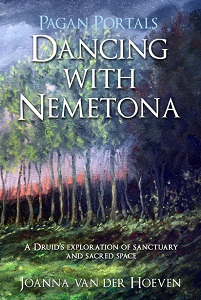
Dancing with Nemetona: A Druid’s Exploration of Sanctuary and Sacred Space

Nemetona is an ancient goddess whose song is heard deep within the earth and also deep within the human soul. She is the Lady of Sanctuary, of Sacred Groves and Sacred Spaces.

She is present within the home, within our sacred groves, our rites and in all the spaces that we hold dear to our hearts. She also lies within, allowing us to feel at ease wherever we are in the world through her energy of holding, of transformation. She holds the stillness and quiet of a perfect day; she is the stillness at the end of it, when the blackbird sings to the dusk. She is the energy of sacred space, where we can stretch out our souls and truly come alive, to be who we wish to be, filled with the magic of potential.

Rediscover this ancient goddess and dance with a Druid to the songs of Nemetona. Learn how to reconnect with this goddess in ritual, songs, chants, meditation and more.

Ellen Evert Hopman, author of Priestess of the Forest says “This lovely volume teaches us how to re-sacralize our life. In a sad and violent world we need to remember to find the sacred within all things; our room, our hearth, our home, our altar, our garden, and our sacred Grove. By doing this, ultimately we will find the sacred within all creatures; animal, mineral, plant and human. This is the lesson of Nemetona, divine protectress of the sacred enclosure, so wonderfully expressed within this book.”

Philip Carr-Gomm, chosen chief of the Order of Bards, Ovates and Druids says “For those of us upon the Druid path, Nemetona is an intriguing goddess. Joanna’s book welcomes us into Nemetona’s sanctuary that we might know her more intimately. With a combination of helpful exercises and the gentle but compelling wisdom born of Joanna’s relationship with this goddess, we discover that the concept of the Grove and the experience of Sacred Space is more rich and complex than we imagined.”

Encounters with unkindness

Can you remember the last time you were unkind to someone? Or thoughtless about something? Chances are, it doesn’t make you feel all that good – it probably makes you feel smaller, inside. When I remember acts of unkindness, either done by myself or done to myself, I feel a squirming inside, an uneasiness.

Still working on thoughts with compassion, exploring  words and acts of unkindness has been an enlightening experience.  Looking deeply at how it made me feel, what my reactions were, what others’ reactions were, what the outcome was, how it could have been prevented – all these I have meditated upon these last few months.  What I’ve come to realise is that no one likes to be unkind. There is no joy from it; perhaps if you are mentally ill, or there is a function in the brain that is not working as it should, then maybe you don’t feel bad, but on the whole, unkind acts do not produce any joy, any feelings of wellness.

Through our connectivity to each other, we perhaps have a deep-rooted empathy that we can acknowledge, if only we allow our ego to fall away, to quiet down and listen to what others have to say above the racket in our own brain.  We all share a life force; we all share a space on this planet, in this universe.  We are all thinking and feeling animals – if you are an animist, you also acknowledge a consciousness and inherent value in all things.  As humans, we all breathe the same air, air expelled from the lungs of others, turned into oxygen through various other life forms, breathing and sharing, breathing and sharing, the life breath that our ancestors breathed thousands of years ago, the life breath our lover breathes right now.

The word “kind” can mean a generous, benevolent, good person or deed, act or consideration.  It can also mean to be of a like group of individuals or objects – being of the “same kind”.  What I would posit is that the two meanings are entwined – kind thoughts, acts and deeds are a direct result of and inspired by being of the same kind.

Being unkind is distancing your self from others, making a distinct split in compassion from others, sometimes even diving into self-centredness in an anthropocentric world view.  Yet this distance, this separation is false – we can never be other than another life form on this planet. Another life form – we are surrounded by others all the time. Some are seen, some unseen – some are natural forces that create and destroy with violence or beauty, others are microscopic and surreal in their manifestation.  Yet we are never alone.

I think that the natural human tendency is to be kind towards others, for we have a specific consciousness that allows us to see and feel the repercussions of our actions.  We have the capacity of forethought, yet we use it all too seldom.  We are homo sapiens, the beings that are aware that we are aware. If we truly are aware, then unkind thoughts and deeds would not ring true in our heart of hearts.  Awareness is a journey towards the cessation of suffering.  If we are truly aware, then our suffering is eased.

Awareness comes in many forms, from simply being in the present moment to an understanding of the grander scheme of things, or seeing things from outside of your own personal perspective.  For how often has our perspective been wrong?  When we have been unkind to others, chances are it is because our perspective was skewed, and we reacted badly to a situation.  If we remember compassion, and strive to see the bigger picture, then with a little discipline and a lot of love we can change or modify our behaviour to help ease the suffering of all beings.

Those people who are unkind are trapped, and it may be helpful to remember that.  When someone is unkind to us, we can act with compassion. Sometimes that may mean seeing things from their point of view. Sometimes it may be walking away from a situation with honour and integrity.  When we find ourselves being unkind, or remember past deeds that are less than glowing, we can remind ourselves that it is up to us to choose freedom over chains.  We don’t have to let our behaviour rule us.  We can be passionate and loving without allowing emotion to skew our perspective. Emotion is such a personal thing, that it’s no wonder our wires get crossed all the time. It’s all about perspective.

In all things, I try to remember two words: be kind.  x

* Sparked by a conversation I had today with a lovely chap and artist (known as Bird Radio – do have a listen, there’s some really good stuff here! https://soundcloud.com/birdradio)  about perceptions, connectivity and many other things, this blog post simply poured out of me, and reminded me of the serendipitous nature of life and reality when it comes to, well, life!

New book coming out May 2014!

dwn smallMy latest book will be coming out in May 2014 with Moon Books Publishing, as part of their Pagan Portals series. This series is a set of introductory books, usually 25,000 words or less, on a topic that allows the reader to gain an foothold on a subject, and then inspire them to continue to find out more on their own personal journeys. This is the second book I have written for the series, the first being Zen Druidry (see my Books Page for how to buy).

Nemetona is an ancient goddess whose song has flowed from Europe into these isles, humming softly deep within the earth and also deep within the human soul. She is the Lady of Sanctuary, of sacred groves and sacred spaces. Not much has been recorded of her academically – we know of an altar in Bath that was dedicated to her by a Gallic artisan who felt her power and carved her elusive name for us to remember down through the ages.

She is present within the home, within our sacred groves and rites and in all the spaces that we hold dear to our hearts. She also lies within, allowing us to feel at ease wherever we are in the world, through her energy of holding, of transformation. She holds the stillness and quiet of a perfect day, she is the stillness at the end of it, when the blackbird sings to the dusk. She is Sanctuary, where we can stretch out our souls and truly come alive, to be who we wish to be, filled with the magic of potential.

Rediscover this ancient Goddess and dance with a Druid to the songs of Nemetona. Learn how to reconnect with this goddess of sanctuary in ritual, songs, chants, meditation and more.

Druid Magic

magic circleDruids aren’t associated with magic in the same way that other Pagan traditions, such as Wicca or Witchcraft seem to be.  Yet I’ve found that in every spiritual path, there are elements of magic contained within that are often very similar in nature.

What is Druid magic? Do Druids cast spells? Have magical tools? Do we think of Gandalf, brandishing his staff and saying mightily “You Shall Not Pass!” or his mushroom-addled fellow, Radagast, who lives in the woods, talks to animals and, according to the latest Hobbit films, has a rabbit-powered all-terrain sleigh and brings hedgehogs back from the dead?

Of course it’s none of these things. It would be pretty cool if it were. But Druid magic, like all magic, is subtler than what we see on the screen or read in books.  There isn’t lightning shooting from fingertips or fire balls sparking from one’s eyes.  In fact, many modern Druids don’t use magic at all, or don’t call it magic.

So what is magic? It has often been quoted these days as manipulating the natural forces of energy within nature to provide a desired result.  This could have many interpretations.  Flicking a switch and having my living room lit up at night could fall within this category, but I’m being a bit facetious. It is also often said that magic should be the last recourse after having tried all mundane means of solving a problem.  So how do Druids use magic, if at all?

There is a growing trend of blending Wicca and Druidry, as in Philip Carr-Gomm’s new book, Druidcraft.  This is a lovely way of expressing the divide between two very similar paths; kind of bridging the gap that lies between.  I thought the book, especially the audio book, was brilliant, and yet I’m still not one to perform spells on a regular basis.  Why is that?

As stated previously, magic is often the last recourse to a situation.  If all other means have been tried, and I’m plum run out of ideas, then I might turn to magic. I might equally turn to prayer. Praying for some guidance, asking the gods, the spirits, the ancestors for a little advice when I’m stuck could be called a spell – it could also be called a prayer.  Lighting a candle and some incense, meditating and then seeking some clarification or inspiration from the ancestors could indeed look like the workings of a magical spell. I think perhaps the difference is in the intention – in both magic and prayer, we are hoping for a result, but the results are often different.

In prayer, asking for the gods to solve a problem for us rarely, if ever, works in my own experience.  I prefer to ask them for inspiration on how to get through this, or my spirit guides on where to go to next in order to resolve and issue.  Casting a spell bypasses the question, in a way, and seeks to get an answer to a question not asked.  Perhaps this is why I resort to magic so little, I always like to ask the input of others to seek out different perspectives on a situation. Again, this is only my own personal views, and others may have other ways of both prayer and spell-casting that are vastly different to my own.

For me, as a Druid I am always questing the awen – for me, awen is the Grail.  Inspiration, flowing spirit – it is such a beautiful word from the Welsh language that has so many different meanings.  To me, awen is magic, though perhaps not in the spellcaster’s sense of the word.  It is energy, it is flowing, it is the Tao and The Force of the Jedi Knight.  It is something to be tapped into in order to gain a new perspective, to see the bigger picture, to obtain compassion. Awen is Buddhist enlightenment.  It is the Christian “God is Love”.

Instead of performing a magic spell, I might wander the heathland or forest, looking for inspiration around me. I might find a place to pray, using that inspiration to guide my prayers to better understanding of myself, the situation, the world.  When all other recourses have failed, then I might try magic – the last recourse.

I feel that magic is something special, something not to be abused or overused.  We often hear the term “god-bothering” and magic may indeed be another form of “bothering” – whether it is the elements, the energy of nature, or something else entirely. I feel that Druids on the whole would turn to awen rather than magic, but perhaps with the blending of Druidry and other traditions this could indeed change, or maybe even change back to the way Druidry used to be – who knows?

Perhaps my quest for awen is my magic.  Magic includes transformation, and questing the awen will indeed change someone.  None of the knights on the Grail quest were ever the same.  None who seek enlightenment will ever be the same person they were before. We are constantly changing anyways, living a life of impermanence and fluidity, of change and flux.

Perhaps just tapping into that idea is magic, is awen.

(Reblogged from my channel at SageWoman: http://www.witchesandpagans.com/SageWoman-Blogs/druid-magic.html)

Heaven and Hell

Blending Buddhist and Zen principles into my Druidry is integral to helping me find my personal spiritual path.  There is no monopoly on wisdom, and I find the teachings of both Buddhism and Druidry are universal.

One aspect of Buddhism that I find is often misquoted or misinterpreted is the idea that you push away your feelings, in order to function with a clear mind. What I have found is that within Buddhist training and discipline, you not only feel your feelings more, you also learn more from the feeling itself.

We are not taught to suppress our feelings within Buddhist teachings. Letting go of attachments is what is at the heart of Buddhism. That includes attachments to your feelings.  So, we feel our anger, our pain, our grief acutely – we give ourselves some time and space to truly feel these feelings, to express them if we need to with honour and compassion, and then to let go. It’s not easy to do at first, but not many things in life are…

I can be very quick to anger. But I have learned to try to not to act or react on that anger without truly feeling it first. In some situations, yes, you may have to make a immediate decisions. If you see an animal being abused, you act right away to stop it. However, you can feel your anger but not allow it to control you, thereby allowing you to act appropriately.  Anger can often to lead violence, physical or verbal, which only elevates the suffering in both parties and which resolves nothing. We should act to help each other and all other living beings on the planet.

When I get angry, if I feel I cannot react to a situation respectfully or honourably and I have the opportunity to take a moment, I do.  Taking a walk, or sitting and meditating with the anger is a great tool to use in order to gain a deeper understanding of it.  Learning how your mind works is an invaluable asset to living a life with greater understanding, or compassion.  If I can, I sit with my anger, or grief, pain, suffering and really feel it. I look it over from all sides.  I try to find root causes of it.  I see that anger reflected in others around me. I then place myself in the situation of the person that I am angry with.  Why am I angry with them? What has caused the anger within me?

Buddhism teaches that anger comes from within – it is not something that is bestowed from without. This is seen in the famous Zen story of the monk and the warrior:

The old monk sat by the side of the road. With his eyes closed, his legs crossed and his hands folded in his lap, he sat. In deep meditation, he sat.

Suddenly his zazen was interrupted by the harsh and demanding voice of a samurai warrior. “Old man! Teach me about heaven and hell!”

At first, as though he had not heard, there was no perceptible response from the monk. But gradually he began to open his eyes, the faintest hint of a smile playing around the corners of his mouth as the samurai stood there, waiting impatiently, growing more and more agitated with each passing second.

“You wish to know the secrets of heaven and hell?” replied the monk at last. “You who are so unkempt. You whose hands and feet are covered with dirt. You whose hair is uncombed, whose breath is foul, whose sword is all rusty and neglected. You who are ugly and whose mother dresses you funny. You would ask me of heaven and hell?”

The samurai uttered a vile curse. He drew his sword and raised it high above his head. His face turned to crimson and the veins on his neck stood out in bold relief as he prepared to sever the monk’s head from its shoulders.

“That is hell,” said the old monk gently, just as the sword began its descent. In that fraction of a second, the samurai was overcome with amazement, awe, compassion and love for this gentle being who had dared to risk his very life to give him such a teaching. He stopped his sword in mid-flight and his eyes filled with grateful tears.

“And that,” said the monk, “is heaven.”

(http://nathayogacenter.com/category-blog/106-spiritual-masters/86-inspired-zen-stories-the-secrets-of-heaven-and-hell)

When our emotions control us, when they are the ones that are raising the sword and not our true minds, that is when we are in hell. When we are aware of what we are doing, and in that awareness come to understand the nature of all beings, ourselves included, then we are in heaven.  Acting with intention, instead of reactionary living, is what can make this world a better place.

 My anger can fuel my fire to fight against injustices in the world. It is kept in check, it is a sheathed sword.  I know it is there, but I choose not to use it, instead working with compassion.  It is a conscious choice. Sometimes I fail, and when I do I notice where and how I have failed, and see the opportunity to work with that. I cannot blame others for my anger.  Their behaviour is nothing that I can control. What I can work on is my own behaviour towards them and to making the world a better place.  Giving like for like can be a very damaging thing to do.  When someone hurts us, our first reaction, our first desire is often to hurt them back.  It takes a lot of work to come out of this mindset, a lot of practice.

They say that practice makes perfect. So every time I let my anger rule me, as Thich Naht Hanh said, I am practicing being angry. Every time I practice awareness, mindfulness and compassion, I get better at those ways of being and living.  I know which I would rather aim towards!

Little Pagan Monastery Retreat

chalicwell1We are still taking bookings for The Little Pagan Monastery – if you would like to try a weekend away dedicated to the spiritual, and finding ways of incorporating that into your everyday life, then this may be just the thing! Set within the beautiful grounds of one of England’s most holy sites, Chalice Well Gardens, let this weekend inspire you!

Book your place here: http://www.autumnsong.org/talks-workshops-retreats.php

Death, Reincarnation and Impermanence

I haven’t sung for a while now. Sometimes when you’re sad or grieving, your body and soul just don’t want to sing.

Thankfully, I have friends and family who have been wonderful, who make me laugh and cry with tears of laughter alongside my tears of unhappiness. Both forms of tears are equally valid, and equally necessary during the time that you grieve.

Having spent the last few weeks thinking about death, I felt that I could now share some ideas with you that I have had about it.  I have been terribly upset at the loss of a very good friend, whom I will never see again.  There is a hole in my life where she used to be, and I still find myself looking for her after all these weeks. Good friends are deeply treasured, and a true blessing.

Meditating upon the nature of death, I have come to the same realisation that Alanis Morrissette came to in her song, “Thank You”.  At one point in the lyrics she states “How about not equating death with stopping”.  I have taken comfort in these words over the last few decades, but never really considered them deeply within my own soul – they were a kind hand on my shoulder from someone who empathises. Now I see the totality of the statement, with a little insight from the Buddhist notion of impermanence and the Druid views of both awen and animism.

The Buddhist view of life is that everything is impermanent, therefore we should try to not cling to anything, even our sense of self, with too much energy. Looking closer at this idea, we see that we are constantly changing, in our ideas, our opinions, our way of life, and we are not the same person we were, say 10 years ago. On a more physical level, we are also constantly changing, sloughing off old skin, our hair growing, our bodies changing shape as we grow older.  Clinging to one thing leads to suffering – if we simply accept that change is a part of life then our suffering will be reduced.

Meditating up on this over the last week, some core truths have sprung up for me that have helped with my suffering.

We are all made up of energy, energy that is in constant motion.  This energy did not spring out into being – you cannot get something from nothing.  This energy is in constant change and flux, according to the environment and circumstances it finds itself in.  Therefore, a Zen koan suddenly made sense to me: “What was the face you wore, before you were born?”

I realised that had never been born.  When we think of being born, we think of suddenly coming into being, but we have already been existing since the dawn of time. It is only our form that has changed with the millennia.  Can we really pinpoint the time we were born, or created? Is creation when egg meets sperm? I am contained in the blood of my father’s fathers and my mother’s mothers as well – can there be a cut-off point? I am the genetic result of thousands of ancestors – where do they end and I begin?  Thinking more laterally as well, I am made up of some of the minerals found in stars and galaxies far away. My blood contains water that I have drunk from all over the world in my lifetime. In this water is life and death of legion of beings. Where do I begin?

In Druidry, many Druids are also animists, believing in the inherent value of all things, whatever their form.  Nothing is more valid or worth more than another thing – they are simply existing in various forms that we perceive throughout our lifetime.  This worldview incorporates the smallest atom to the largest mountain.

If I cannot pinpoint the time when I began to exist, then there cannot be a point in time when I die.  I shall simply change form, the energy running on different currents and in different patterns. Thinking about my friend, I was blessed to know her in her most recent physical form for years, which was always changing anyway.  She has not died, per se – energy cannot simply cease to be.  We often think of death as annihilation. It cannot be so – energy moves but cannot be destroyed.  And so, her current form is undergoing a different process of change. The accepted concept of birth may find its opposite in death, but the term life has no opposite.

What happens to our souls when we die, if we believe in souls, is still the great mystery. But what I’ve come to realise is that at the very least, we can take inspiration from the physical and perhaps also apply that to the idea of the soul as well.  The physical form has now been returned to the earth, decomposing through the process of bacteria and other creatures that are working to change the physical form.  But the energy is still there, being changed into millions of different forms in the circumstance.  Flesh is being eaten by worms and turned into rich soil. That rich soil will feed the plants atop her grave. Those plants will release oxygen into the atmosphere. That oxygen will be breathed by all manner of creatures, or even combine with hydrogen to form water. So, my friend is there, in her grave, but she is also in the plants, in the air, in the clouds, in the water, and inside me.  Her physical form has changed, but it was always changing anyway. Impermanence.

Once I gained this insight, my suffering was eased somewhat.  Not only for the loss of her in my life, but also my own fears of death.  There is no such thing as stopping. Death is not annihilation. It is simply a process, like birth is, into a different and ever-changing physical form. Whether the soul follows some parts in this process is up for question – I like to think so.

Perhaps this is what reincarnation is all about.  The nature of change, the nature of being. Perhaps I have simply been looking at reincarnation too literally.  Reincarnation is simply the new physical form something takes when the circumstances are favourable to its existence. Myself included.

My friend is still here, for she can never go away.  All that has ever been is still here, in some form or another.  We can take comfort in that and ease our own suffering. We can take inspiration from that and live our lives in accordance with it, allowing us to not just to go with the flow, but to be the flow itself, whether that is of the river, the wind, our bloodlines, the Tao or the awen itself.

Thank you, dear friend, for the inspiration and the teaching.  You have taught me so much over the years, and I look forward to still many lessons to come.

Reposted from my blog at SageWoman: http://www.witchesandpagans.com/SageWoman-Blogs/death-impermanence-and-reincarnation.html