The Grail Mysteries

The Grail Mysteries

Reblogged from my channel at SageWoman: My latest blog post for SageWoman… http://www.witchesandpagans.com/SageWoman-Blogs/the-grail-mysteries.html

These past few months I have been delving into Grail stories and mythology, looking for their inner messages and healing stories. I have been working with Jenah Telyndru’s Avalon Within: A Sacred Journey of Myth, Mystery and Inner Wisdom since September, and have just finished reading Jean Shinoda Bolen’s Crossing to Avalon: A Woman’s Midlife Pilgrimage.  There is a lot of resonance and wisdom in both these books, that has opened up my eyes to the Grail stories and also the wisdom of Avalon in ways I never could have dreamt of.

I had always been fascinated by the tales of Arthur and Morgan le Fey since I was a child. Stories of knights riding out on quest, of otherworldly women bestowing kingship, of wizards and wisemen, chivalry and courage and love all held a special place in my heart.  I had always wanted to visit Britain, to see the land that these stories contained – I never thought I would end up living there, but life has its twists and turns.

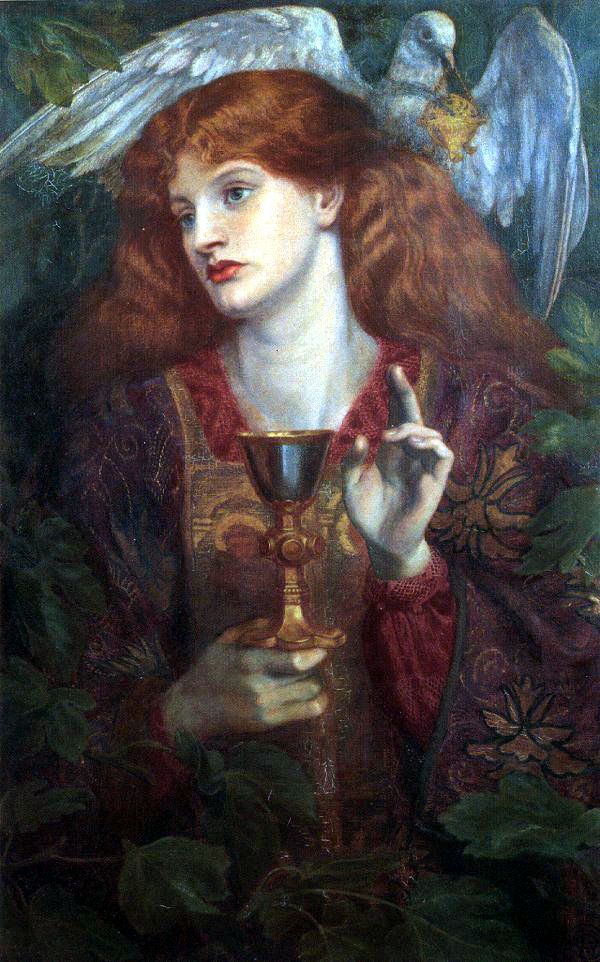
The Grail Mysteries are utterly fascinating.  What I am currently exploring is the figure of the Grail Maiden, the only one able to handle the blessed object.  Whether she is Pagan or Christian is of little consequence – what matters is that she is the one who is carrying it forth into the world.

The Knights of King Arthur’s court see a vision of the Grail, carried through his Great Hall by a Great Lady – some say Morgan herself, others the Lady of the Lake, or an angel.  This sends them into a frenzied search for the Grail – most of his knights take it upon themselves to find this holy object, winning it for themselves, for salvation or fame, freedom or a connection with the divine feminine. Little is said of the Grail Maiden after this – the attention is all bestowed upon the knights and their quests.

The Grail Maiden appears once again in the tales, when Perceval reaches the Fisher King.  This wounded king is reflected in his kingdom, which is barren wasteland.  Until the King is healed, the land cannot be healed.  What is most interesting is that the Grail is carried through his Court each and every day, and yet he cannot receive its healing properties. Two questions must be asked first in order for the King to be healed – “What ails thee?” and “Whom does the Grail serve?”.  Perceval, in an attempt to appear grand and unaffected, being now a ‘famous Knight of King Arthur’s Court on Quest’, does not question the wound on the King when he sees it, though he does notice it and wonder.  When the Grail is brought through the Court time and again in a repetitive procession throughout dinner, again Perceval ignores it, trying to appear nonchalant. In his refusal to show empathy or compassion, curiosity or care he loses his chance to heal the kingdom and also his chance at the Grail and the Divine Feminine. The Grail and castle disappear the next morning.

So, back to the Grail Maiden – why is it that a woman can only carry this vessel? Many will say that women are natural vessels of the Goddess, and this rings true enough.  In Arthurian tales, women are also the bearers of Sovereignty, also reflected in other tales from the land, such as the Welsh Mabinogian. The vessel is the source of the Divine Feminine, therefore it is fitting that is it borne by a woman. Women bear children, bringing new life into the world (with the help of men, of course). There are certain things that only women can understand through shared stories and life experiences – moon bleedings, bearing children, social and cultural successes and struggles.  The knights on quest are seeking this source of the Divine Feminine, lacking it in their own souls, longing to reach out to the Goddess but unable within the constraints of their religion and their faith.

The quest for the Grail is also an inner quest – it is not all about externally seeking something that is outside our selves. Often the Divine Feminine can be missing from a woman’s life as well.  For reasons too legion to go into here, seeking out a female goddess can be a deep and meaningful way to connect with our own self and, in doing so, other women, humanity and the world at large.

What the knights seems to miss, on the whole, is that the Grail is Woman.  Through honouring Woman as well as Man he can come to bridge the gap, come to know the divine.  It is right there in front of their eyes, but they choose not to see it.  For women, coming to understand our own selves is the forerunner to compassion and empathy not only for our sisters, but everything. In seeing and seeking the Grail within, we can heal our own wounds.  We must also ask ourselves the questions that Perceval did not.

By asking our selves (the separation of the words, instead of writing ourselves is intentional here) “What ails thee?” we take the time to look within, to perhaps explore shadow aspects of ourselves.  Within many Eastern traditions, it is through meditation that we understand our selves better, and also understand and redirect our reactions to the world – ie. instead of simply reacting to an event, we act with intention, with mindfulness and awareness. With the Grail question, we can ask this of our selves as well as others in pretty much any situation, therefore eliminating a reactionary response to a more intentional approach. In doing so, we may just find the healing for our selves and the world that is so needed.

The second Grail question, “Whom does the Grail serve?” invites us to question our intention.  Whether we are experiencing pleasant or unpleasant aspects in our lives, we can ask our selves “who does this serve?”, thereby eliminating that which is no longer necessary, and bringing joy, awe and wonder back into our lives.  With old habits and patterns of behaviour that we wish to be freed from, we can simply ask this question over and over again until we have the answer that is required for spiritual growth.  We can ask this question in every aspect of our lives, from our weekly shopping (in order to make better choices not only for ourselves, but the planet) to our everyday interactions with other people.  If we are making a positive change instead of falling into negative, but comfortable patterns then we are on the road to spiritual progress. Reminding our selves of the Grail questions has been integral to my learning these past few months, becoming a mantra for everyday life.

In a patriarchal culture and society, the loss of the feminine can be devastating, as it was to the knights of the Round Table.  In our quest for wholeness, we can either run around in circles, questing after the Grail through established means, or we can simply look within to gain a better perspective on compassion and the divine, whether it be male or female, or even genderless.  It is the deep exploration within that allows us to bring that knowledge out into the world – we cannot simply spend our lives gazing at our own navels – we must bring the Grail out for the benefit of others. We must offer the gifts of compassion and self-awareness. In this, the Grail Mysteries are best served.

Working with Kindness

Many religions and spiritualities the world over teach that kindness and compassion is the way to live your life in order the create harmony and peace not only for yourself, but for the rest of the world.  This is a form of service, which I think may be lacking in much of modern paganism.  It is in the service to others where we truly shine.  The Sisterhood of Avalon states it beautifully in a triad – service to the self, service to the Sisterhood and service to the Goddess.  Like most things, it starts from within and then spreads to the wider community and the world at large.  Sadly, perhaps due to the growing number of self-help books and various psychologies, this service tends to stop at the self.  Instant gratification in our capitalist society combined with living in relative ease can allow complacency in our lives and in our minds.  We can become grasping even, wanting to be healed, looking for that one thing or one person who will heal us, as we have been taught my marketing campaigns the world over.  Me, me me. I, I, I.

There seems to be a great need for healing in the world today.  Paganism embraces this healing with open arms, honouring it in all its various forms.  We are often told that we must first heal ourselves before we can heal others. In this, I very much agree.  It’s often the hardest thing to heal yourself – focusing on others is much easier than coming face to face with your own pain, grief, demons or shadow self.  However, we can become too engrossed in looking inwards that we forget to look outwards as well.  Too much self-awareness and not enough external awareness.  It can even border on or become egocentric.

The key here I believe lies in kindness.  Through these last few months, when the darkness of winter takes hold and we are gifted with the time and space to reflect, we can look at how we can be kind to ourselves.  This is the best thing we can do for ourselves in terms of our own healing.  It is easier to forgive others for hurting us, or causing us stress, grief or pain than it is to forgive ourselves for doing things that we regret.  Yet we must look at ourselves in the same light as we do others and be able to forgive ourselves in order to move the service from self to others, through the act of love and kindness.  This is our service to our self.

We have to be aware of our edges – we must create boundaries so that when we allow kindness to flow through us we have an awareness that not everyone will be kind in return.  This is not a shutting down or closing off of the soul to others – it is simply being prepared.  Like meeting a strange dog or cat for the first time, we are unsure as to how they will react, and so we proceed with caution.  We still show compassion and love and try to help them should they need it in any way possible. We will also do all that we can to prevent being bitten. This is our service to others.

I have been too open – I have not guarded my boundaries as well as I should have. I have loved freely and been bitten on the ass in return.  I have learned to use boundaries to let me help myself and to help others.  In Brian Froud’s latest faery oracle card deck, there is a card that I drew called The Lady of Faith.  She wears a helmet and shoulder armour, but her breast is bare of armour and she is leaning towards something with a hand to her heart.  This card shows that we must protect ourselves but still allow our hearts to move us in kindness and compassion.

I recently saw a documentary on Phil Robertson, of Duck Dynasty fame about how he transformed his life through his religion and coming to know God and Jesus.  While we may not share the same religious points of view we can agree that it all comes down to kindness.  He described when he was making a living fishing on the river and other “river rats” would come and steal from his nets.  After he had found Jesus, he worked with the idea of kindness and so, when he caught them stealing again, offered them the fish freely.  They took it and responded to his kindness by never stealing from him again.  Phil stated that he will act towards all things with kindness, but still carry a shotgun in case all things weren’t kind to him.

This is very similar to a Zen Buddhist story, where a monk is sitting and praying in his cave high on the mountaintop. A thief comes upon him and threatens him. The monk looks at the thief and states that if he wanted his possessions so badly, feeling he had to threaten and steal them, then he would freely give them if that was his need.  The thief left bewildered and the monk sat outside, looking up at the moon.  “If only I could have given him this beautiful moon”, he said. (Some argue that the monk should have done a Phil Roberston and had a shotgun as well, but that doesn’t fit in with the peaceful and non-violent ideals that the monk held to.)

Living to our ideals, exploring our shadow aspects (those aspects of the soul that we fear, that we loathe, that we deny) and giving back to the world results naturally in leading the way to the further service to the gods.  We dedicate our lives to kindness and compassion with full awareness and in doing so, reflect the true nature of not only our being, but of being.  For me, the gods that I follow all have an aspect of peace and kindness that we can find in their stories to inspire us along our own life’s journey.  Tyr, most often seen as a god of war and justice, to me also represents kindness to animals and loyalty as when he fed the wolf, Fenris, when no one else would.  Nehelennia, the goddess of the North Sea rages and leaves us with a fresh world – sometimes battered but ever inspired by the impermanence of all things.  Morrighan heals after the battles and rejuvenates after the blood is spilled.  Nemetona teaches of boundaries as well as love and peace.  In this I have dedicated myself to learning and being open to the awen of their songs.

Through coming into our own true potential, we are better able to serve ourselves, our community and our gods.  The key to it all is through kindness.  How very simple, how often this message had been repeated over thousands of years. How easy it is to forget in today’s society.  Yet when we open ourselves to the possibilities and let kindness lead us in our actions, peace and harmony are a natural result.

Beware the Green-Eyed Monster…

Social media can be a very good thing. It’s good at getting the word out, or for sharing ideas. It can also be a place where we can feel inadequate, where jealous feelings of other’s lives can creep into our thinking and affect how we live.

First of all we must remember that what we see online is not the 100% truth.  What people post on Facebook or Twitter or any other media or forum is not the whole enchilada. We look up someone on Facebook who doesn’t post anything negative, has beautiful photos and deep insights and feel that we are inadequate in our own lives.  What we have to remember is that this is simply a portrayal of a person and not the person themselves. To know the person, we must know them in person, spend a lot of time with them and connect, soul to soul. You can’t do that on a computer in my opinion. You can find a lot of commonalities with what you both have decided to put out there, however it is not the big picture.

Jealousy is an interesting beast.  What causes it? More often than not, it is through experiences that we have gone through that reflect upon our current and future situations.  Something may have happened to us in the past, an emotional pain that casts its pall over everything.  If we are jealous of what we perceive to be someone’s great life on the internet, what is it that is making us jealous? What is causing feelings of inadequacy, or anger, or resentment? Could it be someone in your past that you didn’t live up to, or dreams that you haven’t fulfilled, failings that have been brought to light?  Do they reflect our inner demons, perhaps of low self-esteem or external validation?

Catch yourself the next time you feel jealousy creeping in. Examine it. Why are you jealous? What is the root cause? It is not the person causing the feelings but your own inner self. Why should that be? The person is not the root of the problem – what’s happening in the mind is.  We cannot blame other people’s lives for our feelings of jealousy for they all stem from within.

Wouldn’t it feel better if we let go of these jealous feelings? What if we celebrated others’ successes instead of wallowing in inadequacy? What if we realised that others’ lives are not a reflection of our own? What if we stepped outside our narrow worldview, our egocentric perspective and honoured others for being what they are? The world does not revolve around you, so why persist in these feelings?

Letting go of jealousy is hard. It requires a lot of investigation into the darker regions of the mind but it is well worth it.  We can lead happier, more satisfying and positive lives when we are aware of the green-eyed monster and lay it to rest. So, the next time you are on Facebook and think “my life sucks compared to hers/his” remember, not only are you not seeing the bigger picture; you are also not seeing your self.

Looking inwards

“Not until we are lost do we begin to understand ourselves.” -Henry David Thoreau

As I have begun my journey into the descent of both the self and the dark half of the year, thoughts and feelings have arisen which require acknowledgement. It has often been said that those thoughts that we are unaware of, control us. Quite.

Just as we are not our jobs, our familial roles or any other singular label, so too are we not our past, nor our future. We can only be our present.  All too often I have beat myself up about what I have done in the past. After a couple of months of looking inwards and discovering these thought patterns, I have realised that I have to let go of what I thought of myself in the past.

In the past I have been selfish. In the past I have done things I am not proud of. However, that does not mean that I am selfish now, or that I will do these things again, now or in the future.  What happened does not define me in the present moment so much as inform me of how I got here. I am only the person I am now, typing up this blog post trying to make sense of the self and how it works.

It is a season for letting go and so, every time I have a thought on how I have failed, I remind myself that this was something that happened in the past and, in truth, is not who I am now. It is extremely liberating, and enables me to be the best person I can be right now, as opposed to living in destructive and judgemental behaviour about what I have done.  I can certainly be critical of things, looking at them with detachment and learning from it, however no condemnation can be made because it no longer exists.  Often in Zen we hear of teachers asking students who bring up past faults and issues “Yes, but where is this now?”  Baffled, the student cannot answer, for it does not exist in the present moment. They are memories and lessons learned. They existed in the past. They inform us of the future.

Sometimes the best thing to do is to lose that sense of self in order to be able to look inwards critically.  Putting aside the ego and simply seeing thoughts for what they are is extremely difficult. The ego jostles for attention at any possible chance, with thoughts of “I am this” or comparisons to other people, opinions on the world at large and a deep-seated fear of annihilation. When we put all these aside we are simply left with our own personal truth.

Reblog: Courage

Reblogged from my blog on SageWoman’s channel at Witches & Pagans: http://www.witchesandpagans.com

As the darkness approaches, I find myself thinking more and more about courage. What is courage? Personally, I think courage is so subjective – there is no one definition that would suit everyone. Yet I shall give it a go in any case.

The dictionary defines courage as: the quality of mind or spirit that enables a person to face difficulty, danger, pain, etc., without fear; bravery. I would posit that courage is the quality of mind/spirit that enables a person to face difficulties, etc in spite of fear. It is just not true that the brave know no fear – I believe that they simply get on with it. There is no such thing as a fearless person, unless that person has not the mental capacity for it, having suffered physical brain or emotional trauma.

What causes fear? For the most part, fear is the unknown. As humans, we crave constancy, security. We’re not especially fond of change, at least in great quantities. We fear what we cannot see – many are afraid of the dark. Is this an instinctual fear, based on what could attack and eat us from the shadows? I had an experience a couple of weeks ago, in my own backyard, where I went to offer some food at my altar – a large dark shadow that was not usually there made me stop in my tracks. A bear, my first thought was. Then my brain worked through the processes of logic – there are no bears in Britain. I’m not in Canada anymore. What animal would be big enough to create this? A stag? Would he attack me in this, the rutting season? No, he couldn’t get through the hedge with his rack at this time of year… After going through these thought processes (which probably took less than a second) I simply stepped forward to investigate, and found it to be a large branch from the beech tree that came down in the high winds. I smiled at the brain’s way of dealing with it and made my offering, honouring the darkness and shadows as well.

Growing up in Canada, in bear country, you are taught to be afraid of large, dark shapes at night and early morning. You stay away from them. That learned behaviour has stayed with me even though I have lived in the UK since 1998.

So, what is the great thing about learned behaviour? It can be unlearned. My fear of the dark, of the unknown, can be investigated, experienced fully. Now, of course it is healthy to have a certain instinctual fear of large shadows in the dark, just in case I find myself alone in the woods when I get back to Canada for a visit. I can’t expect my brain to make these logical leaps in time to deal with the situation of a real bear being there – my brain would rightfully tell me to leg it. However, dealing with a fear of the unknown can be unlearned.

In new situations, I don’t have to automatically feel apprehension. I don’t have to worry. I don’t have to react. I can breathe, and work with what is actually happening at the moment, rather than living in the past or fast-forwarding to the future. In the present moment, we cannot know fear – we can only fear outcomes. When we are hurt, when we are in pain or in danger, if we are thinking in the future, “when will this stop!” then we are not in the present moment – we have given over to the future. Facing the current moment of pain, of danger, requires us to be totally present. This very easy to say, not so easy to do. Still, it is worth the effort, I think.

While working on this concept, in the meantime one can learn to live with the fear, in the form of taking on the notion of courage and running with it. Face the darkness in spite of your fears – they may only be tree branches anyway. Fear is a very human emotion, one that has kept us alive for millennia.

For me, fear is a god. Fear can be crippling, fear can drown us in its depths; it can suffocate us until we know no other escape. As such, fear can kill. Yet, like most gods, only in submission to these raw flows of energy would we risk death. By working with the flows, riding the currents of fear, developing a relationship with it, we can better understand it as well as its place in our lives, and the rest of the world. In the meantime, may all your shadows only be deadwood. You’ll only find out by checking it out, at any rate…

Great Reviews for Zen Druidry!

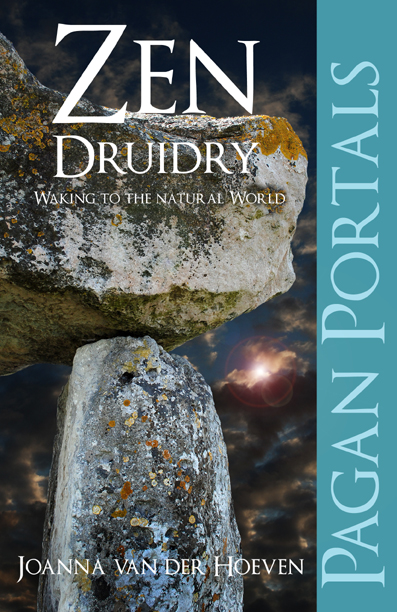
Great reviews still coming in for Zen Druidry – you can still pick up a Kindle copy for only £1.23, or a paperback version from other sellers on Amazon for only £1.03! In North America, Kindle versions are only $1.97, and paperbacks start from $3.20 – a great deal…

Zen Druidry

zen druidry low res

Darkness and Mystery

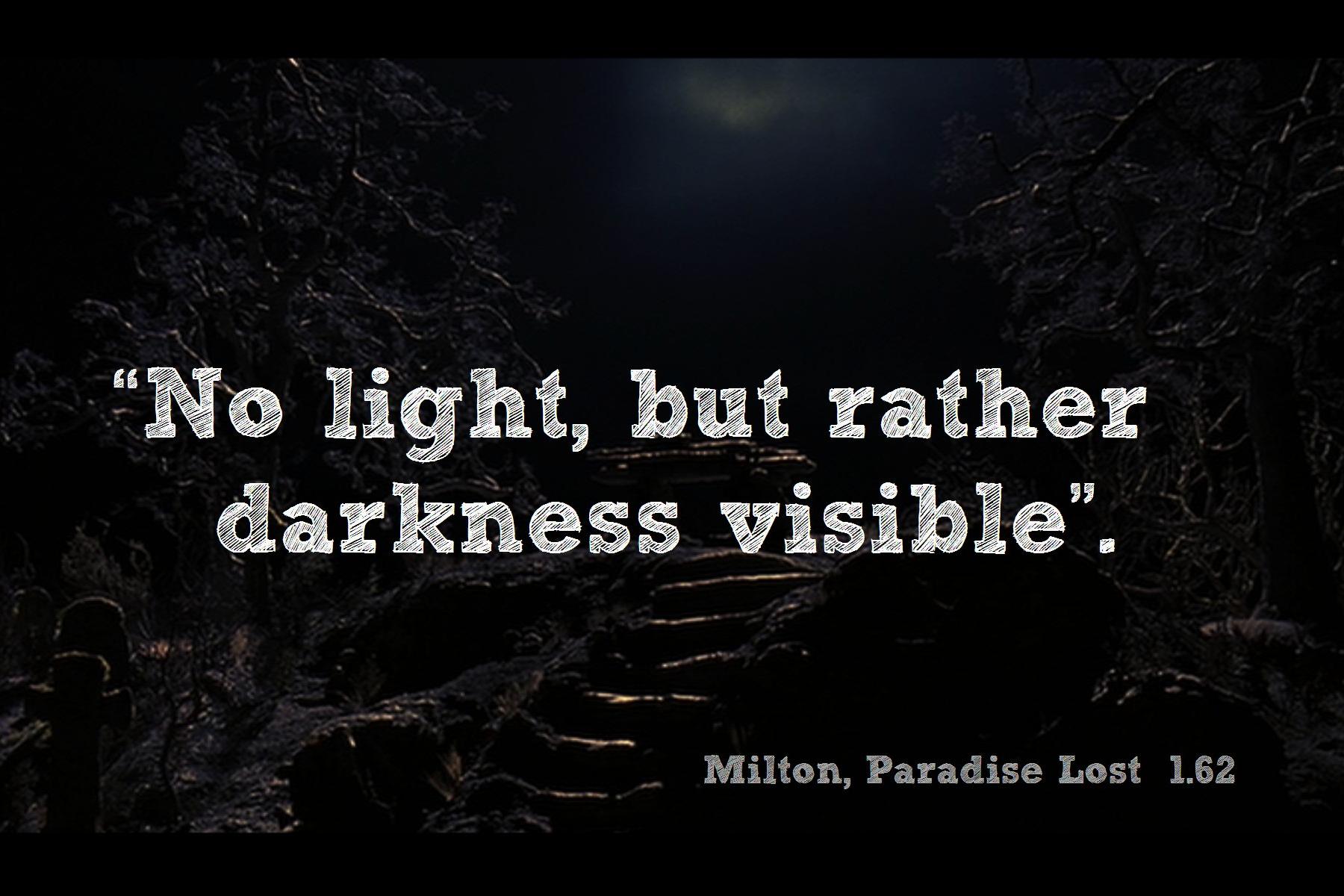
milton paradise lostThe evenings draw in closer, the darkness growing as we make our way towards the winter solstice.  It is a time for deep thought, reflection and understanding – thinking and understanding so deeply you are hardly doing it at all.  In the darkness our minds are much less distracted by visual stimulation.  We can explore the darkness both within and without, as well as the great mystery of the unknown.

In Zen Buddhism, along the Eightfold Path we learn about Right Mind.  At this time of year, I apply it when journeying ever closer towards the rebirth of the light. It is in the darkness that the mind is truly explored. It is in the darkness that the world outside is truly confronted.  It is in the darkness where we find the greatest mystery of all.

Right Mind requires an understanding of the self, in order to see that the self is really not all that important.  First we must learn about our reactions to the world – how we relate to it, what is automatic and what is intentional.  By studying our selves and studying our navels, we look deep within to see where we might be able to work on living in full awareness of our actions in our daily lives.  If we have an understanding that we instantly react to the person on the social networking site who criticises us, we can then work on that so that there isn’t attachment to it.  We learn that we don’t even have to react – that it is within our power as to how we behave.  When our co-worker in the office won’t help us even when we ask for it, we learn not to instantly react and let it ruin our day. We simply get on with the job at hand, perhaps asking for help elsewhere.

We are not owed anything. Learning this lesson can be of great value in our own spiritual awakening.  People do not have to act as we would wish them to. Not everyone has to agree with us. People will have different opinions.  We don’t have to comment, criticise or even give it second thought if we do not wish to.  Our emotions, our passions should be the spark of inspiration. They should not be the raging inferno that takes over.

By looking deep within to see how our passions and emotions play through our daily lives, we come to an understanding of them. We cannot ever develop a relationship with anything, be it person, tree, mountain or deity without first understanding them to a certain degree.  We often do not understand ourselves, to our detriment.  Why do we behave the way we do? How can we live more intentionally?

Through daily meditation we can come to a greater awareness of our selves.  Once we have attained that awareness, it is best to let it go.

You may ask – why spend all that time learning about our selves, only to let it go?

If we are constantly looking inwards, we will neglect to look outwards.  Druidry and much of modern day Paganism are at the risk of becoming too self-involved, too inwardly focused.  Five words remind me of this on a daily basis. It’s not all about you.

We can become so self-absorbed in looking at our navels that the world passes us by.  There is so much out there that we need to become aware of, just as previously there was so much inside that we needed to be aware of.  Once we have achieved a level of competency in knowing ourselves, the best thing we could do is to lose that sense of self in order to understand the bigger picture.

This dropping of the ego, this letting go is not an annihilation of the self. It is not negation. It is immersion, integration – utterly being.  It shows us the boundaries between the worlds, between us and other humans, between us as the natural environment. It also shows us that these boundaries are simply illusion. We are all just energy.

We can then begin to explore the greatest mystery of all, within the nurturing darkness – that of not knowing.  After learning to understand our selves and the world, we lose understanding as well, realising that we really do not know very much at all.  In such a vast landscape, both inner and outer, how can we truly know anything at all?  Often in Zen this is referred to as Mu, or nothing.  In the not knowing we are open to everything, our minds not being closed off.  The great mystery of not knowing is where the true potential lies.  In not knowing, we are free.

Deep within the darkness, the journey continues.

Right Livelihood

autumn leavesDuring the time around the autumn equinox, in my particular path of blending Zen and Druidry I focus on the Buddhist aspects of Right Livelihood within a Druid context.  I do this throughout the year, blending the Buddhist Eightfold Path into the eight seasons of modern Paganism, and have found it spiritually inspiring and enlightening. (For further reading into Zen Druidry, please see my latest book, Zen Druidry, available on Amazon and through Moon Books).

Right Livelihood, in essence, means taking on a way of living and working that does not compromise the other principles within the eightfold path, or indeed any of the Dharma Principles. However, it is much more than ensuring that your occupation is not harmful to others – for me, this accords to everything I do, my entire life.  My livelihood is not just my office job, or my dance company, my writing or my work as a Druid priest. My livelihood is the way in which I live my life – my whole Druidry as a way of living, not just as a practice.

I have ensured that the traditional view of Right Livelihood is upheld in my life – all my jobs do not create harm in others, abuse others or the environment inasmuch as is humanly possible.  Yes, three out of my four jobs require that I drive a car, and that is a compromise that I have to make, which I try to offset in other areas of my life.  I used to work as a legal secretary, but was slowly having my soul destroyed by helping the rich dodge inheritance taxes.  It took the universe to give me a great kick up the bum to get out of that job and dive into something more meaningful for my own self – other similar legal jobs may work for some people, it just wasn’t in accordance with Right Livelihood for me personally.  I quit, went back to university and got a job straight away working for a music company and charity, got writing again, started a dance company and began in my priest work.  I felt much more at ease with myself, knowing that I was partaking in Right Livelihood (or Livelihoods!).

Some of us may feel trapped in jobs that we do not like, but we need the money to support our families, or ourselves.  However, that doesn’t mean that we cannot be on the lookout for something that would sit better within our hearts and souls, and it also doesn’t mean that we can’t offshoot this, say perhaps by doing some volunteer work, donating to charity, etc.  I personally don’t have much spare time, but the time that I do have I try to use wisely – though this year I haven’t succeeded as well as I may have, having run myself a little too ragged.  Organising charity events, performing wedding ceremonies, on top of my other jobs left too little time for me and my husband, and in that regard I failed at Right Livelihood, as there was harm and neglect on that front.  I have worked too hard, and now physically and emotionally see the repercussions. Now, in the autumn of the year, when I can see the results of what I have sown in the springtime of the year, I can also reflect on how to do better next year.

Right Livelihood means living right – it’s not just your job.  For me, within Druidry, it means establishing a life that has as little impact ecologically as is possible at the time for me and my family.  It means investing our savings in solar panels, recycling and composting everything, using cruelty and chemical-free toiletries, working towards creating peace and inspiring others.  It means walking the walk instead of just talking the talk.  It’s bloody hard to do. It means being aware of everything around you, of the impact that you have on the world, from the interaction I have with my co-workers to how many kilowatt hours our household has consumed in the last year.  It means sacrificing ignorance for knowledge, and the practical application of such.

Druidry teaches us about creating honourable relationships with the world around us, with all things if you are an animist like myself. Seeing the inherent value in all things means that no single thing can be taken for granted.  Incorporating Zen means bringing awareness of my own self and how my brain works, as well as working on an awareness of the world at large by living as mindfully as is possible.  Sometimes I am hugely successful at both – other times I fail spectacularly.  At any rate, it’s a learning curve.

Throughout the darkening days until Samhain, my focus on Right Livelihood is a constant reminder to live well.  Taking inspiration from nature, I learn not to take more than is necessary, or at least I am inspired not to – succeeding in this regard is damned hard in a fairly affluent Western society.  I breathe into the growing twilight, the longer nights and learn how to simply be in the world, leaving behind barriers of separation as much as I can, within myself and nature, humanity and the universe.  The rich scents of autumn tingle in my nose, the decaying leaf mould and woodsmoke, the chill winds and starry skies above inspiring me to continue. It is  Inspiring me to create a life that is worthwhile, and in doing so, following a path of Right Livelihood.

Zen Druidry at No. 10!

My little book, Zen Druidry is currently at No. 10 on Amazon’s Best Selling list for Pagan and Neo-Pagan books.

I would like to take this opportunity to thank everyone for their support, and for the encouragement of the community – without you there would be no book! A big thank you to my publishers, Moon Books, and to my editor, Trevor Greenfield, who believed in the success of this book, even where I was a little unsure!

Thank you, thank you, thank you.

J.x

P.S. As of this afternoon, it has reached No.4!

Four Mantras for Good Relationship

Vietnemese Zen Buddhist monk, Thich Nhat Hanh recently spoke in a live webstream from Plum Village (the community he set up in France) about many things, one of which really struck a chord with me about relationships.  He has produced four mantras which help us to learn compassion for each other, and to better open up lines of communication, which is key to any relationship. The four mantras are:

  • Darling, I’m here for you.
  • Darling, I know you are there…and I’m so happy you are there.
  • Darling, I know you suffer…that is why I am here for you.
  • Darling, I suffer – I am trying my best to practice. Please help me.

The first mantra, “Darling, I’m here for you” demonstrates that the other is not alone in this world. Indeed, we are never alone – the idea of being alone is one that has hounded us ever since we made the mind/body disconnection.  The rationalists and the materialists have argued this one thoroughly, so I won’t go into it here, but suffice it to say that within most branches of paganism, the mind are body are thought of as connected.  That being said, through our bodies we are all connected to every other thing on this planet – we contain minerals in our blood that are found in stars, we breathe the air our ancestors breathed, we are all held down by gravity.  There can be no separation in the truest sense.  Our current lives lead us to believe that there is separation – could this simply be a marketing ploy, to divide and conquer?  Something to think about later… but I digress.  When we say “Darling, I’m here for you” we are putting the needs of another ahead of our own, as well as showing them that they are not alone.  In today’s society, that can be and is a great gift that we can give to others.

The second mantra, “Darling, I know you are there, and I am so happy you are there” shows us the joy that others give us, simply by sharing this journey is life.  It is a simple recognition of another soul, which again in today’s society can be so lacking. We lead such virtual and busy lives that speaking these words can reconnect us to the one that means so much to us.  We take so many things for granted, and we should never, ever take our loved ones for granted.  We must remind ourselves each and every day how wonderful it is to have these people in our lives. Allowing ourselves to feel the joy in having someone in our life is another gift, and when we express that joy, that joy spreads throughout the world.

The third mantra, “Darling, I know you suffer, that is why I am here for you” enables us to feel compassion for others in our lives, to show them that we see that they suffer.  So often people feel that they are suffering alone, and when we acknowledge the suffering of others, we immediately have more compassion for them, whether they are our loved ones or not. Everyone is fighting their own battles.  This changes not only our worldview, but changes the perception of those whom we are trying to connect to. Simply listening to someone, truly listening to them, is a great aspect of this mantra.  So often we are not listened to – we are often heard, but is anyone really listening? To give your full heart and attention when someone is trying to connect with you, or vice versa, is key to any relationship.

The fourth mantra, “Darling, I suffer – I am trying my best to practice. Please help me” is perhaps the hardest one to fulfil.  So often our egos get in the way that we simply cannot ask for help, let alone allow others to see our suffering.  How many times have you “suffered in silence”? Why do we do this?  Sometimes, when a loved one has upset us, and then they ask us “What is wrong?” our immediate response is “Nothing,” filled with anger, fear and tension.  They know that something is wrong, but we refuse to tell them in an attempt to punish them for hurting us.  If we allow that hurt to express itself, it will not linger and communication can open up in order to find a resolution.  If we simply answered the question, without judgement or anger, we might be able to see the other side.  We must admit to others that they have upset us, and we must do our best not to let our anger get control. We feel our anger, but we do not attach to it. By not attaching to it, we can talk about it with greater compassion and find greater healing.  We do our best to practice.  When we ask for help, we are putting aside our egos and allowing that other person in.  It’s not easy, but it does change everything. So often our anger is based on a misperception, and allowing the room for that perception to be corrected gives us greater scope for compassion in the world today.

These four mantras are changing the way that I relate to others, I feel in a truly positive and beneficial way for everyone.  For that, I am truly thankful!