Druid Magic

magic circleDruids aren’t associated with magic in the same way that other Pagan traditions, such as Wicca or Witchcraft seem to be.  Yet I’ve found that in every spiritual path, there are elements of magic contained within that are often very similar in nature.

What is Druid magic? Do Druids cast spells? Have magical tools? Do we think of Gandalf, brandishing his staff and saying mightily “You Shall Not Pass!” or his mushroom-addled fellow, Radagast, who lives in the woods, talks to animals and, according to the latest Hobbit films, has a rabbit-powered all-terrain sleigh and brings hedgehogs back from the dead?

Of course it’s none of these things. It would be pretty cool if it were. But Druid magic, like all magic, is subtler than what we see on the screen or read in books.  There isn’t lightning shooting from fingertips or fire balls sparking from one’s eyes.  In fact, many modern Druids don’t use magic at all, or don’t call it magic.

So what is magic? It has often been quoted these days as manipulating the natural forces of energy within nature to provide a desired result.  This could have many interpretations.  Flicking a switch and having my living room lit up at night could fall within this category, but I’m being a bit facetious. It is also often said that magic should be the last recourse after having tried all mundane means of solving a problem.  So how do Druids use magic, if at all?

There is a growing trend of blending Wicca and Druidry, as in Philip Carr-Gomm’s new book, Druidcraft.  This is a lovely way of expressing the divide between two very similar paths; kind of bridging the gap that lies between.  I thought the book, especially the audio book, was brilliant, and yet I’m still not one to perform spells on a regular basis.  Why is that?

As stated previously, magic is often the last recourse to a situation.  If all other means have been tried, and I’m plum run out of ideas, then I might turn to magic. I might equally turn to prayer. Praying for some guidance, asking the gods, the spirits, the ancestors for a little advice when I’m stuck could be called a spell – it could also be called a prayer.  Lighting a candle and some incense, meditating and then seeking some clarification or inspiration from the ancestors could indeed look like the workings of a magical spell. I think perhaps the difference is in the intention – in both magic and prayer, we are hoping for a result, but the results are often different.

In prayer, asking for the gods to solve a problem for us rarely, if ever, works in my own experience.  I prefer to ask them for inspiration on how to get through this, or my spirit guides on where to go to next in order to resolve and issue.  Casting a spell bypasses the question, in a way, and seeks to get an answer to a question not asked.  Perhaps this is why I resort to magic so little, I always like to ask the input of others to seek out different perspectives on a situation. Again, this is only my own personal views, and others may have other ways of both prayer and spell-casting that are vastly different to my own.

For me, as a Druid I am always questing the awen – for me, awen is the Grail.  Inspiration, flowing spirit – it is such a beautiful word from the Welsh language that has so many different meanings.  To me, awen is magic, though perhaps not in the spellcaster’s sense of the word.  It is energy, it is flowing, it is the Tao and The Force of the Jedi Knight.  It is something to be tapped into in order to gain a new perspective, to see the bigger picture, to obtain compassion. Awen is Buddhist enlightenment.  It is the Christian “God is Love”.

Instead of performing a magic spell, I might wander the heathland or forest, looking for inspiration around me. I might find a place to pray, using that inspiration to guide my prayers to better understanding of myself, the situation, the world.  When all other recourses have failed, then I might try magic – the last recourse.

I feel that magic is something special, something not to be abused or overused.  We often hear the term “god-bothering” and magic may indeed be another form of “bothering” – whether it is the elements, the energy of nature, or something else entirely. I feel that Druids on the whole would turn to awen rather than magic, but perhaps with the blending of Druidry and other traditions this could indeed change, or maybe even change back to the way Druidry used to be – who knows?

Perhaps my quest for awen is my magic.  Magic includes transformation, and questing the awen will indeed change someone.  None of the knights on the Grail quest were ever the same.  None who seek enlightenment will ever be the same person they were before. We are constantly changing anyways, living a life of impermanence and fluidity, of change and flux.

Perhaps just tapping into that idea is magic, is awen.

(Reblogged from my channel at SageWoman: http://www.witchesandpagans.com/SageWoman-Blogs/druid-magic.html)
Zen and the Awen

The Celts had Indo-European roots, migrating across Europe and leaving their mark across many countries.  They share many similar spiritual beliefs to other traditions – Buddhist, Saxon and Norse just to name a few.  There are similarities in artwork and other modes of creative expression.  Finding something that is “pure” in any tradition is, at least in my opinion, unattainable. We are constantly being influenced by other people, whether it was 50 years ago, 500 or 5,000 years ago.

Incorporating Zen and Druidry has given me a personal life path that makes a lot of sense in my daily practice.  Simply because Zen Buddhism is an Eastern tradition doesn’t mean that it can’t work with what is commonly thought of as a Western tradition.  (For a more in depth look at Druidry and other Dharmic paths, including Buddhism, Jainism and Hinduism, Philip Carr-Gomm has written a brilliant page on The Order of Bards, Ovates and Druids’ website – http://www.druidry.org/druid-way/other-paths/druidry-dharma.)

Zen and Druidry blend together to form a life path that is utterly devoted to being in the present, giving the Druid a total immersion within nature.  This immersion, not just going with the flow but being the flow itself, is what makes it so special. Zen teaches us to let go of our sense of self, to silence our chattering minds in order to be able to pay attention to the world at large. It also teaches us of discipline, learning how our minds work and how we are so often ruled by our minds, through bad habits, reactionary living, destructive behaviour and so on.

With Soto Zen, the mind is brought under control through hours and hours of meditation, of learning to simply “be”, slowly and gently silencing our “monkey mind” so that we may better hear the songs of the universe.  This is what is meant by releasing the sense of self – it is not, as so many people assume it to be, becoming a mindless zombie.  It is allowing other songs, other voices to be heard above our own so that we may better integrate. We will still have opinions, but we will cherish them less, for we know that everything is in constant change and flux.  We will have a sense of self, but again we hold to it lightly so that we may better see where we fit in the world and where we can do the most good. It is not annihilation – it is immersion, awareness and mindfulness.

Within Druidry, we learn to work with awen, with inspiration and the flow of life itself to see where we fit in the grand scheme of things. We work to see how we can live with the least harm to ourselves and the planet, and also what we can do to make the world a better place.  We work to create peace within ourselves and peace in the outer world as well.  Using our natural abilities and skills, we may work with songs and poetry, or with visions or herbal medicine, with roles in teaching and counselling, in law or in environmentalism – the list is endless.  We are devoted to helping and conserving nature and our planet, sharing the awen and giving back for what we have received.

Using the techniques from Zen for training the mind and the love of nature from Druidry we can find a way to immerse ourselves in our spirituality that is so deeply integrated on so many levels.  When out walking in the forest, we can lose our sense of self in order to become the forest.  Once we are the forest, we are able to drink deeply from the flow of awen that is all life around us.  We become the trees, the deer, the fox, the boulder, the streams and the badger.  We can learn so much from this integration which can also rejuvenate us, providing us with even more inspiration.  We are not looking at ourselves being at one in the forest; we have lost even that in order to become the forest.  When we are fully immersed in simply “being”, we are fully in the flow of awen.

Our footsteps become lighter, our passage barely noticeable. Like the deer, we are able to bound through the trees, awake and aware to every sense.  Indeed, all our sense become sharper, clearer, for our minds are not running us ragged thinking about what to have for dinner, that paper that is due, the meeting we have on Monday.  Fully in the moment, we become the awen.

Zen Buddhism has also leant another aspect to my Druidry that has been rich and rewarding – the idea of compassion. Again, many people misinterpret compassion, seeing it as weak, or being a pushover. Why be kind to others when so few are kind to us?  Living with compassion is what enables us to connect once again to that all important word in Druidry – awen.  The songs of life can only be heard if we try to understand them. We cannot understand them unless we open ourselves to compassion.

In one of the Grail legends, Perceval reaches the wounded Fisher King, and is invited into his castle.  The knight does not ask the King why he is wounded, or how it happened. He shows no interest in learning the story behind the wounded King. Upon sharing a meal with the King, the knight also sees a courtly procession whereby a young maiden carries the Grail through the hall repeatedly throughout the night. Again, trying to appear worldly and nonchalant, Perceval does not ask about this.  These two incidents are the clues in which the Fisher King might be healed, and in which Perceval failed at his chance in finding the Grail.  If he had only asked the King “What ails thee?” then the King would have been instantly and magically healed.  If Perceval had only asked “Whom does the Grail serve?” he would have understood its purpose, and achieved the totality of his quest.

The simple question of “What ails thee” is the showing of compassion.  It is taking ourselves outside of our own minds and our own troubles and asking another person what is wrong, seeking to alleviate their suffering. Also, by asking our selves (the separation of the words, instead of writing ourselves is intentional here) “What ails thee?” we take the time to look within, to perhaps explore shadow aspects of ourselves.  Within many Eastern traditions, it is through meditation that we understand our selves better, and also understand and redirect our reactions to the world – ie. instead of simply reacting to an event, we act with intention, with mindfulness and awareness. With the Grail question, we can ask this of our selves as well as others in pretty much any situation, therefore eliminating a reactionary response for a more intentional approach. In doing so, we may just find the healing for our selves and the world that is so needed.

The second Grail question, “Whom does the Grail serve?” invites us to question our intention.  Whether we are experiencing pleasant or unpleasant aspects in our lives, we can ask our selves “who does this serve?”, thereby eliminating that which is no longer necessary, and bringing joy, awe and wonder back into our lives.  With old habits and patterns of behaviour that we wish to be freed from, we can simply ask this question over and over again until we have the answer that is required for spiritual growth.  We can ask this question in every aspect of our lives, from our weekly shopping (in order to make better choices not only for ourselves, but the planet) to our everyday interactions with other people.  If we are making a positive change instead of falling into negative, but comfortable patterns then we are on the road to spiritual progress. Reminding our selves of the Grail questions has been integral to my learning these past few months, becoming a mantra for everyday life.

In our quest for wholeness, we can either run around in circles, questing after the Grail through established means, or we can simply look within to gain a better perspective on compassion and the divine, whether it be male or female, or even genderless.  It is the deep exploration within that allows us to bring that knowledge out into the world – we cannot simply spend our lives gazing at our own navels – we must bring the Grail out for the benefit of others. We must offer the gifts of compassion and self-awareness. In this, the Grail Mysteries are best served.

In this way as well, both Eastern and Western traditions come together to allow us to help not only our own suffering, but that of the world.  We can learn the values of compassion and mindfulness, and we also look deep within for the inspiration to live an integrated life that reflects the natural cycles of the world around us.

We do not simply touch the awen every now and then – we become the awen ourselves.

(From my blog at Moon Books – http://moon-books.net/blogs/moonbooks/zen-and-the-awen/)

Reblog from SageWoman: The Darkness Within

shadowself

Reblogged from my channel at SageWoman:http://www.witchesandpagans.com/Druid-Heart

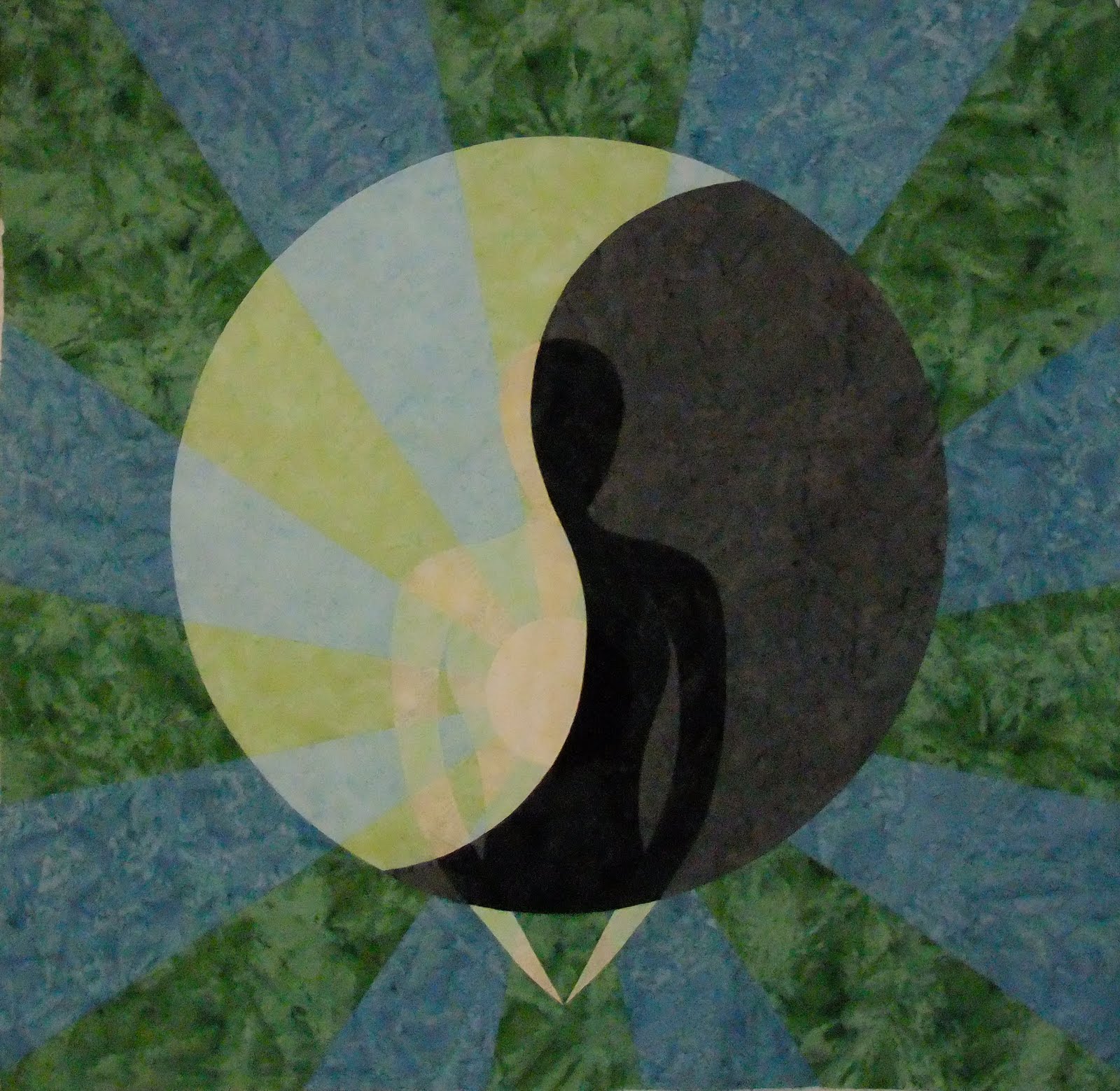
The winter solstice is fast upon us, even though technically the shortest night has already been upon us (for a brain-thumping explanation, see http://www.theatlantic.com/technology/archive/2013/12/the-astronomical-hijinks-of-the-shortest-day-of-the-year/282109/).  Thoughts turn inwards at this time of year, when in the darkness we are confronted with our shadow selves, should we choose to face them.  We have the opportunity to learn more of ourselves, and in doing so, better serve not only ourselves but the world.

Performing a meditative journey, I met with my shadow self – that part of your self that you fear, that you loathe, that you don’t understand as well as those things that cause you pain, grief, rage, etc.  This confrontation was very interesting – my shadow self described to me all the things that she thought I was, as well as all the emotions that crippled me. She delighted in telling me them, it seemed – with each utterance she thought she had gained power over me.  The words hit me and reverberated throughout my body – I literally felt them, each and every one.  When she was done I was still standing, though shaky.

I knew that in order to gain some semblance of control, I needed to know her name and so I asked. She refused to tell me, delighting instead in playing games. I finally had enough of it all, and named her myself in words strong and full of intention – “You will not give me your name, and therefore I will name you myself. You are Joanna Alida van der Hoeven.”

She deflated, knowing that I had named her correctly.  “I know who you are,” I said.  “You are all that I fear to be, all that I have been in the past for good or ill and all that I might be in the future.  But you are merely a potential.  The past is gone, and I am not the same person I was then. The future has not happened yet, and so no one dictates that for me. In the present moment, I simply am who I am, free to be who I wish, decried by my words and deeds and actions.” I remembered the words to my favourite film, Jim Henson’s Labyrinth, and faced my shadow self, stating “You have no power over me”.

The encounter was over, and I had emerged tired but triumphant.  Haunted by some aspects of the past, I have realised that they do not dictate who I am now. The past is there to inform us so that we do not make the same mistakes again.  The past informs the present and the future.  We are not our past, just as we are not our future – we can only be who we are in this present moment.  Our lives are filled with potential for good and bad and we can either let fear dictate our actions and allow past mistakes to re-emerge, or we can accept it; we can own our mistakes and become simply the best people we can be at this moment in time.

I have had a mantra over the last few months, that when I question my motives, or feel fear or grief or rage, happiness or unhappiness, I ask myself this – “Whom does this serve?” Taken straight out of Grail mythology, this question is the one that must be asked upon directly viewing the Grail in order to heal the wounded Fisher King.  These four words contain so much power, and have so many different meanings.  It questions us to look deep within ourselves, but also to the greater world at large.  It deeply explores our intention, which to me is one of the greatest powers one can have both within Druidry and the world.  Intention is at the core of every action we make – but we must look deeply at the intention before we act, if possible, in order to ensure that our actions are honourable.

In the darkness, the shadow self has power.  What we are unaware of deep within our selves can control us in so many ways. We must learn to confront our shadow selves, to acknowledge them, to own our past and our mistakes, our fears and our grief, in order to tumble out towards the light once again, ever repeating this cycle even as the seasons change and the tides turn. The awen lies all around us within nature – all we have to do is open our eyes to see it.

(The journey meditation that I performed was part of a series contained in Jenah Telhyndru’s Avalon Within: A Sacred Journey of Myth, Mystery and Inner Wisdom.)

Blog image is from a quilt taken from The Free Motion Quilting Project: http://freemotionquilting.blogspot.co.uk/2010/05/shadow-self-part-2.html


New book contract accepted!

So, the manuscript for my second book with Moon Books, Dancing with Nemetona: A Druid’s Exploration of the Goddess of Sanctuary and the Sacred Grove, was handed in two days ago.  As well, I have just received a contract for my fourth book with my publishers – The Awen Alone: The Path of the Solitary Druid.

I’m very excited about this new piece.  It will focus on the beginner’s path in Druidry, walking it alone.  Though aimed at the beginner on the journey, anyone may find this work interesting, and of worth.  It’s halfway through being written already, and should be out next year.

Thank you for all your support, dear readers, and blessings of the new Celtic year!

J.x

Reblog: Awen and Despair

From my blog channel at SageWoman: http://www.witchesandpagans.com/SageWoman-Blogs/awen-and-despair.html

Sometimes being a Druid in today’s society can seem so futile, so pointless.  When people are driving their SUV’s and other gas guzzlers to the corner store, or changing the goalposts on the UK badger cull to suit the targets that they set out in an insane attempt to murder as many of the creatures as possible; when people are leaving lights on in their home or their computers on all day because they are too lazy to turn them off, when we keep using plastic bags because we’re too lazy to carry our own into a shop, when we buy cosmetics that have been tested on animals and judge homeless people on the street as ‘good for nothing’ – how on this earth can one go on? And in the name of Druidry, no less – how can we still follow the paths our hearts take us on, when everything around us seems to be crumbling under the weight of the ills of the so called “modern world”?

We may often feel like a tiny drop of water in a vast ocean of futility.  But what we do, matters, even on the most basic level.  It can be horrendously despairing when we hear news of our beloved planet being raped, and we may feel powerless to stop it.  I ask myself so often – what can I do?

Oftentimes, there isn’t an obvious answer. The rage and helplessness have nowhere to go.  It builds up inside, until we are cynical of absolutely everything.  How can we avoid this, how can we continue to walk the earth’s paths with awe and wonder when around us everything that we hold dear is being destroyed?

When this feeling hits me, and it often hits me hard, the answer is to go out. Go outside, go out in nature and find the wonder again.  News from around the world can bombard us with the negative, and we can redress the balance by finding the wonder again in the natural world.  It isn’t enough, however – we must still write to our MP’s about hare coursing, we must still sign petitions and protest when and where we can, we must still stand strong in our love for this planet and not merely let it all fall to pieces.  But the inspiration to continue can be found by taking that time out, by watching the moonrise, by listening to the owls in the growing twilight.

Awen, that beloved Welsh word so popular in Druidry, is what it is all about.  Gathering the threads of inspiration we weave into our world a better outcome, a better solution, a more harmonious approach.  We take that inspiration like a person dying of thirst drinks in a glass of water – it feeds us, nourishes us and sustains us so that we may continue.

It has often been said in Druidry that we do not submit to the gods, for to do so would be suicidal.  Just so, we should not submit to the negativity in the world, for again that only has one outcome.  We must reach for the awen in order to hear the song again, and in hearing the song to be able to sing it, and by singing it hear others as they  join in the chorus, eventually coming together with wonder and awe and beauty.  For me, there is no other way.

Though I occasionally fall into despair, I reach for the awen to help me climb back out again and face the world, head on.

Druidry – What is Awen?

In Druidry, we learn often hear the word, awen, being used, but what exactly is awen?   Loosely translated from Welsh, it means flowing spirit, or flowing inspiration.  Awake to our own energy, and stretching out towards the energy of nature around us, we begin to see just what awen is.  It is an opening of one’s self, of one’s spirit or soul, in order to truly and very deeply see.  When we are open, we can receive that divine gift, inspiration that flows, whether it is from deity, nature, or whatever it is that you choose to focus on.

For awen to exist, there must be relationship.  We cannot be inspired unless we are open, and we cannot be open unless we have established a relationship, whether that is with the thunder, the blackbird or a god.  It is cyclical in nature; we open and give of ourselves and in doing so we receive, and vice versa.  Letting go, releasing into that flow of awen allows it to flow ever more freely, and we find ourselves inspired not only in fits and bursts of enlightenment or inspiration, but all the time, carrying that essence of connection and wonder with us at all times.  There is, of course, a line to be drawn, for we can’t be off our heads in ecstatic relationship with everything all the time.

But just what is awen?  It is an awareness, not just on a physical and mental level but on a soul deep level – an awareness of the entirety of existence, of life itself.  It is seeing the threads that connect us all.  It is the deep well of inspiration that we drink from, to nurture our souls and our world and to give back in joy, in reverence, in wild abandon and in solemn ceremony.

Many are familiar with the Welsh tale/myth of Cerridwen and her cauldron, the three drops of awen falling onto Gwion’s finger and bringing his wisdom in the form of poetic inspiration, shape-shifting and prophecy.  Some liken this story to a Bardic initiation, or the three grades of Bard, Ovate and Druid.  In any case, drinking from the cauldron of the Goddess is to drink deeply of awen.

Many Druid rituals begin or end with singing or chanting the awen. When doing so, the word is stretched to three syllables, sounding like ah-oo-wen.  It is a lovely sound, that opens up the heart and soul. Sung/chanted together, or in rounds, it simply flows, as its namesake determines.  Our hearts literally can open if we let them when chanting or singing the awen.

Yet I am sure that the awen is different for each and every Druid.  The connection, and the resulting expression of that connection, the Druid’s own creativity, can be so vast and diverse.  It is what is so delicious about it – we inhale the awen and exhale our own creativity in song, in dance, in books, in protest marches – the possibilities are endless, as is the awen itself.


Awen and Peace – East meets West

Further exploring the nature of peace, what leads me to understand the fundamental precept behind achieving peace is through compassion.  But what is compassion?

Dictionary definitions say that it is a state of sympathy with someone who is suffering, and yet that doesn’t adequately describe compassion in my mind, in either the Zen or the Druid tradition.  Two words in Sanskrit delve a little closer, such as karuna, a gentle affection and a willingness to bear others’ pain, or metta, often described now as loving kindness, acting for the benefit of all living things with a selfless attitude.

The Dalai Lama stated “Genuine compassion must have both wisdom and lovingkindness. That is to say, one must understand the nature of the suffering from which we wish to free others (this is wisdom), and one must experience deep intimacy and empathy with other sentient beings (this is lovingkindness)” –  (The Essence of the Heart Sutra).

For me, compassion is all about relationship, about an integration with the world, with the universe. As the native American saying goes – “We are all related”.  (Not just humanity, but essentially go far enough back and see that we are all star stuff.)  In order for this integration to occur, we have to learn how to lose that sense of self, for is there is a separate self, there can be no true integration, only the state of sympathy.  There is someone observing someone else’s suffering, and helping to alleviate their suffering but still retaining a sense of Us and Them. In Buddhism, wisdom, or prajna, is most often found through the teachings of No Self, or attana.

In my studies in Zen Buddhism, we are taught to help wherever we can, as selflessly as is possible, which is true compassion. If you help someone and then expect a reward, there is still a separate self expecting reward from a separate person.  We have to learn to drop all expectations. The Tibetan practice of Lojong’s final slogan is brilliant in this regard – Do Not Expect Applause.  Only then, there is there an integration of everyone involved.

In Druidry, this integration is often termed as relationship – but again, words fail to describe the enormity of the meaning behind it all. Druidry also uses the word, awen, a Welsh word with several interpretations: poetic inspiration and flowing spirit to name a few.  For me, awen is the life “force” itself, in its myriad expressions, in constant change and flux.

To find true peace, one must release into this, into awen, losing that sense of separateness, and in doing so discovering the nature of compassion in soul to soul relationship.