Here’s a link to my most recent interview with Future Primitive Podcasts from last week. I hope you enjoy!
Letting Nature Live Through Us – Click HERE for the full interview.
Here’s a link to my most recent interview with Future Primitive Podcasts from last week. I hope you enjoy!
Letting Nature Live Through Us – Click HERE for the full interview.
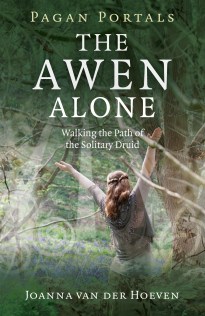
Well, May’s sales figures have come in from my publishers, Moon Books, and we have reached a new milestone – over 10,000 copies of my Pagan Portals books sold! (And The Awen Alone: Walking the Path of the Solitary Druid is still an Amazon No. 1 Bestseller!) I just wanted to thank everyone for their support in my writing, for your lovely emails, your encouraging words, and for being so awesome. May we be the awen!!!

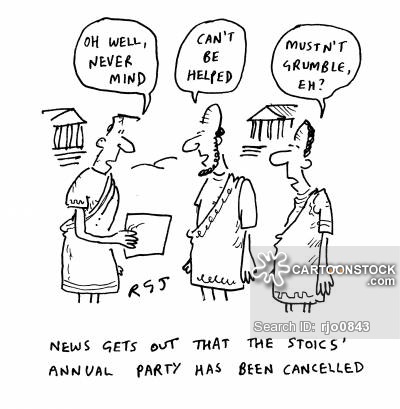
‘News gets out that the Stoics’ annual party has been cancelled.’
So, as readers of this blog may be aware, I’m doing a course in Stoicism, giving some Western philosophy a go, taking a break from my studies in Eastern traditions. The basic premise behind Stoicism really intrigues me. It all boils down to “living in agreement with nature”. The course describes it as thus:
“Stoicism is a complex philosophy in some respects and it’s beyond the scope of this training to go into it in much detail. However, the central teaching was summed up fairly concisely. Stoicism teaches that the goal of life is “living in agreement with Nature”. The Stoics took that to mean, not retreating to a quiet life in the countryside, but rather living “in accord with virtue” or excelling as a human being. Living in agreement with our own nature means flourishing and fulfilling our potential, by cultivating reason and thereby achieving strength of character and practical wisdom. The outcome of our actions, whether we achieve external “success” or “failure”, is therefore less important than the nature of our own character.”
Being a Druid, the whole idea of living in agreement with nature I find highly appealing. It is, after all the goal of the Druid, is it not? For this course, I am taking the Stoic goal word for word here, and not adding on the extra interpretation that so many seem to use, that being, living in accordance with our own nature, or living in accordance with human nature. To me, that seems an unnecessary addition, and not quite in tune with my religious beliefs. It seems to separate the human from nature, where in my mind human nature is a part of nature, just we humans are a part of an ecosystem. To separate the human from nature, to create any lines of division are completely illusory; mental constructs created by human beings for whatever reason: superiority over other beings, separation from the material and the spiritual, and so on. I’m taking the Stoic goal word for word here, because it makes much more sense to me on my quest for integration.
The next aspect of the course that should be interesting is as follows:
“Your overall goal in this four-week training program is to learn to live more consistently in accord with traditional Stoic values, or with “virtue” and practical wisdom, and to evaluate the results for your quality of life. The most important aspect of this will be training yourself to consistently place more importance on your own character and actions than upon external events. You’ll also be training yourself to cultivate mindfulness so that you avoid going along with any thoughts, actions, or feelings, that may interfere with that goal.”
Having studied Eastern traditions, namely Buddhism for so many years, this both makes total sense to me and also presents a different point of view from which to operate. Within Buddhism, we are taught very similar concepts, cultivating mindfulness so that we do not fall into the traps of bad behaviour, allowing our thoughts and feelings to control our lives. As Lao Tzu said, ““Watch your thoughts, they become words; watch your words, they become actions; watch your actions, they become habits; watch your habits, they become character; watch your character, for it becomes your destiny.” That makes perfect sense, and is a very noble thing to do. The difference in Stoicism lies perhaps in the cultivation and support of your own character, identity or self. Within Buddhism, we are taught not to transcend the physical or the material, as so many people wrongfully assume, but to transcend the notion of a separate self to the rest of existence. By living mindfully, wholly within our bodies, aware of our actions, thoughts and so on, we see that the illusion of separation is just that, an illusion. There really is no self.
In Stoicism, there is indeed a more defined sense of self, one that must be cultivated in order to live in accordance with nature. It goes without saying that placing more importance on your own actions rather than external events is the way forward to creating a life of harmony, but the difference lies in the importance of your character as well. Maybe Lao Tzu’s quote above bridges the gap between Buddhism and Stoicism, for it mentions the importance of character. On the other hand, maybe I’m misinterpreting the whole thing, and confusing “character” with “self”. It will be interesting to see if I can make that distinction as the course progresses, in accordance with the principles behind Stoicism.
What I love, and what works with the philosophies that I have previously studied, but perhaps doesn’t stress as much as Stoicism does, is the following from the course:
“Some things are “up to us”, or under our direct control, whereas others are not up to us.
In the next sentence, Epictetus explained that Stoics mean what is “up to us” in the sense of being completely voluntary and within our sphere of control. In a word, as he puts it, this means our actions. That includes our external behaviour but also certain mental acts, such as voluntarily judging something to be desirable or undesirable. Everything else is only under our control indirectly, as a consequence of our actions, which means that other factors can always intervene to thwart our intentions. Those things, which are not our actions, are referred to as “externals” or “indifferent” things. The Stoics often sum up the most significant and problematic externals as: health, wealth, and reputation. Pain and pleasure are also “indifferent” in the sense of being things that happen to us, rather than things we do. When our voluntary actions are good, that’s called “virtue”, and when they’re bad, that’s called “vice”. So acting with virtue rather than vice, in this sense, is the main thing that is “up to us”. Indeed, we’re told the Stoics sometimes defined the fundamental goal of life as “living in accord with virtue”.
Epictetus goes on to say that the root cause of most emotional suffering is placing too much value on these external things, on things beyond our direct control. Becoming overly-attached to externals makes us all the “slaves” of our passions, he says. That’s definitely something worth thinking about, isn’t it? The Stoics therefore repeatedly advised their students to notice when they were experiencing unhealthy emotions or desires, feelings they might want to change. When this happens we’re to pause for a moment and try to grasp very clearly what aspects of the situation are entirely within our sphere of control.”
Focusing on what is under our control, and what is not, is indeed a part of Buddhism. However, the stress that the Stoics put on this concept in relation to living in virtue is much stronger. Attachment to our thoughts and emotions is very similar within the two traditions, and mindfulness of when we are acting out inappropriately is a key concept. However, within Stoicism the difference lies in that we perhaps don’t detach from all emotions or passions, but instead cultivate virtue over vice. I am hesitant in this regard, worrying about cultivating a sense of pride that might impede the Stoic sense of being. Buddhism states that all attachments, to the good or bad, are impediments on the way to enlightenment. The goal of integration is to move beyond attachments into a pure moment of utterly being. Stoicism doesn’t ask us to move beyond striving to do good, to excel in virtue, to perhaps in a sense attach to these ideals. There isn’t the “goalless goal” in Stoicism that there is in Buddhism. It’s fascinating.
With these goals and concepts in mind, working them with my Druidry is, I think, going to be an enlightening experience. I’m eager to see if it truly does lead towards a life in accordance with nature. After working this week with the course, already some things are starting to “click”, and work easier than with some of the Eastern concepts. Then again, it may simply be my interpretation of these concepts that is the greatest challenge towards understanding and integration.
We all feel inadequate at times. We can’t help it – in modern Western society, with media and social media all around us, we are constantly looking at each other’s lives and making value judgements not only about them, but in comparison to ours. We often forget that we are only looking at a tiny fraction of the truth, of the facts, of the life being lived in that present moment.
People raised in capitalistic societies learn to compete from a very young age. Not all competition is wrong, but we have to take a deep look at just why we feel the need to compete in the first place. Life is not a competition, after all. We’re all gonna die, end of story. No one wins. We perhaps need to realise just what is important in our lives, and what is irrelevant. Maybe then the desire to compete will lessen, and we can free ourselves from such restrictions, supporting instead of competing, making the world a better place. That’s not to say that we shouldn’t try our best; far from it. However, we might lessen our feelings of inadequacy.
Having studied Eastern philosophy for many years now, I’m trying something new. After a wonderful conversation with a very dear friend, the concepts found within Stoicism intrigue me. Already I can see how similar they are to, say, Zen Buddhism, and also how they differ. I should imagine it will be a great journey of discovery.
We spoke of value, and the importance of judgement, not externally but internally regarding our perception of self-worth. She explained that in Stoicism, it is in the striving, in the living, in the journey towards being the most awesome human being you can be that is important. This related on so many levels to what I already understood from many Eastern traditions, but also clicked in various different ways that I am excited to explore. I liken it to creating a work of art: it’s not the finished product that is important, but the creative process of making it that is the most important (and the most exciting). Relating this to my Druid path could open up possibilities I have never explored. How wonderful!
I am keen to explore the value judgements others make upon me, and how I respond to them. I am intrigued to understand more about how to listen to my own value judgements on a deeper level. This differs from Eastern philosophy, where we learn to let go of all value judgements. What is our worth? How do we value that worth? I am reminded of the root of the Saxon word, weorthscipe (worship), how we deem something to be worthy. What are the tools, the philosophy, behind this?
We never stop learning. I’ve always had a keen desire to learn history, art, biology, theology and philosophy. Indulge in your passions, for life is far, far too short. The steps on the journey are what makes the journey worthwhile; not the destination.
I’ve written an article for a collaborative work with other Moon Books authors which is now in production and will be out in the next few months, working title: IPagan Druidry. The idea of iPagan has now evolved to produce both print and ebooks and is hoped to be expanded into a series featuring volumes on Druidry, Shamanism, Witchcraft and Contemporary Issues at discount prices so that they are readily available to all. Here’s a little taster from my essay, The Promise…
Is my Lady Brighid real? I still don’t know. But I quest a relationship with her in order to understand more, perhaps not in the hopes of having a definitive yes or no answer, but because the journey is one worth taking. Does Brighid think I am real? What is the need behind the question, what is the desire to learn the answer? What are the forces that push and pull us, in our minds, our lives? Are there great directors and orchestrators of movement? What is the meaning of our lives, of life itself? Are we equipped, mentally and physically, to accept a definitive yes or no answer to any of the above?
What is the nature of belief? The root of the word, belief, stems from the late 12c., bileave, which replaced the Old English geleafa meaning “belief or faith,” which itself originated from the West Germanic ga-laubon “to hold dear, esteem, trust”. In this previous sense, believing in something, whether it is a god or a sub-atomic particle has nothing to do with the nature of reality and everything to do with a notion of trust. To whom or what are we going to give our trust? Do we need to place our trust in something in order to have a relationship with it? What are the bounds that we can work with when it comes to trust and relationship? Should we still investigate these past concepts alongside our modern notions in order to gain a wider perspective, or are they simply muddying the waters of clarity?
If we are to truly have a grand adventure in this present moment and in this lifetime then we are going to come across some serious questions that explore the boundaries of reality and nature itself. In our paths as Druids, these questions form a large part of our understanding, and our understanding of just how little we know. Continuing the quest, putting one foot in front of the other, exploring new mindsets keeps us in the flow that is nature. When we are stuck, when we are mired in a concept or belief, we can become stagnant, like water that cannot flow freely. We may, like water, bump against rocks in our journey down to the sea, cascading down great waterfalls of the unknown, slamming against canyon walls of ignorance and dogma, or floating gently and serenely on a tide of peace for however long or short a time. All that we can truly know is that everything is changing from one moment to the next, ourselves with it, and acceptance of a plurality in our worldview is the way to evolve and adapt, to work better with the world and live our lives utterly dedicated to our quest and our Druidry. It is questioning, and questing the awen. When we live our lives in this manner, things will never be dull.
As David Bowie once said, “I don’t know where I am going from here, but I promise it won’t be boring”.
After a busy autumn, winter and spring I’ve finally had a chance to put up a new blog post on one of my other blogs, The Druid Herbalist. Do check it out and feel free to subscribe to be kept up to date on all future posts!
With the hawthorn in full bloom, it’s time to celebrate the wonderful properties that hawthorn and other herbs can provide for our circulatory system. As always, please talk to a qualified herbalist before taking any medicine, as there may be contraindications, especially if you are pregnant or are already on medication.
Welcome in the May!
Hawthorn (Crataegus oxycanthus) – leaf, blossom and berry
Hawthorn is a good heart tonic, beta blocker, protects the heart muscle, prevents heart attacks, is a vaso-dilator (peripheral), helps promote sleep and is the best herb for blood circulation. It regulates low blood pressure, steadies the heartbeat and lowers cholesterol. It contains chemical compounds that keep blood vessels open, and it vital where vessels lack tone and are inert due to fatty or calcium deposits. It lessens pain in the heart and adjacent areas, re-elasticates blood vessel walls (through rutin), rebuilds collagen fibres in outer layers of vessels and is a powerful anti-oxidant, as well as being rich in vitamin C. It reduces inflammation, relaxes the smooth muscles of the uterus, intestines and other areas to relieve congestion and reduces water retention (bloating before period). It also aids digestion and eases sore throats.
This herb is to be used as a tea, syrup (berries) and as a tincture.
*Not to be used with other beta-blockers or heart drugs/herbs. Please consult a qualified herbalist if on heart/blood pressure medication of any kind.
Cayenne (Capsicum annum) – fruit
Cayenne is a brilliant styptic (stops blood flow from wounds). It equalises blood pressure and is good for heart attack or stroke victim recovery as it strengthens the heart and improves circulation. It dilates the arteries and protects from damage. It aids in heat tolerance, stimulates endorphins and is a good treatment for migraines (prevention and cure). It also reduces the tendency for blood clots. It aids digestion, is a cathartic and also relieves sore throats.
This herb can be used in cooking, in capsule form (powder) or as a tincture (HOT!).
*There are contra-indications with this herb, especially for asthma sufferers.
Click HERE to read about more herbs for the heart and to see the full article.
Looking at the feelings of guilt that can arise when following an Earth-based religion/spirituality, and how to get beyond them towards a life of integration.
The fabulous Pagan Dawn Magazine featured Druid College in their Imbolc edition, containing an interview with myself and Robin Herne. They now have a lovely new website just for the magazine, and have featured this article online for all to read. You can find this article here: http://www.pagandawnmag.org/opening-the-gates-of-the-druid-college/
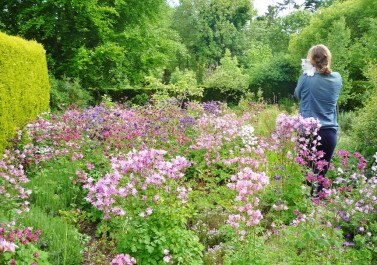
Pagan Dawn is a magazine that just goes from strength to strength. It is now moving from four editions a year to six, and contains articles, information, news and more about all things Pagan. Not only is it just beautiful to look at, but it is a brilliant read and I always look forward to my edition arriving in the post.
May we be the awen!
Here is my latest blog post for my channel Druid Heart at SageWoman on Witches and Pagans. Welcome to the greening of the land!
The trees are almost in full leaf now, with only the ash and aspen yet to join in the greening. It’s been an odd Spring, with the oak trees in leaf before the hawthorn has come into flower here in Suffolk. Only now are the first blooms of the May tree coming out, and with it the signs that herald for me the coming season. The warm days have certainly been a blessing, and the light rain that falls today is equally welcome after long hot days of full sunshine and cool sea breezes.
It’s at this time of year that I am reminded of just how important trees are to me, not just in their life-giving properties but also in their spiritual presence. The deciduous trees with their lush foliage always bring a smile to my face, and after a long winter of sleep to see the beech tree at the bottom of my garden joining in the party that the younger birch trees have started fills my heart with joy. The grass is lush and green, and everything just feels so very much alive. I welcome the greening with all my heart and soul.
Trees are magnificent teachers. They are so much larger than we are, both spiritually and physically. They remind us of what it means to live a life in service to the whole, to live a life filled with integration and harmony, sustainable and at peace. Trees teach us of communion and integration, both at the deep root levels of our soul and reaching out towards the heavens of our soul’s awakening. They teach us of symmetry and asymmetry, of co-operation and anarchy. They are a legion of souls across this land, swaying in the wind, living their intention and benefiting all those around them by doing so. There is no sense of “I” with a tree; rather, it can instigate a better sense of “You” (or “yew”, pun intended).
When we develop a relationship with trees, we think about ourselves less, rather than think less of ourselves. We are reminded that we are a part of an ecosystem, that the ecology of our spirituality is all important to our everyday lives. This ecology is absolutely integral to who we are as a species, and part of a place and environment, as part of life on this planet. We cannot separate this ecology in any shape or form. It is in everything that we do.
We are not far removed from our cousins who still live in the trees. We’re all just monkeys with car keys, after all.
What drew me into Zen Buddhism was the fact that it didn’t matter who you were or where you came from when it came to learning the wisdom of the tradition. The same goes for Druidry as well. Yes, there can be an ancestral link to the tradition that you might find will perhaps deepen either practice for you personally, but you don’t have to be from a particular place in order to practice either tradition. Zen Buddhism and Druidry may have common roots in India’s Vedic tradition, which goes some way to explaining the many similarities, however one does not need to worry about cultural misappropriation when following either tradition. They welcome one and all to their path, as long as it is walked with respect.
Both Zen Buddhism and Druidry are all about what you do: not who you are or where you came from. Working with compassion, deepening the connection to nature and the world around you, there is a holistic healing of the soul that happens when this is embraced, allowing an integration that just seems to flow easier, where the awen shines and peace of mind and body are attainable. Being utterly awake to the present moment, seeing the Buddha-nature of everyone, and remembering that Buddha-nature within our souls can help us to ease the pain of separation that modern culture and society seem to promote in a theology/philosophy of duality. When we realise that we are part of an ecosystem, systems within systems, we work better, understanding our part and working for the benefit of the whole rather than the self. It promotes a thinking where one doesn’t think less of the self, but rather thinks of the self, less.
The magic and wonder of Druidry and the natural world, and the philosophy and practice of Zen Buddhism have allowed me a deep sense of peace and wakefulness to the world. They complement each other beautifully, each tradition having its own wisdom that is there for everyone to discover. If you’d like to learn more about either tradition, I’ve put together a reading list below from my upcoming book, Zen for Druids: A Further Guide to Integration, Compassion and Harmony with Nature. These are the tools that helped me on my journey (with some of my previously written books thrown in there too), and I hope that should they be of interest, you might also find them of some benefit as well.
Blessings on your journey, wherever your path may take you!
Bibliography and Suggested Reading
Adamson, E. & McClain, G. (2001) The Complete Idiot’s Guide to Zen Living: Alpha
Allen, R. (2002) Zen Questions London: MQ Publications Limited
Beck, C.J. (1997) Everyday Zen London: Thorsons
Beck, C. J. (1995) Nothing Special: Living Zen New York: Harper Collins
Carr-Gomm, P. (2002) Druid Mysteries: Ancient Wisdom for the 21st Century: Rider
Hanh, T.N. (2001) Anger: Buddhist Wisdom for Cooling the Flames: Rider
Hanh, T.N. (2012) Making Space: Creating a Home Meditation Practice: Parallax Press
Hanh, T.N. (2015) No Mud, No Lotus: The Art of Transforming Suffering: Parallax Press
Hanh, T.N. (2008) The Miracle of Mindfulness: Rider, Classic Ed Edition
Hanh, T. N. (1993) Interbeing: Fourteen Guidelines for Engaged Buddhism: Parallax Press
Hutton, R. (2011) Blood and Mistletoe: The History of the Druids in Britain: Yale University Press
Kirkey, J. (2009) The Salmon in the Spring: The Ecology of Celtic Spirituality: Hiraeth Press
Lama, D. (2005) Essence of the Heart Sutra: The Dalai Lama’s Heart of Wisdom Teachings: Wisdom Publications, U.S.
MacEowan, F. H. (2002) The Mist-filled Path: Celtic Wisdom for Exiles, Wanderers and Seekers: New World Libray
Matthews, C. (2004) Celtic Devotional: Daily Prayers and Blessings: Gill & Macmillan Ltd
Talboys, G. (2002) Way of the Druid: Rebirth of an Ancient Religion: O Books
Tzu, L. (2002) The Complete Works of Lao Tzu: Translation and Elucidation by Hua-Ching Ni: Sevenstar Communications U.S.
Restall Orr, E. (2004) Living Druidry: Magical Spirituality for the Wild Soul London: Piatkus Books Ltd
Restall Orr, E. (2007) Living With Honour: A Pagan Ethics O Books
Restall Orr, E. (2000) Ritual: A Guide to Life, Love & Inspiration London: Thorsons
Restall Orr, E. (2012) The Wakeful World: Animism, Mind and the Self in Nature: Moon Books
van der Hoeven, J. (2014) The Awen Alone: Walking the Path of the Solitary Druid: Moon Books
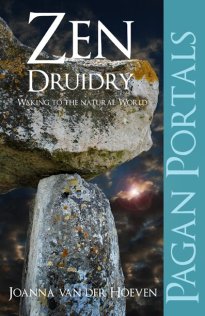
van der Hoeven, J. (2013) Zen Druidry: Living a Natural Life in Full Awareness: Moon Books
Internet Resources
Order of Interbeing http://www.orderofinterbeing.org
The British Druid Order http://www.druidry.co.uk
The Druid Network http://www.druidnetwork.org
The Order of Bards, Ovates and Druids http://www.druidry.org
Zen Buddhism http://www.sacred-texts.com/bud/zen/index.htm
Zen Guide http://www.zenguide.com