Truth, Honour, Service

Druidry can be summed up in three words – truth, honour and service. Yet these words can be very vague – what do they mean to the Druid?

 
Truth is not just figurative and literal truth. There are other dimensions to the word when we see it in accordance with our views of the world and religion or spirituality. Druids live in reverence of nature, connecting the world through awen, the flowing inspiration that guides and directs, that is each thing’s own soul song. When each thing is living in accordance to its own soul song, in accordance to its own nature, then it is following its own truth.

 
The world around us tries to muddy the waters of our truth, making us believe we need more than we could possibly know what to do with, making us think we are above others, making us feel inferior, unworthy and unloved. It tries to tell us that we are lacking. When we take a step back away from the world, we can examine it from a different perspective, seeing what is often termed in Druidry as “the truth against the world”.

 
This truth is our soul song. It shines from us when we live in accordance with nature. If flows like the awen when we care for ourselves, others and the planet. It springs forth when we acknowledge the times and tides of life and death. When we step away from what really matters, from living our own truth, we can feel distanced from the world and from each other, and perhaps even our own selves. We must return to the basics of what is our place is within nature, and how we can live in harmony and balance with it. When we do, we are then living our truth.

Honour is another word that lies in the hazy mists of time. It has connotations of chivalry, fealty and nobility. Yet honour is simply the courage to live our soul truth in the world. It is standing strong by our principles of balance and harmony, making the world a better for all. Returning again to what really matters, to our place in the world, is at the heart of honour. It is not a one-time thing that we can achieve and then sit back, resting on our laurels. Honour requires hard work, all the time, to see that we are indeed living our soul truths to the best of our ability.


When we come to understand truth and honour, the natural outcome is service. We live our lives in service to our Druidry – we can do no other. We are not subservient to anyone but ourselves. Living in accordance to our own nature, our own truths and finding sustainability through honour, it naturally results in service to the world – that same world that tries to rail against our truth! The cycle is ever flowing, and we work in service to the truth and the world in equal measure. That is where we find the most balance and harmony. That is what makes it so special, as well as bloody hard work sometimes.

 
Truth. Honour. Service. Three words; three concepts that are inextricably linked to each other, like beautiful Celtic knotwork.

 
Beltane blessings,
Jo.x

Relationship and worship

Within any relationship there is a give and take, an exchange of energy that flows, spiralling in and out and around, up and down and out and through. Within some practices of paganism, and dependent upon the individual, there can be too much one-sidedness in their relationship with deity, the spirits of place, the ancestors, etc. Often this is the individual asking or petitioning other powers all the time, or simply taking without giving anything in return. Sometimes it is the other way around, where a devotee gives and gives but is reluctant to ask for anything in return. I tend to fall into this latter category all too often.

My life, my rituals, my energy is utterly devoted to the land, the gods and the ancestors. They are my inspiration, they are my connection to the awen. I do not know what I would do now without them. As such, I let them know that they are honoured with daily prayers and devotions, in ritual work and in secular work. Their inspiration sings deep within my soul, feeding my own creativity and actions.

In ritual especially, I find it difficult to ask for anything. I am aware that so many people in our modern society, and indeed within paganism itself, take and take without giving anything in return. I am paranoid that I will fall into that category; that I should I ask for anything I will be lumping myself in with those who take advantage of the beautiful energy of a place, or who bother their gods, or who work magic without forethought.

I know that it is silly, even ridiculous to think this sometimes. However, I think that it also keeps me in check, keeps my ego in check, and allows me to remember my place within the web. I am a part of the tapestry, not separate, and therefore everything that I do affects the whole. Yet I can be so afraid sometimes to move some threads, to take some energy that lies within their warp and weft that perhaps my own colour fades, or becomes too thin. Reciprocity works both ways.

I am uncomfortable asking for things in ritual or in prayer. Why should this be? In my relationship with my partner, I am not afraid to ask for the things I need, for I know that good communication is key to any relationship. I need to understand, to really see and feel this truth in my relationship to the land, the ancestors and the deities as well.

Perhaps it is because they are so much bigger than I am – I am but a drop in the ocean. Yet I am still part of the ocean, whose power lies in its collective drops of water, singing and blending with the songs of wind and rain and sun. I can call upon that power for I am that power, and that power is me. I am a leaf on a tree and the tree itself – there is no separation. My gods live within me as much as they exist without. Separation is nothing but illusion.

Perhaps this is what some pagans have an aversion to when they consider the term “worship”. Taken from the Old English weorthscipe, it is the value of something – what it is worth to the individual. Weorth – worth, and scipe – condition. Worship is not bowing and grovelling before the gods, as some may perceive it to be – it is judging the worth of something in order to be able to fully relate to it. I hold my gods, the land and the ancestors in high esteem and therefore they are worthy of my attention. What I need to realise is that perhaps I too am worthy of their attention.

I’m working on it…

Reciprocity and Druidry

Getting something for nothing is always a nice surprise. However, it is not always honourable.

Our Celtic ancestors took the idea of reciprocity and made it into their worldview. They gave back for what they had. In the Brehon laws, crimes had a price that had to be paid to the victim or to the victim’s family. Personal responsibility and recompense were regarded very highly in society.

In today’s day and age, these ideas have lapsed somewhat, even in pagan society. With the internet offering so much information for free (apart from broadband and electricity fees) we can gain a huge amount of information in a relatively short time with no expense other than our time. We can take in huge amounts of information and give nothing in return. Why should we, if it is all there and waiting for us, for free?

Take for instance The Druid Network. This is the website that really inspired me a decade ago to take up the path of Druidry, for in its pages and articles I found a deep resonance from like-minded people who shared their visions of Druidry. Since then the website has expanded immensely, yet is still a veritable font of information. All the articles are available for viewing for free, there are free courses offered through various members, books and cd reviews – you name it. All there, ready and waiting, and all free.

You can become a member of The Druid Network for £10 a year. Many, many people’s first question is “Yes, that’s nice, but what’s in it for me?” to which all of the above may not seem enough. Indeed, it could be a growing trend within paganism – people offering to become involved only if there is some personal benefit to them in the bargain. It would sometimes appear that being a part of something, or doing work for the sake of doing work, or in service to your path, is not quite enough these days.

Becoming a member of TDN now allows you to not only be a part of this great organisation and help to fund its continuing presence on the web, but also allows you to join a Druid only social network site, as well as receiving quarterly newsletters with info and articles written by other members. When I joined TDN all those years ago, there was a fledgling forum where people could discuss ideas, where members could talk to each other and share in their life’s journey and experience. To see it evolve into what it is today is quite remarkable. Yet for many, it is not enough.

This is where it all falls down for me, where I cannot understand some people’s viewpoint in that sites like TDN don’t offer enough to warrant a £10 a year membership. I find it astonishing that people can download all the articles and find celebrants, rituals, etc for free yet still do not want to contribute in any way. Nevermind that TDN now offer a brilliant social network site – what I don’t understand is why people just don’t want to give back.

Sites like TDN are reliant on the contributions from the Druid community. This is not only in monetary forms, but also in the shape of articles, ritual ideas, essays, etc. After reading all the articles on the site many, many moons ago, I felt motivated to write my own articles from what I had learned and from my own personal application and experience of the same, thereby giving back to the site that had provided me with so much (and still does to this day). However, long periods of time go by (sometimes years) before new material is submitted by its members. The numbers of members in TDN has grown considerably since TDN’s successful work in receiving charitable status as a religious network was achieved. Yet the input from members is sadly not in line with the growing numbers. Why should this be?

Any organisation is only as good as its members are – input is necessary for any network, pagan or otherwise, to survive. The TDN website underwent a couple of years of stagnation before the charity status decision due to lack of input from its members. No new articles had been written, no rituals, no info. Since the decision, there still hasn’t been that much new input from the growing membership. Even now, getting information for the quarterly newsletter can be like pulling teeth.

With so many members it should be easy to keep a wonderful site like TDN vibrant, fresh and informative. I appreciate that some members may be incredibly busy – however I also am aware that apathy exists within the pagan community that needs to be addressed. My words may seem harsh, but they are somewhat intended to be. I think that we as a pagan community need to stop sitting back and being fed information and start contributing to the community. Perhaps it is a product of our society, where it is so easy to just sit down in front of passive screen entertainment every evening and soak up information. What I suggest is that we get off our butts and start contributing, start giving back for all that we have received. Whether this is by joining TDN, writing articles for them, volunteering to be one of the website co-ordinators – it doesn’t matter. What does matter is that we take the idea of reciprocity seriously in our lives.

Organisations such as TDN are only as good as its members. TDN offers financial help for members who are looking for funding for Druid projects. Everything that they do is by volunteers – there is no paid staff, no hierarchies either. The number of people contributing and working for their Druidry and for TDN is severely disproportionate to the amount of people who are benefitting from this organisation. This isn’t right, in my opinion.

We cannot simply take and take without giving back. This is the reason why the world is in such a mess today. Our society and culture is one of greed, a greed that is not based out necessity. Ideas of reciprocity are left by the wayside. If we use TDN’s website, we should find a way to give back, whether that is financially, creatively or by volunteering. We apply the ideas of reciprocity in other aspects of our Druid lives – daily offerings and rituals, for instance. Why should we not apply that same idea to the teaching that we receive, the gifts that we are given for free in some cases? Why must we always feel that we need to acquire something in return?

It is our very act of giving that is the reward; it is the flow of awen. If we do not give, the awen cannot flow. It is that simple.

This article was written purely from my own personal viewpoint, and has had no input or sanction from TDN at the time of writing. All viewpoints are my own, and not necessarily those of TDN.

Go slowly in the Springtime…

This morning I accidentally ran over a small, young rabbit.

Living where I do, accidents such as these are unavoidable at times. Springtime is the worst time, as youngsters are making their way further and further from their homes, unaware of the dangers of the road. Baby birds that are not yet fully proficient in flying, young badgers and even deer that haven’t seen a car in their life. I carry special gloves in my car to take those I find left on the road and bring them to a more respectful distance, to be taken by the ants and foxes, the crows and other creatures. I’ve picked up all manner of roadkill from other people where they have just left it – even putting my back out once dragging a dead deer stag from the middle of the road where it endangered drivers coming around a blind bend. How people could just leave animals that they have hit is beyond me. I’ve had to call the police to inform them of deer that had been hit on the highway and that was still alive, blocking a lane, thereby getting police and environment officials there to kill the deer humanely as quickly as possible, and see that no one else gets hurt. It infuriated me that no one else bothered to take responsibility – no one else had made that call before me.

It doesn’t make it any easier, no matter how much death you see. Picking up the warm, soft furry body, its entrails in my other hand I carried it to the side of the road and placed it gently beneath the hedgerow. I was struck for a moment at how some Druids of old, such as the famed Boudicca would have read the entrails of a sacrificed hare to foretell battle outcomes, if classical sources are correct. I thought about how gentle my Druidry is compared to that, and how I would not change it for the world. As I lay its body on the ground, the green grass and nettles growing up towards the sun, all I could think was “I’m so sorry”. I asked that the gods be kind, and that they may forgive as this little one goes back to the earth from whence it came. A crow directly overhead cawed as I finished my prayer.

I know it may seem odd, asking pagan gods for forgiveness – many would say that attitude is for another religion. However, at that moment it felt utterly right – it was the first step towards making amends for the taking of a life. It acknowledged responsibility as well as regret. Whether the gods accepted it or not I do not know – the crow cawed just at that moment, but he may have just been greeting his mates, or laughing at me, or genuinely speaking for the spirits of that area.

Accepting responsibility for the taking of a life is a concept that was well known to the Celtic ancestors in this country. Whether accidentally or not, reparation must be made and responsibility claimed for one’s own actions. Stopping and taking the little body to a better resting spot was just the first step towards reparation. Asking forgiveness and expressing sorrow and regret was the second. Making a donation to the Hare Trust upon reaching work the third, and tonight in a small ritual an offering will be made to the spirits of place for peace. None of this will bring that little life back. However, it is a constant reminder of my place in the cycle of life, in the grand web of all our lives, how we are all connected, and how each of us is responsible for our actions.

Why all this effort just for a rabbit, some may wonder? To me, all life is sacred – it is why I am a Druid and a vegan. Ideas of reciprocity and responsibility are at the forefront of my worldview. I take what I have learned from our Celtic ancestors and apply the wisdom found in their teachings into modern life. Ancient Celts may not have felt so sorrowful at killing a bunny – but I’m not an ancient Celt. I don’t eat the meat, I cannot make use of the body, and so it seems dishonourable not to do something to make amends for the taking of its life. I live in a different world to the ancient Celts, and thereby must apply their wisdom into my modern worldview in the best way that I can to ensure that my life is lived fully, aware and awake and with honour.

Driving home, I shall drive even slower than I usually do, no matter what the cars behind me think. I am a part of my environment, a part of a very special ecosystem and I will do all that I can to preserve it, to cherish it and to honour it with all that I am. For me, there is no other way.

Reblog: Peace – Knowing When to Speak Out and When to Keep Silent

This is a reblog from my latest post at SageWoman Magazine’s channel, on Witches and Pagans: for the full article click HERE

This past week I have had to hold my tongue. Sometimes it felt like I was holding my tongue so hard all I could taste was blood.

A few people have told me that I should have spoken up, said my piece right there and then, never holding back. However, what I have learned in my own life experience and in my Druid path is that there is time to speak up, and a time to hold your tongue. It all relates to one word – peace.

It has often been said that the Druids were not only the political advisors and religious authority to the Celts, but that they were also the peacemakers within society. They had the power to walk between the battle lines without being harmed, such was their honouring of the notion of peace and their own personal authority and control. As a student of Zen Buddhism as well as Druidry, I have come to know the concept of peace from another worldview that blends in beautifully with what I hold to be true in my path.

Peace is when there is no need. Peace is when we are able to step outside of our ego and relate to the world with loving kindness. Peace is when we are able to find compassion, both for ourselves and for others.

Peace and truth are inexorably entwined within the Druid tradition. Only when we have discovered the nature of truth are we able to find peace. Truth is our natural place in the world, in its cycles and rhythms, the flow of life itself. It is in the riding of the currents of awen that we come to know truth in all its forms. When we know truth, we find peace…

Continued HERE


Eating Vegan and Locally – the ethical debate

“Is it more ethical and sustainable to eat a vegan diet which relies on the oil industry or a vegetarian diet with small amounts of eggs and dairy products from locally produced organic sources where one can make a relationship with the creatures? Do you disagree that a balanced vegan diet relies on imported food and that I am just creating problems for myself?”

(Taken from the Meat Eaters, Vegetarians and Vegans Ethical Debate on The Druid Network’s Ethics Pages Here)

Some very good questions were raised during this ethical debate, which I have been pondering ever since I went vegan. With the world’s dwindling oil supplies and the other costs to food travel – ie. carbon emissions, it has played largely upon my mind. Is it more ethical for me personally to eat lentils and quinoa grown in a country far away and imported at the expense of the environment (and other factors) than it is to try and eat vegan locally? Is such a thing even possible where I live?

I live in a very small village. We do have a village shop, which stocks the basics. None of what it stocks is labelled organic. There is some local produce, but even the people who work there cannot tell me for sure which is and which isn’t. Some produce is labelled as ‘Heritage Farm – locally sourced’ but I cannot find out just who this company actually is. As far as I’m aware, the most local food I can honestly say I have eaten this winter has been the onions scrumped from the fields after the harvest was taken away and handfuls that had not been picked up by the machinery were left to rot or be eaten by the deer.

Now that Spring has sprung, and new foods are available in my very own garden (nettle, mint, spinach, dandelions – strawberry are already in flower!) I am thinking more and more about sourcing local food. There are a few farm shops in the area, but these seem low on actual produce over highly packaged goods such as cakes, cookies, biscuits, chocolates, etc. They’re not so much farm shops as they are ‘farm boutiques’.

It raises another question as well – how local is local? 1 mile? 5 miles? 10 miles? Food grown in Britain?

Take for example my work lunch today, brought in from home. I have some Munchy Seeds, a Suffolk company that does delicious seed mixes. I have scoured the packet and website and nowhere does it say whether they are sourced locally or not (I have sent them an email enquiry). My banana was not grown in the UK, and has many, many food miles behind it. My apple is from Italy. The Twinings tea I am drinking has cucumber, aloe and nettle. There is no information about sourcing of ingredients. I also have a bag of mixed nuts that I dip into – they say ‘produced in Germany’ but can you grow cashews in German soil, or is it that the end package was produced in Germany? My decaf coffee has lots of food miles behind it, and other ethical considerations; the workers pay, the rainforest, etc. The almonds in the almond milk that I drank with it were not grown in this country.

I am seriously going to have to rejig my eating habits if I am to reduce the food miles in my eating habits. Having already made the switch to vegan, it’s been difficult enough already – eating out is an especial challenge in the rural countryside around here. There is usually always a veggie option, but it always contains cheese. One cannot live on chips and salad alone (provided the chips are fried in oil separate to the fish that is usually served with them).

Living on the coast, you would expect that you could get valuable vegan goods like seaweed rather easily. Unless you wade into the ocean yourself though, they are not to be found on any supermarket or local shop shelf, nor even in the ‘health food’ stores. I can find samphire on the beaches around here, but that’s all the local coastal veg that I know of. I think a Food Safari is in order! I also need to look into mushroom foraging workshops – I’d like to eat more foraged food. I will always remember one canoe camping trip in Sweden, when we helped a lost local with his basket of chanterelles who stumbled across our campsite get back to the village via our canoe in the failing light. Europe are much more aware of foraging, of what can be eaten and what can’t. However, considering the huge population of Britain, not everyone could forage without a devastating effect on the local flora and fauna.

So many, many questions, so many answers that need to be sifted through in order to find out what works best, ethically, for me personally. This blog post is not a sweeping statement to all that “This is the Way It Should Be” but how I need to make it work for myself personally in accordance with my principles and worldview.

My own vegetables will be planted shortly in my garden – lettuce, tomatoes and cucumbers. Beans will also be planted, as well as peas. This coming winter I’m looking at growing potatoes, onions and carrots in pots or bags right up against the house where they will be warmer and hopefully keep going all winter long. It’s far from sustainable, but I don’t have the time to operate a fully sustainable food garden right now in my life. If my working hours are reduced, and most definitely upon retirement, things will change (if the planet is not totally screwed up by then).

So, is it more ethical for me personally to support the oil industry in my vegan eating, or to eat more locally sourced food that may include eggs from the farm down the road? I’ve already had to adjust my diet with a vegan vitamin and mineral supplement for health reasons; these are from the Vegan Society. Yet when you break it down, what industry or industries is that really supporting? Are we getting into the pharmaceutical debate here? I still don’t have an answer to this question, but I am aware of my eating habits now, and will use that to make the final decision.

Am I creating problems for myself? I would say no. What I am doing is sacrificing ignorance in order to be aware as much as I can of what I eat, why I eat it and what the result to the world is in my consumer habits. As a Druid, I have to scrutinise my consumerism in order to see if my relationship with the environment is an honourable one. For me, there is no other option – I could not live with myself by being wilfully ignorant of the various choices I may have. This is not a problem, per se, but the way that I already live my life. It’s making me consider choices more and more – problems arise when there is no choice to be made. As long as I have options, I do not have a problem. It is up to me to address it correctly in accordance with my beliefs.

There is still much more thinking and research to do…


What does it mean to be a Druid today?

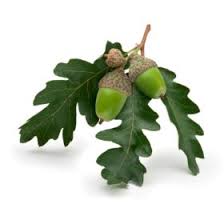
acornWhat does it mean to be a Druid in this modern day and age?

Being a Druid today does not mean trying to live in the same manner as our Celtic ancestors did in this land. We simply couldn’t – with our technology and changed world, our religion or spirituality must change. We can still follow the intention of our ancestors of blood, of the land or of tradition.  We can honour the land upon which we live, work to live in tune with the natural cycles of life, and live a life that is filled with honour, integrity and truth.  These latter three haven’t changed much over the course of millennia; they are still pretty much the same as they always were. Honour is living with great respect for yourself and for the world, for living a life filled with integrity and truth. Integrity is having the will to stand for what you believe in, even through the darkest nights of the soul.  It is standing strong though buffeted by high winds; it is living your soul truth.  Truth is living in accordance to the natural principle of life; it is finding your place in life and not working out of the bounds that our own bodies and souls are bound to in this life.  It is living in accordance with the natural world.

The Druids of old lived their religion – it wasn’t just a matter for the weekend, or eight times a year during the festivals.  Today we too can truly live our religion, allowing it to imbue our spirit with the inspiration to live a life that is wholly integrated between the spiritual and the mundane – in fact, the Druid would say that there is no separation, whether she be a Druid from the Iron Age or a Druid today. It is living in service, giving back for that which sustains us. We may not have the status of the Druids of old, which could be of benefit or detriment – power can corrupt, even as it can make the world a better place. Druids today show their power in their service and devotion to the natural world – from being a judge in the law courts to an RSPCA animal rescuer.  Our love of nature, whether bestowed by ancient or modern Druids, guides our way of life and our worldview.

The Druids of old were of the Celtic peoples – yet today one can be called a Druid without any Celtic ancestry.  Within Druidry, we honour the ancestors in a triad – ancestors of blood, of land and of tradition.  Where we may lack in one, we may find inspiration and guidance from the other two.  As far as I am aware, I have no Celtic ancestry in my recent heritage, however living in Britain and following teachers on the Druid path fill out two sides of the triad, providing me with balance.  I learn from studying what the Celtic worldview was like, from politics and culture, art and history, archaeology and more.  This fills in the last gap, which, all things considered, even those people who can claim Celtic descent should fully investigate. For those of Celtic descent living in other places of the world, their blood and tradition help to balance out their work with the spirits of a new land, and so on.

I do not try to reconstruct what the ancients did – that would not make sense in the modern world.  I understand things that the ancestors did not about nature – equally they understood things that I never could.  I use my knowledge, which is ever growing, to help me adapt my religion to better harmonise and be in balance with the world.  I use the Celtic worldview, as stated above, to guide me to live in accordance with the time and space of the here and now.

Druidry is all about relationship, whether ancient or modern.  While the ancient Druids may have tried to placate the gods with offerings or sacrifice, modern Druids may appear to do the same, but not for quite the same reasons.  We can never truly know the reasons why the ancients did what they did, as they did not write it down.  However, today we may offer daily gifts of thanks to the spirits of place in order to establish a relationship with them, to better understand and to show our gratitude. In relationship there is give and take – we seek the balance in all things.  We may howl at the wind in an attempt to understand why we are standing in the rain, soaked to our underwear, and receive the most blessed inspiration in doing so. We may just get wet.

Ancient Druids were the educated class, from what we can gather from the historical accounts by others about Druidry.  Today, Druids seek to sacrifice ignorance and to learn all that we can about our place in the world.  A Druid might be inspired to heal with herbs, and learn all that he can about that path. Another might be a poet or author, and use words to convey the awen bestowed by the gods, the ancestors and the land. Yet another might be a park ranger, working to protect wildlife – the possibilities are endless.  What links them all is in the continuous learning – we can never know everything about anything.  Druids are constantly learning. Even teachers and priests in the community are always learning, and never afraid to do so, for to do otherwise is simply allowing pride and passivity to come in the way of our relationship with the world.

It goes without saying that all Druids have a love and affinity with nature.  This love guides us in all that we do; it is our inspiration, our awen.  To be a Druid today is to live in accordance with nature, honouring nature in all that we do, with dedication and devotion, in service to the land, our gods and the community. In that, it is not so different from what we believe the ancients did!

Spring Cleaning for the Soul

Spring – it certainly has sprung here in the UK!  The tulips and daffodils are out, the sun is shining (at least where I live on the east coast) and the earth is warm to the touch.  The birds have changed their song to ones of sunlight and warmth, of nesting and mating, of the months ahead and the lengthening days.  The foxes are creating an almighty ruckus at night, and the lizards are coming out to bask in the sun.

It’s time for spring-cleaning in my home – really cleaning the house from top to bottom, doing the floors and dusting the blinds, washing the windows and cleaning every nook, cranny and crevice. It’s amazing how great the house feels after a good cleaning. Every autumn and every spring I do a Big Clean, getting ready for the months ahead.  I feel I am overdue for my spring cleaning.

The chores of housework can seem daunting to some, boring or tedious to others.  To me they are a delight.  Really, I hear you say? Really?

Yeup.

I used to hate housework as a child – we had our daily chores of trying (and in my case failing) to keep our rooms and closets in order. We also had our chores every Saturday when my Mom got the house clean – I cleaned the bathroom, my sister dusted the living room and my parent’s room, my brother tidied the boot rack (to this day, I believe he got off too easily…) while my Mom did laundry and cleaned the kitchen. Dad was usually outside doing gardening in the summer or gone to work in the winter. Every Saturday morning, I dreaded the drudgery of chores when I’d rather be watching cartoons, reading or playing outside.

As such, my room and closet were always a mess, and I may not have done as good a job as I could have in the bathroom.  It’s funny how much a person can change though. I hate living in a messy place these days. I find that it depresses me, makes me sluggish and feeling just plain lazy.  When the house is clean, the dishes are done and the floors swept there is a different energy in the house. It smells clean. It feels clean. The energy seems to move easier, flowing with ease where it might otherwise become stuck on a stack on dirty plates, or picking up bits of cat fur from the “dustbunnies” on the floor (oh Spring, for anyone with a pet – you know what I mean in the shedding season!).

Doing the work is just as rewarding as having the clean house at the end. It can be enjoyable.  I can stop thinking about all my other jobs that are waiting – the essay due, the proofs of the next book, getting my dance class organised, arranging diary dates, thinking about upcoming workshops, retreats and speaking engagements.  I can simply focus on the task and let my mind rest while my body works. It’s marvellous.

Really taking time and care can also help you to get back in touch with your home.  Really picking up each item you dust, looking at it, feeling the surface that it sits on.  Feeling the dishes and warm water on your hands in the sink- washing dishes is lovely in the winter, when my hands are so often cold. It’s so nice to sink them into warm water and let them do their work.

I love housework. I love laundry. I love dishes. I love cleaning the toilet. I love dusting. I never, ever thought I would say that.

Now, I must turn that way of thinking towards all the chores – I mean delights, waiting in my garden!

Reblog: Welcoming the Light at the Spring Equinox

This is a reblog from my Druid Heart, at SageWoman’s channel on http://www.witchesandpagans.com:

The sun rises ever earlier, the days becoming longer. Soon the balance will tip, when the night gives way to the lengthening days. The spring equinox falls on March 20th this year, and after a very wet winter I am very much looking forward to it.

Watching the sun rise and set every day, honouring it with a short prayer and ritual gesture, I can attune myself to the cycles of the sun, of growing life and nourishing decay.  I honour the cycles of the moon, with ritual and spontaneous prayer upon seeing Her face.  Feeling these rhythms deep in my blood and bones, I also feel the shift as the equinox approaches. Similar to the autumn equinox,  I feel like we are on the edge of a knife, ready to be tipped over into a new cycle.

Unlike the autumn equinox, where all seems hushed, teetering on the precipice with dignity and solemnity, the spring equinox is filled with the songs of birds urging us to simply open our wings and fly into the great unknown.  Yet we must take that reaching towards the light as seriously as we take the descent into darkness, otherwise we could get burned. We must protect what we sow in the spring for it to reach fruition in the autumn…

To continue reading, please click HERE to see the full post. x

Compassion for Pirates

Sometimes in this life there are people who challenge us.  It is often difficult to maintain an awareness of our reactions when we are being challenged by another, or when someone upsets us, frustrates or annoys us.  These people can often be our greatest teachers, however, helping us to learn the ways of compassion.

Compassion is not the same as blind acceptance and becoming a sort of door mat for this kind of behaviour. It is not about loving people unconditionally.  There is a social contract involved, based on circumstance, culture and society.  Compassion is trying to understand the other person before falling into a reactionary role.  It is trying to see the bigger picture, in order to act appropriately.  We can stand up for ourselves, for what we believe is right. We can also try to understand those who challenge our views, who have hurt us in the past, who continue to frustrate or upset us in the present moment.

It might not even be that person’s fault that they upset you so.  Vietnemese monk, Thich Nhat Hanh wrote in his book, Interbeing on how if he had grown up on the coast of Siam, there is every possibility that he could have become a pirate like so many other men that plague the waters and make it dangerous for anyone living there.  Often it is due to matters out of anyone’s control – place of birth and circumstances of living that no one can have any sort of say in.

That’s not to say that people can’t change.  It is up to each and every individual to find the path that leads to the least amount of suffering in the world.  We all know that suffering exists – what we should aim to do is to alleviate that suffering where we can, both within our own hearts and in the hearts of others.

We cannot change other people – they have to want to change themselves. We can only lead by example, with our hearts open to the joys of life, not shutting down despite how much we have been hurt. Many may say that this way of living simply invites more hurt into your lives, but I would disagree.  By closing yourself down to love, you are doing yourself a disservice, and not having the right amount of compassion for your own self.  We do not allow people to hurt us – if they do, we walk away to a safe distance, try to understand the reasons why they have behaved in the way that they did, and perhaps try to alleviate the suffering on both sides through compassionate dialogue. Where this isn’t appropriate or where it just isn’t possible, perhaps because we have been hurt too much, we can simply bow and walk away, wishing peace for them and for our own hearts to still open to the possibility of love from a myriad of sources that exist in the world.

There are people in my life that I simply do not get on with.  It is sometimes a personality clash, or they have done/said something that I do not agree with – the circumstances vary.  When we have been mistreated, it is often hard to have compassion for the person who has done you wrong.  Your mind can get so caught up in what this person has done to you that everything they do annoys you.  The way they walk, the way they talk – the way they may apparently blunder through life.  When I find myself faced with such thoughts, it offers me the opportunity to see my own reactions and emotions, to understand how my mind works a little better. This is a true gift.

Yes, this person behaved inappropriately towards me in the past. But why should I let them continue to hurt me, to annoy me, to frustrate me? This is all within my control to end whenever I feel like it.  I don’t have to attach to the past hurt – I can let that go and get on with my life.  When I find myself glaring, or sneering on the inside, when I am disturbed on any level by this other person, I stop, pay attention what is happening in my mind, and smile. I can see the reactions for what they are. They are not actions – they are reactions.  I am acting mindlessly upon something that has already happened, and I am acting again and again in a repetitive state that does not help to alleviate anyone’s suffering. We have the opportunity to really act only once in any given situation, at the moment it happens. After that, we are acting upon the memory of the situation.

I am grateful for the opportunities I am given to see how my mind works, how my emotions can override the reality of a situation.  We are emotional beings, passionate creatures.  We can live a passionate life without being ruled by mindless behaviour. When it becomes too much, we can walk away, taking time to breathe, to try to understand ourselves and the other, to see the reality of the situation. Where there is no way forward, where is there is only hurt or danger we walk away with open hearts. Where there is a chance for reconciliation and healing then we take that with gratitude.

Living with compassion is not an easy thing – it takes dedication to truly want to understand your self, and others around you.  Yet when you do, the world opens up like a beautiful lotus flower, the many petals of existence showering you with beauty.