Patty Griffin – Forgiveness

In the time of greatest light, we cannot hide.  We face our demons, head on, letting our nearest star shine its light upon all that we would attempt to hide. And beneath it all, we remember that a body needs forgiveness…

Blessings of the summer solstice to you all. x

Book Review: The Magic of the Summer Solstice

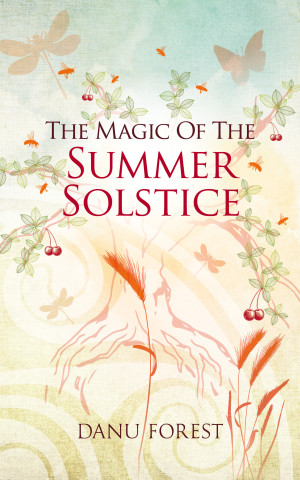
Magic of Summer Solstice Danu ForestFellow author, Druid and all around lovely person, Danu Forest has written the first in a series of e-books that detail aspects of each of the eight pagan festivals, otherwise commonly known as The Wheel of the Year.

Her first book, The Magic of the Summer Solstice, is a well written, well-rounded account of folklore and customs that surround this time of the highest light.  It is also filled with arts and crafts to do during the summer solstice, as well as recipes, meditation, visualisations and more. There are also lovely, simple illustrations by her talented husband and artist (and excellent drummer – my doumbek came alive in his hands at Druid Camp last year!), Dan Goodfellow.

I loved this little book. I loved it so much I read it twice.  I really look forward to reading the others in the series, and to find ways to incorporate some of the ideas into my own personal ritual practice.

For the time being, I’m keeping an eye on the elder tree in my backyard for making cordials, and will be making a lovely sun wheel for our group celebration later this month!

P.S. Just to top it all off, I was also delighted to see that at the end of the e-book was this!

P1070672 (768x1024)

Reblog: Reach for the light, rooted in the earth…

The days are getting so long, with early sunrises and late sunsets. And yet, there still doesn’t seem to be enough time to do everything in a day at this time of year. My schedule is packed, and I’m very tired but happy at the end of each day. Summer madness has sprung, with so much to do! This is a re-blog from my latest post at SageWoman, where during this time of greatest light it’s essential to keep our feet rooted in the ground while reaching for the heavens.

The swirls and eddies of the rising tide pull us ever closer into the dizzying dance that is summer. Here in the British Isles, summer is when everything happens: festivals appear from May to September, weekend events and week-long retreats. It’s a busy time of year, when we ride the solar energies to the point of highest light. We feel our spirits rising with the sun, and let its rays illuminate our paths and nourish us body and soul.

It’s easy to get caught up in the frenzy. My schedule is packed until October, with pagan events, priestly duties and more. By the end of May I can already begin to feel a little burned out, and summer hasn’t even really gotten into its stride yet. What I have to do is look to nature for inspiration.

The growing tides of light can entice us to do more than we should, to overbook or overcommit ourselves. What we don’t want to happen is to have the summer solstice upon us and be too tired to celebrate it. We need to harness our energies, to pool our resources so that we can access those lush depths when the time is right…

To read the full article, click HERE.

Solstice Practice

This post was originally  displayed on SageWoman’s channel, on my blog DruidHeart at Witches & Pagans.

Around the winter solstice is the time of year when many people get together, families and friends, to celebrate the holidays. If we are fortunate, we have some time off to be together, all together in one place – we may not have such an opportunity until the next solstice season rolls around. It can be a wonderful time of loving hugs, good conversation and deep, belly filled laughs. It can also be a trying time, when the bonds of friendship or family can become tested as we are all thrown together, our usual routines and habits left behind and we are faced with situations that are perhaps out of the norm.

My home is usually very quiet, filled with deep silence and stillness. In that silence I find my personal sanctuary, where peace is around every corner. I’m not a big fan of crowds or noise. However, at this time of year, I leave behind my little sanctuary and venture out into the world of lights and noise, family and friends when I’d really rather be sitting on my meditation cushion in the dark, with a candle and some incense.

It’s quite a shift to deal with. There is constant noise around me, different noise to that of my own home. It’s the noise of other people, which I am not accustomed to. Loud televisions, conversations, arguments, laughter – it’s a bit of an assault on my senses. Dealing with other people’s behaviour when there is no opportunity to “escape”. I have to confront everything that upsets me head on, or lose my temper, say something in anger as my “sanctuary” is thrown out the window.

Or is it? Yes, it’s difficult. Even as I type this blog, there are interruptions by people walking in and out of the room, asking me what I’m doing and other various questions. Nemetona, my goddess of sanctuary, has taught me that she is ever within me even as she is without – I take her with me wherever I go, and where I go she is always there.

In my Zen practice, this time of year provides me with innumerable ways to really practice. Life becomes difficult when things don’t go our way. When we realise this, and when we see that life is simply going ahead whether we like it or not, things can become easier. I have to deal with behaviour that I don’t like – this gives me a chance to practice and to try to understand that person’s behaviour. Often I can see myself reflected in it, or see that they are lost in their own suffering. I can try to ease that, when I remember to try to understand it. When it just pisses me off, I’m not trying to understand, and anger can erupt. When this occurs, I realise that I am not practicing very well, that I am not aware of my own reactions and behaviour. It’s a constant reminder to look deeply at myself, to see my patterns and to alter them in order to have peace and harmony both within and without. My goddess and my Zen practice help me with this understanding.

I have two choices when I find myself in difficult circumstances – get upset or not get upset. When people are shouting in the kitchen, or using words unkindly, or their behaviour is totally out of sync with creating harmony, I feel a tightness, a contraction within my body. Getting upset with this only tightens that contraction even further, making me miserable, or lashing out in anger in a misguided attempt to alleviate the tightness within. Seeing people mistreat each other, taking each other for granted – all of these things can cause contractions within. Passive/aggressive behaviour, words that are intented to provoke, noise levels louder than they need to be – all these things cause a contraction within my body. I want to loosen that contraction, but how?

Sitting and walking meditation practice, daily, really help me through this challenging time. By sitting, I am aware of my body, and aware of my thoughts. I see patterns in my behaviour. I see the self that is screaming for attention, for comfort, for sanctuary. I also then see the illusion of the separate self, and the inter-connectedness of all things. We are all dependent on everything else – the sunlight, the rain, our parents, the air, food. Without any of these things we could not exist. We are in them and they are in us.

When people’s behaviour challenges us, it helps to remind ourselves of this inter-connectedness. They are in me, and I am in them. It’s easy to do when out in the forest, becoming one with nature. But in challenging situations, with people we are often more directly faced with egos and personalities, with habits and the ego’s constant self-regard. When someone says something that upsets us, instead of thinking “I’m so upset that he said that” we can just realise that he said something. That’s the truth of the matter. Someone simply said something. We can act on what they said, of course, if they are saying inappropriate things. But we don’t have to act on it in anger, simply in awareness. Things happen. People behave the way they do. We can either get upset and lose our practice, or we can see the opportunities to become even more aware of our selves. In this awareness lies peace.

Slowly losing our separate sense of self, our egos begin to dissolve. We listen more. We apologise more. We find a deep well of peace to draw from, where we nourish that which brings peace and harmony. We don’t ignore our feelings, but we don’t feed those that create discord. We’ve no wish to stay in that contraction, no desire to create it in others.

Use this time of year as an opportunity to practice, to see how in nature we are all connected. See how the awen flows, how we are inspired by each other in each and every moment. Use difficult situations as the chance to become aware of your self and the world around you. It’s not easy, I’m being challenged constantly. It’s also a wonderful opportunity to fully immerse in the flow of awen, and not to be bashed against the rocks and caught in the swirls and eddies in the river of life. When life isn’t going the way that you would like it to, simply remember that. When we are angry or depressed, remember that it is because life isn’t going the way we want it to. Work with those feelings, work with others, and the practice will begin to show its rewards in less contraction, less anger and less upset. Peace begins to seep in, trickling through out insight, aware of the delicious drops of awen upon our tongue.

Isn’t that what this time of year is all about? Peace and love, awareness of the darkness and the returning light, the times and tides of life. May this time of year bring you many chances to practice, and may you find true joy in that practice.

Reblog: The Winter Solstice – No Birth, No Death

This is a reblog from my site, Druidheart, at SageWoman’s channel on Witches and Pagans. To read the whole post, click HERE.

With the Winter Solstice approaching, and in the cold dark months of the year, we have an excellent opportunity to reflect upon the deeper parts of our existence, those shadowy elements that seem to fade away so easily in the heat of the midday sun, those thoughts that require darkness and the teaching that it can bring. Thoughts such as life and death, darkness and light and the cyclical nature of existence are all excellent themes to meditate on at this time of year, with a natural introspective element to this season allowing us to perhaps go further, deeper than we could or would in the warmer, more outwardly focusing half of the year.

This season, with the increasing darkness and the lack of light here in the UK brings more sharply into focus thoughts of death and dying. It is often said in Western Paganism that the Sun God dies at Samhain and is reborn at Yule, when the days begin to lengthen and the light in our lives is increased. However, lately my thoughts have abandoned the concept of death, as well as birth, into a more Zen-like “No Birth, No Death” frame of mind.

Having meditated on this for a couple of months now, and seeing it reflected in nature around me, as a Druid this is how I internalise the teachings. For me, nature is the greatest teacher. I look to no other authority other than nature. It is the core of my religion, the core of my being. Having looked deeply into the nature of death and dying, of birth and living the concept of no death, no birth makes a lot more sense to me right now. Let me explain…

To read the full post, click HERE.

Reblog from DruidHeart: Hello, Jack

Here’s a reblog of my latest post for Druidheart, on the SageWoman channel at Witches and Pagans.

Arthur Rackham, 1920

Arthur Rackham, 1920

At this time of year, I always honour Jack.

 
Who is Jack? Why, Jack In the Green, of course! Although Mr Sparrow does deserve high praise indeed – but I digress. When the greening has taken over the land, when everything suddenly seems to explode in a riotous cacophony of twisting tendrils, blooming buds, leafy mounds and pollen induced insanity – this is when Jack is in His element.

 
Up until now, things have been fairly orderly. The weeds have, for the most part, been kept under control. Everything seems to have taken its turn in coming out – the columbine turning the garden all shades of pink through to purple. A couple of weeks later and BAM! Chaos reigns. Each green and growing thing is no longer playing nice; now it’s a competition for the most light, the best position. We had a lovely calm before the storm in May, now the party well and truly has begun.


As we edge ever closer to the summer solstice, so too does Jack creep further into our hearts, into our psyche. Sleep patterns are disturbed by the long evenings and early mornings (here in the UK). We spend every moment we can enjoying this weather, for it can all change tomorrow into a cold, dreary day. We barbeque at every opportunity. We attend festivals and gatherings, meeting new people and seeing old friends. We have come out of our shell, so to speak, to dance in the full light of the sun. We make noise. We laugh. We love out in the open in the lingering twilight.

 
Jack can bring all these wonderful things to the fore. He can also run you ragged. Like tending a garden – we have to keep Him in check or else he will just run you crazy until you’re lying on the floor, wondering how on earth you got there. There’s a rush to do things, to make use of the wonderful light and time of year. We’re overbooked – we’re double and triple-booked in some cases. We’re teetering on the edge of the solstice, and Jack is waiting to push you over the edge.


Cont’d

To read the full article, click HERE

Reblog from SageWoman: The Darkness Within

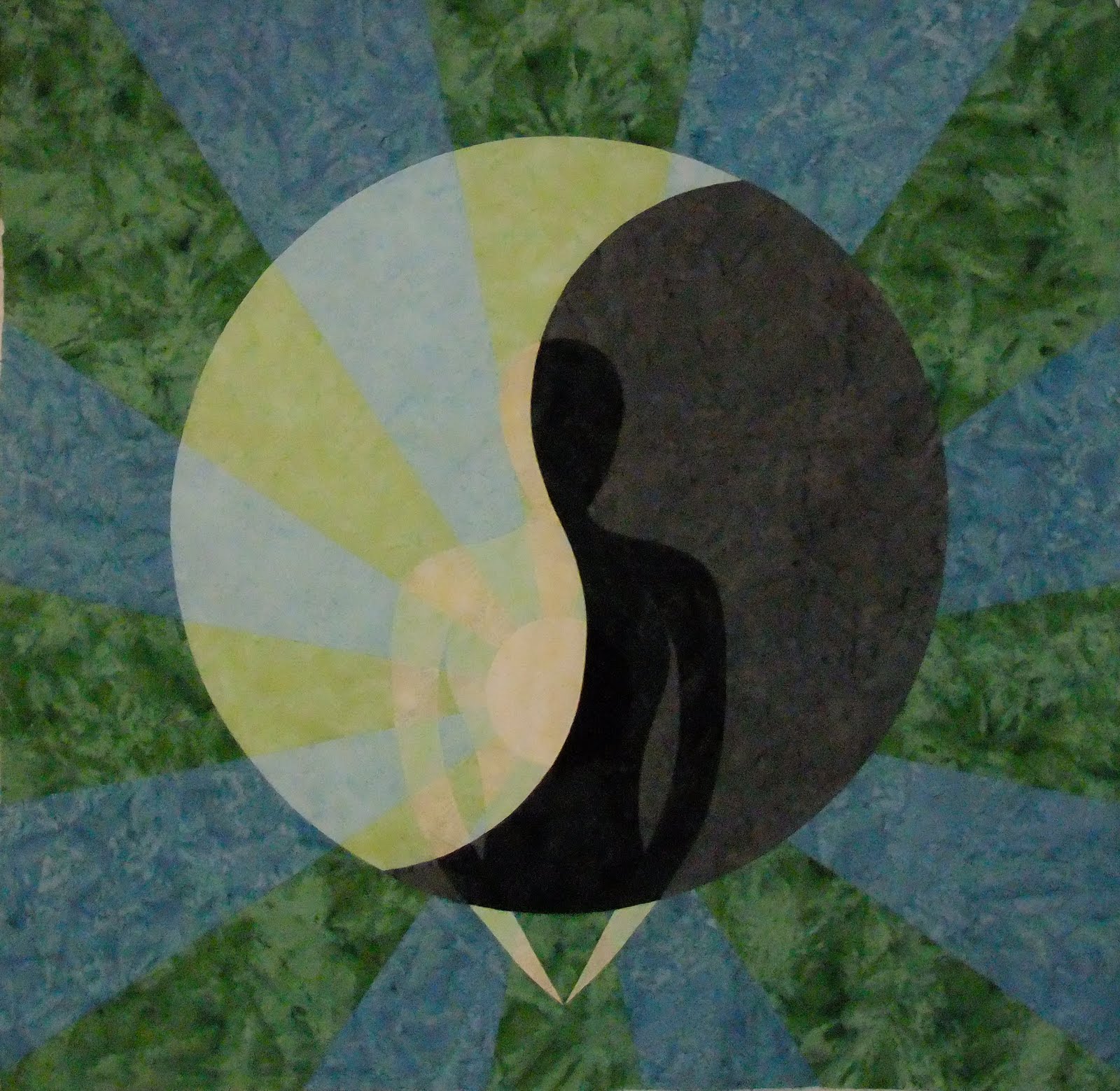
shadowself

Reblogged from my channel at SageWoman:http://www.witchesandpagans.com/Druid-Heart

The winter solstice is fast upon us, even though technically the shortest night has already been upon us (for a brain-thumping explanation, see http://www.theatlantic.com/technology/archive/2013/12/the-astronomical-hijinks-of-the-shortest-day-of-the-year/282109/).  Thoughts turn inwards at this time of year, when in the darkness we are confronted with our shadow selves, should we choose to face them.  We have the opportunity to learn more of ourselves, and in doing so, better serve not only ourselves but the world.

Performing a meditative journey, I met with my shadow self – that part of your self that you fear, that you loathe, that you don’t understand as well as those things that cause you pain, grief, rage, etc.  This confrontation was very interesting – my shadow self described to me all the things that she thought I was, as well as all the emotions that crippled me. She delighted in telling me them, it seemed – with each utterance she thought she had gained power over me.  The words hit me and reverberated throughout my body – I literally felt them, each and every one.  When she was done I was still standing, though shaky.

I knew that in order to gain some semblance of control, I needed to know her name and so I asked. She refused to tell me, delighting instead in playing games. I finally had enough of it all, and named her myself in words strong and full of intention – “You will not give me your name, and therefore I will name you myself. You are Joanna Alida van der Hoeven.”

She deflated, knowing that I had named her correctly.  “I know who you are,” I said.  “You are all that I fear to be, all that I have been in the past for good or ill and all that I might be in the future.  But you are merely a potential.  The past is gone, and I am not the same person I was then. The future has not happened yet, and so no one dictates that for me. In the present moment, I simply am who I am, free to be who I wish, decried by my words and deeds and actions.” I remembered the words to my favourite film, Jim Henson’s Labyrinth, and faced my shadow self, stating “You have no power over me”.

The encounter was over, and I had emerged tired but triumphant.  Haunted by some aspects of the past, I have realised that they do not dictate who I am now. The past is there to inform us so that we do not make the same mistakes again.  The past informs the present and the future.  We are not our past, just as we are not our future – we can only be who we are in this present moment.  Our lives are filled with potential for good and bad and we can either let fear dictate our actions and allow past mistakes to re-emerge, or we can accept it; we can own our mistakes and become simply the best people we can be at this moment in time.

I have had a mantra over the last few months, that when I question my motives, or feel fear or grief or rage, happiness or unhappiness, I ask myself this – “Whom does this serve?” Taken straight out of Grail mythology, this question is the one that must be asked upon directly viewing the Grail in order to heal the wounded Fisher King.  These four words contain so much power, and have so many different meanings.  It questions us to look deep within ourselves, but also to the greater world at large.  It deeply explores our intention, which to me is one of the greatest powers one can have both within Druidry and the world.  Intention is at the core of every action we make – but we must look deeply at the intention before we act, if possible, in order to ensure that our actions are honourable.

In the darkness, the shadow self has power.  What we are unaware of deep within our selves can control us in so many ways. We must learn to confront our shadow selves, to acknowledge them, to own our past and our mistakes, our fears and our grief, in order to tumble out towards the light once again, ever repeating this cycle even as the seasons change and the tides turn. The awen lies all around us within nature – all we have to do is open our eyes to see it.

(The journey meditation that I performed was part of a series contained in Jenah Telhyndru’s Avalon Within: A Sacred Journey of Myth, Mystery and Inner Wisdom.)

Blog image is from a quilt taken from The Free Motion Quilting Project: http://freemotionquilting.blogspot.co.uk/2010/05/shadow-self-part-2.html


Going lightly through life…

As I was out walking the other day, the saying” Living well is the best revenge” popped into my mind.  After a moment’s thought, an additional part to the saying came to mind – “yet if you are focused on revenge, you are not living well”.

At this time of year, when peace on earth and goodwill towards men is often heard, I thought that the addition was rather apt.  For the first part of the saying, it almost deals with the issue, but yet does not allow for forgiveness.  We are still holding a grudge towards someone for what they have done to us.

It reminded me of a story that I recently read, where a group of young monks were given a sack and a bunch of potatoes.  The Master told them that for every grudge, for every thing they could not let go, they had to put a potato in the sack and carry it with them – a physical reminder of the thoughts that they carry around in their heads, which can be outwardly reflected in our behaviour and even our bodies.

After a while, the young monks decided that it was much easier to forgive and let go than to keep carrying around this heavy load the whole time. So, one by one, the potatoes were taken out as they moved on, letting go.  Yet, even as they emptied their sacks, they realised that the sacks could be refilled, and quite easily as well.  So they discarded their sacks – seeing that the sack was as important as the potato. The potatoes were the thoughts, the sack was their very self.  If they held onto their sense of self as lightly as they did their thoughts, seeing that there is no duality and that all things are connected, then there would be no sack, no potatoes, and no burden to carry through life.

I have applied that story to all the old and new grudges that i have been carrying in my life – why would I want to carry them in the first place? Letting go, leaving it all behind and holding very lightly to opinions and the sense of a separate self seems to be the way forward.  It’s not easy, however. Forgiving someone means letting go of any sense of righteousness.  It means letting go of the idea that someone is wrong.  It means simply living in the moment and enjoying it for every second that it exists.  The saying goes “forgive and forget”.  Now, forgetting is much easier than forgiving. I think simply forgiving is enough – forgetting means that it may happen again.  Forgiving implies understanding and not judgement.

So, now is the time to live well, letting go of any ideas of revenge, of grudges.  Life is far, far too short to carry around all that we do not need.  Go lightly through life.  And blessings of the season to you.

The Dying of the Light

Dylan Thomas’ poem, “Do not go gentle into that good night” is often in my thoughts at this time of year, when the winter solstice is approaching and the ever increasing night draws close, the cold winds howling outside.  Yet I do not agree with the poem’s repetitive line – “Rage, rage against the dying of the light“.  

Though wise men at their end know dark is right,
Because their words had forked no lightning they
Do not go gentle into that good night.

Good men, the last wave by, crying how bright
Their frail deeds might have danced in a green bay,
Rage, rage against the dying of the light.

It would seem that the wise know dark is right, and yet their pride, hubris or egos get in the way of going gently into that good night, as their words “had no forked lighting” – they want to be remembered for their wise words, at least, is the suggestion. The true wise person has no need of such external gratification – wisdom is inherent, not granted externally. Written for his father, whom Dylan Thomas wanted to die raging instead of quietly, perhaps for his own selfish attachment or whatever reason, is still spoken of today when the nights are long and we seek illumination in every sense of the word. 

It’s all around us – gaudy, flashing lights – some set at incredible speed settings that I can only assume is to disorientate the viewer, often going up before the leaves have fallen from the trees and the ground not yet frozen.  Many, many people are raging against the dying of the light, putting up the Christmas or Yule lights, lighting the darkness and consuming considerable amounts of energy at this time of year in a display that is somewhat missing the point.  As pagans, we celebrate the return of the sun after the winter solstice, certainly – but we should also honour the darkness in the days leading up to the solstice with equal measure. 

Christmas or Yule lights can certainly be very pretty – if done tastefully, and using very low energy lights, turning off others that we would normally have on at this time of year to offset the energy.  But first we must come to grips with the darkness before we light the lights.  We must look into ourselves to see why and what it is that we fear, loathe, or deny in the darkness – why we are so hesitant to look into the abyss.  Is it because we, as Dylan Thomas did, equate darkness with death?

Yet it is the time of year when death is all around us.  One look at our gardens instantly confirms this – very few things are still alive above ground.  A cycle has ended, and the seeds of the next generation lie below ground to await the return of the light – but they know that this does not happen instantaneously on the winter solstice.  They respond to the growing light and warmth slowly, in the months after the solstice, in their own time, and hopefully not too soon, like some of my daffodils did last January…

Acceptance of death is key here.  We should not rage against it, but embrace it as part of the cycle.  Many people think that death is the opposite of life – yet death is a singular event, and as such its opposite would be birth.  Life has no opposite.  We do not rage against a birth – why should we rage against a death? 

Taking inspiration from the natural world around us, we follow its rhythms and cycles and turn inwards to nurture that which is most precious to us, to guard it for the coming year ahead. It is in that darkness where we can truly know ourselves, our thought patterns, our behavioural tendencies.  Looking inwards into our own darkness we can find that small spark of light that needs to be kept safe in the darkness until it is ready to come to light, and not be snuffed out like a candle in the winter wind. It is time to cease looking for a distraction from the darkness all around us, and instead focus on our own wellbeing, and nurturing that seed of inspiration within, as well as facing our own death and fear.  It is all too easy to lose that in the crowds doing late-night shopping amidst chintzy tinsel and bright lights, with tinny music being piped into the stores that are overheated because they leave the door open to attract more customers into the lure of consumerism.  If we must, we must, but then seek the darkness to recoup and recover. 

Honour the darkness for the wonderful rest that it brings.  Without it we would have no spring.  Celebrate the darkness – turn off all the lights and central heating during the evening of the winter solstice, if you can, and truly experience the time of year. At midnight, light the fire in the hearth or candles in the house to honour the change, slowly, very slowly, lest we become blinded by the artificial return of the light and stumble around unable to see.  Do not rage against the dying of the light – for all the rage in the world will not stop death or the darkening days leading up to the solstice. Embrace, embrace the dying of the light.