Reblog: Ancestors and Integration

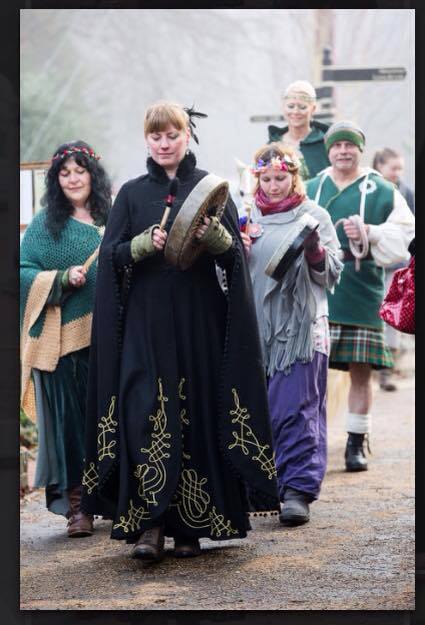
© Photography by Emily Fae, www.photographybyemilyfae.com

Here is a taster from my latest blog post at SageWoman – I’ve also got an article coming up in the next print edition of SageWoman magazine, so keep an eye out!

I learned something fascinating this weekend. I learned that as women, when we are in our mother’s womb, we already have all the ovum (eggs) that we will release during our fertile years. So, to put that into context, when my mother was in my grandmother’s womb, I was also there, partly, as one of the eggs that would be fertilised by my father. This link only occurs in women, and it just blew my mind. I was in my grandmother’s womb.

Our lines of ancestry can be glorious and transformational journeys of discovery. Not only in a historical sense, exploring records and genealogy, but also connecting spiritually with our ancestors. As the darkness creeps in and the days get shorter, in the cooling air with the harvest being taken in the fields all around me, my thoughts turn to my ancestors and to the self, releasing into the approaching autumn and finding great comfort and joy in the letting go.
In order to release that sense of self, however, we must first come to know our self.

Exploring who we are, where we came from, what makes us “us” is key to this work. Understanding circumstances, experiences, lines of ancestry can enrich our lives and help us to uncover depths of our own soul that may have previously escaped our notice.

To read more/full article, click HERE.

Busy times ahead!

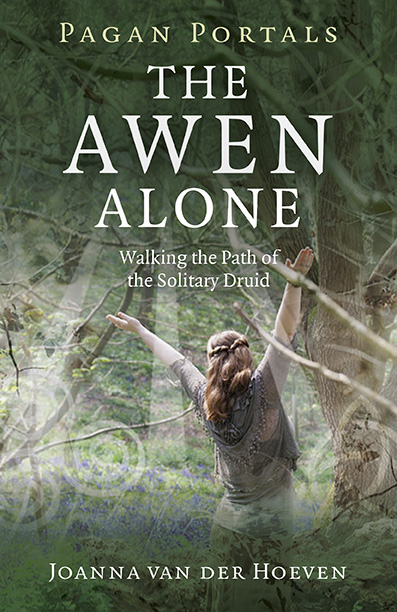
The Awen Alone Joanna van der Hoeven

My latest book, The Awen Alone: Walking the Path of the Solitary Druid has broken through another sales barrier last month – I am really pleased and very grateful for the warm reception that this book has received! I am currently working on a new book at the moment, diving in and getting stuck into a much more in-depth piece of work entitled Druid: Priest of Nature.   I hope to have finished writing this one by this time next year – wish me luck!

Sacrifice

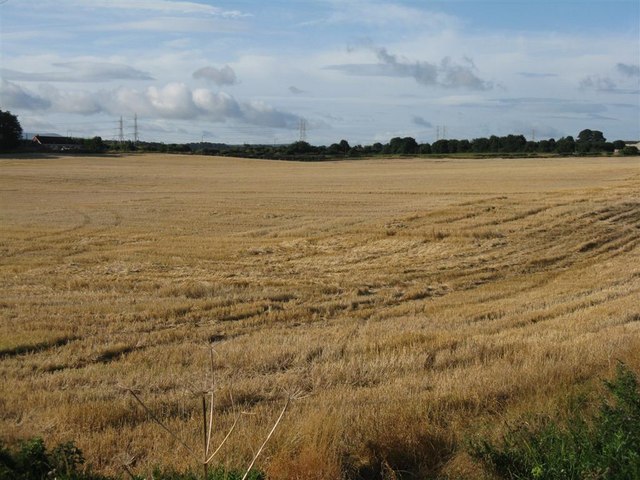
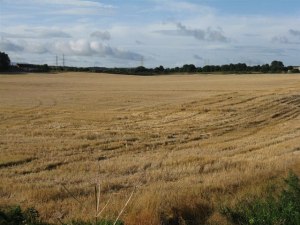
barley stubbleSacrifice – it’s one of those “old” words, like honour and duty. Many who have read Roman accounts of the Druids associate the word, sacrifice, with the priest caste of the Celtic people at that particular time. However, the word goes even further back into the beginnings of time for the human animal, when the importance of relationship with nature was everything, when we knew that to disconnect ourselves from the natural world meant death. Today, we must remember this, remember each and every day how much we are a part of the world, how much our everyday actions count, no matter how small. Each day is also an opportunity to give thanks for the blessings that we have. At Lammas, however, just giving thanks doesn’t seem quite enough. When the first crop is harvested, and the land lies stark and naked, shaved and shorn from under the combine harvester, giving thanks and saying words over the field doesn’t feel adequate. This, for me, is where sacrifice comes into play.

It’s hard as the line keeps shifting between giving thanks and the notion of sacrifice. What might be an offering to one person might be seen as a sacrifice to another. I can only speak from my own personal viewpoint, as I may value things differently from my neighbours, my family, and members of my pagan community. So, what is the difference between an offering and a sacrifice?

For me, sacrifice is something of significant value. This is not necessarily a monetary value, but could be something that is cherished, prized, something that is utterly loved and which has a representative value of the threads of connection we hold with the gods, the ancestors, the spirits of place. What is it that I have which I value? What am I willing to give back in return for the flow of awen, that spark where soul touches soul and is inspired? What am I willing to do to achieve that?

When the barley in the field by my house is cut, the energy of the land drastically changes. Between the homes and the heathland there are two arable fields, one which was harvested in the spring for green barley, and one which still has the golden, bowed stalks waiting to be harvested. Acknowledging the change isn’t enough, for when we hear the songs of the ancestors, I feel how important these crops were for them, how important their relationship with the land meant their survival and success. In a field of growing barley, there is potential, a shimmering energy waiting to be harvested. When that field is cut, the potential can be scattered if the land is not honoured. The ancestors knew this, but we have forgotten. Modern farming depletes the soil of essential nutrients that must be replaced, often by less-than-natural means. The barley is cut, and the field then stands, barren and forgotten for weeks, until the farmer and his tractor are ready to plough in the winter or spring crops.

The land isn’t respected, isn’t acknowledged anymore. As an animist, I find this appalling. When the land has been used, has given us so much in a beautiful field of barley, and we don’t even give thanks, much less sacrifice then there is dishonour. As with any relationship, if one side continually gives and gives, and the other continually takes and takes, the balance will shift, the relationship will crumble and great suffering will ensue.

What can I give that will honour the lives that this crop will feed, that will honour the land that grew it, that will honour the ancestors that worked it, that will honour the spirits of place who live there? What will be a significant gift for all we have received?

The sacrifice will change year upon year. What matters most is the importance of the sacrifice to me personally.

Offerings represent a more daily interaction, little gifts and niceties that you would present to any friend that you meet: a cup of tea, a biscuit, some of the fresh-baked bread you just made, or your home-brew mead. Finding out what the local spirits of place would like is as polite as asking your guest how she would like her tea: with or without milk, honey or sugar? When it comes to sacrifice, however, the shift of focus changes to become more introverted rather than extroverted.

I’ve previously in earlier articles described sacrifice as something that is not only of great value, but also as something that can help you “get to the next level”, so to speak. No, we’re not playing at Druids on World of Warcraft, but we are seeking to deepen our relationship with the land. Sacrifice is key in this regard, helping us to go deeper, to give more of ourselves in order to understand more of the land.

Many within the Pagan traditions see the Sun King as offering himself as sacrifice at this time of year, to be cut down as the grain is cut, to be reborn at Yule. Yet are we comfortable allowing the Sun King to do this each and every year, or should we also take our part in the sacrifice, participating rather than simply watching the cycles of life unfold?

And so I will spend the next few weeks walking the land, finding out what I can give, what I can do to deepen my relationship with it, to be an active contributor instead of a passive spectator. Some aspect of my self must be willing to die alongside John Barleycorn in order to understand the cycles of nature. Some sacrifice must be made.

The Mole Problem: Why Good Animists Make Good Neighbors

Another brilliant article by Alison Leigh Lilly…

The Mole Problem: Why Good Animists Make Good Neighbors.

Working with the Gods of Time

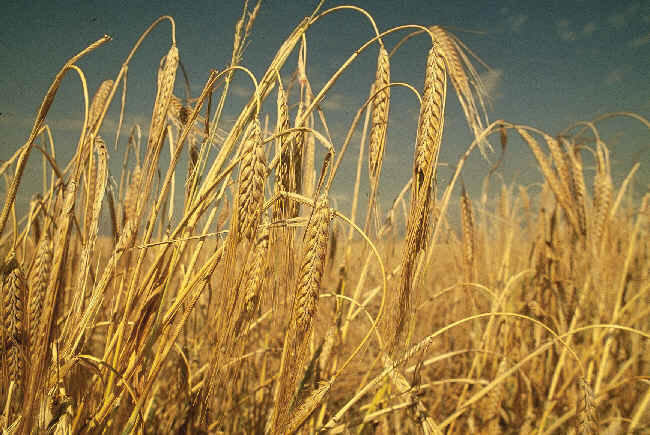
barleyDruidry is hard work. If you want to establish a deep and meaningful relationship with the land, the gods and the ancestors you have to work at it, each and every day, really walking the talk and living your religious or spiritual path. Like most things in life, you get out what you put in.

At this time of year, things can seem crazy busy, with all the plans that we dreamt up over the winter months and put into action in the spring finally coming to fruition. Working as a Druid priest, not only do I have my own personal plans to attend to, but also those of the community. July and August are heavy months in my diary, filled with handfastings and weddings mostly. In the later summer months we are inspired to a deep commitment, not only in our work but in our love lives as well. If we want our harvest to be successful, we have to work at it.

The warm months encourage us outside, even though we may have a pile of work waiting on our desk. It’s important to experience these months physically, as well as on a spiritual level, especially here in the UK where sometimes the summer can seem so short. It makes greater demands on our time, and I find that I do not get nearly as much writing done from June to October as I would like, with other duties and the hot sunshine or warm rain calling me outdoors. It’s equally important to be outside in all kinds of weather, but perhaps it is because I was born in August that this month really appeals to me, with more thunderstorms, hot sunshine, refreshing rains and muggy weather. Though autumn is my favourite season, it can often be too short, whereas summer (hopefully) lingers on in the heat of the stones and the land, the smell of the rain, the flowers and the scent of mown grass.

So even though my work goes a bit nuts at this time of year, I take time out each day to remind myself of that commitment that I made with the land. To work with her, to honour her, to be with her, to learn from her. I hear the songs of the ancestors flowing through the land. My lady Brighid sings deep within my soul, every day.

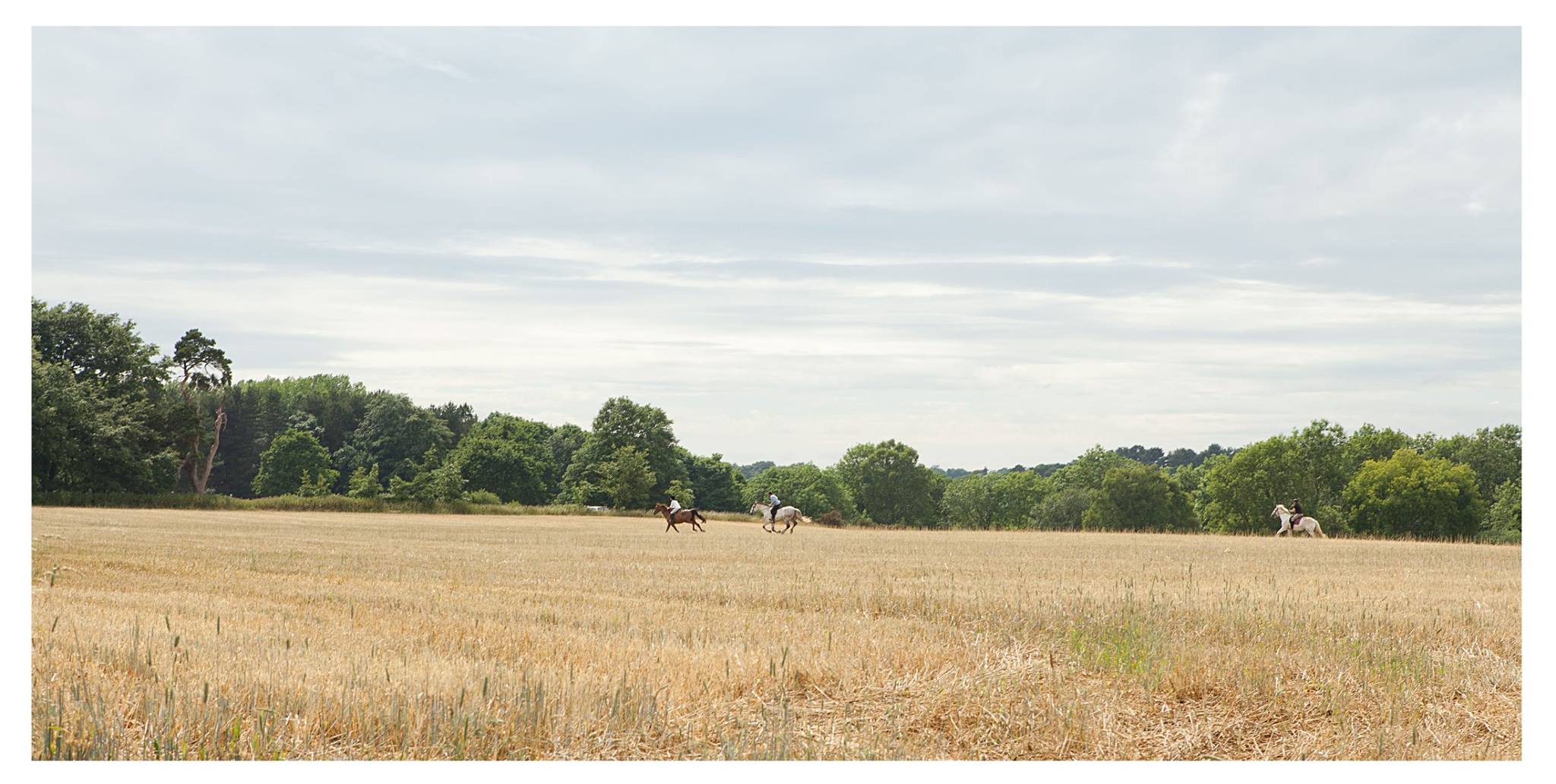
Even though I had only a small window of opportunity yesterday to get out there, still I went to the field opposite my house to be with the barley before the harvest, listening to the brilliant rustle of the drying stalks under the sun, hearing the songs of the land and the troubles with the bluebell woodland beyond. Saying my prayers and blessings over the crop and the land, connecting with the earth and her nourishment, giving of myself in return was a necessary part of the day. Like being in any long-term relationship, it requires constant presence and not taking anything for granted. This was really brought home to me when I studied with Bobcat many years ago in the beautiful setting of the Cotswolds, when we discussed with the other students the gods of time. Working with time is a great learning curve, coming to learn how to relate to the gods of time, working with deep integrity and honesty.

So you will please excuse me if there are fewer posts between now and the end of August – in the few moments of brief respite from other duties and obligations, I’m probably out in the fields or forest, heathland or seashore, spending time with the ancestors, honouring the gods of time and reminding myself to be present.

Blessings of the harvest!

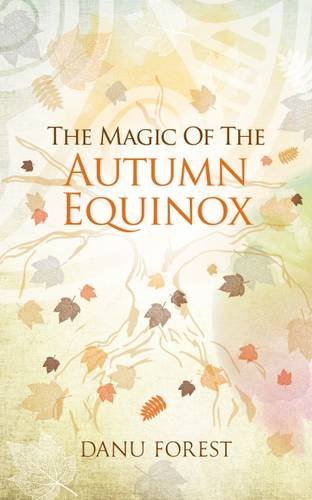
New book by Danu Forest coming soon!

DF autumn equinoxApologies for the lack of posts lately – this is an incredibly busy time of year, for me as a Druid priest and also getting through my Herbcraft diploma course, as well as starting up Druid College this October.  However, I saw that the ever-lovely and talented Danu Forest has a new book coming out soon, and I wanted to share the good word here! I really enjoyed the first book in this series, which was The Magic of the Summer Solstice.  Her second offering, the Magic of the Autumn Equinox is available for pre-order now! Click HERE for more details.

Reblog: Harvest-Time

Here is my latest post for SageWoman Magazine’s blog channel at Witches and Pagans…

Every day at this time of year, either morning or evening, I do some gardening, keeping back the riotous growth that excels in this season. If I didn’t, many plants would simply take over the garden, crowding out some other favourite plants. Though these crowders may be near the end of their cycle, in their death they will still smother those that have great potential, as their time is arriving. It’s a hard time of year to keep on top of things, as the sun is so hot in our south-facing garden, and time is limited to mornings and evenings when we won’t burn to a crisp or keel over from heat exhaustion. Jack in the Green is running riot, uncaring, reaching for the sun, drinking in the rain.

Yet if I want my irises and lilies to survive, I must release them from the choking hold of ground creepers/covers that threatens their existence. I must carefully weed out and try to keep under control those plants whose vigorous growth would otherwise overwhelm others. In this, I feel a kinship to my ancestors, not only my recent ancestors whose work with plants runs in my blood, but also ancestors of this land who depended upon agriculture to survive. Both physically and metaphorically, this is the ideal time to sort the wheat from the chaff.

Even as I hear the tractors and combine harvesters rumbling in the fields on the other side of the street, so too do I look both within and without to see what needs harvesting, and if the harvest has been good. Getting out in the garden brings it all home, showing that if you take on the responsibility of growing things, of nourishing them, then you must do your job well in order for your harvest to be good. Walking out in the fields after supper, running my hands over the tops of the wheat and barley that grow around here, I make my prayers for the harvest to go well, for the people to be nourished and for the land to be treated well. The time nears for when we give back in great gratitude as Lammas, Lughnasadh, Harvest-time arrives…

To read the full article, click HERE.

Working with the Gods

Working with the gods in Druidry is perhaps one of the most intense, exhilarating and powerful experiences we can have. Why is this?

To work with the gods, we require utmost honesty and truth. If we are to open our souls to the gods, and see theirs in return, we have to be utterly aware of who and what we are, baring all without the masks of self-protection, negation, pride or any number of human foibles. It comes close to the Wiccan saying of “in perfect love and perfect trust”, yet I would simply change the word “trust” to “honesty” here.

Trusting a god of nature may not always be a wise thing to do. Gods of nature do not always have our best interests at heart. Gods of nature are there to express their soul song, whether that be in the gift of nourishing herbs and berries or the destruction of a hurricane. I don’t necessarily put my trust in an oncoming storm, but I am willing to be utterly open and honest with it. The same could be said of any interaction or relationship. Trust is an odd thing, an investment in the behaviour of others of which we have no control. I’d rather focus on being open and honest in my relationships with the gods, with the humans and other animals around me, with the tree and stone folk. They do not necessarily require my trust, but by working and being truthful and honest, a deeper and more meaningful relationship is established.

Over the last few years I have worked deeply with Brighid. She came to me at Imbolc three years ago, as a goddess of these British Isles. She was the land itself, not a goddess “of the land”. It’s difficult to describe the difference, but in the bones of the earth beneath my feet I see her solid foundation. In the energy that rises and falls with the seasons I see her own tides rising and falling. In the air that moves across this land I feel her breath, sometimes filled with the scents of the sea less than a mile away, sometimes with the rich earthy scent of the heathland. The rain that falls is filled with her blessings, the sun that shines filled with her joy and nourishment. She works to her own cycles, and I must learn to work with her.

She is not always giving, she is not always nourishing. She asks that we stand on our own two feet and have the courage to help ourselves. She blesses my garden with her light, but she does not do it for me – I have to work with that, for sometimes it can be too strong, and I must balance it with the water caught in my rain barrels from her previous storms. I have to learn to dance with her, to follow her rhythms and movements with respect. I have to listen, deeply, to the music that is the great song, the Oran Mòr. From that deep listening comes an understanding and inspiration, the awen that is sought after and the heart of Druidry.

I cannot deceive my gods. Not because they are omnipotent, but rather the relationship wouldn’t work, wouldn’t flow smoothly if I was anything other than open and honest with them, about myself, about my relationship with the world. I wouldn’t be deceiving them, but deceiving myself by trying to hide behind facades. There is no room for growth, for change, unless we make room by letting go of certain things. We must empty our cup for it to be filled.

When we are open and honest with the gods, their wisdom and energy can flood through us, helping us to understand our place in the world, how we can work in the world in balance and harmony. This is an exquisite gift, an exchange of energy that we see reflected in nature all around us, yet which seems so out of reach for us so often. The mere simplicity of it all is what makes it the greatest challenge, for it requires us to throw away all the dross, to change our own mindset and see the world with a new perception that may or may not support our current view. To change our view of the world can turn it upside-down, can shake our foundations down to the ground. However, sometimes this is necessary in order to rebuild a stronger foundation, with clear perception, un-muddied by our habitual thinking.

Years have passed and still I am only beginning to learn this wonderful new dance with my goddess. She is teaching me new steps, new movements, new music. With an open heart I am willing to learn, to give it my best, and above all, to enjoy every single moment of it.

Choosing your battles

We often spend so much of our energy needlessly. Disputes, arguments, feuds, grudges, long-held anger and frustration are just some examples. We need to choose our battles wisely, for they are not all worth fighting.

Sometimes there is nothing we can do. When faced with ignorance or denial, we are often facing an impassable wall upon which we can either hurl ourselves time and again, or simply shrug and walk away. It is not our duty to make the ignorant wise, or to force someone into changing their mind. That can only change from within. Our energy is a precious resource that must be used wisely. There are many fights that are worthy of our time, but we don’t have to attend every argument that we are invited to.

Think about the energy used in holding a grudge against someone, for a few days, a few weeks, a few months or a few years. How could that energy have been better spent? How much energy is involved in a family feud, from all sides involved? How much time is wasted arguing on social media, trying to prove your point and making a stranger change their mind? How much energy is spent talking behind people’s backs, trying to get people “on your side”? Is it really worth it?

Even if it’s something you truly believe in, proselytising the issue doesn’t really do much. In fact, it can even have the adverse effect of pushing away those who are either in agreement or disagreement: they’re simply tired of the hearing of your message over and over again. That’s not to say that we shouldn’t have opinions, and that we shouldn’t share them, but when we spend so much energy shouting into empty space then maybe it’s time to rethink the situation.

People fall out with each other over the silliest of things sometimes. Letting ego get in the way, they don’t want to listen to anyone’s version of events other than their own. To do so would compromise their reality, the story that they have told of themselves. People often don’t want to change their story, for it may put them in an unflattering light. We have to evaluate the situation and say, “Right. I can offer my version of events, I can try to communicate with compassion, but I will only spend X amount of time of this. I’m not here to change anyone, because I know that true change must come from within. I can walk away at any time, for there are no “winners” or “losers” in this situation, only wasted time”. When we set these parameters, we can work with others without losing our minds.

People are going to behave in any number of ways. We can’t change their behaviour. What we can change is our response to their bad behaviour. We can let them know that we do not approve, and then we can walk away, wishing them well and focusing on the things that really matter in our own lives. Let it go. Walking away is not losing. It is opening up a new path for you to find better things to spend your time on.

I have seen ridiculous grudge matches and people trying to save face on all manner of social media. I have known families who don’t talk to each other for reasons which are entirely inaccurate, the transgression being entirely made up in their own heads. I have seen people treat others very poorly in face to face interactions. We need to find the balance point between standing up for ourselves and learning when we are expending energy needlessly.

Some battles are worth fighting for. We just need to have the right goals in mind when we are fighting. If we are trying to change all our friends’ eating habits to match ours because we are vegan, what really is our agenda here? Instead of spending time arguing or posting social media comments about it, why not spend time volunteering at an animal shelter if your ultimate goal is to help ease the suffering of other animals? If we are spending time trying to undermine someone’s work or persona, what is the real agenda there? Why would we want to do that? Wouldn’t the time be better spent focusing on yourself? Blowing out someone’s candle does not make yours burn any brighter. If we refuse to speak to a family member because they did something wrong in the past, shouldn’t we look to our own lives and remember the ways that we too have failed or wronged someone? These are only a few examples, and some may be rather simplistic. They all have multiple ways of dealing with the issue at hand.  What matters most is our intention.

We don’t have to put up with anyone’s crap, if you’ll pardon my vernacular. But we don’t have to start slinging our own either. Either way, you’ll just end up with a stink in the air.

I’ve walked away from people and situations in order to focus on what really matters. Even when I was totally “right”. It has saved me a lot of time and trouble. I could have spent months trying to change other people’s minds, but instead I worked on what really matters to me. I can say with all honesty that the energy was well spent, and the outcome even more positive than I had dreamt of in terms of benefiting myself and my work/goals/life. I can’t change other people, they’ll do what they will do, with their own demons to fight, their own achievements and successes to encourage them. I have to live my life, not try to please or fit into theirs. I can walk away into better experiences.

Choose your battles wisely. This present moment is what really matters. Live it, instead of losing yourself in a battle that doesn’t or shouldn’t even exist. Life has difficulties enough already. Be kind, be compassionate and be mindful. You may find the battles beginning to lessen, and a peace of mind settling deep within. Enjoy that, for that is what life is all about.

Druid College, Year 1 this October!

HF2We’re getting all geared up for Year One this October at Druid College UK!

In Year One We will be looking at core principles and teachings of Druidry, Living with Honour, Rooting in the Earth, Working with the Ancestors, Animism and the Spirits of Place, Listening and Druid meditation, Awen and the cycle of creativity, Working with the Nemeton, Developing Authentic Relationship, Inspiration and the Poetic arts, Storytelling and cultural heritage, The Cycle of Life and the “Wheel of the Year”, Working with the Gods/Deity, Anarchism and the end of Submission, Emotions and “riding the energies”.

Your tutors are me (Joanna van der Hoeven) and Robin Herne, and there are still places available: for more information visit www.uk.druidcollege.org