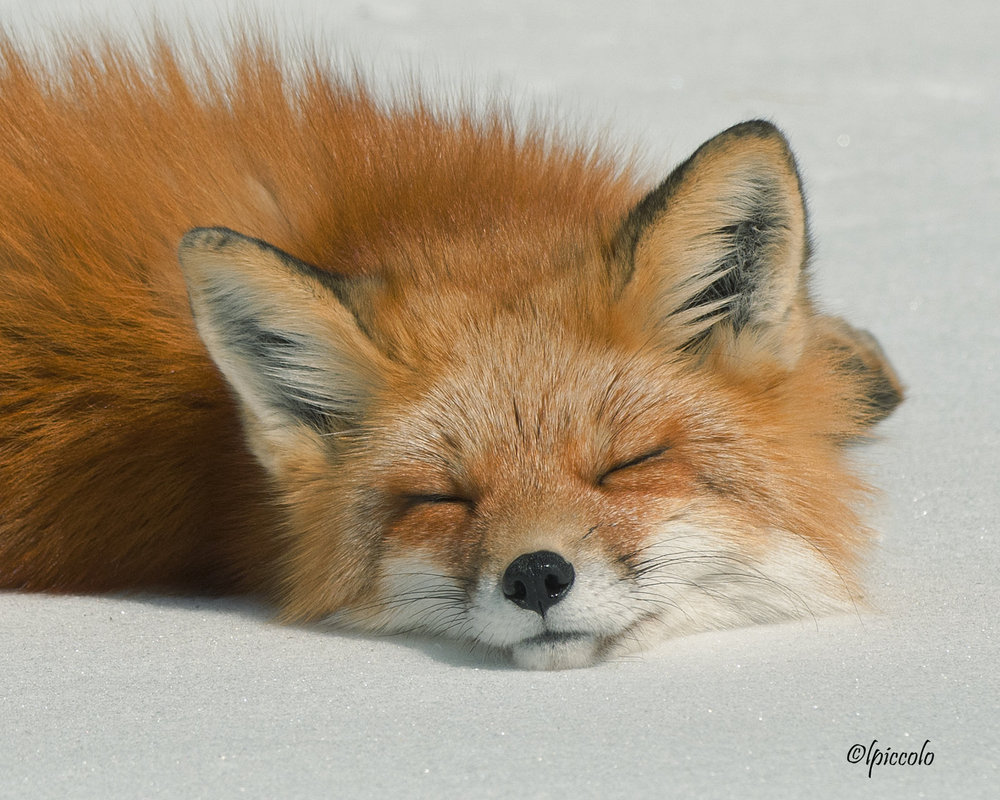
Living Meditation

sleeping_fox_by_krankeloon-d3d8695

(Photo credit: Les Piccolo)

It’s funny how I was just thinking about getting enough sleep this morning and then I came across Leo’s latest blog.

Meditation can be especially hard if we haven’t had enough sleep.  Sleep is so important to many things in our live – from motor skills to regeneration of new cell tissue.  Yet how often do we ignore the signs that we need more sleep, or are unable to meet the demands that our body requires due to the nature of our lives?

Sometimes when I’m meditating I find that my eyes are closing, and my head is falling to my chest. At that point, I give up on meditation and, if it’s not in the evening, have a lie down and a nap (or otherwise just go to bed). I too have tried to get up early in order to meditate, but dance rehearsals and classes at night often equate to a sluggish morning while my body is still recuperating from the exercise. Meditating afterwards is not possible, for I am just too tired.  The best time of day for me to meditate is around 3 – 5pm, however this is not always possible. Yet I still try to meditate every day, in some form, preferably sitting still so that my mind stills even as my body stills.

People with young children often live a life of perpetual sleep-deprivation.  There is a Zen story about a mother who berated herself for not having the time to spend in meditation as she was too busy looking after her child. A Zen monk told her that looking after her child was her meditation – as long as she was fully aware of the moments she had with her child.

Meditation is much more than just sitting on a cushion focusing on the breath, or pondering a problem, journeying within our minds or chanting mantras while holding our hands in mudras.  Meditation is life – all that we need do is to bring a conscious awareness to our lives in order to achieve this.

When I am at work, if I am focused on the work, aware of my surroundings and my reactions to situations, then I am meditating.  When I am driving to or from the office, absorbed in the driving itself, I am meditating. When I am at home from work and finding the time to sit on my zafu and focus on my breath, my thoughts and my feelings; then I am meditating. When I am washing the dishes in full awareness, I am meditating. When I am stroking the cat and listening to her purr, I am meditating.  When I am doing yoga, focusing on the postures, transitions and breath, I am meditating. When I am dancing, aware of every movement in my own body and my fellow dancers, I am meditating.

We often say that we do not have the time to meditate in our busy lives. If we simply cannot squeeze in even ten minutes a day for sitting meditation, we can always make our lives a living meditation. The choice is ours.

Name Change Successful!

We have successfully changed the blog name and URL, and it would appear from the statistics that everyone came along with us for the ride – woo hoo! We’re pleased as punch over here.

If you have linked to this blog from your own, either in a blog post link or in the blogroll, the site redirection will take people to this new site.  However, if you would like to update the name and URL manually in your blogroll, please do – we would like to reflect the new name here and get the word out as smoothly and swiftly as we can.

We would also like to take this opportunity to thank all of our followers and subscribers who have been along with us for this wonderful journey – long may it continue!

J.x

Blog name change cont’d

So, we attempted to change the blog name to Flowing Spirit, but couldn’t get the URL to match, so we have discarded that name.  We are looking to transfer over to “Down the Forest Path” – we hope that the transfer takes all followers and subscribers smoothly, and we will also have at least a year’s worth of redirection from octopusdance to the new site name. Everything else will remain the same.

Fingers crossed, wish us luck, and hope to see you on the other side! We have no idea how long this is will, as it’s our first time, but we hope it won’t be long.

Awen blessings,

Jo.x

Blog name has changed!

So, as you can see, we have changed the name of this blog site to ” The Flowing Spirit”, what is often referred to in Druidry as “awen”.  We hope that you like the change, and that it helps to reflect the content of the blog better!

When we have a new URL we will let you know – we hope to transfer everything over smoothly.

Awen blessings,Jo.x

We feel what we think…

Marguerite Manteau-Rao said “We feel what we think

I have found this to be true on so many levels.  When my heart is open with compassion, and I think loving thoughts, then I feel love in return.  The gateway to the heart does not go in one direction only; it flows freely in and out, up and down, all the way around. I am free.

When I think hurtful, hateful thoughts, my heart constricts, causing me pain in return.  The gates shut, letting no one in, keeping myself locked within.  With these thoughts, I find I am trapped.

Live in love.

Engaged Buddhism

Witnessing a discussion on social media made me a little uneasy at the way people treat other people whom they believe are wrong, either in virtual or real life.  I have seen this in the past many times; sometimes it is abuse, mockery, or belittling – yet each time it stops and makes me think about what I am doing to affect the world, looking at my reasoning, my motives, my intention. What I have been working on this past year is that those who disagree with us, those who challenge us, those who we absolutely hate, those we think are harmful to our world – all these people we need to accept.

Accept, you say?

Acceptance, yes, but in an egaged way.  This is not passivism.  Thich Naht Hanh coined the phrase “engaged Buddhism”, and this is active compassion in trying to create a better world.  Essentially, we accept that there are people out there who are different from us; we accept the world for being the crazy, mixed up, sometimes awful, sometimes beautiful place that it is.  We do not mock other’s beliefs, just as much as we do not condone the beliefs of others that we think are harmful and that cause suffering.

It’s a little hard to get the head around this concept. It’s taken me months to see where that balance point lies.

Thich Nhat Hanh wrote 14 principles of engaged Buddhism. The first one is the best.

“Do not be idolatrous about or bound to any doctrine, theory, or ideology, even Buddhist ones. Buddhist systems of thought are guiding means; they are not absolute truth.”

I personally love this. It reminds us that ideas are just that – ideas. It also demonstrates that everyone’s perception differs in slight or large ways, and that being bound up in our opinions can cause huge amounts of suffering.  Our opinions are constantly changing – as we learn and grow, as we sacrifice ignorance, we change.  This is reflected in the second principle –

“Do not think the knowledge you presently possess is changeless, absolute truth. Avoid being narrow minded and bound to present views. Learn and practice nonattachment from views in order to be open to receive others’ viewpoints. Truth is found in life and not merely in conceptual knowledge. Be ready to learn throughout your entire life and to observe reality in yourself and in the world at all times”.

Number three covers the area of engaged Buddhism, where we confront issues that we think could be harmful to others.

“Do not force others, including children, by any means whatsoever, to adopt your views, whether by authority, threat, money, propaganda, or even education. However, through compassionate dialogue, help others renounce fanaticism and narrow-mindedness.”

Note that here the key word is compassion – compassion is creating an understanding of all points of view and working respectfully with that new understanding to find a resolution if there is confrontation. Sometimes resolution cannot be found, but that does not mean we should stop trying, for who knows when the tides may turn? Thich Naht Hanh worked tirelessly during the Vietnam War, helping those who suffered from the tragedy that conflict brings. He never took a side, and was therefore looked upon with suspicion from both sides, eventually exiled from Vietnam after he went to speak in the United States about ending the suffering caused by war.

So often people think that the Buddhist notion of compassion is loving all things and allowing yourself to become a doormat.  The ninth principle covers this neatly;

“Do not say untruthful things for the sake of personal interest or to impress people. Do not utter words that cause division and hatred. Do not spread news that you do not know to be certain. Do not criticize or condemn things of which you are not sure. Always speak truthfully and constructively. Have the courage to speak out about situations of injustice, even when doing so may threaten your own safety.”

It is possible to speak out against an injustice in the world, against something you believe is wrong, without using words that cause division and hatred. Thich Nhat Hanh has been doing this for over half a century.  Using hateful terms, mockery and discredit of a person’s character are usually our first instincts in a confrontational situation. Stopping, pausing and truly thinking a situation out before you speak or act can result in much smoother and compassionate dialogue.  Instead of instantly reacting to a situation, you are engaging with the other person, not seeing an “Us and Them” concept but one of a unified world, where we are all connected.  I personally do truly believe that what we say, we are. Having studied the Buddhist principle of Right Speech on the Eightfold Path for a while now, it has changed my behaviour, how I act instead of reacting to a situation.  It has really been an eye-opener.

These are but a few principles of this concept of engaged Buddhism – more can be found out through his book,  ‘Interbeing’: Fourteen Guidelines for Engaged Buddhism, revised edition: Oct. l993 by Thich Nhat Hanh, published by Parallax Press, Berkeley, California.

May our hearts be open so that we can love those who challenge us, and in doing so create a world where harmony instead of discord is the song that we sing. It can be so tremendously difficult when those who challenge us are harming others with their actions.  May we engage instead of reacting. May we speak from our hearts, with love, compassion and kindess.

(To see all fourteen precepts of engaged Buddhsim, you can read them here)

Foodie Fridays – Mushroom Pâté

Here’s a recipe that I came up with for a raw vegan spread that is absolutely delicious.

Take a large handful of whatever mushroom you love. Chuck it in a bowl.

Take a large handful of sundried tomatoes. Chuck ’em in too.

Add around two teaspoons of capers.

Throw in some olives if you like olives.

Add a clove or two of garlic.

Whizz with a handblender until smooth.

Add salt and pepper to taste.  A little mushroom ketchup adds a dash of awesomeness.

You can use up any old veg that you have lying in the bottom drawer in this way, padding out the recipe above and making it go further. Courgettes are good, as are aubergines.  Total time to make – under 5 mins from start to finish. Serve on toast, oak cakes, or with raw veggies.

Enjoy!

Deep Paganism

Reblogged from my articles at Moon Books – http://moon-books.net/blogs/moonbooks/deep-paganism/

As Pagans I feel that we naturally tend towards a worldview that is less anthropocentric, especially if we follow an animistic path.  Our love of nature, whether it is the world around us, or human nature, or both leads us on a journey that can take us outside of our selves, and thereby gaining a wider perspective on the whole.

Deep ecology is about thinking less about the benefits towards humanity, and more about the benefits to the environment. Buddhism, with its tenets of compassion, is very much in a similar vein; we try to drop the ego in order to benefit the world, and by becoming less self-centred, are better able to help others.  Some spiritual and secular journeys can put too much stress on human relations, and not enough on the wider web of life.  Within Paganism, we can see that we are always connected, and that connection is what inspires us to lead a life more attuned to the natural cycles, or vice versa.

In my own Druidry, what I seek is total immersion in my natural environment. I strive to loosen my sense of self as an individual and instead seek to blend my song with that of the world around me, finding a harmonious union.  When out walking on the heath or in the woodland, I let the “I” drop away, and become totally immersed in the present moment. I feel that this gives me a greater connection to the world, allowing what Buddhism calls the dharma to flow.  Dharma is simply reality, which we so often tend to avoid at all costs. When we realise the beauty of the present moment, when we can truly live it in every sense of the word, then we are truly connected to everything.  We become part of everything, and in this I also see the Druid concept of awen, or flowing inspiration; the life force itself.

If I can free myself of myself, I can open truly to the songs of the universe.  There is no separation – I am the heath, the forest, the deer.  Movements are made in full awareness, and every step is taken in love and reverence. Every breath is a blessing. Everything my eye falls upon is a gift.

In living such a life, what is fundamental is a respect for all things. This is at the heart of animism, which sees the inherent value in all things just as they are.  No one thing is more worthy than another. Each thing is an expression of itself in full blossom, in full fruition.  Even my self, my physical self, is simply energy taking form as my body in this present momen t and perhaps even my mind), for however long or short a time span.  This body is in permanent change and flux, growing and changing shape, eventually dying. In death the change continues, and the form alongside the energy flows in different currents. My body will continue to change, as cells break down and bacteria work to return the physical form to the earth.  The process of life and death, of decay and regeneration is honoured within Druidry and within animism. No one process even is more important than the other. Birth is no more important than death. What we do realise is that life has no opposite – there is only flow, change, awen.

My sense of self is of little consequence in the grand scheme of things. What matters is that I pay attention to what is happening around me, and use that to inspire me to live my life accordingly, with honour and respect.  Paganism allows us to leave behind all the machinations of humanity to follow a different flow, one where we see where we fit in the puzzle.  The love of nature inspires us along the path, demonstrating that there is more to the world that our own human lives.  We are the country folk, the paganus. Even though we may live in cities, we still feel the pull and hum of nature around us, reflected in the sun’s cycles, the seasons, the flows of human nature.

Immersion is key.  If we can allow ourselves to not only ride the current, but become one with the flow itself, we are then blessed with a wholly different perspective not based upon human need and desire.  There is much more to the world than our anthropocentric view, and we honour that world with all that we are.

Riding the Tides of Perimenopause

Re-blogged from my channel at SageWoman:

SistersRiding the tides of perimenopause, I find that my sense of self, ideas and concepts that I held about myself are shifting like pebbles on a shingle beach, never in the same place twice, forming new solid banks and spits jutting out into the vastness of the ocean.  I live right on the coast of the North Sea, and am finding inspiration and a sense of kinship with the ocean that I have never felt before.

Swells and surges of emotion run through me as hormones find their way to the balance point in the dance of change and impermanence.  My body is changing, the elasticity in my skin fading, laughter lines showing, cellulite appearing in new places.  The curves in my body are becoming softer, gently changing over time.  My breasts sometimes ache as my body tries to find a new way of being.  Periods are nearer to each other, sometimes only two weeks apart, sometimes light, other times so heavy I cannot leave the house.  Sometimes I feel like I did in my teenage years, without the skin breakouts!

It’s not only my body changing – emotions run deeper than ever before.  Awareness of the emotions keeps them in check, allowing myself to truly feel them without too much attachment.  They are sometimes like a knife, cutting through the dross to reveal the jewel beneath; instinct and empathy allowing me to connect with the world on a much deeper level than previously imagined.

My attachments to my body are also becoming less and less.  I am ever thankful for this healthy body, that can dance and run and sing with abandon.  Thoughts about how others relate to me are changing as my body changes. I notice people interacting with me differently – or is it that I am the one who is different?  In our dance troupe, when we are performing, I notice that the attention is gently shifting away from myself to younger ladies in the troupe.  I smile to myself as I notice this, seeing how this makes me feel.  There is a tinge of sadness, as I release the undercurrents of vanity, as well as the newer notes of joy in not being wrapped up in the notions of youth that our culture is so focused upon. My heart goes out to the beautiful young dancers in our troupe, who have to deal with the extra attention.  My soul connects with the beautiful older women in our troupe, whose sense of self pervades a solidity that wholly and utterly inspires me.  I am seeing beauty where I never saw beauty before – it is truly remarkable.

I don’t crave attention in the same way as I used to.  What others think matters a lot less than before.  What does matter is how my life is lived, inspired by the world around me and walked on a path of honour and integrity. I see this reflected in the older women in my life, how comfortable they now appear.  I wouldn’t want to be young again – in looks or age.  I am at home in my body.  Some women are blessed with this from an earlier age, others like me perhaps find it during the hormonal shift. What is important is that we find that stillness within, like a pool of water that becomes clear when all our doubts and worries about our self finally settle, allowing us to mirror the wonder of the heavens.

One beauty is not better or worth more than any other form of beauty – all forms of beauty are simply that- beautiful.  Our soul takes form in our bodies, an impermanent expression of our being.  Learning to love the impermanence allows us to see the beauty in all stages of life and death, growth and decay.  It can allow us to be comfortable with who we are, no matter our age, what condition our bodies are in, what life throws at us.

This latest journey has just begun, and I have to say, I am loving the steps along the way. I breathe with mindfulness and take each step with love and joy even as I feel sadness and release. Life is precious, and impermanent, and in our awareness of impermanence lies our ability to truly live.