Sacrifice – it’s one of those “old” words, like honour and duty. Many who have read Roman accounts of the Druids associate the word, sacrifice, with the priest caste of the Celtic people at that particular time. However, the word goes even further back into the beginnings of time for the human animal, when the importance of relationship with nature was everything, when we knew that to disconnect ourselves from the natural world meant death. Today, we must remember this, remember each and every day how much we are a part of the world, how much our everyday actions count, no matter how small. Each day is also an opportunity to give thanks for the blessings that we have. At Lammas, however, just giving thanks doesn’t seem quite enough. When the first crop is harvested, and the land lies stark and naked, shaved and shorn from under the combine harvester, giving thanks and saying words over the field doesn’t feel adequate. This, for me, is where sacrifice comes into play.
It’s hard as the line keeps shifting between giving thanks and the notion of sacrifice. What might be an offering to one person might be seen as a sacrifice to another. I can only speak from my own personal viewpoint, as I may value things differently from my neighbours, my family, and members of my pagan community. So, what is the difference between an offering and a sacrifice?
For me, sacrifice is something of significant value. This is not necessarily a monetary value, but could be something that is cherished, prized, something that is utterly loved and which has a representative value of the threads of connection we hold with the gods, the ancestors, the spirits of place. What is it that I have which I value? What am I willing to give back in return for the flow of awen, that spark where soul touches soul and is inspired? What am I willing to do to achieve that?
When the barley in the field by my house is cut, the energy of the land drastically changes. Between the homes and the heathland there are two arable fields, one which was harvested in the spring for green barley, and one which still has the golden, bowed stalks waiting to be harvested. Acknowledging the change isn’t enough, for when we hear the songs of the ancestors, I feel how important these crops were for them, how important their relationship with the land meant their survival and success. In a field of growing barley, there is potential, a shimmering energy waiting to be harvested. When that field is cut, the potential can be scattered if the land is not honoured. The ancestors knew this, but we have forgotten. Modern farming depletes the soil of essential nutrients that must be replaced, often by less-than-natural means. The barley is cut, and the field then stands, barren and forgotten for weeks, until the farmer and his tractor are ready to plough in the winter or spring crops.
The land isn’t respected, isn’t acknowledged anymore. As an animist, I find this appalling. When the land has been used, has given us so much in a beautiful field of barley, and we don’t even give thanks, much less sacrifice then there is dishonour. As with any relationship, if one side continually gives and gives, and the other continually takes and takes, the balance will shift, the relationship will crumble and great suffering will ensue.
What can I give that will honour the lives that this crop will feed, that will honour the land that grew it, that will honour the ancestors that worked it, that will honour the spirits of place who live there? What will be a significant gift for all we have received?
The sacrifice will change year upon year. What matters most is the importance of the sacrifice to me personally.
Offerings represent a more daily interaction, little gifts and niceties that you would present to any friend that you meet: a cup of tea, a biscuit, some of the fresh-baked bread you just made, or your home-brew mead. Finding out what the local spirits of place would like is as polite as asking your guest how she would like her tea: with or without milk, honey or sugar? When it comes to sacrifice, however, the shift of focus changes to become more introverted rather than extroverted.
I’ve previously in earlier articles described sacrifice as something that is not only of great value, but also as something that can help you “get to the next level”, so to speak. No, we’re not playing at Druids on World of Warcraft, but we are seeking to deepen our relationship with the land. Sacrifice is key in this regard, helping us to go deeper, to give more of ourselves in order to understand more of the land.
Many within the Pagan traditions see the Sun King as offering himself as sacrifice at this time of year, to be cut down as the grain is cut, to be reborn at Yule. Yet are we comfortable allowing the Sun King to do this each and every year, or should we also take our part in the sacrifice, participating rather than simply watching the cycles of life unfold?
And so I will spend the next few weeks walking the land, finding out what I can give, what I can do to deepen my relationship with it, to be an active contributor instead of a passive spectator. Some aspect of my self must be willing to die alongside John Barleycorn in order to understand the cycles of nature. Some sacrifice must be made.
We often spend so much of our energy needlessly. Disputes, arguments, feuds, grudges, long-held anger and frustration are just some examples. We need to choose our battles wisely, for they are not all worth fighting.
Sometimes there is nothing we can do. When faced with ignorance or denial, we are often facing an impassable wall upon which we can either hurl ourselves time and again, or simply shrug and walk away. It is not our duty to make the ignorant wise, or to force someone into changing their mind. That can only change from within. Our energy is a precious resource that must be used wisely. There are many fights that are worthy of our time, but we don’t have to attend every argument that we are invited to.
Think about the energy used in holding a grudge against someone, for a few days, a few weeks, a few months or a few years. How could that energy have been better spent? How much energy is involved in a family feud, from all sides involved? How much time is wasted arguing on social media, trying to prove your point and making a stranger change their mind? How much energy is spent talking behind people’s backs, trying to get people “on your side”? Is it really worth it?
Even if it’s something you truly believe in, proselytising the issue doesn’t really do much. In fact, it can even have the adverse effect of pushing away those who are either in agreement or disagreement: they’re simply tired of the hearing of your message over and over again. That’s not to say that we shouldn’t have opinions, and that we shouldn’t share them, but when we spend so much energy shouting into empty space then maybe it’s time to rethink the situation.
People fall out with each other over the silliest of things sometimes. Letting ego get in the way, they don’t want to listen to anyone’s version of events other than their own. To do so would compromise their reality, the story that they have told of themselves. People often don’t want to change their story, for it may put them in an unflattering light. We have to evaluate the situation and say, “Right. I can offer my version of events, I can try to communicate with compassion, but I will only spend X amount of time of this. I’m not here to change anyone, because I know that true change must come from within. I can walk away at any time, for there are no “winners” or “losers” in this situation, only wasted time”. When we set these parameters, we can work with others without losing our minds.
People are going to behave in any number of ways. We can’t change their behaviour. What we can change is our response to their bad behaviour. We can let them know that we do not approve, and then we can walk away, wishing them well and focusing on the things that really matter in our own lives. Let it go. Walking away is not losing. It is opening up a new path for you to find better things to spend your time on.
I have seen ridiculous grudge matches and people trying to save face on all manner of social media. I have known families who don’t talk to each other for reasons which are entirely inaccurate, the transgression being entirely made up in their own heads. I have seen people treat others very poorly in face to face interactions. We need to find the balance point between standing up for ourselves and learning when we are expending energy needlessly.
Some battles are worth fighting for. We just need to have the right goals in mind when we are fighting. If we are trying to change all our friends’ eating habits to match ours because we are vegan, what really is our agenda here? Instead of spending time arguing or posting social media comments about it, why not spend time volunteering at an animal shelter if your ultimate goal is to help ease the suffering of other animals? If we are spending time trying to undermine someone’s work or persona, what is the real agenda there? Why would we want to do that? Wouldn’t the time be better spent focusing on yourself? Blowing out someone’s candle does not make yours burn any brighter. If we refuse to speak to a family member because they did something wrong in the past, shouldn’t we look to our own lives and remember the ways that we too have failed or wronged someone? These are only a few examples, and some may be rather simplistic. They all have multiple ways of dealing with the issue at hand. What matters most is our intention.
We don’t have to put up with anyone’s crap, if you’ll pardon my vernacular. But we don’t have to start slinging our own either. Either way, you’ll just end up with a stink in the air.
I’ve walked away from people and situations in order to focus on what really matters. Even when I was totally “right”. It has saved me a lot of time and trouble. I could have spent months trying to change other people’s minds, but instead I worked on what really matters to me. I can say with all honesty that the energy was well spent, and the outcome even more positive than I had dreamt of in terms of benefiting myself and my work/goals/life. I can’t change other people, they’ll do what they will do, with their own demons to fight, their own achievements and successes to encourage them. I have to live my life, not try to please or fit into theirs. I can walk away into better experiences.
Choose your battles wisely. This present moment is what really matters. Live it, instead of losing yourself in a battle that doesn’t or shouldn’t even exist. Life has difficulties enough already. Be kind, be compassionate and be mindful. You may find the battles beginning to lessen, and a peace of mind settling deep within. Enjoy that, for that is what life is all about.
This is a preview of my latest blog post on SageWoman Magazine’s blog channel at Witches and Pagans. To read the full article, please click HERE.
Taking time to become aware of the self is a large part of the modern Pagan movement. In the last twenty years, exploring the psychological aspect in many of the traditions has been as important as the metaphysical and the spiritual work. Many have done this, as part of a training course or in their own deep learning, but perhaps subsequently allowing it to fall by the wayside; once it’s been studied, that’s it, let’s move on. Being aware of your emotions and behaviour is a never-ending quest in self-awareness. In order to live as Pagans it should be a lifelong exercise, in order to ensure that we are living honourably and respectfully within nature and the natural cycle.
Indeed, it is our responsibility to be aware of what we put out into the world, emotionally and physically, as Pagans. We know that we are a part of a greater web, therefore when one strand is tugged, all the others shiver all the way down to the core. We need to be able to see when we have failed to act with honour, in our human relationships, in our relationships with the natural world, in our relationship with the gods and the ancestors. And in doing so, we can work to make amends, to reweave those threads that have been pulled apart…
As the 25th anniversary of the Oka Crisis is upon us, there is a new Indeigogo film project underway that seeks to recount what happened during that year-long struggle, and how it has impacted upon the First Nations people ever since. Here is a video about the project, and an essay that I wrote many years ago now on what began that summer of 1990. You can contribute the project by clicking HERE (url doesn’t work in youtube video).
The Curse of Self-Awareness by Joanna van der Hoeven (originally posted on The Druid Network)
As I sit here, looking out the window, watching the clouds float by in a pale blue sky, I am reminded that the fights and troubles of humankind matters not to them. Still they float past, unrattled by humanity, simply being. The forsythia is in bloom, the sun is out and casting shadows upon the ground. The curse of self-awareness is not upon them. They know nothing of land ownership. They all share in this world, living where they can, with no knowledge of property deeds, legalities and borders. On this bright afternoon, I am reminded of Kanasetake, and the Oka Crisis that began on March 11, 1990 in Quebec, Canada. Why? Because I am human. I carry these memories and cannot forget them. The curse of self-awareness.
Land ownership. The concept is entirely human. The wolf knows its territory, but once the wolf has died, the concept of any claim on land is lost. It cannot be handed down to others through a Will, or any legal documents. You cannot take your land with you when you die. The concept of territory to a wolf is to ensure a sufficient food supply for a hunter and predator. It will share this with the pack, should it be part of one. The wolf does not own its land, it merely claims the right to live on it. With writing these words, I am reminded of Chief Seattle’s words in a letter to the US government, “I never said the land was mine to do with as I choose. The one who created it is the one who has a right to dispose of it. I claim a right to live on my land, and accord you the privilege to return to yours.” Are these words creating a boundary, or defining a territory? In this global village, can we truly live in a land without borders? Where walls and fences do not exist? Can we ever return?
The fight for land ownership, or defending a territory? Are they one and the same? I think there may be a difference between the two, which essentially always ends up merged into the former. The Oka Crisis, spring 1990. The snows were receding, the air beginning to soften with the call of the season. I was sixteen, just graduating from high school and moving on to college later that fall. The news on the television came through as we sat down to our evening meal. The Mohawk people of the Kanasetake reservation had put up roadblocks, to stop anyone from entering land they held sacred. A year previously, the mayor of Oka, Jean Ouellette, decreed that the pine forest, which included a native burial ground next to the reservation, was to be cleared to expand a golf course from nine to eighteen holes. Ouellette was also a member of the golf club. The golf club stood to make a profit for this expansion.
The ownership of the land had been in dispute for 260 years. The governor of New France in 1717 granted the lands to a seminary priest to hold on trust for the Mohawks. The Church then expanded on this agreement, to enable them to have ownership of the entire land, and began selling off the resources. The Mohawks rose against the missionaries but were imprisoned by the police. The remaining land was sold by the missionaries, who then left. In 1961, a nine hole golf course was built. The Mohawk nation legally protested but to no avail, the land was already being cleared right next to their burial ground. Through much red tape, the Mohawk demand was finally thrown out, “failing to meet criteria”.
And so, in 1990 the roadblock was erected. For years the natives and their European descended counterparts had shared the land, though not in fair and judicial proportions. This was not the golf club’s fighting for territory from which to live. It was not necessary to its survival. It stood to profit in excess of what it needed. Land ownership and greed, hand in hand. Respect for the territory of another pack, lost. Self-awareness leading to selfishness.
The Sûreté du Québec, the Provincial police force, were called in by order of the mayor on July 11. The warriors at the barricades turned to the matriarchs for advice, asking whether they should keep the amassed weapons. The women replied that they should not be used unless the SQ opened fire first. Tear gas canisters were thrown in by the SQ along with concussion grenades. CBC reporter Laurent Levigne was live on the radio at the time, and said that he heard the first shot of gunfire sound. When asked from which side, he replied he thought it came from the SQ police. The reporter could no longer continue with his report, and had to retreat due to the teargas. Corporal Marcel Lemay of the SQ was shot and killed during the brief gun battle. After the funeral, flags from both opposing forces were raised to half mast.
The idea of land ownership did not stop there. Racial hatred had begun to show it’s ugly head, fanned by radio host Gilles Proulx and echoed by the federal member of parliament for the district of Chateauguay, who spoke of exiling natives to Labrador, “if they wanted their own country so much”. The new wolves were attacking the forced roadblock where before there had been none. Divides were perhaps not created between people, but solidified that summer. The Mohawks fought to defend their land from the awaiting bulldozers and golfers. They recalled their previous entreaties to grant them the land that they lived on, and the many refusals. The land became a tool of war. Blood lay upon it. I pause here, to ask myself – did the land care? Did the pines weep as the guns shot across the barricades? The dawn continued, regardless of the attack. Did the land care? Was the self-awareness of the humans provoking this encounter? Did the mourning cries of the ancestors at that sacred site awaken the hearts of the warriors and the women? Or did the wind blow through the boughs as it always had, heedless of the humanity beneath its green canopy?
On August 29th, two days after my 17th birthday, the negotiations came to an end after the army had been called in. The stand off had lasted for three months. The army came through the barricades and the women ordered their warriors back. The guns were slowly put away. By 25th September the fights were with hoses and water balloons. On 26th September, the warriors threw their guns into a septic tank and surrendered, with the ceremonial burning of tobacco lingering in the air. The First Nations Policing Policy was developed, and Canada listed on Amnesty International’s list of human rights violators. A year later, the mayor was re-elected, and when asked if he could have done things differently, he said that he would not have changed a thing. For nine holes in the ground, a man lost his life.
The fight for land ownership or the fight for territory. The right to live on your land or the right to own the land upon which you live. On 1st April 1999 a new territory, Nunavut was created in Canada. In Inuit, it means ‘Our Land’. 85% of the population are Inuit. To me, this raises another question though. Is this simply another way of claiming land to own? Of setting up borders? Is this an answer to the problems? Our global community, should it even know any boundaries? What would happen if land ownership simply ceased to be?
Memories flood through us every day. The curse of self-awareness. And outside my window, the sun is still shining.
THE PEOPLE Today we have gathered and we see that the cycles of life continue. We have been given the duty to live in balance and harmony with each other and all living things. So now, we bring our minds together as one as we give greetings and thanks to each other as people. Now our minds are one. THE EARTH MOTHER We are all thankful to our Mother, the Earth, for she gives us all that we need for life. She supports our feet as we walk about upon her. It gives us joy that she continues to care for us as she has from the beginning of time. To our mother, we send greetings and thanks. Now our minds are one.
THE WATERS We give thanks to all the waters of the world for quenching our thirst and providing us with strength. Water is life. We know its power in many forms-waterfalls and rain, mists and streams, rivers and oceans. With one mind, we send greetings and thanks to the spirit of Water. Now our minds are one.
THE FISH We turn our minds to the all the Fish life in the water. They were instructed to cleanse and purify the water. They also give themselves to us as food. We are grateful that we can still find pure water. So, we turn now to the Fish and send our greetings and thanks. Now our minds are one.
THE PLANTS Now we turn toward the vast fields of Plant life. As far as the eye can see, the Plants grow, working many wonders. They sustain many life forms. With our minds gathered together, we give thanks and look forward to seeing Plant life for many generations to come. Now our minds are one.
THE FOOD PLANTS With one mind, we turn to honor and thank all the Food Plants we harvest from the garden. Since the beginning of time, the grains, vegetables, beans and berries have helped the people survive. Many other living things draw strength from them too. We gather all the Plant Foods together as one and send them a greeting of thanks. Now our minds are one.
THE MEDICINE HERBS Now we turn to all the Medicine herbs of the world. From the beginning they were instructed to take away sickness. They are always waiting and ready to heal us. We are happy there are still among us those special few who remember how to use these plants for healing. With one mind, we send greetings and thanks to the Medicines and to the keepers of the Medicines. Now our minds are one.
THE ANIMALS We gather our minds together to send greetings and thanks to all the Animal life in the world. They have many things to teach us as people. We are honored by them when they give up their lives so we may use their bodies as food for our people. We see them near our homes and in the deep forests. We are glad they are still here and we hope that it will always be so. Now our minds are one.
THE TREES We now turn our thoughts to the Trees. The Earth has many families of Trees who have their own instructions and uses. Some provide us with shelter and shade, others with fruit, beauty and other useful things. Many people of the world use a Tree as a symbol of peace and strength. With one mind, we greet and thank the Tree life. Now our minds are one.
THE BIRDS We put our minds together as one and thank all the Birds who move and fly about over our heads. The Creator gave them beautiful songs. Each day they remind us to enjoy and appreciate life. The Eagle was chosen to be their leader. To all the Birds-from the smallest to the largest-we send our joyful greetings and thanks. Now our minds are one.
THE FOUR WINDS We are all thankful to the powers we know as the Four Winds. We hear their voices in the moving air as they refresh us and purify the air we breathe. They help us to bring the change of seasons. From the four directions they come, bringing us messages and giving us strength. With one mind, we send our greetings and thanks to the Four Winds. Now our minds are one.
THE THUNDERERS Now we turn to the west where our grandfathers, the Thunder Beings, live. With lightning and thundering voices, they bring with them the water that renews life. We are thankful that they keep those evil things made by Okwiseres underground. We bring our minds together as one to send greetings and thanks to our Grandfathers, the Thunderers. Now our minds are one.
THE SUN We now send greetings and thanks to our eldest Brother, the Sun. Each day without fail he travels the sky from east to west, bringing the light of a new day. He is the source of all the fires of life. With one mind, we send greetings and thanks to our Brother, the Sun. Now our minds are one.
GRANDMOTHER MOON We put our minds together to give thanks to our oldest Grandmother, the Moon, who lights the night-time sky. She is the leader of woman all over the world, and she governs the movement of the ocean tides. By her changing face we measure time, and it is the Moon who watches over the arrival of children here on Earth. With one mind, we send greetings and thanks to our Grandmother, the Moon. Now our minds are one.
THE STARS We give thanks to the Stars who are spread across the sky like jewelry. We see them in the night, helping the Moon to light the darkness and bringing dew to the gardens and growing things. When we travel at night, they guide us home. With our minds gathered together as one, we send greetings and thanks to the Stars. Now our minds are one.
THE ENLIGHTENED TEACHERS We gather our minds to greet and thank the enlightened Teachers who have come to help throughout the ages. When we forget how to live in harmony, they remind us of the way we were instructed to live as people. With one mind, we send greetings and thanks to these caring teachers. Now our minds are one.
THE CREATOR Now we turn our thoughts to the creator, or Great Spirit, and send greetings and thanks for all the gifts of Creation. Everything we need to live a good life is here on this Mother Earth. For all the love that is still around us, we gather our minds together as one and send our choicest words of greetings and thanks to the Creator. Now our minds are one.
CLOSING WORDS………. We have now arrived at the place where we end our words. Of all the things we have named, it was not our intention to leave anything out. If something was forgotten, we leave it to each individual to send such greetings and thanks in their own way. Now our minds are one.
Today is Canada Day, 1st July. Back home in Canada there will be fireworks, music and celebrations from backyard barbeques to city-wide parties and festivals. Days like this I miss my homeland, my mother country. As today has approached, I’ve been giving some thought about what it means to be a Druid in a land that is not “your own”, living in a foreign land.
A Druid’s relationship is with the land, first and foremost. It is the defining part of our spiritual tradition, religion and philosophy. We deepen that relationship through working with the ancestors, deities, the three worlds, etc. However, at the heart of the matter is the land upon which you live. Establishing a deep and sacred relationship with it is the main part of our work as Druids. But what is this relationship?
We have to know the environment we are living in, in order to live well in it. If we live with ignorance, we might cause damage. If we run against the currents of energy that are flowing through our land, say for example spending inordinate amounts of energy during the winter holidays when the darkness is actually calling us to rest a moment, to get in touch with the depths of winter, then we become exhausted, ill, suffering from diseases and dis-ease. We have to dance with the land, and when dancing with another it is of utmost importance to acknowledge the other’s movements, in order not to cause injury or step on anyone’s toes. We have to be aware of what is going on, each and every day in our landscape. It is not enough to celebrate the eight festivals of the modern pagan Wheel of the Year – to be a Druid requires much more than that.
It is a relationship that is not one way. Singer/composer/pianist Tori Amos once described her relationship to the land through her Cherokee grandfather’s guiding words: “We are either caretakers, or takers. It’s your choice”. While as Druids we don’t really have a sense of stewardship of the earth, for that would place us in a hierarchal order of being that doesn’t really make any sense, we do know that taking too much is damaging and so we work to live in harmony, in balance. Inspired by the ecosystems around us, we see how to fit in, to work with each other, whether that be human or beetle, stinging nettle or oak tree.
My relationship with the land began in Canada, where I was born. I drank from the rivers and lakes: that water is in my body. I grew up in the Laurentian mountains: those granite hills are also in my bones, in my foundation. The wild thunderstorms of summer are in my blood, the cold crisp air of winter in my lungs. They are a part of me and I am a part of it. We are inseparable, the land and I. The conditions manifested at the right time to bring me into being in that space and in that time, and I cannot disengage with it any more than I can wilfully cut off an arm or a leg.
But I live in the UK now. I am a resident of this country, and have been for many, many years. I have been here almost as long as I have lived in Canada. I have learned to dance to the rhythms of this land, with its differently beating heart, its slower pulses and island mentality. I have felt Brighid’s serpent rising and falling with each passing year, deep within the earth, dancing in the light of the sun in summer and retreating again, curled up within the depths of winter’s darkness and at the base of my spine. I have seen different gods of thunder and lightning, of seas and oceans, rivers and deep, cold lakes. I have felt and honoured the ancestors of this land, feeling their stories sung in the evening breeze, feeding from their bodies in the food grown on this land, breathing the air they breathed. I have walked many, many miles all across this land, coming to know its vast and intricate landscape, from craggy sea cliffs to heather moorland, from the Scottish Highlands to the White Cliffs of Dover. I have danced in this energy, so different and still similar to that of my mother country.
The questions remains: to whom do I belong?
I have roved many parts of this world, been in many places on this beautiful blue planet. I belong to this planet, I would say, first and foremost. Though I still carry a Canadian passport, I am a citizen of Earth more than a citizen of any country. Those lines on a map really mean nothing to me, spiritually. A land defines its spirituality, for sure, but there is a shared spirituality as well, as we are all part of this huge ecosystem called Earth. The energies run differently here in the UK than they do in Canada, on the surface, at least. But delve deep enough, in to the core of this spherical mass hurtling through space and it’s a shared centre, with sacred fire holding it all together.
I feel equally at home here in the UK as I do in Canada. There are other places on this planet that I feel at home – Sweden is one. I cannot date my ancestry back to either Scandavian or Celtic roots, but I know that I did come from the same basic ancestors as we all did those many, many years ago. It matters not what more modern root I come from in my Druidry. I was baptised and confirmed a Protestant, but I am a Pagan Druid. I honour different gods from all traditions, and still question the existence of all of them. I quest the awen daily, searching for inspiration, looking for answers, searching for the right questions, sitting in silence and dancing in delight. It doesn’t matter where I came from. What matters most is what I do now, in the land that I am in, whether it is the UK, Norway, France or USA. What matters is that deep connection to the spirits of the land, to the essence of nature wherever I am, and in that connection an honourable, sacred and sustainable relationship. I am not a tourist anywhere.
Yet still I call myself Canadian for the most part. My accent, though much bastardised, is still different and people will ask me where I’m from. Legally I am a Canadian who is resident in the UK. Yet I vote on UK policies, not Canadian ones. I follow deities that are from this land. I honour the deities of Canada and North America, those different energies moving along swifter currents and wilder ways. But I work with the land beneath which I walk, barefoot on the grass in my backyard, the ash trees whispering ancient secrets to me beneath a mackerel evening sky. Perhaps I am not a Canadian. I am not British. But I am Druid.
I love the summer. The heat of the sun, the long days, the unending twilight at this time of year – it’s a brilliant time to be alive. I find at this time of year there is nowhere to hide: you must face what the light shines on you or try to hide in air-conditioned rooms with recycled air, breathing in that stale, same old, same old.
It’s a time when the layers come off, physically and metaphorically. As we expose some skin to the wonderful sunlight (with proper protection) so too do we expose our souls to the light, shining it in all the corners of our psyche. Summer is a time for exploration, for rejuvenation, for relaxation. It’s time to let your hair down and get a bit sweaty.
Many within the pagan tradition see Samhain as the time to face demons, your monsters that can take over and lead you into unacceptable behaviour. But for me it is summer, where I can lay them out on the lawn and watch them wriggle in the full light of the sun – that is where I find the denouement, the closure in my life’s little episodes.
Summer is a time when I have to face certain things head on: my body for one…
In the time of greatest light, we cannot hide. We face our demons, head on, letting our nearest star shine its light upon all that we would attempt to hide. And beneath it all, we remember that a body needs forgiveness…
My “day job” is working for one of the world’s leading artistic centres and concert halls – I work in the marketing and PR department. I’ve been working there since 2008, and have seen experienced a lot of art in various media. This year as part of the visual arts exhibit that complements the music festival that is currently underway, we have some paintings that I walk past every day. These paintings make me uncomfortable.
The subject of these works is the last meal of various prisoners on death row before their execution in the USA. It is an extremely intimate glimpse into the person behind the prisoner. It shows their humanity, their desires, their need for nourishment and what makes them happy in that context. The fact that it is on public display, however, and for sale, makes me uncomfortable. Why?
On the one hand, if it wasn’t on public display I would never have seen them. On the other hand, I didn’t need to see them in order to have compassion for these human beings. I am completely against capital punishment. The fact that it might make people think about what is happening in so-called First World countries regarding life and death is probably a good thing. And I realise that artists need to eat to, hence the fact that they are for sale. But for every person that doesn’t “get it”, that laughs at the absurd combinations these people have chosen without knowing why: does this trivialise, as well as capitalise the suffering and deaths of human beings? Does it de-sensitise us even further? Or does it raise an awareness of the de-sensitisation that we are experiencing in modern society?
I don’t have any answers. All I know is that every time I walk past them, I feel an ache in my heart and an unease, as well as a wellspring of compassion for all humanity who are in this together.
We are our deeds. It’s a popular heathen saying, and the title of a well-written heathen book by Eric Wodening. What we say, what we do is a reflection of our own self. How we behave is what defines us.
Our society is full of examples, however, of bad behaviour being rewarded, or being applauded. In Britain, famous television presenter Jeremy Clarkson was fired from the popular television show, Top Gear, because he had punched a producer in the face when he found out that there was no hot food available on set. No charges have been made against Clarkson’s assault, and indeed, he is making light of the whole situation, thereby condoning violence. In a recent spin-off live show in Belfast it opened with a video of him throwing a left-hook, as if it were right to punch a colleague in the face. Everyone cheered. When it was rumoured that comedian Sue Perkins would possibly replace Clarkson on the show, she had to leave Twitter because of all the death threats that she was receiving. Violence breeds violence.
What we think, what we say, what we do defines our self. When we live in a world that no longer seems to care about personal responsibility, about compassion, about just being nice to other people, it is even more important that we take up the reins and provide an example of how to be in the world in good, honourable relationship.
We are blessed with foresight. We can think about the outcomes of our actions. We have memories of the past to consider when making our actions. And yet some people still behave badly, willfully, out of spite and their own demons, or out of ignorance that there is a choice.
This is what it all comes down to: we always have a choice. We can choose to behave badly, remaining stuck in our bad habits, remaining trapped in our attachments, allowing our emotions to run riot over ourselves and others. Or we can choose to take up personal responsibility, to think about things that we have done and things that we are going to do, and how they will affect others. It’s not fun being mean to other people. It makes our hearts small. It tightens and constricts them until we become mere shadows of ourselves. We may hide behind comedy, delusions or the lies that we have told ourselves over and over again to justify our behaviour. Ultimately, however, we know on a deep level when we are doing things that are wrong, and we can choose to continue or not.
Take responsibility for your actions. Shrugging off bad behaviour doesn’t make it right, and you will eventually have to face it at some point in your life. Clarkson knows that what he did was wrong, which is why he’s making fun of it rather than face up to the fact that he was wrong. It’s all about saving face, about personal egos, illusions and delusions. How many other people do you know who are like that?
If nothing at all, these people remind us of who we do not wish to be. We can still have compassion for them, seeing that they suffer from their own demons. However, that does not mean condoning their behaviour. We can speak out against it, and still hope that they find peace in their own lives.
There is a Zen story about a samurai who asks a monk about heaven and hell:
Hakuin, the fiery and intensely dynamic Zen master, was once visited by a samurai warrior.
“I want to know about heaven and hell,” said the samurai. “Do they really exist?” he asked Hakuin. Hakuin looked at the soldier and asked, “Who are you?”
“I am a samurai,” announced the proud warrior.
“Ha!” exclaimed Hakuin. “What makes you think you can understand such insightful things? You are merely a callous, brutish soldier! Go away and do not waste my time with your foolish questions,” Hakuin said, waving his hand to drive away the samurai.
The enraged samurai couldn’t take Hakuin’s insults. He drew his sword, readied for the kill, when Hakuin calmly retorted, “This is hell.”
The soldier was taken aback. His face softened. Humbled by the wisdom of Hakuin, he put away his sword and bowed before the Zen Master.
“And this is heaven,” Hakuin stated, just as calmly.

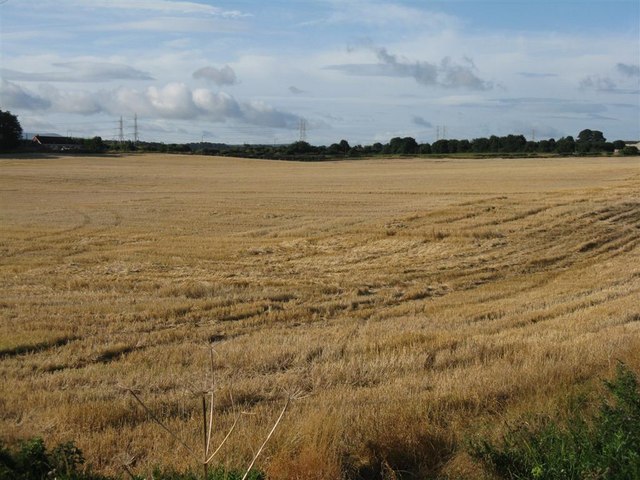 Sacrifice – it’s one of those “old” words, like honour and duty. Many who have read Roman accounts of the Druids associate the word, sacrifice, with the priest caste of the Celtic people at that particular time. However, the word goes even further back into the beginnings of time for the human animal, when the importance of relationship with nature was everything, when we knew that to disconnect ourselves from the natural world meant death. Today, we must remember this, remember each and every day how much we are a part of the world, how much our everyday actions count, no matter how small. Each day is also an opportunity to give thanks for the blessings that we have. At Lammas, however, just giving thanks doesn’t seem quite enough. When the first crop is harvested, and the land lies stark and naked, shaved and shorn from under the combine harvester, giving thanks and saying words over the field doesn’t feel adequate. This, for me, is where sacrifice comes into play.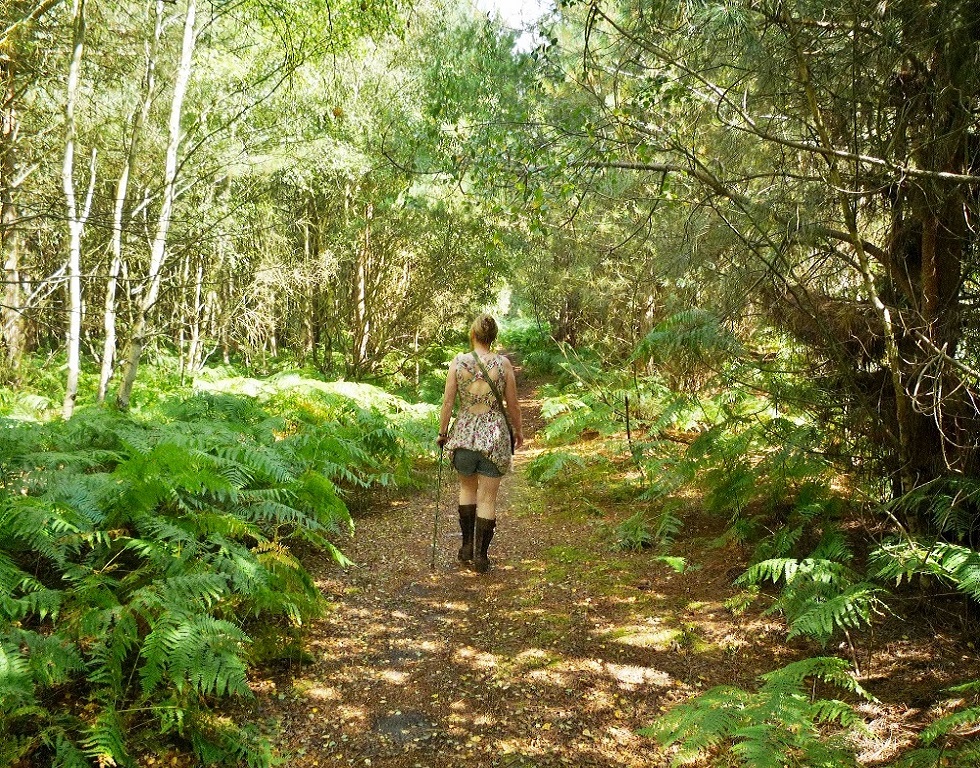
 Down the Forest Path