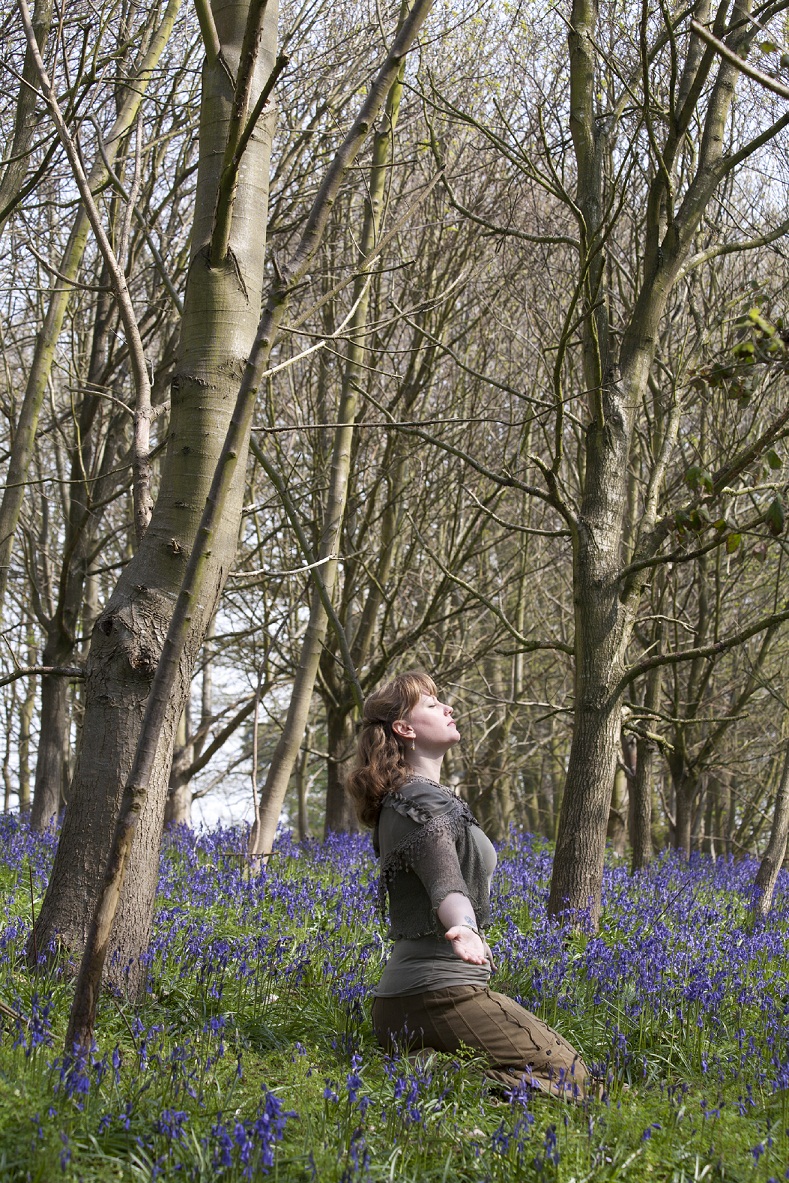
Reblog: Autumn Equinox and the Serpent Energies of Albion

This is a reblog from my channel, DruidHeart at SageWoman Magazine’s section on the Witches and Pagans website.

__________________________

The autumn equinox is upon us today, and we stand on the knife’s edge, leaping, stumbling, tumbling or diving down into the long nights. I love this time of year, as many of you know. The scents of leaves decaying in piles on the forest floor, the brilliant colours and the crisp air fills my heart with such joy. It is a wild cacophony to the senses, one last “hurrah!” before the silence of winter descends.

 
I love the retreat back into the earth, feeling my energy sinking back into my roots. The crazy time of summer and festivals, camps, parties and revelry has passed, and now it is time of reflection. We turn ourselves inwards, away from the social gatherings and noise, and focus on our own inner selves and what we have achieved. We take stock, we sum up, we begin the journey down into the darkness where one by one our senses are lost, eventually dreaming into the winter and letting go during the peaceful rest of deep sleep.

 
During the spring months, when the earth was warming under the eye of the sun, I felt Brighde’s energy rising, a large white dragon/serpent beneath the land that connected all of Albion. Dancing in the energies of midsummer, she then slowly began her retreat back into herself, and now at the equinox I feel her pulling back into the earth, the wild ride of her energy sinking back into the soil, the serpent retreating back into the cool nourishing earth, preparing for slumber. I too feel myself riding these serpent energies, ready to dream big this winter with wonderful new plans awaiting me.

 
Brighde is ancient. She is, for me, the British Isles. She is the bones of this land. She is not a mother goddess. She does not follow cycles of maiden, mother, queen and crone. She always was and always will be. She is as young as the snowdrop and as old as the hills. She has no relation at all to the Bridget of the mixed, revealed Christian and Pagan mythos. She is not all loving, she is not a warrior queen, she is not human in any way. She is the land, in a vast and exceedingly simple but elegant way…

_______________________

To read the the full article, please click HERE.
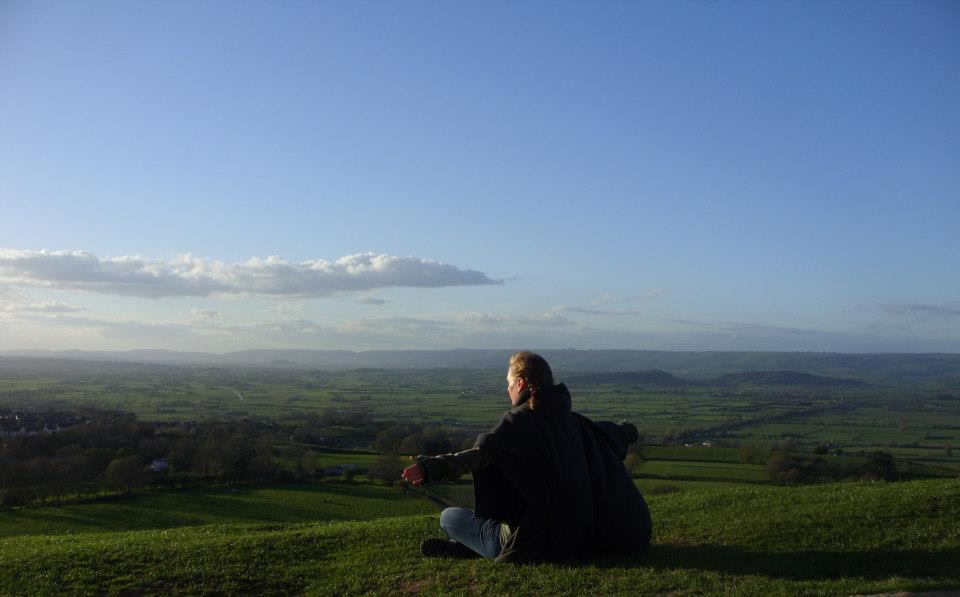
Reblog: Nemetona and Sanctuary

This is a reblog from my post at Druid Heart, at SageWoman’s channel on Witches and Pagans.

524734_640754085941583_54399955_nSometimes one has to retreat from the world, in order to better understand it. Finding sanctuary, a sacred space where we can open our souls without fear, where we can simply be, is a glorious experience. It happens a lot less than we need in our lives, in my opinion.

A goddess of sanctuary, Nemetona is an elusive deity. Not much is written or recorded about her in Classical texts or history. Just the barest hints and place names, some tribe names and a couple of inscriptions. Who is this goddess to whom we can bare our souls, in complete soul truth, knowing that we are held?

In our modern day world, so often we feel we have to close ourselves off in order not to be overwhelmed – by people, media, technology. For sensitive souls, it sometimes is pure hell. We need to allow our soul truths to emerge, otherwise as caged birds we function behind bars, never truly spreading our wings and knowing what it means to fly. We feel we have to be careful not to be too open, too emotive, too sensitive to what people are saying or what is happening in the world around us. We are not allowed to be offended, we are not allowed to speak out without fear of being shot down a lot of the time. We are told that we shouldn’t be so sensitive. Our souls grow smaller with each experience of shutting down, never letting anyone or anything in.

That physical space around us, where we feel uncomfortable if someone we do not trust enters, is a valuable space. It is our personal nemeton, a space where our energy exists outside of our bodies. Many liken it to your aura. Some nemetons are strong and radiant, some wounded with gaping holes, others barricaded with steel. What we have to learn, or relearn, is how to open this space in love and trust – that is what Nemetona provides, often in a world wherein we feel no other human is able to provide this for us…

To read the full post, click HERE.

Reblog: Wonder on the Wing, from Holy Wild

Here is a short excerpt from Alison Leigh Lily’s blog, Holy Wild, which deeply resonated with me. You can read the full article HERE.

Sometimes the very concept of “wildlife management” seems problematic to me. The desire to have a positive impact on the environment can be twisted into the beguiling belief that “technological progress will save us” from the consequences of our past and we need only sit back and enjoy our supremacy. Sometimes I think what we really need is a bit more human management: more self-restraint, more humility in the face of natural forces whose consequences we don’t (perhaps never can) fully understand.

Reblog: Pagan Ethics

Here is my latest blog post for Moon Books…

How much of our Paganism do we allow to be defined by others? If we follow a specific or established spiritual tradition within Paganism, we look to those who have gone before, and those who are a part of it now, to inform our ideas about the path that we are journeying on. We can find great inspiration in doing so, finding relevance in the ideas of others that resonate deep within our souls, through the words and actions of those whom we may look up to, or feel a sense of rapport with. Equally, we may become frustrated and disappointed when those who follow the same spiritual path are at odds with our own beliefs, behaving badly, seeming to work in opposition to the very ethics that Paganism, by virtue of its deep-seated root in respect and love for nature, provides.

What are the ethics of Paganism? More and more, this topic is being discussed by prolific Pagan writers, teachers, organisations, established members of the community and newcomers to Paganism alike. We could look at what defines the Pagan community, but this is just too vast to cover in a blog post, as Paganism itself is so vast a subject. Therefore, the ethics that surround such a vast subject are numerous and varied according to each individual, if not organisation. For some, this is the brilliance of Paganism – for others, it is the downfall.

When the ethics that we hold dear to our heart are not being followed by others who claim to be a part of our tradition or spiritual path, we begin to question our path on so many levels. How can I be a part of this, when people behave like that? Issues with Pagans whom the media court may frustrate us, as we may feel we are not being represented properly or with due respect. Issues arising on social media, where wars with words are carried over into many different spheres can confound or simply clutter one’s newsfeed – these are all a part of being a modern Pagan, should you wish to use the term. Gossiping, griping, flaming, bullying – all these issues can make us question whether we want to be a part of this whole Pagan thing at all…

To read the full article, click HERE.


Reblog: Positive Thinking by Theo Wildcroft

An excellent blog post about positive thinking from Theo:

Any system of thought has its traps for the unwary. The biggest one of all is the safe and superior knowledge of how everyone else is going wrong, without turning that critical awareness inwards. Absolute truth and simple answers are as prayers from human hearts weary of the random cruelty and infinite complexity of life. We live on a ball of semi-molten rock hurtling through space at the mercy of forces well beyond our comprehension, let alone our control. We are, even as a planet, never mind as individual beings, tiny sparks lost in infinite space and darkness. Yet we are each able to believe fervently in our own significance. This is a miracle and a wonder. Terry Pratchett once wrote that the Tooth Fairy and other mythical beings we believe in as children are the little lies that train us to believe in the big lies of mercy, justice, love – and in our belief, we make them so. We birth them into a universe of cold reason and unfeeling force, and that is our gift….

To read the full blog post, click HERE

Reblog: Beltane and the Singleton

This is a reblog from my post at SageWoman Magazine’s blog channel on Witches and Pagans.

Jo Bluebell-063smallBeltane is fast upon us – here in Suffolk, the hawthorn is in bloom already, and I have heard the first cuckoo of summer. The oak leaves are just coming out, and the beech and ash are lagging behind, sluggish after their long sleep. The garden is abloom, and the forest is filled with bluebells, their soft energy shimmering in the sunlight. It is, indeed, Beltane.

Beltane is a pagan festival that relates to fertility and sexuality. It is a celebration of passion, of the fire within the blood and the rising sap within nature and in our own bodies. Yet for the single woman, what does Beltane mean to her? To the pagan without a partner, they can often feel left out during this holiday, this celebration of sexuality, where it is often depicted as the Goddess and God coming together to create new life. What of those women who have no significant other in their life at this time?

Beltane can be celebrated by the singleton as much as with a partner. In Druidry, we take inspiration from the natural world around us, the gods and our ancestors. We know that we are all connected, therefore we can never truly be alone. We take this sense of connection and work with it in everything that we do.

At this time of year, we can work with the energies of flowing, of fire and creativity. We don’t have to just celebrate sex and the act of sexual union – that is only one facet of this festival. It is a fire festival, and so we can take inspiration from the flames and work that into our own lives…

To see the whole post, click HERE.


Reblog: Peace – Knowing When to Speak Out and When to Keep Silent

This is a reblog from my latest post at SageWoman Magazine’s channel, on Witches and Pagans: for the full article click HERE

This past week I have had to hold my tongue. Sometimes it felt like I was holding my tongue so hard all I could taste was blood.

A few people have told me that I should have spoken up, said my piece right there and then, never holding back. However, what I have learned in my own life experience and in my Druid path is that there is time to speak up, and a time to hold your tongue. It all relates to one word – peace.

It has often been said that the Druids were not only the political advisors and religious authority to the Celts, but that they were also the peacemakers within society. They had the power to walk between the battle lines without being harmed, such was their honouring of the notion of peace and their own personal authority and control. As a student of Zen Buddhism as well as Druidry, I have come to know the concept of peace from another worldview that blends in beautifully with what I hold to be true in my path.

Peace is when there is no need. Peace is when we are able to step outside of our ego and relate to the world with loving kindness. Peace is when we are able to find compassion, both for ourselves and for others.

Peace and truth are inexorably entwined within the Druid tradition. Only when we have discovered the nature of truth are we able to find peace. Truth is our natural place in the world, in its cycles and rhythms, the flow of life itself. It is in the riding of the currents of awen that we come to know truth in all its forms. When we know truth, we find peace…

Continued HERE


Reblog: Dedication, Devotion and Duty

This is a reblog from my channel at Moon Books:

Spring has sprung, and everything, myself included, seems to be go going throttle.  My garden is awash in a sea of yellow daffodils and forsythia, contrasted by the purples and pinks of grape hyacinths, hellebore and crocuses.  The birds are singing their heart out, the owls are very active at night and the air is tingling with the anticipation of warm summer days to come.

And yet I must remind myself to slow down, to savour the moment, to remember my intention for this year; to take a step back and focus on studying, learning and personal development.  Speaking engagements and workshops are kept to a minimum, and I’ve learned to say “no” in order to keep to my resolution.  My third book for Moon Books, a guide for solitary Druid, is in its proofing stages, and after that is done I shall be able to work on a long neglected fourth project; a pagan fiction centred around Avalon.  My focus is set, my path is determined.

As I walked a turf labyrinth with three lovely sister souls before the spring equinox this year, three words kept thrumming through my veins and in my head as I made my way to the centre.  Dedication. Devotion. Duty.  I felt them vibrate in my very soul, the words reminding me of what it means to be a Druid, even when you’re a Druid that’s taking a year off from ceremonial work and other engagements.

These three things are central to my personal Druidry.  Without them, I cannot rightly call myself a Druid.

Dedication – this word has so many slightly varying meanings and applications.  I am dedicated to my gods, to my path, to the land where I live, to my family and to my community.  The word, dedicate comes from the latin dedicare – to declare, to devote, to indicate and consecrate.  I declare to all my spiritual path in the usage of the word Druid.  I indicate my intentions to follow that path through my words and, more importantly, my actions.  The world to me is consecrate – there is no unsacred place. Through how I live my life; I demonstrate my dedication to being a Druid.  Everything that I do reflects my Druid worldview.  I am utterly dedicated to this life path, feeling it stir my passion and fill me with awen.

In our society today, dedication can seem a bit off-putting.  If someone is dedicated to a cause, they may sometimes appear a bit too outside of the status quo.  It can have connotations of fanaticism (another word that’s meaning has changed since its original latin origin).  If I tell someone that I am dedicated to my gods, whether they are pagan or not, I can get some pretty odd looks. A lot of people may think that when I say this, I am giving over my entire life to another.  This is not the case – this is using the inspiration from the gods, from the land, from the land, sea and sky to guide me to living a harmonious, more holistic life utterly attuned with nature.  If I gave my life over to my gods I would not be able to function.  I have free will. I am dedicated to them and their teachings through the natural cycles, but dedication does not equal submission…

Read the full article HERE

Reblog: Women in Druidry

This is a reblog from my post on SageWoman’s channel at Witches and Pagans…

Emma Restall Orr

Within Paganism, there appear to be an equal number of women and men in leadership roles. One of the most popular Druids today is Emma Restall Orr, one of the most popular Wiccans is Starhawk. Heathenry has Galina Grasskova and Diana L Paxon. There are countless others in all pagan paths and traditions that stand alongside the men in equal roles of leadership, teaching and more.

We know historically that there were female Druids, often termed as Druidesses. The Greeks and Romans were fascinated by Celtic society, so very different to their own when it came to power women held in their everyday lives. Yet we have snippets; tantalising few extracts from those who decided to include women in their accounts of Celtic society, whether they were from Greece, Rome or followers of subsequent Christian faiths.

Druidry may have suffered more than most when it comes to an overtly and also subverting taint of patriarchy over equality. This has much to do with the 18th and 19th century Revivalists, who were operating out of a culture and society in Western Europe that held women back from all kinds of authority positions. All the artwork we see from this period show older, mostly bearded men in togas occasionally swanning about collecting mistletoe or performing ritual sacrifice. Women are noticeably absent from these paintings and drawings. In the writing that we have, taken from other patriarchal cultures such as Rome and the latter Christian faith, the absence of women is again noted. We have to look deep within the stories to find out what the real role of women was in a particular myth, for example…

To read more, please click HERE

Reblog from Zen Habits – Emotional Independence

Here’s an extract from Leo’s most recent blog post – read the full article HERE.

Becoming Emotionally Self-Reliant

We look for happiness from others, but this is an unreliable source of happiness. Other people will come and go, or they’ll be emotionally unavailable for their own personal reasons.

And here’s the thing: it’s not their job to fill our emotional needs. They are struggling trying to meet their own needs.

So instead of looking for happiness from someone else, we have to realize it’s not out there. It’s within us.

Happiness isn’t in the future, it’s not somewhere else. It’s available right inside us, right now, all the time.

How can we find this happiness? It takes some inner searching, but consider these suggestions:

  • Sit by yourself, without a device or distraction, for a few minutes. Look inside. Notice your thoughts as they come up. Get to know your mind. See how fascinating it is. This in itself is an endless source of entertainment and learning.
  • One of my sources of happiness is creating, coming up with ideas, producing something. I don’t need anyone to do those things, and they give me wonder at my own abilities.
  • I also love learning. It gives me happiness, helps me grow.
  • Curiosity is a boundless source of happiness for me.
  • Learn to fix your own problems. If you are bored, fix it. If you are lonely or hurt, comfort yourself. If you are jealous, don’t hope that someone will reassure you … reassure yourself.
  • Take responsibility. If you find yourself blaming others, tell yourself that the other person is never the problem. Of course, you can believe the other person is the problem, but then you are reliant on them for the solution. If you believe that they aren’t the problem, then you look inside yourself for the solution.
  • If you find yourself complaining, instead find a way to be grateful.
  • If you find yourself being needy, instead find a way to give.
  • If you find yourself wanting someone to help you, help yourself.

Create your own source of built-in happiness. Walk around as a whole, happy person, needing nothing.

Then come from this place of wholeness, of self-reliance and independence, and love others. Not because you want them to love you back, not because you want to be needed, but because loving them is an amazing thing to do.