
I now have a new website – have a look and tell me what you think! I tied the format in with this blog, keeping it very simple and with the same colour scheme. I’d appreciate your thoughts… x
Reblog: Peace – Knowing When to Speak Out and When to Keep Silent
This is a reblog from my latest post at SageWoman Magazine’s channel, on Witches and Pagans: for the full article click HERE
This past week I have had to hold my tongue. Sometimes it felt like I was holding my tongue so hard all I could taste was blood.
A few people have told me that I should have spoken up, said my piece right there and then, never holding back. However, what I have learned in my own life experience and in my Druid path is that there is time to speak up, and a time to hold your tongue. It all relates to one word – peace.
It has often been said that the Druids were not only the political advisors and religious authority to the Celts, but that they were also the peacemakers within society. They had the power to walk between the battle lines without being harmed, such was their honouring of the notion of peace and their own personal authority and control. As a student of Zen Buddhism as well as Druidry, I have come to know the concept of peace from another worldview that blends in beautifully with what I hold to be true in my path.
Peace is when there is no need. Peace is when we are able to step outside of our ego and relate to the world with loving kindness. Peace is when we are able to find compassion, both for ourselves and for others.
Peace and truth are inexorably entwined within the Druid tradition. Only when we have discovered the nature of truth are we able to find peace. Truth is our natural place in the world, in its cycles and rhythms, the flow of life itself. It is in the riding of the currents of awen that we come to know truth in all its forms. When we know truth, we find peace…
Continued HERE
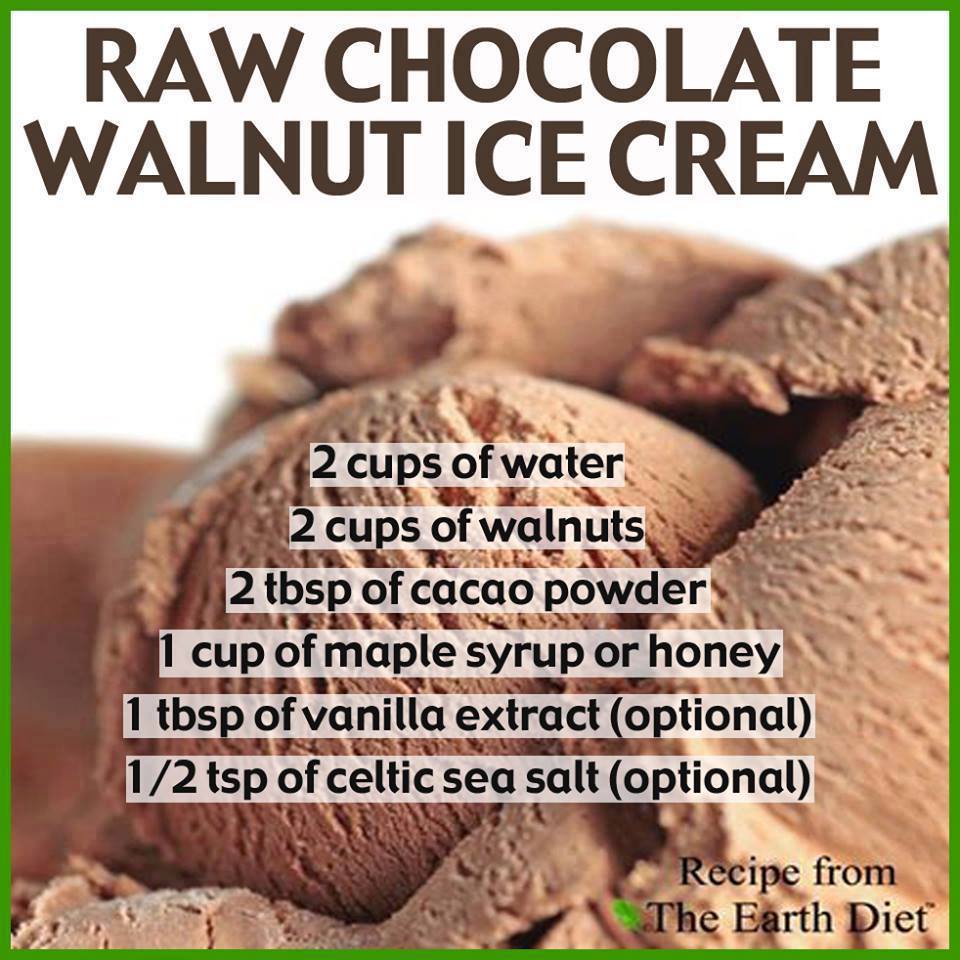
Friday Foodies – Vegan Ice Cream
Eating Vegan and Locally – the ethical debate
“Is it more ethical and sustainable to eat a vegan diet which relies on the oil industry or a vegetarian diet with small amounts of eggs and dairy products from locally produced organic sources where one can make a relationship with the creatures? Do you disagree that a balanced vegan diet relies on imported food and that I am just creating problems for myself?”
(Taken from the Meat Eaters, Vegetarians and Vegans Ethical Debate on The Druid Network’s Ethics Pages Here)
Some very good questions were raised during this ethical debate, which I have been pondering ever since I went vegan. With the world’s dwindling oil supplies and the other costs to food travel – ie. carbon emissions, it has played largely upon my mind. Is it more ethical for me personally to eat lentils and quinoa grown in a country far away and imported at the expense of the environment (and other factors) than it is to try and eat vegan locally? Is such a thing even possible where I live?
I live in a very small village. We do have a village shop, which stocks the basics. None of what it stocks is labelled organic. There is some local produce, but even the people who work there cannot tell me for sure which is and which isn’t. Some produce is labelled as ‘Heritage Farm – locally sourced’ but I cannot find out just who this company actually is. As far as I’m aware, the most local food I can honestly say I have eaten this winter has been the onions scrumped from the fields after the harvest was taken away and handfuls that had not been picked up by the machinery were left to rot or be eaten by the deer.
Now that Spring has sprung, and new foods are available in my very own garden (nettle, mint, spinach, dandelions – strawberry are already in flower!) I am thinking more and more about sourcing local food. There are a few farm shops in the area, but these seem low on actual produce over highly packaged goods such as cakes, cookies, biscuits, chocolates, etc. They’re not so much farm shops as they are ‘farm boutiques’.
It raises another question as well – how local is local? 1 mile? 5 miles? 10 miles? Food grown in Britain?
Take for example my work lunch today, brought in from home. I have some Munchy Seeds, a Suffolk company that does delicious seed mixes. I have scoured the packet and website and nowhere does it say whether they are sourced locally or not (I have sent them an email enquiry). My banana was not grown in the UK, and has many, many food miles behind it. My apple is from Italy. The Twinings tea I am drinking has cucumber, aloe and nettle. There is no information about sourcing of ingredients. I also have a bag of mixed nuts that I dip into – they say ‘produced in Germany’ but can you grow cashews in German soil, or is it that the end package was produced in Germany? My decaf coffee has lots of food miles behind it, and other ethical considerations; the workers pay, the rainforest, etc. The almonds in the almond milk that I drank with it were not grown in this country.
I am seriously going to have to rejig my eating habits if I am to reduce the food miles in my eating habits. Having already made the switch to vegan, it’s been difficult enough already – eating out is an especial challenge in the rural countryside around here. There is usually always a veggie option, but it always contains cheese. One cannot live on chips and salad alone (provided the chips are fried in oil separate to the fish that is usually served with them).
Living on the coast, you would expect that you could get valuable vegan goods like seaweed rather easily. Unless you wade into the ocean yourself though, they are not to be found on any supermarket or local shop shelf, nor even in the ‘health food’ stores. I can find samphire on the beaches around here, but that’s all the local coastal veg that I know of. I think a Food Safari is in order! I also need to look into mushroom foraging workshops – I’d like to eat more foraged food. I will always remember one canoe camping trip in Sweden, when we helped a lost local with his basket of chanterelles who stumbled across our campsite get back to the village via our canoe in the failing light. Europe are much more aware of foraging, of what can be eaten and what can’t. However, considering the huge population of Britain, not everyone could forage without a devastating effect on the local flora and fauna.
So many, many questions, so many answers that need to be sifted through in order to find out what works best, ethically, for me personally. This blog post is not a sweeping statement to all that “This is the Way It Should Be” but how I need to make it work for myself personally in accordance with my principles and worldview.
My own vegetables will be planted shortly in my garden – lettuce, tomatoes and cucumbers. Beans will also be planted, as well as peas. This coming winter I’m looking at growing potatoes, onions and carrots in pots or bags right up against the house where they will be warmer and hopefully keep going all winter long. It’s far from sustainable, but I don’t have the time to operate a fully sustainable food garden right now in my life. If my working hours are reduced, and most definitely upon retirement, things will change (if the planet is not totally screwed up by then).
So, is it more ethical for me personally to support the oil industry in my vegan eating, or to eat more locally sourced food that may include eggs from the farm down the road? I’ve already had to adjust my diet with a vegan vitamin and mineral supplement for health reasons; these are from the Vegan Society. Yet when you break it down, what industry or industries is that really supporting? Are we getting into the pharmaceutical debate here? I still don’t have an answer to this question, but I am aware of my eating habits now, and will use that to make the final decision.
Am I creating problems for myself? I would say no. What I am doing is sacrificing ignorance in order to be aware as much as I can of what I eat, why I eat it and what the result to the world is in my consumer habits. As a Druid, I have to scrutinise my consumerism in order to see if my relationship with the environment is an honourable one. For me, there is no other option – I could not live with myself by being wilfully ignorant of the various choices I may have. This is not a problem, per se, but the way that I already live my life. It’s making me consider choices more and more – problems arise when there is no choice to be made. As long as I have options, I do not have a problem. It is up to me to address it correctly in accordance with my beliefs.
There is still much more thinking and research to do…
Reblog: Dedication, Devotion and Duty
This is a reblog from my channel at Moon Books:
Spring has sprung, and everything, myself included, seems to be go going throttle. My garden is awash in a sea of yellow daffodils and forsythia, contrasted by the purples and pinks of grape hyacinths, hellebore and crocuses. The birds are singing their heart out, the owls are very active at night and the air is tingling with the anticipation of warm summer days to come.
And yet I must remind myself to slow down, to savour the moment, to remember my intention for this year; to take a step back and focus on studying, learning and personal development. Speaking engagements and workshops are kept to a minimum, and I’ve learned to say “no” in order to keep to my resolution. My third book for Moon Books, a guide for solitary Druid, is in its proofing stages, and after that is done I shall be able to work on a long neglected fourth project; a pagan fiction centred around Avalon. My focus is set, my path is determined.
As I walked a turf labyrinth with three lovely sister souls before the spring equinox this year, three words kept thrumming through my veins and in my head as I made my way to the centre. Dedication. Devotion. Duty. I felt them vibrate in my very soul, the words reminding me of what it means to be a Druid, even when you’re a Druid that’s taking a year off from ceremonial work and other engagements.
These three things are central to my personal Druidry. Without them, I cannot rightly call myself a Druid.
Dedication – this word has so many slightly varying meanings and applications. I am dedicated to my gods, to my path, to the land where I live, to my family and to my community. The word, dedicate comes from the latin dedicare – to declare, to devote, to indicate and consecrate. I declare to all my spiritual path in the usage of the word Druid. I indicate my intentions to follow that path through my words and, more importantly, my actions. The world to me is consecrate – there is no unsacred place. Through how I live my life; I demonstrate my dedication to being a Druid. Everything that I do reflects my Druid worldview. I am utterly dedicated to this life path, feeling it stir my passion and fill me with awen.
In our society today, dedication can seem a bit off-putting. If someone is dedicated to a cause, they may sometimes appear a bit too outside of the status quo. It can have connotations of fanaticism (another word that’s meaning has changed since its original latin origin). If I tell someone that I am dedicated to my gods, whether they are pagan or not, I can get some pretty odd looks. A lot of people may think that when I say this, I am giving over my entire life to another. This is not the case – this is using the inspiration from the gods, from the land, from the land, sea and sky to guide me to living a harmonious, more holistic life utterly attuned with nature. If I gave my life over to my gods I would not be able to function. I have free will. I am dedicated to them and their teachings through the natural cycles, but dedication does not equal submission…
Read the full article HERE
Friday Foodies – Raw Vegan Lemon Meltaway Balls
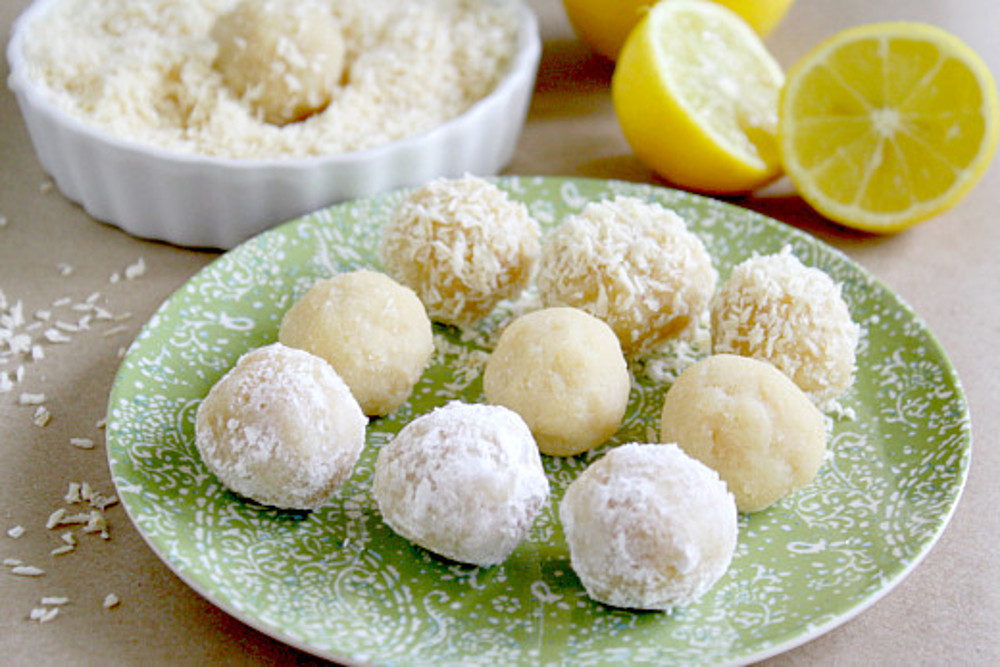
Ingredients
- 1 1/2 cup almond flour
- 1/3 cup organic raw coconut flour
- 1/2 teaspoon pink himalayan salt
- 1 – 2 tablespoon organic maple syrup (or raw honey for non-vegan)
- 3 organic lemons (fresh squeezed juice)
- 2 teaspoons organic vanilla extract
- 1/4 cup organic coconut oil (melted/liquid)
Preparation
- Put all ingredients into a food processor and process until well combined.
- Take out about a spoonful at a time and roll them in the palms of your hand into a ball shape.
- Leave them plain or roll in shredded coconut flakes, almond flour, or powdered sugar (not raw).
- Put them in the refrigerator to firm for about 10 – 15 minutes.
- Keep them in the refrigerator until ready to serve because they will get soft if left out at room temperature as the coconut oil melts.
- Enjoy!
(taken from One Green Planet’s website!)
Reblog: Women in Druidry
This is a reblog from my post on SageWoman’s channel at Witches and Pagans…

Emma Restall Orr
Within Paganism, there appear to be an equal number of women and men in leadership roles. One of the most popular Druids today is Emma Restall Orr, one of the most popular Wiccans is Starhawk. Heathenry has Galina Grasskova and Diana L Paxon. There are countless others in all pagan paths and traditions that stand alongside the men in equal roles of leadership, teaching and more.
We know historically that there were female Druids, often termed as Druidesses. The Greeks and Romans were fascinated by Celtic society, so very different to their own when it came to power women held in their everyday lives. Yet we have snippets; tantalising few extracts from those who decided to include women in their accounts of Celtic society, whether they were from Greece, Rome or followers of subsequent Christian faiths.
Druidry may have suffered more than most when it comes to an overtly and also subverting taint of patriarchy over equality. This has much to do with the 18th and 19th century Revivalists, who were operating out of a culture and society in Western Europe that held women back from all kinds of authority positions. All the artwork we see from this period show older, mostly bearded men in togas occasionally swanning about collecting mistletoe or performing ritual sacrifice. Women are noticeably absent from these paintings and drawings. In the writing that we have, taken from other patriarchal cultures such as Rome and the latter Christian faith, the absence of women is again noted. We have to look deep within the stories to find out what the real role of women was in a particular myth, for example…
To read more, please click HERE
Sacred Reading
A great blog post by Cat!

The year is turning still. In the Western Hemisphere in which I live, Spring is indeed springing all around, with the brightness of daffodils, the unique smell of showers on fresh grass, and birds chattering amidst green leaves.
This is also a time of celebration for many. Pagans have just marked the Vernal Equinox with Ostara; Hindus are joyous with Holi, the amazing festival of colours and love; and Christians are in the middle of the intensity of Lent.
Each of these is very different, but it is fascinating to compare how different faiths mark this time of year. From very personal, private rituals and promises to large public statements, it seems that many of us are doing something to actively notice the budding of new life around us, and inspiration within us.
Despite – or perhaps because of – my primarily Pagan path, I’ve been reading…
View original post 936 more words
Never stop learning…
Never stop learning. That should not only be a Druid mantra, but one for the entire human species!
I’ve taken this year off to really dive deep into new studies, experiences and finding a very deep Druidry within my soul. So far it’s been exceptional – I have learned so many things about myself, about how my brain and body works, how I interact with others and how I take inspiration from the natural world around me.
I’ve always been an avid student of life. I’ve always loved being a student – whether it was elementary or high school, college or university. I’ve always had a hunger to learn more about the way life works, about philosophy, history, biology and ecology. That enthusiasm has never faded, and I should hope with all my heart it never does.
Too often we can become complacent in our lives, thinking that we know all that we need to know for however long a time until the awen hits us in the face and we wake up, wanting to quest deeper, to learn more, to snack on those little hazelnuts of wisdom like the salmon in the sacred well. For a while I was content that I had learned enough about Druidry, about Paganism – I now see how foolishly wrong I was. There is always something more to learn, something new to experience. When we stop learning, we stop growing, both mentally and spiritually. We have such capacity within our brains to ever expand our horizons, but the safe and comfortable instinct can easily override that desire to broaden the boundaries.
At this point in my life, when I will be turning 40 this August, I realise just how little I know about anything. I also know that I will never know everything about anything at all. What I do know is that I will never stop learning, never stop freeing my mind so that my ass will follow. It always leads to wondrous new places filled with the wisdom that can only be gained by combining experience with learning.
I am devouring books and exploring the Celtic heritage of the land where I live, in East Anglia, UK. Often overshadowed in my particular region by the Saxon ship burial and village kingdom near Sutton Hoo, historically there isn’t all that much available about the Celtic Trinovantes that lived in my area (the much more popular Iceni tend to overshadow them). I’m learning more about their stories, from academic research to spending hours listening to the land and the stories gleaned from the wind.
I’ve also spent the winter really looking at my self, the reasons why I have done things in the past, my motives and intentions for the future. It has been a real eye-opening experience, visiting all those dark and light places in the soul, seeing what works in harmony and what doesn’t. Exploring the nature of Truth, looking at how I can live the truest expression of my soul, fitting in not only with my true nature but the entirety of the natural world around me. Re-reading Graeme K Talboys’ Way of the Druid lead to weeks and weeks of reflection on what the nature of Truth is to the Druid – I heartily recommend that book to anyone interested in the Druid path. I’m sure there is a future blog post on it when I have managed to put down all that I have gleaned into words…
Taking time out for your self, for your studies and for your spiritual path can be the best thing you have ever done. It shakes off the comfortable shackles of complacency and breathes pure awen deep into your soul. It awakens you to life, and that is a gift in itself.
A good morning’s work!
Here is a performance from our dance workshop this morning, working on Rajasthani moves!
 Down the Forest Path