My interview with Philip Carr-Gomm

Druidcast 94 is now out, with the Order of Bards, Ovates and Druids‘ Chosen Chief, Philip Carr-Gomm interviewing me last June for their 50th anniversary gala. We talked about religion and philosophy, my books and also what is Druidry today. Have a listen, and check some great music and another great talk by Jonathan Wooley on Druidry and the young adult!

http://druidcast.libsyn.com/druidcast-a-druid-podcast-episode-94

Acts of Compassion

There are many ways we can be compassionate in today’s society. Compassion is merely trying to understand, to see beyond your own point of view and share in humanity as a whole.  An act of compassion need not be grand – it can be as simple as giving up your seat on the bus, or smiling at someone who looks down as you walk past them on the street.

I came across this beautiful story from Jason at Parallax Press today, and had to share it. May peace and love fill your heart and soul, and flow out into the wider world.

I just came back from the Deer Park Holiday Retreat last week, and the theme this year was “New Year, New You.”

While there, we watched Thich Nhat Hanh’s New Year dharma talk from 2013. In the talk, he said something that was very interesting: “There can’t be a new year if there isn’t also a new you.” If we do not have the intention to water the seeds of transformation within us, he elaborated, the so-called new year will continue to be very much like the old, not only for us, but also the world.

With that in mind, I had the privilege of sharing my own insights on the transformative practice of compassion with many of you at the retreat. I shared the story of a life-changing incident that occurred many years ago when I was sixteen and volunteering at a community legal clinic for those who could not afford attorneys.

It was while working there as a receptionist that I encountered a very literal case of “saying hello to your suffering.”

One day at the clinic, I picked up the phone to answer a call as I routinely did, and I heard the sound of a woman crying and what sounded like the humming and whirring of a train or subway car pulling into a station.

“My husband has been beating me and I have no money for a divorce. I should jump onto these tracks and kill myself.”

I realize now that this woman had not only called the clinic for help, but had begun the process of saying hello to her suffering. And suffering had said hello to me that day.

Even as she contemplated her own annihilation on those steel tracks with the train arriving ever closer, she had enough strength within herself to call a total stranger who happened to be a completely unprepared sixteen year old.

In his latest book No Mud, No Lotus, Thich Nhat Hanh writes:

The work of mindfulness is first to recognize the suffering and second to embrace it. A mother taking care of a crying baby naturally will take the child into her arms without suppressing, judging it, or ignoring the crying. Mindfulness is like that mother, recognizing and embracing suffering without judgment. So the practice is not to fight or suppress the feeling, but rather to cradle it with a lot of tenderness, (pp. 26-27).
Rather than saying to the woman, “I’m only sixteen years old; I don’t know what your suffering is, nor how to help you,” I simply listened to her with all my heart, cradling her suffering gently in my arms.

I listened to her for an hour or more, and gradually the crying stopped and I could not hear the train.

I am not so presumptuous to claim that I saved this woman’s life, but what I can say is that my act of compassion sprouted within her the beginnings of a lotus from the mud.

If you’re going through a difficult time, Parallax hopes that the new year leads to the blossoming of a new you. To help get you started, here’s one of my favorite passages from No Mud, No Lotus: 

Releasing the Arrow

There is a Buddhist teaching found in the Sallatha Sutta, known as The Arrow. It says if an arrow hits you, you will feel pain in that part of your body where the arrow hit; and then if a second arrow comes and strikes exactly at the same spot, the pain will not be only double, it will become at least ten times more intense.

The unwelcome things that sometimes happen in life—being
rejected, losing a valuable object, failing a test, getting injured in an accident—are analogous to the first arrow. They cause some pain.

The second arrow, fired by our own selves, is our reaction, our storyline, and our anxiety. All these things magnify the suffering. Many times, the ultimate disaster we’re ruminating upon hasn’t even happened.

We may worry, for example, that we have cancer and that we’re going to die soon. We don’t know, and our fear of the unknown makes the pain grow even bigger.

The second arrow may take the form of judgment (“how could I have been so stupid?”), fear (“what if the pain doesn’t go away?”), or anger (“I hate that I’m in pain. I don’t deserve this!”). We can quickly conjure up a hell realm of negativity in our minds that multiplies the stress of the actual event, by ten times or even more.

Part of the art of suffering well is learning not to magnify our pain by getting carried away in fear, anger, and despair. We build and maintain our energy reserves to handle the big sufferings; the little sufferings we can let go…

Reblog: Druidry, Animism and The Meaning of Life

This post is a reblog extract from my channel at SageWoman. To read the full article, click HERE.

For many people, myself included, Druidry and Animism go hand in hand. Since the Age of Enlightenment and perhaps even further back in history (perhaps with coming of Christianity) Animism has gotten the reputation of being somehow backward, a superstitious and childish view of the world wherein everything is “alive”. This belief is completely biased in that it is totally from a human-centric point of view; those who believe it to be silly would say that believing a stone has a soul is absolutely ridiculous. This point of view is a projection of our human perspective, of what is alive and what isn’t, what is ensouled and what isn’t. It doesn’t take into consideration differences in the metaphysical. This perspective is often derogatory of Animism, yet it fails to actually understand just what Animism actually means, and what living with an Animistic perspective can bring to human consciousness.

In my opinion, we are in great debt to author Emma Restall Orr for exploring Animism in her two books, Living With Honour and The Wakeful World. In both, she goes into just what it means to be an Animist, putting aside the childish perspective and engaging with the concept in a very rational and yet spiritual manner. I remember when I first saw her speak at Witchfest in Croydon many years ago, when she shouted from the stage that the moon was “just a big f*cking rock in the sky!” (which it is). Believing that the moon is deity is perhaps a childish view of the moon, however, seeing the deity within the rock is closer to the mark, dependent upon your concept of deity. In her two latest books, defining the often used words in Animism of soul and spirit, she shows the interconnectedness of all things in contexts of philosophy, spirituality and science.

This interconnectedness is reflected in many, if not most religions and spiritualities throughout the world. Zen monk Thich Nhat Hanh uses the term “interbeing”, even founding The Order of Interbeing, a way to live your life fully aware of the interconnections of all things. We cannot exist without each other – we are fully co-existing together. In a piece of paper, there is the sun, the tree, the rain, the wind, nitrogen, carbon dioxide, stars, clouds, loggers, factory workers, their ancestors, the ancestors of place, the foods that they ate – the list goes on forever. Since the beginning of time, if there ever was a beginning, we all come from the same source, if there is a source. We are all star-stuff.

Continued… to read the full article, click HERE.


Mindful Mondays

Mindfulness is THE buzzword in self-improvement and New Age circles, but what does it really mean? If we go back to basics, we find that it is rooted in Buddhism, and can be easily explained in two simple phrases.

Chop wood. Carry water.

This is actually a pared down version of a slightly longer Zen story, wherein an enlightened monk recalls his process to enlightenment. He stated “When I was unenlightened, I chopped wood and carried water. When I became enlightened, I chopped wood and carried water.”

A lot of the time it can feel like we’re carrying wood and chopping water – not really getting anywhere, flailing around with a dripping axe. But when we stop, focus and concentrate, usually things become smoother, get done quicker and with little drama. Some may not want that – they enjoy the distraction that the flailing causes, or the drama, but after a while it can wear thin. Applying mindfulness, which is simply paying attention, can help alleviate any dis-ease that we may feel in our lives. That’s not to say that we’ll feel great all the time, but just by being in the present moment and not attaching to past experiences, dwelling on them or getting stuck in an emotion we can just get on with plain living.

So, with all that in mind, I’ve decided to dedicate an entire day to mindfulness each week. Ideally, I try to be mindful all the time, but I’m no Buddha. Having an entire day to focus on this will hopefully trickle down into the rest of the week, and all my thoughts, actions and their consequences. I’ve deemed this my Mindful Mondays.

So, what does this all mean? It means that when I’m eating breakfast, I’m just eating breakfast – not reading a book or article. When I’m washing the dishes, I’m just washing the dishes and not singing along to the latest Taylor Swift album. When I’m out walking, I am walking mindfully, at whatever speed, paying attention to my steps and my surroundings – not planning my evening meal. When I’m stroking my cat, I’m not thinking about writing the next chapter of my book. When I’m driving I’m really feeling the road beneath me, not dwelling on the driver that decided to overtake me on a blind summit. When I’m out for a meal with friends, I’m really paying attention to what they are saying, and not already forming a reply to their words before they’ve even finished talking.

Mindful Mondays are all about paying attention.

With that centred awareness, with that focus, we can simplify our lives immensely (part of my New Year’s resolution). People often fear that we will be less productive, but actually we will do jobs better, more efficiently, if we maintain that focus.

Being aware of your movements as well is doing a great kindness to your body. When we are walking down the stairs, we are focusing on our body moving. We will find that our movements may become less hurried and more graceful. A calm descends on our way of being. Like a leaf falling from the tree, we simply are in that moment, either floating down serenely or caught in a whirlwhind – either way it is done with grace.

So, like the monk who realised that life doesn’t change after enlightenment and that you still have to do the things you have to do, what you can change is how you do them. Mindfully, with awareness, focus and concentration. Give it a try, and let me know how you get on! Even if a day is too much, try an hour or half an hour each day. You don’t have to change your schedule, just do everything in it mindfully.

May you be peace as you chop wood and carry water.

ch5

Zen Druidry

My first book with Moon Books in the Pagan Portals series, this little introductory book shows how to blend Zen Buddhism with Druidry to create a life that is awake and aware to the natural world around us, fully immersed  and living life in accordance with the flow.

Kindness

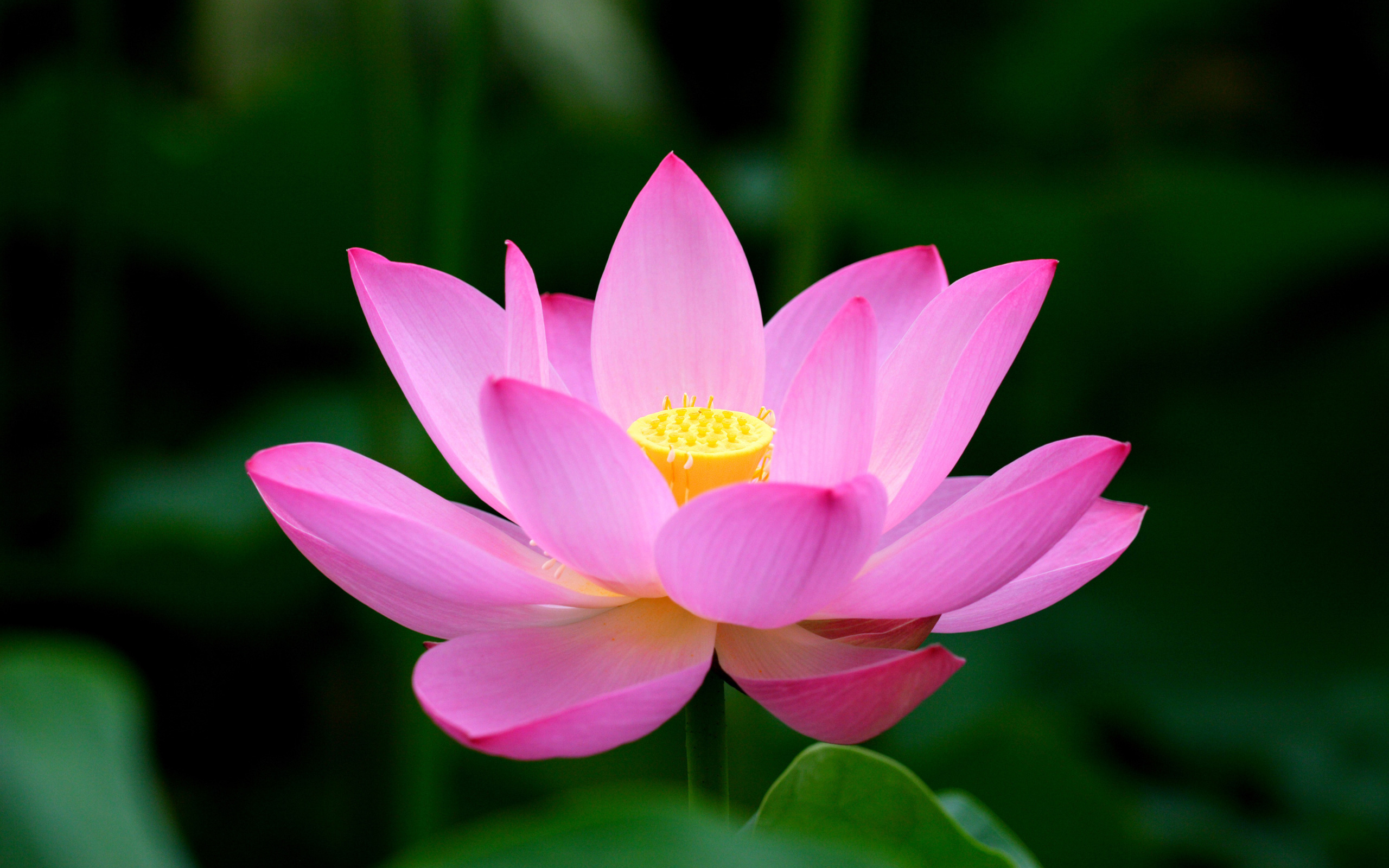
lotus-flowerKindness – in our modern Western world, this beautiful concept has become twisted, where in a “dog eat dog” world it equates to weakness.  We have to push, we have to grasp at life, beat out the other guy in order to get the biggest piece of the pie.

The truth is, there is no pie.

Forget what the media tells you, forget what other people may tell you, that you need to be better than others, that to show your humanity you will soon slide down that corporate ladder. There is no ladder either.

There is no me. There is no you. All is illusion.

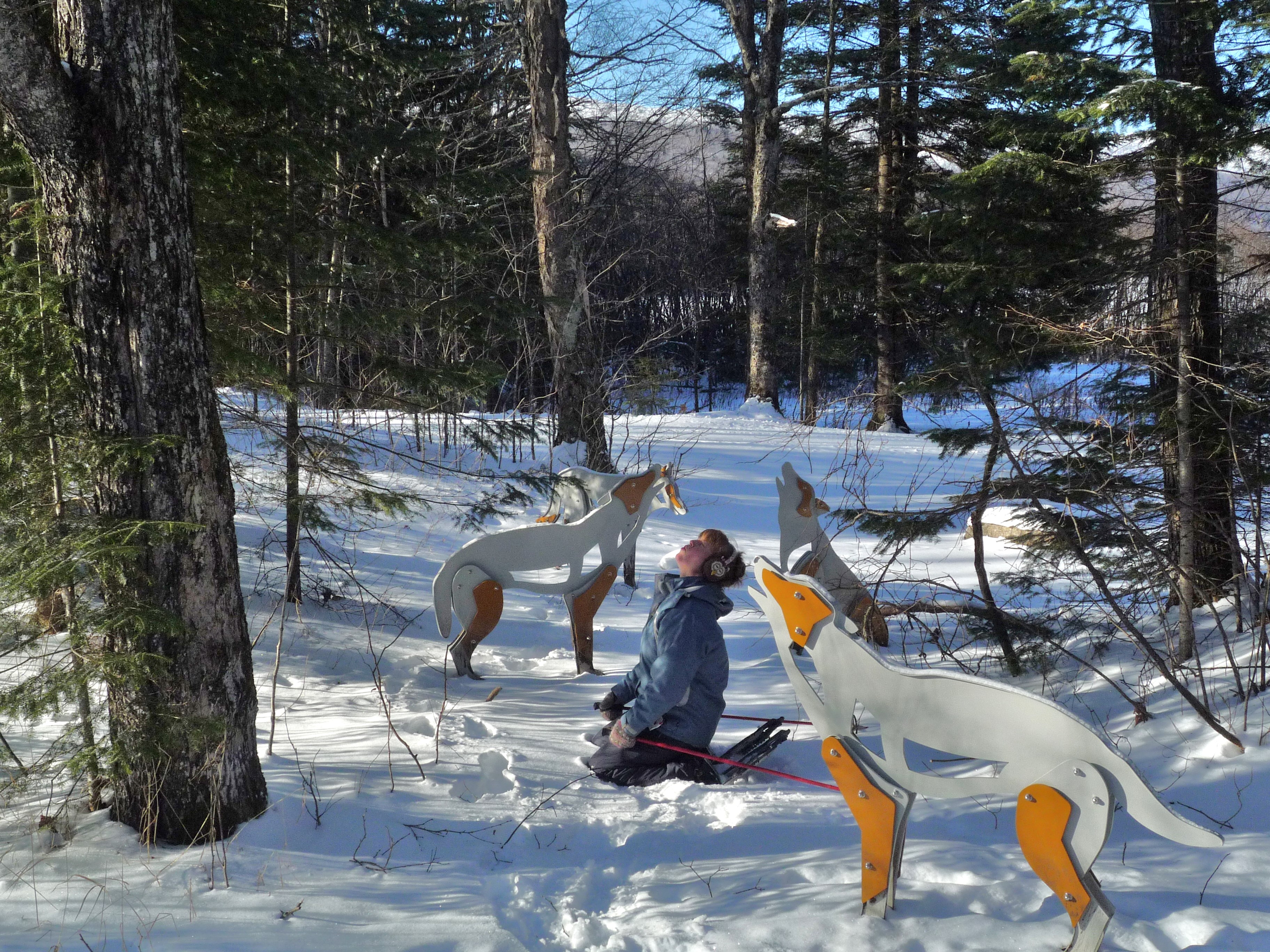
We are all made up of each other, there can be no separation. The tree and the coyote, the fox and the mountain, the sunlight and your brother are all made up of matter and energy. Matter and energy cannot be destroyed. They cannot come out of nothing. They only wait for the right conditions to manifest, for the right circumstances in which to come into a form that we recognise. They are always there. We have always been here. We have always been a part of this world, and a part of each other.

As humans, we have become very judgemental beings. We allow our emotions and thoughts to overide the reality of many situations. It’s far easier to judge the behaviour of others than to look deeply at our own selves. Each time we judge something, we tighten up in our hearts and in our bodies.  An open heart is one that does is not judgemental. If there is no separation, there is nothing to judge.

We need to notice when we are forming judgements of people and of situations.  We need to see when we are contricting our souls, when we are not open to what life really is in this present moment. We need to really begin to know what the word kindness means.  If we truly see that we are all related, why would we be unkind to anyone or anything?

Do not believe in the illusion. Immerse yourself deeply in the awen, the poetic inspiration that opens the door to seeing the interconnectedness of all things.  Open your heart to the wonder that is life all around you. Look into the eyes of your supposed enemy, and see their condition of being. Look into the circumstances that created their life, and see yourself reflected in that. You are them and they are you.

Being aware of each judgement we make, being aware of our thoughts about other people, being aware of what is coming out of our mouth makes such a  difference to our lives.  When we speak ill of someone, we are doing ill to ourselves. When we treat others unkindly, we are being unkind to our selves. Our hearts do not like to be constricted.  The flow of awen, the flow of circulation in our bodies, the flow of a river or the flow of life itself moves better when we are open.

Our practice in life is simply kindness.  It’s not hard, but we make it hard for ourselves.  We have to lose our self-centred ego, our sense of self-importance, our sense that the world should be as we desire it to be, and not as it already is.  When we have stepped away from that way of being and move into a way of being that is centred on others, be they bird or bee, refugee child or murderer, basking shark or polar bear, we see that the world is much greater than the small worlds we create around ourselves.  We are released from anger and depression, hate and worry. We see how our little selves can take over, and we realise what is much more important that our little selves.

Kindness.

Have no fear – we will not become doormats for people to abuse if we are kind. We will not lose our place in life if we are kind. We will be happier, more free and really living as opposed to simply doing things.  Kindness is not weakness – it is the truest form of being. It takes courage to be kind to someone who has hurt us. We do not have to allow them to continue hurting us, but we do not need to seek revenge, or punish them for their actions. We can let them see that they have hurt us, and we can try to understand them with an open heart free of judgement. We can look critically at a situation without judging it, without letting emotion or non-factual elements into the equation. We can release our self-centred perception to get a look at the bigger picture, and try to help others instead of focusing on our selves.

It’s not easy, changing the way you think and behave. We have to really pay attention. We have to be really aware of how we are, how we react, what we say and do in any given situation. We need to look deeply into our being, through practice and meditation, through every single act of our waking lives. We have to be willing to change out of our old habits and our old ways of self-centred thinking. We have to try, again and again, to step outside of our little selves.

When we do, the world opens up in wonder.

May your life be filled with wonder.


Solstice Practice

This post was originally  displayed on SageWoman’s channel, on my blog DruidHeart at Witches & Pagans.

Around the winter solstice is the time of year when many people get together, families and friends, to celebrate the holidays. If we are fortunate, we have some time off to be together, all together in one place – we may not have such an opportunity until the next solstice season rolls around. It can be a wonderful time of loving hugs, good conversation and deep, belly filled laughs. It can also be a trying time, when the bonds of friendship or family can become tested as we are all thrown together, our usual routines and habits left behind and we are faced with situations that are perhaps out of the norm.

My home is usually very quiet, filled with deep silence and stillness. In that silence I find my personal sanctuary, where peace is around every corner. I’m not a big fan of crowds or noise. However, at this time of year, I leave behind my little sanctuary and venture out into the world of lights and noise, family and friends when I’d really rather be sitting on my meditation cushion in the dark, with a candle and some incense.

It’s quite a shift to deal with. There is constant noise around me, different noise to that of my own home. It’s the noise of other people, which I am not accustomed to. Loud televisions, conversations, arguments, laughter – it’s a bit of an assault on my senses. Dealing with other people’s behaviour when there is no opportunity to “escape”. I have to confront everything that upsets me head on, or lose my temper, say something in anger as my “sanctuary” is thrown out the window.

Or is it? Yes, it’s difficult. Even as I type this blog, there are interruptions by people walking in and out of the room, asking me what I’m doing and other various questions. Nemetona, my goddess of sanctuary, has taught me that she is ever within me even as she is without – I take her with me wherever I go, and where I go she is always there.

In my Zen practice, this time of year provides me with innumerable ways to really practice. Life becomes difficult when things don’t go our way. When we realise this, and when we see that life is simply going ahead whether we like it or not, things can become easier. I have to deal with behaviour that I don’t like – this gives me a chance to practice and to try to understand that person’s behaviour. Often I can see myself reflected in it, or see that they are lost in their own suffering. I can try to ease that, when I remember to try to understand it. When it just pisses me off, I’m not trying to understand, and anger can erupt. When this occurs, I realise that I am not practicing very well, that I am not aware of my own reactions and behaviour. It’s a constant reminder to look deeply at myself, to see my patterns and to alter them in order to have peace and harmony both within and without. My goddess and my Zen practice help me with this understanding.

I have two choices when I find myself in difficult circumstances – get upset or not get upset. When people are shouting in the kitchen, or using words unkindly, or their behaviour is totally out of sync with creating harmony, I feel a tightness, a contraction within my body. Getting upset with this only tightens that contraction even further, making me miserable, or lashing out in anger in a misguided attempt to alleviate the tightness within. Seeing people mistreat each other, taking each other for granted – all of these things can cause contractions within. Passive/aggressive behaviour, words that are intented to provoke, noise levels louder than they need to be – all these things cause a contraction within my body. I want to loosen that contraction, but how?

Sitting and walking meditation practice, daily, really help me through this challenging time. By sitting, I am aware of my body, and aware of my thoughts. I see patterns in my behaviour. I see the self that is screaming for attention, for comfort, for sanctuary. I also then see the illusion of the separate self, and the inter-connectedness of all things. We are all dependent on everything else – the sunlight, the rain, our parents, the air, food. Without any of these things we could not exist. We are in them and they are in us.

When people’s behaviour challenges us, it helps to remind ourselves of this inter-connectedness. They are in me, and I am in them. It’s easy to do when out in the forest, becoming one with nature. But in challenging situations, with people we are often more directly faced with egos and personalities, with habits and the ego’s constant self-regard. When someone says something that upsets us, instead of thinking “I’m so upset that he said that” we can just realise that he said something. That’s the truth of the matter. Someone simply said something. We can act on what they said, of course, if they are saying inappropriate things. But we don’t have to act on it in anger, simply in awareness. Things happen. People behave the way they do. We can either get upset and lose our practice, or we can see the opportunities to become even more aware of our selves. In this awareness lies peace.

Slowly losing our separate sense of self, our egos begin to dissolve. We listen more. We apologise more. We find a deep well of peace to draw from, where we nourish that which brings peace and harmony. We don’t ignore our feelings, but we don’t feed those that create discord. We’ve no wish to stay in that contraction, no desire to create it in others.

Use this time of year as an opportunity to practice, to see how in nature we are all connected. See how the awen flows, how we are inspired by each other in each and every moment. Use difficult situations as the chance to become aware of your self and the world around you. It’s not easy, I’m being challenged constantly. It’s also a wonderful opportunity to fully immerse in the flow of awen, and not to be bashed against the rocks and caught in the swirls and eddies in the river of life. When life isn’t going the way that you would like it to, simply remember that. When we are angry or depressed, remember that it is because life isn’t going the way we want it to. Work with those feelings, work with others, and the practice will begin to show its rewards in less contraction, less anger and less upset. Peace begins to seep in, trickling through out insight, aware of the delicious drops of awen upon our tongue.

Isn’t that what this time of year is all about? Peace and love, awareness of the darkness and the returning light, the times and tides of life. May this time of year bring you many chances to practice, and may you find true joy in that practice.

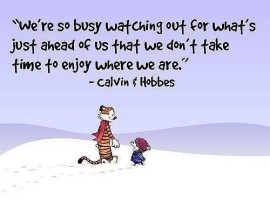
Peace

I feel the anger within me. Sometimes he is purposefully trying to upset me and others around him, other times he doesn’t know that he is doing it – it is simply habitual energy. I feel the anger as a tightness in my chest with his sarcasm, his passive aggressive behaviour. Little flames shoot out, provoking a fire within. It takes much mindfulness not to feed the fire, not to fan the flames of anger within. Acting out in anger will not solve anything. I will find another way to relate to him when he is sunk deep in his suffering, acting it out on everyone around him.

* * * * *

A friend was involved in a car accident which totalled his car. In his recounting of the tale, there was no anger at the young woman who hit him from behind, only remorse at the four pairs of shoes that had been ruined. I smiled and know that I will hold his lesson close to my heart.

* * * * *

Today there is news of the massacre in Pakistan, where around 150 children were murdered by the Taliban in a school shooting. My first response was not anger, but such a deep and silent sadness at the conditions that brought about people who bring about such suffering on the world. I could be one of the children, I could be one of the attackers, had the conditions been right to bring about a manifestation of the person I am in that situation. My heart goes out to everyone in Pakistan, the families who suffer the loss of their children, and to the attackers whose suffering lashes out at innocent children.

* * * * *

Sitting silently in the darkness before dawn, a lone candle and some incense burning, I pay attention to my breath, and the darkness around me slowly lifts as the sun rises unseen behind a canopy of grey sleety skies. May there be peace in the North. May there be peace in the East. May there be peace in the South. May there be peace in the West. May there be peace in our hearts and minds and towards all fellow beings.

Green Buddhism

I recently came across this article from PBS Newshour, and thought I would share. I sincerely hope that it isn’t just talk, but actual action, compassion and love for all things – not merely politics. x

Holistic manifestation – the nature of awen

In my previous blog post on my other blog, DruidHeart for SageWoman, I wrote about how we are never born, and how we can never die: we are simply manifest for a while in one form, and then we manifest again in another when the conditions are right. For me, this represents reincarnation, the nitty gritty basics of it and the science behind reincarnation.

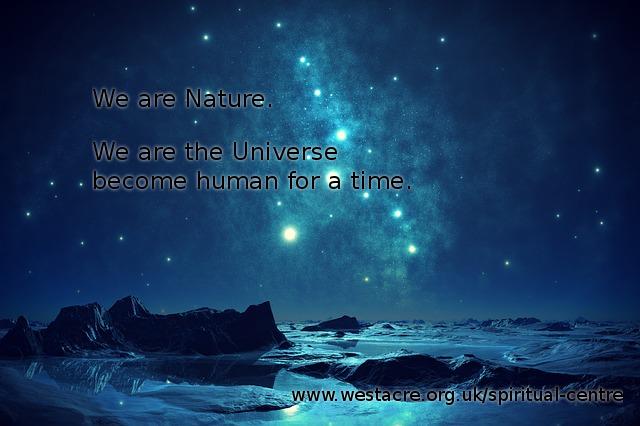
Another aspect of manifestation is that we are not separate beings on this planet, or indeed in this universe. We cannot be, for we are all made up of different elements of existence. A human being is made up of non-human elements, such as calcium and magnesium, sunlight and wave, clouds and stars. All manifestation has a shared existence, for we cannot exist without everything else. This is explained beautifully by Zen monk Thich Nhat Hanh in what he called Inter-Being. We cannot exist alone, we can only inter-be with everything else on this planet. It is a wonderfully evocative and holistic way of thinking that sits very well within my vision of Druidry. When we realise that we are not separate from the whole, we immediately act with a different intention, and live our lives filled with compassion and love instead of alienation and fear.

Our ancestors are with us all the time. Though their bodies may have long since physically disappeared to our eyes in the soil, their manifestation has not – it has simply changed its form. Energy cannot be destroyed, it cannot go anywhere. Neither can it be brought forth out of nothing. We are all manifestations of energy, energy that has existed on this planet for 4.54 billion years. This is a shared energy, one that we cannot claim as our own. If we cannot claim this energy as our own, how can we claim anything to be our own?

Ownership requires the belief that we are separate creatures. In our brief manifestation as human beings, we may think we own our house, our pets, our cars, however this is all illusion. We are only borrowing them, using them for however long or short a period of time before we are changed in form upon our so-called “death”. This death is not a singular, separate event, but merely a way to describe the cessation of a certain manifestation. Equally, there is no birth, simply the beginning of a new manifestation. The energy behind the manifestation is always there.

This shared energy is in the heart of the sun, in the rocky surface of the moon, in the wind and in the rain. It is in the bee and in the bear, in the holly bush and in the snow. The icicle is made up of non-icicle elements. The cat is made up of non-cat elements. This is what it means to have a shared existence. Not shared existences, but a singular shared existence.

If we are all a part of each other, we will see that if we fight with another person, we fight with ourselves. If we grieve for another person, we grieve for ourselves. If we act with love and compassion for the world, we also act with love and compassion for our selves.

The plant that has died is still there, in another form. It is still a part of our self as well, for we have breathed in its oxygen; we are in its soil as its soil is within us. There exists a beautiful garden in our compost heap. The sea is held within the sky. I am within a woman grieving in Palestine, and she is within me.

Keeping this thought close to my heart, I can reach out and touch the awen that connects the threads of all existence. That energy where soul touches soul, where boundaries fall way, where we are beautifully inspired by the acknowledgment of another being and seeing that being reflected and existing in our souls – this is at the heart of Druid teaching. Walking awake and aware in the world, seeing the connecting threads, seeing the shared manifestation and shared existence fills our souls with beauty and awe in the wonder that is the world.

May we be the awen.

universe human