News and events roundup February

February was a particularly busy month – with the opening of Druid College UK being a huge success!  We are now already halfway full in our bookings to begin Year 1 in October this year, and the response has just been amazing.  Social media posts engagement has numbered over 100,000 views, with thousands of shares and likes.  A big thank you to everyone who has supported this project! There are still spaces left on the course, so if you’re interested please email me for further details.

Lots of support has also been received since the interview I had with OBOD’s chosen chief, Philip Carr-Gomm last year at the Order of Bards, Ovates and Druids‘ 50th anniversary gala. The Druidcast interview went out in January, and there has been lots of interest since then, certainly keeping me busy! At the end of February I also did an interview for Upon a Pagan Path, which aired early this month – Tommy the interviewer was such a lovely chap.

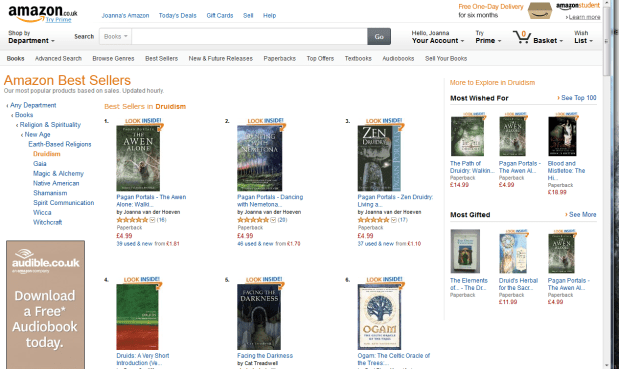
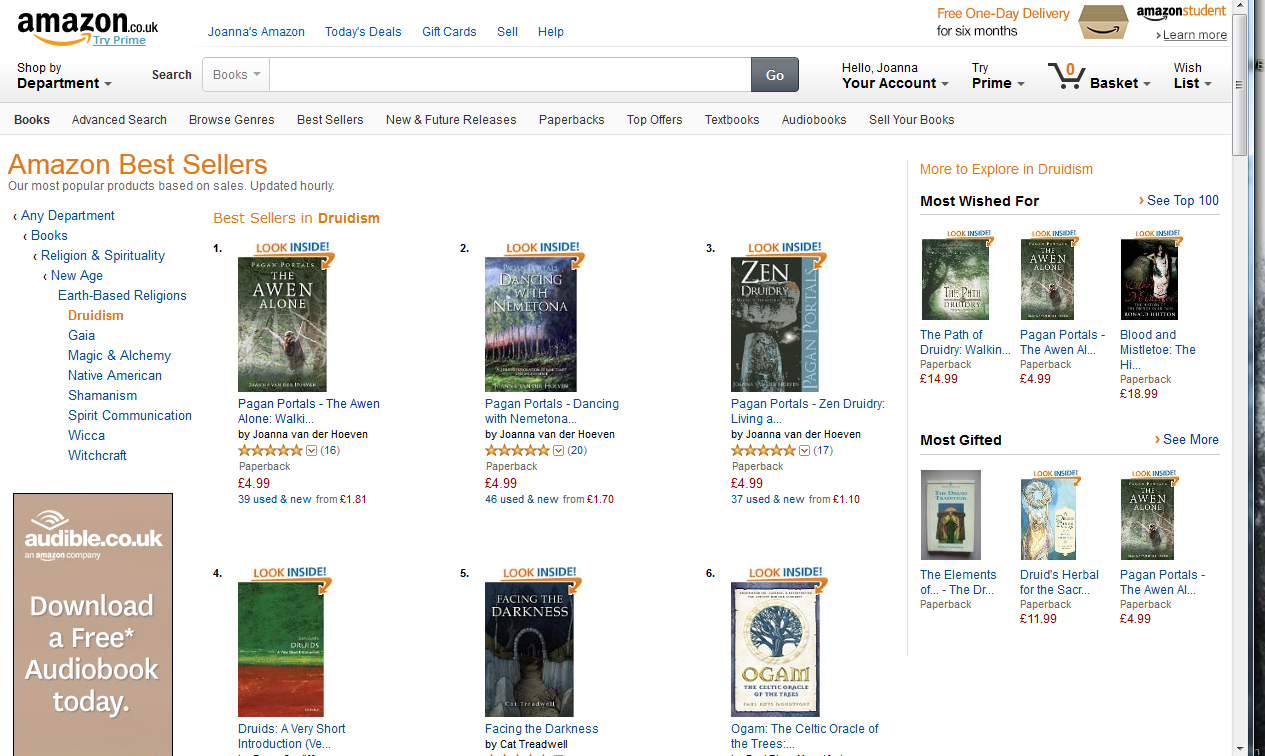
February also saw all three of my books, Zen Druidry, Dancing With Nemetona and The Awen Alone reach the Number 1, 2 & 3 spot on Amazon!  What a day that was – I was and still am flabbergasted.

The next couple of months are going to be equally busy. On Saturday 28 March I will be giving a talk at Leaping Hare in Colchester on the goddess Nemetona. I’ve been going to Leaping Hare for many, many years now and it is an absolute honour to be asked to present at this year’s gathering. I’m looking forward to seeing many familiar faces from the Eastern Region!

But before Leaping Hare I’m heading over to Glastonbury, to enjoy a little break and celebrate the Spring Equinox with some lovely friends.  We’ll also be seeing our friends Serpentyne who are doing a gig on Sat 21st – a medieval ball! Don’t miss it – it’s going to be great. We’re very much looking forward to performing with Serpentyne this summer at the Corn Lammas Gathering 21-23 August as Gypsy Dreams Belly Dance.  (I’ll also be sharing  a stall with my lovely, arty, crafty sisters and selling books – do pop by for a chat!).

The Beltane Picnic hosted by the Pagan Federation will take place this year on 24 May at The Roundhouse in Essex.  I’ll be there with my belly sisters performing again, and also doing book signing – I love this event so much, and have been going for a few years now – it’s such a warm, friendly, welcoming atmosphere of celebration!

If you’re in the Suffolk area on 18th & 19th April, check out the Woodbridge Mind Body Spirit Festival. It’s a lovely gathering of really cool folk who have created a wonderful two day festival celebrating alternative therapies, lifestyles and just sharing the love. I’ll be doing a chakra cleansing workshop on the Saturday, as well as performing with my dance troupe.  Shimmy shimmy shimmy!

And lastly, big thank you to everyone who has supported this blog and who continues to do so. Since the beginning of January we have had over 10,000 views on here alone, with many new people subscribing. Virtual hugs all around!

The food debate

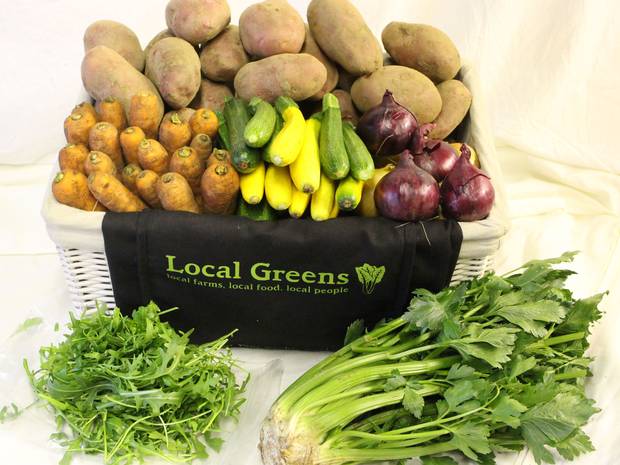
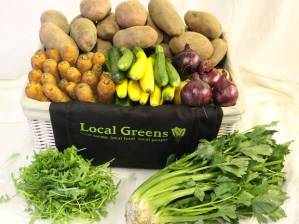
local greensThe ethics of food and diet is such a diverse and difficult topic to cover. For every ethical answer to a question, there are other equally valid ethical answers dependent upon differing circumstances, considerations and priorities. I have been a vegan for over a year now, and in the last month have been seriously reconsidering the ethical implications of my diet regarding the impact that I am having on the whole.

It’s easy to find statistics to back up pretty much any argument. It really depends on who is funding the research, for the most part. However, it is up to us personally to make out own choices, and to educate ourselves as best we can so that we make informed choices about our lives and the way we live them. I chose to be vegan because I thought that it was the most ethically environmentally sound option. However, now I’m not so sure.

The first thing to consider is food miles. Much of the vegan’s diet comes from lands thousands of miles away. The carbon footprint of air travel to bring these foods to the UK is considerable. The second thing to think about is what the growing of these crops is doing to these faraway lands and their people. Quinoa and rice are traditional crops for South America and China respectively, however, now that the West’s desire for these foods has grown the demand for growing them has increased drastically. This has caused the prices of these foods to soar, a lot of time to a level that the farmers themselves cannot afford to put what they grow onto their families’ plates. The third thing to think about is what effect these crops are having on the native land. As crops such as soy, rice, quinoa, lentils, etc are all grown “far away” we don’t really have an understanding of what it is doing to the land itself, as we don’t see it. Out of sight, out of mind. Soy is a great factor in the destruction of rainforest, whether through legal or illegal logging to create new monoculture crops. The monoculture crop itself has a great impact on the land as well – the earth loves and needs diversity. Monoculture is not sustainable, and susceptible to a great many attacks that a bio-diverse ecology would be able to fend off. There are hundreds of other factors to consider – these are just a few.

I’ve been studying permaculture these last few months, learning more about it and how it works. Working with the principles, it seems to me personally that the most ethical way that I can sustain myself it to eat local and organic, either growing my own or supporting those who do. I can check on what they claim, how they go about it as they are just down the road from me. What is happening is not happening thousands of miles away. I know that there are laws in place to protect people, land and animals. I feel like I have a little more control over my diet, knowing where it comes from, how it was grown, etc.

It’s not an easy choice. It requires a lot of research and investigation. It would be easier just to be vegan. I have to read food labels for everything. I have to check farms. I have to talk to neighbours and others in the village if I want to eat their surplus food. It requires an actual positive relationship with not only my food, but my environment.

We grow some of our own food, and will have a small vegetable garden this year. However, our garden is mostly a wildlife garden, dedicated to supporting birds, bees and other pollinating insects, hedgehogs, badgers and the occasional deer that come scrounging through. We decided not to grow the majority of our food, as there is an organic farm down the road that we would like to support instead. It’s their livelihood, and we want to ensure that it is as successful as can be. They grow organic crops, but also raise meat for livestock. It is an ethical consideration that must be taken into account.

Studying more and more about permaculture, I’ve found that I was quite ignorant about the keeping of livestock in small, organic flocks. Large scale industrial farming and monoculture crops are seriously threatening the earth, however, small scale flocks that are organic and actually benefit certain ecosystems, especially where crop growing isn’t a viable alternative. There are also ways to raise livestock alongside different crops that are beneficial to all involved – the very essence of permaculture.

While it’s beyond the scope of this blog to go into the details of permaculture, there are many good resources out there to find out more about the subject (see below).

So, after weighing the pros and cons of being vegan, I’ve decided to go local and organic, with a little dairy in the form of cheese from local farms and eggs from neighbours who keep and love their hens. It’s easy to just say that being vegan is the best thing for the planet, but it leaves out a lot of considerations for the planet that are perhaps “outside the box” in the usual arguments for making the switch.

As with everything, there is no black and white answer, no single answer to such a debate. All we can do is to enlighten ourselves with all the arguments, the pros and cons of each side, and make our own choices based upon what we know.

We also have to know that the choices we make are the choices WE make. We cannot make these choices for others. We cannot push our lifestyle on others. We can inform them of why we make the choices we do, but we cannot condemn them for the choice they make – we are not “better” for the choices we make. It is a trap that is easy to fall into, a sense of self-righteousness that we are definitely doing the right thing. No one really knows that the right thing is, really, or even if there is a right thing at all.

I remember being disappointed when my friend (and now Druid College colleague) Kevin made the switch to eating local meat that he had killed himself. I saw no need from my vegan perspective for the killing of another animal. Having spent time further researching the various implications of western diets on the rest of the world, I’ve changed my mind about his choice, and while I wouldn’t eat meat myself I applaud the well-researched and informed choice he made about Conscious Killing .

We all have to take responsibility for our lives. We have to walk our talk and work to make this world a better place for all, in any way that we can. We have to inform ourselves of the issues that our living has upon the rest of the planet. If like me you follow an earth-based religious or spiritual path, that is a major consideration and part of your path – otherwise why follow it at all?

I can say that after I made the switch two weeks ago (while still using up old foodstuffs like soy in the freezer) I feel a lot better physically. I feel like I have more energy. Whether this is because I’m eating food that hasn’t been treated for long world-wide journeys, eating food in season, eating local and organic I’m not sure – although I think that has a large part. I feel more connected to this land, its rhythms and cycles. So this will be the last month that I eat apples until end of August or beginning of September, providing that local UK apples will not be available in April (dependent upon quantities). There are even further issues that I need to look into, such as the amount of energy required to refrigerate apples throughout the winter from the various local farms. Spring greens in the form of soups are a staple this month. The nettles are growing in my garden – the perfect spring tonic. The sheep and goats are lactating – a new vintage of cheese will soon be available. Purple sprouting broccoli and artichokes will soon be out. Rhubarb is growing outside my conservatory, which will replace the apples in my baking and sauces. It makes the next variety of food available a real event, a real marker of the season.

Whatever your path, whatever your decision, I support you in making honourable choices for the benefit of the whole based on intelligent research and empathy for the land upon which you live. Talk to the gods, the ancestors and discuss these issues with them. Walk the land in reverence and find out how you can fit within that landscape with the least amount of impact. An earth-based tradition is all about relationship, whatever the path it is that we take. Let us take it right back to the earth in every shape and form, in every choice that we make.

What’s in season in the UK

The quinoa debate

Local and organic veg box scheme UK

The Earth Care Manual: A Permaculture Handbook for Britain and Other Temperate Climates

Interview by Upon A Pagan Path March 2015

Here is an interview I had with Tommy from Upon a Pagan Path podcast, where we discuss my books, meditation, prayer and more!

Listen HERE.

Permaculture: The Growing Edge

A good introduction to permaculture, what it’s all about, and hopefully inspire and bring hope back into the world.

Dousing the Fire

Brighid is often known as the goddess of the sacred flame and of the sacred well. It is often said in religions throughout the world that where fire and water meet there is the greatest potential. Exploring her aspects of fire and water are extremely beneficial and here I shall talk a bit about fire; however, perhaps not in its most usual aspect.

We are all familiar with fire as flame, as external energy whether that be a fire in the hearth, the combustion that allows us mechanised transportation or the heat of the sun. What I’ve also been exploring is the fire within, that flame or spark of energy that ignites us to do things, say things, create things. I often think of inspiration in the Druidical “fire in the head” sense, but I also feel fire in the belly and fire in the heart. The fire in the belly is intuitive, instinctive. The fire in the heart is our passion, our love, our capacity for compassion and understanding.

The fire of the heart can take a long time to come into being. In our society, we often feel isolated from each other, even when we are literally living on top of each other in urban high-rise complexes. We learn coping techniques of shutting ourselves off from one another in order to function. We may have been hurt by others in the past and that causes us to dampen our flame of love for the rest of the world.

We also live in a society wherein it seems perfectly acceptable to douse someone’s fire. Think of reality shows, especially those that have “judges” critiquing the participants. Last year I gave up watching Strictly Come Dancing because I was tired of one particular judge being an outright bully, thinking his comments were humorous when they were in reality just plain mean. Putting down, making fun of someone who is simply trying their best to participate in a dance show to raise money for Children in Need is not something I wanted to be a part of. I can donate money directly instead of supporting that kind of behaviour.

We are so influenced by what we watch on television – we cannot deny that we are not. And it frightens me, especially with the amount of television that children are often exposed to these days. It is a rare occurrence, even where I live, to actually see children playing outside despite there being the most gorgeous countryside at their disposal. Whether that is due to parents’ control or other factors I cannot know – all I know is that when I was growing up the streets would be filled with neighbourhood children riding bikes or playing street hockey among other games. Are children nowadays being raised by television and computer games instead?

We live in an extremely competitive society, or so we are told. We feel that we always need the upper hand, the edge on a situation. We are now programmed to work against each other as opposed to with each other. We are trying to beat that other person out in promotion, or to be the best as everyone knows that the top dog is the happiest. We live in a put-down culture where co-operation simply doesn’t exist. We do not know our neighbours.

Living like this provides a perfect divide and conquer technique for those who want to keep us under their control. What we need to do is to reclaim our own power, and that of our own community. Instead of dousing the fire in other people, we need to cheer them on, to work together to make our lives better. It’s happening in small grassroots ways here and there, but not on a massive scale. In my own village, we have a village allotment where people can get together to work on group projects as well as their own. The village shop often acts as a hub for people to interact with each other.

What we need to do is to stop trying to take each other down and instead build each other up. We need to realise that life is not about competition. As a social species, we thrive better when we work together. When we douse the fire in other people’s hearts we are also dousing the fire within our own hearts. Every word, every deed with the intention of dousing another’s fire reduces our own capacity for love and compassion, to make the world a better place. Why on earth would we want to do that?

In her book, The Earth Path author and activist Starhawk talks about this very subject, exploring it at various Witchcamps. A proud supporter of community effort and achievement, of bringing power back to the people, she has worked with the various elements. She tells us of the results of working with fire and dousing another’s energy.

Throughout that week, we went on to reflect on the ways in which we put out each other’s fire. When we recognise subtle energies, we become responsible for the kind of energy we are putting forth in our community. The things we do and say about each other create subtle energetic fields that either support our work and our relationships, or undermine them.

Malicious gossip, backbiting, unsupportive criticism, and mean-spiritedness douse even the stoutest of fire. And because a fire takes energy to build and maintain, such negativity is wasteful of the community’s resources; it’s like use electricity not just to keep the radio on all the time, but to keep it tuned to an irritating and distracting station… when anger festers, when we chew over our grievances like old bones without expressing them directly, when we meet others with sullenness or resentment, we douse not only their fire but our own.”

We need to judge situations in our lives all the time – they key to doing so lies in not being judgemental. We also need to support each other. If you don’t like what someone is doing, if you think it is detrimental to the community, you need to speak to that person directly. If you just don’t like them, then leave them well enough alone. All too often it is easy to attack or undermine someone through subtle means – Facebook and blogs are often used as tools for such behaviour. We can so easily dowse another’s fire through incessant comments or insidious ways online without anyone else apart from the target being the wiser. Let’s stop this behaviour right now. It is within our power.

Let’s cheer each other on, and where we simply cannot let us walk away with respect. Let’s stand up for what we believe in without resorting to maliciousness. Let’s put some good fuel onto the fire of our hearts and that of others and in doing so everything will burn with a cleaner, better focused energy.

Brighid has taught me to look deeply into what is feeding my fire, and how I can feed the fire within others. For that I am utterly thankful.


Reblog: The Nature of Blessing

What does it mean to bless something? To honour your blessings? How can we feel truly blessed?

Most of us only come across the term “blessing” after someone has sneezed, but for me as a Druid it is an integral part of my religion. Alongside “prayer” however, the word can evoke memories of perhaps anti-pagan establishment. If we can set aside these connotations and simply see the word for what it is, we can fill our lives with a wonder and enchantment, or perhaps re-enchantment that can otherwise escape us in today’s modern, secularised world.

So what is a blessing? A blessing is when we awaken, when we fully come to the here and now and see the wonder of life. It is to be absolutely awake and aware of who we are, where we are, and how we work in the flows, rhythms and cycles of life. It is being aware of the gods and ancestors, of how each part is played. When we have awoken to this reality, life may flow easier, we may move through our days with more grace and compassion.

Being aware of our many blessings goes hand in hand with gratitude. If we give thanks for the blessing of lengthening sunlight, we awaken ourselves to the solar cycle of spring and the light half of the year. The sun gives freely of her gift, and this gift is a true blessing. When we give freely, when we are true to our selves and working for the greater good of the world, we too are blessing the world. The rain that brings the flowers is a blessing. The person who helped us out of a dark place is a blessing. A piece of music that sings to our soul is a blessing.

Being aware of these blessings takes us outside of ourselves, allowing room for a greater perspective that our narrow perception of the world can override. We have to shut off the internal monologue to be able to be aware of a blessing, to give and receive blessings with an open heart…

To read the full article, click HERE.

A good day…

A good day…

Absobloominglutely stunned.

Thank you all so much for your support! My heartfelt thanks to the community, to the ancestors and to the gods for my many blessings.

May we be the awen!!!

Best sellers Druidism

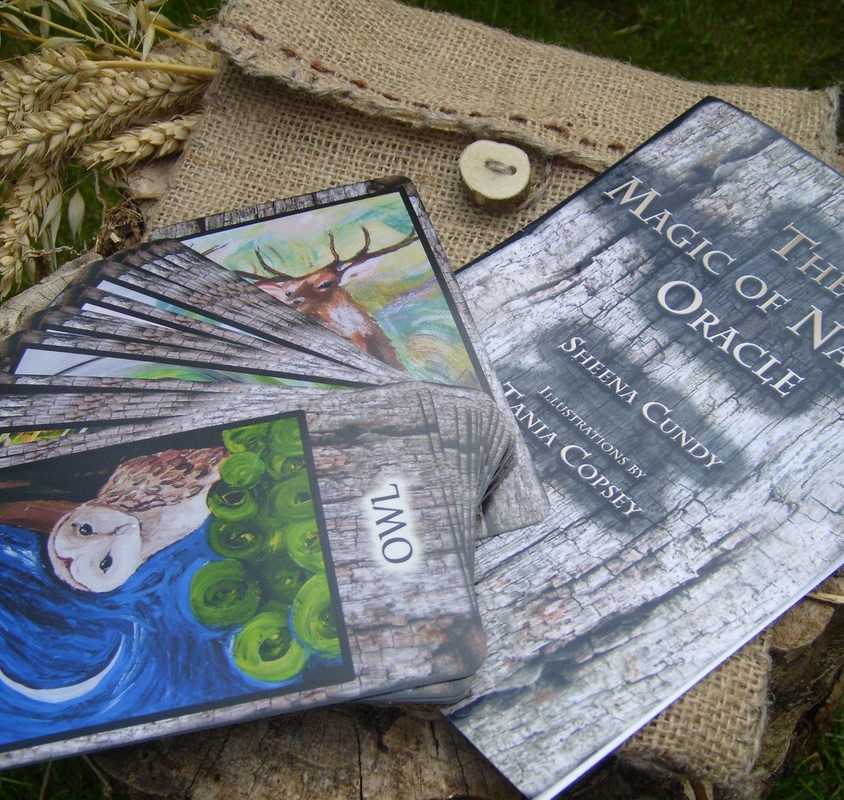
The Magic of Nature Oracle

Magic of Nature OracleSheena Cundy and Tania Copsey created the most wonderful set of oracle cards, called The Magic of Nature Oracle. I have a few oracle decks that I work with – Brian Froud’s The Heart of Faerie is brilliant for specific questions that I may be looking for insight into. I use the Magic of Nature oracle cards for general interpretation and insight, to confirm and affirm actions and experiences and they are always spot on.

Yesterday I had a lovely little ritual with my friend out on the heath, beneath a copse of silver birch trees. We lay down on the ground and opened our hearts and souls to our respective goddesses, feeling the energy of the earth rising towards the surface, to lengthening sun, Her energies stirring our souls into action, re-awakening our spirit even as the snowdrops appear on the forest floor. As I lay on the earth my heart was filled with such love for the earth, for my goddess and all that she represents. It re-awakened a love that had lain dormant for a time this winter. That love flowed between us, inspiring us to action. We left our offerings and prayers, and made our way back home.

Later that evening after I meditated at my altar, I took down the Magic of Nature Oracle and asked for a general reading. What card came up? Love, with two beautiful swans. We had discussed swans in our ritual earlier, and it was simply the perfect card to represent all that had happened that day, and all that inspires me on my path, as well as reminding me of my beautiful sisters who walk this path with me.

The cards are so very different from any other oracle deck. With animals, trees and seasons it covers a lot of life in beautiful representations both in the word translation of the cards and the artwork itself. If you are looking for a deck with a difference, something that isn’t simply replicating other decks available, then the Magic of Nature Oracle cards is for you.

You can find out more about Crafty Crones, Sheeny and Tania’s company, as well as the Magic of Nature Oracle deck HERE.


Love

Many of us have heard the saying “Love means never having to say you’re sorry”. Like all sayings, they can be misinterpreted. Love is one of the most powerful gods. Love is so much more than romance, than warm fuzzy feelings for another. Love can be an unshakeable force, it can inspire us to greatness or tear us apart.

Never having to say sorry with regards to love has been misused by many as an excuse to behave badly, to not care about the feelings of others, to live in a purely self-centred state. It is also often implied that if we really love someone we should always be willing to forgive their behaviour. In Buddhism, it is widely regarded that we are all Buddhas, that we all have the ability for true compassion. However, we are also all human, with all the wonderful implications, limitations and foibles that it entails.

We have all known people whose behaviour has been less than glowing, who are so entrapped in their own worlds and minds that they often create a reality which is completely and utterly different to the one that you may experience. As humans, we have a shared reality and shared human experience, but as beings that are supposedly self-aware we become trapped in this self-awareness to the point of it spilling over into less than glowing behaviour. Love accepts the humanity of everyone. Love accepts reality. Love is compassion.

Compassion, however, doesn’t mean we have to take everyone’s crap. Compassion is understanding, trying to see the bigger picture, to understand why someone behaves the way that they do. In this attempt, we step outside of our “small selves” and out into a greater reality. We open up our perception. We may never truly understand, but at least in the attempt we see that the world is more than just our experience, our perceived reality. We recognise the experience and reality of others.

When that reality hurts us, when people do or say things to undermine us for whatever reason, should we simply forgive and move on? I’m not entirely sure it’s within human capacity to truly forgive, though people like Zen monk Thich Nhat Hanh are real-life inspirations for this way of being. We may find that the hardest person to forgive is ourselves. Perhaps we need to focus less on “us” forgiving “them” and simply focus on living our own lives in way that means that we will never have to say “I’m sorry” to another. This, in my opinion, is the real interpretation of the saying “Love means never having to say I’m sorry”.

We may fail, and there is nothing wrong with saying “I’m sorry”, however.

When we come against people we simply cannot be with, we can still try to understand them, to look beyond our self. It can often put us into the bigger picture, allowing more of a peripheral vision of the world that encompasses everything and in doing so, allowing the self to fall away in integrated living. Sometimes we simply have to walk away from that relationship in order to work compassionately with our selves, for we simply suffer too much at that given time to be able to function properly. We can do this with partners we’ve been romantically involved with – when it no longer works, we can bow to each other and walk away with respect, and hopefully a little compassion for both them and ourselves.

What we have to focus on most though is our own life, and our own behaviour. We have to live our lives in a way that means we will hopefully never have to apologise for our behaviour. It’s not an easy path, but it’s one that is worthwhile. In doing so, we will walk lightly upon the earth, loving the earth with every fibre of our being, loving everything on the earth with eyes wide open and a heart filled with compassion. We can love life, the power of the gods moving through us and around us, and live our lives in celebration of this.

As the first snowdrops bloom here in the UK, and the songs of the birds change to love of each other, of the warming sun and the greening of the land, may our hearts too be filled with love.

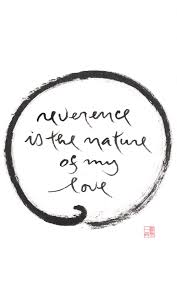
reverence

Exciting News – Druid College UK is born!

After months of planning and preparation, Druid College UK is born! Working with our sister college in Maine USA, the Druid College is dedicated to Earth-centered spirituality, to the integrity of our natural home, and to the crafting of sacred relationship. In short, The Druid College devotes its presence—and it is its sole intent—to prepare priests of Nature.

Foundations for this life-long journey are established by a three-year, intensive study. Unlike contemporary universities, Druid studies are furthered not only by personal reflection but primarily by ongoing personal connection and spiritual guidance of (i.e., apprenticeship to) a Druid Priest. In the UK as of 2015, those people are Joanna van der Hoeven and Robin Herne.

Being a priest of nature does not mean being an intermediary, but instead living a life in service, crafting a sacred relationship with the land, the ancestors and the gods. It requires service to the community as well as the land, wherein the priest acts as guide, witness or celebrant to a journey or journeys of crafting sacred relationship.

There are many Druid Orders and other pagan and earth-based organizations that offer solid training within their respective traditions. The Druid College is for those who wish to journey further. We wish to work with those who want to be ‘carriers’ of Nature-based spirituality – as compared to ‘followers’. We saw a need for a programme for people who desire to go deeper, for those who wish to be in service, to fill the role of priest for their community and the land they dwell in.

The College accepts as first-year apprentices people of all walks and intent. The focus for the first year is on the fundamentals of Druidry and reweaving our personal connection to Earth and to our ancestors and heritage. Commitment to the full programme is not required in order to join in the first year of training.

Our second year training is reserved for those who desire to continue their journey into the priesthood, to step into the role of priests of Nature, to serve the land and its people. Our programme is one of preparing people to be in service, such as prison ministry, working with the dying, or being a priest of the land, offering healing where there is desecration.

The nature of year three is that of being in the role as priests. We envision this year as one of walking the path and sharing those activities with the staff and other apprentices, learning from each other, acknowledging the work, declaring your “Chair” and manifesting it locally.

The Druid College is not an accredited college and offers no degree programme.

For full information, see the Druid College website HERE.

Programme overview:

Year One of the Apprenticeship

“Reweaving the Broken Connection to the Land”

Year one studies include:

Core principles and teachings of Druidry, Living with Honour, Grounding, Working with the Ancestors, Animism and the Spirits of Place, Listening and Druid meditation, Awen and the cycle of creativity, Working with the Nemeton, Developing Authentic Relationship, Inspiration and the Poetic arts, Storytelling and cultural heritage, The Cycle of Life and the “Wheel of the Year”, Working with the Gods/Deity, Anarchism and the end of Submission, Emotions and “riding the energies”

Year Two of the Apprenticeship

“Training in the Crafts of Shapeshifting, Healing, and in the Arts of Transformation”

Year two studies include:

The Awakened Life; Ritual Trance Induction, Crafting Sacred Ritual; Healing; Prophecy and the Seer; Defining what is meant by Applied Inspiration in Service; Ethical Leadership; Bridge-building as Peacework; Justice and Permaculture; Philosophy; Nature and Relationship to Consumption; Preparations for Declaring your “Chair”

Year Three: Practicum

Declaring your “Chair” and manifesting it locally

Purposeful Sharing in Community

Applied Trancing as Priestly Evolution

Training to Lead Ecstatic Ritual

Two large gatherings of the entire College

Possible ritual of Ordination