Everyday Spirituality

How can we incorporate more spirituality into our everyday lives? By truly living our religion, our spirituality, our calling.

A religion or spirituality cannot be read about, or simply thought about – it must be experienced. Like life, it is in the doing that counts.  Yes, we must think – carefully and deeply, about what we do as human beings. We must also act upon that thinking with full awareness, otherwise the opportunity to really live slips us by.

There are so many ways we can bring more awareness and more spirituality into our daily routines.  For instance, a prayer upon awakening is a brilliant way to start the day. Whether you believe in the gods, or spirits of place, the ancestors or nature itself or all of the above is a matter for your own path.  But coming to an awareness of them physically, emotionally – through living your meditations can make all the difference.  Saying a prayer, either aloud or in your head first thing in the morning can put you in the right frame of mind to be mindfully spiritual for the rest of the day.  You can pray in all kinds of ways – prayers of thanks for a new day, prayers of peace and love, prayers of love for those in need.  It matters not what type of prayer; what matters most is that it is done, in a way that best suits you to get into a spiritual frame of mind.

When we then get up and perform our ablutions, we are already aware of the sanctity of life.  We can say a prayer of thanks to the goddess of the waters, the local water source, to the oceans of the world as we run the tap to wash our face.  We create an awareness of the sanctity of water.

When we make our breakfast, or pour a cup of tea, we give thanks to gods, the spirits, to the earth for her abundance.  We take time to acknowledge where our food and drink comes from, and in that acknowledgement continue in a sacred manner.  We are establishing a strong relationship with the world around us by doing so.  A prayer that I like to use before I eat is simple:

“I give my thanks for the food I am about to eat. To the spirits of land, sea and sky, know that you are honoured”. 

I not only say the words, but honour the lands that the food and drink came from, the blessings of sunshine and rain, the people who worked to bring it food to my table.  Seeing the bigger picture allows me to truly be grateful for all that I have.

I can say a prayer or chant a charm when I am about to drive my car somewhere. Equally, I can say a prayer of thanks for hearing the blackbird’s song of Spring, or upon seeing the sunshine after months of rain.  Seeing the moon, or a particular constellation in the sky evokes spontaneous prayers within me, said either aloud or in my mind.  Prayers to the rising and setting sun, to the rising and setting moon are said, as well as prayers before bed. Even getting into the bathtub can become spiritual, with an honouring of clean, hot water, or a pentagram or symbol of awen drawn on the water’s surface to acknowledge the sacredness. Gardening, working with others, before or after meditation – these are all good times for a quick prayer as well.

Certain times of day might be better for those who like a stricter routine. A set time in the morning, noon, afternoon and evening might be more suitable for those who can follow a tighter regime. It is all about personal choice.

It is not only prayer, but short rituals we can use – a bow to the sun or moon, the lighting of a candle upon awakening, offering of incense or food at the end of each day.  Taking the time is what is most important – taking the time to connect with the spiritual world around you. We are never alone; we cannot be separate. We all live together on this planet side by side. Seeing this connection is pure awen.

Create songs for the sunrise, or write new chants for the full moon.  Sing something improvisational when you see the first blackthorn in flower, or raise your arms to honour the sun dog’s myriad colours in the sky.  The secular world may try to make us feel silly about doing so – but just try it. You may just find that your soul opens in response.

For more ideas on how to incorporate spirituality and devotion in your everyday life, I am holding a retreat weekend in the sacred Chalice Well Gardens in Glastonbury from 11 – 13 April.  This weekend, entitled The Little Pagan Monastery, will be a weekend filled with prayer, devotion and ritual, visits to sacred sites, as well as discussion, meditation, and personal time to incorporate ideas into your life.  For more information, see the Retreat Weekends on this site.
The Present Moment

mudraThe present moment – it is a gift, and that is why they called it the ‘present’.

This quote is true on so many levels.  When we are awake, when we are aware to the present moment, we can see it for the very real blessing that it is. For the majority of people who aren’t living in fear through war or famine, who aren’t suffering from chronic pain or disease – simply being in the present moment is the greatest gift we can give to ourselves. Being aware of the present moment, even when faced with such conditions, may help to alleviate suffering.

When we wake up in the morning, we can become fully aware of that moment upon waking. We can lie in bed, feeling our selves in our bodies, listening to any sounds around us. We can do a mental body scan, to see how we feel, if there is any pain or stiffness, any tightness held through residual stress. We can consciously work to try and let that go, in order to start the day right.

We get up, we go to the bathroom.  We can do this with full awareness. When brushing our teeth, we hear the water flowing through the tap, we give thanks that we have clean water at our disposal when so many others do not.  We brush our teeth while concentrating on the simple task of brushing our teeth. So often our minds are already in a meeting at work, that when we brush our teeth, the whole meeting is there brushing our teeth with us!

Concentrating on one task at a time not only does a better job at the task itself, but can also help us to overcome areas in our lives when we are not at the best we can be – say, due to stress perhaps, or depression. If we focus on one task at a time, taking it and really being in each moment, we do not have the opportunity to be stressed, for to be stressed we need to be thinking ahead.  We alleviate our own suffering by being fully aware – in the case of depression, we may not see an end to the suffering, which brings it about in a continuous cycle. By being in the moment, we are not looking forwards or backwards, inwards our outwards – we are simply being.

By being, we are not mindless zombies – we are, in fact, more fully aware than most people by using concentration and focus in order to move about our daily existence.  We will make less mistakes, we will be less clumsy. We will brush our teeth so much better. We will be mindful of each step we take, and so we will trip less, stumble less, walking in total awareness to wherever it is that we need to go.

We eat our breakfast mindfully, thankful for having food to eat. We close the door to our houses, thankful  that we have a home, a sanctuary from the elements in which to live.  We drive our cars mindfully, thankful that we have such luxurious modes of transportation. We work, thankful that we have a job to provide us with the means for food and shelter, as well as the opportunity to work with others, be creative, make the world a better place – whatever it is that your job entails. We do our work with full attention, whether it is sweeping a floor or updating a database. We are mindful of our posture during the work, of our breathing – we take moments to simply be, to assess our bodies and our minds.

Try doing this for an hour or so a day, then a full morning.  Try to maintain awareness for as long as the sun is shining, or the rain is raining.  Become more aware not only of yourself but of your environment. By doing so, you will find that life may flow more easily and that you see where you can fit in more harmoniously.  Your actions will become more graceful, your movements filled with awareness and intention. Let your thoughts follow your body, flowing gracefully and with intention instead of running rampant through the mind.

Notice how this makes you feel – and if it feels good, keep doing it! May you all be gifted with the present.

Sanctuary, Compassion and Freedom

We all need a little sanctuary in our lives. A place where we can let down our walls, let the barriers fall and simply be ourselves, wrapped in the security and safety of knowing that we are held.  My patron goddess, Nemetona, provides me with many opportunities to savour this precious moment, and to help create it for others.  She is the Lady of Holding, of Sacred Space, of Sanctuary.

Often when we meet others, especially human beings, our walls shoot up if they haven’t already been erected, and we are on the defensive.  We regard others warily, perhaps even as enemies; guilty until proven innocent.  A certain wariness around strangers makes sense – it’s an innate human instinct that we also see reflected elsewhere in the animal kingdom.  It is a form of self-preservation.  However, what I would posit is that we become so used to keeping those walls up, that we barricade ourselves inside our selves, unable to see the bigger picture, unable to truly experience compassion.

I am not saying that we should allow others to do as they will to us – wilfully harming another person in any way is completely wrong.  So often when I speak of compassion, people think it is an open invitation to be trod upon, to be used and abused by those who would seek to take advantage of us.  Instead, I try to explain the ideas of compassion, and also of engaged Buddhism – simply put, compassion is about trying to understand, to see around our own sense of self into the bigger picture. Engaged Buddhism is being active in a world to stop suffering, to speak up against violence and injustice and work to spread love and compassion.

My Lady Nemetona helps me with this.  By coming into her sacred embrace, I find that I remember what it is like to be open, to be held, to be free in utter sanctuary.  Thus inspired, I try to find ways to bring that inspiration out into the wider world, making it a better place.  When we are held, when we are free to be our true selves, we also provide the opportunity for awen, for inspiration, to fill our souls with joy and wonder at the simplicity of simply being.  We can then become a conduit for this energy, bringing about positive change in the world, even in the midst of suffering.

Working with Nemetona, we become aware of our boundaries, when we erect them and when we let them dissolve. We also see how we involuntarily create barriers, whether it is in our energetic fields, our communication, or our perception.  Through meditation and work with this particular goddess, I have found a way of both strengthening my inner sanctuary, thereby being able to let down those walls and openly experience situations with complete awareness.  In this, intention is key.

By being open, I am also being receptive to input that might otherwise pass me by through my own ego-centric mindlessness.  By working with sanctuary, I can see where I have lapsed and allowed others to abuse my trust, and where I will never allow that to happen again.  By being aware of how, why and who we engage with, and with what intention, we can change how we react to situation, acting with intention instead of a more reactionary type of living.  By becoming engaged with my boundaries, I am aware of when I need to strengthen or release them as appropriate.

It’s been a tough ride, sometimes, working with this goddess and with compassion.  It has shown me where I have failed so many times in the past.  Understanding and awareness of those failures, however, is not there to deter me; they are there to remind me, lessons learned and opportunities for further growth.  The key to working with boundaries and compassion, and indeed Nemetona Herself, lies in awareness – of the self, of others and of the world at large.  It’s not an easy path, but one well worth walking. It can lead us down the shadowy paths in the long dark night of the soul, but we can emerge into the light of the sacred forest grove, whether it be dappled sunlight, pale moonlight or starshine.  In that emergence lies our true nature, inspired by nature and surrounded by our natural sanctuary.

In that emergence lies our freedom.

The Little Pagan Monastery Retreat

We’ve got our weekend retreat coming up! 11 – 13 April, Chalice Well Gardens, Glastonbury, UK

Experience a weekend filled with devotion to the gods, the land and the ancestors – with prayer, meditation, discussion and ritual, as well as visiting sacred sites such as Glastonbury Tor and the White Spring on this unique retreat, The Little Pagan Monastery.  Stay at Chalice Well & gardens, at Little St Michaels where you will have 24 hour access to one of Albion’s most sacred places during your stay.  Incorporate daily prayer and ritual into your life, make new friends and enjoy some time spent away in an inspirational setting with like-minded people.

To book, please visit: The Little Pagan Monastery

Little Pagan Monastery Itinerary

Friday
5pm onwards – arrivals
6pm – Welcome talk
6.30pm – Supper
8pm – Evening prayer and group meditation
9pm – Free time

Saturday
7.30am – Morning personal meditation
8am – Morning Prayers and group meditation
9am – Breakfast
10.30 am – Discussion
12 noon – Midday prayers and group meditation
1pm – Lunch
2.30pm – Glastonbury Tor walk and meditation
5pm – Free time/gardening work
6pm – Supper
7.30pm – Discussion
9pm – Evening prayers

Sunday
7.30am – Morning personal meditation
8am – Morning Prayers and group meditation, followed by ritual
9am – Breakfast
10.30 am – White Spring visit
12 noon – Midday prayers and group meditation
1pm – Lunch
2.30pm – Farewell

Engaged Buddhism

Witnessing a discussion on social media made me a little uneasy at the way people treat other people whom they believe are wrong, either in virtual or real life.  I have seen this in the past many times; sometimes it is abuse, mockery, or belittling – yet each time it stops and makes me think about what I am doing to affect the world, looking at my reasoning, my motives, my intention. What I have been working on this past year is that those who disagree with us, those who challenge us, those who we absolutely hate, those we think are harmful to our world – all these people we need to accept.

Accept, you say?

Acceptance, yes, but in an egaged way.  This is not passivism.  Thich Naht Hanh coined the phrase “engaged Buddhism”, and this is active compassion in trying to create a better world.  Essentially, we accept that there are people out there who are different from us; we accept the world for being the crazy, mixed up, sometimes awful, sometimes beautiful place that it is.  We do not mock other’s beliefs, just as much as we do not condone the beliefs of others that we think are harmful and that cause suffering.

It’s a little hard to get the head around this concept. It’s taken me months to see where that balance point lies.

Thich Nhat Hanh wrote 14 principles of engaged Buddhism. The first one is the best.

“Do not be idolatrous about or bound to any doctrine, theory, or ideology, even Buddhist ones. Buddhist systems of thought are guiding means; they are not absolute truth.”

I personally love this. It reminds us that ideas are just that – ideas. It also demonstrates that everyone’s perception differs in slight or large ways, and that being bound up in our opinions can cause huge amounts of suffering.  Our opinions are constantly changing – as we learn and grow, as we sacrifice ignorance, we change.  This is reflected in the second principle –

“Do not think the knowledge you presently possess is changeless, absolute truth. Avoid being narrow minded and bound to present views. Learn and practice nonattachment from views in order to be open to receive others’ viewpoints. Truth is found in life and not merely in conceptual knowledge. Be ready to learn throughout your entire life and to observe reality in yourself and in the world at all times”.

Number three covers the area of engaged Buddhism, where we confront issues that we think could be harmful to others.

“Do not force others, including children, by any means whatsoever, to adopt your views, whether by authority, threat, money, propaganda, or even education. However, through compassionate dialogue, help others renounce fanaticism and narrow-mindedness.”

Note that here the key word is compassion – compassion is creating an understanding of all points of view and working respectfully with that new understanding to find a resolution if there is confrontation. Sometimes resolution cannot be found, but that does not mean we should stop trying, for who knows when the tides may turn? Thich Naht Hanh worked tirelessly during the Vietnam War, helping those who suffered from the tragedy that conflict brings. He never took a side, and was therefore looked upon with suspicion from both sides, eventually exiled from Vietnam after he went to speak in the United States about ending the suffering caused by war.

So often people think that the Buddhist notion of compassion is loving all things and allowing yourself to become a doormat.  The ninth principle covers this neatly;

“Do not say untruthful things for the sake of personal interest or to impress people. Do not utter words that cause division and hatred. Do not spread news that you do not know to be certain. Do not criticize or condemn things of which you are not sure. Always speak truthfully and constructively. Have the courage to speak out about situations of injustice, even when doing so may threaten your own safety.”

It is possible to speak out against an injustice in the world, against something you believe is wrong, without using words that cause division and hatred. Thich Nhat Hanh has been doing this for over half a century.  Using hateful terms, mockery and discredit of a person’s character are usually our first instincts in a confrontational situation. Stopping, pausing and truly thinking a situation out before you speak or act can result in much smoother and compassionate dialogue.  Instead of instantly reacting to a situation, you are engaging with the other person, not seeing an “Us and Them” concept but one of a unified world, where we are all connected.  I personally do truly believe that what we say, we are. Having studied the Buddhist principle of Right Speech on the Eightfold Path for a while now, it has changed my behaviour, how I act instead of reacting to a situation.  It has really been an eye-opener.

These are but a few principles of this concept of engaged Buddhism – more can be found out through his book,  ‘Interbeing’: Fourteen Guidelines for Engaged Buddhism, revised edition: Oct. l993 by Thich Nhat Hanh, published by Parallax Press, Berkeley, California.

May our hearts be open so that we can love those who challenge us, and in doing so create a world where harmony instead of discord is the song that we sing. It can be so tremendously difficult when those who challenge us are harming others with their actions.  May we engage instead of reacting. May we speak from our hearts, with love, compassion and kindess.

(To see all fourteen precepts of engaged Buddhsim, you can read them here)

Deep Paganism

Reblogged from my articles at Moon Books – http://moon-books.net/blogs/moonbooks/deep-paganism/

As Pagans I feel that we naturally tend towards a worldview that is less anthropocentric, especially if we follow an animistic path.  Our love of nature, whether it is the world around us, or human nature, or both leads us on a journey that can take us outside of our selves, and thereby gaining a wider perspective on the whole.

Deep ecology is about thinking less about the benefits towards humanity, and more about the benefits to the environment. Buddhism, with its tenets of compassion, is very much in a similar vein; we try to drop the ego in order to benefit the world, and by becoming less self-centred, are better able to help others.  Some spiritual and secular journeys can put too much stress on human relations, and not enough on the wider web of life.  Within Paganism, we can see that we are always connected, and that connection is what inspires us to lead a life more attuned to the natural cycles, or vice versa.

In my own Druidry, what I seek is total immersion in my natural environment. I strive to loosen my sense of self as an individual and instead seek to blend my song with that of the world around me, finding a harmonious union.  When out walking on the heath or in the woodland, I let the “I” drop away, and become totally immersed in the present moment. I feel that this gives me a greater connection to the world, allowing what Buddhism calls the dharma to flow.  Dharma is simply reality, which we so often tend to avoid at all costs. When we realise the beauty of the present moment, when we can truly live it in every sense of the word, then we are truly connected to everything.  We become part of everything, and in this I also see the Druid concept of awen, or flowing inspiration; the life force itself.

If I can free myself of myself, I can open truly to the songs of the universe.  There is no separation – I am the heath, the forest, the deer.  Movements are made in full awareness, and every step is taken in love and reverence. Every breath is a blessing. Everything my eye falls upon is a gift.

In living such a life, what is fundamental is a respect for all things. This is at the heart of animism, which sees the inherent value in all things just as they are.  No one thing is more worthy than another. Each thing is an expression of itself in full blossom, in full fruition.  Even my self, my physical self, is simply energy taking form as my body in this present momen t and perhaps even my mind), for however long or short a time span.  This body is in permanent change and flux, growing and changing shape, eventually dying. In death the change continues, and the form alongside the energy flows in different currents. My body will continue to change, as cells break down and bacteria work to return the physical form to the earth.  The process of life and death, of decay and regeneration is honoured within Druidry and within animism. No one process even is more important than the other. Birth is no more important than death. What we do realise is that life has no opposite – there is only flow, change, awen.

My sense of self is of little consequence in the grand scheme of things. What matters is that I pay attention to what is happening around me, and use that to inspire me to live my life accordingly, with honour and respect.  Paganism allows us to leave behind all the machinations of humanity to follow a different flow, one where we see where we fit in the puzzle.  The love of nature inspires us along the path, demonstrating that there is more to the world that our own human lives.  We are the country folk, the paganus. Even though we may live in cities, we still feel the pull and hum of nature around us, reflected in the sun’s cycles, the seasons, the flows of human nature.

Immersion is key.  If we can allow ourselves to not only ride the current, but become one with the flow itself, we are then blessed with a wholly different perspective not based upon human need and desire.  There is much more to the world than our anthropocentric view, and we honour that world with all that we are.

Encounters with unkindness

Can you remember the last time you were unkind to someone? Or thoughtless about something? Chances are, it doesn’t make you feel all that good – it probably makes you feel smaller, inside. When I remember acts of unkindness, either done by myself or done to myself, I feel a squirming inside, an uneasiness.

Still working on thoughts with compassion, exploring  words and acts of unkindness has been an enlightening experience.  Looking deeply at how it made me feel, what my reactions were, what others’ reactions were, what the outcome was, how it could have been prevented – all these I have meditated upon these last few months.  What I’ve come to realise is that no one likes to be unkind. There is no joy from it; perhaps if you are mentally ill, or there is a function in the brain that is not working as it should, then maybe you don’t feel bad, but on the whole, unkind acts do not produce any joy, any feelings of wellness.

Through our connectivity to each other, we perhaps have a deep-rooted empathy that we can acknowledge, if only we allow our ego to fall away, to quiet down and listen to what others have to say above the racket in our own brain.  We all share a life force; we all share a space on this planet, in this universe.  We are all thinking and feeling animals – if you are an animist, you also acknowledge a consciousness and inherent value in all things.  As humans, we all breathe the same air, air expelled from the lungs of others, turned into oxygen through various other life forms, breathing and sharing, breathing and sharing, the life breath that our ancestors breathed thousands of years ago, the life breath our lover breathes right now.

The word “kind” can mean a generous, benevolent, good person or deed, act or consideration.  It can also mean to be of a like group of individuals or objects – being of the “same kind”.  What I would posit is that the two meanings are entwined – kind thoughts, acts and deeds are a direct result of and inspired by being of the same kind.

Being unkind is distancing your self from others, making a distinct split in compassion from others, sometimes even diving into self-centredness in an anthropocentric world view.  Yet this distance, this separation is false – we can never be other than another life form on this planet. Another life form – we are surrounded by others all the time. Some are seen, some unseen – some are natural forces that create and destroy with violence or beauty, others are microscopic and surreal in their manifestation.  Yet we are never alone.

I think that the natural human tendency is to be kind towards others, for we have a specific consciousness that allows us to see and feel the repercussions of our actions.  We have the capacity of forethought, yet we use it all too seldom.  We are homo sapiens, the beings that are aware that we are aware. If we truly are aware, then unkind thoughts and deeds would not ring true in our heart of hearts.  Awareness is a journey towards the cessation of suffering.  If we are truly aware, then our suffering is eased.

Awareness comes in many forms, from simply being in the present moment to an understanding of the grander scheme of things, or seeing things from outside of your own personal perspective.  For how often has our perspective been wrong?  When we have been unkind to others, chances are it is because our perspective was skewed, and we reacted badly to a situation.  If we remember compassion, and strive to see the bigger picture, then with a little discipline and a lot of love we can change or modify our behaviour to help ease the suffering of all beings.

Those people who are unkind are trapped, and it may be helpful to remember that.  When someone is unkind to us, we can act with compassion. Sometimes that may mean seeing things from their point of view. Sometimes it may be walking away from a situation with honour and integrity.  When we find ourselves being unkind, or remember past deeds that are less than glowing, we can remind ourselves that it is up to us to choose freedom over chains.  We don’t have to let our behaviour rule us.  We can be passionate and loving without allowing emotion to skew our perspective. Emotion is such a personal thing, that it’s no wonder our wires get crossed all the time. It’s all about perspective.

In all things, I try to remember two words: be kind.  x

* Sparked by a conversation I had today with a lovely chap and artist (known as Bird Radio – do have a listen, there’s some really good stuff here! https://soundcloud.com/birdradio)  about perceptions, connectivity and many other things, this blog post simply poured out of me, and reminded me of the serendipitous nature of life and reality when it comes to, well, life!

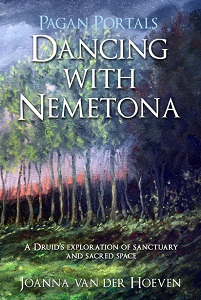
New book coming out May 2014!

dwn smallMy latest book will be coming out in May 2014 with Moon Books Publishing, as part of their Pagan Portals series. This series is a set of introductory books, usually 25,000 words or less, on a topic that allows the reader to gain an foothold on a subject, and then inspire them to continue to find out more on their own personal journeys. This is the second book I have written for the series, the first being Zen Druidry (see my Books Page for how to buy).

Nemetona is an ancient goddess whose song has flowed from Europe into these isles, humming softly deep within the earth and also deep within the human soul. She is the Lady of Sanctuary, of sacred groves and sacred spaces. Not much has been recorded of her academically – we know of an altar in Bath that was dedicated to her by a Gallic artisan who felt her power and carved her elusive name for us to remember down through the ages.

She is present within the home, within our sacred groves and rites and in all the spaces that we hold dear to our hearts. She also lies within, allowing us to feel at ease wherever we are in the world, through her energy of holding, of transformation. She holds the stillness and quiet of a perfect day, she is the stillness at the end of it, when the blackbird sings to the dusk. She is Sanctuary, where we can stretch out our souls and truly come alive, to be who we wish to be, filled with the magic of potential.

Rediscover this ancient Goddess and dance with a Druid to the songs of Nemetona. Learn how to reconnect with this goddess of sanctuary in ritual, songs, chants, meditation and more.

Heaven and Hell

Blending Buddhist and Zen principles into my Druidry is integral to helping me find my personal spiritual path.  There is no monopoly on wisdom, and I find the teachings of both Buddhism and Druidry are universal.

One aspect of Buddhism that I find is often misquoted or misinterpreted is the idea that you push away your feelings, in order to function with a clear mind. What I have found is that within Buddhist training and discipline, you not only feel your feelings more, you also learn more from the feeling itself.

We are not taught to suppress our feelings within Buddhist teachings. Letting go of attachments is what is at the heart of Buddhism. That includes attachments to your feelings.  So, we feel our anger, our pain, our grief acutely – we give ourselves some time and space to truly feel these feelings, to express them if we need to with honour and compassion, and then to let go. It’s not easy to do at first, but not many things in life are…

I can be very quick to anger. But I have learned to try to not to act or react on that anger without truly feeling it first. In some situations, yes, you may have to make a immediate decisions. If you see an animal being abused, you act right away to stop it. However, you can feel your anger but not allow it to control you, thereby allowing you to act appropriately.  Anger can often to lead violence, physical or verbal, which only elevates the suffering in both parties and which resolves nothing. We should act to help each other and all other living beings on the planet.

When I get angry, if I feel I cannot react to a situation respectfully or honourably and I have the opportunity to take a moment, I do.  Taking a walk, or sitting and meditating with the anger is a great tool to use in order to gain a deeper understanding of it.  Learning how your mind works is an invaluable asset to living a life with greater understanding, or compassion.  If I can, I sit with my anger, or grief, pain, suffering and really feel it. I look it over from all sides.  I try to find root causes of it.  I see that anger reflected in others around me. I then place myself in the situation of the person that I am angry with.  Why am I angry with them? What has caused the anger within me?

Buddhism teaches that anger comes from within – it is not something that is bestowed from without. This is seen in the famous Zen story of the monk and the warrior:

The old monk sat by the side of the road. With his eyes closed, his legs crossed and his hands folded in his lap, he sat. In deep meditation, he sat.

Suddenly his zazen was interrupted by the harsh and demanding voice of a samurai warrior. “Old man! Teach me about heaven and hell!”

At first, as though he had not heard, there was no perceptible response from the monk. But gradually he began to open his eyes, the faintest hint of a smile playing around the corners of his mouth as the samurai stood there, waiting impatiently, growing more and more agitated with each passing second.

“You wish to know the secrets of heaven and hell?” replied the monk at last. “You who are so unkempt. You whose hands and feet are covered with dirt. You whose hair is uncombed, whose breath is foul, whose sword is all rusty and neglected. You who are ugly and whose mother dresses you funny. You would ask me of heaven and hell?”

The samurai uttered a vile curse. He drew his sword and raised it high above his head. His face turned to crimson and the veins on his neck stood out in bold relief as he prepared to sever the monk’s head from its shoulders.

“That is hell,” said the old monk gently, just as the sword began its descent. In that fraction of a second, the samurai was overcome with amazement, awe, compassion and love for this gentle being who had dared to risk his very life to give him such a teaching. He stopped his sword in mid-flight and his eyes filled with grateful tears.

“And that,” said the monk, “is heaven.”

(http://nathayogacenter.com/category-blog/106-spiritual-masters/86-inspired-zen-stories-the-secrets-of-heaven-and-hell)

When our emotions control us, when they are the ones that are raising the sword and not our true minds, that is when we are in hell. When we are aware of what we are doing, and in that awareness come to understand the nature of all beings, ourselves included, then we are in heaven.  Acting with intention, instead of reactionary living, is what can make this world a better place.

 My anger can fuel my fire to fight against injustices in the world. It is kept in check, it is a sheathed sword.  I know it is there, but I choose not to use it, instead working with compassion.  It is a conscious choice. Sometimes I fail, and when I do I notice where and how I have failed, and see the opportunity to work with that. I cannot blame others for my anger.  Their behaviour is nothing that I can control. What I can work on is my own behaviour towards them and to making the world a better place.  Giving like for like can be a very damaging thing to do.  When someone hurts us, our first reaction, our first desire is often to hurt them back.  It takes a lot of work to come out of this mindset, a lot of practice.

They say that practice makes perfect. So every time I let my anger rule me, as Thich Naht Hanh said, I am practicing being angry. Every time I practice awareness, mindfulness and compassion, I get better at those ways of being and living.  I know which I would rather aim towards!