Solstice Practice

This post was originally  displayed on SageWoman’s channel, on my blog DruidHeart at Witches & Pagans.
Around the winter solstice is the time of year when many people get together, families and friends, to celebrate the holidays. If we are fortunate, we have some time off to be together, all together in one place – we may not have such an opportunity until the next solstice season rolls around. It can be a wonderful time of loving hugs, good conversation and deep, belly filled laughs. It can also be a trying time, when the bonds of friendship or family can become tested as we are all thrown together, our usual routines and habits left behind and we are faced with situations that are perhaps out of the norm.

My home is usually very quiet, filled with deep silence and stillness. In that silence I find my personal sanctuary, where peace is around every corner. I’m not a big fan of crowds or noise. However, at this time of year, I leave behind my little sanctuary and venture out into the world of lights and noise, family and friends when I’d really rather be sitting on my meditation cushion in the dark, with a candle and some incense.

It’s quite a shift to deal with. There is constant noise around me, different noise to that of my own home. It’s the noise of other people, which I am not accustomed to. Loud televisions, conversations, arguments, laughter – it’s a bit of an assault on my senses. Dealing with other people’s behaviour when there is no opportunity to “escape”. I have to confront everything that upsets me head on, or lose my temper, say something in anger as my “sanctuary” is thrown out the window.

Or is it? Yes, it’s difficult. Even as I type this blog, there are interruptions by people walking in and out of the room, asking me what I’m doing and other various questions. Nemetona, my goddess of sanctuary, has taught me that she is ever within me even as she is without – I take her with me wherever I go, and where I go she is always there.

In my Zen practice, this time of year provides me with innumerable ways to really practice. Life becomes difficult when things don’t go our way. When we realise this, and when we see that life is simply going ahead whether we like it or not, things can become easier. I have to deal with behaviour that I don’t like – this gives me a chance to practice and to try to understand that person’s behaviour. Often I can see myself reflected in it, or see that they are lost in their own suffering. I can try to ease that, when I remember to try to understand it. When it just pisses me off, I’m not trying to understand, and anger can erupt. When this occurs, I realise that I am not practicing very well, that I am not aware of my own reactions and behaviour. It’s a constant reminder to look deeply at myself, to see my patterns and to alter them in order to have peace and harmony both within and without. My goddess and my Zen practice help me with this understanding.

I have two choices when I find myself in difficult circumstances – get upset or not get upset. When people are shouting in the kitchen, or using words unkindly, or their behaviour is totally out of sync with creating harmony, I feel a tightness, a contraction within my body. Getting upset with this only tightens that contraction even further, making me miserable, or lashing out in anger in a misguided attempt to alleviate the tightness within. Seeing people mistreat each other, taking each other for granted – all of these things can cause contractions within. Passive/aggressive behaviour, words that are intented to provoke, noise levels louder than they need to be – all these things cause a contraction within my body. I want to loosen that contraction, but how?

Sitting and walking meditation practice, daily, really help me through this challenging time. By sitting, I am aware of my body, and aware of my thoughts. I see patterns in my behaviour. I see the self that is screaming for attention, for comfort, for sanctuary. I also then see the illusion of the separate self, and the inter-connectedness of all things. We are all dependent on everything else – the sunlight, the rain, our parents, the air, food. Without any of these things we could not exist. We are in them and they are in us.

When people’s behaviour challenges us, it helps to remind ourselves of this inter-connectedness. They are in me, and I am in them. It’s easy to do when out in the forest, becoming one with nature. But in challenging situations, with people we are often more directly faced with egos and personalities, with habits and the ego’s constant self-regard. When someone says something that upsets us, instead of thinking “I’m so upset that he said that” we can just realise that he said something. That’s the truth of the matter. Someone simply said something. We can act on what they said, of course, if they are saying inappropriate things. But we don’t have to act on it in anger, simply in awareness. Things happen. People behave the way they do. We can either get upset and lose our practice, or we can see the opportunities to become even more aware of our selves. In this awareness lies peace.

Slowly losing our separate sense of self, our egos begin to dissolve. We listen more. We apologise more. We find a deep well of peace to draw from, where we nourish that which brings peace and harmony. We don’t ignore our feelings, but we don’t feed those that create discord. We’ve no wish to stay in that contraction, no desire to create it in others.

Use this time of year as an opportunity to practice, to see how in nature we are all connected. See how the awen flows, how we are inspired by each other in each and every moment. Use difficult situations as the chance to become aware of your self and the world around you. It’s not easy, I’m being challenged constantly. It’s also a wonderful opportunity to fully immerse in the flow of awen, and not to be bashed against the rocks and caught in the swirls and eddies in the river of life. When life isn’t going the way that you would like it to, simply remember that. When we are angry or depressed, remember that it is because life isn’t going the way we want it to. Work with those feelings, work with others, and the practice will begin to show its rewards in less contraction, less anger and less upset. Peace begins to seep in, trickling through out insight, aware of the delicious drops of awen upon our tongue.

Isn’t that what this time of year is all about? Peace and love, awareness of the darkness and the returning light, the times and tides of life. May this time of year bring you many chances to practice, and may you find true joy in that practice.
A Deer Little Moment…

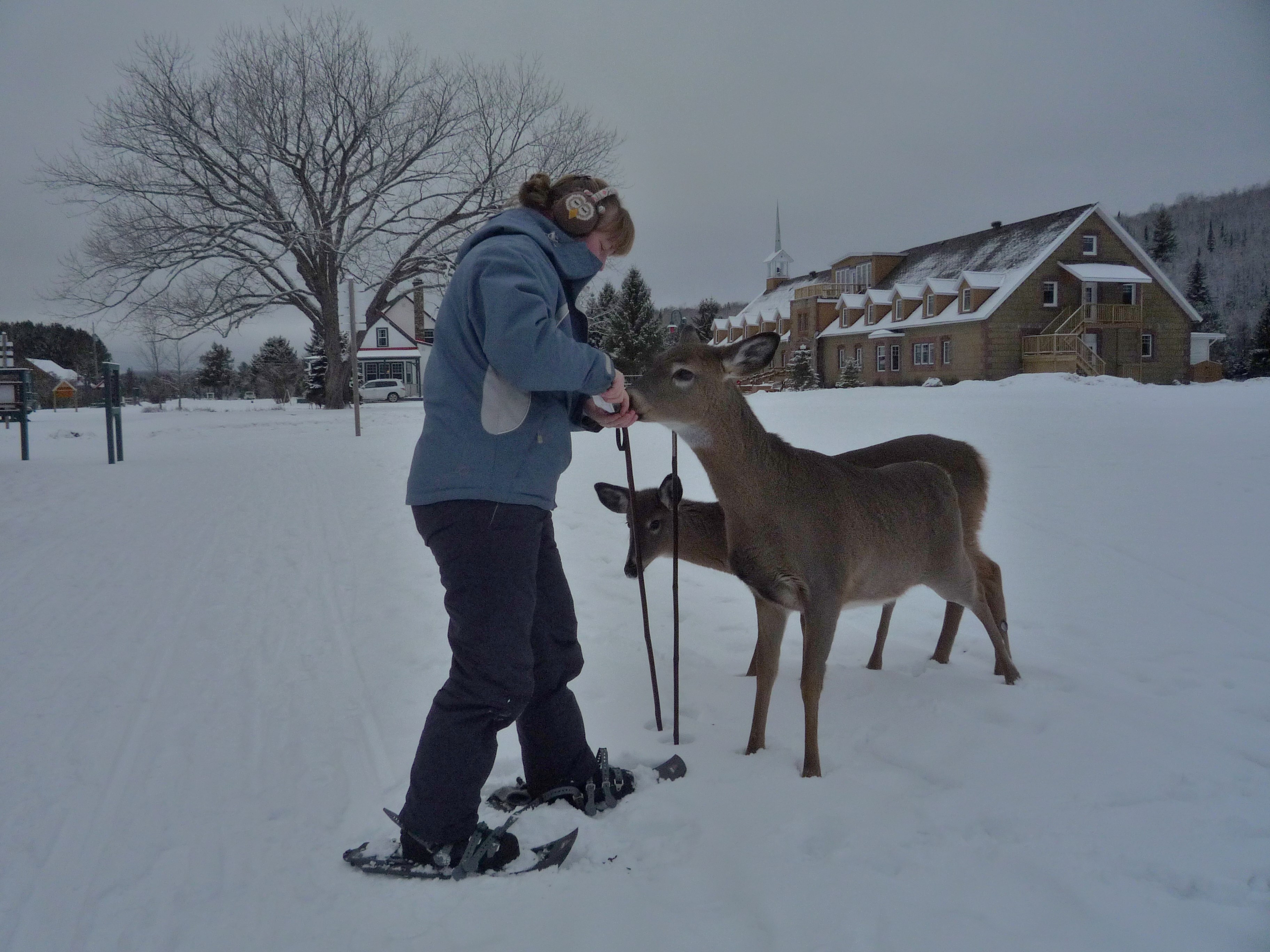
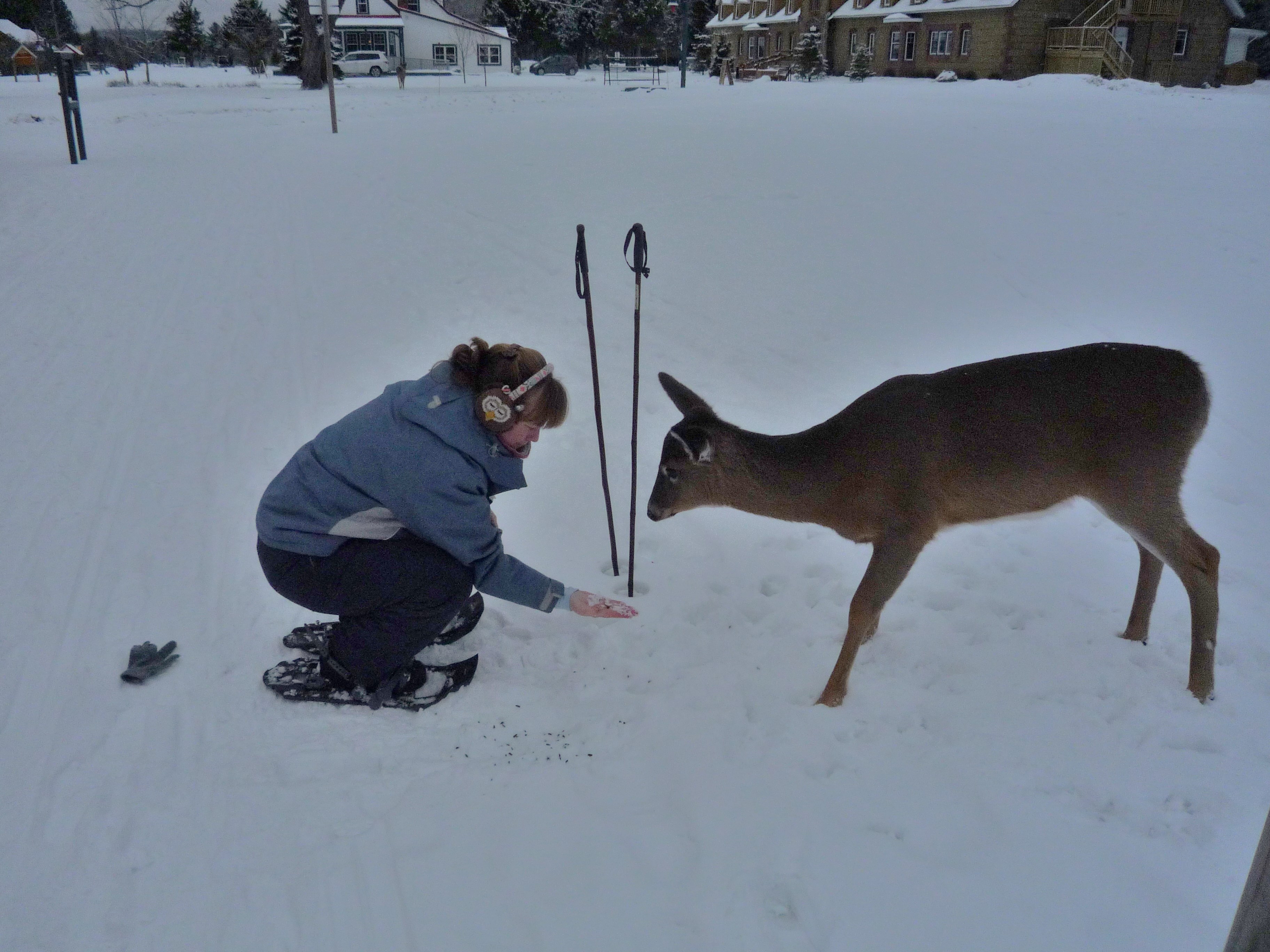
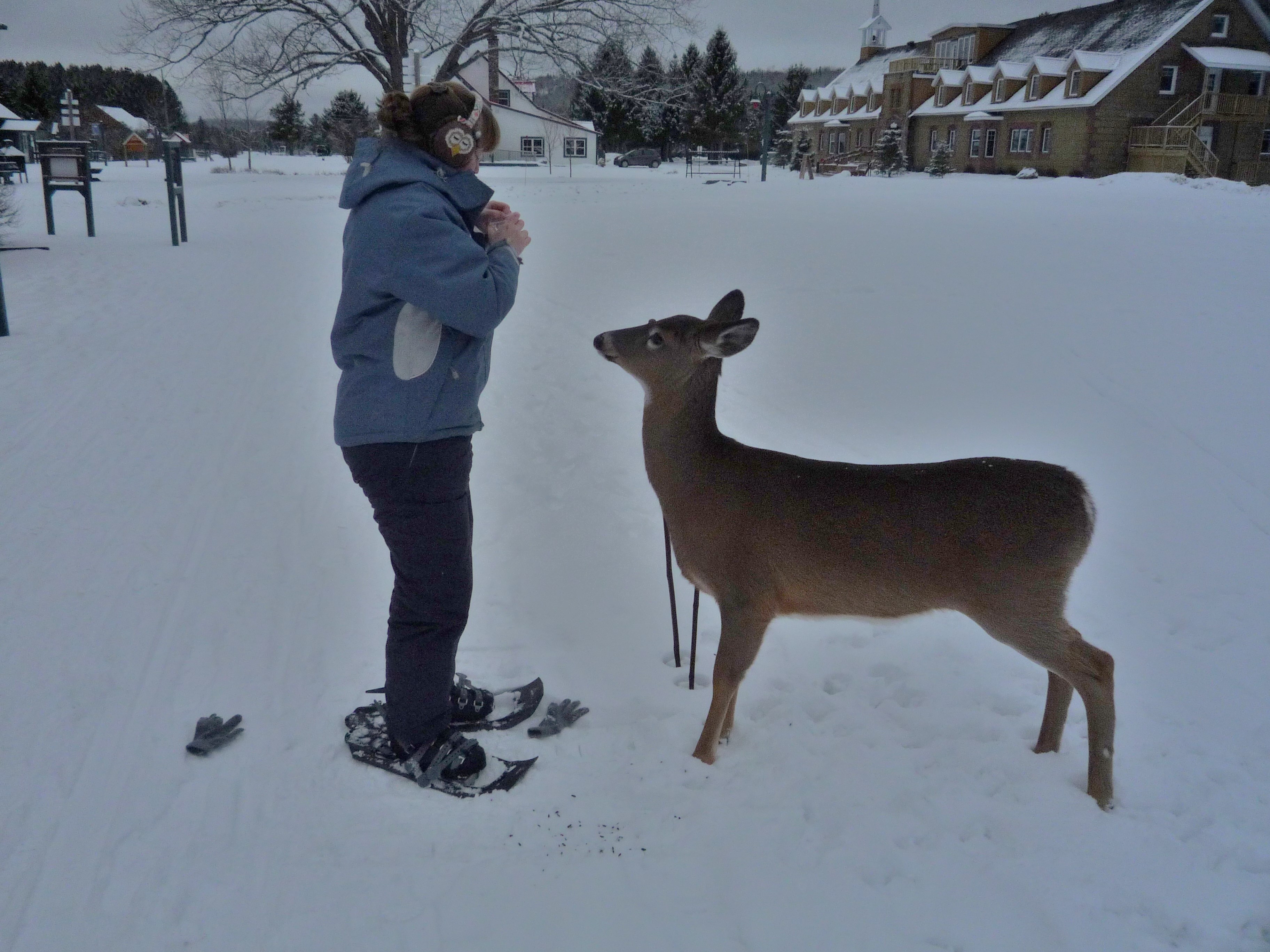
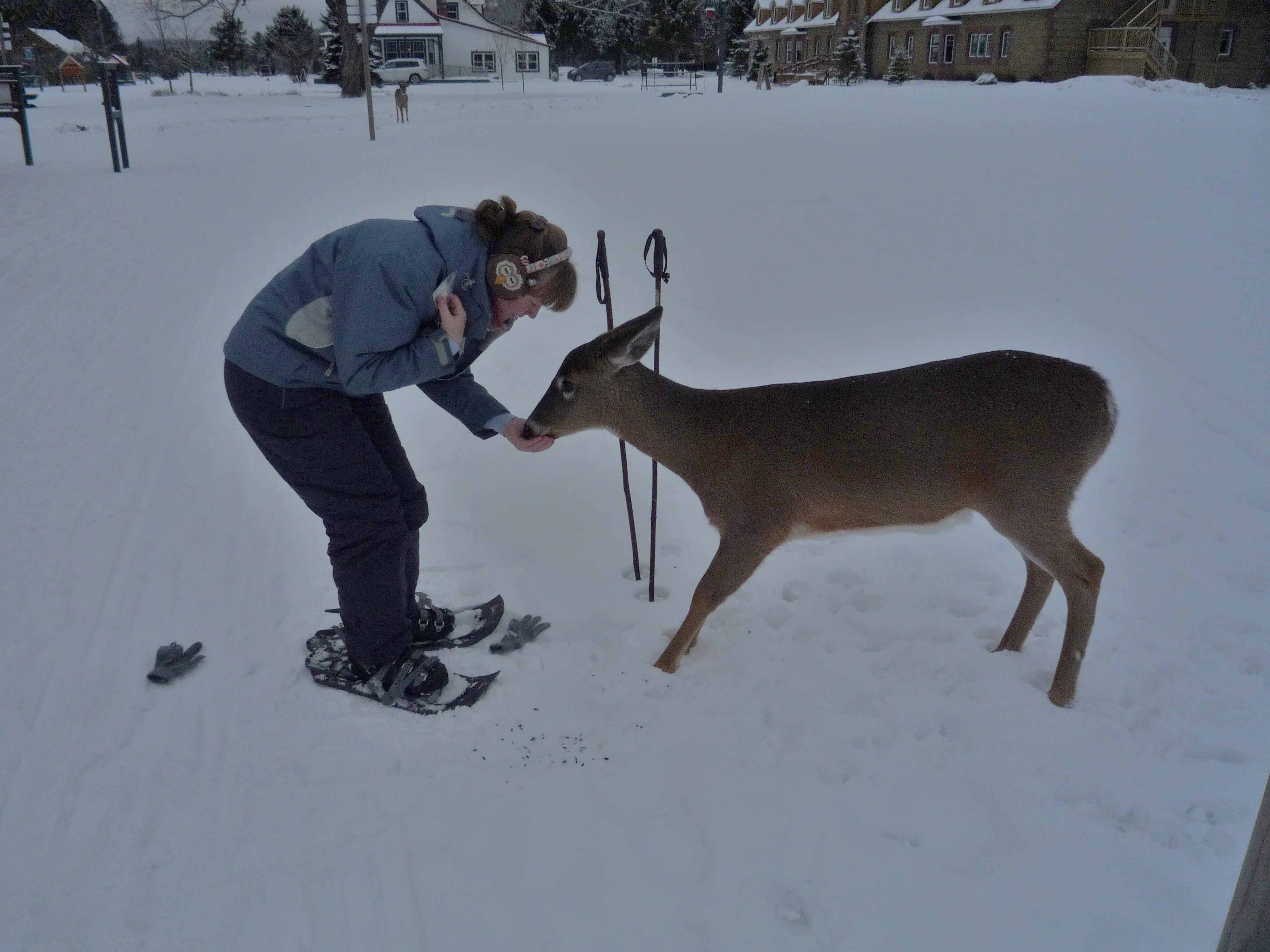
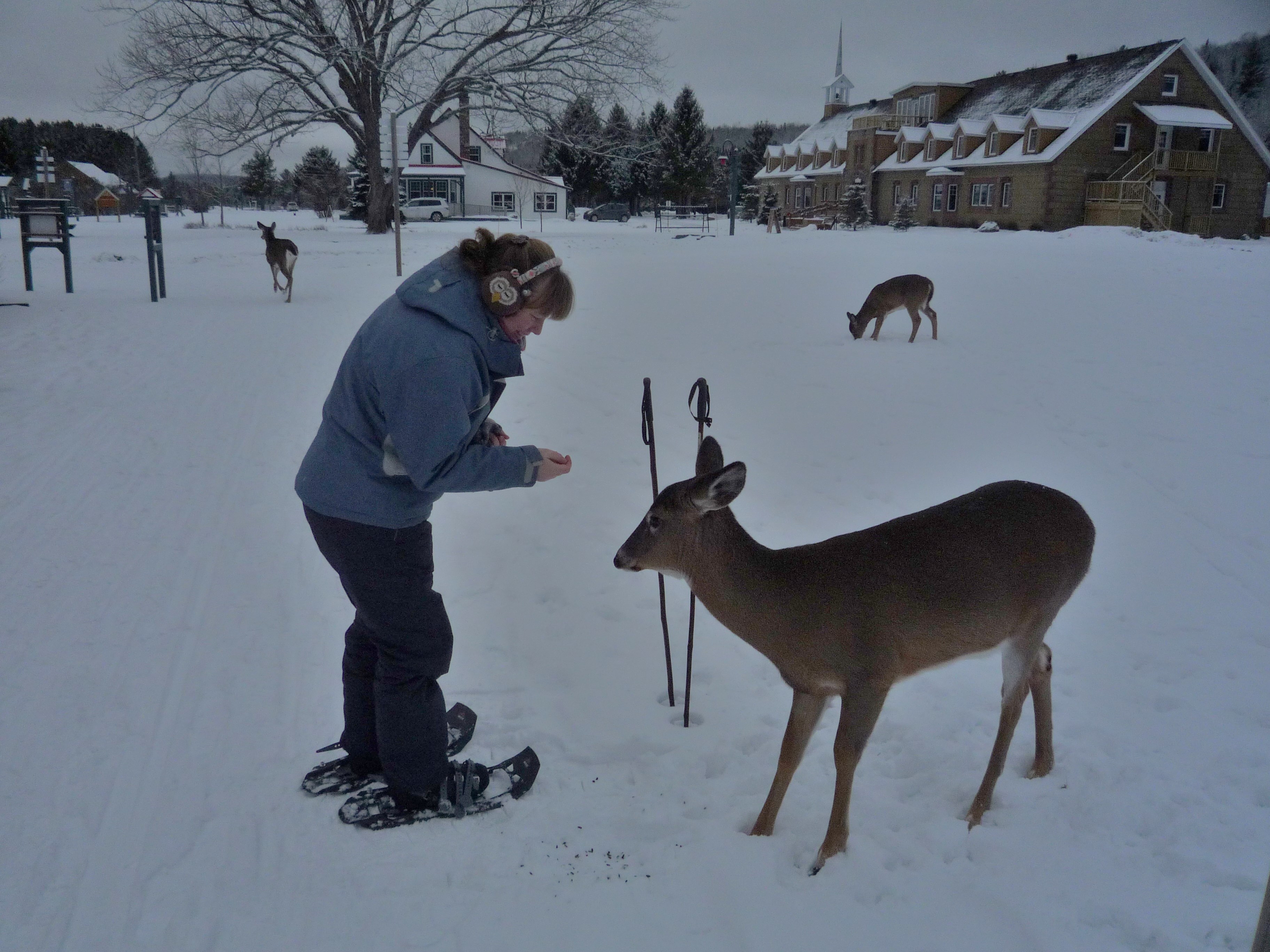
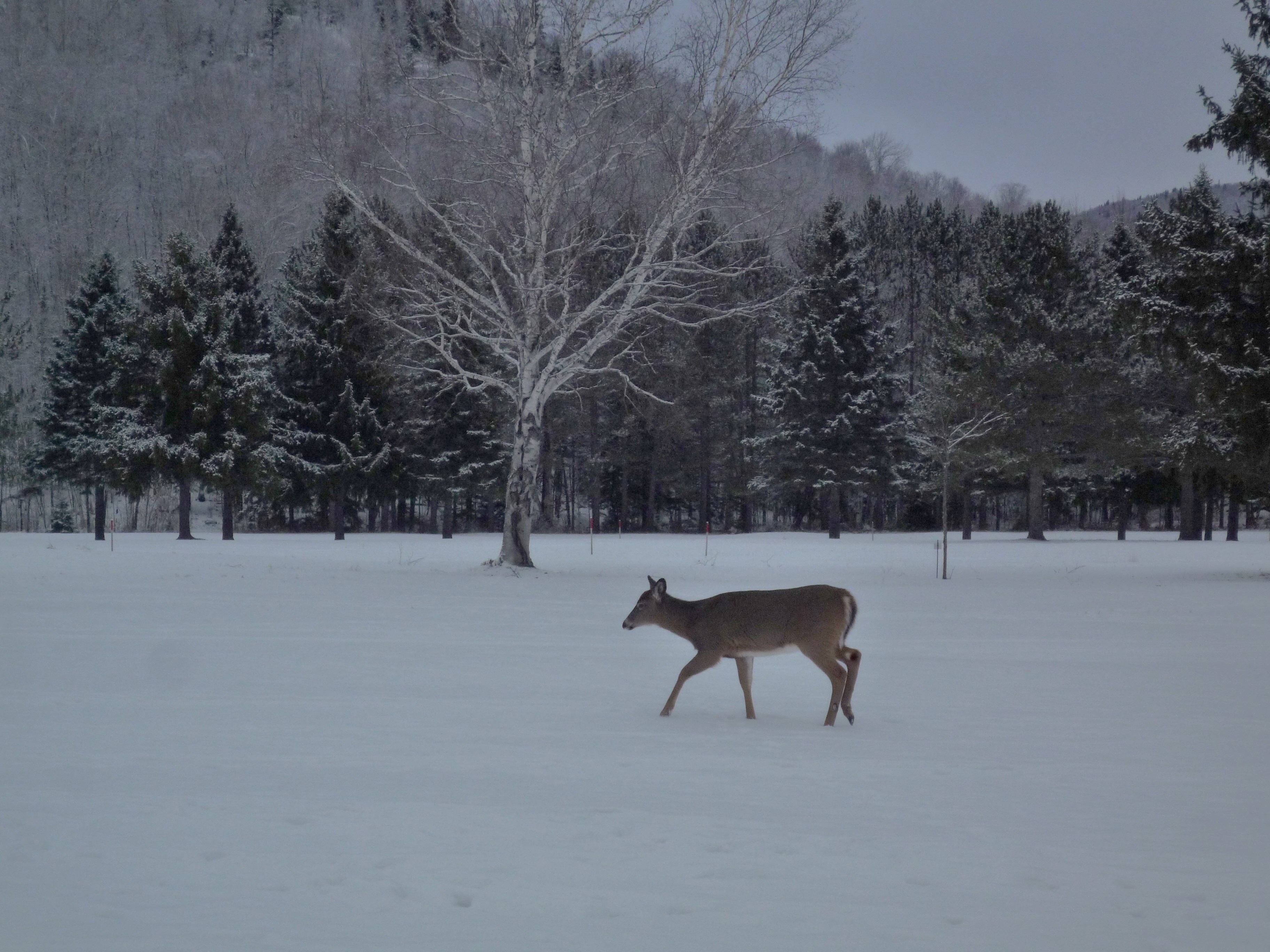
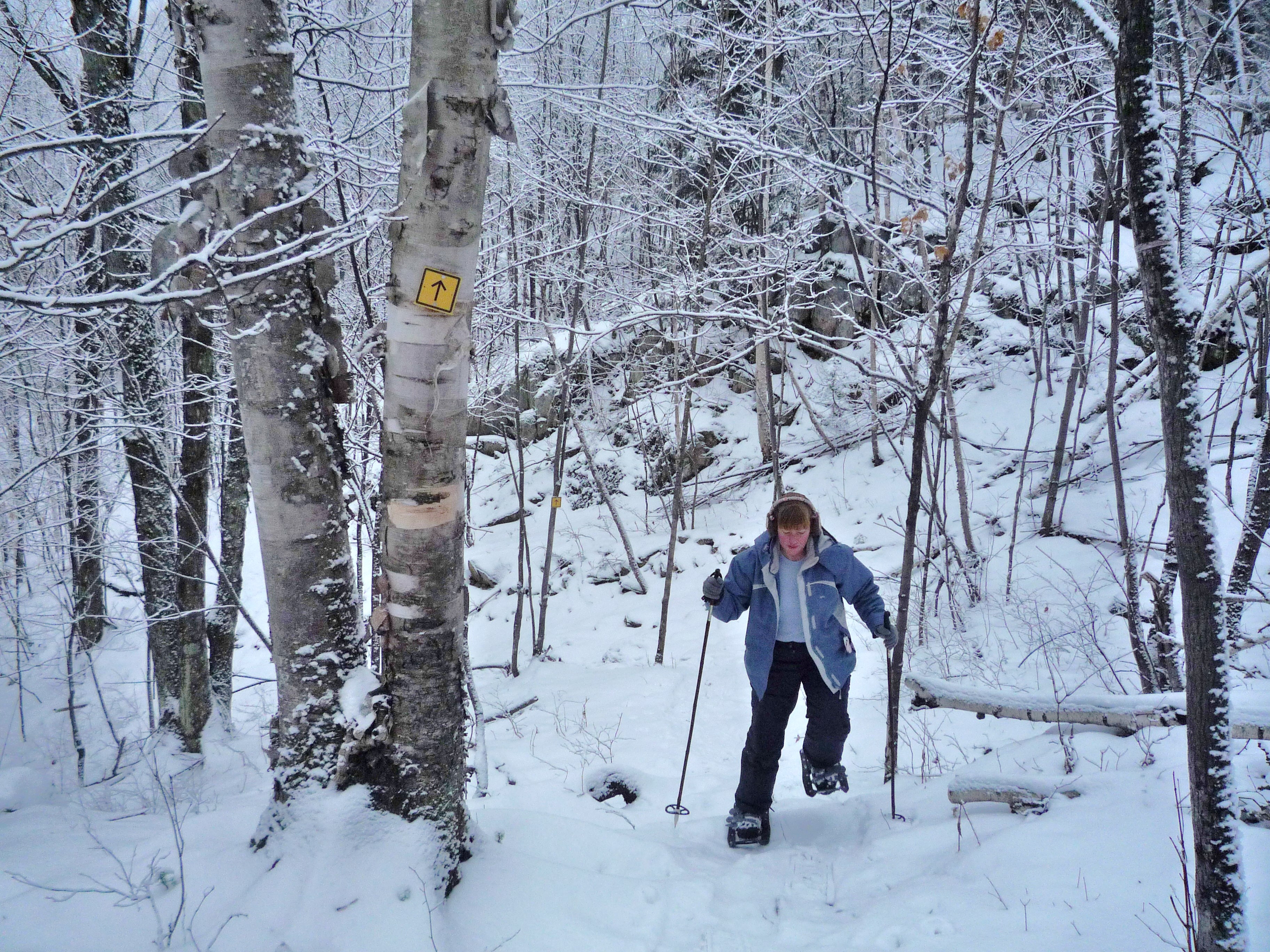
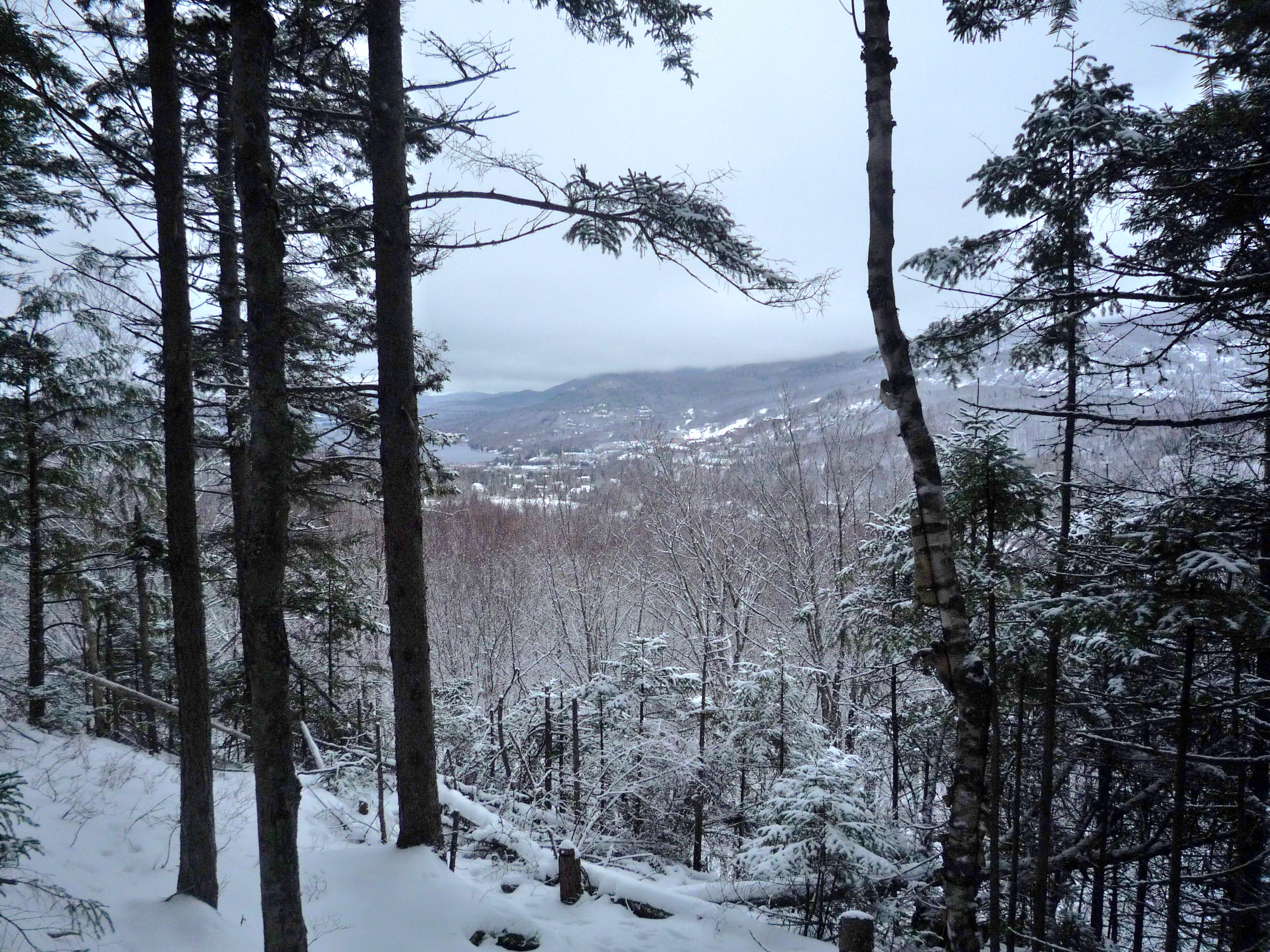
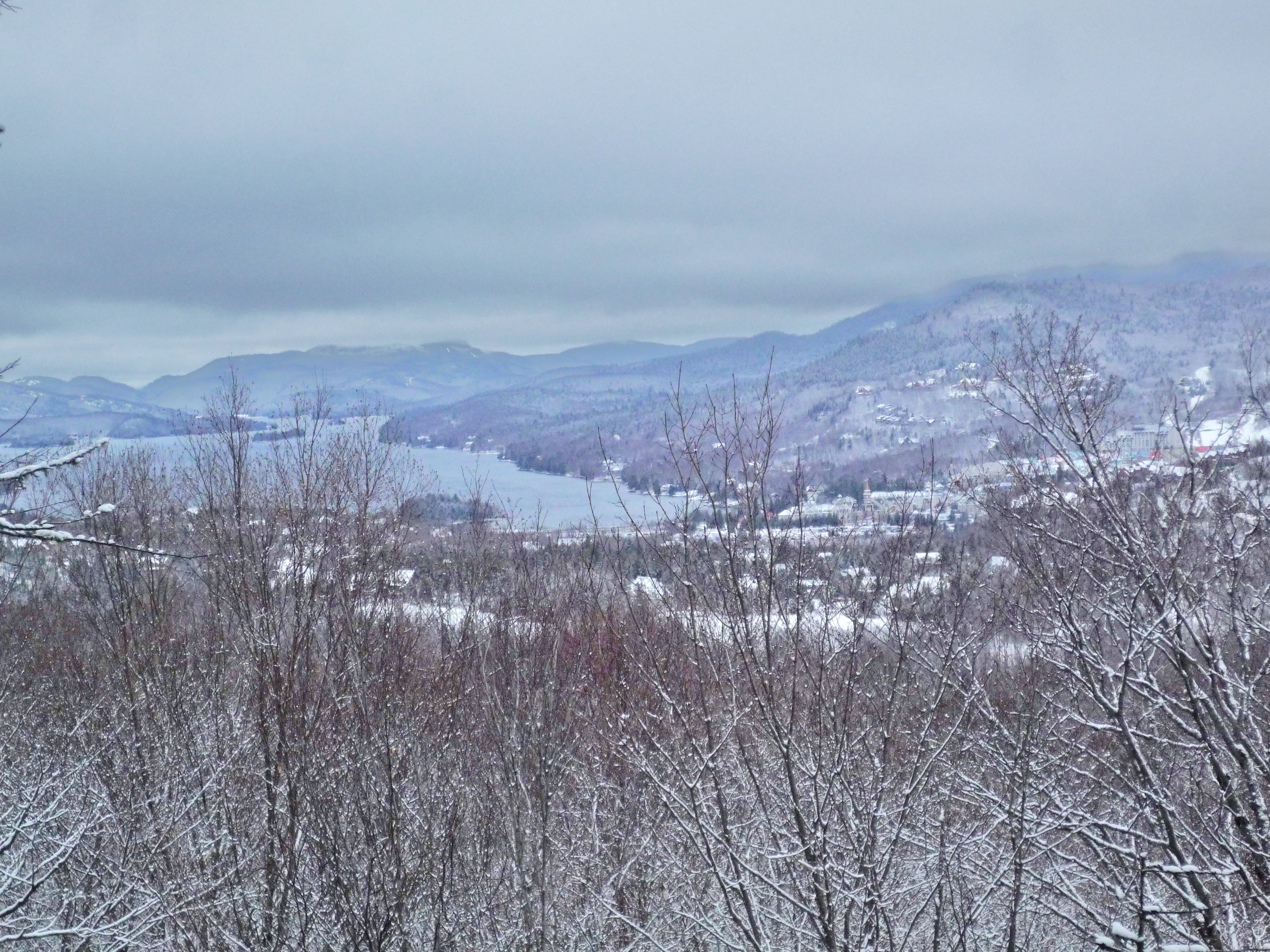
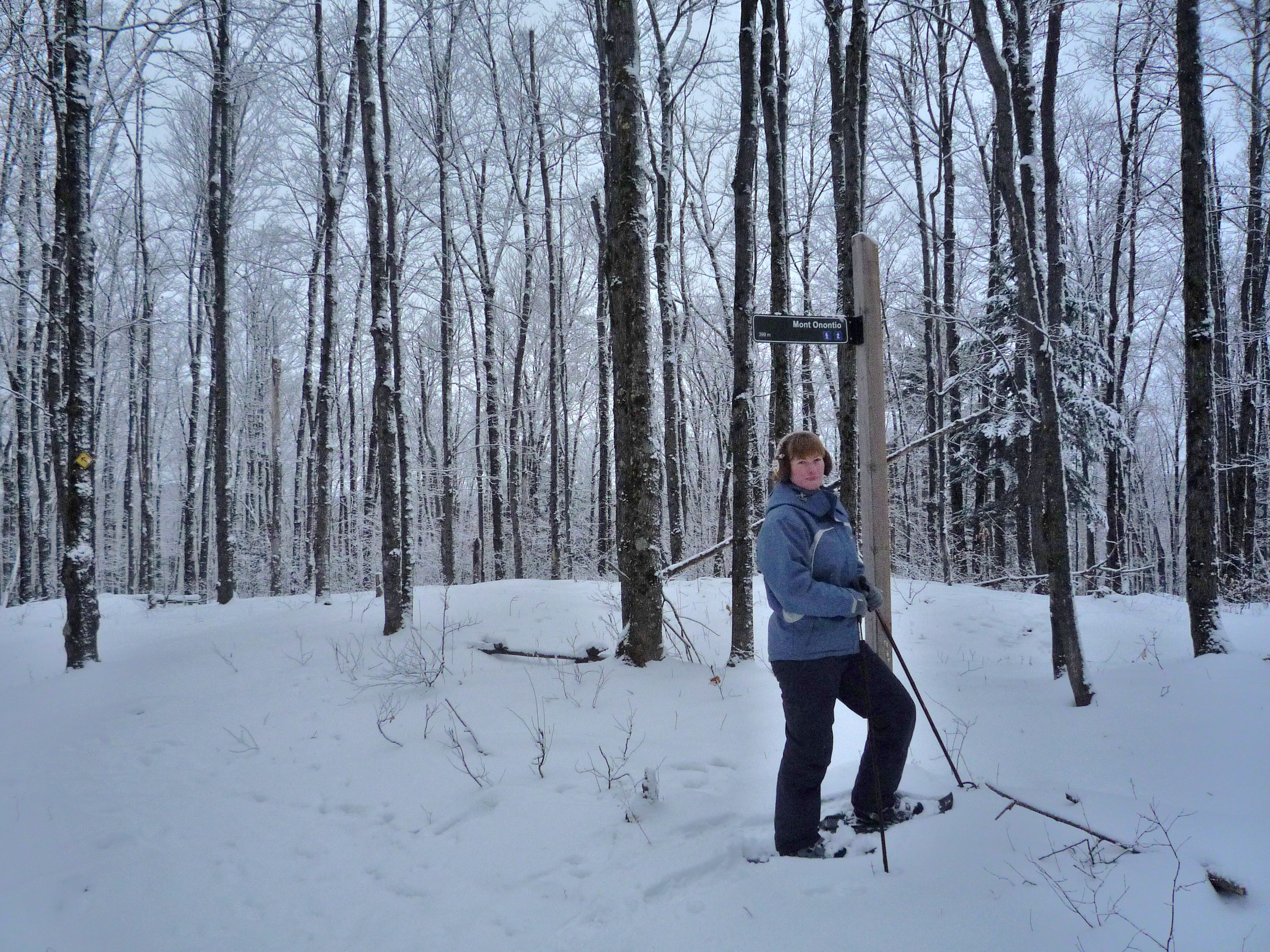
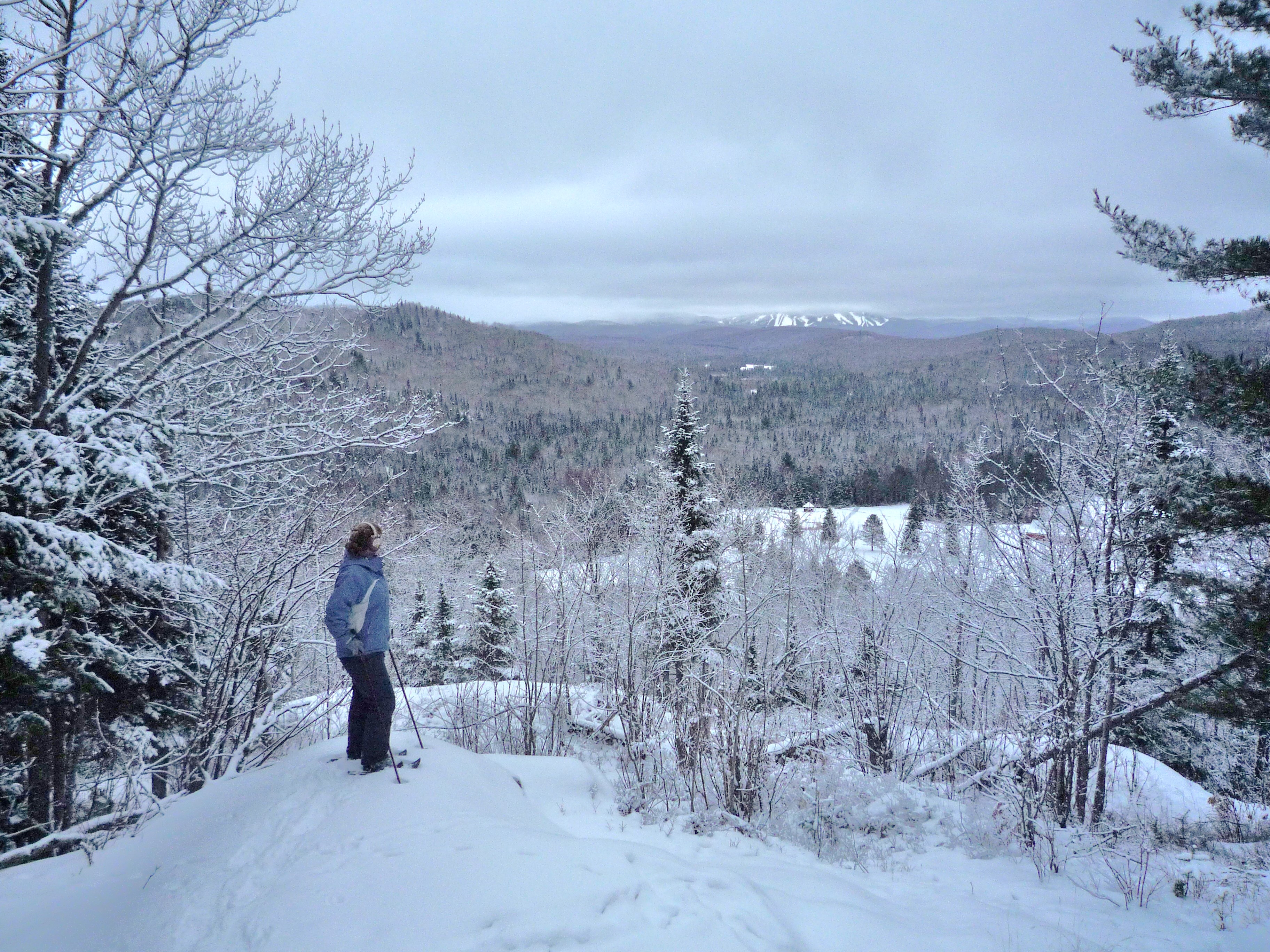
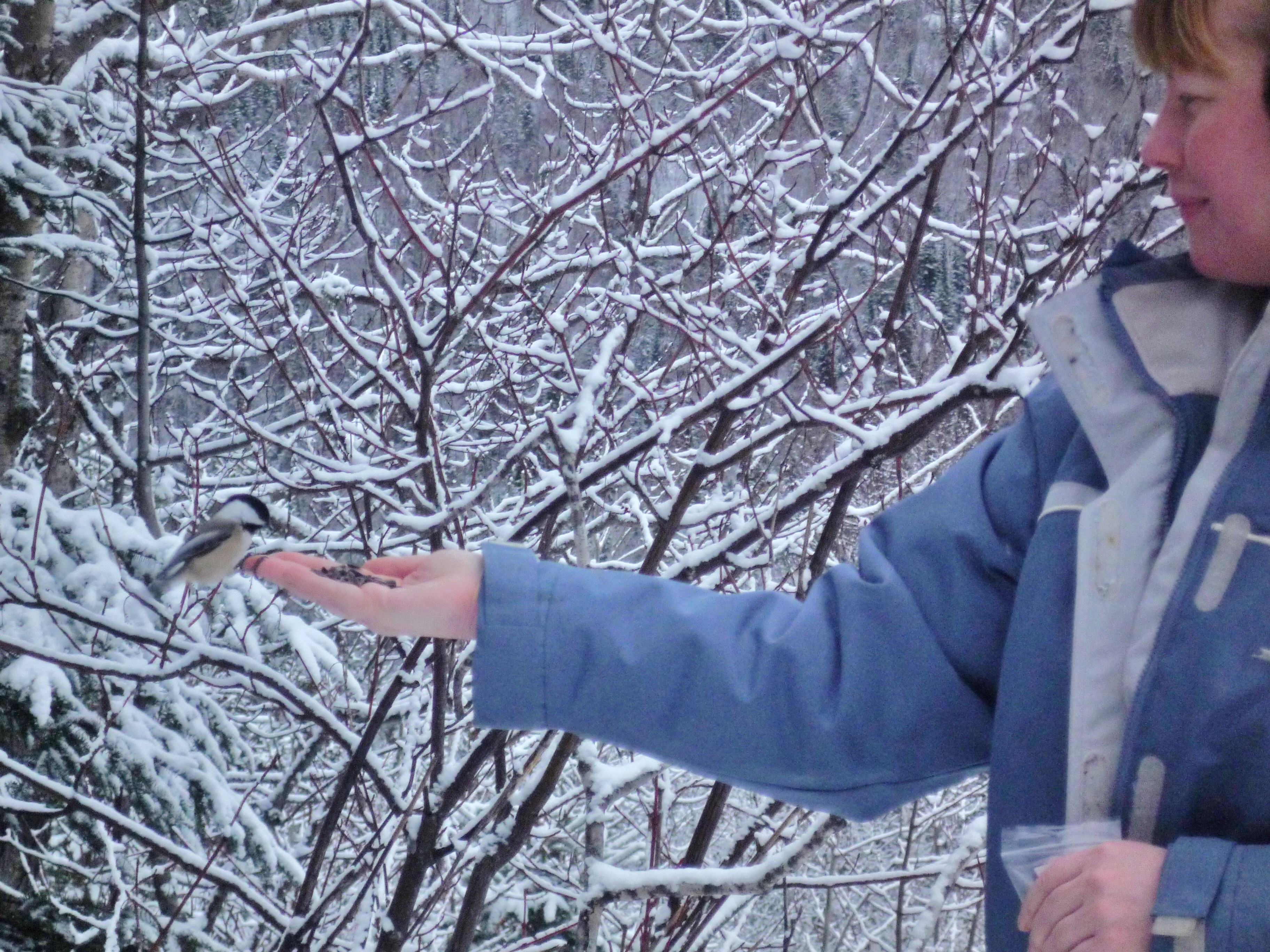
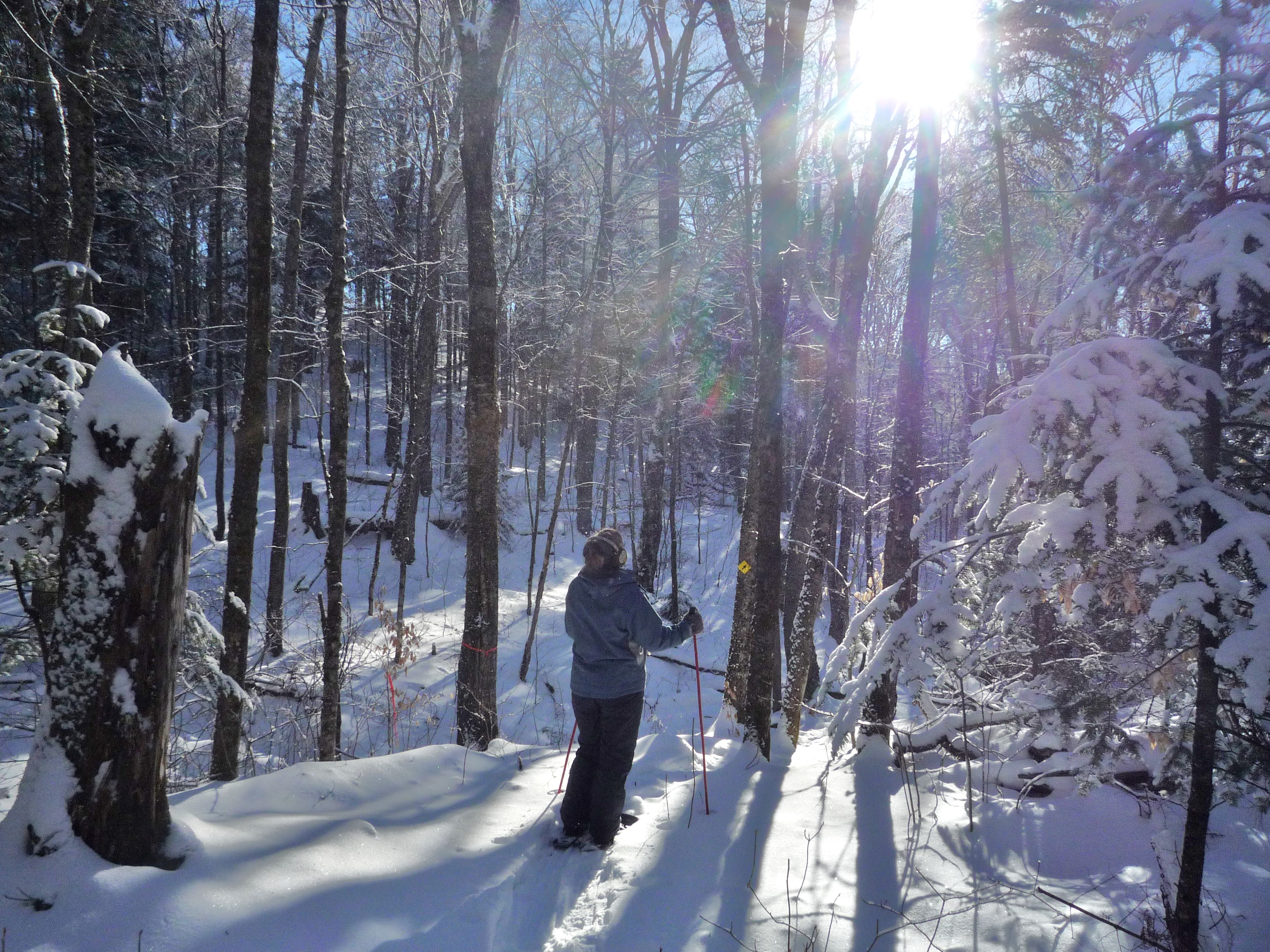
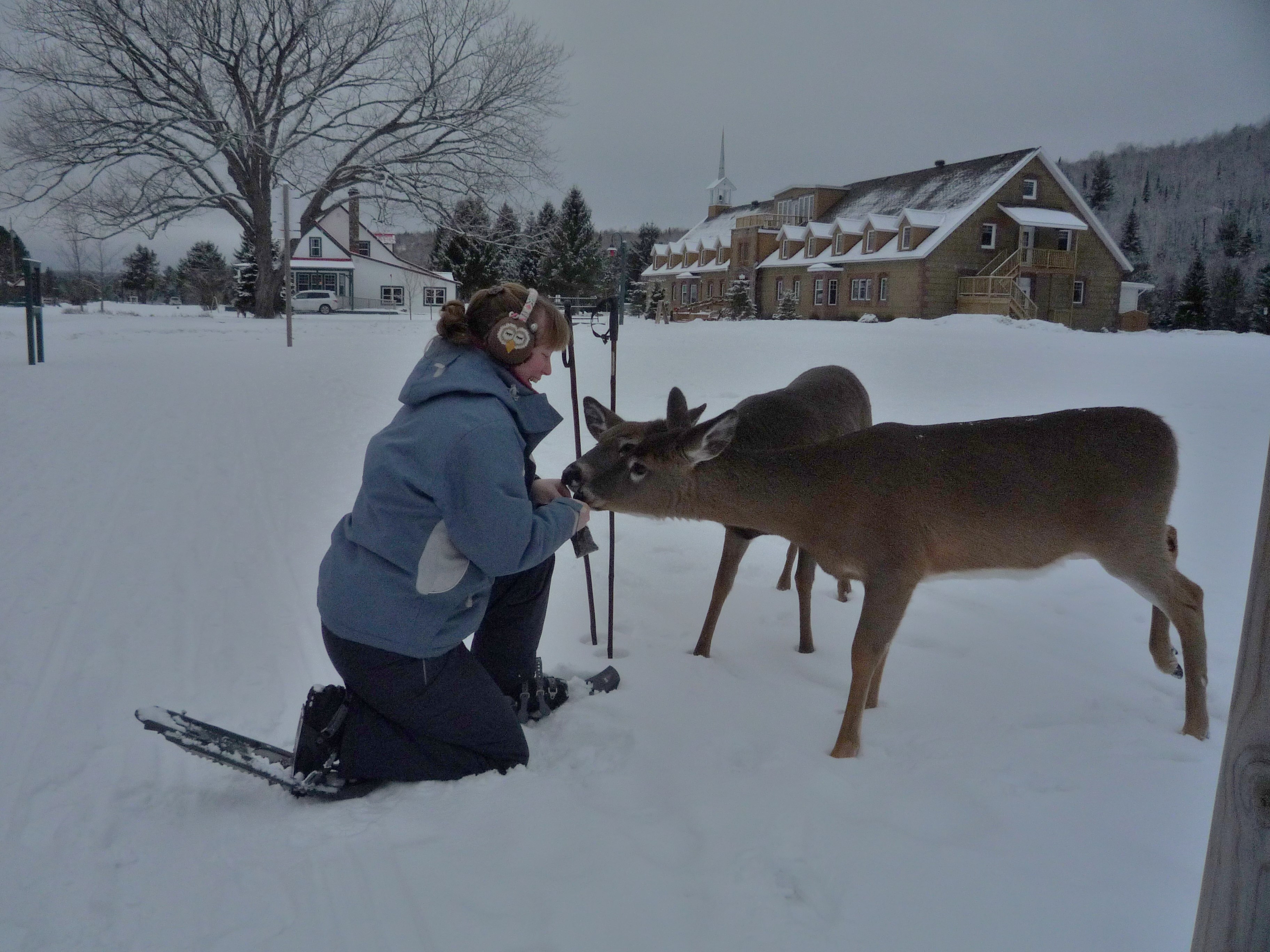
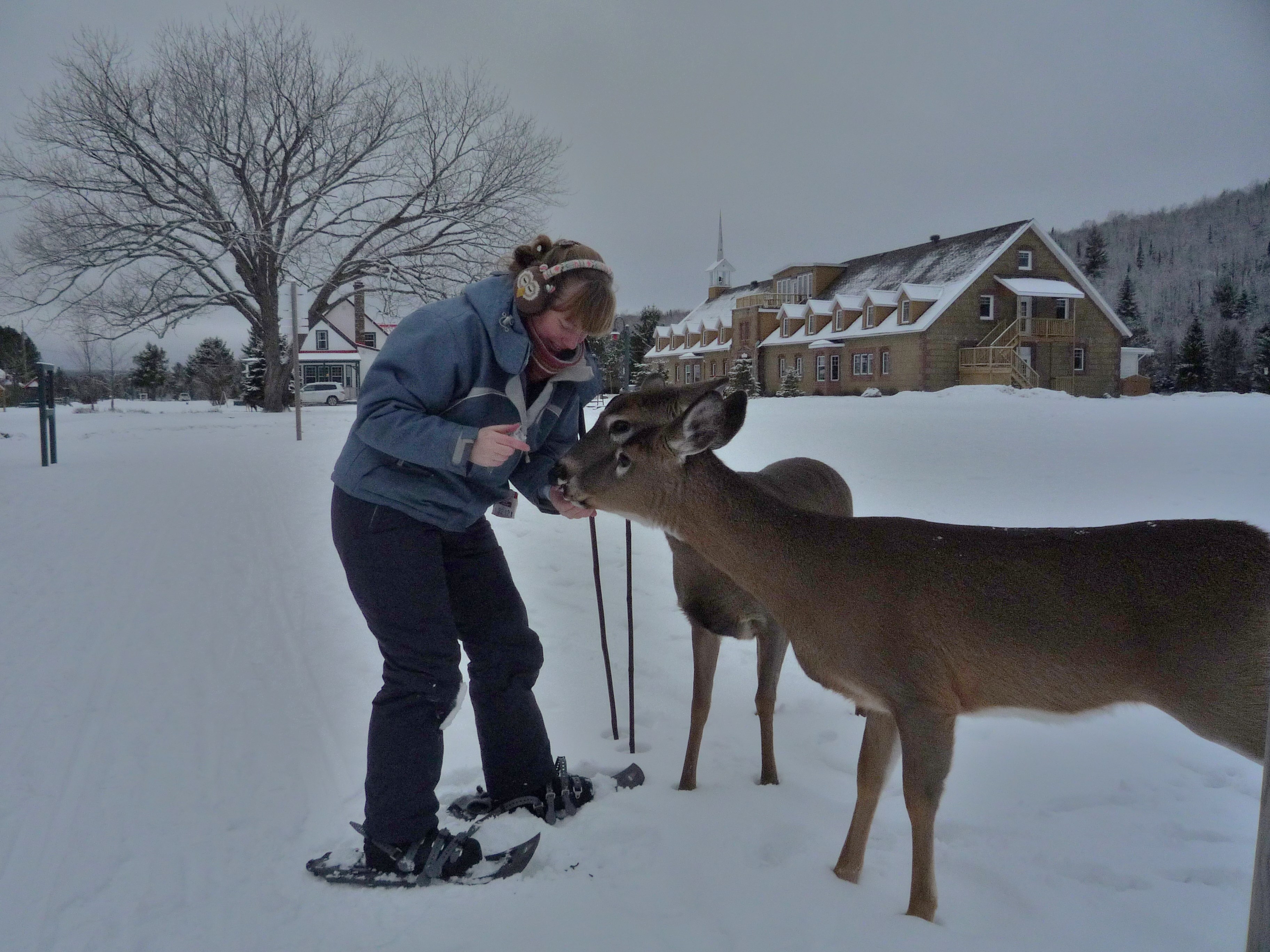
So, I’m strapping on my snowshoes, minding my own business, when I feel something beside me and see a brownish blur out of the corner of my eye. I think, “Someone’s dog is around from the car park.” I finish doing up one shoe and reach over for the other one, looking up – right into the face of a white-tailed deer. Astounded, I look the other way and there’s another one. And another one. Four suddenly surrounded us, four stealthy ninja deer who came out of nowhere and figured that they outnumbered us, so it should be okay. I had some sunflower seeds in my pocket for the chickadees, which they soon munched up straight from my hand. An absolutely wonderful, magical moment… as quickly as they arrived, they left, silently melting back into the woods. Did I mention that I had been praying to Elen of the Ways every morning?  We had a wonderful two days of snowshoeing after that.

P1060912 P1060914 P1060915 P1060916 P1060917 P1060918 P1060919 P1060920P1060921 P1060922 P1060927 P1060929 P1060930 P1060933 P1060941 P1060945 P1060949 P1060951 P1060954

Peace

I feel the anger within me. Sometimes he is purposefully trying to upset me and others around him, other times he doesn’t know that he is doing it – it is simply habitual energy. I feel the anger as a tightness in my chest with his sarcasm, his passive aggressive behaviour. Little flames shoot out, provoking a fire within. It takes much mindfulness not to feed the fire, not to fan the flames of anger within. Acting out in anger will not solve anything. I will find another way to relate to him when he is sunk deep in his suffering, acting it out on everyone around him.

* * * * *

A friend was involved in a car accident which totalled his car. In his recounting of the tale, there was no anger at the young woman who hit him from behind, only remorse at the four pairs of shoes that had been ruined. I smiled and know that I will hold his lesson close to my heart.

* * * * *

Today there is news of the massacre in Pakistan, where around 150 children were murdered by the Taliban in a school shooting. My first response was not anger, but such a deep and silent sadness at the conditions that brought about people who bring about such suffering on the world. I could be one of the children, I could be one of the attackers, had the conditions been right to bring about a manifestation of the person I am in that situation. My heart goes out to everyone in Pakistan, the families who suffer the loss of their children, and to the attackers whose suffering lashes out at innocent children.

* * * * *

Sitting silently in the darkness before dawn, a lone candle and some incense burning, I pay attention to my breath, and the darkness around me slowly lifts as the sun rises unseen behind a canopy of grey sleety skies. May there be peace in the North. May there be peace in the East. May there be peace in the South. May there be peace in the West. May there be peace in our hearts and minds and towards all fellow beings.

Food for Thought

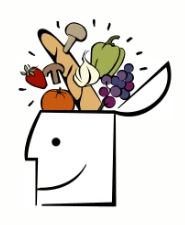
food_for_thoughtWe’ve all heard the term, “you are what you eat”. We know that if we put bad things into our bodies, we’ll end up feeling pretty poorly. Equally, if we put good, wholesome, nourishing food into our bodies, we will feel much better. How much different is it to take this idea over to our thinking minds?

Our minds need nourishment too. All too often, we overload it with media and television, with constant thinking, worrying and getting stuck in our emotions. These things also help us to distract ourselves from our true self, from our true or “pure” thinking and emotions. We can get so wrapped up in them that we can’t see the forest for the trees, so to speak.

We all have things like fear and anger within our minds and within our bodies. The key is to not nourish these things, but instead nourish more positive things like compassion and love. This isn’t a rejection of our anger or our fear – they will always be there. It’s only human. We simply don’t have to engage with them, dance with them so much in order to live our lives fully. If I am angry, sitting with that anger, meditating with it helps me to see the underlying cause of it. I can see that the root cause of anger lies within me, and not another being that has ’caused’ it. Often it is through past experiences that we relate the anger to the present moment. If I can let my anger go, if I truly experience it and then let it go, what am I left with? The same can be said of fear. Fear is pretty much always based on change, and once we realise that all life is impermanent, the fear no longer lies within us and simply falls away. We will have to sit with these emotions time after time, but as long as we are practicing with them, we will get better at understanding them both within ourselves and others.

If we feed fear or anger, they will only get bigger and bigger. Have you ever punched your pillow? Did it make you feel better? Have you ever crawled under the duvet and feared coming out? Did this make anything better? Most likely not – acting on the anger and misplacing it on your pillow solves nothing, and also means that you have acted out aggressively and with violence to a mere pillow. If we keep feeding this sort of behaviour, how long until we act that out on another human being? Equally so with fear, if we constantly act on our fears they do not go away, but rather take control of our lives until we become so tied up within them we cannot move.

It’s not just a case of switching over to ‘positive thinking’ either. Thinking only good thoughts will not make the bad ones go away – they will be there. We have to acknowledge them first and then deal with them. Sitting with them helps us to understand them. Then we can nourish more positive thoughts. If we see that fear is keeping us immobile, if the root of our fear lies in past relationships and experiences, we can then look at it objectively and apply that reasoning to our current situation, in the present moment. We might fear that we will lose our job, but fear lies in change, something that we humans hate. We seek stability and reassurance constantly, it’s our nature. If we look outside ourselves, however we see that in nature nothing is ever constant, things are ever flowing and changing, never the same twice. Every morning we wake up a different person.

We will always have fear, we will always have anger. How we engage with them is what is most important. Friends might say something that sets off anger within ourselves, but if we sit with it and look at it, we often realise that this is based on how we think they should behave. People are never going to behave exactly as we want or expect them to – they are their own person, with their own experiences. We cannot get inside their head. All we can do is see that they share the same sufferings along the path of human existence as we do, and can see also where we have failed. When we see that, we don’t have these expectations of others, and we don’t have the anger when the expectations aren’t met, or the fear that things are changing.

Find what nourishes you most, and work with those thoughts while being in touch with those that don’t nourish. Try not to engage with the thoughts that don’t nourish – simply notice them and be aware of them within yourself. Nourishing things like love, compassion, creativity and acceptance will make the road of life a lot easier to manage.

Take a look at your food for thought. What is nourishing you?

Awen blessings. x

Holistic manifestation – the nature of awen

In my previous blog post on my other blog, DruidHeart for SageWoman, I wrote about how we are never born, and how we can never die: we are simply manifest for a while in one form, and then we manifest again in another when the conditions are right. For me, this represents reincarnation, the nitty gritty basics of it and the science behind reincarnation.

Another aspect of manifestation is that we are not separate beings on this planet, or indeed in this universe. We cannot be, for we are all made up of different elements of existence. A human being is made up of non-human elements, such as calcium and magnesium, sunlight and wave, clouds and stars. All manifestation has a shared existence, for we cannot exist without everything else. This is explained beautifully by Zen monk Thich Nhat Hanh in what he called Inter-Being. We cannot exist alone, we can only inter-be with everything else on this planet. It is a wonderfully evocative and holistic way of thinking that sits very well within my vision of Druidry. When we realise that we are not separate from the whole, we immediately act with a different intention, and live our lives filled with compassion and love instead of alienation and fear.

Our ancestors are with us all the time. Though their bodies may have long since physically disappeared to our eyes in the soil, their manifestation has not – it has simply changed its form. Energy cannot be destroyed, it cannot go anywhere. Neither can it be brought forth out of nothing. We are all manifestations of energy, energy that has existed on this planet for 4.54 billion years. This is a shared energy, one that we cannot claim as our own. If we cannot claim this energy as our own, how can we claim anything to be our own?

Ownership requires the belief that we are separate creatures. In our brief manifestation as human beings, we may think we own our house, our pets, our cars, however this is all illusion. We are only borrowing them, using them for however long or short a period of time before we are changed in form upon our so-called “death”. This death is not a singular, separate event, but merely a way to describe the cessation of a certain manifestation. Equally, there is no birth, simply the beginning of a new manifestation. The energy behind the manifestation is always there.

This shared energy is in the heart of the sun, in the rocky surface of the moon, in the wind and in the rain. It is in the bee and in the bear, in the holly bush and in the snow. The icicle is made up of non-icicle elements. The cat is made up of non-cat elements. This is what it means to have a shared existence. Not shared existences, but a singular shared existence.

If we are all a part of each other, we will see that if we fight with another person, we fight with ourselves. If we grieve for another person, we grieve for ourselves. If we act with love and compassion for the world, we also act with love and compassion for our selves.

The plant that has died is still there, in another form. It is still a part of our self as well, for we have breathed in its oxygen; we are in its soil as its soil is within us. There exists a beautiful garden in our compost heap. The sea is held within the sky. I am within a woman grieving in Palestine, and she is within me.

Keeping this thought close to my heart, I can reach out and touch the awen that connects the threads of all existence. That energy where soul touches soul, where boundaries fall way, where we are beautifully inspired by the acknowledgment of another being and seeing that being reflected and existing in our souls – this is at the heart of Druid teaching. Walking awake and aware in the world, seeing the connecting threads, seeing the shared manifestation and shared existence fills our souls with beauty and awe in the wonder that is the world.

May we be the awen.

universe human

Reblog: The Winter Solstice – No Birth, No Death

This is a reblog from my site, Druidheart, at SageWoman’s channel on Witches and Pagans. To read the whole post, click HERE.

With the Winter Solstice approaching, and in the cold dark months of the year, we have an excellent opportunity to reflect upon the deeper parts of our existence, those shadowy elements that seem to fade away so easily in the heat of the midday sun, those thoughts that require darkness and the teaching that it can bring. Thoughts such as life and death, darkness and light and the cyclical nature of existence are all excellent themes to meditate on at this time of year, with a natural introspective element to this season allowing us to perhaps go further, deeper than we could or would in the warmer, more outwardly focusing half of the year.

This season, with the increasing darkness and the lack of light here in the UK brings more sharply into focus thoughts of death and dying. It is often said in Western Paganism that the Sun God dies at Samhain and is reborn at Yule, when the days begin to lengthen and the light in our lives is increased. However, lately my thoughts have abandoned the concept of death, as well as birth, into a more Zen-like “No Birth, No Death” frame of mind.

Having meditated on this for a couple of months now, and seeing it reflected in nature around me, as a Druid this is how I internalise the teachings. For me, nature is the greatest teacher. I look to no other authority other than nature. It is the core of my religion, the core of my being. Having looked deeply into the nature of death and dying, of birth and living the concept of no death, no birth makes a lot more sense to me right now. Let me explain…

To read the full post, click HERE.

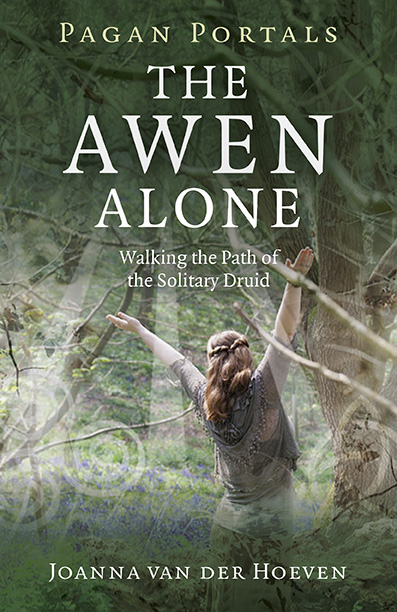
Kindle version of The Awen Alone: Walking the Path of the Solitary Druid is now available!

The Awen Alone Joanna van der Hoeven


The Kindle version of The Awen Alone is now available! Download your own copy for only £1.85.  Through the magic that is Druidry, build deep and abiding relationships with the natural world and walk a path of truth, honour, service and commitment.

Book Review: The Awen Alone

Guest blogger Maria Ede-Weaving reviews my latest book,  The Awen Alone: Walking the Path of the Solitary Druid on Philip Carr-Gomm’s blog. Thank you, Maria, for your lovely words – I am well and truly chuffed to bits.

The Awen Alone Joanna van der HoevenDruidry is a fast growing tradition and whether by necessity or choice, many of its practitioners walk the path alone. Sharing a tradition and its spiritual practices with others can be richly rewarding but it is not for everyone and Joanna van der Hoeven’s latest book The Awen Alone: Walking the Path of the Solitary Druid illustrates that a solitary path in no way diminishes the wisdom and inspiration that Druidry offers.

The book is organised into three sections: the Basics of Druidry, Druidry in Practice and Creating Your Own Path.  The first deals with the history and what Druidry is, examining subjects such as the Awen, the Gods, the Ancestors and festivals. The second delves into practices such as meditation and pathworking, altar creation and rituals, whilst the third gives suggestion as to how the reader might design and walk their own path.

Joanna has already written two wonderful books in the Pagan Portals series published by Moon books: Zen Druidry and Dancing with Nemetona.  Pagan Portals are great little books that serve as doorways to a subject, a starting point for further reading. The Awen Alone is also part of this series and although it is a small book, it is large of heart; Joanna manages to perfectly distil core wisdom in an accessible and perceptive way that loses none of the richness of the subject.

Throughout you get a real sense of Joanna’s commitment to her practice; of the wisdom gained through an honest devotion to discovering her truth.  She reminds the reader that one of Druidry’s greatest strengths is that it encourages relationship with self, community and nature and that this brings its own responsibilities and inspiration. Druidry has no Dogma and this has led some outside the tradition to judge it as a ‘do what you fancy’ spirituality that lacks depth. The Awen Alone challenges this assumption by exploring a Druidry that strikes the perfect balance between acting upon the freedom to discover what Druidry is for the individual whilst sharing core values and principles that give shape to it as a philosophy. Joanna’s approach reminds us that we must move beyond reacting to truly responding and relating, and in this way our practice will remain flowing, flexible and open – enhancing our sensitivity to the changes that we must make, whilst at the same time feeling ourselves rooted in the tradition.

As a guide for the solitary Druid or beginner, The Awen Alone can’t be faulted – the reader is in very safe and knowledgeable hands – but in my view, it is much more than a ‘how to’.  Joanna’s book stands on its own as a concise and insightful exploration of Druid philosophy. For me, The Awen Alone helped me to re-engage with my own practice with some renewed enthusiasm and a deeper appreciation and understanding of this path that I follow. Its useful suggestions and exercises are perfect for those new to the Druid path, but Joanna’s depth of understanding and her ability to deliver this in an accessible yet profound way, makes this a book that Druids with many years of experience can learn from.  – Maria Ede-Weaving

The Self and the Middle Way

I’ve just been introduced to a wonderful concept, a very different view of the Middle Way by Vietnemese Zen Buddhist monk, Thich Nhat Hanh in his book, Beyond the Self: Teachings of the Middle Way.

So many people interpret the Buddha’s teachings of the Middle Way as walking between two extremes, of finding a middle ground between points of view. However, Thay talks about how we need to throw out all duality in order to truly understand the Middle Way. We do not walk between two extremes, but instead we throw out the concept of the extremes. We let go of dualistic points of view, and in doing so we are further able to release notions of the self in order to fully integrate with the world.

This has resonated so deeply with me, as for the past couple of months I have been exploring the release of the self and integration with the natural world as a result. To walk the middle way, we must, as Thay suggests “throw out” instead of letting go – as letting go still concedes to a dualistic nature of existence, and a self that is separate from nature. If we throw out all these ideas we are left with nothing but possibility.

The idea of the Middle Way, of changing the way that you think by throwing out dualities, has some other very interesting concepts to chew on. What happens if you throw out anger and joy? What happens when you throw out pain and bliss? Walking the Middle Way is not about never getting angry, or upset, or joyful, or blissful. It is about releasing ideas of opposites, and seeing the potential that is created in doing so.

How does this work then? If we throw out ideas of birth and death, we are simply left with manifestation of existence in all its forms. This reaffirms my belief that life does not begin when we are born, nor stop when we die: we simply change form, decomposing into the soil, molecules breaking down, chemical reactions occurring. We are released into the air through the plants growing around us, released into the water table, we fall as rain or snow, we are in the wind. There is no beginning and no end. When the conditions are right we manifest in different forms, whether that be human, water molecule, etc. When we strike a match, the flame does not come out of nowhere: the right chemical reaction must occur. When the flame is blown out, it does not disappear into nothingness, but simply ceases in that manifestation. When the conditions are right, it can appear again. As Thay puts it – clouds cannot die.

For me, this is the concept of reincarnation, exquisitely explained.

With regards to the self, we can take this further, realising that there is no separate self. We are beings that, like everything else on this planet, require the existence of other things in order to manifest. We are entirely co-dependent, there is nothing on this planet that can exist without other things. A cloud needs water and other elements in order to be. Humans needs water, food, shelter, oxygen and a host of other things in order to exist. Everything is interconnected. We cannot separate one thing from another – it is simply impossible. When we realise the interdependence of existence, we see that there really can be no separate sense of self – we are made up of millions of other human and non-human elements.

Thay goes further into describing all these other elements as having their own vitality, their own purpose, their own consciousness. Each thing is equally important in the manifestation of all existence.

For me, this is animism, exquisitely explained.

It is so wonderful when concepts that you hold so dear to your heart, concepts that you regularly meditate over, are expressed within a different religious path so eloquently. It shows a shared human experience, and a shared global manifestation of consciousness.

Thay is currently in hospital, aged 88 having suffered a brain haemorrhage. He is making progress, and we all wish him the best in his recovery, should that happen. Whatever may happen, we wish him peace and love. His teachings have made him a true hero of our time.

The Curse of Self-Awareness

As homo sapien sapiens, the beings that are aware that we are aware, we have a great gift in terms of our species title (though personally I’m not sure that this is pertinent only to human beings). We also suffer from a great curse: the curse of self-awareness.

Being self-aware can help us to achieve wonderful, beautiful things, striving towards peace and harmony with all creatures with pure intention, awake and aware of how you respond to situations and seeing where you “fit”. It can also lead down the slippery slope of becoming drowned in your own sense of self and of not being able to see beyond that. We can get lost in our heads in a made-up world instead of actually being in reality. We can create situations, linger on emotions and situations that are no longer relevant, and simply be too self-focused, missing out on the beauty, wonder and magic that life can offer us at any given moment.

Much of Paganism and Druidry begins by looking at the self, of finding where we fit within nature. Locating that sense of self is important. However, it shouldn’t end there – we must look outwards as well, otherwise we are missing out on everything that nature is communicating with us in relationship. Druidry is, after all, all about relationship, a two-way flow of energy.

Lift the curse of self-awareness, and look beyond the self to be inspired by the beauty and wonder of the world around you. Finding where you fit, and then listening and being inspired by others, in whatever form they may be – that is the greatest gift.