Reblog: Trees as Teachers

Here is my latest blog post for my channel Druid Heart at SageWoman on Witches and Pagans. Welcome to the greening of the land!
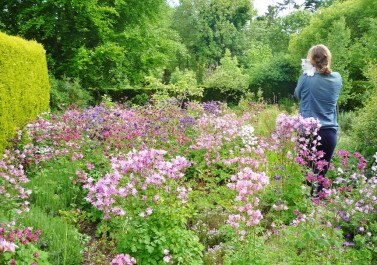
P1070665 (1024x666)The trees are almost in full leaf now, with only the ash and aspen yet to join in the greening. It’s been an odd Spring, with the oak trees in leaf before the hawthorn has come into flower here in Suffolk. Only now are the first blooms of the May tree coming out, and with it the signs that herald for me the coming season. The warm days have certainly been a blessing, and the light rain that falls today is equally welcome after long hot days of full sunshine and cool sea breezes.

It’s at this time of year that I am reminded of just how important trees are to me, not just in their life-giving properties but also in their spiritual presence. The deciduous trees with their lush foliage always bring a smile to my face, and after a long winter of sleep to see the beech tree at the bottom of my garden joining in the party that the younger birch trees have started fills my heart with joy. The grass is lush and green, and everything just feels so very much alive. I welcome the greening with all my heart and soul.

Trees are magnificent teachers. They are so much larger than we are, both spiritually and physically. They remind us of what it means to live a life in service to the whole, to live a life filled with integration and harmony, sustainable and at peace. Trees teach us of communion and integration, both at the deep root levels of our soul and reaching out towards the heavens of our soul’s awakening. They teach us of symmetry and asymmetry, of co-operation and anarchy. They are a legion of souls across this land, swaying in the wind, living their intention and benefiting all those around them by doing so. There is no sense of “I” with a tree; rather, it can instigate a better sense of “You” (or “yew”, pun intended).

When we develop a relationship with trees, we think about ourselves less, rather than think less of ourselves. We are reminded that we are a part of an ecosystem, that the ecology of our spirituality is all important to our everyday lives. This ecology is absolutely integral to who we are as a species, and part of a place and environment, as part of life on this planet. We cannot separate this ecology in any shape or form. It is in everything that we do.

We are not far removed from our cousins who still live in the trees. We’re all just monkeys with car keys, after all.
Inspiration for a Zen Druid

What drew me into Zen Buddhism was the fact that it didn’t matter who you were or where you came from when it came to learning the wisdom of the tradition. The same goes for Druidry as well. Yes, there can be an ancestral link to the tradition that you might find will perhaps deepen either practice for you personally, but you don’t have to be from a particular place in order to practice either tradition. Zen Buddhism and Druidry may have common roots in India’s Vedic tradition, which goes some way to explaining the many similarities, however one does not need to worry about cultural misappropriation when following either tradition. They welcome one and all to their path, as long as it is walked with respect.

Both Zen Buddhism and Druidry are all about what you do: not who you are or where you came from. Working with compassion, deepening the connection to nature and the world around you, there is a holistic healing of the soul that happens when this is embraced, allowing an integration that just seems to flow easier, where the awen shines and peace of mind and body are attainable. Being utterly awake to the present moment, seeing the Buddha-nature of everyone, and remembering that Buddha-nature within our souls can help us to ease the pain of separation that modern culture and society seem to promote in a theology/philosophy of duality. When we realise that we are part of an ecosystem, systems within systems, we work better, understanding our part and working for the benefit of the whole rather than the self. It promotes a thinking where one doesn’t think less of the self, but rather thinks of the self, less.

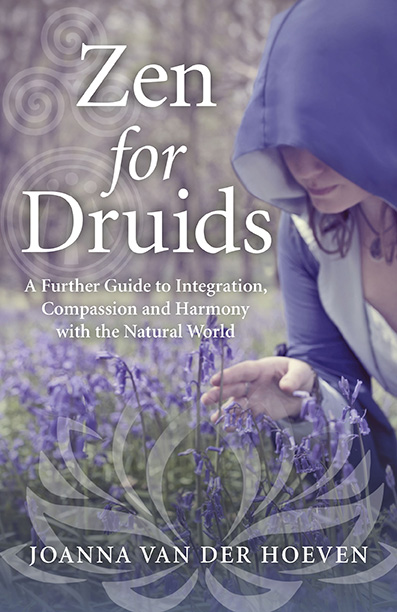
The magic and wonder of Druidry and the natural world, and the philosophy and practice of Zen Buddhism have allowed me a deep sense of peace and wakefulness to the world. They complement each other beautifully, each tradition having its own wisdom that is there for everyone to discover. If you’d like to learn more about either tradition, I’ve put together a reading list below from my upcoming book, Zen for Druids: A Further Guide to Integration, Compassion and Harmony with Nature. These are the tools that helped me on my journey (with some of my previously written books thrown in there too), and I hope that should they be of interest, you might also find them of some benefit as well.

Blessings on your journey, wherever your path may take you!

Bibliography and Suggested Reading

Adamson, E. & McClain, G. (2001) The Complete Idiot’s Guide to Zen Living: Alpha

Allen, R. (2002) Zen Questions London: MQ Publications Limited

Beck, C.J. (1997) Everyday Zen London: Thorsons

Beck, C. J. (1995) Nothing Special: Living Zen New York: Harper Collins

Carr-Gomm, P. (2002) Druid Mysteries: Ancient Wisdom for the 21st Century: Rider

Hanh, T.N. (2001) Anger: Buddhist Wisdom for Cooling the Flames: Rider

Hanh, T.N. (2012) Making Space: Creating a Home Meditation Practice: Parallax Press

Hanh, T.N. (2015) No Mud, No Lotus: The Art of Transforming Suffering: Parallax Press

Hanh, T.N. (2008) The Miracle of Mindfulness: Rider, Classic Ed Edition

Hanh, T. N. (1993) Interbeing: Fourteen Guidelines for Engaged Buddhism: Parallax Press

Hutton, R. (2011) Blood and Mistletoe: The History of the Druids in Britain: Yale University Press

Kirkey, J. (2009) The Salmon in the Spring: The Ecology of Celtic Spirituality: Hiraeth Press

Lama, D. (2005) Essence of the Heart Sutra: The Dalai Lama’s Heart of Wisdom Teachings: Wisdom Publications, U.S.

MacEowan, F. H. (2002) The Mist-filled Path: Celtic Wisdom for Exiles, Wanderers and Seekers: New World Libray

Matthews, C. (2004) Celtic Devotional: Daily Prayers and Blessings: Gill & Macmillan Ltd

Talboys, G. (2002) Way of the Druid: Rebirth of an Ancient Religion: O Books

Tzu, L. (2002) The Complete Works of Lao Tzu: Translation and Elucidation by Hua-Ching Ni: Sevenstar Communications U.S.

Restall Orr, E. (2004) Living Druidry: Magical Spirituality for the Wild Soul London: Piatkus Books Ltd

Restall Orr, E. (2007) Living With Honour: A Pagan Ethics O Books

Restall Orr, E. (2000) Ritual: A Guide to Life, Love & Inspiration London: Thorsons

Restall Orr, E. (2012) The Wakeful World: Animism, Mind and the Self in Nature: Moon Books

van der Hoeven, J. (2014) The Awen Alone: Walking the Path of the Solitary Druid: Moon Books

van der Hoeven, J. (2013) Zen Druidry: Living a Natural Life in Full Awareness: Moon Books


Internet Resources

Order of Interbeing http://www.orderofinterbeing.org

The British Druid Order http://www.druidry.co.uk

The Druid Network http://www.druidnetwork.org

The Order of Bards, Ovates and Druids http://www.druidry.org

Zen Buddhism http://www.sacred-texts.com/bud/zen/index.htm

Zen Guide http://www.zenguide.com

Zen for Druids…

Production is underway, will have a release date shortly! Stay tuned…

Zen for Druids front cover.jpg

What is the Awen? (Video Blog)

Fire in the Head

Well, the manuscript has been handed in for my next book, Zen for Druids: A Further Guide to Integration, Compassion and Harmony with Nature. I’ve just come back from a fabulous weekend of teaching at Druid College. It’s been a busy few weeks, to say the least! Everything is coming together, after the nourishing rains and sunlight, both in the inner worlds and the outer. The bluebells are out in full force, the awen is flowing and the sunlight every growing. Beltane is near.

These past few years I have learned so much about my local environment, having moved from the city to the country back in 2010. Being a country girl at heart, it was like a huge sigh of relief, getting away from the concrete and out into the sweet-smelling air of the rural countryside. I have explored the ancestors of place, finding ancient Celtic settlements, henges and tumuli. I have also discovered that my ancestry, with regards to ethnicity through DNA testing, is 56% British (“native” British people are usually 60%), which was a shock as I had pretty much thought all my ancestry would be Western European, seeing as I could trace my family history back to the Netherlands for at least 250 years. Does this give me a deeper sense of belonging to this land? It does, and it doesn’t. I feel less like a visitor, but then again I have been living here in the UK for nearly twenty years. When does someone become native? Is it justified by a length of time, by ancestry?

For me, I think it comes down to relationship. If I have soul-deep relationship with the land, if I am connected to it on every level, then I am home.

Where I live there are the songs of Celts and Saxons, Normans and Friesians. But it is the songs of the Celts that I find harmony with more than most, and being able to connect to these ancestors through blood, place and tradition brings an even deeper level of understanding to my being. I love living in Boudica country. I love learning more and more about the history, the theology. These have always got my fires burning, all throughout my schooling years as a child into adulthood. Now they feel a bit more solidified, a bit more a part of me than someone else’s stories.

Our teaching at Druid College combines the history and theology of both ancient Celtic and modern-day Druidry. I am blessed to have a co-tutor who is, in my eyes, the leading authority in this area (and many other world religions): Robin Herne. I feel that together we have created something that is truly special, truly unique. I have the most amazing students this year, our inaugural year, who inspire me in a beautiful cycle of awen and creativity.

Everything feels like it is coming together in wonderful synchronicity, in beautiful symbiosis. Flowing with the currents of awen, walking with honour and responsibility, ever inspired by the wonder of existence I simply cannot take anything for granted. The fires of Beltane will soon be lit. The fire in the head simply will not quit.

And so this Beltane I hope to travel out to the local ancient sacred spaces, to spend the night with the ancestors, lighting a fire and sleeping out under the stars, walking between this world and the Otherworld. The fire in my head will not allow me to do otherwise, it seems. The fire in the belly keeps me stoked. The fire in the cauldron brings potential and awen.

And if I’m not back in a hundred years, you’ll know where to find me!

The Song of Wandering Aengus

By William Butler Yeats

I went out to the hazel wood,
Because a fire was in my head,
And cut and peeled a hazel wand,
And hooked a berry to a thread;
And when white moths were on the wing,
And moth-like stars were flickering out,
I dropped the berry in a stream
And caught a little silver trout.
When I had laid it on the floor
I went to blow the fire a-flame,
But something rustled on the floor,
And someone called me by my name:
It had become a glimmering girl
With apple blossom in her hair
Who called me by my name and ran
And faded through the brightening air.
Though I am old with wandering
Through hollow lands and hilly lands,
I will find out where she has gone,
And kiss her lips and take her hands;
And walk among long dappled grass,
And pluck till time and times are done,
The silver apples of the moon,
The golden apples of the sun.


The Solitary Path

For me, Druidry is mostly a solitary path, though I do belong to some Druid Orders and networks, and celebrate the seasons with a small group of friends. But the everyday Druidry, the currents of intention that flow through me and my home, through the landscape where I live, is my main focus. Like learning, I always preferred to do so on my own, rather than working with a group, for I found that my concentration was higher, and I could have a deeper level of experience than I could with the influence of others upon my work. Indeed, personal and private ritual is always more profound than most shared ritual, though there have been a few occasions where, such as at the White Spring in Glastonbury, there has been a mix of private ritual and group celebration with my best friends deep within the cavernous walls that house those sacred waters that have changed my life forever.

Of course, we are never truly solitary creatures, but in this sense I am using the word solitary with regards to other humans. I am never truly solitary, for I am always surrounded by nature and all its creatures every single second of my life. I am always a part of an inter-connected web of existence. Living this connection, weaving the threads of my life to that of my environment and all that exists within it, means that there is no separation, no isolation. Yet, when asked to describe my path, I use the word solitary in the sense that I prefer to find such connection on my own, without other human animals around. Why this should be so is perhaps due to my nature: naturally shy, and sensitive to noise, light, barometric pressure and other phenomena, it is just easier to be “alone” most of the time. My husband is much the same, so it is easy to be around him for most of the time, taking day-long walks with him through the countryside, with little words between us, for there is no need for unnecessary talk; just being with another being in a shared space is enough. We live in a small village near the coast, so it is easy to get away from humanity by just walking out the door and down the bridle paths, or simply stay in and enjoy our beautiful garden visited by all sorts of wildlife, from deer and pheasants to pigeons and blackbirds, and even a family of badgers one time!

The path of the mystic is much the same, a solitary path where personal connection to the divine is the central focus. Some would say that the mystic path is the search for the nature of reality. For me, Druidry is the search for reality within nature, and so the two can walk hand in hand down this forest path. There are many elements of mysticism in my everyday life, where the songs of the land and the power of the gods flow through me, the knowledge from the ancestors deep within my blood and deep within the land upon which I live, rooted in its soil and sharing its stories on the breeze. To hold that connection, day in and day out, to live life fully within the threads of that tapestry is what I aspire to do, each and every moment. Sometimes a thread is dropped, and it requires a deep mindfulness to restore it, but practice helps when we search for those connecting threads, becoming easier with time and patience both with the world and with your own self.

The dissolution of the ego can be seen as at the heart of many Eastern traditions. Druidry teaches us integration, our ego perhaps not dissolving but blending in with that of our own environment. The animism that is a large part of Druidry for many helps us to see the sacredness of all existence, and in doing so we are not seeking annihilation, but integration. We can perhaps dissolve the notions and out-dated perceptions that we have, both about the world and about ourselves, leaving the self to find its own edges and then blending in to the world around us, truly becoming part of an ecosystem where selflessness is not altruistic, but necessary for the survival of the system.

The flowing inspiration, the awen, where soul touches soul and the edges melt away into an integrated way of being, has always been at the heart of Druidry. The three drops of inspiration or wisdom from Cerridwen’s cauldron contain that connection; contain the awen that, with enough practice, is accessible to all. We have to spend time brewing our own cauldron of inspiration, filling it with both knowledge and experience before we can taste the delicious awen upon our lips. Some prefer to do this with others; some prefer to do so alone.

It is easier to quiet the noise of humanity, and of our own minds, when we are alone without distraction. Notice I said “easier” and not “easy”, because again it takes practice. But time spent alone, daily connecting and reweaving the threads that we have dropped can help us create a wonderful, rich tapestry that inspires us to continue in our journey through life, whatever may happen along the way. Though the solitary path might not be for everyone, having these moments of solitude can be a great tool for deep learning, working on your own as well as working within a group, Grove or Order. Sometimes we need to remove ourselves from the world in order to better understand it, and then come back into the fold with a new awareness and integration filled with awen, filled with inspiration.

New video blog channel!

Hiya – thought I’d try something different, and have started a video blog channel! Don’t worry, this blog will continue as usual; I just wanted to try something new 🙂 I was a little nervous this first time, I must admit. I hope to be adding at least two videos a month. Feel free to subscribe for any new videos!

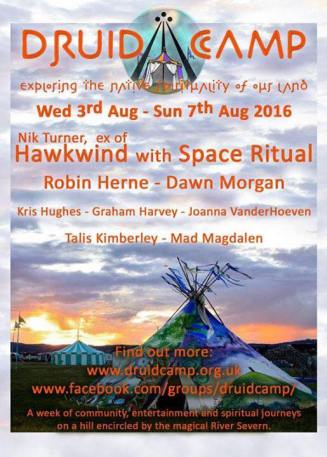
Druid Camp 2016

Druid Camp 2016

I’m so very much looking forward to Druid Camp this year, seeing old friends and having a brilliant, transformative, heart-warming time!  If you’ve never been, it’s a five-day event (though you can buy single day tickets) that celebrates the songs of our land. There are workshops, talks, music, ritual, healing area and more, as well as evening entertainment, lovely veggie food, hot showers, sauna and lots of other wonderful things to delight!

Reblog: How Altars can Alter our Practice

Reblogged from my channel, Druid Heart, at Witches and Pagans.

P1000491 (1024x640)Altars can have a very significant role in daily practice and worship, providing a focal point in establishing relationship. I try to highlight this importance with my students, explaining the benefits of have a focus within an area in which to open up communication with the spirits of place (or land, sea and sky), the ancestors, and the gods. Communication is essential to good relationship, and finding a spot to come back to again and again helps us to not only strengthen the bond between the person and the place, but also gives it a ritual context within which to commune. Often this ritual context is held within a temple, whether it is a building or creation of stone and/or timber, or a sacred circle cast with energy around the practitioner. The importance of the altar and the temple should not be taken for granted, though neither are exactly essential.

When beginning on the Druid path, having a place to work in that you can come back to repeatedly creates a special bond between the person and the place. A place has a very real impact upon a person, as we come to realise that we are not separate from the rest of the natural world. When we find our place within a place we are able to communicate openly, sharing freely that wonderful dose of awen (inspiration), the hum of energy where souls meet… (cont’d)

To read the full article, click HERE.

Deep Peace

This is known as a Celtic blessing, the source of which is uncertain, but it is beautiful nonetheless, arranged by Bill Douglas. I’m also partial to Bill Douglas’ arrangement of “The Clouds”.