I have found this to be true on so many levels. When my heart is open with compassion, and I think loving thoughts, then I feel love in return. The gateway to the heart does not go in one direction only; it flows freely in and out, up and down, all the way around. I am free.
When I think hurtful, hateful thoughts, my heart constricts, causing me pain in return. The gates shut, letting no one in, keeping myself locked within. With these thoughts, I find I am trapped.
As Pagans I feel that we naturally tend towards a worldview that is less anthropocentric, especially if we follow an animistic path. Our love of nature, whether it is the world around us, or human nature, or both leads us on a journey that can take us outside of our selves, and thereby gaining a wider perspective on the whole.
Deep ecology is about thinking less about the benefits towards humanity, and more about the benefits to the environment. Buddhism, with its tenets of compassion, is very much in a similar vein; we try to drop the ego in order to benefit the world, and by becoming less self-centred, are better able to help others. Some spiritual and secular journeys can put too much stress on human relations, and not enough on the wider web of life. Within Paganism, we can see that we are always connected, and that connection is what inspires us to lead a life more attuned to the natural cycles, or vice versa.
In my own Druidry, what I seek is total immersion in my natural environment. I strive to loosen my sense of self as an individual and instead seek to blend my song with that of the world around me, finding a harmonious union. When out walking on the heath or in the woodland, I let the “I” drop away, and become totally immersed in the present moment. I feel that this gives me a greater connection to the world, allowing what Buddhism calls the dharma to flow. Dharma is simply reality, which we so often tend to avoid at all costs. When we realise the beauty of the present moment, when we can truly live it in every sense of the word, then we are truly connected to everything. We become part of everything, and in this I also see the Druid concept of awen, or flowing inspiration; the life force itself.
If I can free myself of myself, I can open truly to the songs of the universe. There is no separation – I am the heath, the forest, the deer. Movements are made in full awareness, and every step is taken in love and reverence. Every breath is a blessing. Everything my eye falls upon is a gift.
In living such a life, what is fundamental is a respect for all things. This is at the heart of animism, which sees the inherent value in all things just as they are. No one thing is more worthy than another. Each thing is an expression of itself in full blossom, in full fruition. Even my self, my physical self, is simply energy taking form as my body in this present momen t and perhaps even my mind), for however long or short a time span. This body is in permanent change and flux, growing and changing shape, eventually dying. In death the change continues, and the form alongside the energy flows in different currents. My body will continue to change, as cells break down and bacteria work to return the physical form to the earth. The process of life and death, of decay and regeneration is honoured within Druidry and within animism. No one process even is more important than the other. Birth is no more important than death. What we do realise is that life has no opposite – there is only flow, change, awen.
My sense of self is of little consequence in the grand scheme of things. What matters is that I pay attention to what is happening around me, and use that to inspire me to live my life accordingly, with honour and respect. Paganism allows us to leave behind all the machinations of humanity to follow a different flow, one where we see where we fit in the puzzle. The love of nature inspires us along the path, demonstrating that there is more to the world that our own human lives. We are the country folk, the paganus. Even though we may live in cities, we still feel the pull and hum of nature around us, reflected in the sun’s cycles, the seasons, the flows of human nature.
Immersion is key. If we can allow ourselves to not only ride the current, but become one with the flow itself, we are then blessed with a wholly different perspective not based upon human need and desire. There is much more to the world than our anthropocentric view, and we honour that world with all that we are.
Can you remember the last time you were unkind to someone? Or thoughtless about something? Chances are, it doesn’t make you feel all that good – it probably makes you feel smaller, inside. When I remember acts of unkindness, either done by myself or done to myself, I feel a squirming inside, an uneasiness.
Still working on thoughts with compassion, exploring words and acts of unkindness has been an enlightening experience. Looking deeply at how it made me feel, what my reactions were, what others’ reactions were, what the outcome was, how it could have been prevented – all these I have meditated upon these last few months. What I’ve come to realise is that no one likes to be unkind. There is no joy from it; perhaps if you are mentally ill, or there is a function in the brain that is not working as it should, then maybe you don’t feel bad, but on the whole, unkind acts do not produce any joy, any feelings of wellness.
Through our connectivity to each other, we perhaps have a deep-rooted empathy that we can acknowledge, if only we allow our ego to fall away, to quiet down and listen to what others have to say above the racket in our own brain. We all share a life force; we all share a space on this planet, in this universe. We are all thinking and feeling animals – if you are an animist, you also acknowledge a consciousness and inherent value in all things. As humans, we all breathe the same air, air expelled from the lungs of others, turned into oxygen through various other life forms, breathing and sharing, breathing and sharing, the life breath that our ancestors breathed thousands of years ago, the life breath our lover breathes right now.
The word “kind” can mean a generous, benevolent, good person or deed, act or consideration. It can also mean to be of a like group of individuals or objects – being of the “same kind”. What I would posit is that the two meanings are entwined – kind thoughts, acts and deeds are a direct result of and inspired by being of the same kind.
Being unkind is distancing your self from others, making a distinct split in compassion from others, sometimes even diving into self-centredness in an anthropocentric world view. Yet this distance, this separation is false – we can never be other than another life form on this planet. Another life form – we are surrounded by others all the time. Some are seen, some unseen – some are natural forces that create and destroy with violence or beauty, others are microscopic and surreal in their manifestation. Yet we are never alone.
I think that the natural human tendency is to be kind towards others, for we have a specific consciousness that allows us to see and feel the repercussions of our actions. We have the capacity of forethought, yet we use it all too seldom. We are homo sapiens, the beings that are aware that we are aware. If we truly are aware, then unkind thoughts and deeds would not ring true in our heart of hearts. Awareness is a journey towards the cessation of suffering. If we are truly aware, then our suffering is eased.
Awareness comes in many forms, from simply being in the present moment to an understanding of the grander scheme of things, or seeing things from outside of your own personal perspective. For how often has our perspective been wrong? When we have been unkind to others, chances are it is because our perspective was skewed, and we reacted badly to a situation. If we remember compassion, and strive to see the bigger picture, then with a little discipline and a lot of love we can change or modify our behaviour to help ease the suffering of all beings.
Those people who are unkind are trapped, and it may be helpful to remember that. When someone is unkind to us, we can act with compassion. Sometimes that may mean seeing things from their point of view. Sometimes it may be walking away from a situation with honour and integrity. When we find ourselves being unkind, or remember past deeds that are less than glowing, we can remind ourselves that it is up to us to choose freedom over chains. We don’t have to let our behaviour rule us. We can be passionate and loving without allowing emotion to skew our perspective. Emotion is such a personal thing, that it’s no wonder our wires get crossed all the time. It’s all about perspective.
In all things, I try to remember two words: be kind. x
* Sparked by a conversation I had today with a lovely chap and artist (known as Bird Radio – do have a listen, there’s some really good stuff here! https://soundcloud.com/birdradio) about perceptions, connectivity and many other things, this blog post simply poured out of me, and reminded me of the serendipitous nature of life and reality when it comes to, well, life!
We are still taking bookings for The Little Pagan Monastery – if you would like to try a weekend away dedicated to the spiritual, and finding ways of incorporating that into your everyday life, then this may be just the thing! Set within the beautiful grounds of one of England’s most holy sites, Chalice Well Gardens, let this weekend inspire you!
I’ve recently watched Dan Snow’s latest expedition, to travel down the Colorado River through the Grand Canyon in three boats from the late 19th century, just as Powell did. It was a really interesting show (not just because of the equally gorgeous and intelligent Mr Snow) that not only demonstrated the awesome power of the elements, but also those of human nature.
Each boat has three people in it – an experienced helmsman, an experienced boatman and a novice. The three novices were Dan, Mike (you may know him from Springwwatch) and another chap whose name eludes me – historian, ecologist and geologist respectively. They all had to work together as a team to see it through to the end – 18 days of incredible physical and mental challenge amidst one of the world’s most beautiful and dangerous environments.
Each person had to pull their own weight, despite their experience, and each person did so without fail. They all tried their hardest and it was inspiring to see. What was not so inspiring was another aspect of human nature that arose from one of the boats – namely, the blame game.
In one of the three boats, Mike was having a harder time than the other novices. Whether that was simply his lack of skill and learning, or insufficient support and teaching from his colleagues, is up for debate – we could not see everything that happened in this edited television show. What I did see however, was an aspect of human nature that really opened up my eyes not only to how other people treat each other, but how I’ve treated others in the past as well.
It started with the “expert whitewater kayaker” beginning to complain to the camera about Mike and his lack of ability. It would seem that instead of taking extra time to help the novice and support him, he would rather complain to the camera away from the group. He blamed Mike for the difficulty their boat was having in the rapids. However, what we all saw was at the first set of rapids, the kayaker falling out of his seat pretty much at the first bump. Whether this started off something in his mind that needed to help him save face, changing the focus from his own inability, mistake or accident, and blaming someone else for it we can never know for certain. It certainly appeared that way to me.
Since then, he complained on several occasions to the camera in isolation. Then his helmsman made a mistake, taking the boat down backwards in the hopes of having better steering in one section of rapids. The boat that went through before managed it. I’m not an experienced boatman, but I could see in those churning waters that the oar would snap like a twig if caught on a rock, which it did. After that, the helmsman began to complain to the camera as well about Mike, who was simply doing his best to row and keep the boat going straight and bail when he needed to – there really was nothing else he could do. At one point we saw the helmsman shout at Mike to bail, and Mike’s pail got caught up in part of the boat’s rigging – not that it would have mattered, for bailing in the middle of those rapids was, to me, pointless – the boat was already full at and the mercy of the river. Mike began bailing as fast as he could, but another wave just crashed right in. He would have been better off rowing, but he still got yelled at.
This all made me very uncomfortable. I hate seeing people getting picked on when they are trying their best. But I was also inspired by Dan’s boat, which seemed to have some sort of Zen Master at the helm. This chap was brilliant – he was so calm, so peaceful, never shouting orders and seeming at one with the river – when he took his boat down the rapids, he steered it down the path of least resistance, without effort. A beautiful thing to witness. Soft spoken and mild-mannered, and an accomplished musician, his calming influence was a gentle reminder to me to keep my Zen on and have compassion, even for those who were irritating the hell out of me on the show.
That’s not to say that the Zen Master Helmsman’s boat didn’t make any mistakes. His boat came the closest to capsizing in one of the most difficult rapids. They didn’t make the line they were going for down between the rocks, and got swept away down a fast sluice heading straight towards the canyon’s rock walls. His oar got ripped from his hands in the roiling water, and they were at the mercy of the river. The other helmsman would have shouted his head off at this point, but Zen Master Helmsman kept his cool – it was a beautiful thing to behold. He had lost his oar, all manner of steering, and the boat swept into the curve of the canyon (you can see it on the video). The boat kept to the curve, the water sweeping it close but not up against the canyon wall. Then the boat began to tip over on its right side. Dan lost his seat and fell into the right side wall, nearly out of the boat. ZMH calmly reached for the left side of the boat, push against it with his body weight, counterbalancing the tipping boat, and it righted itself. You can’t hear it on the video, but he was also calmly talking and encouraging his fellow crewman throughout, saying “Stay calm, just stay in the boat, take it easy”. They made it through, without yelling, without panic, without blame.
Everyone makes mistakes. With three people in a boat, you cannot blame one person for the boat going wrong. Everyone is in it, working together to try and go in the same direction. There are so many variables that to blame one person it pointless. Staying calm, looking out for your crew members and acting with compassion is the way forward. By observing this, the three simply followed the river’s flow. There was nothing else they could do, so why increase suffering?
Compassion is all about reducing your suffering. The two complainers in the other boat did not seem to grasp this. Instead of helping they made things worse. I hate to think what would have happened had it been their boat that nearly capsized. However, their boat did not escape unscathed of a terrifying experience.
On the next section of these last, and most dangerous rapids, Mike’s boat lost their helmsman as he was washed away in a giant wall of water that hit the boat. No one’s fault – you cannot blame crew or wave or river any more than you can blame the sun for shining. The helmsman managed to hang onto his oar under the water, and pull himself back to the boat, floating down the rest of the rapids with it, finally being pulled back into the boat at the first opportunity. This was the changing point for that crew.
The fragility of human existence hits hard when confronted with the very sudden realisation that you or someone you know could have died in a certain experience or circumstance. This realisation did indeed hit Mike hard, as we saw when the camera was on him when they were on the beach after these rapids – he was brought to tears by the whole experience. It also brought the crew together – the kayaker who originally tried to blame Mike for everything saw Mike’s suffering, and came up to give him a hug. Petty blame games mean nothing when you realise just how precious and precarious life really is. Alleviating suffering is much more conducive to peace than creating more suffering in this lifetime.
What I realised from this show is that blaming people does not solve anything. It does not even make you feel better – it increases your own suffering, because everything that person does upsets or annoys you from then on. Also, when you blame someone, you instantly block out any form of objectiveness in the situation. You have established a truth for yourself that blinds you to seeing the bigger picture. Believing in this truth is dangerous. Believing that one person is wrong and that you are right is what has caused innumerable amounts of suffering in the world. Opening your heart and mind in compassion, in trying to see the bigger picture and in trying to make the world a better place would be far more beneficial to all.
I looked back at the times in my life when I had played the blame game, making others the culprit for everything that had gone wrong. Like those boats in the river, there were so many variables that one person could not be responsible for everything. The only thing we can be responsible for is ourselves in this life. If we try to help others instead of break them down, if we see our own failings before we blame others, we might change our behaviour into something that is more compassionate.
Driving to the RSPCA today to visit a cat that I am adopting, I was cut off by a car speeding in a residential area. My reaction to it was simply to keep driving, and hope that the person in the speeding car finds peace within him or herself that could be reflected in their driving. Getting mad at the other driver would not solve anything except to make me suffer. (On the way home, I did see that they are now installing speed cameras along that stretch of road, for which I am glad).
We all make mistakes. We can blame others for what we perceive to have gone wrong with our lives. Or we can simply get on with making this world a better place, communicating with compassion towards everyone, even our enemies. We may then realise that we do not have enemies in the first place. We can even wallow in guilt, blaming ourselves for everything that has gone wrong instead of working out best to improve the situation – I know which I would rather engage with. We stand strong, we act responsibly – like ZMH we have the ability to respond to a crisis situation with calmness and grace, even when faced by enormous odds and potential life-threatening situations. We are all simply boats on a river, either working together or alone to stay afloat, at the mercy of the elements and each other.
I am taking a leaf out of Zen Master Helmsman’s book. He was a total dude.
Within Druidry, and indeed in modern Paganism, it is usual to adopt a craft name within your tradition. It is not necessary, and if you feel that you don’t need one, or one doesn’t appeal, then by all means forego the craft name. However, choosing a craft name, or having one bestowed upon you can enhance your connection to your tradition, if you allow it.
Craft names can provide an air of mystery and magic. We can choose something that reflects our work, such as Oak Seeker, Coll (hazel, if working with ogham), or Pathfinder. We can choose something that reflects a part of the environment that we love – Alder, Willow, Rain. We can put two words together that express a deep part of our soul, or a deep love that we have, such as Gentle Bear, Running Horse, or my craft name – Autumn Song. We can adopt names of the gods and goddesses that we love, such as Nehalennia, Freya, Lugh, Branwen, Rhiannon, Bridget. There are also mythological names like Merlin, Morgan and Nimue that might strike a chord deep within our hearts. We can even choose names from fantasy books that we love – Gandalf, Radagast, Arwen, Goldberry, Eomer, Eowyn, Faramir (all Lord of the Rings names). What matters most is that our name expresses a deep part of our soul; that when we utter it, write it, exhale it into the twilight it means something to us, connects us to the awen.
You can inscribe your craft name upon your altar, or your tools. You can sign correspondence with it. You may even change your name to your craft name if you feel that better reflects who you are. I like having both names, as I can honour my two grandmothers for whom I am named after, and honour my tradition with my craft name. Besides, it took me long enough to learn how to write my own name, and I’m sticking to it…
We might choose our craft name, or we might be gifted it by another. We could meditate, commune with the local spirits of place, or deity, and ask that they bestow us a name. In some magical traditions, a craft name is given upon initiation into the tradition, or upon completion of various grades. When working alone, we do not have to wait to have a name bestowed upon us – we can seek it out ourselves from whatever inspires us whenever we feel ready. We can ask our ancestors, our spirit guides, even friends and family for ideas and inspiration.
Our craft names may also change with time. As we grow and develop in our spirituality, we might find that we outgrow our name, and thereby be inspired to choose another that better suits our current work. We can include our naming in ceremonies, whether it is our first time or our fifth time in choosing a craft name. Taking on a name is not something to be done lightly, however. It requires much thought and meditation if you wish for it to be important to your work.
Whatever name you choose, or however you decide to be named, honour that name with all that you are. Find ways of being that reflect your name in deep and compassionate ways, working to create peace and harmony in your life and in all life around you.
The Celts had Indo-European roots, migrating across Europe and leaving their mark across many countries. They share many similar spiritual beliefs to other traditions – Buddhist, Saxon and Norse just to name a few. There are similarities in artwork and other modes of creative expression. Finding something that is “pure” in any tradition is, at least in my opinion, unattainable. We are constantly being influenced by other people, whether it was 50 years ago, 500 or 5,000 years ago.
Incorporating Zen and Druidry has given me a personal life path that makes a lot of sense in my daily practice. Simply because Zen Buddhism is an Eastern tradition doesn’t mean that it can’t work with what is commonly thought of as a Western tradition. (For a more in depth look at Druidry and other Dharmic paths, including Buddhism, Jainism and Hinduism, Philip Carr-Gomm has written a brilliant page on The Order of Bards, Ovates and Druids’ website – http://www.druidry.org/druid-way/other-paths/druidry-dharma.)
Zen and Druidry blend together to form a life path that is utterly devoted to being in the present, giving the Druid a total immersion within nature. This immersion, not just going with the flow but being the flow itself, is what makes it so special. Zen teaches us to let go of our sense of self, to silence our chattering minds in order to be able to pay attention to the world at large. It also teaches us of discipline, learning how our minds work and how we are so often ruled by our minds, through bad habits, reactionary living, destructive behaviour and so on.
With Soto Zen, the mind is brought under control through hours and hours of meditation, of learning to simply “be”, slowly and gently silencing our “monkey mind” so that we may better hear the songs of the universe. This is what is meant by releasing the sense of self – it is not, as so many people assume it to be, becoming a mindless zombie. It is allowing other songs, other voices to be heard above our own so that we may better integrate. We will still have opinions, but we will cherish them less, for we know that everything is in constant change and flux. We will have a sense of self, but again we hold to it lightly so that we may better see where we fit in the world and where we can do the most good. It is not annihilation – it is immersion, awareness and mindfulness.
Within Druidry, we learn to work with awen, with inspiration and the flow of life itself to see where we fit in the grand scheme of things. We work to see how we can live with the least harm to ourselves and the planet, and also what we can do to make the world a better place. We work to create peace within ourselves and peace in the outer world as well. Using our natural abilities and skills, we may work with songs and poetry, or with visions or herbal medicine, with roles in teaching and counselling, in law or in environmentalism – the list is endless. We are devoted to helping and conserving nature and our planet, sharing the awen and giving back for what we have received.
Using the techniques from Zen for training the mind and the love of nature from Druidry we can find a way to immerse ourselves in our spirituality that is so deeply integrated on so many levels. When out walking in the forest, we can lose our sense of self in order to become the forest. Once we are the forest, we are able to drink deeply from the flow of awen that is all life around us. We become the trees, the deer, the fox, the boulder, the streams and the badger. We can learn so much from this integration which can also rejuvenate us, providing us with even more inspiration. We are not looking at ourselves being at one in the forest; we have lost even that in order to become the forest. When we are fully immersed in simply “being”, we are fully in the flow of awen.
Our footsteps become lighter, our passage barely noticeable. Like the deer, we are able to bound through the trees, awake and aware to every sense. Indeed, all our sense become sharper, clearer, for our minds are not running us ragged thinking about what to have for dinner, that paper that is due, the meeting we have on Monday. Fully in the moment, we become the awen.
Zen Buddhism has also leant another aspect to my Druidry that has been rich and rewarding – the idea of compassion. Again, many people misinterpret compassion, seeing it as weak, or being a pushover. Why be kind to others when so few are kind to us? Living with compassion is what enables us to connect once again to that all important word in Druidry – awen. The songs of life can only be heard if we try to understand them. We cannot understand them unless we open ourselves to compassion.
In one of the Grail legends, Perceval reaches the wounded Fisher King, and is invited into his castle. The knight does not ask the King why he is wounded, or how it happened. He shows no interest in learning the story behind the wounded King. Upon sharing a meal with the King, the knight also sees a courtly procession whereby a young maiden carries the Grail through the hall repeatedly throughout the night. Again, trying to appear worldly and nonchalant, Perceval does not ask about this. These two incidents are the clues in which the Fisher King might be healed, and in which Perceval failed at his chance in finding the Grail. If he had only asked the King “What ails thee?” then the King would have been instantly and magically healed. If Perceval had only asked “Whom does the Grail serve?” he would have understood its purpose, and achieved the totality of his quest.
The simple question of “What ails thee” is the showing of compassion. It is taking ourselves outside of our own minds and our own troubles and asking another person what is wrong, seeking to alleviate their suffering. Also, by asking our selves (the separation of the words, instead of writing ourselves is intentional here) “What ails thee?” we take the time to look within, to perhaps explore shadow aspects of ourselves. Within many Eastern traditions, it is through meditation that we understand our selves better, and also understand and redirect our reactions to the world – ie. instead of simply reacting to an event, we act with intention, with mindfulness and awareness. With the Grail question, we can ask this of our selves as well as others in pretty much any situation, therefore eliminating a reactionary response for a more intentional approach. In doing so, we may just find the healing for our selves and the world that is so needed.
The second Grail question, “Whom does the Grail serve?” invites us to question our intention. Whether we are experiencing pleasant or unpleasant aspects in our lives, we can ask our selves “who does this serve?”, thereby eliminating that which is no longer necessary, and bringing joy, awe and wonder back into our lives. With old habits and patterns of behaviour that we wish to be freed from, we can simply ask this question over and over again until we have the answer that is required for spiritual growth. We can ask this question in every aspect of our lives, from our weekly shopping (in order to make better choices not only for ourselves, but the planet) to our everyday interactions with other people. If we are making a positive change instead of falling into negative, but comfortable patterns then we are on the road to spiritual progress. Reminding our selves of the Grail questions has been integral to my learning these past few months, becoming a mantra for everyday life.
In our quest for wholeness, we can either run around in circles, questing after the Grail through established means, or we can simply look within to gain a better perspective on compassion and the divine, whether it be male or female, or even genderless. It is the deep exploration within that allows us to bring that knowledge out into the world – we cannot simply spend our lives gazing at our own navels – we must bring the Grail out for the benefit of others. We must offer the gifts of compassion and self-awareness. In this, the Grail Mysteries are best served.
In this way as well, both Eastern and Western traditions come together to allow us to help not only our own suffering, but that of the world. We can learn the values of compassion and mindfulness, and we also look deep within for the inspiration to live an integrated life that reflects the natural cycles of the world around us.
We do not simply touch the awen every now and then – we become the awen ourselves.
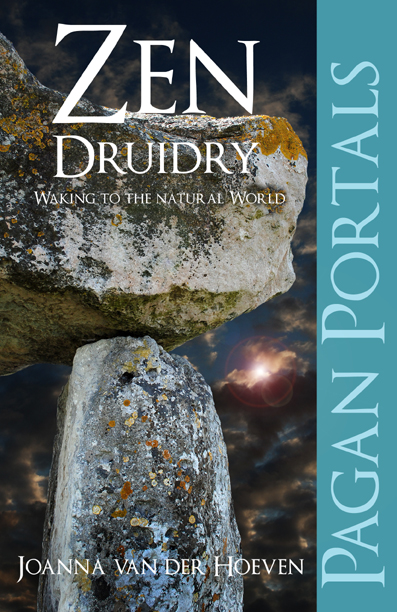
Zen Druidry still at the low Kindle price of UK £1.23 – what a lovely number! Paperback copies available starting at £1.05, used copies from only 99p. In the US, copies start from $2.02 (another lovely number) and in Canada from $0.01!!!) . Read reviews by leaders and authors in the pagan community such as Philip Carr-Gomm, Graeme Talboys, Nimue Brown and more! Part of Moon Books‘ Pagan Portals series.
Today I have the day to myself – no one else, just me in the house with my cat. For me, it is pure bliss. After the sometimes chaotic nature of the holiday season spent in constant company, whether that is with beloved family or friends, a little downtime is a blessing. I love these moments, when I am free to do as I choose, when the house is quiet and no one needs anything. I can write or listen to music, meditate without extraneous noise, or simply just sit in the conservatory with a cup of tea and enjoy the silence and the season. After busy times, I crave solitude.
In today’s society, however, I am seeing more and more evidence that people do not want to spend time with themselves. There are constant distractions everywhere, the worst culprit being mobile phones. Not only are they being used to call or text people constantly, but now people can tweet, check their facebook or email and never spend a moment without their “friends”. I remember about six months ago going to my local pub and sitting at the bar, chatting to the bar staff. Other locals were around me sharing conversation, but once the bartender had disappeared they all lowered their heads and were on their phones, thumbs hammering away. I have gone out to dinner on numerous occasions where I see other couples sitting across from each other not talking to each other but on their phones. It makes me so sad that people do not want to be together physically when they are given the precious opportunity. What I find perhaps even more distressing is the fact that people don’t know how to be alone either.
In a supermarket queue, no one can just stand there anymore and wait in line, either simply being and standing, or making eye contact with others, offering a smile, perhaps some comment on the weather. I respect it when people don’t want to talk to strangers – I can feel annoyed when people want my attention and I don’t want to give it to them at that particular moment. It can feel intrusive. Men who expect you to flirt back, for instance. But I digress – surrounded by real people in the supermarket queue, people would rather look to a tiny screen that acknowledge those around them, or perhaps even succumb to their own thoughts for the barest instant.
I know that I am assuming much here – I can’t know what really goes on in other people’s heads. But I think it is a fair assumption to make. Being alone is scary for a lot of people, especially if they’re not used to it. What worries me is that a whole generation of human beings is living without the blessing of time spent by and with themselves. They will never experience that exquisite silence when the gadgets are turned off. They will never know their own thoughts, being constantly distracted by the thoughts of others. They might never truly know themselves.
Time spent alone is precious time to look within, to check on our self and see if everything is okay. Not enough time is spent doing this, in my opinion. Giving this gift of attention to our selves, we can see where we are simply reacting to events, instead of acting with intention. It gives us a chance to be compassionate with our selves, and thereby allowing us to be more compassionate with others. We check in on others all the time with social media – what I suggest is that we check in with ourselves as well.
Mindfulness and meditation are two great ways to check in with the self, to see how you are doing at this particular moment in time. Breathing in, being aware of the breath, you can do this anywhere – even in the supermarket queue. Simply saying “breathing in, I am aware that I am breathing in, breathing out, I am aware that I am breathing out” in your mind as you breathe gives you a moment in time that is all your own. I like to do this regularly, and also to see where I am holding tension in my body. Often I will find that my right shoulder is raised, and I can make a conscious effort to relax my muscles, giving them a rest as well as my mind. I am unconsciously tensing, perhaps protectively with my dominant arm against some unperceived threat. When I am aware of this, I see that there is no threat, and can relax and enjoy the moment better.
In meditation, simply stopping is a brilliant way to get back in touch with your self. Sitting on a cushion, perhaps some incense burning as an offering, simply spend time with your self and your thoughts. See the thoughts in your mind as they arise, but do not attach to them – let them go. See and discover how crazily the mind works, how hurried and fast thoughts arise. Just as quickly as they come, let them go, and slowly, with time and with effort, with a little discipline, the thoughts will begin to settle like mud in a pond, eventually allowing clear insight into the depths. It doesn’t happen all at once, and takes dedication, but it is so worth it.
Spend some time with yourself today, even if it only for two minutes. Breathe, stand outside after work and smell the night air. Take a candlelit bath and really feel the water surround you, relaxing your body and noticing where there may be tension. Sit at your meal and savour each and every bite, really paying attention to what it is that you are putting in your mouth. Lying down to sleep, do a full body sweep with your mind to feel areas of tension, relaxing the muscles one by one.
And for the love of your self, turn your phone off. x
Some people have differing opinions to ours. That is their entitlement – we all may agree or disagree with each other, have different viewpoints and perspectives. Only we can see the world through our own eyes, layered with our own experiences, trials and tribulations. Only we know our own story fully and completely. No other can know us the way we know ourselves, the reasons for our actions and the choices we make.
Everyone is on their own path, fighting their own battles, making their own decisions according to the principles that they live by, the culture and society they grew up in, and their own soul’s calling. We should never berate another for following their own path. We can certainly disagree, and stand up for what we believe in, whether that is against a political party, a company, an abusive relationship – but we must always remember that belittling someone is never the right thing to do. People will make bad choices, people will not care about the same things that we do. However, making fun of them does not solve anything. Looking down on someone means that you have placed yourself in a position of authority or power over them – an illusory pedestal.
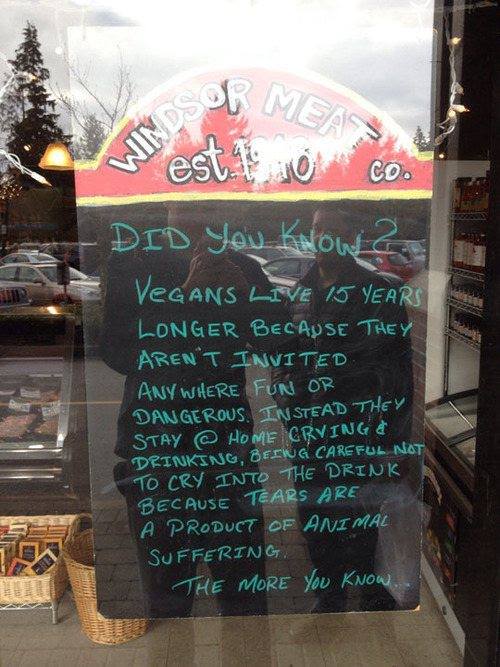
The photo here is an example of a meat company who are putting down vegans in order to gain more people to their “side”, using “humour” as a unifier against some perceived threat to their way of life. What we have to realise is that there are no sides in life – only differing choices and opinions. There is no Us and Them – there is only the human experience. The entire Us and Them mentality has led to the most atrocious human behaviour possible – war and genocide, murder and rape, crime and racism, just to name a few.
Those who choose to become vegan or vegetarian have their own reasons – health, weight loss, environmentalism, religion. It is wrong to belittle someone for any of these reasons. In fact, it is wrong to belittle anyone – end of story. I disagree with people all the time, and I know I’m not perfect, but when I catch myself belittling someone I do my best to stop it, to realise that they are on their own journey, and to have compassion for them. I do not want to be like the person who wrote this sign. I choose to behave differently.
I chose to become vegetarian twenty years ago, and am currently in the switch to vegan. This is my personal choice, based on research and religious reasons that ring true to my own soul. This may not be the same choice for other people, and I understand that. However, I do tire of people making fun of my choice – I have had to endure that for over twenty years. It is inevitable at dinner parties where someone who doesn’t know you very well, and who is a self-confessed “meat lover”, will question your choice at the dinner table, confronting you on your life path when all you want to do is eat with a good conscience and enjoy your meal with your friends or family, in harmony. The ubiquitous “screaming vegetables” always comes up, and I must explain my reasons for becoming vegetarian or remain silent. Sometimes I choose to, other times I simply let it be. For the sake of peace, I make a decision based on compassion for all those who are sharing the meal with me. I only wish certain others could do the same.
Would it be correct to challenge someone on their religion at the dinner table? I don’t think so. What about their decision to join Amnesty International, or Greenpeace? Would it be right to poke fun at someone because they looked different? We must appreciate each other’s diversity, and in that appreciation realise that we are all human beings on our own journeys- that unifying factor within the diversity is what compassion is all about.
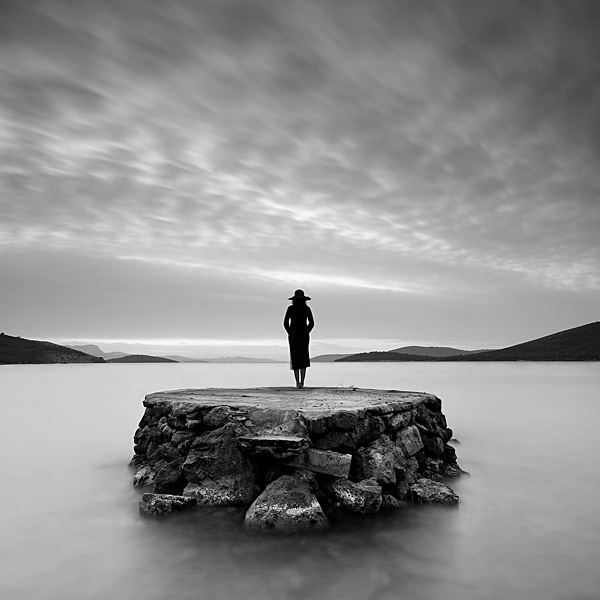
That is why in response to the photo above, I am posting this other photo. It reflects and is only my opinion, but it matters to me in my spiritual journey. Zen Buddhism tells us to hold to our opinions lightly, and indeed I see the wisdom in this. Our opinions are always changing – we are always learning and growing. However, we must do so with compassion and awareness of the journey of others as well, even those who challenge us and our opinions. I must have compassion for the people who own that meat company, realising that they have their own reasons for writing this sign, however much I disagree with them. I can voice my own opinion against it with this blog, with my words, with respect and as much understanding as my situation allows. I don’t have to think it is right. I don’t have to agree with them. But I shall not belittle them for their opinion.
Watching Parliament in full swing makes me cringe – I remember the first time I saw a “discussion” which never let the other side finish what they were saying, instead making so much noise as to drown out the current speaker’s voice in a wall of derision. This was how our country was and is being governed. It saddened and enraged me – this so-called civilised way of government. How much better could it be if we just took the time to listen to each other without judgement, allowing the other person their say, and respectfully choosing to disagree if it does not ring true to our souls? If the government cannot govern their behaviour in Parliament, why should the people? I found it so saddening, and still do…
Never be afraid to speak out against what you think is wrong, or for what you believe in. However, do so with compassion, with respect. Otherwise, you are simply acting and reacting to the bad behaviour of others. Remember also that acting with compassion does not necessarily elevate you above these others – you are not “good” for acting compassionately. You are simply acting compassionately – that is all.
Live with honour and dignity. Act with love and compassion. It’s not that hard. Blessings on your journey. X



 Down the Forest Path