SageWoman: Serenity Issue now available!

sagewoman aut 2015

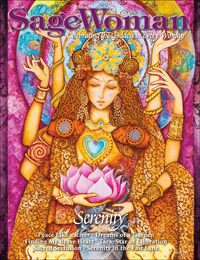
SageWoman’s latest magazine is now available for download and to be mailed to subscribers; this issue is Serenity, and contains a Zen/Druid article by yours truly.  To find out more, click HERE.

Grace

Most of us hope that when we die, we are able to pass on with a little grace and dignity. However, what is important to me right now is living in the present moment, awake and aware to the flow of life, of awen, hearing the songs of the ancestors and truly finding the meaning of the word, grace, within my own life.

Grace is a brilliant word that has so many meaning: to favour, to honour, elegance or beauty in form, ease, fluidity, mercy, clemency and pardon, just to name a few. If we look to the Latin languages’ use of the word, we find echoes in the Italian grazie or Spanish gracias, or in the French merci.  The Latin root is grātia, meaning:  (1) a pleasing quality, (2) favour or goodwill, and (3) gratitude or thanks. All three of these I find are essential to living honourably in today’s world.

To have a pleasing quality can have a myriad of meanings, from being aesthetically pleasing to simply being kind. The key word in this description is please in a verb form, which is something that makes one happy, whether it is the self or another.  Why would we not want to make another happy?  As long as it isn’t at our own expense, or hurtful towards ourselves, it seems a wonderful way to live. When we are hurtful towards another person, it doesn’t make us feel very good – or if it does, there might be something rather wrong with the brain’s chemistry.  This doesn’t mean that our lives are not our own, and that we have to make others happy first – finding happiness within the self should come first, as should love for the self, in order to spread it around a little bit.  Finding a peace and contentment within helps us to bring that to others.  When we are not at peace with our sense of self, we cannot bring peace to others.

To have goodwill for others is at the heart of living with compassion, and also living with grace. The moment we wish another being harm, we have stepped outside of grace and into a hellish world of anger, retribution, revenge, bitterness and so on. We will not always immediately have good will for another being, especially if we have been hurt by someone in the past.  Sitting with our own hurt, and then recognising the other’s pain helps us to open up our perspective from just ourselves to the wider situation.  People who hurt others are often very hurt themselves.  Those who try to pick-apart, to undermine, to speak unkindly to/about, who cause emotional pain – we can work with this with grace. We can see their hurt, empathise with it (though we don’t have to engage it, especially if it means further hurt or abuse from them towards ourselves), and feel compassion for them. We can wish them well, wish them love and peace, which feeds our own inner peace and peace throughout the world.  The compassionate being is one who lives gracefully. (Please note: If you are being physically or psychologically abused, please do talk to someone about it right away and seek help.)

For me, perhaps the most important part of grace and its root word is to give thanks. To have gratitude is one of the key components of my Druid path, along with reverence, honour and compassion. When we have gratitude, again we step outside of our “small self” and enter into a way of being in which everything is part of everything else.  No longer separate from the world, we are able to experience a deep gratitude for the world, our experiences, our loves and our lives.  Our ancestors have brought us to where we are today, and it is through their strengths and weaknesses that we walk upon the earth.  Our future ancestors are the ones to which we will be accountable for our actions in the present moment.  Having a deep gratitude for our ancestors, not only human but also other-than-human ancestors helps us to see the inter-connectedness of all existence. Again, it shifts the perspective away from the self and into a broader, more integrated view.

This is the essence of grace – widening our world and our views, and in doing so living with kindness and compassion. It is something that is achievable for all, and something that will lead us to lives with more peace and harmony.  Listening to the notes of the Great Song, the Oran Mòr, we are able to move with grace, to live with grace and to extol grace upon others.

Emma Restall Orr on the ancestors

“The dead fall from awareness only when they are forgotten, so the practising animist acknowledges the ancestors with gratitude and open-heartedness, each and every day – whenever a task is to be done, whenever an old tool is lifted, a skill used, an old pathway walked. When a challenge or an obstacle arises blocking the way, when pain kicks in and weakness overwhelms, it is to the ancestors that the animist turns, and it is in the ancestors that courage is found, generation to generation, hand in hand, words of wisdom heard and experience shared. When crises are overcome, when love is found and joy fills a moment with delight, the ancestors are an integral part of the celebration.”
Emma Restall Orr, from her essay “Time and the Grave”, from the book This Ancient Heart.

Sitting still – the joy, the suffering, transformation and impermanence

Working on my online course for Zen Druidry and putting into words a deeper exploration of Zen Buddhist concepts with Druid philosophy and way of life has opened my eyes even more to the wonder that is life, the suffering and the joy that we create and the freedom in distinguishing between the functional ego and the representational ego that causes so much unnecessary difficulty in our lives.

I think meditation is the key to unlocking these concepts, for by stilling the body we can still the mind enough to see clearly, to ponder concepts such as the Four Noble Truths and the Eightfold Path in a Druid context with a deeper insight as a result of simply being quiet and mindful. I sit in meditation for 30 – 40 minutes a day, with a large chunk of that time being spent simply being present in the moment, in all its pain and glory, up and downs, its successes and difficulties. It’s a simple thing to do, but can be quite difficult to do when we begin to realise just how our minds work, and how hard it is to let them be, to not get attached to thoughts and feelings and simply be the observer of the mind’s functioning. We love to judge, we love to recreate scenarios, we love to think, think, think about everything to the point where we leave our bodies behind. At the other extreme we run our bodies into the ground and by doing so, without stilling them for any amount of time our minds become as frazzled as our nerves and we cannot find any sense of peace.

Sitting in silence, we can feel extreme joy even as we can feel extreme pain. Our attachment to either is what causes us suffering. When we attach to joy, we want to feel it over and over again, and crave it, striving for it with all our being, sometimes living lost in the future anticipation of that joy, or lost in the past of when we had it in our lives. Our attachment to pain causes us to suffer further, again becoming lost in the future with thoughts of “when will this pain every end?” or lost in the past “this is the cause of my pain, if only…”; when we drop our attachment and simply be in the present moment, we can take care of our thoughts and our emotions with great skill, thereby being compassionate to ourselves.

When we sit with either joyful or painful feelings, when we observe them without judging them or anyone else, when we simply see them as a part of life, as an emotion, we can also begin to understand their impermanence. Buddhism talks a lot about the impermanence of everything, and this is reflected in the Druid tradition of honouring the ever-changing cycles of life. We look at a river and see that it is never the same river twice, but constantly flowing, moving downwards to the sea, being filled with rain and experiencing a cycle of existence that has no single, unchangeable part. When we see concepts of birth and death both within a Druid and Buddhist perspective, we realise that there is no such thing as a beginning or ending that is so often tied to these concepts. They are simply events in our lives that all things experience. My view is that we are all a part of nature’s soul, that everything that exists is nature undergoes changes in form through transformation, energy being patterned by conditions and environment in an endless cycle. When we see life in such a context, we see that joy and suffering are also impermanent, and we are able to sit and be with them, to take them by the hand and allow ourselves to experience them without getting caught up in their form, for we know that they are transitory, as are we.

In the quiet and stillness we are able to gain a greater perspective of the whole, rather than the chattering monologue that runs through our minds for the majority of our lives. To step outside of our minds is a great liberation. To see the interconnectedness of all things dissolves the separate ego, instead allowing us a deep realisation of the weave of each form in the tapestry of life. We understand and acknowledge the functional ego that allows us to be in this world, while letting go of the representational ego that strives for and causes separation through the illusion of an Us and Them mindset. We’re all in this together.

In the Ten Ox-herding Pictures (or The Ten Bulls)  we see the final part as being able to work in the world without that separate sense of self. I think this is very important for Druidry and for all Paganism, for if we stop at the realisation of self we are at risk of self-importance. It is necessary to find out who we are, and then to work on letting that go as we realise that self is part of another system, which is part of another system, and so on throughout the universe. Rafting the currents of human emotion become so much easier when we lose the idea of a separate self, for not only are we not hurt by others as much and are able to feel compassion to create a more harmonious and peaceful existence, but we also become a part of the flow of that current. We find that with time our meditation and contemplation allows us to let go of the raft and simply become the river, thereby not having to fight it anymore, or fight to keep our seat as we hurtle through obstacles on our journey to the sea.

It’s our choice, however, to do the work necessary in order to achieve this sense of wholeness and peace, for no one can do it for us.

For a look into how Druidry can be related to the Ten Ox-herding pictures, see my post HERE.

Karma – It’s not about what we do…

This is a brilliant article by Culadasa and Matthew Immergut on the nature of Karma, what it is and isn’t in relation to the Buddha’s teachings: specifically, the teaching of “no self”.  Click HERE for the full article.

Karma: that word that gets thrown around a lot.

People talk about “good” karma versus “bad” karma, or “your” karma versus “mine.”

But despite the term’s popularity, it seems like everybody has a different idea about what it actually means. If karma is truly one of the Buddha’s most important teachings, as he himself repeatedly emphasized, then to follow in his footsteps, we need to be clear about its definition.

The Problems with “Agricultural” Karma

Probably one of the most popular misunderstandings about Buddhist Karma is the idea that everything that happens to us is our karma. If we win the lottery or have an attractive partner, it’s because we performed good deeds in the past—we have “good” karma. If we get hit by a truck or our partner cheats on us, it’s because we misbehaved and have “bad” karma. And, of course, what we do now will determine our future results. Let’s just call this the agricultural view of karma: we reap what we sow.

So, what’s wrong with this idea? Well, whether we’re Buddhist or not, it creates lots of intellectual problems.

READ MORE…

A Pub Walk, Ancient History

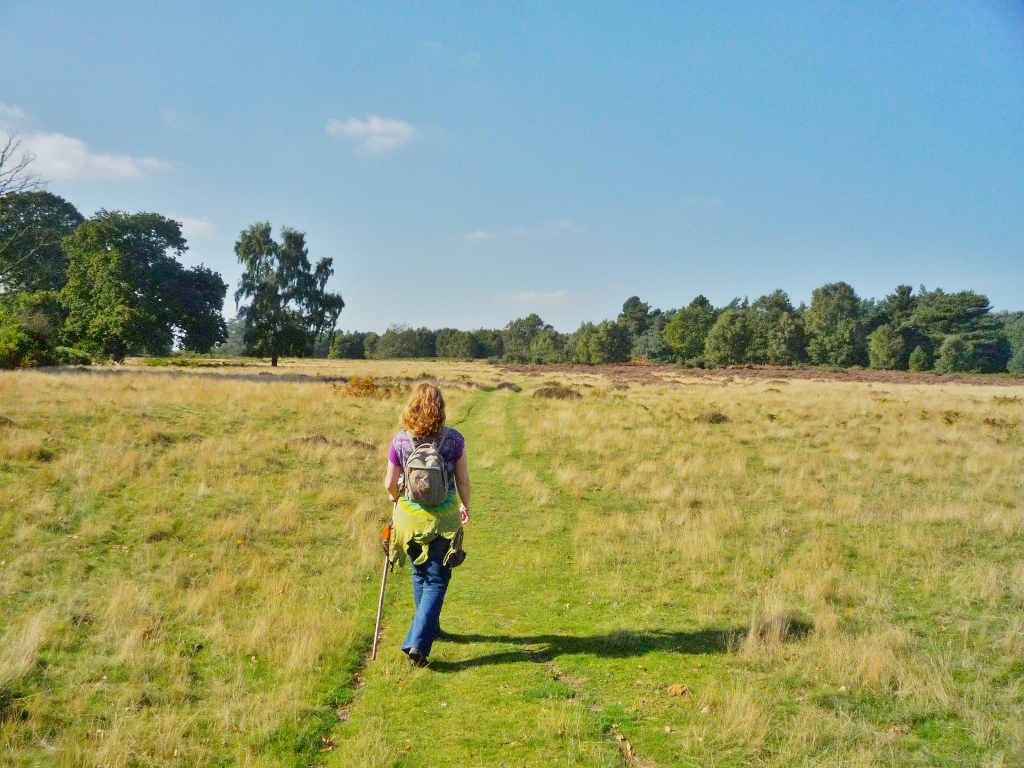
The ancestors are all around us. Traces of the ancestors of the past, of those that lived upon this land, whose stories are heard upon the wind, whose lives are still reflected all around us can be still found if we simply open our senses to them.  At this time of year, as at any other time of the year, I walk with the ancestors, yet when Samhain approaches the urgency of their presence seems to fill my mind. I feel such a strong connection to the ancestors, of past, present and future.  A simple walk to the pub reveals the very real existence of the ancestors on the land where I live.

The Suffolk landscape is often synonymous with Saxon culture and history, from the graves at Sutton Hoo to the palace/village/town found in Rendlesham forest. But echoes of those who were here before the Saxons, the Celtic tribes still remain.  Though the term Celtic is currently undergoing much investigation, there is still much evidence of Iron Age life (and even before that) in this landscape from those who lived here, fished these rivers, walked this sandy soil.  When we think of the Celts today, we most often think of Ireland, Scotland and Wales.  But here in the East of England the ancestors are all around us, from the history of Boudicca’s uprising to the gentler, untold stories of daily life in the marshes and heathlands that abound in this land.

A simple three mile walk to the pub can reveal a very deep connection to those who have gone before, and who are still present all around us.

With every footstep, we walk with the ancestors.

With every footstep, we walk with the ancestors.

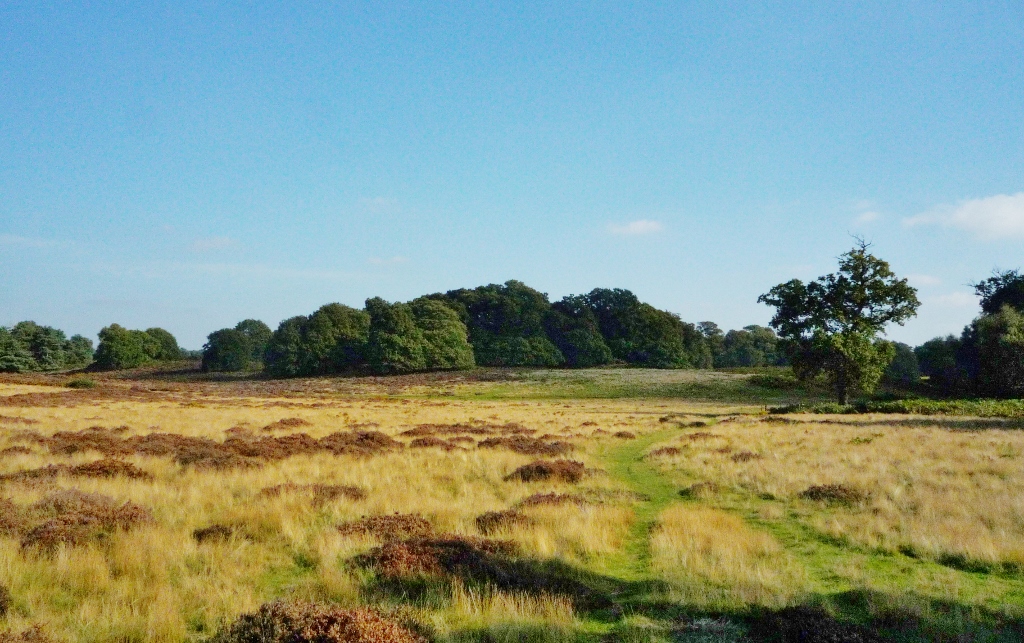
“Hill” where Iron Age burial mounds overlook the heathland

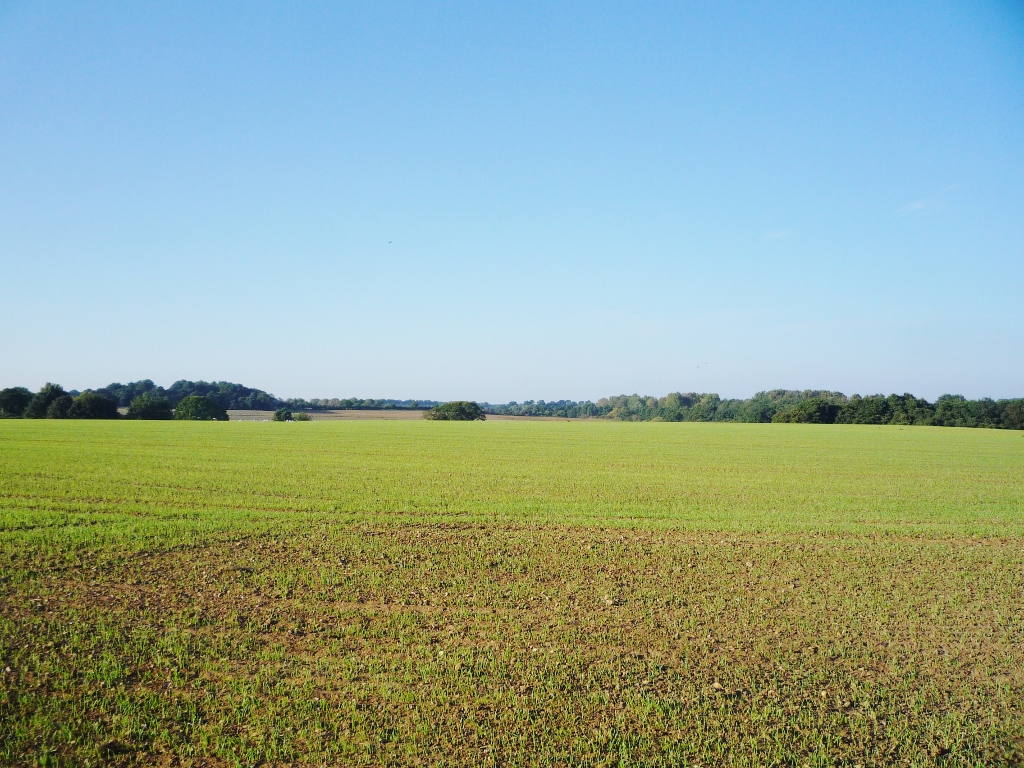
Buried beneath this farmer's field is a henge.

Buried beneath this farmer’s field is a henge.

View of the heath from burial mound.

View of the heath from burial mound.

Site of Iron Age village, half a mile away from the burial mounds and sitting atop a hill, now a farmer's field.

Site of Iron Age village, half a mile away from the burial mounds and stitting atop a hill, now a farmer’s field.

Reblog: Riding the Tides of Samhain (No sh*t, no flowers)

Here’s a link to my latest blog post on my channel at SageWoman on the Witches and Pagans site. Blessings of the Samhain tide!

“I can make whatever choices I want in my life, and I will live with the consequences of those choices. But if I want to live a life close to my deepest desires, I have to risk knowing who I really am and have always been. Knowing this, then I can choose.”

Oriah Mountain Dreamer, The Invitation

We live in a culture and a world of avoidance.  Television, social media, alcohol and drugs are just a few escape routes we have to avoid truly knowing who we really are.  At this time of year, when Samhain is fast approaching we cannot avoid the very real fact that we will die, that death is unavoidable, though we may try.  Looking at death straight in the eye can reveal some very hard truths about ourselves, about how we live in the world, and what our responsibility and duty is to the ancestors, not only ancestors of the past but perhaps more importantly, ancestors of the future.

Continued… to read the full blog post, click HERE.

Interview with The Wild Hunt

druid college UK logo 2

I was recently interviewed by The Wild Hunt about my work at Druid College – you can read the full interview HERE!

The Druid and the Stag

After Skyping yesterday with my friend and colleague, Kevin Emmons (who runs Druid College in Maine, USA) and having a great chat on the success of our first weekend of Druid College here in the UK (13 wonderful students, brilliant venue, great co-tutor Robin Herne and foraging expert, David Slate) I finished up some interview questions for The Wild Hunt, looked outside the window and decided I needed to get out into that sunshine. I had been hard at work all day, preparing my Zen Druidry online course and now wanted some fresh air, sun and that wonderful autumn smell that lingers on the sandy heath and under the trees.

I grabbed my staff (still with its ribbon of intention tied around it from our ritual at Druid College on Saturday night) and headed out the door, smiling at the sun, the vast amount of bees and other insects in the flowering ivy at the corner of my road leading onto the bridleway. I walked past the farmer’s field, bare barley stalks shining golden, greenish-yellow grass coming through the dried remains. I greeted the horses in their paddocks and walked out onto the heath, a Buddhist chant in my head.

Desiring to hear the songs of others, I tried to clear the Buddhist chant from my head by listening to the wonder, the symphony of sounds all around me but to no avail – it was simply replaced by another chant, this one a well-known Pagan Goddess chant. I sighed and let it be, trying to not attach to it or to the desire to change it, and simply walked on, paying attention to the light, the colours, the sounds and smells around me as the music flowed through my brain.

As I approached my special spot, a copse of birch trees set in the corner of a heather-filled wide open space, I saw that a large herd of deer had gathered beneath the golden boughs. I stopped and, not wanting to disturb them, sat down where I was beneath an oak tree. I took a couple of deep breaths and bowed low to the herd, to the oak tree, to the heathland. My mind stilled, the chants faded and the brilliance of the Oran Mór entered my soul, that great song of all existence. My heart was filled with joy, my soul resonating with the sound. How long I sat there I am not sure, but a stag calling behind me entered into the song, and I slowly detached from it, knowing that it was time to move on.

As I stood up, I noticed that the herd of deer had silently moved from the birch copse, and were now directly behind me. As I shook out my coat and replaced it over my shoulders, they began to move again, now heading towards the main part of the heath in great running, leaping bounds. I watched them go, letting their beauty and grace fill my soul with delight. As the last few does, meeping to their young left the area, the great stag appeared, his broad antlers heavy upon his head, his thick neck holding his head high and proud. He stopped, knowing that he was being watched, and I waved my hand to let him know who was watching him. He turned his magnificent head towards me, and we looked each other straight in the eye for many long moments.

I raised my staff up high towards him, my intention from the weekend’s ritual ringing through my soul: integration and compassion. I then bowed low to him, honouring him for all that he is with all that I am. We stood there for a few moments longer, looking into each other’s eyes, and I knew that he honoured me as I had honoured him. He then turned and lazily bounded after his does, carrying his rack with ease through the pine and bracken. Tears sprung into my eyes as I watched him leave, and I felt utterly blessed by this soul to soul connection. Let the awen flow.