Reblog: Wild Things

This is a reblog of today’s post from my channel at SageWoman Magazine’s section of Witches and Pagans. To read the full article, click HERE.

Wild Things

I had an email this morning from a reader thanking me for my book, The Awen Alone: Walking the Path of the Solitary Druid, which is always a lovely thing to hear – do write to authors you like and support them! – and who also had some very good questions, apprehensions and fears about walking the wilds of Maryland, USA, safely and as a Druid, in cougar and bear country.

I used to live in North Vancouver, and took precautions every time I went out into the wild. I always had a hunting knife, not only for defence, but also in case I got lost, needed to make a fire, etc. What sort of Pagan goes into cougar and bear-infested woods armed? A smart one! Not that we would want to use any weapons, but that we know that nature is not necessarily always working for the sole purpose of being kind to humanity. Nature has its own modus operandi, as we know, for we too are a part of that nature.

What I would recommend to anyone anxious about going out into the wilds, is to keep walking the same paths, get to know the area intimately, cougars, bears and all. Go prepared. Go armed, if you need to, and as per the laws of your country, state, province or county. Know how to use that weapon properly, and be aware of all the safety precautions necessary to carry such a thing responsibly. Our own claws and fangs have become pretty poor weapons of self-defence. And so we developed new ones.

Become a part of that landscape, not just a “tourist” but someone who is there every day, just as the birds and beetles are. The reader really wanted to meditate out in the wilds, but felt a great apprehension in doing so, quite rightly. The best thing would be to take someone with you, especially if you want to meditate in cougar country. Having someone watch over you is a very good idea. I would imagine that if you can’t get someone to come with you, then making a fire would keep many wild beasts away, but this isn’t a failsafe method. Meditation is also not always something that detaches you from the world; you can try to meditate with your eyes open, awake and aware to everything around you. That is, indeed, a very Zen form of meditation! Or try a form of walking, wakeful meditation, where you are not so much of a “sitting duck”, so to speak. The pagan author Starhawk in her book The Earth Path talks of walking out in nature with an open awareness, which is again another form of meditation that isn’t a detachment from the world, but rather integration with it.

Wild animals can always surprise us, by sheer accident and not necessarily by stalking us as a snack. For example, snakes always surprise me when I’m out walking. First glance always makes me jump! I live in adder country, here in the UK, and the adder is probably our most dangerous animal (being the only poisonous snake, and is usually stepped on by accident by people wearing flip-flops while walking out on the heathland – sigh). But when I encounter one, I simply take a couple of steps back, smile to myself and the snake, and find another way around. I look where I’m walking, awake and aware to any sunny spots on the path where they might be basking. I also wear good, sturdy hiking boots. I’m sure the snake felt exactly the same shock and surprise when a human nearly stepped on her, and is appreciative of the space that I gave her afterwards! They are such beautiful creatures…

Continued HERE

Remembering your story

I’ve just had a lovely two week vacation, not only from work but also from my computer. It’s essential, in my opinion, to detach one’s self from the constant noise and hub of media and communication, for however long a period, whether it’s a day or two weeks, a month or altogether. I’ve known people who have given up Facebook altogether, and been much happier for it. I can honestly say that I didn’t miss it at all on my two week vacation (no social media, no emails or online communication), and I actually dreaded going back on there today to check for messages. I know that I will be spending a lot less time on there from now on, as the pull and tug of getting into other people’s stories just isn’t all that appealing anymore. Heck, if I could give it up completely I would, but that would be marketing suicide for a mostly self-promoted, self-employed author.

Having two weeks to myself, spending time with myself and my family, has enabled me to see more clearly the stories that really matter to me. While most of social media is filled with noise, things that don’t really matter (alongside really great cat videos), it also has its benefits, such as putting us in touch with high school friends, keeping us up to date on our nephews’ first day at school, and so on. I do Facebook and Twitter, because I like to keep in touch with my family and friends that I physically can’t see, being 3,000 miles away across the Atlantic, as well as feeling obligated for business reasons. But the amount of noise on there is staggering.

We can get so lost in other people’s stories, in the noise that social media produces. Stories that are inconsequential to ours. Stories that have no relevance at all to our daily lives. Stories that have no meaning full stop. We fill our mind with them, drowning out the sound of our story, of our own life, or vainly trying to compare ours to this fictional recreation that social media has produced, which is entirely inaccurate to say the least. I am not my Facebook profile or pages, not by a long shot. Neither are my friends or family. It is a narrow window into one’s life, should one be honest about it, but only provides a miniscule view of the reality that is the whole.

My story is important, if only to myself. But I have to listen to it, in order to be able to change the story, should I so choose. While there are many external factors that help to decide how this story ends, there are also a lot that are completely within my control, if I am able to hear them. I feel an even deeper connection with myself than I had before, because I stopped filling my brain every morning with pictures of what other people had for breakfast, who’s pissed off for whatever reason, etc. I stopped the constant influx of other people’s stories. I feel more me.

I don’t have a smartphone that enable me to check emails and social media wherever I am. I have a mobile phone that lives in my car should I break down. I do all my emails and social media early in the morning, to get it out of the way so that I can get on with my work and my day. I honestly can’t imagine constantly checking on a smartphone for emails and Facebook; that thought is just too horrific for someone as unsocially mediated as myself. What little time I did spend on there, I now realised was for the most part a waste of time. And I haven’t got time to waste. There are weeds to be pulled in the garden, walks to be taken, words to be written, cats to be played with, friends to visit, life to live.

Don’t be lured into the dulling effects of social media. Don’t be pulled into other people’s stories so that your own is neglected. Stay in touch, but don’t be a slave to social media or online communication. Your life is yours to live, so truly live it, don’t let it pass you by in a blur of emails or status updates. And above all, remember and rediscover your story.


Reblog: Lammas, Don’t Fear the Reaper

This is a reblog from my channel at SageWoman for Witches and Pagans at PaganSquare. To read the full article, click HERE.

The grain harvest is being collected in the fields around my home. The usually still and silent evening air is filled with the sound of combine harvesters, accentuated every now and then with the hoot of a tawny owl. Lammas is upon us.

Standing on a footpath that divides two large fields, one side filled with barley just reaped, the other with wheat standing pale golden in the sun, I raise my hands to the blue sky and give my thanks for all that nourishes us. I walk a ways into the cut field, the harsh stubs of barley amid the dry, sandy earth and place my hands upon the soil. Thank you for your blessing, may the land be nourished even as it nourishes us. Hail and thanks be to the goddess. I then move to stand on the edge of the wheat field, allowing its song of potential to flow through me. I brush the bent heads filled with seed and say another prayer of thanks.

This is a wonderful time of year, when the songs of the ancestors flow through the rural heartlands of Britain. Though the way we harvest is different, still there is that cycle of growth, of planting and harvesting. After the long hot days of midsummer, the lengthening evenings are welcome, bringing cooler air. Though the dog days may still lie ahead of us, there is something different in the air at this time of year. The scents have changed, the leaves are dark green and heavy, the foliage beginning to choke out and fall back.

I love this time of year. The birds have fledged, and the muntjac deer are at the end of their mating season. The stag barks occasionally for his hind on the other side of the hedge, and this year’s badger family come to visit every night to eat the fallen birdseed from our table and the peanuts that we put out. The sidhe are active at their special spots, over by the burial mound as they are at each of the fire festivals. It is a time of celebration, though there is still much work to be done…

Continue to the full article HERE

Book reviews: *A Legacy of Druids* and *Fairycraft*

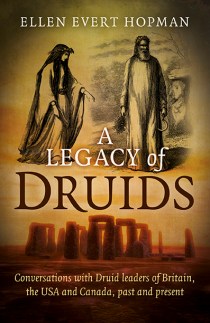
A-Legacy-of-Druids-coverA Legacy of Druids by Ellen Evert Hopman is a capsule held in time, with interviews by Druids from all over the world that were taken twenty years ago. It is interesting to hear their stories, especially from those people I know now, and whose perceptions have changed with the passage of time.
It’s not a book on how to be a Druid, but rather a conversation with an entire room full of them. You get to “work the room” so to speak in this volume, finding so many different personalities, histories and visions for the future. The foreward by Philip Carr-Gomm was perhaps the most interesting for me, and which coincided with my perception of Druidry as it is today. That this should be so is obvious; as a nature-based tradition, Druidry is always evolving, and here was have the proof that this is so.

Dynamics, schisms, traits, perspectives of different Druid traditions, with a lot of American vs British is reflected in the interviewees’ words. That these perceptions and their individual predictions for the future have changed over the last twenty years is, I think, a very good thing. With the popularity of the internet, dialogue has opened across vast oceans, with views being shared, references, academia, experiential gnosis and more. The divide between the two has lessened greatly, to the benefit of all.

Of course, I did not agree or resonate with the words of every Druid (or Druid friendly person) interviewed. Like being at a party, there are some people you want to hang out with and others that you don’t. But all of it is informative, in its raw, unedited state. You get real flavour of who that person was at that time, and what Druidry meant to them at that particular point in time.

A very interesting, and original work. I would love to see a modern version of this done, with as many of the same people in the original work, as well as new voices!

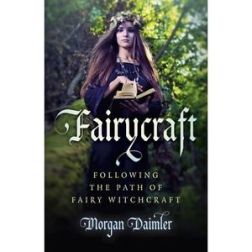
fairycraftI thoroughly enjoyed Morgan Daimler’s Fairycraft. This book is the follow-up to her Pagan Portals Fairy Witchcraft, and goes into deeper depth for this particular practice.
This book is extremely well-researched, and contains as well as a plethora of information, the author’s own experiences in the tradition. This down to earth practicality is what sets this book apart from others on the subject. It is divided into many sections, each with their own sub-section detailing the matter fully and capably. Not only do you learn fairy lore and customs, but this book also provides you with rituals and rites, prayers and holiday suggestions suited to one who wishes to honour or develop a deepening relationship with the fey, the sidhe, the gods and the ancestors.

Daimler’s writing is sincere and succinct, not overly flowery and not trying to impress, but rather expressing honestly what she has learned through her many years of experience in the tradition. I especially enjoyed the final portion of the book, entitled “Living Witchcraft”, for it gave me a deeper insight into the tradition and its practicalities, and also the author herself. I’ve enjoyed all of Daimler’s works, and look forward to reading more.

Lammas/Lughnasadh blessings!

Blessings of the harvest to you all. x

lammas wendy andrews

Painting by Wendy Andrews: http://www.paintingdreams.co.uk

New Patreon Page!

16Hiya! I’ve just started a Patreon Page, where people can support me and help fund new projects that I have on the go. As you can see from my previous blog post, I’ve got a new video series on Druid Ritual Tools, as well as the other videos for Down the Forest Path Video blog. The original Down the Forest Path blog has been going for a few years now, and I’ve had so many wonderful emails and messages from the readers. If you can support me on my Patreon page as well, that would be wonderful!

It’s getting harder and harder to be a successful writer/artist/insert alternative occupation here/ these days, and any patronage is always welcome. I love blogging, both written and video, but it does take time away from writing my books, both on Druidry and also the fantasy fiction that I am currently working on. If you can spare it, I’d greatly welcome your support, either financially or just keep sending the good vibes and messages here!

I’ve met the most wonderful people here, and truly appreciate all of my readers who take the time out of their day to come and visit me here and on my video blog, or who read my books.  May we be the awen, one and all!

To see my Patreon Page, and the projects that I am currently working on, click HERE.

Druid Ritual Tools: Cup, Cauldron and Bowl

Here is the second installment in my Druid Ritual Tools series for Down the Forest Path Video Blog: the cup, cauldron and bowl. I hope you enjoy!

New video series – Druid Ritual Tools

This is the first in a new series of videos on Druid Ritual Tools for my video blog channel at YouTube.  I hope you enjoy, and subscribe to the channel to keep up to date on all the latest videos!

The Stoic Druid – Part Two

Running a little behind in my course on Stoicism, I’m now getting up to date on the second week’s programme. This section challenges me to live in accord with Stoic values (virtues) and to set consistent goals in my daily life. It focuses more on my intentions and actions, i.e., my behaviour throughout the day. The ancient Stoics viewed their ethics as the very cornerstone of their philosophy. I also see my ethics as the cornerstone of my Druidry.

Living in accordance with nature is the goal of the Stoic. While many see have translated this as “living in accordance with virtue” for me it is the same thing. To live a life in balance and harmony with the natural world is to live a life of virtue. But what is virtue?

The dictionary’s first two definitions of virtue are:

  1. moral excellence; goodness; righteousness.
  2. conformity of one’s life and conduct to moral and ethical principles; uprightness; rectitude.

There are other definitions, such as chastity and virginity, but these are irrelevant to the topic. What is important is that the Stoic definition of virtue is not the same as the modern definition that often is confused with righteousness, but is rather a striving for excellence in living in accordance with one’s ethical principles, a flourishing of that which makes us live well. Many people when they first hear the word “virtue” they think of someone who thinks they are better than someone else, and this is simply not the case in Stoicism. Valued living is often replacing virtue in both modern-day Stoicism as well as psychology, and this term is less confrontational as well as being more descriptive.

So, this week is all about learning what is under my control, and what is not. It’s a very Zen way of thinking, which I can relate to easily. Stoicism also throws in a few other concepts, such as when we act or behave well, we are working with virtue, and when we are acting or behaving badly, we are working with vice. Again, we have to remember the Stoic’s definition of virtue and vice, where virtue is living well and in accordance with nature, and vice is not. Everything not under our control is termed indifferent. The Stoic definition is something that we have no control over, fortune and misfortune. We might be striving towards personal excellence, and this is virtue, however, we might be working under conditions of illness or physical pain, over which we have no control. It is preferred, of course, to be hale and healthy, and the preferred does make an appearance in this section of the work. So, to sum it up, we have:

  1. Externals, such as health, wealth, and reputation, which are merely “preferred” and
  2. Virtues, such as wisdom, justice, courage, and self-discipline, which are considered the chief “good” in life.

So, this week I begin by working with “values clarification”. This is an exercise which I’ve fallen out of the habit of doing, as I have done it previously in my Zen Buddhist studies. It is asking “are you sure” or “is that so” when you react to a situation or when you define your life in general. It is realising that your perception is only a tiny point on the compass, and that there are 359 other degrees from which to view it. It is questioning everything that we say or do, questioning our goals and how we live, questioning very deeply, and requires a lot of attention and focus.

To quote Marcus Aurelius:

“To what use then am I putting my own soul? Never fail to ask yourself this question and to cross-examine yourself thus: “What am I making of this part of me they call the ‘central faculty’ of the mind? And whose soul do I have now anyway? The soul of a child? Of a youth? […] Of a tyrant? Of a grazing animal? Of a wild beast?” – Marcus Aurelius, Meditations, 5.11

And so, the fundamental questions that are posed to me on this course right now are:

  • What’s ultimately the most important thing in life to you?
  • What do you want your life to “stand for” or “be about”?
  • What would you most like your life to be remembered for after you’ve died?
  • What sort of thing do you most want to spend your life doing?
  • What sort of person do you most want to be in your various relationships and roles in life, e.g., as a parent, a friend, at work, and in life generally?

To begin with, what is the most important thing in life to me? It’s a hard choice, between my family and working towards creating a world where nature is honoured. In fact, the two are indeed a part of each other, for my blood relatives are an extension of my connection to the entire world – they are just more immediate to me DNA-wise. The most important thing is that the world we live in, nature and the natural world, is respected, not abused and is loved so that all future generations of beings can enjoy it.

What do I want my life to stand for or be about? I would like my life to stand for working together to create peace and harmony with the natural world, with each other, co-existing as we do on this little ball of rock hurtling through space. I’d like my life to be about re-enchanting our souls with the wonder of nature, of the gods and the ancestors, the spirits of place that have such meaning and provide us a context for our lives wherever we are in the world.

What would I like to be remembered for? I hope that in my work as a Druid, my words and deeds inspire others in their reverence for the land and for the past, present and future ancestors.

What sort of thing to I want to spend my life doing? What I am doing now, writing and sharing my experiences on the Druid path, hoping to gain a little wisdom and insight, and sharing the awen in a continuous cycle of inspiration and creativity.

What sort of person do I most want to be in my various relationships and roles in life? As a Druid, one works in harmony with nature. As an author, one whose words inspire. As a friend, someone who supports and is there for others. In life, someone who is genuine, living life to the fullest in harmony, and in doing so honouring the gods, the ancestors, my friends, colleagues, readers, neighbours, spirits of place and so on.

Now it’s my turn to consider these responses for the next few days, to see if they change, or how true they remain. To talk to friends and family, to share points of view. We then move on to more questions, to delve deeper into personal ethics, but first, I’m going to spend a good few days here, really defining my terms and finding the truth in the words.


Interview on A Kitchen Witch’s Blog

Kitchen Witch BlogI was recently interviewed by Rachel Patterson of the Kitchen Witch School of Natural Witchery – you can read the entire interview by clicking HERE.