Excerpt from my upcoming book, Zen for Druids

This is an extract from my upcoming book, Zen for Druids: A Further Guide to Integration, Compassion and Harmony with Nature. It is the follow-up to my introductory book, Zen Druidry, which is part of the Pagan Portals series with Moon Books.  This book delves deeper into incorporating Zen philosophy into a Druid tradition, allowing us to find deep integration with nature, flowing along the currents of inspiration, of awen.

Chapter One

The Three Treasures

The Three Treasures (sometimes called The Three Jewels) are what all Buddhists can take refuge in, in order to alleviate suffering. They are:

  1. That everyone has a Buddha nature: taking refuge in the Buddha
  2. The dharma reflects ultimate truth: taking refuge in the dharma
  3. There is a community (known as sangha in Buddhism): taking refuge in the community

In today’s society, we often take refuge in that which causes us harm: drugs; alcohol; high fat foods and so on. We take refuge in violent or mind-numbing television shows. We may even take refuge in abusive relationships. All of these do not help to alleviate suffering, but only increase suffering. We need to re-evaluate what it is that we take refuge in. Let us look at the Three Treasures that Buddhists take refuge in, and see how they are reflected in modern Druidry.

Taking refuge in the Buddha: Everyone has a Buddha nature – In this teaching, we see that everyone has the essence of the Buddha within them. This means that everyone can achieve enlightenment. When we recognise the Buddha nature of a stranger, for example, our behaviour and attitude towards them will shift. We will act with more compassion, because we see that which is in ourselves, our own Buddha nature, is also within them. Within Druidry, as mentioned above, the sanctity of all nature is at the heart of its teachings. There is no hierarchy within Druidry; we are aware that we are a part of an ecosystem, part of a planet, part of the universe and part of the whole. Through the wonders of science, we know that we contain star stuff within our blood and bones. When we realise that we are made up of so many different elements, non-human elements, we are able to recognise the greater pattern that makes up life, and our part within it as a strand of the web of creation. We have rivers and oceans within us, for we drink water every day. We have the sun within us, in the food that we eat, the light upon our skin. We realise that the illusion of separation is just that: an illusion. When the boundaries of this illusory divide fall away, we can become fully integrated into the world around us. There is no human and nature, there is only nature.

There is a Zen story that states: “If you see Buddha on the road, kill him!” This means that anything that we conceive as being external to ourselves is only an illusion, for the Buddha is within. The Buddha is our potential to live our lives in our own perfect truth, awake and aware to life all around us, fully participating in life rather than being passengers on the journey. By recognising our own Buddha nature, we see it in others. The sanctity of life and all creation directs us to live our lives accordingly.

Buddha was/is a great teacher. He exists today as he existed thousands of years ago. He is an inspiration to all who honour the Buddhist tradition. In the Buddha we are inspired to great healing, great peace. We can honour our teachers from all traditions that speak to our soul. In Druidry, we work with the ancestors: ancestors of blood, ancestors of place and ancestors of tradition. Buddha can be a great ancestor of tradition – so can the Dalai Lama, or Zen Buddhist monk and activist Thich Nhat Hanh just as much as Taliesen, Boudicca or modern-day writers and Druids such as Emma Restall Orr or Phillip Carr-Gomm.

Taking refuge in the dharma: The dharma reflects ultimate truth – Truth is a tricky word in modern-day society. Yet it is central to both Buddhist and Druid teachings. In Buddhism, we drop the illusion of separateness; we step beyond suffering created by duality and merge into our own truth. Within modern Druidry, there is a saying: “The truth against the world”. The truth is our own self, our true self, without the conditions and restrictions placed upon it by the ego and others. This self works in the world to create peace and harmony, for it is at peace and harmony. The world is that which tries to impose illusions of duality or conditions of existence upon us. We are told that we need this or that in order to be happy. We are told what to eat, wear, what car to drive. We are told that we are superior to others, human and non-human. We often believe that we will be happy in the future, as we set a condition upon our lives for our own happiness. When we drop these conditions and really pay attention to life, we find out what we really need in order to have peace and happiness. When we follow our own nature and listen to the truth within, we are able to find our place in the world. We are better able to hear our own soul’s truth, and that is the truth against the world. We find wisdom in the teachings, in the dharma, and we know that through experience of the teachings we can understand the truth for ourselves. Within Zen Druidry we realise that there is no monopoly on wisdom. By combining the teachings of both Druidry and Zen Buddhism each are complemented and enhanced.

Taking refuge in the dharma, we recognise for ourselves that the real cause of suffering stems from within, as does the real cause of joy and peace. Taking refuge in the teachings of Druidry, we learn about integration with the world, and how to live our lives as a reflection of our love and devotion to the natural world around us. Both lead us to living lives fully awake and aware, lives that are filled with responsibility towards everything that exists on our planet. It guides us to live in harmony and in peace, mindful of sustainability and honour.

Taking refuge in the community: There is a community – In Buddhism, the community (known as the sangha) is there for one to take refuge in, providing support through shared ideals and goals. They are fellow Buddhists, people you meditate with, perhaps even a monastic community. They are like-minded people, on the path to enlightenment, trying to ease suffering. They are people who can help you on the path, and people that may come to you for help.

This community has been taken further in modern Buddhism to incorporate the planet, seeing and knowing that the earth is our home, our community, and therefore we must take better care of it. Within Druidry, the community is our environment. Not just the land upon which we live, but our homes, our workplaces, the Druid community: everything that we are working with in the world. Druidry knows that life is all inter-connected, that we are all parts of a whole. Ecosystems function because everything knows its place in the wider context, fulfilling its role (living its truth) and thereby contributing to the benefit of the whole. We support the community and the community supports us. We can take refuge in this community, knowing on the most basic level that we are all in this together. It engenders a deep respect for the community, for the whole.

There is a Druid community throughout the world, as there is a Buddhist community. It may be difficult to find other Druids in your particular area, however, there are groups and groves, festivals and camps, Orders and organisations you can join in order to connect with other people following the Druid path, to find support in a community, or to support others within the community in a Druid context. Druidry also recognises the community as a whole, on this little rock we call planet Earth, hurtling through time and space.


Questions

  1. What is it that you currently take refuge in? Does it cause further suffering? If so, what can you do to change?
  2. Think about the concept of everyone having a Buddha nature, or seeing the sacredness of all things. In Druidry and in Animism there is no division, no one thing being holier or more sacred than another. Everything is simply a part of an ecosystem, part of a whole. Where do you place any dividing line within your own life? Is a grain of sand less sacred than a desert? A drop of water to a lake?
  3. What is truth? What do you feel to be your personal truth? Stripped away of ego and conditions, what would your true self feel like?

© Joanna van der Hoeven


The Solitary Path

For me, Druidry is mostly a solitary path, though I do belong to some Druid Orders and networks, and celebrate the seasons with a small group of friends. But the everyday Druidry, the currents of intention that flow through me and my home, through the landscape where I live, is my main focus. Like learning, I always preferred to do so on my own, rather than working with a group, for I found that my concentration was higher, and I could have a deeper level of experience than I could with the influence of others upon my work. Indeed, personal and private ritual is always more profound than most shared ritual, though there have been a few occasions where, such as at the White Spring in Glastonbury, there has been a mix of private ritual and group celebration with my best friends deep within the cavernous walls that house those sacred waters that have changed my life forever.

Of course, we are never truly solitary creatures, but in this sense I am using the word solitary with regards to other humans. I am never truly solitary, for I am always surrounded by nature and all its creatures every single second of my life. I am always a part of an inter-connected web of existence. Living this connection, weaving the threads of my life to that of my environment and all that exists within it, means that there is no separation, no isolation. Yet, when asked to describe my path, I use the word solitary in the sense that I prefer to find such connection on my own, without other human animals around. Why this should be so is perhaps due to my nature: naturally shy, and sensitive to noise, light, barometric pressure and other phenomena, it is just easier to be “alone” most of the time. My husband is much the same, so it is easy to be around him for most of the time, taking day-long walks with him through the countryside, with little words between us, for there is no need for unnecessary talk; just being with another being in a shared space is enough. We live in a small village near the coast, so it is easy to get away from humanity by just walking out the door and down the bridle paths, or simply stay in and enjoy our beautiful garden visited by all sorts of wildlife, from deer and pheasants to pigeons and blackbirds, and even a family of badgers one time!

The path of the mystic is much the same, a solitary path where personal connection to the divine is the central focus. Some would say that the mystic path is the search for the nature of reality. For me, Druidry is the search for reality within nature, and so the two can walk hand in hand down this forest path. There are many elements of mysticism in my everyday life, where the songs of the land and the power of the gods flow through me, the knowledge from the ancestors deep within my blood and deep within the land upon which I live, rooted in its soil and sharing its stories on the breeze. To hold that connection, day in and day out, to live life fully within the threads of that tapestry is what I aspire to do, each and every moment. Sometimes a thread is dropped, and it requires a deep mindfulness to restore it, but practice helps when we search for those connecting threads, becoming easier with time and patience both with the world and with your own self.

The dissolution of the ego can be seen as at the heart of many Eastern traditions. Druidry teaches us integration, our ego perhaps not dissolving but blending in with that of our own environment. The animism that is a large part of Druidry for many helps us to see the sacredness of all existence, and in doing so we are not seeking annihilation, but integration. We can perhaps dissolve the notions and out-dated perceptions that we have, both about the world and about ourselves, leaving the self to find its own edges and then blending in to the world around us, truly becoming part of an ecosystem where selflessness is not altruistic, but necessary for the survival of the system.

The flowing inspiration, the awen, where soul touches soul and the edges melt away into an integrated way of being, has always been at the heart of Druidry. The three drops of inspiration or wisdom from Cerridwen’s cauldron contain that connection; contain the awen that, with enough practice, is accessible to all. We have to spend time brewing our own cauldron of inspiration, filling it with both knowledge and experience before we can taste the delicious awen upon our lips. Some prefer to do this with others; some prefer to do so alone.

It is easier to quiet the noise of humanity, and of our own minds, when we are alone without distraction. Notice I said “easier” and not “easy”, because again it takes practice. But time spent alone, daily connecting and reweaving the threads that we have dropped can help us create a wonderful, rich tapestry that inspires us to continue in our journey through life, whatever may happen along the way. Though the solitary path might not be for everyone, having these moments of solitude can be a great tool for deep learning, working on your own as well as working within a group, Grove or Order. Sometimes we need to remove ourselves from the world in order to better understand it, and then come back into the fold with a new awareness and integration filled with awen, filled with inspiration.

New video blog channel!

Hiya – thought I’d try something different, and have started a video blog channel! Don’t worry, this blog will continue as usual; I just wanted to try something new 🙂 I was a little nervous this first time, I must admit. I hope to be adding at least two videos a month. Feel free to subscribe for any new videos!

In the Key of Bee…

One of the perks of working for a music and arts organisation is the inside scoop on really interested projects.  One of my colleagues has just finished this video on one of our Artist’s Residency projects, and I had to share!

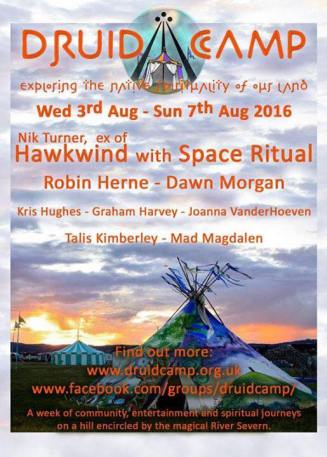
Druid Camp 2016

Druid Camp 2016

I’m so very much looking forward to Druid Camp this year, seeing old friends and having a brilliant, transformative, heart-warming time!  If you’ve never been, it’s a five-day event (though you can buy single day tickets) that celebrates the songs of our land. There are workshops, talks, music, ritual, healing area and more, as well as evening entertainment, lovely veggie food, hot showers, sauna and lots of other wonderful things to delight!

Reblog: How Altars can Alter our Practice

Reblogged from my channel, Druid Heart, at Witches and Pagans.

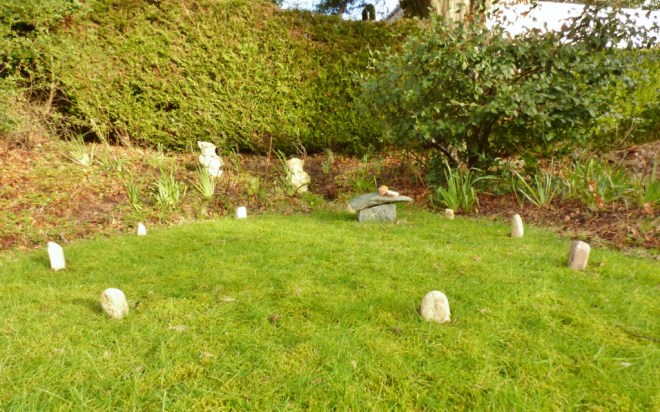
P1000491 (1024x640)Altars can have a very significant role in daily practice and worship, providing a focal point in establishing relationship. I try to highlight this importance with my students, explaining the benefits of have a focus within an area in which to open up communication with the spirits of place (or land, sea and sky), the ancestors, and the gods. Communication is essential to good relationship, and finding a spot to come back to again and again helps us to not only strengthen the bond between the person and the place, but also gives it a ritual context within which to commune. Often this ritual context is held within a temple, whether it is a building or creation of stone and/or timber, or a sacred circle cast with energy around the practitioner. The importance of the altar and the temple should not be taken for granted, though neither are exactly essential.

When beginning on the Druid path, having a place to work in that you can come back to repeatedly creates a special bond between the person and the place. A place has a very real impact upon a person, as we come to realise that we are not separate from the rest of the natural world. When we find our place within a place we are able to communicate openly, sharing freely that wonderful dose of awen (inspiration), the hum of energy where souls meet… (cont’d)

To read the full article, click HERE.

Deep Peace

This is known as a Celtic blessing, the source of which is uncertain, but it is beautiful nonetheless, arranged by Bill Douglas. I’m also partial to Bill Douglas’ arrangement of “The Clouds”.


Living a Charmed Life

While the winds howl outside as winter lets us know that just because we have celebrated Imbolc, it doesn’t yet mean Spring is here, I have taken the last two weeks to rest in solitude. Staying home, organising and having a big clear-out, cleaning and simplifying has been a challenging fortnight. After the big family gatherings and the busy pace of the Yuletide holidays, Imbolc is often a quiet time for reflection. Being thrust into solitude after weeks spent with happy, noisy family members can be quite a shock to the system, but there are lessons to be learned with everything in life.

I give thanks that I have a home, a beautiful home that shelters me from the winter’s rages. As I lie in bed and hear the wind whipping around the house, the rain lashing against the window panes I remember that there are many who do not have this luxury, both human and non-human. As I walk outside in my garden, seeing the snowdrops and the crocus, the daffodils and the hellebore in flower I am reminded of the quiet, elegant beauty that exists even as the torrential storms pass overhead. The white serpent energy is slowly stirring in the ground beneath my feet, connecting all the areas of these sacred isles in a web of existence upon whose threads we can travel, if we dare. The hearth flame is utterly sacred, whether it is candles burning upon the mantlepiece or a cozy fire crackling in the evening. Being utterly awake to all these things reminds me of the constant stream of blessings and the sacredness of everything. There is nothing mundane in this world.

Chanting prayers to Brighid upon rising, giving thanks as the sun shines upon a new day, singing songs to the land as I dig into the earth of my garden, I know that there is no separation between what is sacred and what is not. I have come to realise that reciting little chants and prayers throughout the day helps to remind me of the sacredness of each and every moment, from preparing and eating food to cleaning the floors and windows, to laying myself down each night in the shelter of my home, my husband and cats with me. Inspired by the charms and chants, blessings and prayers found in works such as the Carmina Gadelica has led me to create my own, which is an incredibly fun thing to do in and of itself. But when applied to everyday life, singing my prayers throughout the day I really feel an ever deeper connection to the gods, the ancestors and the spirits of place. I can’t take them for granted anymore.

It brings a whole new meaning to living a charmed life.

Blessings of Imbolc!

http://www.paintingdreams

Brighid by Wendy Andrew http://www.paintingdreams.co.uk


Blessings of Imbolc!

It has been a mild winter here in the UK, and though where I live in Suffolk we haven’t had any floods, the ground is wet and squishy (where it isn’t sandy) and everything is looking forward to a good drying out. The little lawn out back has done its usual shift from grass to moss, and is utterly delightful underfoot (though wet). Deer and pheasants are regular visitors, especially now that food is becoming scarce and we put out birdseed, apples and bread daily. My husband did the RSPB Birdwatch yesterday, and we had a good number of different species to record and submit.

The land is stirring slowly from its light slumber. Last weekend at Druid College we noticed the blackthorn is in flower already, and we had two daffodils over the winter solstice on the south slope of our garden. The buds are on the birch and apple trees, the crocuses are poking through, and colour is slowly returning to the green and brown palette of winter.

As we were out walking yesterday, we felt the sun upon our backs, stronger and warmer than it had been for a long time. The scents from the ground rose to greet our noses with a wonderful sharp, earthy smell. The birdsong is changing, and the badger mums are out in full force foraging to keep their bellies full and provide milk for their young.

It’s a soft time of year, when things happen slowly, unlike the Spring Equinox, when everything seems to happen at lightning speed. We awaken groggy from our slumber, and move with care, taking our time and not rushing anything. This is the goddess Brighid’s time, a deity of infinite patience and understanding, of mindfulness and co-operation.

Tonight I shall be holding vigil after sunset, and on the morrow honouring Her with all that I am. Having spent the last three years getting to know Her better, a shift in our relationship seems nigh, and I eagerly anticipate working with Her guidance and inspiration on an even deeper level. She is the land of Britain itself, the green paddocks and pastures, the brown heathland, the dark forests and wind-swept moors. She is the serpent energy lying just beneath the surface of the earth, stirring it awake with her sinuous movement. She is the holy well and sacred flame. She is inspiration. She is the adder basking in the sun, the ewe and the lamb, the cattle that is so much a part of our history.

I know not what this year holds, but I do know that I walk it with Brighid.


I kindle my soul with the flame of Brighid:

Flame of courage, flame of joy.

Blessings of the deep well be upon me:

Drops of awen on my lips, on my work.

May Brighid guide me in my endeavours

This day and every day.


I lay myself upon the anvil of Brighid;

May my soul be tempered by experience,

May my heart be strengthened with compassion,

May my thoughts be shaped by love,

May I walk forth anew with the blessings of Brighid,

The Forger and the Flame.