Changing Times

thank youDruid College begins in a couple of weeks, and I’m so very excited about it. This is the first time I’ve taught this many students at once – thirteen in all have signed up for Year 1! It promises to bring a lot of change to my life, and I look forward to it.

This year has already brought about many changes in my life, and has led to a deeper relationship with my gods, the ancestors and my environment. I feel so blessed to be on this journey, a journey that is shared with my friends and family, with readers of my blogs, my students and fellow colleagues on the Druid path. I have lived my Druidry full-time for many years now, and now it is a full-time “job” as well as a way of life! There are also more books underway, which I hope you will enjoy.

I aim to live in service to this land, to this planet, in whatever shape or form I can. I feel that it is our duty as part of an earth-based religion to serve, with truth and honour. I heartily thank all my teachers and guides along the way, and hope that I can continue the cycle of inspiration, of awen, after having been so inspired by so many people, both human and non-human, as well as that wonderful serpent energy contained within these British Isles. I honour my roots and work towards a future that I hope will be integrated, inclusive and inspiring.

Thank you, all from the depths of my heart.

The Myth of Duality

It’s hard to escape the ingrained duality of our culture and mindset in the Western world. For so many hundreds of years we have listened and taken as fact that the mind and body are separate, that the individual is separate from nature. This is a concept that abounds even in Modern Paganism, which in my opinion hinders the way forward for many people who are truly trying to integrate, to live in harmony with the natural world. By creating a divide we are instantly alienated from a world to which we have a natural birthright.

Even some proponents of non-duality still can get caught out on certain issues – take the Otherworld for instance. If we truly believed in an inclusive and shared reality, a shared experience in which there is no subject and object, but instead a collection of subjects in shared experience then we come close to the core of animism. However, many Pagans still believe that when we die, our soul splits from our bodies and goes “somewhere else”: The Otherworld, the Summerlands, etc. What I would posit is that there is no “other”, just as there is no such thing as “away”. I am fully aware that not all Pagans are animists, but for me personally they go hand in hand.

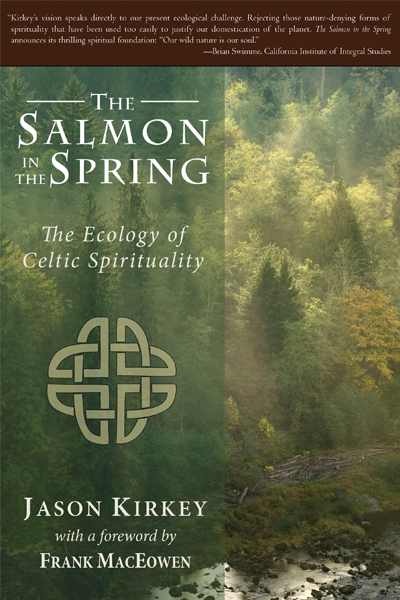
Jason Kirkey touches on this subject in his book, The Salmon in the Spring. He sees the Otherworld as a different mode of perception, more than a physical place that is different to this world. By opening our perception we can see the Otherworld, which really is our world in its full entirety, unhindered by concepts of dualism.

We live in a shared reality, though many choose not to accept this. We are, in each and every second, undergoing a shared experience. There can be no such thing as a solitary experience. We are in contact with the world each and every moment. As I sit here typing, I am experiencing the clack of the keyboard and its plastic keys, the light from the monitor, the air around me, the draft from the window, the light filtering through the cloudy skies, my cat complaining for more food. I am experiencing all these things, and all these things are also experiencing me. In this context, there is no subject/object, for in order for there to be an object there needs to be separate reality and experience entirely isolated from everything else. This is simply not possible – no one lives in a vacuum.

When I am walking to my Tai Chi class in the rain, I am experiencing the rain and the rain is experiencing me. When I am in class, I am experiencing the instructor and other class members, and they are experiencing me. When I place my foot carefully on the floorboards of the hall, I am experiencing the floorboards and the floorboards are experiencing me. As an animist, for me there is no such thing as inanimate objects, or even objects at all – everything is filled with energy in motion, which creates mass and density, and everything is subject to the world around it.

Creating a division, between Us and Them, between animate and inanimate is a huge cause for the troubles we are now experiencing politically, environmentally and socially. When we realise that everything is shared experience, then we automatically work for the benefit of the whole rather than ourselves, for we realise that there is no such thing as just “ourselves”. We are an integral part of the whole, and being integral it only comes as natural that we should live our lives in service to the whole.

This is the main focus of Druidry for me in my personal life. Living a life in service means thinking, acting, living for the whole rather than the self. It’s not done in an altruistic sense, but in a holistic sense. By dropping the illusion of separation I can experience the world on a much deeper level, and have a greater relationship because the illusory barriers and boundaries of dualism have simply disappeared.

In my opinion, Descartes has a lot to answer for.

Reblog: Full review of The Salmon in the Spring

Salmon-in-the-SpringI’ve finally managed to put together a cohesive account of my experience with this book over on my blog at SageWoman – if you’re interested, please click HERE for the full article.

Harvest blessings,

Jo. x

Jason Kirkey: Celtic spiritual ecologist

Salmon-in-the-SpringI had my mind blown a while back by Jason Kirkey’s book, The Salmon in the Spring. It is the best book I have ever read about Celtic spirituality, animism and ecology. Now, as I am re-reading it, again I am finding my head nodding in response to everything he says, like some little toy dog in the back of someone’s car.  I am eagerly anticipating his new book, which hopefully will be available soon.  Though I’ve never met him, or spoken to him, I feel a soul kinship to his words and thoughts that resonate so deeply with my own spirituality. Concepts of ego and environment, of humanity’s place within the whole, has left me once again reeling with a different perception.  When I have found some handholds I shall write about it, first needing to find a more coherent sense of self in order to form the words 🙂

To find our more about Jason Kirkey, please visit his website HERE.

Finding balance

Finding your balance point is a major part of this season, the season of harvest. We learn of need and abundance, of just enough and not quite enough. We learn what needs to be worked on still, and what we can sit back and enjoy. Having a birthday that falls right in the middle of the harvest season is a great reminder for me to stop, to take stock, in my own personal life. Too often for me the focus is outward, and rightly so in my opinion, working on deep integration and relationship. Too often too many spend their entire lives looking inward, and missing the entire outer experience of being in the world. The curse of self-awareness is a blinkered view of the world because the focus is centred on the self. When the self becomes “we”, however, our views can change rapidly. But right here, right now, I am about to celebrate another year’s passing in my life, camping with my husband, taking our canoe out and enjoying some time together away from all the demands of everyday life. With the equinox approaching, the crops still being taken in, the apples in my garden ripening, I see how everything in nature is working in a balance, where if something is out of kilter, it will more than likely fail.

Taking this time is essential for my own personal balance. Teetering on the tipping point of a situation can be gloriously inspiring, invigorating and exciting, but so can finding that harmony within. So many people feel alive only when they are tipped one way or another, but for me balancing in the middle of that teeter-totter was always the best place to be on the playground. Literally. I loved finding my balance, seeing the ends of the teeter-totter stretched out to either side, knowing that I could keep them both off the ground and in balance through finding my own centre. I didn’t need the drama of a great high or a low bump while sitting on the edge of that playground attraction – that middle place was the most exhilarating, where I found I used the most skill to find and maintain my own balance to affect the whole.

I’ve always had good balance physically. Learning to ski and ice skate from a very early age, riding bikes all summer long, I knew how to find and work with that sweet spot to my own advantage. With ice-skating in particular I loved spinning, finding that spot on the blade of my skate that allowed me to spin at speed in one place, ignoring the dizziness and simply being in the moment of perfect balance, often one leg lifted, creating beautiful shapes and feeling physically present and wonderful in that moment.

Spiritually, my work in Buddhism has helped me to understand the wisdom of the Middle Way. This is not to say that my life isn’t full of spiritual or emotional ups and downs, but instead the focus is to incorporate the teachings of harmony and balance into everyday life.

I simply don’t understand the need to create huge dramas when life is so utterly wonderful. I’m not saying my life is wonderful, for again there are equal amounts of pleasure and pain, work and enjoyment, life and death. But being in that moment of moving beyond opens me to the wonder that is so utterly inspiring to Druids the world over. It is that exquisite taste of awen, of inspiration, where souls meet and worlds are broken open into new and deeper meanings than ever imagined. That wonder is not just found in great highs and at the turning point of the lowest lows, but also in perfect balance.

This harvest season, as we approach the equinox, I’ll be working further with balance, opening my eyes to see it in the world around me, to allow it to inspire me further in my work. In the heathland and forest of my home, where the ecosystem maintains itself without human intervention. In the cycles of water and wind that roam over our blue planet. In the dance of stars and moons that hurtle through time and space. And at the centre of it all is balance, even as the world spins without, here, at the very centre is a stillness that is so exquisite there simply aren’t even words to describe it.

Darkness, the Self and Release

I wept this morning, over a photo of a man fleeing his Syrian homeland with his two children, stepping out of the boat, clutching his loved ones close to him and weeping himself. What uncertainty faces this family, along with the other refugees arriving on the islands of Greece? What could it possibly feel like to leave all that you know, out of fear for your life and those that you love, hoping that your decision will be the right one?

This is probably not a decision that I shall ever have to make in my lifetime. It is moments like these that remind me to step beyond myself, to get outside of my head, to stop thinking in the context of “me” and move forward into integrated relationship. Doing this keeps things in perspective, and keeps my own troubles, pains and dark wolves at bay. When the weight of the world seems to push me under, I get beyond myself and into the wider web. It is something that I’ve been writing about for months now, about deep integration, about dropping the illusion of the self, about seeing the interconnectedness of all things.

I look out my window and see a leaf on the beech tree. That leaf is not separate from the other leaves. That leaf is not separate from the branch, or any part of the tree. The tree is the leaf and the leaf is the tree. Even when the leaf falls in the autumn, it lands on the ground at the base of the tree, decaying into the soil, feeding the roots and is still a part of the tree. Watching this cycle, witnessing it from a Druid perspective I see how the illusion of separateness causes us so much suffering. There is no “Us” and “Them”. There is only life.

Deep integration and dropping the sense of self. Seeing beyond the “me, myself and I” keeps my head above the water, rafting the currents of life. When things are at their darkest, I can release into that darkness, dropping the edges and boundaries and allowing a greater perspective than could ever be achieved thinking that I am confined to this body and this mind. When the sheer stupidity of the human race threatens to drag me down, when my body is in great pain, when I see others suffering, I release into the darkness and there find the potential that awaits, like the seed in wintertime. If I fail in that endeavour, then there is always a back-up, words spoken by someone whose name I cannot remember, but goes something along the lines of:

“When I am in pain, show me someone who is in agony. When I am hungry, show me someone who is starving…”

Again, this lets me step beyond my self, to allow me a greater perspective. Pain and suffering, cruelty and bad behaviour all stem from misperceptions. If we can get past that notion of the self, that self-centredness, then we can dance with the divine in a beautiful, graceful round surrounded by the stars, galaxies and all life as we know it. In doing so we are free.

Busy times ahead!

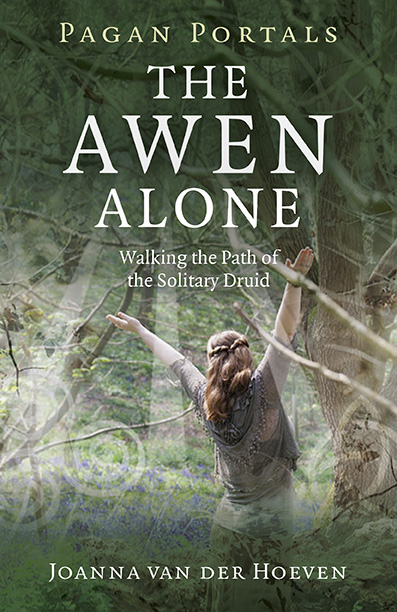
The Awen Alone Joanna van der Hoeven

My latest book, The Awen Alone: Walking the Path of the Solitary Druid has broken through another sales barrier last month – I am really pleased and very grateful for the warm reception that this book has received! I am currently working on a new book at the moment, diving in and getting stuck into a much more in-depth piece of work entitled Druid: Priest of Nature.   I hope to have finished writing this one by this time next year – wish me luck!

Sacrifice

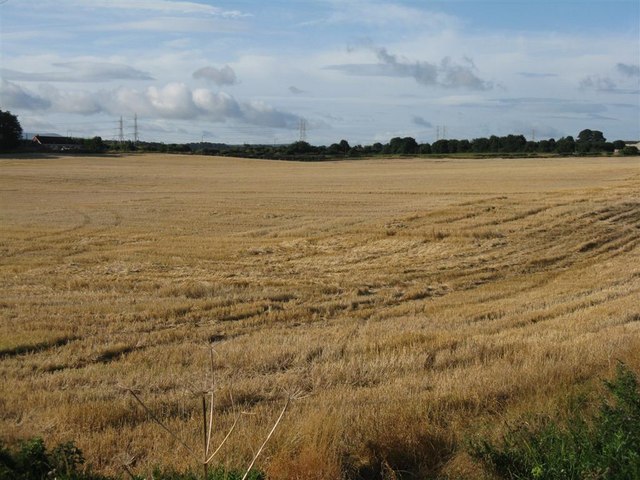
barley stubbleSacrifice – it’s one of those “old” words, like honour and duty. Many who have read Roman accounts of the Druids associate the word, sacrifice, with the priest caste of the Celtic people at that particular time. However, the word goes even further back into the beginnings of time for the human animal, when the importance of relationship with nature was everything, when we knew that to disconnect ourselves from the natural world meant death. Today, we must remember this, remember each and every day how much we are a part of the world, how much our everyday actions count, no matter how small. Each day is also an opportunity to give thanks for the blessings that we have. At Lammas, however, just giving thanks doesn’t seem quite enough. When the first crop is harvested, and the land lies stark and naked, shaved and shorn from under the combine harvester, giving thanks and saying words over the field doesn’t feel adequate. This, for me, is where sacrifice comes into play.

It’s hard as the line keeps shifting between giving thanks and the notion of sacrifice. What might be an offering to one person might be seen as a sacrifice to another. I can only speak from my own personal viewpoint, as I may value things differently from my neighbours, my family, and members of my pagan community. So, what is the difference between an offering and a sacrifice?

For me, sacrifice is something of significant value. This is not necessarily a monetary value, but could be something that is cherished, prized, something that is utterly loved and which has a representative value of the threads of connection we hold with the gods, the ancestors, the spirits of place. What is it that I have which I value? What am I willing to give back in return for the flow of awen, that spark where soul touches soul and is inspired? What am I willing to do to achieve that?

When the barley in the field by my house is cut, the energy of the land drastically changes. Between the homes and the heathland there are two arable fields, one which was harvested in the spring for green barley, and one which still has the golden, bowed stalks waiting to be harvested. Acknowledging the change isn’t enough, for when we hear the songs of the ancestors, I feel how important these crops were for them, how important their relationship with the land meant their survival and success. In a field of growing barley, there is potential, a shimmering energy waiting to be harvested. When that field is cut, the potential can be scattered if the land is not honoured. The ancestors knew this, but we have forgotten. Modern farming depletes the soil of essential nutrients that must be replaced, often by less-than-natural means. The barley is cut, and the field then stands, barren and forgotten for weeks, until the farmer and his tractor are ready to plough in the winter or spring crops.

The land isn’t respected, isn’t acknowledged anymore. As an animist, I find this appalling. When the land has been used, has given us so much in a beautiful field of barley, and we don’t even give thanks, much less sacrifice then there is dishonour. As with any relationship, if one side continually gives and gives, and the other continually takes and takes, the balance will shift, the relationship will crumble and great suffering will ensue.

What can I give that will honour the lives that this crop will feed, that will honour the land that grew it, that will honour the ancestors that worked it, that will honour the spirits of place who live there? What will be a significant gift for all we have received?

The sacrifice will change year upon year. What matters most is the importance of the sacrifice to me personally.

Offerings represent a more daily interaction, little gifts and niceties that you would present to any friend that you meet: a cup of tea, a biscuit, some of the fresh-baked bread you just made, or your home-brew mead. Finding out what the local spirits of place would like is as polite as asking your guest how she would like her tea: with or without milk, honey or sugar? When it comes to sacrifice, however, the shift of focus changes to become more introverted rather than extroverted.

I’ve previously in earlier articles described sacrifice as something that is not only of great value, but also as something that can help you “get to the next level”, so to speak. No, we’re not playing at Druids on World of Warcraft, but we are seeking to deepen our relationship with the land. Sacrifice is key in this regard, helping us to go deeper, to give more of ourselves in order to understand more of the land.

Many within the Pagan traditions see the Sun King as offering himself as sacrifice at this time of year, to be cut down as the grain is cut, to be reborn at Yule. Yet are we comfortable allowing the Sun King to do this each and every year, or should we also take our part in the sacrifice, participating rather than simply watching the cycles of life unfold?

And so I will spend the next few weeks walking the land, finding out what I can give, what I can do to deepen my relationship with it, to be an active contributor instead of a passive spectator. Some aspect of my self must be willing to die alongside John Barleycorn in order to understand the cycles of nature. Some sacrifice must be made.

The Mole Problem: Why Good Animists Make Good Neighbors

Another brilliant article by Alison Leigh Lilly…

The Mole Problem: Why Good Animists Make Good Neighbors.

Working with the Gods of Time

barleyDruidry is hard work. If you want to establish a deep and meaningful relationship with the land, the gods and the ancestors you have to work at it, each and every day, really walking the talk and living your religious or spiritual path. Like most things in life, you get out what you put in.

At this time of year, things can seem crazy busy, with all the plans that we dreamt up over the winter months and put into action in the spring finally coming to fruition. Working as a Druid priest, not only do I have my own personal plans to attend to, but also those of the community. July and August are heavy months in my diary, filled with handfastings and weddings mostly. In the later summer months we are inspired to a deep commitment, not only in our work but in our love lives as well. If we want our harvest to be successful, we have to work at it.

The warm months encourage us outside, even though we may have a pile of work waiting on our desk. It’s important to experience these months physically, as well as on a spiritual level, especially here in the UK where sometimes the summer can seem so short. It makes greater demands on our time, and I find that I do not get nearly as much writing done from June to October as I would like, with other duties and the hot sunshine or warm rain calling me outdoors. It’s equally important to be outside in all kinds of weather, but perhaps it is because I was born in August that this month really appeals to me, with more thunderstorms, hot sunshine, refreshing rains and muggy weather. Though autumn is my favourite season, it can often be too short, whereas summer (hopefully) lingers on in the heat of the stones and the land, the smell of the rain, the flowers and the scent of mown grass.

So even though my work goes a bit nuts at this time of year, I take time out each day to remind myself of that commitment that I made with the land. To work with her, to honour her, to be with her, to learn from her. I hear the songs of the ancestors flowing through the land. My lady Brighid sings deep within my soul, every day.

Even though I had only a small window of opportunity yesterday to get out there, still I went to the field opposite my house to be with the barley before the harvest, listening to the brilliant rustle of the drying stalks under the sun, hearing the songs of the land and the troubles with the bluebell woodland beyond. Saying my prayers and blessings over the crop and the land, connecting with the earth and her nourishment, giving of myself in return was a necessary part of the day. Like being in any long-term relationship, it requires constant presence and not taking anything for granted. This was really brought home to me when I studied with Bobcat many years ago in the beautiful setting of the Cotswolds, when we discussed with the other students the gods of time. Working with time is a great learning curve, coming to learn how to relate to the gods of time, working with deep integrity and honesty.

So you will please excuse me if there are fewer posts between now and the end of August – in the few moments of brief respite from other duties and obligations, I’m probably out in the fields or forest, heathland or seashore, spending time with the ancestors, honouring the gods of time and reminding myself to be present.

Blessings of the harvest!