The Present Moment

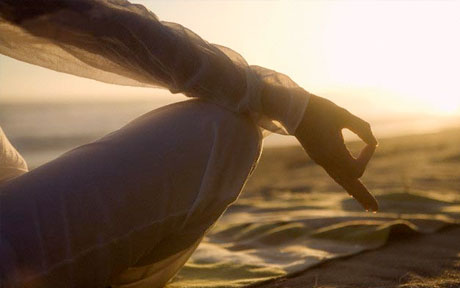
mudraThe present moment – it is a gift, and that is why they called it the ‘present’.

This quote is true on so many levels.  When we are awake, when we are aware to the present moment, we can see it for the very real blessing that it is. For the majority of people who aren’t living in fear through war or famine, who aren’t suffering from chronic pain or disease – simply being in the present moment is the greatest gift we can give to ourselves. Being aware of the present moment, even when faced with such conditions, may help to alleviate suffering.

When we wake up in the morning, we can become fully aware of that moment upon waking. We can lie in bed, feeling our selves in our bodies, listening to any sounds around us. We can do a mental body scan, to see how we feel, if there is any pain or stiffness, any tightness held through residual stress. We can consciously work to try and let that go, in order to start the day right.

We get up, we go to the bathroom.  We can do this with full awareness. When brushing our teeth, we hear the water flowing through the tap, we give thanks that we have clean water at our disposal when so many others do not.  We brush our teeth while concentrating on the simple task of brushing our teeth. So often our minds are already in a meeting at work, that when we brush our teeth, the whole meeting is there brushing our teeth with us!

Concentrating on one task at a time not only does a better job at the task itself, but can also help us to overcome areas in our lives when we are not at the best we can be – say, due to stress perhaps, or depression. If we focus on one task at a time, taking it and really being in each moment, we do not have the opportunity to be stressed, for to be stressed we need to be thinking ahead.  We alleviate our own suffering by being fully aware – in the case of depression, we may not see an end to the suffering, which brings it about in a continuous cycle. By being in the moment, we are not looking forwards or backwards, inwards our outwards – we are simply being.

By being, we are not mindless zombies – we are, in fact, more fully aware than most people by using concentration and focus in order to move about our daily existence.  We will make less mistakes, we will be less clumsy. We will brush our teeth so much better. We will be mindful of each step we take, and so we will trip less, stumble less, walking in total awareness to wherever it is that we need to go.

We eat our breakfast mindfully, thankful for having food to eat. We close the door to our houses, thankful  that we have a home, a sanctuary from the elements in which to live.  We drive our cars mindfully, thankful that we have such luxurious modes of transportation. We work, thankful that we have a job to provide us with the means for food and shelter, as well as the opportunity to work with others, be creative, make the world a better place – whatever it is that your job entails. We do our work with full attention, whether it is sweeping a floor or updating a database. We are mindful of our posture during the work, of our breathing – we take moments to simply be, to assess our bodies and our minds.

Try doing this for an hour or so a day, then a full morning.  Try to maintain awareness for as long as the sun is shining, or the rain is raining.  Become more aware not only of yourself but of your environment. By doing so, you will find that life may flow more easily and that you see where you can fit in more harmoniously.  Your actions will become more graceful, your movements filled with awareness and intention. Let your thoughts follow your body, flowing gracefully and with intention instead of running rampant through the mind.

Notice how this makes you feel – and if it feels good, keep doing it! May you all be gifted with the present.

Zen Druidry

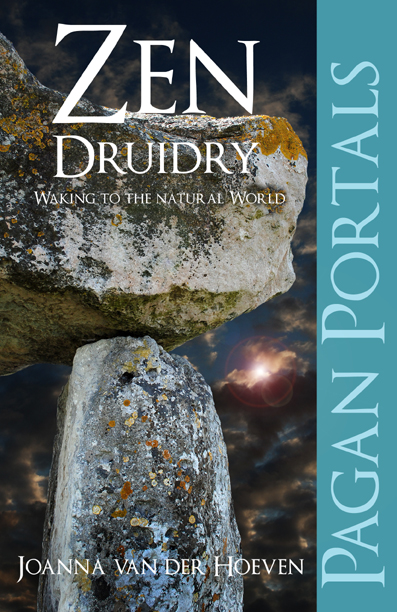
zen druidryZen Druidry still at the low Kindle price of UK  £1.23 – what a lovely number! Paperback copies available starting at £1.05, used copies from only 99p. In the US, copies start from $2.02 (another lovely number) and in Canada from $0.01!!!) . Read reviews by leaders and authors in the pagan community such as Philip Carr-Gomm, Graeme Talboys, Nimue Brown and more! Part of Moon Books‘ Pagan Portals series.

Buy in the UK here

Buy in USA here

Buy in Canada here

For other countries, please refer to Amazon provider associated.

Zen Druidry at No.1 on Amazon!

Zen Druidry is at No.1 on Amazon’s Druidism best seller category – thank you all for your support! x

zen druidry

Great Reviews for Zen Druidry!

Great reviews still coming in for Zen Druidry – you can still pick up a Kindle copy for only £1.23, or a paperback version from other sellers on Amazon for only £1.03! In North America, Kindle versions are only $1.97, and paperbacks start from $3.20 – a great deal…

Zen Druidry

zen druidry low res

Right Livelihood

autumn leavesDuring the time around the autumn equinox, in my particular path of blending Zen and Druidry I focus on the Buddhist aspects of Right Livelihood within a Druid context.  I do this throughout the year, blending the Buddhist Eightfold Path into the eight seasons of modern Paganism, and have found it spiritually inspiring and enlightening. (For further reading into Zen Druidry, please see my latest book, Zen Druidry, available on Amazon and through Moon Books).

Right Livelihood, in essence, means taking on a way of living and working that does not compromise the other principles within the eightfold path, or indeed any of the Dharma Principles. However, it is much more than ensuring that your occupation is not harmful to others – for me, this accords to everything I do, my entire life.  My livelihood is not just my office job, or my dance company, my writing or my work as a Druid priest. My livelihood is the way in which I live my life – my whole Druidry as a way of living, not just as a practice.

I have ensured that the traditional view of Right Livelihood is upheld in my life – all my jobs do not create harm in others, abuse others or the environment inasmuch as is humanly possible.  Yes, three out of my four jobs require that I drive a car, and that is a compromise that I have to make, which I try to offset in other areas of my life.  I used to work as a legal secretary, but was slowly having my soul destroyed by helping the rich dodge inheritance taxes.  It took the universe to give me a great kick up the bum to get out of that job and dive into something more meaningful for my own self – other similar legal jobs may work for some people, it just wasn’t in accordance with Right Livelihood for me personally.  I quit, went back to university and got a job straight away working for a music company and charity, got writing again, started a dance company and began in my priest work.  I felt much more at ease with myself, knowing that I was partaking in Right Livelihood (or Livelihoods!).

Some of us may feel trapped in jobs that we do not like, but we need the money to support our families, or ourselves.  However, that doesn’t mean that we cannot be on the lookout for something that would sit better within our hearts and souls, and it also doesn’t mean that we can’t offshoot this, say perhaps by doing some volunteer work, donating to charity, etc.  I personally don’t have much spare time, but the time that I do have I try to use wisely – though this year I haven’t succeeded as well as I may have, having run myself a little too ragged.  Organising charity events, performing wedding ceremonies, on top of my other jobs left too little time for me and my husband, and in that regard I failed at Right Livelihood, as there was harm and neglect on that front.  I have worked too hard, and now physically and emotionally see the repercussions. Now, in the autumn of the year, when I can see the results of what I have sown in the springtime of the year, I can also reflect on how to do better next year.

Right Livelihood means living right – it’s not just your job.  For me, within Druidry, it means establishing a life that has as little impact ecologically as is possible at the time for me and my family.  It means investing our savings in solar panels, recycling and composting everything, using cruelty and chemical-free toiletries, working towards creating peace and inspiring others.  It means walking the walk instead of just talking the talk.  It’s bloody hard to do. It means being aware of everything around you, of the impact that you have on the world, from the interaction I have with my co-workers to how many kilowatt hours our household has consumed in the last year.  It means sacrificing ignorance for knowledge, and the practical application of such.

Druidry teaches us about creating honourable relationships with the world around us, with all things if you are an animist like myself. Seeing the inherent value in all things means that no single thing can be taken for granted.  Incorporating Zen means bringing awareness of my own self and how my brain works, as well as working on an awareness of the world at large by living as mindfully as is possible.  Sometimes I am hugely successful at both – other times I fail spectacularly.  At any rate, it’s a learning curve.

Throughout the darkening days until Samhain, my focus on Right Livelihood is a constant reminder to live well.  Taking inspiration from nature, I learn not to take more than is necessary, or at least I am inspired not to – succeeding in this regard is damned hard in a fairly affluent Western society.  I breathe into the growing twilight, the longer nights and learn how to simply be in the world, leaving behind barriers of separation as much as I can, within myself and nature, humanity and the universe.  The rich scents of autumn tingle in my nose, the decaying leaf mould and woodsmoke, the chill winds and starry skies above inspiring me to continue. It is  Inspiring me to create a life that is worthwhile, and in doing so, following a path of Right Livelihood.

Zen Druidry at No. 10!

My little book, Zen Druidry is currently at No. 10 on Amazon’s Best Selling list for Pagan and Neo-Pagan books.

I would like to take this opportunity to thank everyone for their support, and for the encouragement of the community – without you there would be no book! A big thank you to my publishers, Moon Books, and to my editor, Trevor Greenfield, who believed in the success of this book, even where I was a little unsure!

Thank you, thank you, thank you.

J.x

P.S. As of this afternoon, it has reached No.4!

Living with Right Speech

From Lammas, the first harvest, to the Spring Equinox, in my spirituality I focus on a specific aspect of the Buddhist Eightfold path – Right Speech.  For every one of the eight pagan festivals, I have corresponded a part of the Eightfold path, finding a great blending of the two traditions together (see my book, Zen Druidry, for more details http://www.moon-books.net/books/pagan-portals-zen-druidry).  To me, at this time of year when the Celtic peoples gathered together to celebrate the harvest, participate in games and competitions, wedding ceremonies and such, considering how to converse and behave appropriately was paramount in order for the tribe to thrive and meet other tribes without violence or bloodshed.  I see this paralleled in the Eastern concept of Right Speech.

So, what do we mean when we speak of Right Speech?  The concept of right speech involves four elements; abstaining from false speech, abstaining from slanderous speech, abstaining from harsh speech and abstaining from idle chatter.  For the Buddhist, this shows the sacredness of speech, and gives us a framework within which we can work towards more compassionate and thoughtful speech.

Here is a quote taken from The Secular Buddhist:

“The Buddha divides right speech into four components: abstaining from false speech, abstaining from slanderous speech, abstaining from harsh speech, and abstaining from idle chatter. Because the effects of speech are not as immediately evident as those of bodily action, its importance and potential is easily overlooked. But a little reflection will show that speech and its offshoot, the written word, can have enormous consequences for good or for harm. In fact, whereas for beings such as animals who live at the preverbal level physical action is of dominant concern, for humans immersed in verbal communication speech gains the ascendency. Speech can break lives, create enemies, and start wars, or it can give wisdom, heal divisions, and create peace. This has always been so, yet in the modern age the positive and negative potentials of speech have been vastly multiplied by the tremendous increase in the means, speed, and range of communications. The capacity for verbal expression, oral and written, has often been regarded as the distinguishing mark of the human species. From this we can appreciate the need to make this capacity the means to human excellence rather than, as too often has been the case, the sign of human degradation.” http://www.thesecularbuddhist.com/nep_04.php

Living in such a verbal society, we must take extra special care of our words, both verbal and written.  It is an increasingly difficult thing to do, in my opinion, when we are living “virtual lives” more and more with the internet.  We have an “online presence” as much as our real physical presence.  It is up to the individual how closely the two are related.

What we say, both physically in face to face encounters, as well as in a virtual community or forum may have varying degrees of impact, dependent upon who is actually listening.  The fact of the matter remains – whether it is virtual or physical, there is an impact.  For someone to be cruel to another person online could have devastating consequences (as we have seen recently with the suicide of two teenagers bullied on a social media forum).  A person may be attacked by an online community, and feel no repercussions whatsoever.  In a face to face situation, the reverse might happen.  One thing remains – we are personally responsible for our own behaviour, for we cannot control the behaviour of others. We can lead by example, but underlying fundamental control of others is beyond our grasp.

I have been verbally attacked on social media forums, bullied and trolled.  As yet, it still does not get any easier with time.  I stand by the view that the internet is as much a tool for sensitive souls as it is abused by being a playground for trolls.  I do not think that sensitive souls should have to “toughen up” in order to be online or to deal with face to face encounters. I think that people should be responsible and culpable for their actions, whether virtual or real, and take others thoughts and feelings into consideration.

As a recent example, a friend of mine told me that there is now a new term in a couple of UK LRP (LARP) communities/systems which is replacing a previous term.  He finds this fascinating, as he loves studying etymology.  It is indeed food for thought!  The previous term within the community was “special snowflake”, something that people used to deride another person on the basis that snowflake in question thought of themselves as being unique, and therefore life should go according to their own terms on this basis.  The new term that has cropped up to replace this,  is “bluebell”.

Now, some of you may know of my decision to abstain from a particular company due to the reason that I cannot condone the fact that each spring they hold battles in woodland that is carpeted with the most brilliant bluebells.  For an in depth look at this, please see my previous post “ Druidry and Choices” here: https://downtheforestpath.wordpress.com/2013/06/04/druidry-and-choices/.  It would appear that some players have decided to take it upon themselves to take this particular subject and twist it around to insinuate that I was a “special snowflake”.  There was some agreement by players on a social media board, before it exploded and abuse and trolling were hurled by some members.  All I asked what if others felt the same way as I did about protecting what I saw as a beautiful woodland – I did not, in fact, want to change the system to suit my needs.

And so, the new term “bluebell” has been born to denote a self-centred, self-indulgent ignorant person who wants to have their own way as opposed to someone who loves and cares for the environment.  This was, in all honesty, quite hurtful for me to hear, and I wondered at the people who would twist such a simple stance to suit their own agenda.

Then it got me thinking.

So, why on earth would someone want to do such a thing?  The obvious response is that it makes them feel better about themselves by putting someone or something down.  I cannot know for certain, however that this is the case.  Looking at popular culture, however, would seem to indicate that this may, indeed be the way that things are heading.  Why? Because more and more we see people criticising others using derogatory terms.  Instead of discussion, debate and honest criticism, we see through television and other media people judging other people with harsher and harsher verbal terminology.  Just watch any “reality” television show where they have judges – how many judges simply put a value on a performance without becoming personal?  There is a growing trend for celebrity television judges to make it personal, to get people on their side, to appear “cool” or “funny”.  This is also the case in everyday life.

In our ever-growing faceless society, the need to “save face” is, ironically, coming to the fore.  With an unseen audience of who knows how many, we feel we have to witty and clever. (Yes, I do see the irony in putting this in an online blog).  For some, the easiest way to do this is by putting another person down – in essence, to be “bigger and more clever”.  Well, as the British saying goes – it’s not big and it’s not clever.

Having spoken to people in science based professional fields, there still seems that there is the ability for disagreement on a subject to occur within the professional sphere without someone feeling the need to act “big and clever”.  Of course, there are always exceptions, but generally debate is still held within certain bounds of respect and integrity that may be lacking in popular culture debates and interactions.  They are able to criticise things without being derogatory, something which I think is falling by the wayside in mainstream society.  I’m still mulling this one over, and your thoughts would be appreciated!

I’ve said it before and I’ll say it again – you don’t need to blow out someone else’s candle for yours to burn all the brighter.  We can use words and speech, whether online or offline to interact with each other respectfully.  In Zen, it is agreed that we cannot control the behaviour of others, and so to ponder why people do the things they do is, in fact, a bit of a waste of time.  But I still do wonder why people do the things they do – I can’t help it, and I’m working on it as much as I can – I’m no Buddha.  I find it easy to have pity for people, however, pity requires making a judgement call on their life which may or may not be true – ie. I pity someone because they must have such a dull life they have to hurt other people to make themselves feel better.  This isn’t right, I know.  What I should be doing is having compassion for people – compassion, unlike pity, requires a total lack of judgement on the individual’s part.

Compassion is both the easiest thing and the damned hardest thing in the world.  To learn the ways of compassion, one must first release the notion of the self, the ego that one clings to, in order to see that we are all related, that we are all connected – that there are no “special snowflakes” or even “bluebells” 🙂   There is no one to hurt and be hurt by.  We are all Buddhas.  By taking advice from Buddha’s Eightfold Path, we can learn how to live more compassionately.  By focusing this Lammastide on Right Speech, I hope to change my behaviour so that I may benefit the world and not just my own agenda.  Like racism, sexism and a host of other human ills, hateful speech is learned behaviour.  The good thing about that is that it can be unlearned.

Like I said, I’m working on it.

Zen Druidry Facebook Page

I have a new Facebook page dedicated to Zen Druidry, so if you’d like to keep up to date with news, views, articles, videos and more then please feel free to “Like”!  Awen blessings. x

https://www.facebook.com/zendruidry

Exploring the nature of criticism…

I don’t put much store in astrology, but when people say Virgos are very critical, I can’t really deny it. All the Virgos that I know are – then again, I also know a lot of people who aren’t Virgos who are…

Ever since my post on the death of Margaret Thatcher and my criticism on the subsequent behaviour of those who downloaded Ding Dong I have been thinking about the criticisms that I hold on to in everyday life, and those that I feel I need to share with others.

In order to criticise something, there must be a sense of self, someone who is standing back and commenting.  Yet in Zen, the goalless goal is to integrate completely, so that the sense of self falls away and we are completely immersed in the here and now, in the environment, in life itself.  As a Druid this is so very appealing, for I long to release into nature to become a part of it; to stop distancing myself from it with ideas and notions of who I am, which are constantly changing anyway.  Pondering on the idea of self, Zen would offer that the sense of self is but an illusion that we create and cling to, for various reasons – out of security, fear and ego-driven desires.  Therefore, holding on to an illusion is a little bit of a waste of time. Criticising someone else’s is a total waste.  If it’s not real, there’s no point.

We have this idea about our selves, that we have created throughout our lives.  What if this sense of self was just those ideas that we repeat the most, the ones that we like the best (or hate the most), the ones that shout the most loudly in our heads? Ideas are not real things – they are abstracts.  Experience is the key here, for experience is not an abstract.

So, back to criticism – in a Zen Druid worldview, is it ever right or worth the effort to criticise something?  There’s that old adage – if you’ve got nothing good to say, don’t say anything at all. For me, this is not enough, for when something needs changing, when those who can’t speak for themselves need a voice, I will speak out against it.  The key here is to do so with respect, honour and integrity. I’m still learning.

Also, offering criticism when it is not asked for is an easy trap to fall into.  Our lives are filled with it – we are inundated with television shows like Big Brother, or more importantly other reality shows such as The X Factor, Dancing on Ice, Strictly Come Dancing, etc. where we are expected to criticise, where we are voting for who we wish to win.  The judges on these shows often criticise dishonourably, mocking and offering nothing helpful. Sometimes they are offering good criticism and are right (at least, we agree with them).  (Spot the paradox – I just criticised judges on reality shows J).  At any rate, what these shows may do is to make us feel better about ourselves, with an underlying fear that we could be that person being criticised.   What I am suggesting is that maybe we need to detatch from the world of dishonourable relationship, where criticisms are just plain mean, or mis-informed.  I know I’m still working on it personally, as per my Maggie post earlier.

In Zen Buddhism Right Speech is part of the Eightfold Path.  I remind myself of this every time that I can before I now offer criticism.  Yet Right Speech does not say “do not to criticise”, but rather to reflect on whether this criticism is beneficial to anyone.  Talking about people behind their backs, offering criticism when it is not asked for, or condemning people when you have absolutely no idea what their motivations are is not altogether “right”.  Yet Zen states that we will never fully know the motivations of others, and that reflecting on this is also a waste of time.  So before you say something about someone, ask yourself – “Is this beneficial to anyone? Is this making the world a better place?” If so, then go ahead – with love and compassion we certainly need to do this in our world.  If the answer is no, then keep it to yourself, or even better, let it go, seeing it for what it is – an illusion, in most cases.  We are not omniscient – therefore our opinions on most things are subjective, and indeed flawed in that regard.

In Zen there is a saying – “Do not seek the truth, only cease to cherish opinions”.  This really strikes a chord with me. It is not saying that we shouldn’t have opinions, but that we should hold to them lightly, for how often has your opinion on something changed?  My Thatcher post and subsequent discussion changed my opinion, certainly.  If we cherished opinions so highly, we could never learn new things, progress and really be in the here and now, in a state of true experience. We would be holding so tightly to things that shift and change, that are never constant. It’s like trying to hold water in your hands – no matter how tightly you squeeze, a little water always dribbles out.

So, next time I am about to criticise something, I will consider Right Speech. I will also question what or who it is that I am criticising, as well as just who I think is doing the criticising. Most likely, I will have no idea on either score, and therefore either keep my mouth shut or investigate further, delving deep into experience before coming to any conclusions.

Having a critical mind is a wonderful thing.  It can really help us to see what can be done in the world to make it a better place. How we use it is entirely up to us.  Also losing your critical mind can be a wonderful thing, being utterly absorbed into the natural world, at one with everything.  The paradox is delicious.