Book reviews: *A Legacy of Druids* and *Fairycraft*

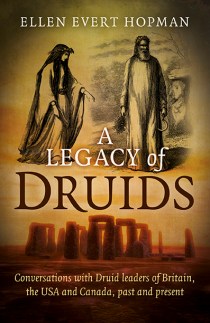
A-Legacy-of-Druids-coverA Legacy of Druids by Ellen Evert Hopman is a capsule held in time, with interviews by Druids from all over the world that were taken twenty years ago. It is interesting to hear their stories, especially from those people I know now, and whose perceptions have changed with the passage of time.

It’s not a book on how to be a Druid, but rather a conversation with an entire room full of them. You get to “work the room” so to speak in this volume, finding so many different personalities, histories and visions for the future. The foreward by Philip Carr-Gomm was perhaps the most interesting for me, and which coincided with my perception of Druidry as it is today. That this should be so is obvious; as a nature-based tradition, Druidry is always evolving, and here was have the proof that this is so.

Dynamics, schisms, traits, perspectives of different Druid traditions, with a lot of American vs British is reflected in the interviewees’ words. That these perceptions and their individual predictions for the future have changed over the last twenty years is, I think, a very good thing. With the popularity of the internet, dialogue has opened across vast oceans, with views being shared, references, academia, experiential gnosis and more. The divide between the two has lessened greatly, to the benefit of all.

Of course, I did not agree or resonate with the words of every Druid (or Druid friendly person) interviewed. Like being at a party, there are some people you want to hang out with and others that you don’t. But all of it is informative, in its raw, unedited state. You get real flavour of who that person was at that time, and what Druidry meant to them at that particular point in time.

A very interesting, and original work. I would love to see a modern version of this done, with as many of the same people in the original work, as well as new voices!

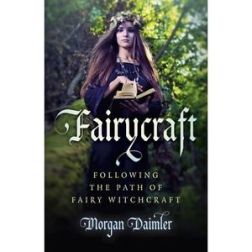
fairycraftI thoroughly enjoyed Morgan Daimler’s Fairycraft. This book is the follow-up to her Pagan Portals Fairy Witchcraft, and goes into deeper depth for this particular practice.

This book is extremely well-researched, and contains as well as a plethora of information, the author’s own experiences in the tradition. This down to earth practicality is what sets this book apart from others on the subject. It is divided into many sections, each with their own sub-section detailing the matter fully and capably. Not only do you learn fairy lore and customs, but this book also provides you with rituals and rites, prayers and holiday suggestions suited to one who wishes to honour or develop a deepening relationship with the fey, the sidhe, the gods and the ancestors.

Daimler’s writing is sincere and succinct, not overly flowery and not trying to impress, but rather expressing honestly what she has learned through her many years of experience in the tradition. I especially enjoyed the final portion of the book, entitled “Living Witchcraft”, for it gave me a deeper insight into the tradition and its practicalities, and also the author herself. I’ve enjoyed all of Daimler’s works, and look forward to reading more.

Lammas/Lughnasadh blessings!

Blessings of the harvest to you all. x

lammas wendy andrews

Painting by Wendy Andrews: http://www.paintingdreams.co.uk

New Patreon Page!

16Hiya! I’ve just started a Patreon Page, where people can support me and help fund new projects that I have on the go. As you can see from my previous blog post, I’ve got a new video series on Druid Ritual Tools, as well as the other videos for Down the Forest Path Video blog. The original Down the Forest Path blog has been going for a few years now, and I’ve had so many wonderful emails and messages from the readers. If you can support me on my Patreon page as well, that would be wonderful!

It’s getting harder and harder to be a successful writer/artist/insert alternative occupation here/ these days, and any patronage is always welcome. I love blogging, both written and video, but it does take time away from writing my books, both on Druidry and also the fantasy fiction that I am currently working on. If you can spare it, I’d greatly welcome your support, either financially or just keep sending the good vibes and messages here!

I’ve met the most wonderful people here, and truly appreciate all of my readers who take the time out of their day to come and visit me here and on my video blog, or who read my books.  May we be the awen, one and all!

To see my Patreon Page, and the projects that I am currently working on, click HERE.

Druid Ritual Tools: Cup, Cauldron and Bowl

Here is the second installment in my Druid Ritual Tools series for Down the Forest Path Video Blog: the cup, cauldron and bowl. I hope you enjoy!

New video series – Druid Ritual Tools

This is the first in a new series of videos on Druid Ritual Tools for my video blog channel at YouTube.  I hope you enjoy, and subscribe to the channel to keep up to date on all the latest videos!

The Stoic Druid – Part Two

Running a little behind in my course on Stoicism, I’m now getting up to date on the second week’s programme. This section challenges me to live in accord with Stoic values (virtues) and to set consistent goals in my daily life. It focuses more on my intentions and actions, i.e., my behaviour throughout the day. The ancient Stoics viewed their ethics as the very cornerstone of their philosophy. I also see my ethics as the cornerstone of my Druidry.

Living in accordance with nature is the goal of the Stoic. While many see have translated this as “living in accordance with virtue” for me it is the same thing. To live a life in balance and harmony with the natural world is to live a life of virtue. But what is virtue?

The dictionary’s first two definitions of virtue are:

  1. moral excellence; goodness; righteousness.
  2. conformity of one’s life and conduct to moral and ethical principles; uprightness; rectitude.

There are other definitions, such as chastity and virginity, but these are irrelevant to the topic. What is important is that the Stoic definition of virtue is not the same as the modern definition that often is confused with righteousness, but is rather a striving for excellence in living in accordance with one’s ethical principles, a flourishing of that which makes us live well. Many people when they first hear the word “virtue” they think of someone who thinks they are better than someone else, and this is simply not the case in Stoicism. Valued living is often replacing virtue in both modern-day Stoicism as well as psychology, and this term is less confrontational as well as being more descriptive.

So, this week is all about learning what is under my control, and what is not. It’s a very Zen way of thinking, which I can relate to easily. Stoicism also throws in a few other concepts, such as when we act or behave well, we are working with virtue, and when we are acting or behaving badly, we are working with vice. Again, we have to remember the Stoic’s definition of virtue and vice, where virtue is living well and in accordance with nature, and vice is not. Everything not under our control is termed indifferent. The Stoic definition is something that we have no control over, fortune and misfortune. We might be striving towards personal excellence, and this is virtue, however, we might be working under conditions of illness or physical pain, over which we have no control. It is preferred, of course, to be hale and healthy, and the preferred does make an appearance in this section of the work. So, to sum it up, we have:

  1. Externals, such as health, wealth, and reputation, which are merely “preferred” and
  2. Virtues, such as wisdom, justice, courage, and self-discipline, which are considered the chief “good” in life.

So, this week I begin by working with “values clarification”. This is an exercise which I’ve fallen out of the habit of doing, as I have done it previously in my Zen Buddhist studies. It is asking “are you sure” or “is that so” when you react to a situation or when you define your life in general. It is realising that your perception is only a tiny point on the compass, and that there are 359 other degrees from which to view it. It is questioning everything that we say or do, questioning our goals and how we live, questioning very deeply, and requires a lot of attention and focus.

To quote Marcus Aurelius:

“To what use then am I putting my own soul? Never fail to ask yourself this question and to cross-examine yourself thus: “What am I making of this part of me they call the ‘central faculty’ of the mind? And whose soul do I have now anyway? The soul of a child? Of a youth? […] Of a tyrant? Of a grazing animal? Of a wild beast?” – Marcus Aurelius, Meditations, 5.11

And so, the fundamental questions that are posed to me on this course right now are:

  • What’s ultimately the most important thing in life to you?
  • What do you want your life to “stand for” or “be about”?
  • What would you most like your life to be remembered for after you’ve died?
  • What sort of thing do you most want to spend your life doing?
  • What sort of person do you most want to be in your various relationships and roles in life, e.g., as a parent, a friend, at work, and in life generally?

To begin with, what is the most important thing in life to me? It’s a hard choice, between my family and working towards creating a world where nature is honoured. In fact, the two are indeed a part of each other, for my blood relatives are an extension of my connection to the entire world – they are just more immediate to me DNA-wise. The most important thing is that the world we live in, nature and the natural world, is respected, not abused and is loved so that all future generations of beings can enjoy it.

What do I want my life to stand for or be about? I would like my life to stand for working together to create peace and harmony with the natural world, with each other, co-existing as we do on this little ball of rock hurtling through space. I’d like my life to be about re-enchanting our souls with the wonder of nature, of the gods and the ancestors, the spirits of place that have such meaning and provide us a context for our lives wherever we are in the world.

What would I like to be remembered for? I hope that in my work as a Druid, my words and deeds inspire others in their reverence for the land and for the past, present and future ancestors.

What sort of thing to I want to spend my life doing? What I am doing now, writing and sharing my experiences on the Druid path, hoping to gain a little wisdom and insight, and sharing the awen in a continuous cycle of inspiration and creativity.

What sort of person do I most want to be in my various relationships and roles in life? As a Druid, one works in harmony with nature. As an author, one whose words inspire. As a friend, someone who supports and is there for others. In life, someone who is genuine, living life to the fullest in harmony, and in doing so honouring the gods, the ancestors, my friends, colleagues, readers, neighbours, spirits of place and so on.

Now it’s my turn to consider these responses for the next few days, to see if they change, or how true they remain. To talk to friends and family, to share points of view. We then move on to more questions, to delve deeper into personal ethics, but first, I’m going to spend a good few days here, really defining my terms and finding the truth in the words.

 

The Return

So today it is Canada Day, where back home everyone is celebrating their happiness in a country that is working towards a better future for all, under the leadership of a sincere and honest politician. (Yes, they do exist). Yesterday in my little village here on the edge of England, looking out over the North Sea towards Europe, someone had written racist slogans on the traffic signs and one For Sale sign. I stand on the shingle beach and weep for what has happened to this country.

And yet, Brighid, Brigantia, the goddess that is this land by whatever name, does she care? The wheat is still growing in the fields, the deer still bounding across the heath, the magpies chittering in the garden. The troubles of humanity, I wonder: do they affect her as well? When we finally manage to wipe ourselves off the planet, she will go on, regardless…

I return to my garden, and sit at my altar beneath the beech tree, the dryad spirit singing softly to me, reminding me to listen. And so I listen, to the wind through the leaves, to the blackbird singing, the chickens squawking down the road. I listen to the hum of the earth, the heartbeat of my lady. I release my fear, my anguish through my tears even as the rain falls, washing my face with its song. And I return to this place, to the songs all around me that are not the songs of humanity. I remember that I am part of a much bigger web.

My lady grabs me by the hand and whooshes me across this country, riding the dragon lines of her energy. I am at Avebury, where a ritual for peace is being held. I am at a lonely stone circle in Dartmoor, the heavy slate skies and thunder booming overhead. I am at the edge of Loch Lomond in Scotland, with the fey crowding all around me. I am at the edge of the Atlantic on the coast of Ireland, the waves crashing against the rocks.

I am then taken deep below the ground, through the sand and silt, through layers of rock. I am in the deepest darkness, where the hum and heartbeat of this little planet hurtling through space is strongest. And then suddenly I am thrown out into the sky, riding the winds and lost in perfect freedom. I am diving deep into the realm of the sea, where the songs of whales guide me towards peace.

And I am back in my garden, my breath coming hard, my eyes snapping open.

I am more than my species. I am more than my gender. I am more than my nationality. I am more than my politics.

And my lady smiles.

Communication Breakdown: The EU Referendum

We need to change the way we communicate. Right now. Here in the UK, everyone is reacting to other people’s reactions, in an insane run of events that has led to unprecedented turmoil and upset. People aren’t talking to each other. Germany refuses to talk to the UK parliament until they begin the leave negotiations. Labour ministers refuse to talk to their leader about the best way forward. The Prime Minister is resigning, leaving the talking to whoever takes up the difficult role. Friends are attacking and “unfriending” each other all over social media. This sort of behaviour is based in punishment: an eye for an eye. We have been hurt, we will hurt in response. We are emotional creatures.With the lines of communication closed, we are stuck here in limbo, everyone reacting instead of acting with intention. Reactive behaviour is, for the most part, usually not the best behaviour.

Emotional responsibility is something that is seriously lacking in our society. In fact, any responsibility is met with apprehension, especially personal responsibility. Far too many are eager to find power under the guise of responsibility for others, but when it comes to perhaps changing their own behaviour they will never even consider it. It’s everyone else’s fault, people are stupid, people are ignorant. We will not even talk about changing our own behaviour, lest we admit to something that needs improvement. Sure, we’ll criticise the hell out of others, for don’t we see that every day in the media, from television entertainment shows to the PM’s questions every Wednesday lunchtime? And yet, where is the real communication?

If we are emotionally responsible, we won’t simply unfriend someone on Facebook because they didn’t vote the same way we did. So what if a friend voted for Leave? So what if a Remainer said something stupid in response? They are reacting. We can stop, see their pain, see their fear, try to see why they are reacting in such a way. In that stopping, in that attempt to understand, there is compassion. And where there is compassion, hopefully the lines of communication can reopen, and respectful behaviour ensue. Hopefully then, we are acting with intention, not in reaction.

Sometimes it just isn’t possible, and I understand that. Sometimes someone hurts us so bad, has just been so horrid that we will simply not put ourselves in that position ever again. This is something that has usually happened over a longer period of time, where the behaviour has been repeated again and again. We give them a second chance. And maybe a third. And then, if there is no value, if there is no respect, if there is no honour then we can walk away, in peace. And wishing them peace. But if walking away in anger, without first trying to establish the lines of communication: if this is the first and only thing we do, then there is very little chance of reconciliation, of compassion, of communication. Maybe we just have to accept that humans will be humans, that they will do and say stupid things, that they have opinions, both good and bad, and we will also have ours, good and bad, stupid and brilliant. But if we stop talking to them, we lose all chance of hope for a future together.

There is so much divisiveness right now, in this so-called United Kingdom. There has been blood shed, a life lost, and more death threats to others because of fear, because of lack of communication, because of ignorance, because of poor communication, because of misinformation and manipulation. There is a growing blatant and overt racism and prejudice, fuelled by ignorance, by fear. If we are talking to each other, then maybe this can be overcome. Where we are no longer talking, there is no hope for change.

We need to change the way we communicate. Right now.


Working with Fear: The EU Referendum

EU referendumRight now it feels like we are living in a country filled with fear. With the EU referendum just around the corner, the future of this country appears to be at stake. The tactics being used by both sides promote fear, which as my teacher Bobcat always said, is never a good motivator. When we use fear to create change, we risk ruining our chances of real transformation because all people want to do is alleviate the fear.

There are many ways to try to alleviate fear. One is simply avoidance. We ignore it, we don’t turn up to vote, we remain ignorant on the issues, we fall into apathy. It’s the easiest way to not have to deal with fear. We can also resort to escapism, through alcohol and drugs, television and more. But we all know that ignoring a problem usually doesn’t make it go away. It’s an illusion, and we have a responsibility to create the world that we would like to live in.

Working with fear means challenging ignorance, challenging what may be uncomfortable to deal with. Changing our behaviour is hard work. But we can do it, we have the ability to respond, true response-ability. We can move through the fear, to see through it and to calm the fear through learning and integration.

If we are ruled by fear, we risk behaving disrespectfully, to others, to the environment. If we are instead ruled by a desire to create a better world, to strive for the good of all, to live a life fully integrated in world, in our locality, in our ecosystem, then there is little risk. Instead we are motivated by compassion, by love, by devotion, by duty, by care for others.

We have already seen tragedy occur in the run-up to the EU referendum, with the murder of MP Jo Cox. We need to take stock of our actions, of our words, our thoughts and our deeds, every single one of us, no matter which side we are on, and act accordingly. As Druids, as Pagans, we need to lift the veils of ignorance, apathy and fear and face the truth against the world. May there be courage in our hearts, and may there be peace throughout the world.

A Place to Be

I had a lovely meeting this weekend with small Druid Order, filled with people utterly dedicated to their Druidry. It is always such an inspiration to meet up with these folk, to hear their stories and their views, to hear their physical voices and to be able to reach out and touch them, hug them, share food and space together. Each time we meet, prayers are said and dedications are affirmed, and each time it is deeply profound. Though my dedication remained the same as it had two and a half years ago since the last gathering, still there were new components to my personal story that are poignant to the words I had spoken, witnessed by those souls and held in the beauty of a garden in Stratford.

At this meeting was my old teacher, Bobcat. Never have I seen her looking so strong, so wonderful, so at peace, shimmering with vibrancy and yet coming from a place of deep stillness, utterly rooted to the landscape. I had to email her later, to tell her so, and she replied that I has looked wonderful too, wholly comfortable in my skin, even if I am still finding what sort of a place to be.

Indeed, being an immigrant to these lands, I have had to develop a relationship with this environment that is so different to that which I grew up with in Canada. And yet, after a recent DNA test, I have found that my heritage is over half British, more so than Western European, which was a bit of a surprise. As far back as the family can remember, which is to about the mid-19th century, the family is Dutch, pure and simple. However, somewhere further in the reaches of time many of my ancestors came from and lived upon these lands, not so far from my Dutch ancestors, whom I connect with simply by walking down to the shingle beach near where I live and looking out across the North Sea. Is this where my British ancestors came from? It’s all a mystery…

Ever since I came to the UK, I’ve tried to find a place to be. With my heart torn in two places, between what I consider my homeland in Canada (nevermind all that Dutch ancestry, where my parents and their parents and their parents were born) and the British Isles it’s always been a bit of a tricky thing. Nearly reaching the point where I have lived in the UK for as long as I have lived in Canada, the issue of home and place is at the forefront of my thinking, not to mention the coming referendum.

And what Bobcat said was true, as I reflected on it during meditation at my outdoor altar this afternoon, taking a break from organising lectures for our upcoming Druid College Weekend, and getting the next two books underway. Having recently handed in my notice at the concert hall where I work, I’m now going full-time as an author, dancer and all-around self-employed person. The time feels right, and I am wholly comfortable with who I am at this point in time. I am thankful for my many blessings, the good and the bad, that have brought me to this wonderful point. But there is still the issue of place, of where I belong. For me, place has always been important.

Perhaps I need to find out why I need to belong anywhere. What is it that drives this need? Perhaps I simply need to connect with my newly-found ancestors of this land, and therein the answer lies. Perhaps I just need to let go of the question altogether, and simply “be”.