
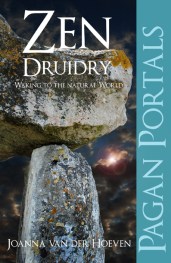
 It’s finally here: the Zen Druidry online course! An extension of my first Pagan Portals book, Zen Druidry: Living a Natural Life in Full Awareness, this 75 page online course delves deeper into the subject matter with practical exercises, links to videos and talks, provides questions to help the practitioner develop a broader level of understanding and more. A basic meditation audio file also comes with the course, to help beginners and the more adept alike in furthering their meditation practice. For more information on this course, please email autumnsong@hotmail.co.uk. £40
joanna van der Hoeven
“Modern Druidry” – Talk given at the Woodbridge Mind Body Spirit Festival
Here’s my talk from this Saturday’s Mind Body Spirit Festival here in Suffolk – hope you enjoy it!
Excerpt from my upcoming Zen Druidry Online Course
Busy here getting the Zen Druidry online course ready, so apologies for the haphazard posting of late!
Here’s a short excerpt from the upcoming online Zen Druidry course, that delves deeper into the subject matter that was introduced in my first book, Zen Druidry as part of the Pagan Portals introductory books series. This course is quite extensive, with practical exercises, video links, audio files and more. We hope to release it by the Winter Solstice – keep everything crossed!
This excerpt is from the Wheel of the Year section, where each festival is looked at in depth and culminates in practical work that combines the elements of Zen Buddhism and Druidry.
Imbolc
The days are becoming longer, and though the air is still cold, the first signs of Spring emerge.
Extract from Zen Druidry: Living a Natural Life with Full Awareness by Joanna van der Hoeven:
At Imbolc we welcome the lengthening days and the first of the flowers, with the snowdrops coming into season. For those that celebrate by the calendar, Imbolc occurs on the 2nd February. I prefer to celebrate when the snowdrops are out, as I find this more in tune with the seasons. This could happen anytime from beginning of January to as late as March, depending on the winter. Imbolc is also the time when the sheep begin to produce milk – ewe’s milk, which is where we get the name Imbolc from. For our ancestors, this was a celebratory time, when cheeses and butter could once again be made to replenish the winter stores. Again, the milking time can occur anytime in February onwards – it’s always a joy to watch the fields and wait to see the new lambs scampering, flipping their ridiculous tails! This is a time for preparing the seeds of what we wish to achieve in the coming year, dreamt up over the long winter nights, but not yet ready to plant – we must still keep these dreams safe. With Zen, we can apply Right Concentration to this time of year, and focus on total immersion in the present moment.
As we have been using Right Mindfulness in the time from the Winter Solstice to the time of Imbolc, we will notice in our environment when the first snowdrops come out, the increasing amount of sunlight each day, the slow warming of the earth. We will feel the energy softly changing, moving from an introspective feel outwards towards the growing light.
The festival of Imbolc is one of gentle joy. Agriculturally our ancestors in the British Isles celebrated the time of lactation, when ewes first began to produce milk. The winter stores could be replenished with fresh milk and cheeses, to last the hungry time through Spring until the land began to offer her bounty once more and awake from her winter’s slumber. Imbolc is also a Fire Festival in the Celtic year, along with Samhain, Beltane and Lughnasad. The goddess Brighid has long been associated with this festival. She is a goddess of fire and water, of healing, poetry, smithcraft and more. This festival became Christianised as Candlemas, again showing the fire aspect of this time. The growing sunlight is reflected through earthly fire and flame. There are many ways to celebrate Imbolc, including household blessings, the making of Bride dolls, Brigid’s crosses, and more.
Become aware of how fire is a central aspect of your life, in all its manifestations. Give thanks when your central heating comes on. Give thanks for the sunlight that keeps our planet from becoming an ice cube hurtling through space. Give thanks for the gas that powers your stove/cooker, allowing you to have a hot meal. Look into a candle’s flame, or a fire in the hearth, and commune with the spirit of fire. Look at how fire is manifested within the body, in energy, emotion and more.
The Druid pays attention to her surroundings. With Right Concentration (sometimes referred to as Right Focus) she can hone her skills in mindfulness. Concentrating on being fully present, little will escape our attention and we will live a more integrated life with the natural world around us. Right Concentration is a skill that can be achieved through daily meditation. We begin with focusing on the breath and the body in meditation, and keeping our concentration centred within. We then move that focus outwards, without losing the concentration that keep us from distractions, from our chattering “monkey mind“.
It is easy to berate ourselves for not having enough concentration in our lives. In fact, when we look at modern-day society, we see that we are being bombarded by things that actually lessen our ability to concentrate for any period of time. We have smart phones that allow us to stop whatever it is we are doing at any given moment (apart from driving, we hope!) and look at/think about something else. We have telephones that ring us when we are at home. We have television shows, sometimes divided into 4-7 minute segments (mostly American shows) with advertising breaks in between. Our attention spans are becoming shorter and shorter simply through the media that we use. Twitter has a 140 character length, and if you can’t communicate what you have to say in that short space then you can’t say it at all. Their Vine app makes looping videos that are only 6.5 seconds long. The list continues.
We have to relearn how to concentrate, how to bring our awareness in directed focus on a subject in order for our minds, bodies and lives to begin to settle once more. As infants, we absorbed information in rapt attention, no matter if it was a light shining overhead or our mother’s voice. Toddlers exploring the world are intensely focused, beginning with their first steps and then on their goal. We begin to lose our abilities to concentrate with the more information we have to hand, thinking that we can absorb it all without actually realising the repercussions it has on our lives. Technology has advanced so much that our human bodies simply aren’t able to cope with the information overload, and we need to take a step back and refocus.
Most of the information we are receiving is not necessary to our daily function. Reading some celebrity’s tweet will not put dinner on the table. Checking replies to our Facebook status will not get our toilets cleaned. If you’ve spent a media-free day a week during the Winter Solstice to Imbolc period, then you probably have realised the benefit of stopping the information overload.
We begin with a simple candle meditation, incorporating the fire aspect of the season and the one-pointed focus required in this meditation. Sit before a candle, and simple watch its flame. When thoughts arise, notice them by saying “lunch” or “meeting” or “cat” and then let it go, returning your focus to the candle’s flame. If you have a family, it might be better to do this meditation either early in the morning or late at night when everyone is in bed. It doesn’t matter how many times you have to bring your focus back to the candle – what matters most is that you do it. Bring your attention and concentration back however many times you need to. Concentration is a skill, and any skill is something which is developed over time. It doesn’t happen in an instant.
Now is the time to take it a step further. Literally.
Walking meditation is a brilliant way draw focus into what we are doing, and help us to integrate with our natural surroundings on the Druid path. We can think of each step we take as kissing the earth, celebrating our love for life on this planet. Walking meditation began as an interlude to zazen, or sitting meditation, to allow the meditator to continue with their meditation while easing their body from a sedentary pose to a moving one, allowing for good circulation and bringing some exercise into the practice.
Walking meditation can be done indoors or outdoors. Zendos (Zen centres) will accommodate both practices in their buildings, but incorporating the Druid path into our spirituality means that we need to engage further with the natural world around us. Remaining indoors has its benefits, enabling us to concentrate better with less distractions, however, we can practice this outdoors with great joy. We can then let this practice become part of our lives to such a great extent that we walk mindfully, aware of our movements wherever we go, whatever we are doing. It requires Right Concentration. Do what you can, whether indoors or out.
Not only will we benefit personally from walking meditation, but the land will benefit as well. If we walk with love and with joy, instead of walking with anger or suffering, the land will also share in this experience. Too often we believe that we are the only beings experiencing, however, we can walk in the rain and experience the rain, knowing that the rain is also experiencing us. Let us make this a good experience.
With the exercise and fresh air, we also release stress and anxiety, as well as developing a practice that allows us to be in the world by silencing our monkey mind and embracing the world as it really is.
If you are lucky enough to have a backyard, these are ideal places to begin. It is out of doors, and relatively quiet, safe and secure. If you don’t have a backyard, you can try a local park that you feel is safe and secure, or a botanical garden, or even a friend’s backyard (with their permission, of course!). If you live deep in the heart of a city and don’t feel that you are able to access public parks with safety on your own, ask a friend or relative to join you. If you have wild stretches of forest or heathland at your doorstep, go for it, but do ensure that someone is aware of where you are going, and what you are doing. Again, take someone along if it makes you feel more at ease. If you have a young family, doing walking meditation with them is a great way to spend time together.
Barefoot walking is a great way to bring focus and attention to each and every step. However, it depends on your circumstances and whether this is a safe thing to do. Broken glass and other debris on city streets are not conducive to good barefoot walking meditation; neither is walking through gorse-laden brush in adder country. Be safe and responsible.
Really notice the feel of movement in your body as you slowly take one step, then another. Engage your whole foot in the step, touching the ground with the heel first, then rolling all the way to the tips of the toes. Be aware of what both feet are doing at the same time. This is surprisingly difficult at first, but it will hone your concentration. Breathe mindfully as if in meditation. Feel the air on your skin, the sunlight or the rain. Notice the light or darkness, the sounds and scents. Do not become lost in these, however; simply notice. Notice without judgement. You can even say to yourself “sunlight”, “dog barking”, “snowdrop”, “icy path” and allow your awareness of everything to keep you going. When you find the mind starting to wander, or you feel you begin to judge something, bring your attention back into your feet and your breath.
Walk as slowly or as quickly as feels comfortable. Most Zen walking meditation is done slowly, but some Zen centres do practice kinhin quickly, to get the blood flowing. As with everything, mindfulness is key. Do this every day if you can, noticing how your environment is changing through the seasons.
Some things to consider from Imbolc to the Spring Equinox are:
- Look at how fire manifests in your life. Look at the inner fire within. See how fire can destroy as well as bring nourishment and comfort. Learn how to harness the power of fire responsibly.
- Do the candle meditation each day, and then begin walking meditation after you have sufficiently honed your concentration with the candle meditation.
- Be kind and gentle with yourself. This is a season which can be difficult, even as it was for our ancestors, who lived through the lean months of Spring until food sources became more abundant.
- Do a house-blessing – research various forms or come up with your own.
- Prepare the seeds of your intention that you kept safe over Samhain and dreamt over during the Winter Solstice. Find out what they will require to bring them into fruition, but do not plant them just yet. Wait until the sun is a little stronger, the air a little warmer, and life generally a little more forgiving. Learn the value of patience.
Coming Up…
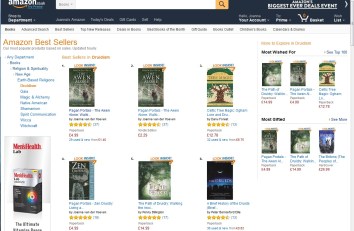 My third book, The Awen Alone: Walking the Path of the Solitary Druid is at No. 1 and No.2 today in Amazon’s bestseller charts for the category of Druidism. Huge thanks to everyone who has left a review, emailed me with support, and just generally been lovely.
On Saturday, 5th December at 3.15pm I will be giving a talk on “Modern Druidry” at the Woodbridge Mind Body Spirit Festival. I’ll also be performing with my dance company on Sunday at 2.15pm, as well as doing wandering performances earlier that day at the Woodbridge Christmas Fair.
The Zen Druidry online course is on schedule to be released before the Winter Solstice, so keep everything crossed that it remains so!
Applications for Druid College will open at Imbolc, 2016, watch this space for more info.
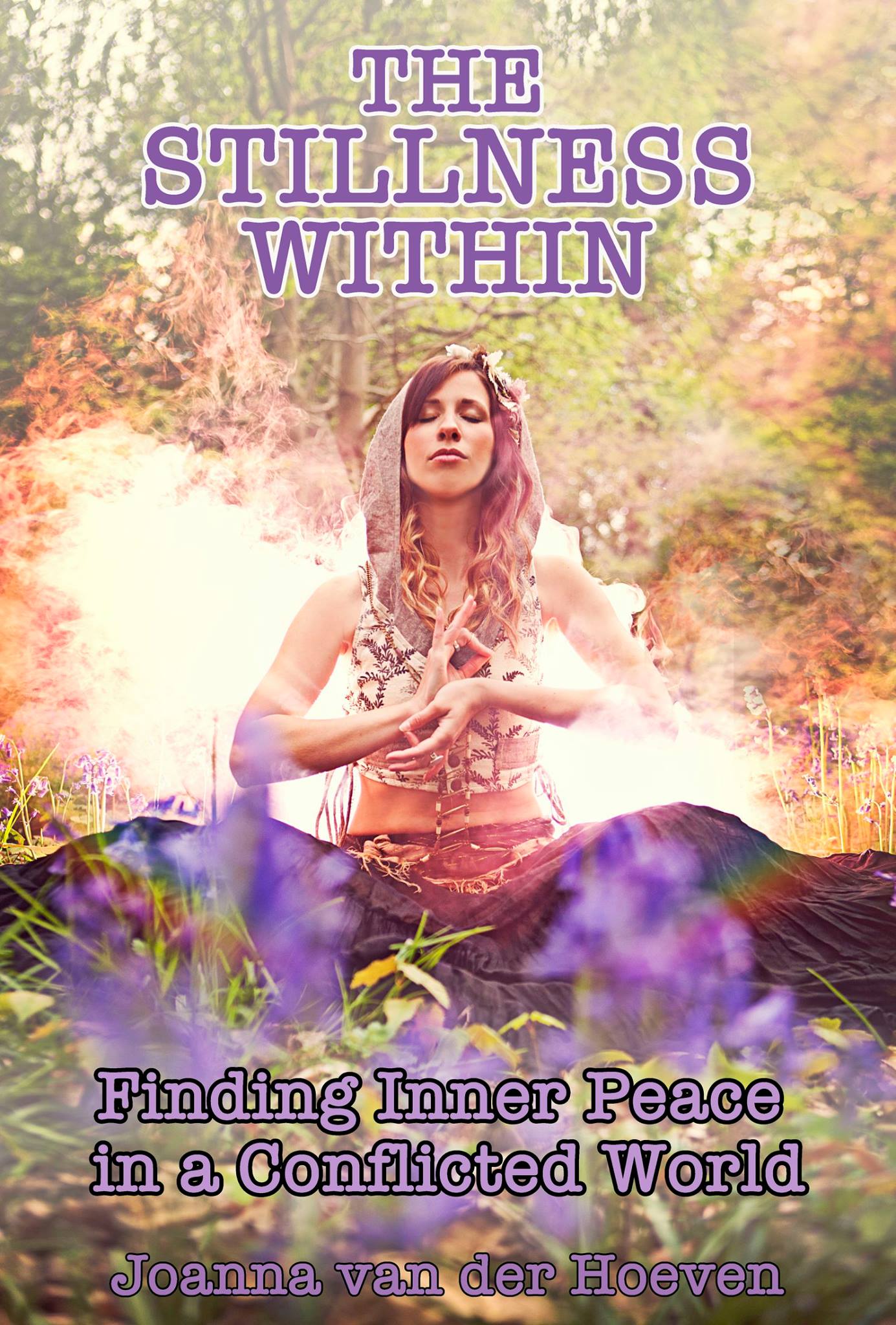
The Stillness Within – out soon!
My fourth book, The Stillness Within: A collection of writings on finding inner peace in a conflicted world will be out fairly shortly. Available in electronic format only, it is my aspiration with this book to keep overhead production costs as low as possible so that the full proceeds of sale can go to Woodland Trust and Orangutan Appeal UK. I’ll keep you posted when the book become available!
SageWoman: Serenity Issue now available!
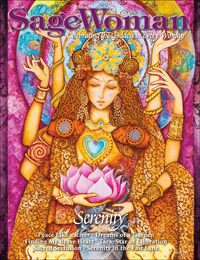
SageWoman’s latest magazine is now available for download and to be mailed to subscribers; this issue is Serenity, and contains a Zen/Druid article by yours truly. To find out more, click HERE.
Busy times ahead!
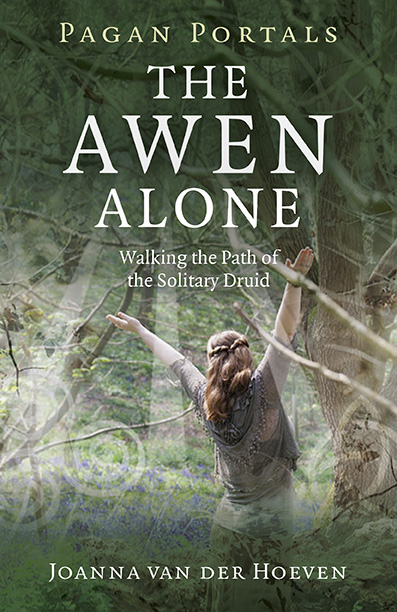
My latest book, The Awen Alone: Walking the Path of the Solitary Druid has broken through another sales barrier last month – I am really pleased and very grateful for the warm reception that this book has received! I am currently working on a new book at the moment, diving in and getting stuck into a much more in-depth piece of work entitled Druid: Priest of Nature. I hope to have finished writing this one by this time next year – wish me luck!
Happy Canada Day
Today is Canada Day, 1st July. Back home in Canada there will be fireworks, music and celebrations from backyard barbeques to city-wide parties and festivals. Days like this I miss my homeland, my mother country. As today has approached, I’ve been giving some thought about what it means to be a Druid in a land that is not “your own”, living in a foreign land.
A Druid’s relationship is with the land, first and foremost. It is the defining part of our spiritual tradition, religion and philosophy. We deepen that relationship through working with the ancestors, deities, the three worlds, etc. However, at the heart of the matter is the land upon which you live. Establishing a deep and sacred relationship with it is the main part of our work as Druids. But what is this relationship?
We have to know the environment we are living in, in order to live well in it. If we live with ignorance, we might cause damage. If we run against the currents of energy that are flowing through our land, say for example spending inordinate amounts of energy during the winter holidays when the darkness is actually calling us to rest a moment, to get in touch with the depths of winter, then we become exhausted, ill, suffering from diseases and dis-ease. We have to dance with the land, and when dancing with another it is of utmost importance to acknowledge the other’s movements, in order not to cause injury or step on anyone’s toes. We have to be aware of what is going on, each and every day in our landscape. It is not enough to celebrate the eight festivals of the modern pagan Wheel of the Year – to be a Druid requires much more than that.
It is a relationship that is not one way. Singer/composer/pianist Tori Amos once described her relationship to the land through her Cherokee grandfather’s guiding words: “We are either caretakers, or takers. It’s your choice”. While as Druids we don’t really have a sense of stewardship of the earth, for that would place us in a hierarchal order of being that doesn’t really make any sense, we do know that taking too much is damaging and so we work to live in harmony, in balance. Inspired by the ecosystems around us, we see how to fit in, to work with each other, whether that be human or beetle, stinging nettle or oak tree.
My relationship with the land began in Canada, where I was born. I drank from the rivers and lakes: that water is in my body. I grew up in the Laurentian mountains: those granite hills are also in my bones, in my foundation. The wild thunderstorms of summer are in my blood, the cold crisp air of winter in my lungs. They are a part of me and I am a part of it. We are inseparable, the land and I. The conditions manifested at the right time to bring me into being in that space and in that time, and I cannot disengage with it any more than I can wilfully cut off an arm or a leg.
But I live in the UK now. I am a resident of this country, and have been for many, many years. I have been here almost as long as I have lived in Canada. I have learned to dance to the rhythms of this land, with its differently beating heart, its slower pulses and island mentality. I have felt Brighid’s serpent rising and falling with each passing year, deep within the earth, dancing in the light of the sun in summer and retreating again, curled up within the depths of winter’s darkness and at the base of my spine. I have seen different gods of thunder and lightning, of seas and oceans, rivers and deep, cold lakes. I have felt and honoured the ancestors of this land, feeling their stories sung in the evening breeze, feeding from their bodies in the food grown on this land, breathing the air they breathed. I have walked many, many miles all across this land, coming to know its vast and intricate landscape, from craggy sea cliffs to heather moorland, from the Scottish Highlands to the White Cliffs of Dover. I have danced in this energy, so different and still similar to that of my mother country.
The questions remains: to whom do I belong?
I have roved many parts of this world, been in many places on this beautiful blue planet. I belong to this planet, I would say, first and foremost. Though I still carry a Canadian passport, I am a citizen of Earth more than a citizen of any country. Those lines on a map really mean nothing to me, spiritually. A land defines its spirituality, for sure, but there is a shared spirituality as well, as we are all part of this huge ecosystem called Earth. The energies run differently here in the UK than they do in Canada, on the surface, at least. But delve deep enough, in to the core of this spherical mass hurtling through space and it’s a shared centre, with sacred fire holding it all together.
I feel equally at home here in the UK as I do in Canada. There are other places on this planet that I feel at home – Sweden is one. I cannot date my ancestry back to either Scandavian or Celtic roots, but I know that I did come from the same basic ancestors as we all did those many, many years ago. It matters not what more modern root I come from in my Druidry. I was baptised and confirmed a Protestant, but I am a Pagan Druid. I honour different gods from all traditions, and still question the existence of all of them. I quest the awen daily, searching for inspiration, looking for answers, searching for the right questions, sitting in silence and dancing in delight. It doesn’t matter where I came from. What matters most is what I do now, in the land that I am in, whether it is the UK, Norway, France or USA. What matters is that deep connection to the spirits of the land, to the essence of nature wherever I am, and in that connection an honourable, sacred and sustainable relationship. I am not a tourist anywhere.
Yet still I call myself Canadian for the most part. My accent, though much bastardised, is still different and people will ask me where I’m from. Legally I am a Canadian who is resident in the UK. Yet I vote on UK policies, not Canadian ones. I follow deities that are from this land. I honour the deities of Canada and North America, those different energies moving along swifter currents and wilder ways. But I work with the land beneath which I walk, barefoot on the grass in my backyard, the ash trees whispering ancient secrets to me beneath a mackerel evening sky. Perhaps I am not a Canadian. I am not British. But I am Druid.
Interview in Aontacht
The Golden Seed out now!
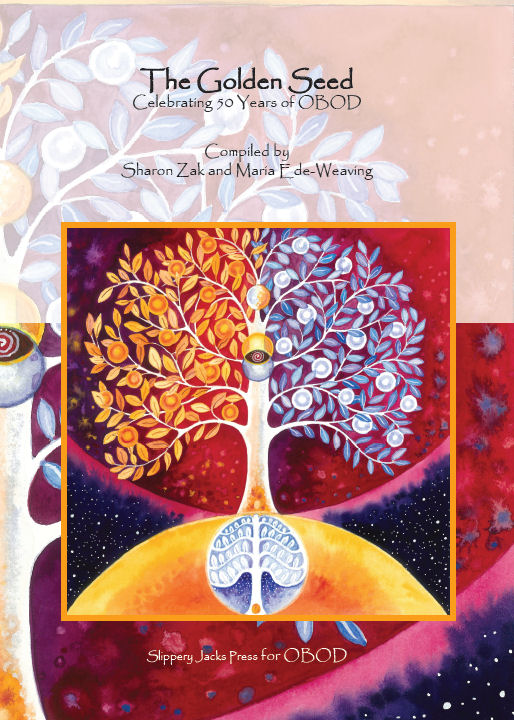
50 Druids were selected to contribute to Order of Bards Ovates and Druids (OBOD) 50th anniversary celebration book, The Golden Seed, and I was honoured and delighted to be one of them. Order your copy now of this wonderful book, with fabulous illustrations and also a DVD of the 50th Anniversary event in Glastonbury with photos and music by Damh the Bard! Pre-ordered copies are in the mail as of today – yay!
 Down the Forest Path