The present moment – it is a gift, and that is why they called it the ‘present’.
This quote is true on so many levels. When we are awake, when we are aware to the present moment, we can see it for the very real blessing that it is. For the majority of people who aren’t living in fear through war or famine, who aren’t suffering from chronic pain or disease – simply being in the present moment is the greatest gift we can give to ourselves. Being aware of the present moment, even when faced with such conditions, may help to alleviate suffering.
When we wake up in the morning, we can become fully aware of that moment upon waking. We can lie in bed, feeling our selves in our bodies, listening to any sounds around us. We can do a mental body scan, to see how we feel, if there is any pain or stiffness, any tightness held through residual stress. We can consciously work to try and let that go, in order to start the day right.
We get up, we go to the bathroom. We can do this with full awareness. When brushing our teeth, we hear the water flowing through the tap, we give thanks that we have clean water at our disposal when so many others do not. We brush our teeth while concentrating on the simple task of brushing our teeth. So often our minds are already in a meeting at work, that when we brush our teeth, the whole meeting is there brushing our teeth with us!
Concentrating on one task at a time not only does a better job at the task itself, but can also help us to overcome areas in our lives when we are not at the best we can be – say, due to stress perhaps, or depression. If we focus on one task at a time, taking it and really being in each moment, we do not have the opportunity to be stressed, for to be stressed we need to be thinking ahead. We alleviate our own suffering by being fully aware – in the case of depression, we may not see an end to the suffering, which brings it about in a continuous cycle. By being in the moment, we are not looking forwards or backwards, inwards our outwards – we are simply being.
By being, we are not mindless zombies – we are, in fact, more fully aware than most people by using concentration and focus in order to move about our daily existence. We will make less mistakes, we will be less clumsy. We will brush our teeth so much better. We will be mindful of each step we take, and so we will trip less, stumble less, walking in total awareness to wherever it is that we need to go.
We eat our breakfast mindfully, thankful for having food to eat. We close the door to our houses, thankful that we have a home, a sanctuary from the elements in which to live. We drive our cars mindfully, thankful that we have such luxurious modes of transportation. We work, thankful that we have a job to provide us with the means for food and shelter, as well as the opportunity to work with others, be creative, make the world a better place – whatever it is that your job entails. We do our work with full attention, whether it is sweeping a floor or updating a database. We are mindful of our posture during the work, of our breathing – we take moments to simply be, to assess our bodies and our minds.
Try doing this for an hour or so a day, then a full morning. Try to maintain awareness for as long as the sun is shining, or the rain is raining. Become more aware not only of yourself but of your environment. By doing so, you will find that life may flow more easily and that you see where you can fit in more harmoniously. Your actions will become more graceful, your movements filled with awareness and intention. Let your thoughts follow your body, flowing gracefully and with intention instead of running rampant through the mind.
Notice how this makes you feel – and if it feels good, keep doing it! May you all be gifted with the present.
We all need a little sanctuary in our lives. A place where we can let down our walls, let the barriers fall and simply be ourselves, wrapped in the security and safety of knowing that we are held. My patron goddess, Nemetona, provides me with many opportunities to savour this precious moment, and to help create it for others. She is the Lady of Holding, of Sacred Space, of Sanctuary.
Often when we meet others, especially human beings, our walls shoot up if they haven’t already been erected, and we are on the defensive. We regard others warily, perhaps even as enemies; guilty until proven innocent. A certain wariness around strangers makes sense – it’s an innate human instinct that we also see reflected elsewhere in the animal kingdom. It is a form of self-preservation. However, what I would posit is that we become so used to keeping those walls up, that we barricade ourselves inside our selves, unable to see the bigger picture, unable to truly experience compassion.
I am not saying that we should allow others to do as they will to us – wilfully harming another person in any way is completely wrong. So often when I speak of compassion, people think it is an open invitation to be trod upon, to be used and abused by those who would seek to take advantage of us. Instead, I try to explain the ideas of compassion, and also of engaged Buddhism – simply put, compassion is about trying to understand, to see around our own sense of self into the bigger picture. Engaged Buddhism is being active in a world to stop suffering, to speak up against violence and injustice and work to spread love and compassion.
My Lady Nemetona helps me with this. By coming into her sacred embrace, I find that I remember what it is like to be open, to be held, to be free in utter sanctuary. Thus inspired, I try to find ways to bring that inspiration out into the wider world, making it a better place. When we are held, when we are free to be our true selves, we also provide the opportunity for awen, for inspiration, to fill our souls with joy and wonder at the simplicity of simply being. We can then become a conduit for this energy, bringing about positive change in the world, even in the midst of suffering.
Working with Nemetona, we become aware of our boundaries, when we erect them and when we let them dissolve. We also see how we involuntarily create barriers, whether it is in our energetic fields, our communication, or our perception. Through meditation and work with this particular goddess, I have found a way of both strengthening my inner sanctuary, thereby being able to let down those walls and openly experience situations with complete awareness. In this, intention is key.
By being open, I am also being receptive to input that might otherwise pass me by through my own ego-centric mindlessness. By working with sanctuary, I can see where I have lapsed and allowed others to abuse my trust, and where I will never allow that to happen again. By being aware of how, why and who we engage with, and with what intention, we can change how we react to situation, acting with intention instead of a more reactionary type of living. By becoming engaged with my boundaries, I am aware of when I need to strengthen or release them as appropriate.
It’s been a tough ride, sometimes, working with this goddess and with compassion. It has shown me where I have failed so many times in the past. Understanding and awareness of those failures, however, is not there to deter me; they are there to remind me, lessons learned and opportunities for further growth. The key to working with boundaries and compassion, and indeed Nemetona Herself, lies in awareness – of the self, of others and of the world at large. It’s not an easy path, but one well worth walking. It can lead us down the shadowy paths in the long dark night of the soul, but we can emerge into the light of the sacred forest grove, whether it be dappled sunlight, pale moonlight or starshine. In that emergence lies our true nature, inspired by nature and surrounded by our natural sanctuary.
This little phrase may not only save your life, but can continue to make your life a lot easier. I’ve been slowing down a lot this year, saying “no” to many things, acknowledging that there is already enough on my plate. I’m taking time to simply be, to be in the moment, to stop the running around and to well and truly live.
Slowing down, physically, (and mentally, as a result – thoughts eventually stop racing around in your mind when your body slows down) can bring new joys in an otherwise missed-out world. Eat your breakfast mindfully, slowly. Drink your tea mindfully, slowly. Drive your car mindfully, slowly. Just try these three things for the first week and you will notice a distinct improvement in how you feel. It’s amazing how changing small habits can have such a grand effect.
Eating and drinking too quickly, unaware of your food, can lead to stomach upsets, food waste, and over-eating just to name a few things. Driving too quickly can result in loss of control of your car, and ultimately your life or the life of another. Taking the time to really be in the moment of these “little” things, these everyday things, can bring a new awareness and gratitude for the small pleasures in life.
Feel the consistency of your breakfast banana, really smell it, touch it, run your fingers over it before you even peel it and begin eating. Be thankful that you have that banana to eat. Savour each mouthful, chewing slowly, swallowing purposefully – it may sound silly, but just try it. Drink your tea in beautiful china cups, taking the time to brew it carefully in a teapot, aware of every movement of your body as you do so. Pour the tea with full awareness. Raise the cup, feel the smooth porcelain on your lips just before the warm liquid dances on your tongue. Be thankful that you have tea. Touch your car before getting into it. Sit down gracefully, feeling your body in the seat. Start the engine mindfully, and drive with total awareness of the steering wheel beneath your hands, the road beneath the tires. Be thankful that you have a car.
By slowing down you will may find yourself less stressed when you get to work, or when you arrive back home from work. We are not meant to live under the constant stress that our everyday lives present us when we live un-mindfully. By taking a few moments to slow down, to become aware of where we are and what we are doing, we can help heal and restore the balance in our lives.
We’ve got our weekend retreat coming up! 11 – 13 April, Chalice Well Gardens, Glastonbury, UK
Experience a weekend filled with devotion to the gods, the land and the ancestors – with prayer, meditation, discussion and ritual, as well as visiting sacred sites such as Glastonbury Tor and the White Spring on this unique retreat, The Little Pagan Monastery. Stay at Chalice Well & gardens, at Little St Michaels where you will have 24 hour access to one of Albion’s most sacred places during your stay. Incorporate daily prayer and ritual into your life, make new friends and enjoy some time spent away in an inspirational setting with like-minded people.
Friday
5pm onwards – arrivals
6pm – Welcome talk
6.30pm – Supper
8pm – Evening prayer and group meditation
9pm – Free time
Saturday
7.30am – Morning personal meditation
8am – Morning Prayers and group meditation
9am – Breakfast
10.30 am – Discussion
12 noon – Midday prayers and group meditation
1pm – Lunch
2.30pm – Glastonbury Tor walk and meditation
5pm – Free time/gardening work
6pm – Supper
7.30pm – Discussion
9pm – Evening prayers
Sunday
7.30am – Morning personal meditation
8am – Morning Prayers and group meditation, followed by ritual
9am – Breakfast
10.30 am – White Spring visit
12 noon – Midday prayers and group meditation
1pm – Lunch
2.30pm – Farewell
It’s funny how I was just thinking about getting enough sleep this morning and then I came across Leo’s latest blog.
Meditation can be especially hard if we haven’t had enough sleep. Sleep is so important to many things in our live – from motor skills to regeneration of new cell tissue. Yet how often do we ignore the signs that we need more sleep, or are unable to meet the demands that our body requires due to the nature of our lives?
Sometimes when I’m meditating I find that my eyes are closing, and my head is falling to my chest. At that point, I give up on meditation and, if it’s not in the evening, have a lie down and a nap (or otherwise just go to bed). I too have tried to get up early in order to meditate, but dance rehearsals and classes at night often equate to a sluggish morning while my body is still recuperating from the exercise. Meditating afterwards is not possible, for I am just too tired. The best time of day for me to meditate is around 3 – 5pm, however this is not always possible. Yet I still try to meditate every day, in some form, preferably sitting still so that my mind stills even as my body stills.
People with young children often live a life of perpetual sleep-deprivation. There is a Zen story about a mother who berated herself for not having the time to spend in meditation as she was too busy looking after her child. A Zen monk told her that looking after her child was her meditation – as long as she was fully aware of the moments she had with her child.
Meditation is much more than just sitting on a cushion focusing on the breath, or pondering a problem, journeying within our minds or chanting mantras while holding our hands in mudras. Meditation is life – all that we need do is to bring a conscious awareness to our lives in order to achieve this.
When I am at work, if I am focused on the work, aware of my surroundings and my reactions to situations, then I am meditating. When I am driving to or from the office, absorbed in the driving itself, I am meditating. When I am at home from work and finding the time to sit on my zafu and focus on my breath, my thoughts and my feelings; then I am meditating. When I am washing the dishes in full awareness, I am meditating. When I am stroking the cat and listening to her purr, I am meditating. When I am doing yoga, focusing on the postures, transitions and breath, I am meditating. When I am dancing, aware of every movement in my own body and my fellow dancers, I am meditating.
We often say that we do not have the time to meditate in our busy lives. If we simply cannot squeeze in even ten minutes a day for sitting meditation, we can always make our lives a living meditation. The choice is ours.
Witnessing a discussion on social media made me a little uneasy at the way people treat other people whom they believe are wrong, either in virtual or real life. I have seen this in the past many times; sometimes it is abuse, mockery, or belittling – yet each time it stops and makes me think about what I am doing to affect the world, looking at my reasoning, my motives, my intention. What I have been working on this past year is that those who disagree with us, those who challenge us, those who we absolutely hate, those we think are harmful to our world – all these people we need to accept.
Accept, you say?
Acceptance, yes, but in an egaged way. This is not passivism. Thich Naht Hanh coined the phrase “engaged Buddhism”, and this is active compassion in trying to create a better world. Essentially, we accept that there are people out there who are different from us; we accept the world for being the crazy, mixed up, sometimes awful, sometimes beautiful place that it is. We do not mock other’s beliefs, just as much as we do not condone the beliefs of others that we think are harmful and that cause suffering.
It’s a little hard to get the head around this concept. It’s taken me months to see where that balance point lies.
Thich Nhat Hanh wrote 14 principles of engaged Buddhism. The first one is the best.
“Do not be idolatrous about or bound to any doctrine, theory, or ideology, even Buddhist ones. Buddhist systems of thought are guiding means; they are not absolute truth.”
I personally love this. It reminds us that ideas are just that – ideas. It also demonstrates that everyone’s perception differs in slight or large ways, and that being bound up in our opinions can cause huge amounts of suffering. Our opinions are constantly changing – as we learn and grow, as we sacrifice ignorance, we change. This is reflected in the second principle –
“Do not think the knowledge you presently possess is changeless, absolute truth. Avoid being narrow minded and bound to present views. Learn and practice nonattachment from views in order to be open to receive others’ viewpoints. Truth is found in life and not merely in conceptual knowledge. Be ready to learn throughout your entire life and to observe reality in yourself and in the world at all times”.
Number three covers the area of engaged Buddhism, where we confront issues that we think could be harmful to others.
“Do not force others, including children, by any means whatsoever, to adopt your views, whether by authority, threat, money, propaganda, or even education. However, through compassionate dialogue, help others renounce fanaticism and narrow-mindedness.”
Note that here the key word is compassion – compassion is creating an understanding of all points of view and working respectfully with that new understanding to find a resolution if there is confrontation. Sometimes resolution cannot be found, but that does not mean we should stop trying, for who knows when the tides may turn? Thich Naht Hanh worked tirelessly during the Vietnam War, helping those who suffered from the tragedy that conflict brings. He never took a side, and was therefore looked upon with suspicion from both sides, eventually exiled from Vietnam after he went to speak in the United States about ending the suffering caused by war.
So often people think that the Buddhist notion of compassion is loving all things and allowing yourself to become a doormat. The ninth principle covers this neatly;
“Do not say untruthful things for the sake of personal interest or to impress people. Do not utter words that cause division and hatred. Do not spread news that you do not know to be certain. Do not criticize or condemn things of which you are not sure. Always speak truthfully and constructively. Have the courage to speak out about situations of injustice, even when doing so may threaten your own safety.”
It is possible to speak out against an injustice in the world, against something you believe is wrong, without using words that cause division and hatred. Thich Nhat Hanh has been doing this for over half a century. Using hateful terms, mockery and discredit of a person’s character are usually our first instincts in a confrontational situation. Stopping, pausing and truly thinking a situation out before you speak or act can result in much smoother and compassionate dialogue. Instead of instantly reacting to a situation, you are engaging with the other person, not seeing an “Us and Them” concept but one of a unified world, where we are all connected. I personally do truly believe that what we say, we are. Having studied the Buddhist principle of Right Speech on the Eightfold Path for a while now, it has changed my behaviour, how I act instead of reacting to a situation. It has really been an eye-opener.
These are but a few principles of this concept of engaged Buddhism – more can be found out through his book, ‘Interbeing’: Fourteen Guidelines for Engaged Buddhism, revised edition: Oct. l993 by Thich Nhat Hanh, published by Parallax Press, Berkeley, California.
May our hearts be open so that we can love those who challenge us, and in doing so create a world where harmony instead of discord is the song that we sing. It can be so tremendously difficult when those who challenge us are harming others with their actions. May we engage instead of reacting. May we speak from our hearts, with love, compassion and kindess.
(To see all fourteen precepts of engaged Buddhsim, you can read them here)
As Pagans I feel that we naturally tend towards a worldview that is less anthropocentric, especially if we follow an animistic path. Our love of nature, whether it is the world around us, or human nature, or both leads us on a journey that can take us outside of our selves, and thereby gaining a wider perspective on the whole.
Deep ecology is about thinking less about the benefits towards humanity, and more about the benefits to the environment. Buddhism, with its tenets of compassion, is very much in a similar vein; we try to drop the ego in order to benefit the world, and by becoming less self-centred, are better able to help others. Some spiritual and secular journeys can put too much stress on human relations, and not enough on the wider web of life. Within Paganism, we can see that we are always connected, and that connection is what inspires us to lead a life more attuned to the natural cycles, or vice versa.
In my own Druidry, what I seek is total immersion in my natural environment. I strive to loosen my sense of self as an individual and instead seek to blend my song with that of the world around me, finding a harmonious union. When out walking on the heath or in the woodland, I let the “I” drop away, and become totally immersed in the present moment. I feel that this gives me a greater connection to the world, allowing what Buddhism calls the dharma to flow. Dharma is simply reality, which we so often tend to avoid at all costs. When we realise the beauty of the present moment, when we can truly live it in every sense of the word, then we are truly connected to everything. We become part of everything, and in this I also see the Druid concept of awen, or flowing inspiration; the life force itself.
If I can free myself of myself, I can open truly to the songs of the universe. There is no separation – I am the heath, the forest, the deer. Movements are made in full awareness, and every step is taken in love and reverence. Every breath is a blessing. Everything my eye falls upon is a gift.
In living such a life, what is fundamental is a respect for all things. This is at the heart of animism, which sees the inherent value in all things just as they are. No one thing is more worthy than another. Each thing is an expression of itself in full blossom, in full fruition. Even my self, my physical self, is simply energy taking form as my body in this present momen t and perhaps even my mind), for however long or short a time span. This body is in permanent change and flux, growing and changing shape, eventually dying. In death the change continues, and the form alongside the energy flows in different currents. My body will continue to change, as cells break down and bacteria work to return the physical form to the earth. The process of life and death, of decay and regeneration is honoured within Druidry and within animism. No one process even is more important than the other. Birth is no more important than death. What we do realise is that life has no opposite – there is only flow, change, awen.
My sense of self is of little consequence in the grand scheme of things. What matters is that I pay attention to what is happening around me, and use that to inspire me to live my life accordingly, with honour and respect. Paganism allows us to leave behind all the machinations of humanity to follow a different flow, one where we see where we fit in the puzzle. The love of nature inspires us along the path, demonstrating that there is more to the world that our own human lives. We are the country folk, the paganus. Even though we may live in cities, we still feel the pull and hum of nature around us, reflected in the sun’s cycles, the seasons, the flows of human nature.
Immersion is key. If we can allow ourselves to not only ride the current, but become one with the flow itself, we are then blessed with a wholly different perspective not based upon human need and desire. There is much more to the world than our anthropocentric view, and we honour that world with all that we are.
Can you remember the last time you were unkind to someone? Or thoughtless about something? Chances are, it doesn’t make you feel all that good – it probably makes you feel smaller, inside. When I remember acts of unkindness, either done by myself or done to myself, I feel a squirming inside, an uneasiness.
Still working on thoughts with compassion, exploring words and acts of unkindness has been an enlightening experience. Looking deeply at how it made me feel, what my reactions were, what others’ reactions were, what the outcome was, how it could have been prevented – all these I have meditated upon these last few months. What I’ve come to realise is that no one likes to be unkind. There is no joy from it; perhaps if you are mentally ill, or there is a function in the brain that is not working as it should, then maybe you don’t feel bad, but on the whole, unkind acts do not produce any joy, any feelings of wellness.
Through our connectivity to each other, we perhaps have a deep-rooted empathy that we can acknowledge, if only we allow our ego to fall away, to quiet down and listen to what others have to say above the racket in our own brain. We all share a life force; we all share a space on this planet, in this universe. We are all thinking and feeling animals – if you are an animist, you also acknowledge a consciousness and inherent value in all things. As humans, we all breathe the same air, air expelled from the lungs of others, turned into oxygen through various other life forms, breathing and sharing, breathing and sharing, the life breath that our ancestors breathed thousands of years ago, the life breath our lover breathes right now.
The word “kind” can mean a generous, benevolent, good person or deed, act or consideration. It can also mean to be of a like group of individuals or objects – being of the “same kind”. What I would posit is that the two meanings are entwined – kind thoughts, acts and deeds are a direct result of and inspired by being of the same kind.
Being unkind is distancing your self from others, making a distinct split in compassion from others, sometimes even diving into self-centredness in an anthropocentric world view. Yet this distance, this separation is false – we can never be other than another life form on this planet. Another life form – we are surrounded by others all the time. Some are seen, some unseen – some are natural forces that create and destroy with violence or beauty, others are microscopic and surreal in their manifestation. Yet we are never alone.
I think that the natural human tendency is to be kind towards others, for we have a specific consciousness that allows us to see and feel the repercussions of our actions. We have the capacity of forethought, yet we use it all too seldom. We are homo sapiens, the beings that are aware that we are aware. If we truly are aware, then unkind thoughts and deeds would not ring true in our heart of hearts. Awareness is a journey towards the cessation of suffering. If we are truly aware, then our suffering is eased.
Awareness comes in many forms, from simply being in the present moment to an understanding of the grander scheme of things, or seeing things from outside of your own personal perspective. For how often has our perspective been wrong? When we have been unkind to others, chances are it is because our perspective was skewed, and we reacted badly to a situation. If we remember compassion, and strive to see the bigger picture, then with a little discipline and a lot of love we can change or modify our behaviour to help ease the suffering of all beings.
Those people who are unkind are trapped, and it may be helpful to remember that. When someone is unkind to us, we can act with compassion. Sometimes that may mean seeing things from their point of view. Sometimes it may be walking away from a situation with honour and integrity. When we find ourselves being unkind, or remember past deeds that are less than glowing, we can remind ourselves that it is up to us to choose freedom over chains. We don’t have to let our behaviour rule us. We can be passionate and loving without allowing emotion to skew our perspective. Emotion is such a personal thing, that it’s no wonder our wires get crossed all the time. It’s all about perspective.
In all things, I try to remember two words: be kind. x
* Sparked by a conversation I had today with a lovely chap and artist (known as Bird Radio – do have a listen, there’s some really good stuff here! https://soundcloud.com/birdradio) about perceptions, connectivity and many other things, this blog post simply poured out of me, and reminded me of the serendipitous nature of life and reality when it comes to, well, life!
I’ve recently watched Dan Snow’s latest expedition, to travel down the Colorado River through the Grand Canyon in three boats from the late 19th century, just as Powell did. It was a really interesting show (not just because of the equally gorgeous and intelligent Mr Snow) that not only demonstrated the awesome power of the elements, but also those of human nature.
Each boat has three people in it – an experienced helmsman, an experienced boatman and a novice. The three novices were Dan, Mike (you may know him from Springwwatch) and another chap whose name eludes me – historian, ecologist and geologist respectively. They all had to work together as a team to see it through to the end – 18 days of incredible physical and mental challenge amidst one of the world’s most beautiful and dangerous environments.
Each person had to pull their own weight, despite their experience, and each person did so without fail. They all tried their hardest and it was inspiring to see. What was not so inspiring was another aspect of human nature that arose from one of the boats – namely, the blame game.
In one of the three boats, Mike was having a harder time than the other novices. Whether that was simply his lack of skill and learning, or insufficient support and teaching from his colleagues, is up for debate – we could not see everything that happened in this edited television show. What I did see however, was an aspect of human nature that really opened up my eyes not only to how other people treat each other, but how I’ve treated others in the past as well.
It started with the “expert whitewater kayaker” beginning to complain to the camera about Mike and his lack of ability. It would seem that instead of taking extra time to help the novice and support him, he would rather complain to the camera away from the group. He blamed Mike for the difficulty their boat was having in the rapids. However, what we all saw was at the first set of rapids, the kayaker falling out of his seat pretty much at the first bump. Whether this started off something in his mind that needed to help him save face, changing the focus from his own inability, mistake or accident, and blaming someone else for it we can never know for certain. It certainly appeared that way to me.
Since then, he complained on several occasions to the camera in isolation. Then his helmsman made a mistake, taking the boat down backwards in the hopes of having better steering in one section of rapids. The boat that went through before managed it. I’m not an experienced boatman, but I could see in those churning waters that the oar would snap like a twig if caught on a rock, which it did. After that, the helmsman began to complain to the camera as well about Mike, who was simply doing his best to row and keep the boat going straight and bail when he needed to – there really was nothing else he could do. At one point we saw the helmsman shout at Mike to bail, and Mike’s pail got caught up in part of the boat’s rigging – not that it would have mattered, for bailing in the middle of those rapids was, to me, pointless – the boat was already full at and the mercy of the river. Mike began bailing as fast as he could, but another wave just crashed right in. He would have been better off rowing, but he still got yelled at.
This all made me very uncomfortable. I hate seeing people getting picked on when they are trying their best. But I was also inspired by Dan’s boat, which seemed to have some sort of Zen Master at the helm. This chap was brilliant – he was so calm, so peaceful, never shouting orders and seeming at one with the river – when he took his boat down the rapids, he steered it down the path of least resistance, without effort. A beautiful thing to witness. Soft spoken and mild-mannered, and an accomplished musician, his calming influence was a gentle reminder to me to keep my Zen on and have compassion, even for those who were irritating the hell out of me on the show.
That’s not to say that the Zen Master Helmsman’s boat didn’t make any mistakes. His boat came the closest to capsizing in one of the most difficult rapids. They didn’t make the line they were going for down between the rocks, and got swept away down a fast sluice heading straight towards the canyon’s rock walls. His oar got ripped from his hands in the roiling water, and they were at the mercy of the river. The other helmsman would have shouted his head off at this point, but Zen Master Helmsman kept his cool – it was a beautiful thing to behold. He had lost his oar, all manner of steering, and the boat swept into the curve of the canyon (you can see it on the video). The boat kept to the curve, the water sweeping it close but not up against the canyon wall. Then the boat began to tip over on its right side. Dan lost his seat and fell into the right side wall, nearly out of the boat. ZMH calmly reached for the left side of the boat, push against it with his body weight, counterbalancing the tipping boat, and it righted itself. You can’t hear it on the video, but he was also calmly talking and encouraging his fellow crewman throughout, saying “Stay calm, just stay in the boat, take it easy”. They made it through, without yelling, without panic, without blame.
Everyone makes mistakes. With three people in a boat, you cannot blame one person for the boat going wrong. Everyone is in it, working together to try and go in the same direction. There are so many variables that to blame one person it pointless. Staying calm, looking out for your crew members and acting with compassion is the way forward. By observing this, the three simply followed the river’s flow. There was nothing else they could do, so why increase suffering?
Compassion is all about reducing your suffering. The two complainers in the other boat did not seem to grasp this. Instead of helping they made things worse. I hate to think what would have happened had it been their boat that nearly capsized. However, their boat did not escape unscathed of a terrifying experience.
On the next section of these last, and most dangerous rapids, Mike’s boat lost their helmsman as he was washed away in a giant wall of water that hit the boat. No one’s fault – you cannot blame crew or wave or river any more than you can blame the sun for shining. The helmsman managed to hang onto his oar under the water, and pull himself back to the boat, floating down the rest of the rapids with it, finally being pulled back into the boat at the first opportunity. This was the changing point for that crew.
The fragility of human existence hits hard when confronted with the very sudden realisation that you or someone you know could have died in a certain experience or circumstance. This realisation did indeed hit Mike hard, as we saw when the camera was on him when they were on the beach after these rapids – he was brought to tears by the whole experience. It also brought the crew together – the kayaker who originally tried to blame Mike for everything saw Mike’s suffering, and came up to give him a hug. Petty blame games mean nothing when you realise just how precious and precarious life really is. Alleviating suffering is much more conducive to peace than creating more suffering in this lifetime.
What I realised from this show is that blaming people does not solve anything. It does not even make you feel better – it increases your own suffering, because everything that person does upsets or annoys you from then on. Also, when you blame someone, you instantly block out any form of objectiveness in the situation. You have established a truth for yourself that blinds you to seeing the bigger picture. Believing in this truth is dangerous. Believing that one person is wrong and that you are right is what has caused innumerable amounts of suffering in the world. Opening your heart and mind in compassion, in trying to see the bigger picture and in trying to make the world a better place would be far more beneficial to all.
I looked back at the times in my life when I had played the blame game, making others the culprit for everything that had gone wrong. Like those boats in the river, there were so many variables that one person could not be responsible for everything. The only thing we can be responsible for is ourselves in this life. If we try to help others instead of break them down, if we see our own failings before we blame others, we might change our behaviour into something that is more compassionate.
Driving to the RSPCA today to visit a cat that I am adopting, I was cut off by a car speeding in a residential area. My reaction to it was simply to keep driving, and hope that the person in the speeding car finds peace within him or herself that could be reflected in their driving. Getting mad at the other driver would not solve anything except to make me suffer. (On the way home, I did see that they are now installing speed cameras along that stretch of road, for which I am glad).
We all make mistakes. We can blame others for what we perceive to have gone wrong with our lives. Or we can simply get on with making this world a better place, communicating with compassion towards everyone, even our enemies. We may then realise that we do not have enemies in the first place. We can even wallow in guilt, blaming ourselves for everything that has gone wrong instead of working out best to improve the situation – I know which I would rather engage with. We stand strong, we act responsibly – like ZMH we have the ability to respond to a crisis situation with calmness and grace, even when faced by enormous odds and potential life-threatening situations. We are all simply boats on a river, either working together or alone to stay afloat, at the mercy of the elements and each other.
I am taking a leaf out of Zen Master Helmsman’s book. He was a total dude.

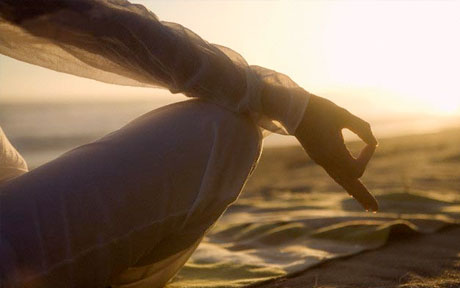 The present moment – it is a gift, and that is why they called it the ‘present’.

 Down the Forest Path