Fundraising success!

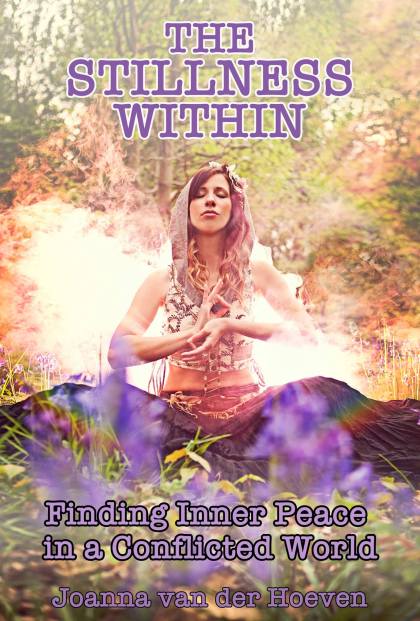
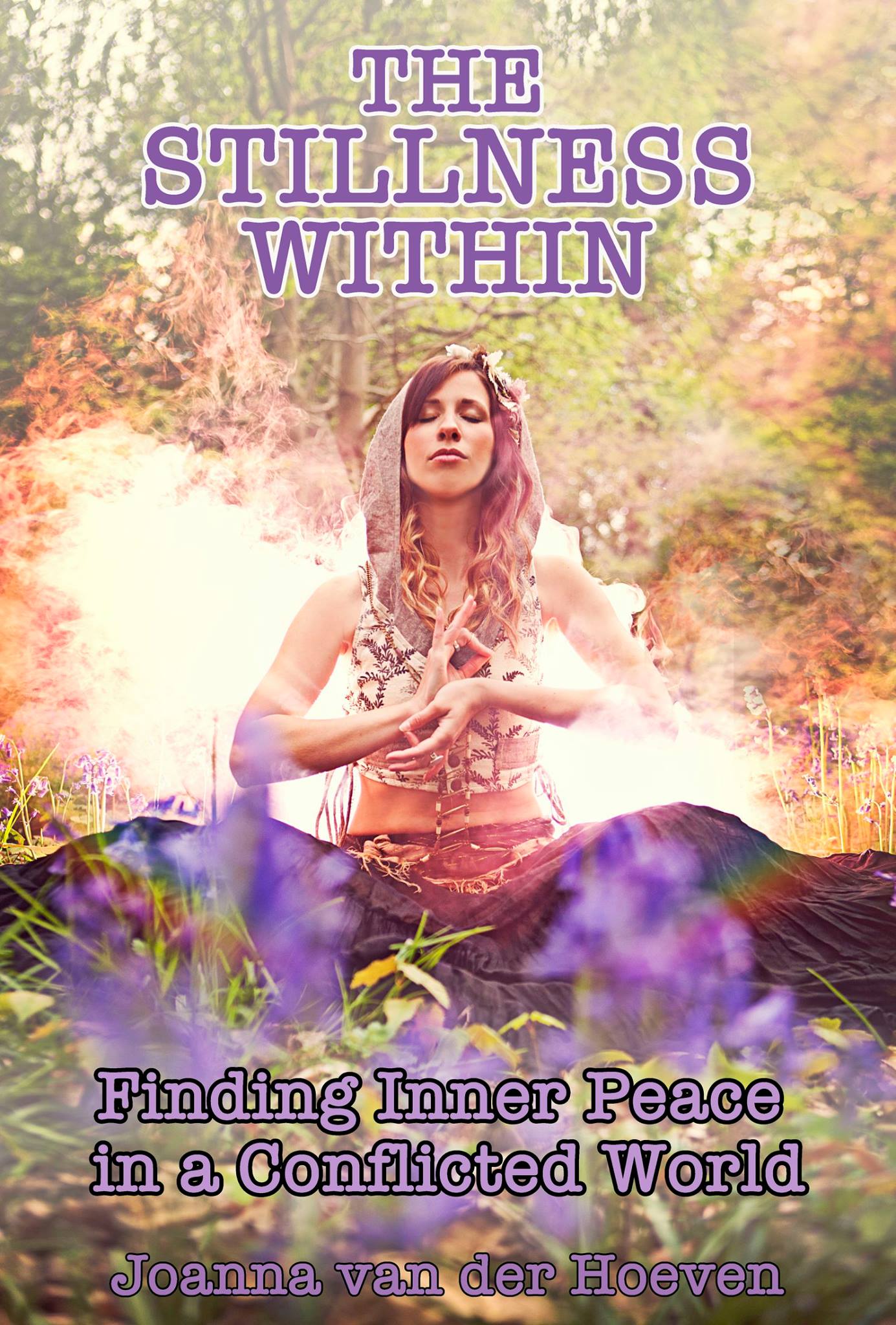
Thank you to everyone who has bought my little e-book, The Stillness Within: Finding Inner Peace in a Conflicted World. All royalties for this book go to charity, and since it’s release in May we’ve raised £65.97 for The Woodland Trust and Orangutan Appeal UK. Well done! They were both very appreciative of our donation. Let’s keep it going; please spread the good word about this project, and let’s raise even more money in the next six months for these fabulous charities.

Release

p1000386-1024x666I had a lovely solo ritual last evening, to celebrate the autumn equinox. As the sun set, I meditated on the changing colours in the sky, on the harvest that has taken place, the wheat and corn crops taken in, the onions and turnips. The fields are still being tended, ploughed for winter veg, seeding with potatoes and other root crops. The sounds of work in the fields is still going on, even as the evening dog walkers pick blackberries and apples from the hedgerows. It’s a strange time of both noise and stillness, when the swifts and house martins have mostly left, the skies seeming emptier for it. The dawn chorus is softer, the evening calls less urgent.
The times of the festivals have an effect on me, physically as well as spiritually. At these strong points in the year, I often feel at odds, not quite in this realm or any other. At Beltane, my head felt like it was being pressed in on all sides as we spent time at the local tumuli. Yesterday, and the day before, I felt dizzy, sometimes faint as it seemed the energy was swirling around me yet again. Being very susceptible to pressure changes in the air, I feel I’m becoming even more sensitive to energies unseen that roil and swirl around this little sphere hurtling through space.

I love autumn. I love the energy that it brings, a quiet, soft, energy: a release. It seems that all summer long, from Beltane onwards there has been a swift build-up of energy that it seeking its release. Some of it goes at midsummer, but most of it is contained, helping to ripen the harvest fruits. It’s at this time of year, when the fruits fall, that the energy is released, the potential lying still and quiet in the seeds, ready for winter’s dreaming.

And so at last night’s ritual, I began with meditation, and then did the ritual in my usual way, scattering leaves and saying words of my appreciation for the season and the harvest around my circle. I also prayed for peace, a deep, heartfelt prayer, as well as doing five earth touchings. I then meditated again, the sun having set, feeling the balance between darkness and light. I opened my self to what I needed to learn over the long dark nights of approaching winter, widening my perspective, allowing nature to guide me. Instantly, one word rang through my head: forgiveness.

Taking inspiration from nature, I thought about forgiveness. If any ecosystem held a grudge, then it would fail. Trees continue to provide us with oxygen, despite us decimating their population. Herbs continue to grow, despite humanity’s propensity for herbicides. The rain falls, the sun shines, and we still reap the rewards that this world has to offer each and every day. If we could only do the same, if we could only learn true forgiveness, then this world would be a much better place.

I thought that I was pretty good at forgiveness. I’ve forgiven people in my life who have caused me to suffer. But taking a deeper look, my forgiveness wasn’t all-encompassing. I needed to release the anger and hate, like the leaf falls from the tree, like the leaves that lay scattered all around me in my ritual circle.

Forgiveness is one of the most difficult things to do for us humans. We often equate forgiveness with weakness, seeing it as a relinquishing of power. Those who forgive, we think, are only setting themselves up for more grief from those who would cause them to suffer. They’re doormats.

What we don’t realise is the exquisite power of forgiveness. When we can truly forgive, we can move on with our own lives. This doesn’t mean that we condone bad behaviour; far from it. We can still stand up for ourselves, speak out against injustices. We will still face struggles with people in our lives. But we can suffer less in ourselves, if we can forgive.

But we don’t want to. We want the other person to suffer, for all the hurt that they have done to us and to others. If we forgive, we think that they’ve been left off the hook. This most certainly isn’t the case. Everyone is accountable for their actions, everyone has a responsibility for their own life. We can’t force anyone to accept this, of course, but we can set the example for others. And when others don’t follow our example, we shrug and move on, knowing that we have, at the very least, stopped the suffering in ourselves.

But we want to change people. We want to stop people who are hurting others, and rightly so. So we can stand up for what is right, remembering that there is more than one right. We can also forgive, because everyone is suffering in some form or other. Whether willingly or not, when someone is causing another being harm, they are suffering deep inside from some affliction that we may never realise. They are fighting their own battles. We must set the example.

That doesn’t mean that we’re going to suddenly start liking these people. But we can allow the power of compassion to flow freely, to stop the pain in our lives, and when we do it begins to radiate outwards, like rings of water in a still pond. We’re not going to take any crap, but equally we’re not going to allow any crap that comes our way to cause us to suffer, to continue to make us crazy, hurt or bitter. We’re going to remain open, calm and filled with love for this planet, and in doing so understand the true meaning of forgiveness.

We’re also going to forgive ourselves. In doing so, we find peace. We’ve all screwed up, we’ve all caused pain at some point. We need to release that in order to function properly. We accept responsibility for our actions, and ensure that we never do it again. We strive to be better people, to make the world a better place.

Some would query whether it is truly possible for any human being to really forgive. I’ve thought about this myself. As such emotionally biased creatures, are we able to set aside our skewed perceptions of any given situation? In the attempt to do so, at the very least, is the heart of compassion. In the striving to do so, we rise to the challenge.

So my ritual last night was filled with my home environment providing me with the awen on the nature of forgiveness, compassion and love. And as I sat in the growing darkness, the cool soft breeze playing around me, I whispered these four words: I welcome the darkness.


Deep Peace

This is known as a Celtic blessing, the source of which is uncertain, but it is beautiful nonetheless, arranged by Bill Douglas. I’m also partial to Bill Douglas’ arrangement of “The Clouds”.


https://youtu.be/NjqT5GVS7Uo?list=RDoEmvQqg_EpQ

The Stillness Within Out Now!

Cover 1My latest book, The Stillness Within: Finding Inner Peace in a Conflicted World is out now! It’s a little collection of writings from late 2014 to mid 2015 on how to deal with people, situations, and life in general when it all just gets messy, complicated, hurtful, stressed and more. Based on writings from this blog, they’re all collated into one little book, the proceeds of which are all going to charity: The Woodland Trust and Orangutan Appeal UK.

Available worldwide for Kindle only. Hope you enjoy it!

Peace, not approval

Researching some videos to accompany my online Zen Druidry course, I came across this gem – in fact, all of her videos are brilliant!

Peace

Praying today for the civilians of Raqqa, who live under terrorist rule and are now being bombed by France, sanctioned by the rest of the West’s powers. Praying for all those across the globe, from Beirut to the United States, who suffer from humanity’s dualistic “Us” and “Them” mentality. Praying for the world today.

Druids were documented as having been able to walk between the lines of warring people. Diodorus Siculus wrote “Often when the combatants are ranged face to face, and swords are drawn and spears are bristling, these men come between the armies and stay the battle, just as wild beasts are sometimes held spellbound. Thus even among the most savage barbarians anger yields to wisdom, and Mars is shamed before the Muses.”

Maintaining our peace, we are better able to work in the world to create peace. May we be peace.

The Stillness Within – out soon!

My fourth book, The Stillness Within: A collection of writings on finding inner peace in a conflicted world will be out fairly shortly.  Available in electronic format only, it is my aspiration with this book to keep overhead production costs as low as possible so that the full proceeds of sale can go to Woodland Trust and Orangutan Appeal UK.  I’ll keep you posted when the book become available!

Cover 1

Grace

Most of us hope that when we die, we are able to pass on with a little grace and dignity. However, what is important to me right now is living in the present moment, awake and aware to the flow of life, of awen, hearing the songs of the ancestors and truly finding the meaning of the word, grace, within my own life.

Grace is a brilliant word that has so many meaning: to favour, to honour, elegance or beauty in form, ease, fluidity, mercy, clemency and pardon, just to name a few. If we look to the Latin languages’ use of the word, we find echoes in the Italian grazie or Spanish gracias, or in the French merci.  The Latin root is grātia, meaning:  (1) a pleasing quality, (2) favour or goodwill, and (3) gratitude or thanks. All three of these I find are essential to living honourably in today’s world.

To have a pleasing quality can have a myriad of meanings, from being aesthetically pleasing to simply being kind. The key word in this description is please in a verb form, which is something that makes one happy, whether it is the self or another.  Why would we not want to make another happy?  As long as it isn’t at our own expense, or hurtful towards ourselves, it seems a wonderful way to live. When we are hurtful towards another person, it doesn’t make us feel very good – or if it does, there might be something rather wrong with the brain’s chemistry.  This doesn’t mean that our lives are not our own, and that we have to make others happy first – finding happiness within the self should come first, as should love for the self, in order to spread it around a little bit.  Finding a peace and contentment within helps us to bring that to others.  When we are not at peace with our sense of self, we cannot bring peace to others.

To have goodwill for others is at the heart of living with compassion, and also living with grace. The moment we wish another being harm, we have stepped outside of grace and into a hellish world of anger, retribution, revenge, bitterness and so on. We will not always immediately have good will for another being, especially if we have been hurt by someone in the past.  Sitting with our own hurt, and then recognising the other’s pain helps us to open up our perspective from just ourselves to the wider situation.  People who hurt others are often very hurt themselves.  Those who try to pick-apart, to undermine, to speak unkindly to/about, who cause emotional pain – we can work with this with grace. We can see their hurt, empathise with it (though we don’t have to engage it, especially if it means further hurt or abuse from them towards ourselves), and feel compassion for them. We can wish them well, wish them love and peace, which feeds our own inner peace and peace throughout the world.  The compassionate being is one who lives gracefully. (Please note: If you are being physically or psychologically abused, please do talk to someone about it right away and seek help.)

For me, perhaps the most important part of grace and its root word is to give thanks. To have gratitude is one of the key components of my Druid path, along with reverence, honour and compassion. When we have gratitude, again we step outside of our “small self” and enter into a way of being in which everything is part of everything else.  No longer separate from the world, we are able to experience a deep gratitude for the world, our experiences, our loves and our lives.  Our ancestors have brought us to where we are today, and it is through their strengths and weaknesses that we walk upon the earth.  Our future ancestors are the ones to which we will be accountable for our actions in the present moment.  Having a deep gratitude for our ancestors, not only human but also other-than-human ancestors helps us to see the inter-connectedness of all existence. Again, it shifts the perspective away from the self and into a broader, more integrated view.

This is the essence of grace – widening our world and our views, and in doing so living with kindness and compassion. It is something that is achievable for all, and something that will lead us to lives with more peace and harmony.  Listening to the notes of the Great Song, the Oran Mòr, we are able to move with grace, to live with grace and to extol grace upon others.

Sitting still – the joy, the suffering, transformation and impermanence

Working on my online course for Zen Druidry and putting into words a deeper exploration of Zen Buddhist concepts with Druid philosophy and way of life has opened my eyes even more to the wonder that is life, the suffering and the joy that we create and the freedom in distinguishing between the functional ego and the representational ego that causes so much unnecessary difficulty in our lives.

I think meditation is the key to unlocking these concepts, for by stilling the body we can still the mind enough to see clearly, to ponder concepts such as the Four Noble Truths and the Eightfold Path in a Druid context with a deeper insight as a result of simply being quiet and mindful. I sit in meditation for 30 – 40 minutes a day, with a large chunk of that time being spent simply being present in the moment, in all its pain and glory, up and downs, its successes and difficulties. It’s a simple thing to do, but can be quite difficult to do when we begin to realise just how our minds work, and how hard it is to let them be, to not get attached to thoughts and feelings and simply be the observer of the mind’s functioning. We love to judge, we love to recreate scenarios, we love to think, think, think about everything to the point where we leave our bodies behind. At the other extreme we run our bodies into the ground and by doing so, without stilling them for any amount of time our minds become as frazzled as our nerves and we cannot find any sense of peace.

Sitting in silence, we can feel extreme joy even as we can feel extreme pain. Our attachment to either is what causes us suffering. When we attach to joy, we want to feel it over and over again, and crave it, striving for it with all our being, sometimes living lost in the future anticipation of that joy, or lost in the past of when we had it in our lives. Our attachment to pain causes us to suffer further, again becoming lost in the future with thoughts of “when will this pain every end?” or lost in the past “this is the cause of my pain, if only…”; when we drop our attachment and simply be in the present moment, we can take care of our thoughts and our emotions with great skill, thereby being compassionate to ourselves.

When we sit with either joyful or painful feelings, when we observe them without judging them or anyone else, when we simply see them as a part of life, as an emotion, we can also begin to understand their impermanence. Buddhism talks a lot about the impermanence of everything, and this is reflected in the Druid tradition of honouring the ever-changing cycles of life. We look at a river and see that it is never the same river twice, but constantly flowing, moving downwards to the sea, being filled with rain and experiencing a cycle of existence that has no single, unchangeable part. When we see concepts of birth and death both within a Druid and Buddhist perspective, we realise that there is no such thing as a beginning or ending that is so often tied to these concepts. They are simply events in our lives that all things experience. My view is that we are all a part of nature’s soul, that everything that exists is nature undergoes changes in form through transformation, energy being patterned by conditions and environment in an endless cycle. When we see life in such a context, we see that joy and suffering are also impermanent, and we are able to sit and be with them, to take them by the hand and allow ourselves to experience them without getting caught up in their form, for we know that they are transitory, as are we.

In the quiet and stillness we are able to gain a greater perspective of the whole, rather than the chattering monologue that runs through our minds for the majority of our lives. To step outside of our minds is a great liberation. To see the interconnectedness of all things dissolves the separate ego, instead allowing us a deep realisation of the weave of each form in the tapestry of life. We understand and acknowledge the functional ego that allows us to be in this world, while letting go of the representational ego that strives for and causes separation through the illusion of an Us and Them mindset. We’re all in this together.

In the Ten Ox-herding Pictures (or The Ten Bulls)  we see the final part as being able to work in the world without that separate sense of self. I think this is very important for Druidry and for all Paganism, for if we stop at the realisation of self we are at risk of self-importance. It is necessary to find out who we are, and then to work on letting that go as we realise that self is part of another system, which is part of another system, and so on throughout the universe. Rafting the currents of human emotion become so much easier when we lose the idea of a separate self, for not only are we not hurt by others as much and are able to feel compassion to create a more harmonious and peaceful existence, but we also become a part of the flow of that current. We find that with time our meditation and contemplation allows us to let go of the raft and simply become the river, thereby not having to fight it anymore, or fight to keep our seat as we hurtle through obstacles on our journey to the sea.

It’s our choice, however, to do the work necessary in order to achieve this sense of wholeness and peace, for no one can do it for us.

For a look into how Druidry can be related to the Ten Ox-herding pictures, see my post HERE.

Choosing your battles

We often spend so much of our energy needlessly. Disputes, arguments, feuds, grudges, long-held anger and frustration are just some examples. We need to choose our battles wisely, for they are not all worth fighting.

Sometimes there is nothing we can do. When faced with ignorance or denial, we are often facing an impassable wall upon which we can either hurl ourselves time and again, or simply shrug and walk away. It is not our duty to make the ignorant wise, or to force someone into changing their mind. That can only change from within. Our energy is a precious resource that must be used wisely. There are many fights that are worthy of our time, but we don’t have to attend every argument that we are invited to.

Think about the energy used in holding a grudge against someone, for a few days, a few weeks, a few months or a few years. How could that energy have been better spent? How much energy is involved in a family feud, from all sides involved? How much time is wasted arguing on social media, trying to prove your point and making a stranger change their mind? How much energy is spent talking behind people’s backs, trying to get people “on your side”? Is it really worth it?

Even if it’s something you truly believe in, proselytising the issue doesn’t really do much. In fact, it can even have the adverse effect of pushing away those who are either in agreement or disagreement: they’re simply tired of the hearing of your message over and over again. That’s not to say that we shouldn’t have opinions, and that we shouldn’t share them, but when we spend so much energy shouting into empty space then maybe it’s time to rethink the situation.

People fall out with each other over the silliest of things sometimes. Letting ego get in the way, they don’t want to listen to anyone’s version of events other than their own. To do so would compromise their reality, the story that they have told of themselves. People often don’t want to change their story, for it may put them in an unflattering light. We have to evaluate the situation and say, “Right. I can offer my version of events, I can try to communicate with compassion, but I will only spend X amount of time of this. I’m not here to change anyone, because I know that true change must come from within. I can walk away at any time, for there are no “winners” or “losers” in this situation, only wasted time”. When we set these parameters, we can work with others without losing our minds.

People are going to behave in any number of ways. We can’t change their behaviour. What we can change is our response to their bad behaviour. We can let them know that we do not approve, and then we can walk away, wishing them well and focusing on the things that really matter in our own lives. Let it go. Walking away is not losing. It is opening up a new path for you to find better things to spend your time on.

I have seen ridiculous grudge matches and people trying to save face on all manner of social media. I have known families who don’t talk to each other for reasons which are entirely inaccurate, the transgression being entirely made up in their own heads. I have seen people treat others very poorly in face to face interactions. We need to find the balance point between standing up for ourselves and learning when we are expending energy needlessly.

Some battles are worth fighting for. We just need to have the right goals in mind when we are fighting. If we are trying to change all our friends’ eating habits to match ours because we are vegan, what really is our agenda here? Instead of spending time arguing or posting social media comments about it, why not spend time volunteering at an animal shelter if your ultimate goal is to help ease the suffering of other animals? If we are spending time trying to undermine someone’s work or persona, what is the real agenda there? Why would we want to do that? Wouldn’t the time be better spent focusing on yourself? Blowing out someone’s candle does not make yours burn any brighter. If we refuse to speak to a family member because they did something wrong in the past, shouldn’t we look to our own lives and remember the ways that we too have failed or wronged someone? These are only a few examples, and some may be rather simplistic. They all have multiple ways of dealing with the issue at hand.  What matters most is our intention.

We don’t have to put up with anyone’s crap, if you’ll pardon my vernacular. But we don’t have to start slinging our own either. Either way, you’ll just end up with a stink in the air.

I’ve walked away from people and situations in order to focus on what really matters. Even when I was totally “right”. It has saved me a lot of time and trouble. I could have spent months trying to change other people’s minds, but instead I worked on what really matters to me. I can say with all honesty that the energy was well spent, and the outcome even more positive than I had dreamt of in terms of benefiting myself and my work/goals/life. I can’t change other people, they’ll do what they will do, with their own demons to fight, their own achievements and successes to encourage them. I have to live my life, not try to please or fit into theirs. I can walk away into better experiences.

Choose your battles wisely. This present moment is what really matters. Live it, instead of losing yourself in a battle that doesn’t or shouldn’t even exist. Life has difficulties enough already. Be kind, be compassionate and be mindful. You may find the battles beginning to lessen, and a peace of mind settling deep within. Enjoy that, for that is what life is all about.