Excerpt from my upcoming Zen Druidry Online Course

Busy here getting the Zen Druidry online course ready, so apologies for the haphazard posting of late!

Here’s a short excerpt from the upcoming online Zen Druidry course, that delves deeper into the subject matter that was introduced in my first book, Zen Druidry as part of the Pagan Portals introductory books series. This course is quite extensive, with practical exercises, video links, audio files and more. We hope to release it by the Winter Solstice – keep everything crossed!

This excerpt is from the Wheel of the Year section, where each festival is looked at in depth and culminates in practical work that combines the elements of Zen Buddhism and Druidry.

Imbolc

The days are becoming longer, and though the air is still cold, the first signs of Spring emerge.

Extract from Zen Druidry: Living a Natural Life with Full Awareness by Joanna van der Hoeven:

At Imbolc we welcome the lengthening days and the first of the flowers, with the snowdrops coming into season. For those that celebrate by the calendar, Imbolc occurs on the 2nd February. I prefer to celebrate when the snowdrops are out, as I find this more in tune with the seasons. This could happen anytime from beginning of January to as late as March, depending on the winter. Imbolc is also the time when the sheep begin to produce milk – ewe’s milk, which is where we get the name Imbolc from. For our ancestors, this was a celebratory time, when cheeses and butter could once again be made to replenish the winter stores. Again, the milking time can occur anytime in February onwards – it’s always a joy to watch the fields and wait to see the new lambs scampering, flipping their ridiculous tails! This is a time for preparing the seeds of what we wish to achieve in the coming year, dreamt up over the long winter nights, but not yet ready to plant – we must still keep these dreams safe. With Zen, we can apply Right Concentration to this time of year, and focus on total immersion in the present moment.

As we have been using Right Mindfulness in the time from the Winter Solstice to the time of Imbolc, we will notice in our environment when the first snowdrops come out, the increasing amount of sunlight each day, the slow warming of the earth. We will feel the energy softly changing, moving from an introspective feel outwards towards the growing light.

The festival of Imbolc is one of gentle joy. Agriculturally our ancestors in the British Isles celebrated the time of lactation, when ewes first began to produce milk. The winter stores could be replenished with fresh milk and cheeses, to last the hungry time through Spring until the land began to offer her bounty once more and awake from her winter’s slumber. Imbolc is also a Fire Festival in the Celtic year, along with Samhain, Beltane and Lughnasad. The goddess Brighid has long been associated with this festival. She is a goddess of fire and water, of healing, poetry, smithcraft and more. This festival became Christianised as Candlemas, again showing the fire aspect of this time. The growing sunlight is reflected through earthly fire and flame. There are many ways to celebrate Imbolc, including household blessings, the making of Bride dolls, Brigid’s crosses, and more.

Become aware of how fire is a central aspect of your life, in all its manifestations. Give thanks when your central heating comes on. Give thanks for the sunlight that keeps our planet from becoming an ice cube hurtling through space. Give thanks for the gas that powers your stove/cooker, allowing you to have a hot meal. Look into a candle’s flame, or a fire in the hearth, and commune with the spirit of fire. Look at how fire is manifested within the body, in energy, emotion and more.

The Druid pays attention to her surroundings. With Right Concentration (sometimes referred to as Right Focus) she can hone her skills in mindfulness. Concentrating on being fully present, little will escape our attention and we will live a more integrated life with the natural world around us. Right Concentration is a skill that can be achieved through daily meditation. We begin with focusing on the breath and the body in meditation, and keeping our concentration centred within. We then move that focus outwards, without losing the concentration that keep us from distractions, from our chattering “monkey mind“.

It is easy to berate ourselves for not having enough concentration in our lives. In fact, when we look at modern-day society, we see that we are being bombarded by things that actually lessen our ability to concentrate for any period of time. We have smart phones that allow us to stop whatever it is we are doing at any given moment (apart from driving, we hope!) and look at/think about something else. We have telephones that ring us when we are at home. We have television shows, sometimes divided into 4-7 minute segments (mostly American shows) with advertising breaks in between. Our attention spans are becoming shorter and shorter simply through the media that we use. Twitter has a 140 character length, and if you can’t communicate what you have to say in that short space then you can’t say it at all. Their Vine app makes looping videos that are only 6.5 seconds long. The list continues.

We have to relearn how to concentrate, how to bring our awareness in directed focus on a subject in order for our minds, bodies and lives to begin to settle once more. As infants, we absorbed information in rapt attention, no matter if it was a light shining overhead or our mother’s voice. Toddlers exploring the world are intensely focused, beginning with their first steps and then on their goal. We begin to lose our abilities to concentrate with the more information we have to hand, thinking that we can absorb it all without actually realising the repercussions it has on our lives. Technology has advanced so much that our human bodies simply aren’t able to cope with the information overload, and we need to take a step back and refocus.

Most of the information we are receiving is not necessary to our daily function. Reading some celebrity’s tweet will not put dinner on the table. Checking replies to our Facebook status will not get our toilets cleaned. If you’ve spent a media-free day a week during the Winter Solstice to Imbolc period, then you probably have realised the benefit of stopping the information overload.

We begin with a simple candle meditation, incorporating the fire aspect of the season and the one-pointed focus required in this meditation. Sit before a candle, and simple watch its flame. When thoughts arise, notice them by saying “lunch” or “meeting” or “cat” and then let it go, returning your focus to the candle’s flame. If you have a family, it might be better to do this meditation either early in the morning or late at night when everyone is in bed. It doesn’t matter how many times you have to bring your focus back to the candle – what matters most is that you do it. Bring your attention and concentration back however many times you need to. Concentration is a skill, and any skill is something which is developed over time. It doesn’t happen in an instant.

Now is the time to take it a step further. Literally.

Walking meditation is a brilliant way draw focus into what we are doing, and help us to integrate with our natural surroundings on the Druid path. We can think of each step we take as kissing the earth, celebrating our love for life on this planet. Walking meditation began as an interlude to zazen, or sitting meditation, to allow the meditator to continue with their meditation while easing their body from a sedentary pose to a moving one, allowing for good circulation and bringing some exercise into the practice.

Walking meditation can be done indoors or outdoors. Zendos (Zen centres) will accommodate both practices in their buildings, but incorporating the Druid path into our spirituality means that we need to engage further with the natural world around us. Remaining indoors has its benefits, enabling us to concentrate better with less distractions, however, we can practice this outdoors with great joy. We can then let this practice become part of our lives to such a great extent that we walk mindfully, aware of our movements wherever we go, whatever we are doing. It requires Right Concentration. Do what you can, whether indoors or out.

Not only will we benefit personally from walking meditation, but the land will benefit as well. If we walk with love and with joy, instead of walking with anger or suffering, the land will also share in this experience. Too often we believe that we are the only beings experiencing, however, we can walk in the rain and experience the rain, knowing that the rain is also experiencing us. Let us make this a good experience.

With the exercise and fresh air, we also release stress and anxiety, as well as developing a practice that allows us to be in the world by silencing our monkey mind and embracing the world as it really is.

If you are lucky enough to have a backyard, these are ideal places to begin. It is out of doors, and relatively quiet, safe and secure. If you don’t have a backyard, you can try a local park that you feel is safe and secure, or a botanical garden, or even a friend’s backyard (with their permission, of course!). If you live deep in the heart of a city and don’t feel that you are able to access public parks with safety on your own, ask a friend or relative to join you. If you have wild stretches of forest or heathland at your doorstep, go for it, but do ensure that someone is aware of where you are going, and what you are doing. Again, take someone along if it makes you feel more at ease. If you have a young family, doing walking meditation with them is a great way to spend time together.

Barefoot walking is a great way to bring focus and attention to each and every step. However, it depends on your circumstances and whether this is a safe thing to do. Broken glass and other debris on city streets are not conducive to good barefoot walking meditation; neither is walking through gorse-laden brush in adder country. Be safe and responsible.

Really notice the feel of movement in your body as you slowly take one step, then another. Engage your whole foot in the step, touching the ground with the heel first, then rolling all the way to the tips of the toes. Be aware of what both feet are doing at the same time. This is surprisingly difficult at first, but it will hone your concentration. Breathe mindfully as if in meditation. Feel the air on your skin, the sunlight or the rain. Notice the light or darkness, the sounds and scents. Do not become lost in these, however; simply notice. Notice without judgement. You can even say to yourself “sunlight”, “dog barking”, “snowdrop”, “icy path” and allow your awareness of everything to keep you going. When you find the mind starting to wander, or you feel you begin to judge something, bring your attention back into your feet and your breath.

Walk as slowly or as quickly as feels comfortable. Most Zen walking meditation is done slowly, but some Zen centres do practice kinhin quickly, to get the blood flowing. As with everything, mindfulness is key. Do this every day if you can, noticing how your environment is changing through the seasons.

Some things to consider from Imbolc to the Spring Equinox are:

  1. Look at how fire manifests in your life. Look at the inner fire within. See how fire can destroy as well as bring nourishment and comfort. Learn how to harness the power of fire responsibly.
  2. Do the candle meditation each day, and then begin walking meditation after you have sufficiently honed your concentration with the candle meditation.
  3. Be kind and gentle with yourself. This is a season which can be difficult, even as it was for our ancestors, who lived through the lean months of Spring until food sources became more abundant.
  4. Do a house-blessing – research various forms or come up with your own.
  5. Prepare the seeds of your intention that you kept safe over Samhain and dreamt over during the Winter Solstice. Find out what they will require to bring them into fruition, but do not plant them just yet. Wait until the sun is a little stronger, the air a little warmer, and life generally a little more forgiving. Learn the value of patience.

Reblog: Relationship

This is a reblog from my channel for SageWoman Magazine at Witches and Pagans. To read the full article, click HERE.

P1000375 (1024x768)Druidry is all about relationship, and you cannot have relationship without some form of communication. It may not always be in words, human to human, but opening those lines of communication helps us to perceive that the world is more than just our own sense of self. When we begin to see that there are other perspectives, other points of view we also come to an awareness that the world is being experienced by each being individually, in a collective state of unity dictated by space and time.
Events around the world this year have shone a spotlight on discordance, in human to human relationship, and in human to other-than-human relationships. Violent attacks, disregard for the environment, the increasing gap between the rich and the poor and more can be attributed to an “Us” and “Them” mentality. When we remove this dualist point of view, and encompass a more holistic approach, we see that what we do to others, we do to ourselves. In Buddhism, it is acknowledged that suffering exists in the world, and that this suffering is caused by the illusion of separation. If we look deeply enough scientifically, anthropologically, and even spiritually we can see that there is more that binds us together than tears us apart.

As a Druid, nature teaches me the impermanence of all things, through the cycles of birth and death, energy in constant motion. It has taught me of unity and ancestry, for in my body are electrons which have previously been in trees, in a child in Mexico, in the deer and the blackbird. The air that I breathe is the breath of the ancestors, and the shared breath of the world. We all have star-stuff within us. Not in a “hippy-dippy” sense, but in a real, visceral sense that this connection is all pervasive; we simply choose to ignore it for whatever reason…

Continued at Witches and Pagans HERE.

Coming Up…

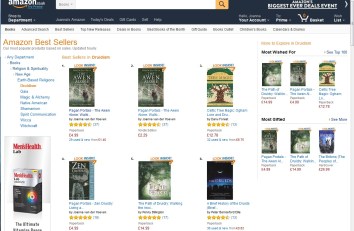
AA no 1 and 2 Nov 18 2015My third book, The Awen Alone: Walking the Path of the Solitary Druid is at No. 1 and No.2 today in Amazon’s bestseller charts for the category of Druidism. Huge thanks to everyone who has left a review, emailed me with support, and just generally been lovely.

On Saturday, 5th December at 3.15pm I will be giving a talk on “Modern Druidry” at the Woodbridge Mind Body Spirit Festival. I’ll also be performing with my dance company on Sunday at 2.15pm, as well as doing wandering performances earlier that day at the Woodbridge Christmas Fair.

The Zen Druidry online course is on schedule to be released before the Winter Solstice, so keep everything crossed that it remains so!

Applications for Druid College will open at Imbolc, 2016, watch this space for more info.

Peace

Praying today for the civilians of Raqqa, who live under terrorist rule and are now being bombed by France, sanctioned by the rest of the West’s powers. Praying for all those across the globe, from Beirut to the United States, who suffer from humanity’s dualistic “Us” and “Them” mentality. Praying for the world today.

Druids were documented as having been able to walk between the lines of warring people. Diodorus Siculus wrote “Often when the combatants are ranged face to face, and swords are drawn and spears are bristling, these men come between the armies and stay the battle, just as wild beasts are sometimes held spellbound. Thus even among the most savage barbarians anger yields to wisdom, and Mars is shamed before the Muses.”

Maintaining our peace, we are better able to work in the world to create peace. May we be peace.

Samhain trials and tribulations, initiations and revelations…

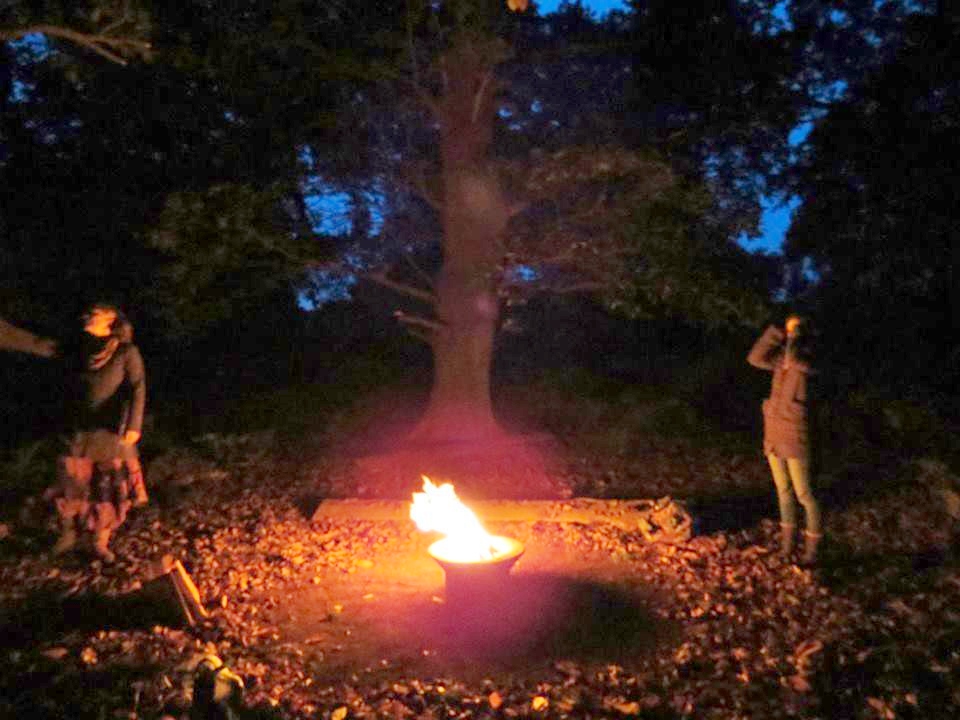
10463010_10153728632559228_6463239705937211598_n (960x720)We’d walked up to the Celtic Iron Age burial mounds, just after the sun had set. Owls were hooting in the distance, pheasants squawking and fallow deer stags calling their challenge into the evening air. The sky held the last bright tinges of deep pinks and purples, and dusk had settled firmly in.

We went into the darkness beneath the oak and chestnut trees that grew around the burial mounds. There stood a firepit and some logs around it to sit upon. We had gathered some wood the week before, and now lit a fire, honouring its spirit. Saying our prayers to the ancestors, honouring our blood lines, the lines of our traditions and the spirits of place, we spoke softly into the night. We made our offerings and then sat in silence as the fire died, allowing the darkness to enfold us as we meditated upon the ancestors.

It was a simple, beautiful little Samhain ritual. No scripts, no plans other than bringing offerings, we were wholly and utterly in the moment.

Opening my heart and soul to the ancestors, I laid myself bare as I faced outside the firelight towards the burial mounds, saying my prayers and allowing my soul deep integration. Sometimes, however, it is not so good to forget oneself if one has been pushing too hard in their lives. Often, we can forget to take care of ourselves in order for us to function properly. We have to take care of the functional ego in order to let the representational ego fall away… and that means the functional body too.

The body lives in the soul.

And so, as we walked back down the bridleway, an old track that leads to other, later Saxon burial mounds made famous in the middle of last century by the discovery of a longship and treasure hoard, I felt a pain begin in my chest. I thought it was the mist that was rolling in, being quite susceptible to the damp after experiencing bronchitis a few times in the wet but wonderful land of Wales, where I had lived for a few years. I loved that landscape, but it wasn’t all that healthy for me to live in.

The pain in my chest only got worse as the night progressed, and into all the next day. I took it easy, but when on Monday I experienced numbness in my left hand it was time to go to the doctor’s straight away. Series of tests showed that it wasn’t a heart attack, thankfully, and there was no sign of infection either. All the doctors could say was that it was myalgia (muscle pain) in my chest.

I’d experienced this twice before, to varying degrees, and been to A&E for the same reasons, done all the tests and, when the pain died down, sent home without any explanation. After doing some research, I discovered Precordial Catch Syndrome, which described my symptoms perfectly all three times it had happened over the last 20 years. Perhaps this is what I have; the doctor’s don’t want to discuss it with me, however, ignoring it when I bring it up. It seems to be taken a bit more seriously in North America, at the very least.

At this time of year, I am reminded very strongly of our human strengths and our human weaknesses. Holding the wisdom of the ancestors close to my heart, hearing their songs, seeing the continuation of life in all its manifestations, through birth to death and rebirth, I can work through the physical frailties of this manifestation of my body. The last three years have shown a pattern at this time of year, at Samhain, where the frailties bring me to a new realisation: in 2013, I had chickenpox with a fever that broke through habitual thinking patterns; in 2014 my back went out and I was laid flat out for three days, unable to walk, discovering the limitations of body but not of mind. This year I came very close to my own mortality, with three long days of tests, waiting for results and wondering if there was something seriously wrong with my heart. It brought me even closer to death and my feelings around it. On a very personal level, I had to deal with the fear of death, though with the strength of my beliefs and the ancestors with me, it wasn’t so much fear as sorrow if this ride had to end suddenly, for I am having such a good time in this current manifestation.

At any rate, it once again drives home the point that we need to be utterly present, in our bodies and in reality in order to see the magic of existence. It also makes the point that we need to listen to our bodies, to take good care of our bodies, so that we can hear the songs of the universe for as long as is possible in this current manifestation. We can’t take anything for granted.

One day I too will become an ancestor, but hopefully it will not be today. Today is a good day to die. But tomorrow is even better…

Samhain blessings

May the ancestors be with you, may you find strength in the darkness, may your inner fire burn bright. Samhain blessings to you all. x

All Souls Night by Loreena McKennitt, from the album The Visit.

Reblog – Druid Priest: Behind the robes

Here’s a taster from my latest blog at SageWoman – to read the full article click HERE.

At this time of year, the pull of the ancestors is very strong, from the blood ancestors, the ancestors of the land and also ancestors of tradition. The beckoning call of our future ancestors also pulls me in another direction, and I feel the threads that weave it all together being pulled tightly, even as the leaves turn and fall from the trees, the smell of woodsmoke on the wind.  Sometimes the songs of the ancestors are so strong, that when walking through the land it can feel like walking through treacle. When sitting in meditation, the songs flow through my body, leaving my sense of self behind as I am swept up in the current of my bloodline, the songs of those who lived on this land before, and the wisdom whispered through the teachers.  It can be difficult, dealing with the parish council and social workers, or even holding a conversation with someone who works at the village shop.  Still, with the heady songs flowing through my veins and through the land I manage to get the day to day jobs done: the post mailed, the articles written, the class notes finished, the toilet scrubbed.

It’s now mid-afternoon, and as I stand by the empty grave I see people starting to arrive. They wait by the edge of the graves, and then the hearse arrives, the long black car pulling along the dirt drive through the trees of the natural burial ground. I feel the waves of emotion through the people as they see that vehicle of death arriving, and I feel a wave of memory flooding through me as well, of past deaths and loved ones arriving in the same fashion.  I take a deep breath of the autumn air and send love and compassion to my heart, and then extend that outwards to those who are waiting for the coffin to emerge, as I hold them, creating a sacred space for them to grieve, to feel this moment, to come to terms with their own mortality and the mortality of those that they love…

Cont’d at Witches and Pagans HERE.

SageWoman: Serenity Issue now available!

sagewoman aut 2015

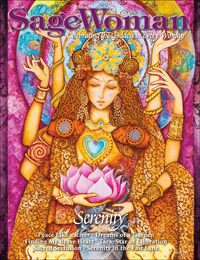
SageWoman’s latest magazine is now available for download and to be mailed to subscribers; this issue is Serenity, and contains a Zen/Druid article by yours truly.  To find out more, click HERE.

Grace

Most of us hope that when we die, we are able to pass on with a little grace and dignity. However, what is important to me right now is living in the present moment, awake and aware to the flow of life, of awen, hearing the songs of the ancestors and truly finding the meaning of the word, grace, within my own life.

Grace is a brilliant word that has so many meaning: to favour, to honour, elegance or beauty in form, ease, fluidity, mercy, clemency and pardon, just to name a few. If we look to the Latin languages’ use of the word, we find echoes in the Italian grazie or Spanish gracias, or in the French merci.  The Latin root is grātia, meaning:  (1) a pleasing quality, (2) favour or goodwill, and (3) gratitude or thanks. All three of these I find are essential to living honourably in today’s world.

To have a pleasing quality can have a myriad of meanings, from being aesthetically pleasing to simply being kind. The key word in this description is please in a verb form, which is something that makes one happy, whether it is the self or another.  Why would we not want to make another happy?  As long as it isn’t at our own expense, or hurtful towards ourselves, it seems a wonderful way to live. When we are hurtful towards another person, it doesn’t make us feel very good – or if it does, there might be something rather wrong with the brain’s chemistry.  This doesn’t mean that our lives are not our own, and that we have to make others happy first – finding happiness within the self should come first, as should love for the self, in order to spread it around a little bit.  Finding a peace and contentment within helps us to bring that to others.  When we are not at peace with our sense of self, we cannot bring peace to others.

To have goodwill for others is at the heart of living with compassion, and also living with grace. The moment we wish another being harm, we have stepped outside of grace and into a hellish world of anger, retribution, revenge, bitterness and so on. We will not always immediately have good will for another being, especially if we have been hurt by someone in the past.  Sitting with our own hurt, and then recognising the other’s pain helps us to open up our perspective from just ourselves to the wider situation.  People who hurt others are often very hurt themselves.  Those who try to pick-apart, to undermine, to speak unkindly to/about, who cause emotional pain – we can work with this with grace. We can see their hurt, empathise with it (though we don’t have to engage it, especially if it means further hurt or abuse from them towards ourselves), and feel compassion for them. We can wish them well, wish them love and peace, which feeds our own inner peace and peace throughout the world.  The compassionate being is one who lives gracefully. (Please note: If you are being physically or psychologically abused, please do talk to someone about it right away and seek help.)

For me, perhaps the most important part of grace and its root word is to give thanks. To have gratitude is one of the key components of my Druid path, along with reverence, honour and compassion. When we have gratitude, again we step outside of our “small self” and enter into a way of being in which everything is part of everything else.  No longer separate from the world, we are able to experience a deep gratitude for the world, our experiences, our loves and our lives.  Our ancestors have brought us to where we are today, and it is through their strengths and weaknesses that we walk upon the earth.  Our future ancestors are the ones to which we will be accountable for our actions in the present moment.  Having a deep gratitude for our ancestors, not only human but also other-than-human ancestors helps us to see the inter-connectedness of all existence. Again, it shifts the perspective away from the self and into a broader, more integrated view.

This is the essence of grace – widening our world and our views, and in doing so living with kindness and compassion. It is something that is achievable for all, and something that will lead us to lives with more peace and harmony.  Listening to the notes of the Great Song, the Oran Mòr, we are able to move with grace, to live with grace and to extol grace upon others.