Touching the Earth

Imagine my delight when I read how practices I am currently doing in my Druid tradition are also being done by the venerable Zen monk Thich Nhat Hanh (you will notice quite a few blog posts dedicated to his teachings on this blog!). In his book The World We Have: A Buddhist Approach to Peace and Ecology  he provides some lovely daily practices (gathas) to honour the earth that we can fit into our everyday life. Some of these I was doing already in various forms, such as prayers before meals, washing hands/body, drinking water, etc, and some were new and equally poignant, to be incorporated in my daily practice. But what really struck a chord with me was the Five Earth Touchings that he described after the Earth gathas and how similar they were to my daily prayers.

He recommends to Touch the Earth each and every day, to establish our deep and abiding connection with the earth and to give thanks for all that we have, reminding ourselves of who we are, where we came from, our ancestors of the future and living a life filled with compassion and peace.

He states “The practice of Touching the Earth is to return to the Earth, to our roots, to our ancestors, and to recognize that we are not alone but connected to a whole stream of spiritual and blood ancestors. We are their continuation and with them, will continue into the future generations. We touch the earth to let go of the idea that we are separate and to remind us that we are the Earth and part of Life.

When we touch the Earth we become small, with the humility and simplicity of a young child. When we touch the Earth we become great, like an ancient tree sending her roots deep into the earth, drinking from the source of all waters. When we touch the Earth, we breathe in all the strength and stability of the Earth, and breathe out our suffering- our feelings of anger, hatred, fear, inadequacy and grief.

Our hands join to form a lotus bud and we gently lower ourselves to the ground so that all four limbs and our forehead are resting comfortably on the floor. While we are Touching the Earth we turn our palms face up, showing our openness to the three jewels, the Buddha, the Dharma (the teachings of the Buddha), and the Sangha (the community). After one or two times practicing Touching the Earth (Three Touchings or Five Touchings), we can already release a lot of our suffering and feeling of alienation and reconcile with our ancestors, parents, children, or friends.”

The first Earth Touching is “In gratitude, I bow to all generations of ancestors in my blood family.” Here we honour our blood ties, the stories that brought us to where we are today, the generations of love and suffering in our bloodlines that help to create our story today. By opening ourselves to our ancestors we acknowledge all this, and can ask for their protection, love and support. In Druidry, we honour the ancestors, and in my own tradition I state “I honour the ancestors of blood, whose stories flow through my veins”.

The second Earth Touching is “In gratitude, I bow to all generations of ancestors in my spiritual family.” Here we honour the teachers who have shared their wisdom and insight, throughout the years, whether we have known them personally or not. We can see ourselves in these people. These are the people who can help us to transform our suffering and bring about peace, both in our own hearts and in the world. In my own tradition, I state “I honour the ancestors of tradition, whose wisdom flows through the teachings.”

The third Earth Touching is “In gratitude, I bow to this land and all of the ancestors who made it available.” Here we honour the spirits and/or ancestors of place, who have made this world that we live in. They are in the soil and wind, all those who have lived and died and now exist in another form. It is the energy of the land upon which we live, that we can feel humming in our bones, if we only open ourselves to listen. In my tradition, I state “I honour the ancestors of place, whose songs flow through this land”.

The fourth Earth Touching is “In gratitude and compassion, I bow down and transmit my energy to those I love.” Here we share the wisdom and insight gained from our practice and spread that out to all our loved ones in a form of prayer. The energy we have received from the earth is given freely, and so we too give freely to those we love. We can ask our ancestors for their protection and aid in this matter. In my tradition, I state “May there be peace in the hearts and minds of all those I hold dear, my family, friends and loved ones.”

The fifth Earth Touching is “In understanding and compassion, I bow down to reconcile myself with all those who have made me suffer.” Here we learn that the earth gives of her energy without discrimination or prejudice, and we can learn to live magnanimously in all that we do. We understand that people who cause us to suffer do so through their own wrong perceptions, and we pray that they find a way to relieve their suffering. We work towards not holding any anger or hatred towards these people, instead trying to understand in order to better work in the world. Again, we can ask our ancestors for help in this matter. In my tradition, I state “May peace be in the hearts and minds of those who cause me and others around them to suffer, may they know loving kindness.

The similarities between what I currently do as a Zen-minded Druid and these Buddhist practices absolutely delight me, and could to transform much of the world’s suffering if done with mindfulness and loving kindness. Try to take some time each day to recite the Earth Touchings above, or something similar – it could change your life, or at the very least ease some of the suffering and provide a path to peace that is yours and yours alone to walk.

The Novice

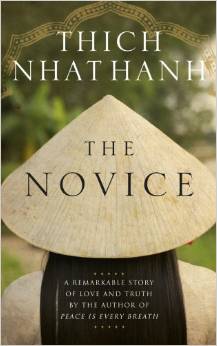
noviceWhilst on holiday in Brittany the past week (blog and photos to come!) I read Zen monk Thich Nhat Hanh’s novel, The Novice. It is his first novel, that tells the story of a young woman who has become a legend in Vietnam for paving the way for women to be nuns in the Buddhist tradition. It’s a short book, eloquently written and filled with wisdom throughout.

Kinh Tam is a beautiful young woman who has always felt a calling for deep learning through Buddhist enlightenment. As there were no temples for nuns at the time, she felt that her only option was to do what women did back then – marry and have children. However, her marriage failed as her in-laws falsely accused her of trying to kill her husband one night. Kinh Tam goes back home then, cuts off her hair and disguises herself as a boy, wandering for five days until she comes to a temple where she asks to be taken in as a novice.

She shows an aptitude unlike any other monk in her devotion to the Zen Buddhist teachings and carrying them out. She lives the perfections of generosity, mindfulness, magnanimity, diligence, patience and insight. She has already been through much, after the false accusations of attempted murder, and yet she holds true to her path, holding no malice to those who have wronged her through their own false perceptions.

A young noblewoman who visits the temple falls in love with the young “boy” monk, seeing in him such beauty that only an open-heart can radiate. Kinh Tam avoids her, with as much compassion as possible, as her secret cannot be found out else she faces expulsion. After Kinh Tam turns down the noblewoman’s request for a private meeting, the noblewoman woman becomes enraged, filled with her own anger and wounded pride, accusing the young novice of impregnating her when it was really a servant boy from her household whom she took to bed in anger and despair of not being able to sway the young novice from his devoted path.

Kinh Tam faces the dilemma of choice: tell everyone that it’s not possible, as she is a woman, or face beatings for her “transgressions”. Her love for her path is so strong that it sees her through the beatings, and yet again she never holds any malice towards the young woman (Mau), those who believe her false accusations and even those who beat her. She knows it is only their wrong perception of her that makes them act as they do, and the strength of loving kindness overcomes all the pain she endures.

Kinh Tam goes through further hardships, yet always with the endurance of a loving heart and the deep well of forgiveness. I won’t tell you the ending, but I was in tears as I read it – it was just so beautiful.

Kinh Tam’s story is one that can help anyone going through a rough time. It doesn’t matter what it is that you are enduring, whether it is being shot at, beaten, false accusations or someone trying to undermine you and your work – the open heart of compassion and seeing the unity of all things is stronger than any of these. Anyone can relate to Kinh Tam’s story. As a woman, I felt a deep bond with her struggles and an empathy for her trials and tribulations. I felt deeply the tug of sadness as one woman falsely accuses another (albeit unknowingly regarding the disguised gender, yet with an intended malice in any event). As a practitioner of Zen I found deep wisdom in the teachings that lay like little stars filled with light across the pages, twinkling with their insight into living a life of less suffering. We all suffer, for various reasons, but we can lessen that suffering through the open heart of compassion. Those who try to hurt us, physically, emotionally, intellectually, who undermine our person and our work, who tell lies and allow their pride, anger and other emotions to overwhelm their reason and the ability to see clearly the heart of the matter – these are things we all go through at some point in our lives. Whether it is through war, office/work politics or family issues, the cause is the same: wrong perceptions. Because they have a wrong perception of us, they act out, lash out, are ruled by the monkeys riding on their backs.

Yet we don’t have retaliate like for like. We can see their suffering, and still send them our love and compassion, even from afar. Because they perhaps have not seen that there is another option, they have no way out. Living through our actions, of opening our eyes to all possibilities and the reality of the present moment we can hopefully provide an example for a peaceful way of life that benefits the whole. We can forgive these misjudgements from others, as they are easily created. Through diligence we can work to dissolve these false perceptions within ourselves, through meditation, deep insight and the other teachings of Zen Buddhism.

I always doubted whether humans were truly capable of forgiveness. When explained through the words and story told by Thich Nhat Hanh, it makes so much more sense; it is so easy. There are three appendices to the story, one describing further the legend of Kinh Tam, the second describing the legacy of Kinh Tam by Sister Chan Khong of Plum Village monastery, and Thich Nhat Hanh’s own addendum about practicing love. These appendices are just as important as the story itself, for it shows “Engaged Buddhism” in action as Sister Chan Khong and Thich Nhat Hanh both relate how the practice of compassion helped them through the suffering of the Vietnam war, exile and more. We see first-hand how the Zen Buddhist precepts are put into practice, actually lived out in the lives of those who worked in the DMZ, offering wisdom and deep insight into how suffering is different for each individual and yet can be overcome when held in the arms of compassion.

In the UK, you can buy this wonderful little book from as little as £1.04 second-hand; do try to read it if you are at all interested in Zen Buddhism, mindfulness, compassion or loving kindness. If you feel you are suffering in any shape or form, this book might be able to help you find the way to transforming suffering into something that instead brings peace and harmony to your world, and thereby to the world at large.

May we be peace. x


Reblog: Bless the Water Thrice by Alison Leigh Lilly

A brilliant blog post by Alison Leigh Lilly 🙂

In the days of the ancient Celts, a devotee might have honored the gods of her people with a votive object — a torc, a piece of intricately-wrought jewelry, a small statue of a god or goddess, a bent silver coin — given in offering to the clear-running waters of a river or wellspring, or deposited in the murky waters of a marsh at a dedicated sacred site. In the same way, a warrior might have offered up his sword or shield, ritually broken to render it useless or perhaps forged specially to be a sacrifice, never to be used in battle.

But those days are gone.Blessing the Waters, An Environmentally-Safe Method for Making Offerings, by Alison Leigh Lilly  Read more HERE

The naked form

Beltane is fast approaching – the house martins are back, the bluebells are coming out, the earth underfoot is soft and the air is turning warmer. Many thoughts are turning to the coming summer, the long days, the short nights, the summer clothes, or lack thereof. I’ve heard it said that Beltane arrives when it is warm enough to make love outside without freezing your bits off, alongside the usual ‘when the hawthorn blooms’. But I do wonder, with a smile – is it ever the season in Britain to have your clothes off?

Don’t get me wrong – I love being naked. Without the restriction of clothing, the body moving freely, feeling the air upon your skin, swimming naked; all these are pure bliss. What’s not so lovely about being naked outdoors is sunburn, or bug bites, sitting on thistles or treading around nettles, etc. We humans (sadly, in my opinion) have evolved without all that much fur to protect us from the elements.

On the rare days that it is warm enough here in Britain to get outside naked, you’re more than likely to get sunburn, especially if you’re fair like I am. I’m not a big fan of slathering sunscreen all over my body (I don’t like the feeling of the lotion). I’d rather wear some lightweight clothing to protect my bits from the sun, wearing sunscreen on any exposed bits. That way, it also doesn’t interfere with any insect repellent that I might be wearing – I love lavender, as well as citronella, as they are brilliant at keeping away the mozzies and the midges. However, they can react with your sunscreen, making it less effective, so I try not to combine the two on my skin. So, if you’re not being burned or bitten, it’s probably cold and wet and rainy, which is nice, for a while being outside and naked in, but for a sustained length of time leaving you shivering and probably not terribly healthy in the end.

There are also other considerations to bear in mind when being outdoors and naked – will others see you? It’s still illegal in this country, unless you’re in a designated naturist resort or camp. I’ve spent many summer days at nudist beaches and hot springs, revelling in the lovely feeling of freedom of being naked (bugs are less of an issue on the beach and around the hotsprings, though sunscreen is a constant pain). These are places where people know that they will be seeing other naked people – it’s not a surprise or a shock when they come across the naked human form. We have to consider other people’s issues as well as our own when we are exploring nudity – we can’t just think of ourselves in this regard. How would I feel if my nudity made someone feel uncomfortable? While it’s good to challenge people’s perceptions every now and then, pushing them into uncomfortable situations isn’t all that respectful. Think of the young girl who has been sexually abused by her stepfather, and confronted suddenly with a naked male stranger during ritual or at a pagan camp – that’s not a situation that is taking into consideration her story, her feelings on the matter. Working with compassion means we have to try to understand everyone’s story, even as we are telling our own, and realising that others’ stories matter, even if we haven’t heard them. If we are in a designated area where we know there will be nudity, and where everyone is in the same mindset, then we can be more respectful to the thoughts and feelings of others, whatever their situation.

It’s a great and liberating thing to do, to explore nudity outdoors, getting in touch with your body, spending some time around other naked bodies without a sexual agenda. However, I would say that there is a time and place for this, in order to respect other people’s feelings (and the law). My last trip to Avebury in March saw a couple just on the other side of the bank pleasuring each other in a field – a beautiful affirmation of their feelings, yes, but not entirely appropriate perhaps when walking around with a three-year old. And speaking of sexual agendas, making love in the forest, while perhaps being illegal (indecent exposure) can be a beautiful expression of our souls connecting not only with each other, but the earth itself (though do be prepared for possible bug bites in embarrassing places – or massage each other first with a lavender massage oil!). It all comes down to respect – will you be disturbing anyone? If so, I’m sure that there are other equally fine alternatives.

It all comes down to respect – respect for yourself, for others and for the land. May you find blessed freedom and comfort in your own body!

The gift of the present

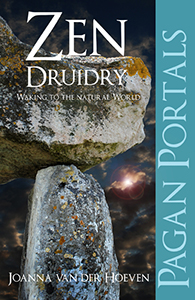
1780993900Going through my old gwers (small course books) from the Order of Bards, Ovates and Druids’ online correspondence course that I did many years ago, I found a section of a few gwers that made me smile, as it resonated with me then and still does, on so many levels and is also a major part of the way that I live my life. It focuses on the here and now, on the beauty and wonder of the present moment, and how important the present moment is. Leaving the past to the past, and the future to the future, these gwers really highlighted the importance of focus on the here and now. I did this through incorporating elements of Zen Buddhism into my life (see my first book, Zen Druidry) which has helped me to fully actualise the present moment, to not take it for granted and to learn to simply be, wherever I am and whatever I am doing.

Being comfortable in the present is key to finding lasting happiness. Knowing that the past exists, but that it serves only as a guide to the present moment helps us to release many things that can have a negative effect on the present moment, such as anger, grief, fear or hate. Knowing that the future exists only as a flexible plan helps us to not get too stuck in our ways and habits, and can also alleviate feelings such as fear. Our focus should always been on the now, to live life fully.

But what if the “now” isn’t all that great? What if in the “now” we are stuck outside in the pouring rain without an umbrella or coat, waiting for a bus that never turns up? Yep – that’s all part of it. Buddhism teaches in the first noble truth that all beings suffer. You can’t escape it. That might sound like one helluva downer, but the upside is that the other noble truths help us to alleviate that suffering. One of the ways to do so is the fully be in your self, in your body and mind (there is no separation) and in doing so, the suffering eases. That doesn’t mean you won’t get soaked to your knickers, but at least you spent the time feeling the rain upon your body, smelled the earth responding to the rain and smiled to your own heart rather than get angry at the bus driver, or grumpy about the wetness, wondering why this sort of thing always happens to you.

For some people who are living in extreme conditions, say in the middle of a war zone for instance, the above may sound trite. However, Vietnemese monk Thich Nhat Hanh experienced the horrors of war first hand and learned how to be in the present moment, to help alleviate the suffering. (See the Miracle of Mindfulness by Thich Nhat Hanh .) When we are in the present moment we will know how to respond to any situation better than if we were responding from the past or future. Our clarity sharpens and we respond in a manner that is wholly and utterly relevant to the situation at hand rather than drudging up issues from the past or worries about the future.

I have had to deal with uncomfortable situations and difficult people. Being in the present helped me to not drudge up the past to project it onto a particular situation in negative ways, but to enable me to deal with the issues as they are, up front without any extra baggage. That doesn’t necessarily mean that we enjoy dealing with this sort of stuff, but we can get through it with a lighter heart, finding our peace more quickly and able to spread that out to the world. It helps you see reality, as it really is. Eventually you may find that your inner peace becomes less and less disturbed, no matter what life throws at you, and that peace and calm will radiate out into the world in beautiful and positive ways.

May you enjoy the present moment for all that it is. Remember the old saying, “Yesterday’s the past, tomorrow’s the future, but today is a gift. That’s why it’s called the present”.


Toxic consumption

Leo Babuata’s recent blog post about reality came at a serendipitous moment when I was reading Thich Nhat Hanh’s “The World We Have: A Buddhist Approach to Peace and Ecology“. It is often said that we create our own reality, but I think that those words are often misinterpreted. Those who are suffering from famine or abuse have not necessarily created that reality – everyone’s reality is also a combination of others’ reality. However, what Leo and Thay point out that it is what we consume that helps to create our reality.

We are a consumer culture, here in the West. Some of us are trying to bring more awareness to what we consume, whether that is in material goods, food, petrol or electricity consumption, etc. What Leo and Thay speak of however is what we are consuming with our soul, with our heart, with our brain, mainly through media but also in the form of speech, gossip, etc. Thay speaks eloquently about this matter, stating that a lot of what we visually consume from the media is toxic. We watch television shows that are violent, or that pit people against each other in dishonourable ways. We are influenced by advertising. We may speak ill or dishonestly of others, or about ourselves. When we are doing this, we are taking in a toxicity that affects our very being. We can stand up for ourselves, certainly, speaking out against injustice with honesty and awareness. It doesn’t mean we will never speak out. What it does mean is that we become engaged in our living, in our being, in a positive way that benefits the whole, not just the self.

Life is a choice, for the most part. We can choose to not take in this toxicity, or be a part of it. That is not to say that we shut ourselves off from what is happening in the world. We need to know of the suffering that is occurring in the world in order to help alleviate it. But we can say no to violence as entertainment, to disrespect someone in order to “pass the time”. Everyone knows the saying “You are what you eat”. Let’s open this out to everything else that we consume. We can choose to be a part of this world, aware of what is happening, without taking in the vast amounts of toxic images and words; it is within our power.

Be aware of the world. Know that people are suffering from a horrific tragedy in Kenya. Know that people are suffering in your own hometown. Know too that you can choose to not play violent video games, or watch gory movies, to intake that violence into your consciousness. You can fill your heart with peace and loving kindness – it is your choice. You don’t have to read that magazine with photoshopped men and women. You don’t have to comment negatively on someone’s Facebook status. You don’t have to gossip about someone, or read about it in the latest trashy mag. You choose what you put out there into the world.

When we fill ourselves with positive things instead of toxic things, we can hopefully make this world a better place. What are your thoughts?

Transcript of Nemetona: Goddess of Boundaries and Edges…

I’ve had several requests for a transcript of the talk I gave last weekend at Leaping Hare Pagan Conference in Colchester, Essex. So, here you go! x

Nemetona: Goddess of Boundaries and Edges, Sanctuary and Freedom

In this talk I am going to explore the goddess Nemetona as the Lady of Boundaries and Edges, and also her role in personal freedom and sanctuary. Not much is known academically of the goddess Nemetona: there are a few inscriptions at sacred spots such as at Altripp, Trier and Eisenberg in Germany. There is also an inscription to her at Bath. She was known in Gaul and in Spain we find the Nemetatae tribe. The word nemeton or similar versions are mentioned throughout Europe, especially in place names. Nemeton means Sacred Grove, and in this regard she is sometimes connected with Druids. However, this talk is not an academic discussion of this particular goddess, but an experiential one. We will explore boundaries and edges of ecosystems and of our own selves, our own nemetons, inspired by the goddess of the sacred grove, where the edge of the wood meets open space. We will see where those boundaries meet, touching soul to soul and awakening awen or inspiration. My perspective comes from a Druid tradition, languaged as it is within a religion that is animistic and polytheistic.

A Druid looks to nature in order to find inspiration. Authority is found in nature rather than in human constructs and society. Our relationships are inspired by the natural connection we see in everything, the threads of the web that connect us all. We realise that we do not exist separately from the world – we are a part of it, a thread in the tapestry. We know that without other beings we could not exist. Zen Buddhist monk Thich Nhat Hanh calls this Interbeing – that we inter-are with everything on the planet. Nothing exists separately. We live in ecosystems, living environments that support and sustain us. It isn’t human animals that define how the Druid interacts – the land provides us with a way to be in the world, teaches us of co-existing in harmony, in the flow of perpetual change and in the times and tides of life. It can be regarded as anarchic in that sense, but it is not a disregard for the laws of humanity that keep a society together, a cohesive social order – rather it is more seeking the wisdom of the oak, as the word Druid means – dru, meaning oak, and wid, meaning wisdom. Gods of nature, of an earth-based religion inspire us in different ways from the secular world. The gods are both brutal and beautiful.

Working with the gods, the ancestors and the land we learn about harmony, about ecosystems, about where edges meet and how it works co-operatively. Nemetona teaches us this as we explore our own nemeton. Our personal nemeton is that space around us, sometimes called our aura, that we only allow those we trust to enter. That space is sometimes expanded in ritual, to create a sacred circle or sacred space, where we find ourselves within the greater cosmos, defined in a smaller, set form and boundary which is easier to understand. In that boundary we are safe, we are free.

Nemetona teaches us of that perfect freedom. In Wicca, it is often said that one enters the circle “In perfect love and perfect trust”. We open our souls wide within the limits of our circle, guided by the gods to inspire and receive inspiration. In that perfect freedom we know our true selves. As goddess of the sacred grove, Nemetona teaches us of this perfect trust, and how it relates to the rest of the world. Calling to her to help hold that space, we explore the nature of our own self, coming to truly know it and understand it. Having secured our sense of identity we can then work in the world from strong standpoint, where we know that the world doesn’t end at us – we work in service to the world. We have to step beyond the boundaries of ego and self-importance if we are to work for true harmony.

Working with edges, our own and understanding how to use them to benefit the whole is at the heart of what Nemetona teaches us. Our personal nemetons will change their appearance according to our current lives and how well we are at using them intentionally. If we are unaware of our nemeton, then we often find we clash with other people, or have a hard time connecting with others, or withdraw into ourselves so much that others may pass us by when we would like them to acknowledge us. Conscious manipulation of our nemeton can indeed change the way we feel about ourselves and how we are perceived. As with everything in Druidry, this must be done with honour and integrity.

Opening our nemeton requires a level of ability and trust. We close ourselves off on so many levels each and every day simply because of the sensory overload that we are exposed to through people, media and more. We have so many demands on our life that if a stranger came up to us in need after a hectic day, we may shut ourselves off completely from them and not provide the help that they might need, however simple and genuine their request may be. Our cat may come to us for a cuddle, and we don’t even notice as we are too busy distracting ourselves with television and high fat or sugary food. We switch off constantly, and we must relearn how not to do this, and instead be aware and mindful of our nemeton and how it interacts with others.

The nemeton is a sacred and holy space. When we interact with others, we must always bear this in mind. Using our nemeton to gain attention needlessly or simply to get what we want is dishonouring both ourselves, others and the Goddess.

We must honour the nemeton of others as much as we honour our own. They are all sacred. By discovering where our edges lie, we can also learn to see where and how other nemetons work, and in doing so work honourably with them.

Nemetona teaches us to open ourselves. She also teaches us how to listen. Listening is one of the greatest teachings in Druidry. We need compassion, which is basically simple understanding. We need to listen without judgement in order to work with compassion. We see how relationships work in nature. We study the way things work in order to better understand them. We see how sometimes relationships don’t work, in nature and in our own lives. If it doesn’t work, we find out why it didn’t work. If we are working with the soil, we know that some things simply won’t work in our home environments. We cannot grow bananas in the UK. The soil in my back garden is very acidic – I have to know and understand the soil in order to know what will grow best in that environment. Some relationships just can’t thrive in certain environments, and it is up to us to quest for the understanding. Sometimes we simply have to let go of relationships that don’t work. We cannot continue to try growing bananas in our backyards if we try repeatedly and fail. We must understand why it doesn’t work and move on in order to nourish and be nourished.

When we are rooted in our selves, finding our place in the environment, working with our edges we understand where we came from. With that understanding, we can reach out to others, where soul meets soul, when boundaries and edges touch. In that touch there is relationship and inspiration. In Druidry we call that awen, where soul touches soul and the spark of inspiration occurs. Where the seeds lands on the soil, where those edges meet, something wonderful happens and new life occurs. When we meet another human being with honesty and compassion, utterly awake and aware to the connection around us we are inspired. If we are aware of where we come from, aware of our ancestors, the land upon which we live, we can work from a place of deep connection. As the Tao Te Ching states, “Stay at the centre of the circle and let all things take their course”.

But it doesn’t stop at the self. Self-improvement is not the goal in Druidry. Nemetona teaches us to root and find our edges in the sacred grove, but then nudges us to go and seek out those edges in the wider world, where we can truly be inspired. Self-focused creativity is not as inspiring as that which is connected to the whole. Getting the self out of the way is key in this learning, of learning to live in service. We need to find out how and what we can give in order to have sustainable relationship.

Giving is essential in a culture and lifestyle that takes so much. We live in a consumer culture. We need to balance consumerism with the inspiration we receive from nature, where if we take too much it dies. If one creature starts to take too much the whole ecosystem is affected, and is at risk. As homo sapiens, the beings that are supposedly aware, we still take too much. We can look to nature to find out how to work better in and with the world. The curse of self-awareness means that we are often so focused on our selves that we do not see the wider world. We are so busy looking inwards that we forget to look outwards. We forget that what benefits us may not benefit the whole, and we are a part of that whole, therefore selfishness can be so detrimental – if only we are able to look beyond the self (and we are). Relationships require a give and take. We cannot always give nor can we always take. We are honour bound to give back for what we have received if we are working from a place of deep connection. Nature shows us how. Otherwise it is simply not sustainable. A forest is able to sustain itself without any human interaction. The sacred grove in the forest, where the edges of woodland meet open space are filled with potential, able to sustain itself with integrity.

Nemetona allows us that sacred space to explore our emotions and find ways through the internal formations of our minds so that we can act with intention in the world, rather than living a purely reactive life. This is the blessing of self-awareness, one that we should use much more often than we do. By taking time to explore our boundaries and edges and where they meet in the world we turn what could otherwise be a solely inward-focusing exercise into pure integration with the rest of the world. Within the circle, within the sacred grove we are able to work clearly. Human emotion can often overwhelm us, causing us to act out in ways that are not sustainable, in ways that are dishonourable. Anger, rage, love and lust can consume us if we are not aware of where our edges meet. In sacred space we can come to understand them as forces of nature that need to be worked with creatively to transform them, thereby benefiting the whole. Druidry is about seeing the bigger picture, stepping beyond our selves and our own internal worlds through a deep knowledge of the self, working from a place rooted space and time. We can serve the world best if we are working from a place of strong, honourable intention.

The importance is placed on holding, holding space not only for ourselves but for others. That is the role of teaching and guidance. In learning, in deep learning held in a place of sanctuary we work beyond the realms of language into true experiential learning. Coming from a safe place, we begin to realise that we know nothing, and in that knowing is exquisite learning, an openness to all of reality as it really is, aware and wide awake, both eyes open, all our senses open. In Zen this is often called Beginners Mind, where when we realise we know nothing at all our horizons are expanded, the self is dropped and we are open to endless possibility. That word, possibility is so evocative. From the latin, possibilis meaning “that which can be done” and posse “be able”. The door is opened and it is for us to walk through. It is a call to action.

Shunryu Suzuki wrote a book called Zen Mind, Beginner’s Mind, and there are many beautiful expressions of possibility therein, showing how we can move beyond our selves. One such quote is “In the beginner’s mind there are many possibilities, but in the expert’s there are few”. He also states ““A mind full of preconceived ideas, subjective intentions, or habits it not open to things as they are.” Going deeper into ideas of attachment, he states “Not to be attached to something is to be aware of its absolute value. Everything you do should be based on such an awareness, and not on material or self-centered ideas of value.” When we able to step beyond ourselves we perceive reality as it really is, and can work from a place of understanding and compassion. If we come from a viewpoint that everything is sacred, if we learn to perceive the sacredness of everything, we will be inspired to have sustainable relationship.

Community is important. Right here, right now in this very room our edges are touching, blending, breaking or standing fast against each other. There are also non-human edges that we are coming into contact with – the chair, the floor, the air around us, the ancestors. Learning to work together, inspired by the gods and by nature, by the earth-based traditions that we belong to we can work with an awareness of the sacred in our own community. There is strength in that awareness, making the community itself strong. We can show how sustainable relationships work. We can walk our talk and inspire others. We can’t live only for ourselves – we have to be individually strong yes, but where we work together, our edges touching is where the true strength lies. Finding authority in the natural world helps us to build this strong awareness and community. Learning to work with boundaries, co-operative work and practice is tantamount. If we are simply focused on the self, our community suffers. If we focus solely on the community, the self suffers. Balance and harmony, the wider perspective, is what is needed.

Leading by example through sustainable relationship can be the greatest inspiration, the greatest motivator. The energy of connection in relationship is where the real power lies. The inter-relatedness of everything is where the true strength is found. The root of the word community comes from communis – meaning common. I am not important. You are not important. Humans are not important. But where our edges meet, whether that is with another human or tree, mountain or beetle, where we find relationship is where the power lies. In our interaction is where there is the greatest potential. Nemetona teaches us of this power, by working co-operatively we can find new ways to trickle that energy up through the various social strata and spheres to affect the whole. The way we treat each other, run our businesses, live our lives and relate to each other can and does affect the wider world. We are not self-contained units. We are part of the whole.

The Celts had a very strong sense of personal and social responsibility. There were honour prices to be paid if someone had wronged another of the community. This implies a very real sense of ownership to one’s behaviour. Not working or living in a world isolated, working together requires us to acknowledge and work with the edges of other people, human and non-human in a myriad of ways. The Celtic metaphysic demonstrated that we simply cannot do as we want – being part of a whole, we have to consider others in every aspect of our lives. There is a strong notion of free-will, but the important thing to remember is that everything is a choice. When we choose with a wider sense of perspective we lean more towards benefiting the whole rather than just the self. Co-incidentally, when we benefit the whole we are also benefiting ourselves. Working in a society that focuses on responsibility, rather than punishment can lead to a better society in which everyone is an active participant, rather than being taken care of by a nanny state. Without personal responsibility, such as in our current judicial system, someone else will take care of it. There is a passiveness in our relationships with each other.

I remember seeing on the news a couple of weeks ago how the driver of a car ran into someone on horseback. A man and his wife were out for a horse ride, she in front and he behind down a quiet little country lane. A car came up, driving too fast, and the man on horseback had two options – move his horse out of the way and let his wife and her horse be hit, or take the impact himself. Tears fell from my eyes as I imagined what it would be like to be in his predicament, where no matter what you do someone you love will die due to the carelessness of another. And the horse that he was riding, to not bolt or run away at the danger, to believe in his rider so much that he would take the impact was just overwhelming in its power of relationship. Needless to say, the horse died, but the man and his wife, and her mount survived.

What happened to the car driver? Nothing. He didn’t even get a caution, or a ticket for careless or reckless driving. Now, I’m not saying that the man needed to be punished, but what I would like to see in our society is personal responsibility. If we still followed a society where personal responsibility was paramount to honour and integrity, an honour price should have been paid to the man who lost his horse. Whether in money or work, it doesn’t matter. The driver should have found some way to make amends. Instead, our society is at the hands of a judicial system which encourages passive behaviour, seeing just what we can get away with and allowing others to make the decisions for us. We live in a world where personal responsibility requires reinforcement from an outside authority. We need to take personal responsibility back into our own hands, taking our authority from nature. Perhaps then we will move from passiveness into lives filled with intention, even as the bluebell opens out to the warming sunshine.

We have to learn how to communicate, and here we see how the words community and communicate come together. Each community is different, each ecosystem balanced in different ways. Only through communication can we work and relate honourably in different ecosystems. The winds, the smells, the flora and fauna in the ecosystem of my home are different to that of Ipswich, only 15 miles away. Coastal, heathland and forest – I find systems within systems in my very own backyard. We have to learn about each system, how it works to relate properly and effectively to the whole and not just tramp all over it, devastating it with our own self-centred arrogance. We have to learn to recognise each other’s edges without putting our own projections onto them. Working with others, working with the self, working with Nemetona we find how to be of service without ego getting in the way.

I have seen the goddess Nemetona in the principles of permaculture. The basis behind permaculture is something I’ve been talking about all along: how to take what we see in natural ecosystems and use that as a model for our own living, creating sustainability and diversity. Permaculture acknowledges that it is at the edges where there is the most potential, the most diversity. The edge of a forest is where you will find the most plants, where the herds of deer wander. It teaches of self-regulatory systems where each element has its own personal intention which also works to the benefit of the whole. The diversity of beneficial relationships is what makes an ecosystem work and be self-sustaining.

We may already have all the elements necessary to have a self-sustaining ecosystem – all they may need is a little rearranging in order to create harmonious relationships. We are a part of nature, therefore we need to re-learn how to be in nature without messing it all up. Permaculture begins with working with what is already there. Then we can research and study what works best and help to create a system that is sustainable. This is what we do when as Pagans when we are working with our own personal nemeton, and also when we are in larger groups, perhaps even group ritual. The diversity, the edges are at the heart of all interaction. We can create systems that are healthy and balanced simply by paying attention. Within permaculture, each species of animal or plant has what is known as a niche – its own function within the ecosystem in relation to other species. Likewise, we all have our own talents and abilities that we can contribute in relations to society at large. When we see each other’s niches we can work around and with that, recognising their edges and creating new ways of being in the world that work co-operatively instead of competitively.

In permaculture, where one ecosystem meets another it is known as the edge effect. Conflict between what could be seen as competing plants due to finite levels of light on a forest edge are overcome naturally by having different plants growing at different times of the year. This acknowledgement of space helps all to thrive in their own time. Imagine how our human world would be if we could adopt these same principles! I think it would be more courteous world, to say the least.

Where woodland and grassland meet, we find some advantages coming from both ecosystems. The berry-producing bushes at the forest edge make the best use of the greater amount of light than that found deep within the heart of the wood. Birds of prey nest at field and forest edges to benefit from the security provided by tree cover and the food provided by open spaces in the form of voles, mice and other small animals. Deer, as mentioned previously, favour the edges as it gives them the best of both worlds – grazing and shelter from predators. Permaculture learns how to lessen the rigidity of edges, so that there isn’t a strong forest meets field edge, but rather a co-operative blend of the two as would be found naturally, instead of the forced edge of a farmer’s monoculture field and that of ancient woodland.

Becoming aware of your edges is only the beginning to coming to an understanding of this sacred Goddess. Once we know where our edges are, we can also be freed of them in the right environment, finding immersion in our landscapes that it utterly exhilarating and deeply inspiring, at one with the rest of the world and in perfect harmony.

Blessings from the edge to you all.

Nemetona: Goddess of Boundaries and Edges, Sanctuary and Freedom Presentation

I had a wonderful time yesterday at the Leaping Hare Pagan Conference in Colchester, Essex.  I was honoured to be asked by the organisers at the end of last year to present, give a talk on the goddess Nemetona after having received requests throughout the year following the release of my second book, Dancing With Nemetona: A Druid’s Exploration of Sanctuary and Sacred Space.

It was a really enjoyable experience. I have been going to Leaping Hare for many, many years now and there is a real community spirit, a real sense of well-being and support. Thank you to everyone for your kind words, messages and emails following the talk – may we be the awen!

Be the change you want to see in the world…

https://youtu.be/oqGPa84jM2M

Peace in Druidry

The word peace means many different things to many different people. Some see peace as simply the cessation of aggression or violence. Others see it as a way of life, a philosophy. Still again others see it as a mere dream, while others see it as the ultimate goal. But just what is peace, and what does it mean in a Druid context?

In our society, we strive for so much. Some things are worth working for, putting all our heart and soul into, such as equality, environmentalism and a better way of life for all beings. Some things we strive for are not so worthy – material wealth, social, economic and political power, fame or authority. For many in today’s society, it’s a dog eat dog world, and to get ahead you have to step over others in the race for the top. In reality, there is no top rung on that ladder – there isn’t even a ladder to begin with. All these notions of power are entirely illusionary, when looked at from a basic ultimate view that we are all just beings co-existing with each other on this little planet. Allow me explain.

The illusion of separateness has caused our world so much pain. When we see ourselves as separate, we begin to lose the notion of the sacredness in everything. There is absolutely no possible way for anyone or anything to be separate from anything else. We human beings are made up of minerals and atoms, of genetic information from all our ancestors (human and non-human), of sunlight and wind and rain. We are all star-stuff. We have not come out of nowhere, to suddenly exist and then just as suddenly depart when our earthly lives are snuffed out. The clouds in the sky have always been, and always will be. They may change their form, becoming humid wisps of cloud and ice, to larger clouds that then change into rain. That rain falls onto the earth, to be drunk by human and non-human animals alike, by the garden plants and the trees, by the birds and the bees. This water is released once more into the atmosphere through a myriad of ways – sweat, piss, moist exhalation, dewdrops. Back into the sky it goes, to once again form a cloud. We have clouds within our bodies, in the food that we eat, in the water that we drink, in our genetic makeup. We are clouds and the clouds are us.

Once we see the interconnectedness of all things, we realise that to strive for power or control over anything is as fleeting as the life of a cloud. All things are connected, and all things are impermanent. This is an essential tenet of Eastern philosophies, which is strongly reflected in a Druid’s perspective when viewed as part of the natural cycle. Nothing ever stays the same, not the river, not the sky, not the grass, not the tadpole. Everything is in constant change and flux. The key to finding peace within this constant change is acceptance of the impermanence, allowing our hearts to find ease from the fears and insecurities that arise when we fight against change.

A wave does not stress out about dying when it crashes upon the shoreline. It knows that it is water. The wave is simply the form that it took for however long a time. It knows that it is connected with everything else on this planet – there is nothing that exists outside it in a separate context. The web of life, the threads of connections are all around us. When we see those threads we lose the fear of death, instead seeing the cycles that allow us to really come to terms with the concept of changing forms. Death is not annihilation – it is simply becoming a new form, a new way of being.

The basic fact of life is that we will all die. So what is this struggle, what is this constant striving towards ideas of ownership, of power and rule, of games played with lives? To what purpose does it serve when we will all return to the earth in some form or another, when we come to an understanding that we are not separate from anything else? When can we move from concepts such as birth and death?

As humans we have developed a sense of self-awareness that actually hinders the possibility of finding a true and real sense of peace. We are often so self-focused that we are blinkered to everything else, to the entirety of existence. When we are only in tune with ourselves, how can we ever find harmony without? Stuck within the whirls and eddies of the mind, we will never notice the birdsong, or the rain upon our shoulders, the cry of a hungry child or the yowl of a cat in heat. When we look beyond ourselves is when we will be able to find peace. When we are able to work for the benefit of others instead of just ourselves, the world will know harmony. As we are all co-existing on this planet, it just makes sense to work together. However, the illusion of separateness is strong.

Peace is not just something for stoned hippies to think about and discuss – it is a very real and powerful way of being in the world. Through sensing our connection to the world we find a place of true power, power that comes from within that allows us to work for the benefit of all. This power cannot and will never be a “power over” anyone or anything else, as writer and activist Starhawk expresses often in her work. This power from within is the deep core of true expression, of a sustainable relationship working in tune with the entirety of existence.

Peace is not just a cessation to war and violence. Peace comes from a very real and deep understanding of our selves, of our behaviour and our way of being in the world. Many people within the pagan community seek to find a better way of being in the world. They focus on working on the self, through years of self-discovery, journeys, pilgrimages, workshops, training and the like. For many, the journey stops there, at the betterment of the self. What I would posit in this essay is that in order to bring about true peace in the world, we then have to let go of ideas of the self, in order to focus on the wider world. It is a letting go of the blinkers that hinder our ability to work with others compassionately, in real empathy and attunement to the natural cycles.

This is deep integration, of immersion in the world to allow for true peace to flow. Where there are no barriers of you and me, no sense of the “other”, then we can truly work together to bring balance and harmony to our world. It is often said in historical and academic accounts that Druids were the peacemakers of their world and their society. Did they have a deep understanding of the connectedness of all life, did they allow their sense of self to fall away in order to bring about peace between warring tribes, between the workings of the human race and other species, in their work with the gods? We will never know, but it is something that I think is perhaps lost in today’s Druidry.

Peace is often not the main focus for those who come to Druidry. They often seek a spiritual path that allows them to explore the true nature of their self, to affirm their beliefs in a like-minded community. This is brilliant, and of course very useful for all, however it cannot end there. In my opinion, there must be a return for the lessons that we learn, an exchange, a flow from one to the other that allows for true and sustainable relationship. When we step beyond our selves and begin to truly understand what it means as a Druid to live a life in service to the gods, the community and the land then we are really coming to terms with the concept of peace within a Druid context.

Too many are living a reactionary life, caught within the trapping of their minds and unwilling or unable to see the world around them and their part in the weave that is the tapestry of life. They cannot sense all the other threads around them, or if they do sometimes they feel competition, or aggressiveness towards them. It is a sickness in our culture and society that we are brought up in such an environment. Instead of supporting each other and rooting for each other, if we have an issue with someone we do the exact opposite, for whatever reason. In sacred relationship, especially within a Druid context, we don’t have to like everyone we meet or interact with. However, we can see them for what they are: a part of the sacredness in all life. As Bobcat once wrote many years ago, it’s all about sacred relationship – when we walk through the woods we avoid the nettles. We don’t have to cut them all down in order to continue, yet we can still honour their existence and their place in the web of life. Essentially, we don’t have to hurt others who may even have hurt us – if we do that, we are simply living reactionary lives. Let’s live active lives instead, claiming full responsibility for our actions and in doing so achieve peace. Even if others hurt us, we don’t have to continue the cycle of hurt – we can walk around the nettles.

Peace must first come from within. If we are hurt or angry, we are not at peace. We must take some time to look at our hurt and our anger, and see where they really stem from. As Zen Buddhist monk Thich Nhat Hanh states, we must take care of our anger in order to transform it. When we finally sit with our emotions, we open the doors to empathy and compassion. Compassion is as mis-interpreted as the concept of peace is: compassion is simply looking at the bigger picture, attempting to understand the whole. It doesn’t necessarily mean unconditional love for all beings, though if we are truly and utterly open in our hearts that will ultimately be the outcome. It’s a tough call for most to make – in fact, only the Buddha himself has done it so far. However, we can take the wisdom of wider learning to help us understand others and thereby finding peace. If someone hurts us, we can sit with our anger and hurt, looking at it relating to our self. We can then extend that investigation – this is where most contemplation ends in day to day life. However, working through an entirely self-focused view, we can then begin to look at the person who hurt us, seeing that they too suffer. It’s not pleasant to cause suffering – not unless there is something severely wrong with the brain and a mental fissure stops that basic understanding and empathy. Have you ever betrayed anyone or said anything unkind? Did it make you feel better? Have you ever intentionally said something to hurt someone? Did you ever believe in the illusion that to being someone down raises you up? We all have. What we can do now is stop that cycle and truly live a life filled with intention, instead of reactionary living.

The Druid looks to nature for inspiration on how to live a live immersed and integrated with the whole. When we see the complex web of existence, when we bring our focus to an ecosystem, we see how everything works with the other in some shape or form to bring about the continuation of existence. We can look to ideas from permaculture, from biology, from ecology in order to grasp that sense of working together to create a beneficent environment. As Druids we don’t look to humanity for authority – we seek that from nature instead.

In gaining the wider perspective we can allow room in our hearts for a deep and abiding peace. We can still work actively in the world to bring about peace – we needn’t suddenly find peace and sit back while the world struggles on around us, our environment is destroyed and people are attacking each other. It means that from a very deep well we can work to nourish our communities, bringing a much-needed draught of inspiration or awen. In doing so, we are Druid.