Al Gore has created the sequel to his film, An Inconvenient Truth. It will be out this summer. May our future ancestors forgive, and may we do right by them before it’s too late.

Al Gore has created the sequel to his film, An Inconvenient Truth. It will be out this summer. May our future ancestors forgive, and may we do right by them before it’s too late.
Our culture of “not good enough” is so rampant, that it can be terribly hard to disassociate oneself from it. I was able to come to terms with the capitalist way of life here in our Western world through Eastern means, specifically through Zen Buddhism. That led to deep meditation, of simply being in the moment, of enjoying the simple things in life while maintaining a deep discipline of distancing myself from the “not good enough life” into one where “it is enough”. This occurred on both a physical and spiritual level. Indeed, it usually does, because the two cannot be separated from each other.
The discipline aspect was hard, at first. I didn’t feel like meditating, like being in the moment. I would do so without any spiritual or religious intent, per se; it was merely to be in the moment, experiencing my body without distraction, noticing my thoughts. As I became more proficient at this, through sheer dogged determination and mule-minded stubborness, the light began to shine through the cracks that had opened up in my mind and in my way of being in the world. I could see that it was all illusion, that what my mind created was illusion, that the way we thought and acted in the world was all based on illusion. At first I was angry at the deception, then I was sad, depressed at the state of the world and not seeing a way through. But through perseverance, I came through the other side. How did I persevere? Again, it was discipline, but this time it was wedded to devotion.
Discipline itself wasn’t enough to get me through. I knew I could do it, and indeed I had. But when I dropped out many things in my life, all the illusory things, I didn’t at the time realise that I had to fill up the hole that they left with something more nourishing. Instead, it left me feeling empty, which at first was an interesting way to be, but then voracious hunger kicks in, when we’re empty, when we need refuelling. Carefully deciding on the path that I wanted to take, in order to find and maintain a sovereign sense of self, I brought devotion into my practice, in order to grasp that deep intention and give meaning to all that I did. After all, isn’t that the meaning of life? To give your life meaning?
And so I devoted myself to the gods of my local landscape, and several other “traditional” gods within the Celtic pantheon, some that I had worked with for decades, others which called to me to come and dance with them, for however long or short a while. And so I did, weaving discipline, daily discipline, with devotion, giving meaning to the work that I did, both for myself and for the wider world. When the hole was filled, through the previous emptying of my mind and soul, it was enough.
This is not a one-off process, however. Every day I am learning just what enough means. We are bombarded each and every day by media trying to create feelings of inadequacy. It brings to mind the Druid maxim: the Truth against the World. I have to hold my truth, against that of the world around me which seeks to distance myself from my truth. I have to work hard to be sovereign of myself. The hard work is worth the effort.
That’s not to say that I don’t have my bad days, that I don’t slip into despair every now and then, of my own failings and that of the world. But when I go outside, listen to the blackbird singing songs of the Otherworld, when I see the herd of deer running through the woods, or the bloated corpse of a fallow deer rotting down into the leafmould; when I see the hawk flying over the treetops, screaming in hunger or joy, or the waves of the sea gently lapping the shingle and whispering secrets of the murky depths, I come back to an awareness of the Mystery. That Mystery is that the world is more than me, that I am a part of a great web, a connecting thread in all that there is, all that ever was, and all that shall ever be. I am the awen, from the depths I sing.
It’s important to remember that human beings are part of nature. Our culture tries to create the illusion of separateness, but when we pull back the veil we see the interconnectedness of all things. The air that I breathe is oxygen created by trees and plankton, grasses and daisies. They in turn take a deep breath of the carbon I expel from my lungs, in one great harmonious intake and outtake of a World Breath. Just breathing can connect us to each other, can remind us of that connection each and every day. That was why the sitting meditation, or zazen of my earlier days, of just focusing and concentrating on breathing was such a great stepping stone in my life. From there, from just sitting and breathing with the world, I came to a sense of connection that led to a life of devotion, where I work to achieve a sovereignty of self in a world that seeks to make me its subject and slave.
We might think that we aren’t equipped to do the daily practice, to help others, much less help ourselves. But we are, if we remember. Re-member: to bring together disparate parts of ourselves. If we remember that connection, the threads of awen that connect each and every life form to each other, then we can work to know that our existence is not just a mere blight on the planet. We have destroyed so much, and we are at a tipping point, for sure. But there is also the great possibility that this is the moment where we all wake up. That humanity undergoes a revolution of its own mind, its hive mind. That we open up to the wonderful magic of possibility. That we are able to use our intelligence, discipline, compassion, empathy and more to make this world a better place. Is this altruism? Not entirely, because we also will benefit greatly from this revolution. We are doing it because we know that we are all connected. We are all related.
For me, wedding discipline to devotion helped to give my life meaning, and to put my feet upon the path towards this revolution. Working with love and compassion, for myself and for the world around me gives my life meaning. Even when I’m not feeling particularly loving, especially towards humanity, I have to remember the potential, the possibility that we can change, that we can reweave our connection to the land. It’s the basis of the work I do at Druid College, to hope to inspire people find their sovereign self, to come to know what enough really is, to work with the gods, the ancestors, the spirits of place and to really understand on a deep level that we are the land. There is no separation. Lying down upon the mossy ground in my backyard, underneath the beech tree, tiny buds appearing on its ever-expanding canopy year upon year, I look up into the blue sky just beyond the tangled web and know that there is always possibility, that there is always change. Buddhism and Zen teach of impermanence; so too does Druidry, in the natural flow and cycles of the seasons of our lives. When we truly come to understand the nature of impermanence, we come to truly know abundance.
© Joanna van der Hoeven 2017
This is a reblog from my channel, DruidHeart, at Witches and Pagans for PaganSquare. To read the full article in its original form, click HERE.
Treat others as you would like to be treated. Such a simple phrase, yet so hard to comply with when we’ve been hurt or wounded in any way. Our first reaction is to hurt back, to wound in return. Yet is this how we would like to be treated? What if the person who hurt you didn’t even know that they had? What if it was completely intentional? Is it then justifiable to perpetuate the cycle of hurt? How do we, as Druids, work with anger and wounding in today’s society? How do we work with honour?
We don’t really know how the ancient Druids worked with the concepts of honour or revenge. We have an account of how the Druids stood on the shores of their sacred isle at Anglesey, just before the Romans invaded, and called down their magic and their might, black-robed women with wild hair brandishing torches and running between the Druid ranks. What those men and women were doing we just don’t know, but we can be fairly certain that they were protecting their land from invaders. Whether or not their magics would have been invoked without provocation is a total unknown, but here we have an example of defence, rather than offense. Boudicca wiped out Colchester and London in retaliation for the rape of her daughters by the Romans. Whether or not that great queen in history was a Druid or not, or advised by them, is debatable.
But that is ancient history. How do we, as Druids today, work with concepts of revenge? How do we deal with people hurting us, with our rights being taken away? How does the word honour factor into our everyday lives?
It’s difficult, especially when we have such a quick means of communication in our world. Emails and opinions can be shared without a second thought. People can comment, cut down, undermine, say whatever they feel like in the virtual realm and not really suffer very many consequences in the real world. Government lie to us outright, and have been caught out in their lies, and still there is no justice. Even the most kind-hearted person begins the feel the anger and rage boiling within, battling with compassion and love for the world that they live in, for the world they would like to see. How can we deal with these emotions? If someone is attacking us, how do we as Druids protect ourselves and yet find justice? How can we ensure that the balance is maintained?
The first idea that we need to let go of is the idea of revenge. We do not need to hurt someone when they’ve hurt us. We would like to, we desire to hurt them in response, but we don’t need to in order to continue in our daily lives. We have to work out the difference between our desires and our needs, as with so many other aspects of our lives. It’s perfectly human to want to hurt someone when they’ve hurt us, or upset us, or someone we love. It’s up to us how we act on those feelings, however. We have to be emotionally responsible.
Pride is an oft maligned trait in the human race. Pride can be the reason many people seek out to hurt others, trying to “save face” or in an attempt to not to face those aspects of themselves that they so dislike, instead waging a war outside of their inner worlds so that they don’t have to own up to their own shadow selves. Yet pride can also be a good thing. Our pride can be part of our self-respect. In this way, pride will not allow others to walk all over us, but neither does it seek to destroy others who don’t agree with us.
As Druids, we work in service: to the gods, to the ancestors and to the community. We know that we have to give back, that we have a responsibility in this world to ensure that the ecosystem in which we live is functioning well. A balanced, diverse, healthy ecosystem is where there is a give and take, and where relationship is the key matter of the discussion. Those relationships must work together, must find a way to honour each other in order to flow smoothly, to be efficient and benefit the whole. It is this whole that concerns us, as Druids, the most. The whole is what we work in service to, rather than the self. When we heal the whole, when we work holistically, then we also benefit the self. It’s not altruism, it just is.
When we are in positions of power, acts of anger and revenge can be even more devastating to the whole. We must learn how to work honourably with our power, out of self-respect and out of respect for the rest of the world. Without all those relationships, whether it is other humans, the bees, the mountains or the rivers, we would simply not exist. We don’t live in a bubble or a vacuum. We need others in order to survive. We must learn to work with others, even if we disagree with them. When others hurt us, we need to ride the currents of emotion and keep the bigger picture to hand, in order to work honourably. We need to let go of our destructive sense of pride and ego, and build on the better aspects of both. We need to work from a strong and balanced sense of self, and yet be able to let that sense of self go into the light of utter integration for the benefit of the whole.
Author, activist and Wiccan Starhawk write in her book The Twelve Wild Swans: A Journey to the Realm of Magic, Healing and Action:
“We let go of vengeance out of love and concern for our larger community. To be a true leader, we must be able to look at each of our acts and say, “How will this affect the community? Is it worth dividing the community for me to be proved right? Would I not be destroying the very source of support and healing that I most need?
“And we relinquish revenge because we hold a vision of healing, for ourselves and for the world. Magic teaches us that the ends do not justify the means. Instead the means themselves shape the ends that follow. We cannot achieve healing through vengeance. We cannot serve a broad vision by being petty and spiteful.”
If we are to be leaders in our community, allowing our actions to speak as loudly, if not more than our words, we need to relinquish forms of revenge and focus instead on healing. We don’t need to make someone look bad, to punish someone, to destroy them or perform character assassinations. We can’t push out people simply because they disagree with us. People will be annoying, will try to pick fights, will be aggressive or antagonistic. We don’t have to respond like for like. If we are to work as Druids in the community, we need to let go of our desire for the above when we are hurt, and instead focus on the need for healing in the community as a whole.
This doesn’t mean that we allow people to walk all over us. Whether it’s an individual, the government, whatever, we can still stand up for what we believe in. We can speak out against injustices, we can march in protest or start a campaign, raising money and supplies to help those in need. When it becomes personal, we can simply ignore it and get on with our lives, doing the work that needs to be done, having compassion both for ourselves and for the person who is antagonising us. We know that the work still needs to be done, and getting distracted because of false pride or ego is not helping the whole. We can work with our feelings of anger and injustice, and then see where they fit in the grand scheme of things. Will this benefit the whole?
It requires us to look deeply at ourselves first and foremost. When we are able to do that, we can begin to work honourably. We see our own failings, and we have compassion for ourselves. We see those same failings reflected in others, and we have compassion for them. We know that we live in an extremely damaged world, and that perpetuating the hurt and anger will only damage it further. We will stand up for what we believe in. We will speak out against bullies and those who would tout their privilege. We will seek political and social reform. We will endeavour to find the balance, to find a fairer system where the term justice actually means something. We will work to nourish and strengthen this planet that we live on, even as it nourishes us. And we will focus on working in relationship with everyone around us, deeply immersed in our own sense of self-respect and honour.
And in doing so, we relinquish the notion of revenge, and instead focus on healing for ourselves and for the world. That is the power of the Druid.
© Joanna van der Hoeven 2017
From the Climate Coalition. Just beautiful.
Click on the “Watch on Vimeo” to see this wonderful video. Superb.
 For me, Druidry is about living a life in service. Many people confuse the word service with subservient: being beneath someone else in a lower position, lowering yourself for others. Service has nothing to do with this, and everything to do with using your skills, wit and intelligence to benefit the world around you. Relationship is at the heart of Druidry, and service to Druidry requires good relationship. There is equality, a give and take, in order to maintain a sustainable relationship. We work to serve the whole: the ecosystem, our community, our families, our ancestors, our gods, our planet. Our work in Druidry is not just for ourselves.
To work in service requires an open heart, a sense of duty and discipline. Too often, when things are rough, people can lay aside their spiritual practice feeling that they need to just in order to survive, or that they simply can’t be bothered. When we do so, we are stating that the theory and foundation of our religion or spirituality is just that: a theory. It’s not something that needs to manifest. When something just remains a thought, a theory, then it is completely intangible, and unable to create change in the world. At these points in time, when we are stretched to our limits, when we are in pain, when the world seems to be crumbling around us, this is when we need our Druidry the most. We make not feel like doing ritual, but this may be exactly what we need. We may not want to meditate, but again, that may be just what clears up our thoughts in order to proceed, to find the way forward. This is where discipline kicks in, as well a duty. When we just don’t feel like it, we can remember our ancestors, remember their struggles, their fears, their failings, and know that we can do better, we can give back for all that we have received. With relationship at the heart of Druidry, we must learn what we owe to the world, and not forget this very important concept. Only then will we truly understand the concept of duty, and manifest it in the world, living a life in service.
I am blessed in so many aspects of my life. That is not to say that my lady Brighid does not throw me onto her anvil every now and then, and pound the heck out of me, stretching me and re-forging me anew. But in service to Her, I work with the gifts that she provides me, with the challenges that lie before me, and see them as opportunities to re-forge relationships, or to understand why they don’t work and walk away. I learn where I can be of service, where my skills and talents lie, and then use them to the best of my ability, living my truth. Above all else, Brighid keeps reminding me to live my truth.
In the midst of despair, when all seems dark, I stop and take a look around. I see the blackbird, singing in my garden at sunset, listening to his call that takes me beyond this world and into the Otherworld. I see the deer eating the birdseed that falls from my feeder. I watch the clouds turn from white to gold and then deepest pinks and orange, a wash of colour that delights the eye and feeds the soul. I remember to look for and see the beauty in the world, in the small things and the large. I remember that I am part of an ecosystem, and that I have duty to give back. This gives my life meaning, and is also the meaning of life.
As a Druid, I walk a life of service. This service provides my life with meaning. I owe it to the land that nourishes me to protect it, to give back for my many blessings. I owe it to my ancestors, without whom I would not be here today. I owe it to my gods, who provide me with such deep inspiration that words cannot even come close to projecting my relationship with them. Knowing what I owe, I walk the path of service in perfect freedom, for freedom is found when we release our self-centred perspective, and take the whole of nature into our hearts and souls. We are nature.
It’s not just for ourselves. It’s for all existence.
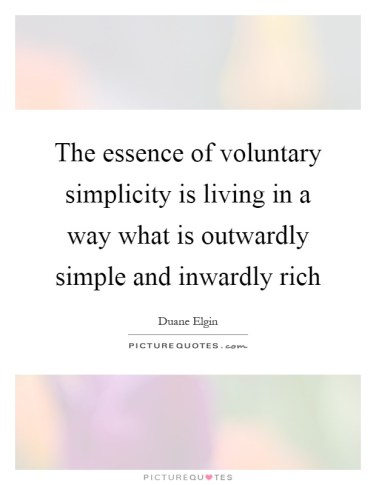 2017 is going to be the year where hopefully the words “voluntary simplicity” will be embraced by a wider range of people. I know that I have been incorporating voluntary simplicity in my own life for many years now, and that there is still many more ways in which I can follow a simpler, more efficient and ecologically sustainable way of being in the world. To do so, I am constantly informing myself, being conscious and mindful, trying to look at the bigger picture and taking personal responsibility for the world that I am leaving to our ancestors of the future. Now more than ever, we are at the crucial tipping point where we have to look beyond our own self-interest and look to the whole, to be more holistic in everything that we do.
I have incorporated Zen and Buddhism into my life for many years. For me, this brings a wisdom from both Eastern and Western philosophies that can blend together to form a holistic worldview and way of life. I feel that East and West need each other in order to understand the whole. Only when we understand the material as well as the spiritual can we bring them together to live fully in the here and now.
It’s important that simplicity, in terms of reducing consumerism, resources and living a better, cleaner more sustainable life, is voluntarily chosen. When it is not, we come across such suffering as poverty. Many people in the world do not have a choice to reduce, reuse, to choose. Here in the West, many of us can make choices, however small, in our daily lives that strive towards a more sustainable future for everyone. Where we can, we should voluntarily make that choice, in order to preserve a future for humanity. In doing so, we will also achieve a higher quality of life, and be able to truly flourish as a species. We are at that balance point, if we haven’t already gone too far, to either evolve into a higher consciousness and have that reflected in our actions, to come together as we realise that there is more to bind us together than tear us apart, or we can fall into divisiveness, fighting each other over the few differences and destroying not only ourselves, but a large portion of life on this planet in our downfall.
But what is simplicity? It is living in harmony with the world. Druidry is all about relationship, and this is also at the heart of simplicity. It is egalitarian. It sees through the illusions created by modern-day culture and society, the need to consume, the distractions of the media. It is about seeing what is really important in life: your family, your friends, your local environment. It is about living sustainably, so that our children and their children, as well as all the planet’s children, both human and non-human, have a good quality of life. It is about learning what is enough, rather than striving for more.
It is important to understand that simplicity is something that is for many of us a voluntary lifestyle. As stated above, many people lead lives in poverty and suffering because they do not have enough. We who do should learn just what is enough, and work towards achieving that understanding by informing and educating ourselves of our wants versus our needs. We must do this willingly, with an open heart. In doing so, we are also leading lives filled with compassion for all beings. It is not sacrifice, for we are only giving up the things that are unnecessary. Sacrifice is giving up the essentials. Many of thing things we consume or the activities we undertake are unnecessary. Many of them are distractions. Many of them only cause us to distance ourselves further from reality, each other and our place in the ecosystem. We are sacrificing ourselves by not following a simpler way of life.
We have to regard simplicity as a creative way of being in the world. Consumerism is not very creative. If we learn to live a simpler life, we rid ourselves of many distractions, thus enabling our own innate creativity to flourish. No longer are we kept under the pacifying drugs such a television, the media, advertising, and so on. We will embrace all that life has to offer, savouring each and every moment, willingly.
Gandhi said that we “choose to live simply so that others may simply live”. This is where we find compassion in a simpler life. This is where we see that we are a single thread among many in the tapestry or web of life. As human beings, homo sapien sapiens, the “beings who are aware that we are aware”, we understand the concept of a greater good for our species, and for the world as whole. Let’s use that knowledge wisely. Let’s create a world that we actually want to live in.
The concept of voluntary simplicity was begun by Richard Gregg, who was a student of Gandhi’s teachings. In 1936, he wrote about voluntary simplicity, stating that the purpose of life was to create a life of purpose. Let these words inspire you in your path towards voluntary simplicity. They can be a guiding beacon of light in a world of many illusory struggles and distractions. Create a life of purpose and meaning for yourself, using voluntary simplicity. It is the best way forward not only for your own life, but for the planet as a whole. Be creative. Druidry has a large focus on awen, on inspiration. Let us use that inspiration to live simpler lives filled with our creative potential to create a truly harmonious and sustainable way of life.
Mindfulness is a huge buzz word these past few years, and is a great tool in voluntary simplicity. We are living with intention, choosing our own path. We are conscious. We are aware that we are aware. Living an intentional life, as opposed to a reactive life, is one where we find a life of purpose. It really is that simple, yet is a challenging way to live. Being deliberate in everything requires us to evaluate and asses everything that we do, all our relationships: with other people, people we like and people we don’t like, with ourselves, with human and non-human animals, with the plant and mineral kingdoms. Like practicing Tai Chi, everything we do becomes a deliberate action, wholly understood and executed in a mindful manner, thus creating a beautiful flow.
Right now, we live in a world of crisis. Soon, the oil will become much more expensive, sea levels will rise, air quality will fall and the divide between those that have and those that have not will reach unprecedented proportions. We are currently living lives that sacrifice ourselves, each other and the planet. It can be utterly depressing when we view the world as such. Towards the end of 2016, an unusual pall of heaviness and depression hit me, as the weight of the suffering in the world fell all around me. I saw no hope for the future. However, voluntary simplicity has encouraged me that all is not lost. At this crisis point, we just might find profound opportunities to be creative, to be nourishing, to really change the way that we have been going the last few hundred years. This could be the unprecedented change necessary for our own survival. As the make or break point, this is where we could truly flourish as a species, to understand what has gone wrong, and to make amends right here, right now.
This requires personal responsibility. We cannot wait for governments to legislate for us. We cannot say that we will not undertake a simpler way of life until everyone else does. If we wait until everyone else decides to do this, or for it to be legislated, we could well be beyond the point of no return, where any action we undertake will already be too late. We must do this right now in our own lives, and let our lives be the example. We will not suffer because we are doing this, while others still live lives of disposable consumerism. We will not fall behind in the rat race. We will be living more intentionally, walking with a lighter footstep upon the planet, and knowing what really matters. Those who are not awakening to the benefit of voluntary simplicity are the ones who will suffer. Responsibility and duty have become dirty words in our society, and we must reclaim them for the very powerful values that they posses. We can change the world through everyday small actions. Like drops in a bucket, when we do so, even at tiny levels, it all adds up. We may not see the results straight away on a global scale, but we will see them in our own lives. We cannot wait any longer. We must take action now, in any way we can. No one will do this for us.
It’s also important to lay aside blame for the moment. If we participate in the world of consumerism, then we have only ourselves to blame. If we step outside of those bounds as much as possible, we will begin to understand the reasons why people do the things that they do, and in that understanding compassion will arise. For example, I know people whose kitchen cupboards are filled to overflowing. They don’t know what is in the back of those cupboards. There is food going to waste. But I also understand that there were many years where food was hard to come by for them, where every cent went to putting food on the table for their children. Full cupboards mean security. Though they might not be aware of this, I can certainly understand the behaviour, even if I don’t personally agree with it. I don’t blame them for creating the world that I live in, because I can change my own world in small and in large ways. If I lay all the blame for the world we live in on those who don’t share my own values, I can fall into an apathy and sense of separation from the rest of my fellow human beings that has absolutely no purpose or benefit in saving this planet or creating a new sustainable way of living. Instead, I will only live with anger and contempt, instead of working with compassion and integrity.
Every decision matters. The food we eat, the clothes we wear, the jobs we undertake and more. We are not powerless. We must remember this. It is essential to living a more simple way of life. We cannot change society until we change ourselves. Our biggest and often most important vote that we have in our consumerist society is how we spend our money. Tell the companies that you don’t want their latest product induced by media to increase low self-esteem by not participating in what they are trying to create. Instead, live a life of meaning, of intentional and mindful experience. The quality of life will increase, as opposed to the quantity of material goods. You will find creative ways of living. It is possible.
When we discover the things that really matter in life, life really matters. This is my understanding of voluntary simplicity.
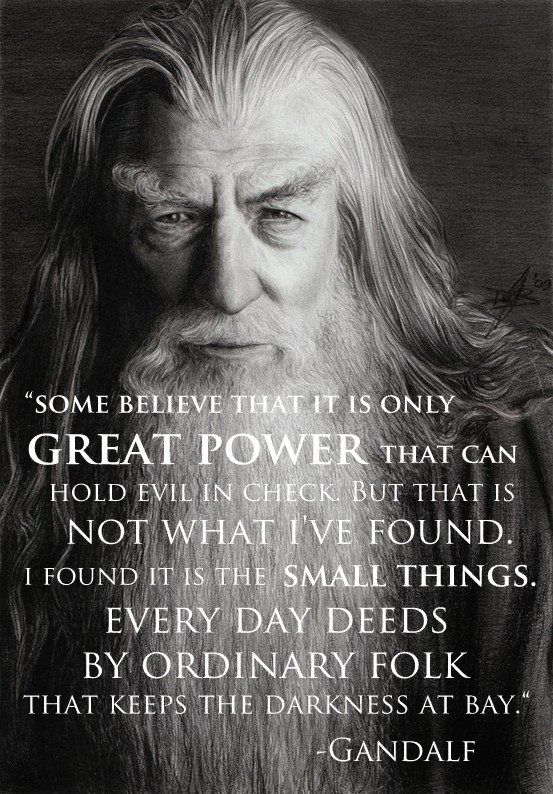
A lovely reader, Donal commented on my Make Tea post about how the US feels like they’re living in a Tolkein epic right now. It may indeed seem that all the forces of evil are set against us, overshadowing all. I was instantly reminded of my all-time favourite Druid, one of my greatest inspirations and heroes since I was a young lass: Gandalf. Tolkein was writing during some very dark times in his own day and age, and through Gandalf presented wonderful wisdom and awen. This got me through some pretty dark days in my own life, and still continues to inspire me each and every day. I hope that they can also inspire others. x
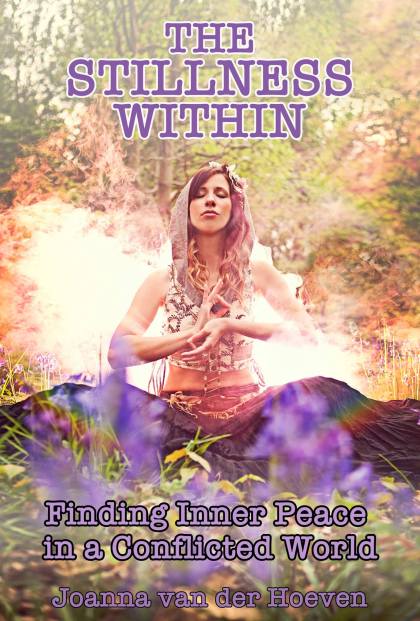
Thank you to everyone who has bought my little e-book, The Stillness Within: Finding Inner Peace in a Conflicted World. All royalties for this book go to charity, and since it’s release in May we’ve raised £65.97 for The Woodland Trust and Orangutan Appeal UK. Well done! They were both very appreciative of our donation. Let’s keep it going; please spread the good word about this project, and let’s raise even more money in the next six months for these fabulous charities.
Hope can be a double-edged sword. It can lift our hearts, rally us towards a cause, or it can lead us to the depths of despair when it dies. I’ve often wondered whether it is better to have hope or not, whether hope is a carrot dangling in front of us, or whether it is that very real need to invest our emotions into the belief that we can change our world. Back in 2012, I wrote about the Zen approach, in a piece entitled “No Hope“. The words that I wrote four years ago still resonate strongly within me, even as my relationship to hope has changed.
When we are at our lowest, we might still have some hope that things will get better. This hope may be the only thing that gets us through those long, dark nights of the soul. Then again, that hope may be what is preventing us from achieving things in our own right. Hope may cause complacency. If we work without hope, without expectation, then we may be even more motivated to make a positive change in the world in our own right, for the benefit of all.
With hope comes expectation. When we have expectations, we can be thrown against the rocks of frustration, anxiety, anger and despair when those expectations are not met, when things do not go the way that we would like them to. We want people to behave the way we think they should, for the benefit of all. We want our politicians to think of the people that they represent instead of their own agendas. We want colleagues to pull their own weight, spouses and partners to be there for us, children to love us. When things don’t go according to our plans, or according to our expectations, we might crash and burn. We might dive into darkness at seeing a new President-elect, we might look at the environment and realise that perhaps we have simply gone too far, and there is no remedy for what we have done. When this happens, we can lose momentum, we can get stuck. Hope might be the thing that brings us out of this stagnation, or it might leave us altogether, so that we are in an even worse state than before.
So how do we work with hope? I’ve found it useful in the last couple of years to work with Hope as a god. I’ve worked with Time in the same context, and it has been illuminating for me in so many ways. Working with the gods, we learn to create a relationship with them, one that is nurturing for all involved. There is a give and take, a sustainable and reciprocal feeling to it that means that we cannot rely on them to do everything for us, and vice versa. It is in mutual respect where we meet, where we realise that we are part of an ecosystem, and where we need to strengthen the bonds of relationship so that it functions for mutual benefit. We learn from permaculture that diversity is key, that edges are where things happen. We learn to work with both, and in doing so can make this planet a better place. If we give up Hope in this context, if we give up Hope as deity, then there will be a very real feeling of bereavement in our lives; we will be bereft. That relationship will be gone, and when it is gone then to whom do we relate?
Others would say that this might be preferable, and in giving up Hope as deity we then become more self-reliant. But self-reliance is a myth. We are all co-dependent upon everything else on this planet. We do not exist in a vacuum. We need others in order to exist, let alone thrive. We are not separate. Without the innumerable other factors in our lives, beings seen and unseen, we simply could not be. I think that this is why I believe in the gods. The gods are all about relationship, about relating to our world through a means which is personal to each and every being. This is why I’m starting to work with Hope on a new level, when it seems perhaps that all hope is lost. Otherwise, I fear I might spiral into apathy, or depression. If I work with Hope, if I talk to Her and connect those threads of sustainable relationship, then I might be inspired to solve a problem, mend something that is broken, reweave the threads of connection in the best way that I can.
Hope can be the spark of inspiration, the awen that sings to us in the dead of night when all seems lost. Hope can also be a force that keeps us from changing our lives for the better, hoping someone else, someone more powerful or intelligent will do it for us. But when we work with Hope as deity, then things begin to change. Hope will not save us from ourselves. But Hope may inspire us to do better, to be better, to be the change that we wish to see in the world.
Or so one can only Hope.
 I had a lovely solo ritual last evening, to celebrate the autumn equinox. As the sun set, I meditated on the changing colours in the sky, on the harvest that has taken place, the wheat and corn crops taken in, the onions and turnips. The fields are still being tended, ploughed for winter veg, seeding with potatoes and other root crops. The sounds of work in the fields is still going on, even as the evening dog walkers pick blackberries and apples from the hedgerows. It’s a strange time of both noise and stillness, when the swifts and house martins have mostly left, the skies seeming emptier for it. The dawn chorus is softer, the evening calls less urgent.
The times of the festivals have an effect on me, physically as well as spiritually. At these strong points in the year, I often feel at odds, not quite in this realm or any other. At Beltane, my head felt like it was being pressed in on all sides as we spent time at the local tumuli. Yesterday, and the day before, I felt dizzy, sometimes faint as it seemed the energy was swirling around me yet again. Being very susceptible to pressure changes in the air, I feel I’m becoming even more sensitive to energies unseen that roil and swirl around this little sphere hurtling through space.
I love autumn. I love the energy that it brings, a quiet, soft, energy: a release. It seems that all summer long, from Beltane onwards there has been a swift build-up of energy that it seeking its release. Some of it goes at midsummer, but most of it is contained, helping to ripen the harvest fruits. It’s at this time of year, when the fruits fall, that the energy is released, the potential lying still and quiet in the seeds, ready for winter’s dreaming.
And so at last night’s ritual, I began with meditation, and then did the ritual in my usual way, scattering leaves and saying words of my appreciation for the season and the harvest around my circle. I also prayed for peace, a deep, heartfelt prayer, as well as doing five earth touchings. I then meditated again, the sun having set, feeling the balance between darkness and light. I opened my self to what I needed to learn over the long dark nights of approaching winter, widening my perspective, allowing nature to guide me. Instantly, one word rang through my head: forgiveness.
Taking inspiration from nature, I thought about forgiveness. If any ecosystem held a grudge, then it would fail. Trees continue to provide us with oxygen, despite us decimating their population. Herbs continue to grow, despite humanity’s propensity for herbicides. The rain falls, the sun shines, and we still reap the rewards that this world has to offer each and every day. If we could only do the same, if we could only learn true forgiveness, then this world would be a much better place.
I thought that I was pretty good at forgiveness. I’ve forgiven people in my life who have caused me to suffer. But taking a deeper look, my forgiveness wasn’t all-encompassing. I needed to release the anger and hate, like the leaf falls from the tree, like the leaves that lay scattered all around me in my ritual circle.
Forgiveness is one of the most difficult things to do for us humans. We often equate forgiveness with weakness, seeing it as a relinquishing of power. Those who forgive, we think, are only setting themselves up for more grief from those who would cause them to suffer. They’re doormats.
What we don’t realise is the exquisite power of forgiveness. When we can truly forgive, we can move on with our own lives. This doesn’t mean that we condone bad behaviour; far from it. We can still stand up for ourselves, speak out against injustices. We will still face struggles with people in our lives. But we can suffer less in ourselves, if we can forgive.
But we don’t want to. We want the other person to suffer, for all the hurt that they have done to us and to others. If we forgive, we think that they’ve been left off the hook. This most certainly isn’t the case. Everyone is accountable for their actions, everyone has a responsibility for their own life. We can’t force anyone to accept this, of course, but we can set the example for others. And when others don’t follow our example, we shrug and move on, knowing that we have, at the very least, stopped the suffering in ourselves.
But we want to change people. We want to stop people who are hurting others, and rightly so. So we can stand up for what is right, remembering that there is more than one right. We can also forgive, because everyone is suffering in some form or other. Whether willingly or not, when someone is causing another being harm, they are suffering deep inside from some affliction that we may never realise. They are fighting their own battles. We must set the example.
That doesn’t mean that we’re going to suddenly start liking these people. But we can allow the power of compassion to flow freely, to stop the pain in our lives, and when we do it begins to radiate outwards, like rings of water in a still pond. We’re not going to take any crap, but equally we’re not going to allow any crap that comes our way to cause us to suffer, to continue to make us crazy, hurt or bitter. We’re going to remain open, calm and filled with love for this planet, and in doing so understand the true meaning of forgiveness.
We’re also going to forgive ourselves. In doing so, we find peace. We’ve all screwed up, we’ve all caused pain at some point. We need to release that in order to function properly. We accept responsibility for our actions, and ensure that we never do it again. We strive to be better people, to make the world a better place.
Some would query whether it is truly possible for any human being to really forgive. I’ve thought about this myself. As such emotionally biased creatures, are we able to set aside our skewed perceptions of any given situation? In the attempt to do so, at the very least, is the heart of compassion. In the striving to do so, we rise to the challenge.
So my ritual last night was filled with my home environment providing me with the awen on the nature of forgiveness, compassion and love. And as I sat in the growing darkness, the cool soft breeze playing around me, I whispered these four words: I welcome the darkness.
 Down the Forest Path