Peace

I feel the anger within me. Sometimes he is purposefully trying to upset me and others around him, other times he doesn’t know that he is doing it – it is simply habitual energy. I feel the anger as a tightness in my chest with his sarcasm, his passive aggressive behaviour. Little flames shoot out, provoking a fire within. It takes much mindfulness not to feed the fire, not to fan the flames of anger within. Acting out in anger will not solve anything. I will find another way to relate to him when he is sunk deep in his suffering, acting it out on everyone around him.

* * * * *

A friend was involved in a car accident which totalled his car. In his recounting of the tale, there was no anger at the young woman who hit him from behind, only remorse at the four pairs of shoes that had been ruined. I smiled and know that I will hold his lesson close to my heart.

* * * * *

Today there is news of the massacre in Pakistan, where around 150 children were murdered by the Taliban in a school shooting. My first response was not anger, but such a deep and silent sadness at the conditions that brought about people who bring about such suffering on the world. I could be one of the children, I could be one of the attackers, had the conditions been right to bring about a manifestation of the person I am in that situation. My heart goes out to everyone in Pakistan, the families who suffer the loss of their children, and to the attackers whose suffering lashes out at innocent children.

* * * * *

Sitting silently in the darkness before dawn, a lone candle and some incense burning, I pay attention to my breath, and the darkness around me slowly lifts as the sun rises unseen behind a canopy of grey sleety skies. May there be peace in the North. May there be peace in the East. May there be peace in the South. May there be peace in the West. May there be peace in our hearts and minds and towards all fellow beings.

Green Buddhism

I recently came across this article from PBS Newshour, and thought I would share. I sincerely hope that it isn’t just talk, but actual action, compassion and love for all things – not merely politics. x

Holistic manifestation – the nature of awen

In my previous blog post on my other blog, DruidHeart for SageWoman, I wrote about how we are never born, and how we can never die: we are simply manifest for a while in one form, and then we manifest again in another when the conditions are right. For me, this represents reincarnation, the nitty gritty basics of it and the science behind reincarnation.

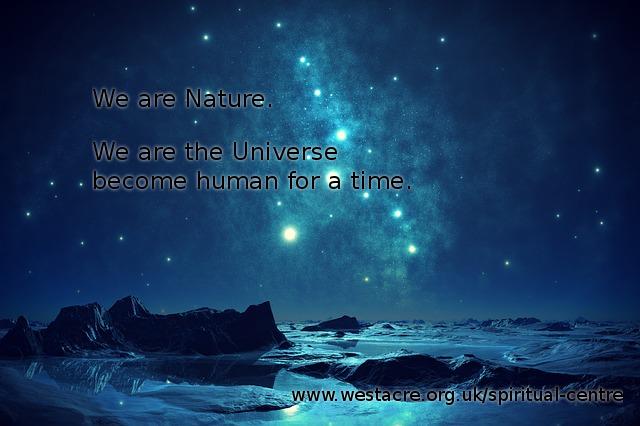
Another aspect of manifestation is that we are not separate beings on this planet, or indeed in this universe. We cannot be, for we are all made up of different elements of existence. A human being is made up of non-human elements, such as calcium and magnesium, sunlight and wave, clouds and stars. All manifestation has a shared existence, for we cannot exist without everything else. This is explained beautifully by Zen monk Thich Nhat Hanh in what he called Inter-Being. We cannot exist alone, we can only inter-be with everything else on this planet. It is a wonderfully evocative and holistic way of thinking that sits very well within my vision of Druidry. When we realise that we are not separate from the whole, we immediately act with a different intention, and live our lives filled with compassion and love instead of alienation and fear.

Our ancestors are with us all the time. Though their bodies may have long since physically disappeared to our eyes in the soil, their manifestation has not – it has simply changed its form. Energy cannot be destroyed, it cannot go anywhere. Neither can it be brought forth out of nothing. We are all manifestations of energy, energy that has existed on this planet for 4.54 billion years. This is a shared energy, one that we cannot claim as our own. If we cannot claim this energy as our own, how can we claim anything to be our own?

Ownership requires the belief that we are separate creatures. In our brief manifestation as human beings, we may think we own our house, our pets, our cars, however this is all illusion. We are only borrowing them, using them for however long or short a period of time before we are changed in form upon our so-called “death”. This death is not a singular, separate event, but merely a way to describe the cessation of a certain manifestation. Equally, there is no birth, simply the beginning of a new manifestation. The energy behind the manifestation is always there.

This shared energy is in the heart of the sun, in the rocky surface of the moon, in the wind and in the rain. It is in the bee and in the bear, in the holly bush and in the snow. The icicle is made up of non-icicle elements. The cat is made up of non-cat elements. This is what it means to have a shared existence. Not shared existences, but a singular shared existence.

If we are all a part of each other, we will see that if we fight with another person, we fight with ourselves. If we grieve for another person, we grieve for ourselves. If we act with love and compassion for the world, we also act with love and compassion for our selves.

The plant that has died is still there, in another form. It is still a part of our self as well, for we have breathed in its oxygen; we are in its soil as its soil is within us. There exists a beautiful garden in our compost heap. The sea is held within the sky. I am within a woman grieving in Palestine, and she is within me.

Keeping this thought close to my heart, I can reach out and touch the awen that connects the threads of all existence. That energy where soul touches soul, where boundaries fall way, where we are beautifully inspired by the acknowledgment of another being and seeing that being reflected and existing in our souls – this is at the heart of Druid teaching. Walking awake and aware in the world, seeing the connecting threads, seeing the shared manifestation and shared existence fills our souls with beauty and awe in the wonder that is the world.

May we be the awen.

universe human

Reblog: The Winter Solstice – No Birth, No Death

This is a reblog from my site, Druidheart, at SageWoman’s channel on Witches and Pagans. To read the whole post, click HERE.

With the Winter Solstice approaching, and in the cold dark months of the year, we have an excellent opportunity to reflect upon the deeper parts of our existence, those shadowy elements that seem to fade away so easily in the heat of the midday sun, those thoughts that require darkness and the teaching that it can bring. Thoughts such as life and death, darkness and light and the cyclical nature of existence are all excellent themes to meditate on at this time of year, with a natural introspective element to this season allowing us to perhaps go further, deeper than we could or would in the warmer, more outwardly focusing half of the year.

This season, with the increasing darkness and the lack of light here in the UK brings more sharply into focus thoughts of death and dying. It is often said in Western Paganism that the Sun God dies at Samhain and is reborn at Yule, when the days begin to lengthen and the light in our lives is increased. However, lately my thoughts have abandoned the concept of death, as well as birth, into a more Zen-like “No Birth, No Death” frame of mind.

Having meditated on this for a couple of months now, and seeing it reflected in nature around me, as a Druid this is how I internalise the teachings. For me, nature is the greatest teacher. I look to no other authority other than nature. It is the core of my religion, the core of my being. Having looked deeply into the nature of death and dying, of birth and living the concept of no death, no birth makes a lot more sense to me right now. Let me explain…

To read the full post, click HERE.

Perception, assumption and suffering

How much of our lives are based around incorrect perceptions? How often does our emotional state and relationship with others fall apart based on incorrect perceptions? And just what is perception?

Perception is how we interpret the world, through our own subjectivity. We have a store consciousness built on our past experiences and those experiences related to us by others. We use this store consciousness to help inform us on our view of the world. It helps us to survive. We know that fire burns, so we don’t touch it. We know that cougars are dangerous, so we don’t approach. We look both ways (hopefully) before crossing the street. However, as our perception of the world is so subjective, how often do we get it wrong?

This is not to say that we should throw out all useful perception and experience. What we need to do is to become aware of our perceptions, and to see if we are making assumptions that aren’t based on actual fact. So much of our lives are built upon this, which is a rather shaky foundation.

Incorrect perception can lead to all sorts of problems and can create a huge amount of suffering. We might have the incorrect assumption that we are alone, which gives us the false perception that we are completely isolated from the rest of the world. We may react to a situation based on what we think someone said, rather than what they actually said, and thereby create a false perception of the actual event. We may assume from past experience that all politicians lie, and create a false perception that we cannot trust anyone, much less bother to vote. We might get angry at someone for their behaviour, without seeing the root causes behind it. Changing your perception leads to understanding, which is the essence of compassion.

We will still make mistakes, however. We have habits, ingrained learned behaviour that is difficult to overcome if we are not aware of it. However, once we see the patterns formed in learned behaviour, we can unlearn it. We can break free of negative, destructive cycles, beginning to heal ourselves and then work towards healing our community, our world.

By nature I judge everything – it’s simply a part of my personality. While it’s worth having to some extent, it’s also a detriment. What I have had to learn is how to judge without being judgemental. It may not sound like that great a difference, but really it is the foundation of trying to understand the human being.

Daily meditation helps with this on so many levels. Practising awareness for 10 to 20 mins a day in mindful meditation begins to seep into every aspect of your life. Once you become aware of your thought patterns and behavioural patterns, you can then learn to break free of these in order to live with more intention. Everyone can meditate to some extent – you just have to want to. You have to want to spend time with yourself, and thereby doing some pretty deep examination, coming to terms with the less than glowing aspects of your self, as well as embracing those parts of your self that nourish and bring peace. It’s very simple and sometimes very difficult. However, if you want to get off that treadmill of constant running, out of that vicious cycle you feel trapped in, it’s well worth the effort.

Next time you are angry, depressed or sad, take the time to look deeply into your perceptions. If you find that they are based on incorrect or unsubstantiated views, perhaps they are not perceptions but assumptions. You will have to let go of the anger, depression or sadness as well as the ego in order to fully see – things we like to cling on to for various reasons, ie. because we know we are right, because we know we are not good enough, etc. This knowledge is not true knowledge, but assumption based on false perception.

Doing this work can lead to a life filled with less suffering, and in doing so even bring more joy into the world. May we do the work with a peaceful heart and with pure intention.

The Self and the Middle Way

I’ve just been introduced to a wonderful concept, a very different view of the Middle Way by Vietnemese Zen Buddhist monk, Thich Nhat Hanh in his book, Beyond the Self: Teachings of the Middle Way.

So many people interpret the Buddha’s teachings of the Middle Way as walking between two extremes, of finding a middle ground between points of view. However, Thay talks about how we need to throw out all duality in order to truly understand the Middle Way. We do not walk between two extremes, but instead we throw out the concept of the extremes. We let go of dualistic points of view, and in doing so we are further able to release notions of the self in order to fully integrate with the world.

This has resonated so deeply with me, as for the past couple of months I have been exploring the release of the self and integration with the natural world as a result. To walk the middle way, we must, as Thay suggests “throw out” instead of letting go – as letting go still concedes to a dualistic nature of existence, and a self that is separate from nature. If we throw out all these ideas we are left with nothing but possibility.

The idea of the Middle Way, of changing the way that you think by throwing out dualities, has some other very interesting concepts to chew on. What happens if you throw out anger and joy? What happens when you throw out pain and bliss? Walking the Middle Way is not about never getting angry, or upset, or joyful, or blissful. It is about releasing ideas of opposites, and seeing the potential that is created in doing so.

How does this work then? If we throw out ideas of birth and death, we are simply left with manifestation of existence in all its forms. This reaffirms my belief that life does not begin when we are born, nor stop when we die: we simply change form, decomposing into the soil, molecules breaking down, chemical reactions occurring. We are released into the air through the plants growing around us, released into the water table, we fall as rain or snow, we are in the wind. There is no beginning and no end. When the conditions are right we manifest in different forms, whether that be human, water molecule, etc. When we strike a match, the flame does not come out of nowhere: the right chemical reaction must occur. When the flame is blown out, it does not disappear into nothingness, but simply ceases in that manifestation. When the conditions are right, it can appear again. As Thay puts it – clouds cannot die.

For me, this is the concept of reincarnation, exquisitely explained.

With regards to the self, we can take this further, realising that there is no separate self. We are beings that, like everything else on this planet, require the existence of other things in order to manifest. We are entirely co-dependent, there is nothing on this planet that can exist without other things. A cloud needs water and other elements in order to be. Humans needs water, food, shelter, oxygen and a host of other things in order to exist. Everything is interconnected. We cannot separate one thing from another – it is simply impossible. When we realise the interdependence of existence, we see that there really can be no separate sense of self – we are made up of millions of other human and non-human elements.

Thay goes further into describing all these other elements as having their own vitality, their own purpose, their own consciousness. Each thing is equally important in the manifestation of all existence.

For me, this is animism, exquisitely explained.

It is so wonderful when concepts that you hold so dear to your heart, concepts that you regularly meditate over, are expressed within a different religious path so eloquently. It shows a shared human experience, and a shared global manifestation of consciousness.

Thay is currently in hospital, aged 88 having suffered a brain haemorrhage. He is making progress, and we all wish him the best in his recovery, should that happen. Whatever may happen, we wish him peace and love. His teachings have made him a true hero of our time.

Recommended Reading: Thich Nhat Hanh, Love Letter to the Earth

TNH LLtoE

The wisdom of compassion allows us to see that we are part of a great cycle, that there is no separation. The earth is us, and we are the earth.

In this book, Love Letter to the Earth, Vietnemese Buddhist monk, Thich Nhat Hanh, talks about the stress we humans are putting upon the planet, and what we can do to live more harmoniously with the rest of the natural world.

I read this with the eyes of a human, the mind of a Zen Buddhist and the heart of a Druid.  In my opinion, this book needs to be on every Pagan’s bookshelf, let alone read by everyone regardless of faith, spiritual path, economic circumstance, political party, etc.

It is animism, and how to live it.

Letting Go

Taking inspiration from nature, many Pagans see this season as a time of letting go. Even as leaves fall from the tree, we let go of things in our lives that no longer nourish us. In the letting go, we allow new manifestations to feed our creativity and inspire us in our journey, even as the fallen leaves feed the soil around the tree.

There are many different kinds of things we let go – ideas, relationships, emotions, material possessions. They key here is that if they are no longer nourishing, then we can softly let them go into the lengthening nights, thinking deeply about our lives and carrying within us new seeds for the coming year. They might be the vegetable garden that didn’t work, the friendship that no longer feels right, grief or anger that we have experienced or even just clutter in our houses.

We can also learn from the letting go – we can try and plant a vegetable garden in a different spot, grow different vegetables. We can focus on the relationships that we have that make our souls sing, and open ourselves to new possibilities. We remember those who have passed away, or who are struggling in the shared human journey. We learn to cherish and make space in our homes and in our lives for things that bring us joy.

The tree does not mourn the falling leaf, nor does the leaf mourn the tree. In the letting go, we simply allow for new manifestations to occur.

Blessings of Samhain.

Self-Governance

mudraFar too often we allow our emotions to control us, dictating how we react and respond to situations and perhaps not in the best way. Some would argue that our emotions are what gets things done, however, something done with anger, for instance, may not always be the best way forward.

Discipline has become a bad word in our society. What we need to do is to reclaim this word, along with duty (which I will elaborate more on in another blog). We need to sit down with ourselves and take a good, long, hard look at our emotions and the roots of these emotions, finding out why we react to situations the way we do, discover underlying patterns and unravel the threads that are loose, or about to snap, reworking them into something more harmonious.

If we work on a situation based on an emotion of anger, hate or jealousy, then the outcome will most likely not be conducive to creating compassion and harmony with the world. Exploring the roots of these “negative” emotions, we will realise that the underlying thread is one of fear. Anger is another expression of fear. We become angry at our partner for not behaving in a manner that we think he should. In reality, we may be fearful of losing our partner, or of changing feelings for him, of not having enough control in our own lives, etc. Hate is based in fear, as we fear that which is the Other, separate from ourselves, the unknown. Jealousy is based on fear of change, our own insecurities and fears created out of past experiences.

What we need to do it to sit down with our feelings, to better understand them and in doing so, better understand our selves. In creating a safe space to sit with our feelings, we can engage with them openly and honestly. Creating a haven, a sanctuary in which to perform this task, we can explore the deepest corners of our minds. For me, the goddess Nemetona helps in this exercise.

She is a goddess of sanctuary and sacred space. She is present in my home and in my heart. Human beings have such a craving for safety and security, and within this goddess we can find that wherever we are. Not only does it help with emotional discipline and self-governance, but the two are intricately woven together, with self-governance creating that safety. Let me explain.

If we are ruled by the tides of our emotions, we will never settle, never find a place that we can call a sanctuary. We are subject to the peaks and valleys of an emotional long hard slog, and never really find a good breathing space in which to find some respite. If we do not have that sanctuary, we have no place to breathe and to truly connect with our emotions. And so an endless cycle of repetition is created.

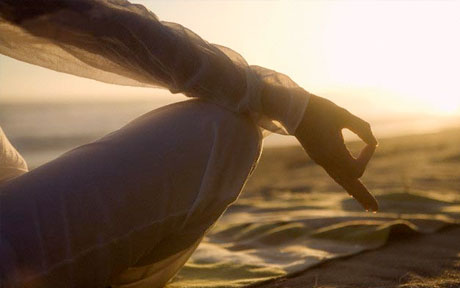
Finding time every day to simply sit and breathe is a great way to begin. In a safe, comfortable place, whether indoors or out, we focus on our breath, in and out, breathing in the air that our ancestors breathed, that all living things breathe. We breathe out into the world, exhaling even as the trees exhale in the deepening twilight. Sharing this beautiful moment, this sacred breath, we come to an awareness of ourselves, of our self and how we currently feel in the world at this particular moment. We can call upon Nemetona to hold this space while we simply sit and breathe, honouring Her for all that She is with a return to the stillness at our core.

It’s not easy, taking the time to simply breathe, to meditate on our breath. Our minds will try every trick in the book to distract us from this present moment and this one little act. It is with discipline that we return to our breath again and again, each time we find ourselves wandering off mentally, or shifting our bums restlessly. You have to really want to find stillness – it doesn’t just happen. You have to be disciplined enough to achieve it. It won’t simply suddenly appear out of nowhere, nor can it be spoon-fed. Discipline will not allow any passivity. We must take full responsibility for our selves and for our world.

After breathing, we can take some time looking at our feelings and emotions without attaching to them. Again, we can ask Nemetona to help us, to hold the space and to guide us to explore our feelings without getting too involved, wrapped up once again the in the emotion. She won’t do it for us, however. We can look at our fear, at our anger, our impatience, our joy and our happiness. We can find the roots of these if we don’t let them take control over our minds, and therefore live in better awareness.

For not only do we have to be careful of the negative emotions ruling our behaviour, but we must also become aware of the more pleasant emotions. Far too often we experience a beautiful emotion, and crave that emotion for the rest of our lives. We will never be able to recreate that experience, for it has happened and exists only in the past. All we have is this present moment, which is always changing, moving forwards. If we try to regain the feeling of joy that we had on our wedding day every time we look at our loved one, we disregard other emotions and feelings that will eventually come and bite us on our backside. We may not notice the present moment. Focusing only on positive emotions doesn’t work – we are human and we have negative emotions too. Those who deny them, who suppress them, will face some pretty hard demons at some point in their life.

So we sit, and we meditate day after day, breathing and coming to an awareness of the present moment. We are able to take the time to look at our feelings and get to know them better, thereby allowing ourselves the opportunity to break from negative patterns of behaviour into more purposefully led lives. Discipline and self-governance are not things to be afraid of, nor are they something to shun as not in keeping with our freedom of expression. We are better able to express ourselves when we are not ruled by our emotions, allowing us to see what lies at the root of our souls, and thereby what lies in others’ souls as well.

This is the heart of compassion. When we understand ourselves we can better understand others, and see their fears, their patterns being created. We can work with them to help create new patterns, or we can simply walk away with respect and not have their patterns reflected in our own. We can only help those who want to be helped, and this includes our own self.

So please do take the time to sit, every day, and be in the present moment. Become aware of your breathing. Call upon Nemetona or any other god to help you find that peace, that space to explore your feelings, should you so desire. Look at your feelings and better understand them for what they are. In doing so, you will no longer be ruled by them, but instead be able to respond in the world with an awareness and mindfulness that can only create harmony. We come to understand each other in a very deep and meaningful way when we take what we learn of ourselves and relate that to others. In this, we can see that we are all related.

We are not restricting ourselves with self-governance, but allowing ourselves to open to the world with the eyes of compassion and hearts that are true.


For more about the goddess, Nemetona, please see my book, Dancing With Nemetona: A Druid’s Exploration of Sanctuary and Sacred Space

Thich Nhat Hanh on No Self

Meditating upon this for a couple of years now, I was absolutely delighted to come across this little question and answer session with Thay back in 2010.  His thoughts on ancestors, on no self and awareness were exactly the same as my own, and resonate deeply within my soul.

Whoever I am.