Tori Amos and Terrorism

Working on my new book, The Stillness Within – Finding Inner Peace in a Conflicted World has really given me the opportunity to delve deep into my own soul. This book is taken from writings on this blog and updated, collated and revised into a little book that will hopefully be a guidepost on the roads we travel to a place of peace.

I apologise if my posts here the last few weeks have been a bit scarce – I’m in full-on editing mode, and sorting out the cover this week too. One thing that I am exploring deeply this week, however, which may or may not make it into the edit of this book (time restrictions) is the notion of how much we fight ourselves, as well as each other. Watching some interviews with music artist Tori Amos the other day, she spoke of how we find our own personal power, which can defeat notions of terrorism. This terrorism is not in the conventional sense, however, but a personal terrorism that comes from within that seeks to obliterate rather than negotiate.

She stated that the song The Power of Orange Knickers, that deals with the theme of terrorism, kept drawing her in, deeper and deeper into different meanings of the word. “It’s easy to see the enemy in another country, it’s easy to see the enemy in another culture: find the enemy in your own culture, then find the enemy in your own being… we all have this part of ourselves that would choose to obliterate an idea instead of negotiate, because it takes a lot of skill to negotiate, but it doesn’t take a lot of skill to obliterate.”

Her words struck a chord with me. How often do we not allow for understanding to bring about a resolution to a conflict? In my book, I talk a lot about how compassion is understanding, trying to see the other side, trying to see the bigger picture. But in doing so, we may have to admit that we have a limited viewpoint, and worse still, that our viewpoint may actually be wrong. Our egos get in the way all the time, trying to save face, with bitter, hurtful words, bad or destructive behaviour or any other myriad ways which we employ to ensure that the façade that we are “right” is kept intact. But what happens when that is happening from within, not only doing it to others, but when we are doing that to ourselves?

For the most part, when we have been hurt, we often try to obliterate the person who has hurt us, punishing them in some way to make ourselves feel better. In severe cases of abuse this may not be the case, but in our day to day interactions with others, when someone does something we do not like, when they say something we disagree with, when we allow past events to influence the present moment, perhaps even dredging up old hurts and projecting them onto the current situation, we seek to annihilate the person whom we believe to be the current source of all our pain.

But what if that person is ourselves? What if we do as Tori states, and look to find this person within? We all have aspects of ourselves that are less than glowing, “darker” aspects that we would rather not face. We spend so much time deluding ourselves, our egos constantly chattering inside our heads convincing us that we are right, that they are wrong, that they are the enemy. The enemy is often lying within, silent and deadly, slowly and steadily killing all chances of peace and compassion.

We have to learn to negotiate with that aspect of ourselves, to talk with it, to try to understand it. In understanding this aspect, we find compassion, for ourselves and for others. In seeing the demons in our own soul we can better understand the demons in others. We have to become skilled negotiators, finding the right words that will cut through the pride and the ego, that will get to the heart of the matter in kindness and in love. We can’t just wade into our psyches and try to obliterate that aspect of ourselves; when we do that, we are just perpetuating the suffering in ourselves and in the world. We have to learn the deep art of communication, to open up the pathways of resolution. There are many choices we can make, if only we are able to see them.

Work towards an ending of the war within. Learn the arts of negotiation and communication. Take the time to look deeply, past the walls of the ego and through the memories of the past and the worries of the future. Look to the person you are right now. Find how you can heal her. Stop the cycle of hurt, pain suffering within and you will also stop that cycle without. It’s never too late.

For the full interview in which Tori Amos discusses the different songs on her album, The Beekeeper, please see below.

Glastonbury, June 2015

glasonbury torI spent last weekend in Glastonbury, a beautiful little town where I always go a couple of times each year to refocus and recharge the old batteries on a spiritual pilgrimage. As a Druid, I get inspired by the land around me and my home environment more than anything, but if you want to see outside the box so to speak, there’s nothing better than a pilgrimage to a spot that has great energy and peace.

And so, my friend and I piled into the car and drove down to Somerset, stopping off at Avebury on the way as she had never seen it before. We had lunch at the Lion (a fantastic pumpkin chili burger each) and then walked amongst the stones. After we had completed our first circuit we went and spent some time by the Obelisk, in one of the two inner circles. This is a special spot for me, as it really is a gateway into the past; time moves differently in that circle. Sitting on the ground, placing your hands upon the grass you could feel time shifting and slipping in and out of the present, looking up and seeing what Avebury would have looked like before the houses were built, before the village came. It’s a powerful thing, going in and out of time, but also so wonderful: a reminder that time is not linear, exactly, but an ever ebbing and flowing tide.

After Avebury we headed to Glastonbury, where we had hoped to meet up with some friends and drum up on top of the Tor at sunset. By the time we had settled in and eaten, it had already gone past 9pm and we were just too tired, and had to pass on that little excursion. We went back to the B&B (Pilgrim’s B&B – I highly recommend it) and with a visit from the resident cat we went to sleep, having a big day ahead of us.

The next day we were up early – too early for anything to be open! Shops don’t open until after 10am (some of them opening when they feel like it) and the Goddess Temple was only open from 12 noon. So we wandered around the town, looking in windows and finally visiting them when they opened. There are some really lovely shops there, with good books, items and other pagan goodies (I highly recommend the incense from The Goddess and Green Man – Mists of Avalon and the Golden Sickle are my favourite!). We then went to the Goddess Temple, where we were able to find a little sanctuary from the high street. Clad in the red colours of Beltane still, it was a warm and welcoming atmosphere. Meditation is so easy in that sacred space. I asked one of the temple priests if he could smudge me and he did with some really powerful incense cleansing my spirit with skilful sweeps. Inside the temple there is also a Red Tent, where I always go for a second meditation session and a card reading using the Temple’s own deck of cards they created out of the Nine Morgens of their tradition. I got Freedom, and pondered that for a while in the beauty of the little temple.

We had some lunch and then headed to the White Spring, but it was closed. Sadly, the opening hours state that it is open in the afternoons on the weekends, but it is rather hit or miss as to whether anyone actually comes and opens them. So we then proceeded to Chalice Well, a beautiful space with lush gardens and a light yet at the same time heavy atmosphere of the sacred. So many people from all over the world have been there, and it is amazing to think how many feet have walked these paths, drunk these sacred waters and prayed by the wellhead. I did my usual ritualistic route up to the wellhead at the top of the garden, where a few other people were sitting. As I settled myself, I could see the usual golden glow of healing emanating from the well and flowing out into the gardens. Some young children ran up, and the glow intensified around them. They looked down into the well and then ran off, moving with the swift determination that youngsters do when they must see and be everywhere at once. I smiled, loving their fresh energy and youthful exuberance. Normally I would have been irritated, as I am not particularly maternal, but their energy and that of the well brought a smile of joy to my face. As I sat and basked in that energy I looked around to the others who had gathered around the well head. I realised the deep need for healing that so many had when coming to the Red Spring, whether physical or emotional or both. My heart opened to everyone who had gathered there, wishing them all the healing that they needed, my soul opening in compassion.

After a time I went to sit on the lower slopes of Chalice Hill, where the Chalice Well Gardens overlook the Tor. Meditating there for a bit I was able to send my roots deep into the ground, breathing into them and through them from the deep, dark depths of the soil. My heart was calm, my soul at peace.

We left the gardens and I met an old friend from The Druid Network, who was there with a friend of his. It was so lovely to see him, and even though I had difficulties in the past with his friend, my heart was open to them both – Chalice Well is such a place of healing, I cannot even begin to describe it. We all chatted and laughed, and then we continued onto the Tor while they made their way into the gardens.

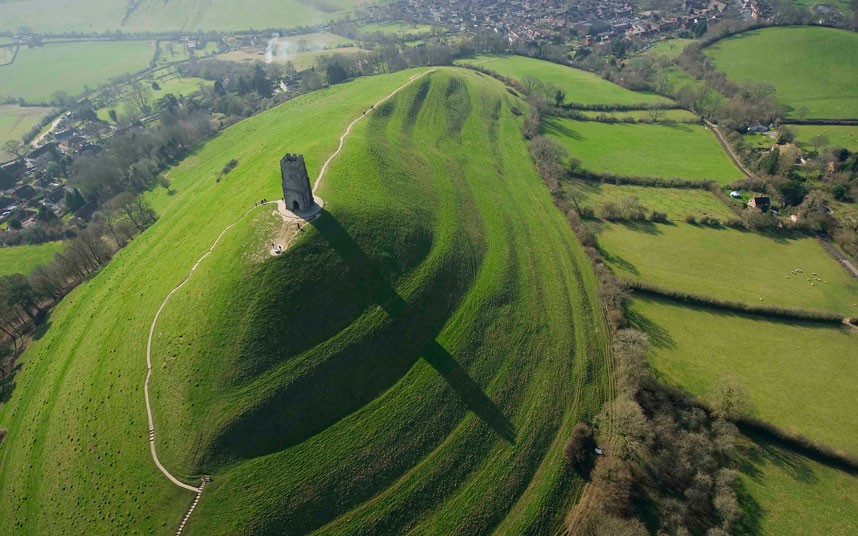
As we puffed our way up the steep slope of Glastonbury Tor, the wind whipped our hair and clothes and stung our cheeks. It was windy, even for the Tor, which is always windy. We got to the top, and as always felt the energy whirling around us, pulling us up, down, sideways, inside and out. My friend went and sat on the northern side while I found a little corner out of the wind facing westwards. As I sat I could feel the energy that made this such a special place, a place between the worlds, between the earth and sky with fresh clean water flowing from it into the red and white springs below. It was then that it struck me – freedom. The card that I had drawn from the goddess temple. Freedom was not just physical or creative freedom, but also an emotional freedom. Letting go of hate, letting go of past grudges, we are then free. My spirit soared with the jackdaws that lifted off the grassy slopes of the Tor to ride down into the valley below. The epiphany had struck, not just as an intellectual exercise but as a real life experience, from start to finish in a single day. My heart opened in true compassion on top of the Tor, to everything on this planet, like it never had before and I felt a deep peace settle in my soul that would carry me through my life ahead. I realised that before I had only glimpses of the healing power of compassion, now the light flooded through my being, in perfect freedom.

We went back down to enjoy a nice meal and then relaxed in the B&B. Tomorrow we would finish our shopping and pop into the White Spring on the off chance that it would be open (it wasn’t when we were there). I was saddened that I could not actually visit inside the White Spring, where I had first met my goddess, Brighid, but I could still feel her all around me, as I always do, wherever I am in the world.

Our journey back was quick and painless, and exhausted I climbed into bed next to my husband, my two cats snuggling up as if I had been away for weeks. Going away makes you appreciate all that you have even more, even as it opens up new doors and allows for new experiences. Thank you, Glastonbury, once again, for a beautiful weekend.

New book on its way!

Well, it would appear that I’ve written another book, which took me by surprise lol!

I’ve collated selected bits of my personal writings into a little book which will be called The Stillness Within: A collection of writings on Zen, meditation and compassion.  This book will be published soon, and all royalties from the sale of this book will be going to charity.

More info to come!

Reblog: A Guide to Cultivating Compassion

Here is a reblog from Leo’s wonderful site.  Number six is the most difficult, but perhaps the most important.  🙂

A Guide to Cultivating Compassion in Your Life, With 7 Practices

“If you want others to be happy, practice compassion. If you want to be happy, practice compassion.– Dalai Lama

By Leo Babauta

I believe compassion to be one of the few things we can practice that will bring immediate and long-term happiness to our lives. I’m not talking about the short-term gratification of pleasures like sex, drugs or gambling (though I’m not knocking them), but something that will bring true and lasting happiness. The kind that sticks.

The key to developing compassion in your life is to make it a daily practice.

Meditate upon it in the morning (you can do it while checking email), think about it when you interact with others, and reflect on it at night. In this way, it becomes a part of your life. Or as the Dalai Lama also said, “This is my simple religion. There is no need for temples; no need for complicated philosophy. Our own brain, our own heart is our temple; the philosophy is kindness.”

Definition
Let’s use the Wikipedia definition of Compassion:

Compassion is an emotion that is a sense of shared suffering, most often combined with a desire to alleviate or reduce the suffering of another; to show special kindness to those who suffer. Compassion essentially arises through empathy, and is often characterized through actions, wherein a person acting with compassion will seek to aid those they feel compassionate for.

Compassionate acts are generally considered those which take into account the suffering of others and attempt to alleviate that suffering as if it were one’s own. In this sense, the various forms of the Golden Rule are clearly based on the concept of compassion.

Compassion differs from other forms of helpful or humane behavior in that its focus is primarily on the alleviation of suffering.

Benefits
Why develop compassion in your life? Well, there are scientific studies that suggest there are physical benefits to practicing compassion — people who practice it produce 100 percent more DHEA, which is a hormone that counteracts the aging process, and 23 percent less cortisol — the “stress hormone.”

But there are other benefits as well, and these are emotional and spiritual. The main benefit is that it helps you to be more happy, and brings others around you to be more happy. If we agree that it is a common aim of each of us to strive to be happy, then compassion is one of the main tools for achieving that happiness. It is therefore of utmost importance that we cultivate compassion in our lives and practice compassion every day.

How do we do that? This guide contains 7 different practices that you can try out and perhaps incorporate into your every day life.

7 Compassion Practices

  1. Morning ritual. Greet each morning with a ritual. Try this one, suggest by the Dalai Lama: “Today I am fortunate to have woken up, I am alive, I have a precious human life, I am not going to waste it. I am going to use all my energies to develop myself, to expand my heart out to others, to achieve enlightenment for the benefit of all beings, I am going to have kind thoughts towards others, I am not going to get angry or think badly about others, I am going to benefit others as much as I can.” Then, when you’ve done this, try one of the practices below.
  2. Empathy Practice. The first step in cultivating compassion is to develop empathy for your fellow human beings. Many of us believe that we have empathy, and on some level nearly all of us do. But many times we are centered on ourselves (I’m no exception) and we let our sense of empathy get rusty. Try this practice: Imagine that a loved one is suffering. Something terrible has happened to him or her. Now try to imagine the pain they are going through. Imagine the suffering in as much detail as possible. After doing this practice for a couple of weeks, you should try moving on to imagining the suffering of others you know, not just those who are close to you.
  3. Commonalities practice. Instead of recognizing the differences between yourself and others, try to recognize what you have in common. At the root of it all, we are all human beings. We need food, and shelter, and love. We crave attention, and recognition, and affection, and above all, happiness. Reflect on these commonalities you have with every other human being, and ignore the differences. One of my favorite exercises comes from a great article from Ode Magazine — it’s a five-step exercise to try when you meet friends and strangers. Do it discreetly and try to do all the steps with the same person. With your attention geared to the other person, tell yourself:
    1. Step 1: “Just like me, this person is seeking happiness in his/her life.”
    2. Step 2: “Just like me, this person is trying to avoid suffering in his/her life.”
    3. Step 3: “Just like me, this person has known sadness, loneliness and despair.”
    4. Step 4: “Just like me, this person is seeking to fill his/her needs.”
    5. Step 5: “Just like me, this person is learning about life.”
  4. Relief of suffering practice. Once you can empathize with another person, and understand his humanity and suffering, the next step is to want that person to be free from suffering. This is the heart of compassion — actually the definition of it. Try this exercise: Imagine the suffering of a human being you’ve met recently. Now imagine that you are the one going through that suffering. Reflect on how much you would like that suffering to end. Reflect on how happy you would be if another human being desired your suffering to end, and acted upon it. Open your heart to that human being and if you feel even a little that you’d want their suffering to end, reflect on that feeling. That’s the feeling that you want to develop. With constant practice, that feeling can be grown and nurtured.
  5. Act of kindness practice. Now that you’ve gotten good at the 4th practice, take the exercise a step further. Imagine again the suffering of someone you know or met recently. Imagine again that you are that person, and are going through that suffering. Now imagine that another human being would like your suffering to end — perhaps your mother or another loved one. What would you like for that person to do to end your suffering? Now reverse roles: you are the person who desires for the other person’s suffering to end. Imagine that you do something to help ease the suffering, or end it completely. Once you get good at this stage, practice doing something small each day to help end the suffering of others, even in a tiny way. Even a smile, or a kind word, or doing an errand or chore, or just talking about a problem with another person. Practice doing something kind to help ease the suffering of others. When you are good at this, find a way to make it a daily practice, and eventually a throughout-the-day practice.
  6. Those who mistreat us practice. The final stage in these compassion practices is to not only want to ease the suffering of those we love and meet, but even those who mistreat us. When we encounter someone who mistreats us, instead of acting in anger, withdraw. Later, when you are calm and more detached, reflect on that person who mistreated you. Try to imagine the background of that person. Try to imagine what that person was taught as a child. Try to imagine the day or week that person was going through, and what kind of bad things had happened to that person. Try to imagine the mood and state of mind that person was in — the suffering that person must have been going through to mistreat you that way. And understand that their action was not about you, but about what they were going through. Now think some more about the suffering of that poor person, and see if you can imagine trying to stop the suffering of that person. And then reflect that if you mistreated someone, and they acted with kindness and compassion toward you, whether that would make you less likely to mistreat that person the next time, and more likely to be kind to that person. Once you have mastered this practice of reflection, try acting with compassion and understanding the next time a person treats you. Do it in little doses, until you are good at it. Practice makes perfect.
  7. Evening routine. I highly recommend that you take a few minutes before you go to bed to reflect upon your day. Think about the people you met and talked to, and how you treated each other. Think about your goal that you stated this morning, to act with compassion towards others. How well did you do? What could you do better? What did you learn from your experiences today? And if you have time, try one of the above practices and exercises.

These compassionate practices can be done anywhere, any time. At work, at home, on the road, while traveling, while at a store, while at the home of a friend or family member. By sandwiching your day with a morning and evening ritual, you can frame your day properly, in an attitude of trying to practice compassion and develop it within yourself. And with practice, you can begin to do it throughout the day, and throughout your lifetime.

This, above all, with bring happiness to your life and to those around you.

“My message is the practice of compassion, love and kindness. These things are very useful in our daily life, and also for the whole of human society these practices can be very important.” – Dalai Lama

Touching the Earth

Imagine my delight when I read how practices I am currently doing in my Druid tradition are also being done by the venerable Zen monk Thich Nhat Hanh (you will notice quite a few blog posts dedicated to his teachings on this blog!). In his book The World We Have: A Buddhist Approach to Peace and Ecology  he provides some lovely daily practices (gathas) to honour the earth that we can fit into our everyday life. Some of these I was doing already in various forms, such as prayers before meals, washing hands/body, drinking water, etc, and some were new and equally poignant, to be incorporated in my daily practice. But what really struck a chord with me was the Five Earth Touchings that he described after the Earth gathas and how similar they were to my daily prayers.

He recommends to Touch the Earth each and every day, to establish our deep and abiding connection with the earth and to give thanks for all that we have, reminding ourselves of who we are, where we came from, our ancestors of the future and living a life filled with compassion and peace.

He states “The practice of Touching the Earth is to return to the Earth, to our roots, to our ancestors, and to recognize that we are not alone but connected to a whole stream of spiritual and blood ancestors. We are their continuation and with them, will continue into the future generations. We touch the earth to let go of the idea that we are separate and to remind us that we are the Earth and part of Life.

When we touch the Earth we become small, with the humility and simplicity of a young child. When we touch the Earth we become great, like an ancient tree sending her roots deep into the earth, drinking from the source of all waters. When we touch the Earth, we breathe in all the strength and stability of the Earth, and breathe out our suffering- our feelings of anger, hatred, fear, inadequacy and grief.

Our hands join to form a lotus bud and we gently lower ourselves to the ground so that all four limbs and our forehead are resting comfortably on the floor. While we are Touching the Earth we turn our palms face up, showing our openness to the three jewels, the Buddha, the Dharma (the teachings of the Buddha), and the Sangha (the community). After one or two times practicing Touching the Earth (Three Touchings or Five Touchings), we can already release a lot of our suffering and feeling of alienation and reconcile with our ancestors, parents, children, or friends.”

The first Earth Touching is “In gratitude, I bow to all generations of ancestors in my blood family.” Here we honour our blood ties, the stories that brought us to where we are today, the generations of love and suffering in our bloodlines that help to create our story today. By opening ourselves to our ancestors we acknowledge all this, and can ask for their protection, love and support. In Druidry, we honour the ancestors, and in my own tradition I state “I honour the ancestors of blood, whose stories flow through my veins”.

The second Earth Touching is “In gratitude, I bow to all generations of ancestors in my spiritual family.” Here we honour the teachers who have shared their wisdom and insight, throughout the years, whether we have known them personally or not. We can see ourselves in these people. These are the people who can help us to transform our suffering and bring about peace, both in our own hearts and in the world. In my own tradition, I state “I honour the ancestors of tradition, whose wisdom flows through the teachings.”

The third Earth Touching is “In gratitude, I bow to this land and all of the ancestors who made it available.” Here we honour the spirits and/or ancestors of place, who have made this world that we live in. They are in the soil and wind, all those who have lived and died and now exist in another form. It is the energy of the land upon which we live, that we can feel humming in our bones, if we only open ourselves to listen. In my tradition, I state “I honour the ancestors of place, whose songs flow through this land”.

The fourth Earth Touching is “In gratitude and compassion, I bow down and transmit my energy to those I love.” Here we share the wisdom and insight gained from our practice and spread that out to all our loved ones in a form of prayer. The energy we have received from the earth is given freely, and so we too give freely to those we love. We can ask our ancestors for their protection and aid in this matter. In my tradition, I state “May there be peace in the hearts and minds of all those I hold dear, my family, friends and loved ones.”

The fifth Earth Touching is “In understanding and compassion, I bow down to reconcile myself with all those who have made me suffer.” Here we learn that the earth gives of her energy without discrimination or prejudice, and we can learn to live magnanimously in all that we do. We understand that people who cause us to suffer do so through their own wrong perceptions, and we pray that they find a way to relieve their suffering. We work towards not holding any anger or hatred towards these people, instead trying to understand in order to better work in the world. Again, we can ask our ancestors for help in this matter. In my tradition, I state “May peace be in the hearts and minds of those who cause me and others around them to suffer, may they know loving kindness.

The similarities between what I currently do as a Zen-minded Druid and these Buddhist practices absolutely delight me, and could to transform much of the world’s suffering if done with mindfulness and loving kindness. Try to take some time each day to recite the Earth Touchings above, or something similar – it could change your life, or at the very least ease some of the suffering and provide a path to peace that is yours and yours alone to walk.

The Novice

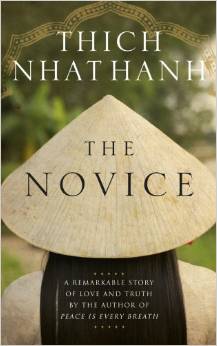
noviceWhilst on holiday in Brittany the past week (blog and photos to come!) I read Zen monk Thich Nhat Hanh’s novel, The Novice. It is his first novel, that tells the story of a young woman who has become a legend in Vietnam for paving the way for women to be nuns in the Buddhist tradition. It’s a short book, eloquently written and filled with wisdom throughout.

Kinh Tam is a beautiful young woman who has always felt a calling for deep learning through Buddhist enlightenment. As there were no temples for nuns at the time, she felt that her only option was to do what women did back then – marry and have children. However, her marriage failed as her in-laws falsely accused her of trying to kill her husband one night. Kinh Tam goes back home then, cuts off her hair and disguises herself as a boy, wandering for five days until she comes to a temple where she asks to be taken in as a novice.

She shows an aptitude unlike any other monk in her devotion to the Zen Buddhist teachings and carrying them out. She lives the perfections of generosity, mindfulness, magnanimity, diligence, patience and insight. She has already been through much, after the false accusations of attempted murder, and yet she holds true to her path, holding no malice to those who have wronged her through their own false perceptions.

A young noblewoman who visits the temple falls in love with the young “boy” monk, seeing in him such beauty that only an open-heart can radiate. Kinh Tam avoids her, with as much compassion as possible, as her secret cannot be found out else she faces expulsion. After Kinh Tam turns down the noblewoman’s request for a private meeting, the noblewoman woman becomes enraged, filled with her own anger and wounded pride, accusing the young novice of impregnating her when it was really a servant boy from her household whom she took to bed in anger and despair of not being able to sway the young novice from his devoted path.

Kinh Tam faces the dilemma of choice: tell everyone that it’s not possible, as she is a woman, or face beatings for her “transgressions”. Her love for her path is so strong that it sees her through the beatings, and yet again she never holds any malice towards the young woman (Mau), those who believe her false accusations and even those who beat her. She knows it is only their wrong perception of her that makes them act as they do, and the strength of loving kindness overcomes all the pain she endures.

Kinh Tam goes through further hardships, yet always with the endurance of a loving heart and the deep well of forgiveness. I won’t tell you the ending, but I was in tears as I read it – it was just so beautiful.

Kinh Tam’s story is one that can help anyone going through a rough time. It doesn’t matter what it is that you are enduring, whether it is being shot at, beaten, false accusations or someone trying to undermine you and your work – the open heart of compassion and seeing the unity of all things is stronger than any of these. Anyone can relate to Kinh Tam’s story. As a woman, I felt a deep bond with her struggles and an empathy for her trials and tribulations. I felt deeply the tug of sadness as one woman falsely accuses another (albeit unknowingly regarding the disguised gender, yet with an intended malice in any event). As a practitioner of Zen I found deep wisdom in the teachings that lay like little stars filled with light across the pages, twinkling with their insight into living a life of less suffering. We all suffer, for various reasons, but we can lessen that suffering through the open heart of compassion. Those who try to hurt us, physically, emotionally, intellectually, who undermine our person and our work, who tell lies and allow their pride, anger and other emotions to overwhelm their reason and the ability to see clearly the heart of the matter – these are things we all go through at some point in our lives. Whether it is through war, office/work politics or family issues, the cause is the same: wrong perceptions. Because they have a wrong perception of us, they act out, lash out, are ruled by the monkeys riding on their backs.

Yet we don’t have retaliate like for like. We can see their suffering, and still send them our love and compassion, even from afar. Because they perhaps have not seen that there is another option, they have no way out. Living through our actions, of opening our eyes to all possibilities and the reality of the present moment we can hopefully provide an example for a peaceful way of life that benefits the whole. We can forgive these misjudgements from others, as they are easily created. Through diligence we can work to dissolve these false perceptions within ourselves, through meditation, deep insight and the other teachings of Zen Buddhism.

I always doubted whether humans were truly capable of forgiveness. When explained through the words and story told by Thich Nhat Hanh, it makes so much more sense; it is so easy. There are three appendices to the story, one describing further the legend of Kinh Tam, the second describing the legacy of Kinh Tam by Sister Chan Khong of Plum Village monastery, and Thich Nhat Hanh’s own addendum about practicing love. These appendices are just as important as the story itself, for it shows “Engaged Buddhism” in action as Sister Chan Khong and Thich Nhat Hanh both relate how the practice of compassion helped them through the suffering of the Vietnam war, exile and more. We see first-hand how the Zen Buddhist precepts are put into practice, actually lived out in the lives of those who worked in the DMZ, offering wisdom and deep insight into how suffering is different for each individual and yet can be overcome when held in the arms of compassion.

In the UK, you can buy this wonderful little book from as little as £1.04 second-hand; do try to read it if you are at all interested in Zen Buddhism, mindfulness, compassion or loving kindness. If you feel you are suffering in any shape or form, this book might be able to help you find the way to transforming suffering into something that instead brings peace and harmony to your world, and thereby to the world at large.

May we be peace. x


The naked form

Beltane is fast approaching – the house martins are back, the bluebells are coming out, the earth underfoot is soft and the air is turning warmer. Many thoughts are turning to the coming summer, the long days, the short nights, the summer clothes, or lack thereof. I’ve heard it said that Beltane arrives when it is warm enough to make love outside without freezing your bits off, alongside the usual ‘when the hawthorn blooms’. But I do wonder, with a smile – is it ever the season in Britain to have your clothes off?

Don’t get me wrong – I love being naked. Without the restriction of clothing, the body moving freely, feeling the air upon your skin, swimming naked; all these are pure bliss. What’s not so lovely about being naked outdoors is sunburn, or bug bites, sitting on thistles or treading around nettles, etc. We humans (sadly, in my opinion) have evolved without all that much fur to protect us from the elements.

On the rare days that it is warm enough here in Britain to get outside naked, you’re more than likely to get sunburn, especially if you’re fair like I am. I’m not a big fan of slathering sunscreen all over my body (I don’t like the feeling of the lotion). I’d rather wear some lightweight clothing to protect my bits from the sun, wearing sunscreen on any exposed bits. That way, it also doesn’t interfere with any insect repellent that I might be wearing – I love lavender, as well as citronella, as they are brilliant at keeping away the mozzies and the midges. However, they can react with your sunscreen, making it less effective, so I try not to combine the two on my skin. So, if you’re not being burned or bitten, it’s probably cold and wet and rainy, which is nice, for a while being outside and naked in, but for a sustained length of time leaving you shivering and probably not terribly healthy in the end.

There are also other considerations to bear in mind when being outdoors and naked – will others see you? It’s still illegal in this country, unless you’re in a designated naturist resort or camp. I’ve spent many summer days at nudist beaches and hot springs, revelling in the lovely feeling of freedom of being naked (bugs are less of an issue on the beach and around the hotsprings, though sunscreen is a constant pain). These are places where people know that they will be seeing other naked people – it’s not a surprise or a shock when they come across the naked human form. We have to consider other people’s issues as well as our own when we are exploring nudity – we can’t just think of ourselves in this regard. How would I feel if my nudity made someone feel uncomfortable? While it’s good to challenge people’s perceptions every now and then, pushing them into uncomfortable situations isn’t all that respectful. Think of the young girl who has been sexually abused by her stepfather, and confronted suddenly with a naked male stranger during ritual or at a pagan camp – that’s not a situation that is taking into consideration her story, her feelings on the matter. Working with compassion means we have to try to understand everyone’s story, even as we are telling our own, and realising that others’ stories matter, even if we haven’t heard them. If we are in a designated area where we know there will be nudity, and where everyone is in the same mindset, then we can be more respectful to the thoughts and feelings of others, whatever their situation.

It’s a great and liberating thing to do, to explore nudity outdoors, getting in touch with your body, spending some time around other naked bodies without a sexual agenda. However, I would say that there is a time and place for this, in order to respect other people’s feelings (and the law). My last trip to Avebury in March saw a couple just on the other side of the bank pleasuring each other in a field – a beautiful affirmation of their feelings, yes, but not entirely appropriate perhaps when walking around with a three-year old. And speaking of sexual agendas, making love in the forest, while perhaps being illegal (indecent exposure) can be a beautiful expression of our souls connecting not only with each other, but the earth itself (though do be prepared for possible bug bites in embarrassing places – or massage each other first with a lavender massage oil!). It all comes down to respect – will you be disturbing anyone? If so, I’m sure that there are other equally fine alternatives.

It all comes down to respect – respect for yourself, for others and for the land. May you find blessed freedom and comfort in your own body!

Be the change you want to see in the world…

https://youtu.be/oqGPa84jM2M

Peace in Druidry

The word peace means many different things to many different people. Some see peace as simply the cessation of aggression or violence. Others see it as a way of life, a philosophy. Still again others see it as a mere dream, while others see it as the ultimate goal. But just what is peace, and what does it mean in a Druid context?

In our society, we strive for so much. Some things are worth working for, putting all our heart and soul into, such as equality, environmentalism and a better way of life for all beings. Some things we strive for are not so worthy – material wealth, social, economic and political power, fame or authority. For many in today’s society, it’s a dog eat dog world, and to get ahead you have to step over others in the race for the top. In reality, there is no top rung on that ladder – there isn’t even a ladder to begin with. All these notions of power are entirely illusionary, when looked at from a basic ultimate view that we are all just beings co-existing with each other on this little planet. Allow me explain.

The illusion of separateness has caused our world so much pain. When we see ourselves as separate, we begin to lose the notion of the sacredness in everything. There is absolutely no possible way for anyone or anything to be separate from anything else. We human beings are made up of minerals and atoms, of genetic information from all our ancestors (human and non-human), of sunlight and wind and rain. We are all star-stuff. We have not come out of nowhere, to suddenly exist and then just as suddenly depart when our earthly lives are snuffed out. The clouds in the sky have always been, and always will be. They may change their form, becoming humid wisps of cloud and ice, to larger clouds that then change into rain. That rain falls onto the earth, to be drunk by human and non-human animals alike, by the garden plants and the trees, by the birds and the bees. This water is released once more into the atmosphere through a myriad of ways – sweat, piss, moist exhalation, dewdrops. Back into the sky it goes, to once again form a cloud. We have clouds within our bodies, in the food that we eat, in the water that we drink, in our genetic makeup. We are clouds and the clouds are us.

Once we see the interconnectedness of all things, we realise that to strive for power or control over anything is as fleeting as the life of a cloud. All things are connected, and all things are impermanent. This is an essential tenet of Eastern philosophies, which is strongly reflected in a Druid’s perspective when viewed as part of the natural cycle. Nothing ever stays the same, not the river, not the sky, not the grass, not the tadpole. Everything is in constant change and flux. The key to finding peace within this constant change is acceptance of the impermanence, allowing our hearts to find ease from the fears and insecurities that arise when we fight against change.

A wave does not stress out about dying when it crashes upon the shoreline. It knows that it is water. The wave is simply the form that it took for however long a time. It knows that it is connected with everything else on this planet – there is nothing that exists outside it in a separate context. The web of life, the threads of connections are all around us. When we see those threads we lose the fear of death, instead seeing the cycles that allow us to really come to terms with the concept of changing forms. Death is not annihilation – it is simply becoming a new form, a new way of being.

The basic fact of life is that we will all die. So what is this struggle, what is this constant striving towards ideas of ownership, of power and rule, of games played with lives? To what purpose does it serve when we will all return to the earth in some form or another, when we come to an understanding that we are not separate from anything else? When can we move from concepts such as birth and death?

As humans we have developed a sense of self-awareness that actually hinders the possibility of finding a true and real sense of peace. We are often so self-focused that we are blinkered to everything else, to the entirety of existence. When we are only in tune with ourselves, how can we ever find harmony without? Stuck within the whirls and eddies of the mind, we will never notice the birdsong, or the rain upon our shoulders, the cry of a hungry child or the yowl of a cat in heat. When we look beyond ourselves is when we will be able to find peace. When we are able to work for the benefit of others instead of just ourselves, the world will know harmony. As we are all co-existing on this planet, it just makes sense to work together. However, the illusion of separateness is strong.

Peace is not just something for stoned hippies to think about and discuss – it is a very real and powerful way of being in the world. Through sensing our connection to the world we find a place of true power, power that comes from within that allows us to work for the benefit of all. This power cannot and will never be a “power over” anyone or anything else, as writer and activist Starhawk expresses often in her work. This power from within is the deep core of true expression, of a sustainable relationship working in tune with the entirety of existence.

Peace is not just a cessation to war and violence. Peace comes from a very real and deep understanding of our selves, of our behaviour and our way of being in the world. Many people within the pagan community seek to find a better way of being in the world. They focus on working on the self, through years of self-discovery, journeys, pilgrimages, workshops, training and the like. For many, the journey stops there, at the betterment of the self. What I would posit in this essay is that in order to bring about true peace in the world, we then have to let go of ideas of the self, in order to focus on the wider world. It is a letting go of the blinkers that hinder our ability to work with others compassionately, in real empathy and attunement to the natural cycles.

This is deep integration, of immersion in the world to allow for true peace to flow. Where there are no barriers of you and me, no sense of the “other”, then we can truly work together to bring balance and harmony to our world. It is often said in historical and academic accounts that Druids were the peacemakers of their world and their society. Did they have a deep understanding of the connectedness of all life, did they allow their sense of self to fall away in order to bring about peace between warring tribes, between the workings of the human race and other species, in their work with the gods? We will never know, but it is something that I think is perhaps lost in today’s Druidry.

Peace is often not the main focus for those who come to Druidry. They often seek a spiritual path that allows them to explore the true nature of their self, to affirm their beliefs in a like-minded community. This is brilliant, and of course very useful for all, however it cannot end there. In my opinion, there must be a return for the lessons that we learn, an exchange, a flow from one to the other that allows for true and sustainable relationship. When we step beyond our selves and begin to truly understand what it means as a Druid to live a life in service to the gods, the community and the land then we are really coming to terms with the concept of peace within a Druid context.

Too many are living a reactionary life, caught within the trapping of their minds and unwilling or unable to see the world around them and their part in the weave that is the tapestry of life. They cannot sense all the other threads around them, or if they do sometimes they feel competition, or aggressiveness towards them. It is a sickness in our culture and society that we are brought up in such an environment. Instead of supporting each other and rooting for each other, if we have an issue with someone we do the exact opposite, for whatever reason. In sacred relationship, especially within a Druid context, we don’t have to like everyone we meet or interact with. However, we can see them for what they are: a part of the sacredness in all life. As Bobcat once wrote many years ago, it’s all about sacred relationship – when we walk through the woods we avoid the nettles. We don’t have to cut them all down in order to continue, yet we can still honour their existence and their place in the web of life. Essentially, we don’t have to hurt others who may even have hurt us – if we do that, we are simply living reactionary lives. Let’s live active lives instead, claiming full responsibility for our actions and in doing so achieve peace. Even if others hurt us, we don’t have to continue the cycle of hurt – we can walk around the nettles.

Peace must first come from within. If we are hurt or angry, we are not at peace. We must take some time to look at our hurt and our anger, and see where they really stem from. As Zen Buddhist monk Thich Nhat Hanh states, we must take care of our anger in order to transform it. When we finally sit with our emotions, we open the doors to empathy and compassion. Compassion is as mis-interpreted as the concept of peace is: compassion is simply looking at the bigger picture, attempting to understand the whole. It doesn’t necessarily mean unconditional love for all beings, though if we are truly and utterly open in our hearts that will ultimately be the outcome. It’s a tough call for most to make – in fact, only the Buddha himself has done it so far. However, we can take the wisdom of wider learning to help us understand others and thereby finding peace. If someone hurts us, we can sit with our anger and hurt, looking at it relating to our self. We can then extend that investigation – this is where most contemplation ends in day to day life. However, working through an entirely self-focused view, we can then begin to look at the person who hurt us, seeing that they too suffer. It’s not pleasant to cause suffering – not unless there is something severely wrong with the brain and a mental fissure stops that basic understanding and empathy. Have you ever betrayed anyone or said anything unkind? Did it make you feel better? Have you ever intentionally said something to hurt someone? Did you ever believe in the illusion that to being someone down raises you up? We all have. What we can do now is stop that cycle and truly live a life filled with intention, instead of reactionary living.

The Druid looks to nature for inspiration on how to live a live immersed and integrated with the whole. When we see the complex web of existence, when we bring our focus to an ecosystem, we see how everything works with the other in some shape or form to bring about the continuation of existence. We can look to ideas from permaculture, from biology, from ecology in order to grasp that sense of working together to create a beneficent environment. As Druids we don’t look to humanity for authority – we seek that from nature instead.

In gaining the wider perspective we can allow room in our hearts for a deep and abiding peace. We can still work actively in the world to bring about peace – we needn’t suddenly find peace and sit back while the world struggles on around us, our environment is destroyed and people are attacking each other. It means that from a very deep well we can work to nourish our communities, bringing a much-needed draught of inspiration or awen. In doing so, we are Druid.

Dousing the Fire

Brighid is often known as the goddess of the sacred flame and of the sacred well. It is often said in religions throughout the world that where fire and water meet there is the greatest potential. Exploring her aspects of fire and water are extremely beneficial and here I shall talk a bit about fire; however, perhaps not in its most usual aspect.

We are all familiar with fire as flame, as external energy whether that be a fire in the hearth, the combustion that allows us mechanised transportation or the heat of the sun. What I’ve also been exploring is the fire within, that flame or spark of energy that ignites us to do things, say things, create things. I often think of inspiration in the Druidical “fire in the head” sense, but I also feel fire in the belly and fire in the heart. The fire in the belly is intuitive, instinctive. The fire in the heart is our passion, our love, our capacity for compassion and understanding.

The fire of the heart can take a long time to come into being. In our society, we often feel isolated from each other, even when we are literally living on top of each other in urban high-rise complexes. We learn coping techniques of shutting ourselves off from one another in order to function. We may have been hurt by others in the past and that causes us to dampen our flame of love for the rest of the world.

We also live in a society wherein it seems perfectly acceptable to douse someone’s fire. Think of reality shows, especially those that have “judges” critiquing the participants. Last year I gave up watching Strictly Come Dancing because I was tired of one particular judge being an outright bully, thinking his comments were humorous when they were in reality just plain mean. Putting down, making fun of someone who is simply trying their best to participate in a dance show to raise money for Children in Need is not something I wanted to be a part of. I can donate money directly instead of supporting that kind of behaviour.

We are so influenced by what we watch on television – we cannot deny that we are not. And it frightens me, especially with the amount of television that children are often exposed to these days. It is a rare occurrence, even where I live, to actually see children playing outside despite there being the most gorgeous countryside at their disposal. Whether that is due to parents’ control or other factors I cannot know – all I know is that when I was growing up the streets would be filled with neighbourhood children riding bikes or playing street hockey among other games. Are children nowadays being raised by television and computer games instead?

We live in an extremely competitive society, or so we are told. We feel that we always need the upper hand, the edge on a situation. We are now programmed to work against each other as opposed to with each other. We are trying to beat that other person out in promotion, or to be the best as everyone knows that the top dog is the happiest. We live in a put-down culture where co-operation simply doesn’t exist. We do not know our neighbours.

Living like this provides a perfect divide and conquer technique for those who want to keep us under their control. What we need to do is to reclaim our own power, and that of our own community. Instead of dousing the fire in other people, we need to cheer them on, to work together to make our lives better. It’s happening in small grassroots ways here and there, but not on a massive scale. In my own village, we have a village allotment where people can get together to work on group projects as well as their own. The village shop often acts as a hub for people to interact with each other.

What we need to do is to stop trying to take each other down and instead build each other up. We need to realise that life is not about competition. As a social species, we thrive better when we work together. When we douse the fire in other people’s hearts we are also dousing the fire within our own hearts. Every word, every deed with the intention of dousing another’s fire reduces our own capacity for love and compassion, to make the world a better place. Why on earth would we want to do that?

In her book, The Earth Path author and activist Starhawk talks about this very subject, exploring it at various Witchcamps. A proud supporter of community effort and achievement, of bringing power back to the people, she has worked with the various elements. She tells us of the results of working with fire and dousing another’s energy.

Throughout that week, we went on to reflect on the ways in which we put out each other’s fire. When we recognise subtle energies, we become responsible for the kind of energy we are putting forth in our community. The things we do and say about each other create subtle energetic fields that either support our work and our relationships, or undermine them.

Malicious gossip, backbiting, unsupportive criticism, and mean-spiritedness douse even the stoutest of fire. And because a fire takes energy to build and maintain, such negativity is wasteful of the community’s resources; it’s like use electricity not just to keep the radio on all the time, but to keep it tuned to an irritating and distracting station… when anger festers, when we chew over our grievances like old bones without expressing them directly, when we meet others with sullenness or resentment, we douse not only their fire but our own.”

We need to judge situations in our lives all the time – they key to doing so lies in not being judgemental. We also need to support each other. If you don’t like what someone is doing, if you think it is detrimental to the community, you need to speak to that person directly. If you just don’t like them, then leave them well enough alone. All too often it is easy to attack or undermine someone through subtle means – Facebook and blogs are often used as tools for such behaviour. We can so easily dowse another’s fire through incessant comments or insidious ways online without anyone else apart from the target being the wiser. Let’s stop this behaviour right now. It is within our power.

Let’s cheer each other on, and where we simply cannot let us walk away with respect. Let’s stand up for what we believe in without resorting to maliciousness. Let’s put some good fuel onto the fire of our hearts and that of others and in doing so everything will burn with a cleaner, better focused energy.

Brighid has taught me to look deeply into what is feeding my fire, and how I can feed the fire within others. For that I am utterly thankful.