
There is some debate in the Pagan community about using the word ‘Mabon’ to refer to the Autumn Equinox. In 1974, Aiden Kelly was looking for a name to put to the Autumn Equinox that had similarities to the descent of Kore or Persephone. He chose Mabon from Welsh literature, the son who was stolen away from his mother and which Culhwch was tasked to find to win the hand of the beautiful Olwen. With the aid of King Arthur he did indeed free Mabon from his imprisonment, as told in the Tale of Culhwch and Olwen in the Mabinogi.
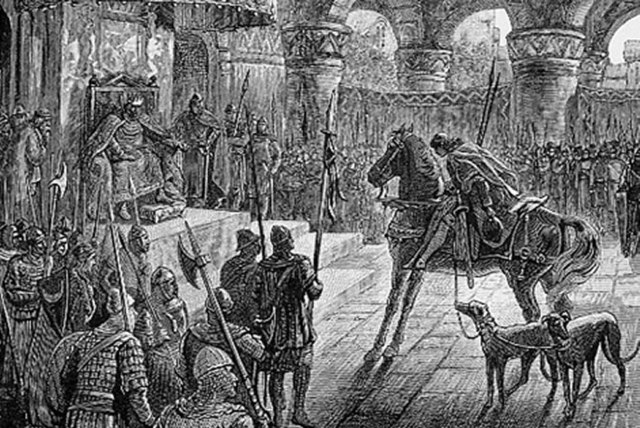
At first glance, it would appear that Mabon’s disappearance and rescue has very little to do with the equinox, and the similarities between his story and that of Kore can appear tenuous at best. However, there are other aspects to Mabon that do very much relate to the Autumn Equinox, which I haven’t seen discussed anywhere (but that may just be because I live in a cave deep in the woods).
I think the most important aspect of Mabon is that it was said that he was the greatest hunter of all time. And when does hunting season begin? For the majority of hunted animals which here in the UK are birds, it is around the Autumn Equinox when the season really gets underway. Deer hunting technically starts at the beginning of August, but the deer are hard to find as they are still hiding away from the summer’s heat until it gets dark. It is around the Autumn Equinox when you are able to see them out again during the day, from late afternoon onwards.
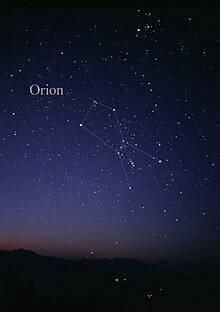
It is also when the constellation of Orion (The Hunter) becomes more visible in the night sky, albeit still in the east before dawn but slowly awakening and becoming more ‘upright’ so that he can stride across our skies followed by his hound during the winter months. As well, it’s when the temperature shifts, and the warmth leaves us as the cold northerly winds begin to blow, hinting at the Wild Hunt and winter’s reign to come. So yes, for me the honouring Mabon as the hunter does make sense at this time of year, though that may not have been the original intention.
Some argue that our ancient ancestors did not care about the autumn or spring equinox. To that, I would say look to our ancient megaliths. In 1966, C. A. ‘Steve’ Newham found an alignment for the equinoxes at Stonehenge by drawing a line between one of the Station Stones with a posthole next to the Heel Stone. The equinox sunrise is beautifully framed by the Gossan Stones in the Wicklow Mountains, Ireland. Callanish in Scotland has an alignment with the equinox, and so does Newgrange in Ireland. Most of these places are famed for their solstice alignments, but they also do have other alignments which are not only solar, but lunar as well.
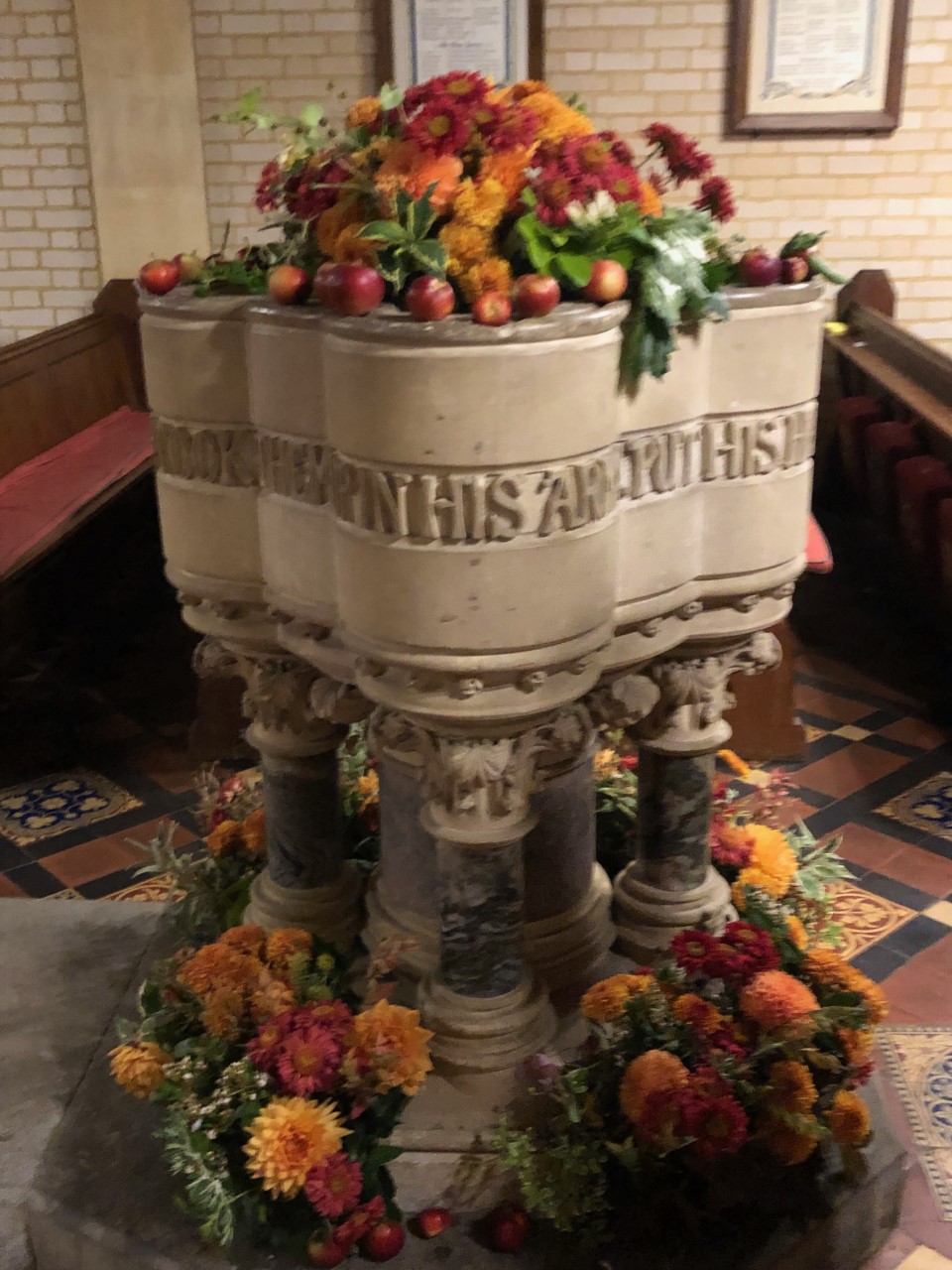
At the Autumn Equinox here in the rural British countryside we are also in the thick of harvest season, which begins at the start of August and runs through to the end of October. As such, some people argue that we should be celebrating Harvest Home. I love that name, but the origins are unclear. It may have been derived from Germanic Pagan traditions that have since been co-opted by the Christian Church, but we can’t quite be sure of its Pagan roots. Harvest Home services are held in many local, rural churches including the one in my own little village on the Suffolk Coast in the East of England. Today Harvest Home is now very much associated with Christianity. That’s not to say that we can’t incorporate it into our own festivals, because it’s what traditions from all over the world have done and still do over time. We learn, borrow and make stuff our own all the time. The Romans were masters at it. But that leads us to the argument of cultural appropriation.
The cultural appropriation argument against Mabon is that it is using a Welsh word/cultural hero and throwing it into ritual without awareness or regard for where it came from. And this is a wholly important thing to consider. However after you’ve done the research, and you find Mabon is known as the greatest hunter then the correlations to this time of hunting and harvesting make more sense, and seem less tenuous. As well, if we believe that we shouldn’t be using Welsh words in our Wiccan, Witchcraft, Druid [insert name of Pagan tradition here] then we really shouldn’t be using Samhain, or Beltane, or Imbolc, should we? We are using the words that have lasted through the years, but if we are not Irish or Scottish for instance, should we even be using these words in our traditions? I think of how many people today still say that Samhain is the Celtic New Year. On the flipside of that, I wonder how many people honour the god Belenus at Beltane? These are all Gaelic words that have been co-opted and given a different flair for various rituals in different Pagan traditions today that sometimes retain very little of the original source.
So should we rewrite all our traditions’ rituals and give them all new names?
Maybe.
But I still like Mabon.
 Down the Forest Path