Points of View and Perspectives Are Not Facts

I received an email today from a person who had contacted Philip Carr-Gomm about working with several different spiritual traditions at the same time, and the frustration and challenges that can arise. Philip directed him to reach out to me, and I thought that my response might also serve as a blog post for anyone out there who may be feeling a little frustrated, confused, or merely interested in my approach to creating and working in my own spiritual tradition, based on decades of learning from others combined with my own experience.

There have been many questions that I have had to deal with in my own spiritual path, and as such, I can only provide answers from my own perspective, and encourage one to seek one’s own as well, which may or may not resonate along the same levels. But when searching, it is difficult to find a straight yes-or-no answer, and more often than not, many different correct answers lie between the two.

As a Hedge Druid and a Hedge Witch, I have come to terms with the liminality of my life. I am Canadian, living in Britain. I have no recent Celtic ancestry to speak of, and yet that has in no way stopped me from honouring, working with, and connecting to Celtic deities and spiritual paths. And there are others from all across the globe who have experienced similar situations, whether it be with Celtic spirituality, Yoruba, or Shinto, just to name a few. I feel that ‘race’ and ‘place’ are not hard definitions of who we are, as we are all simply human beings. We all share the same basic needs and wants, and truly, are only monkeys with car keys! That being so, many similarities between world traditions and religions seem to speak of a unifying message: one of belonging.

It’s that need for belonging that drives so many to a spiritual path. But we often forget that the most important place that we need to feel a connection with is nature itself, the world around us, wherever we find ourselves on this planet. Deities, spirits of place, all these are but names and roles we have given to energies to explain and offer us a way to connect to the energy of life itself, and the world around us. Religion and spirituality are just languages that we use to explain that connectivity.

I have studied world religions for many years, and found many things that help me in my own path, as well as other aspects with which I have disagreed. The no-self in Buddhism was a concept that I once accepted, whereas today I do not. I do not feel that I have to accept everything within a spiritual tradition in order to learn from it, gain wisdom or insight. Just like reading a book on Druidry, Witchcraft, or any other tradition, it can be filled with so much information, but that doesn’t mean we have to agree with everything the author states. There isn’t a soul on the planet that anyone can agree with on everything one hundred per cent. Why should we hold religion or spirituality to a different standard?

If an energy, deity, spirit of place, speaks to you, then listen. You lose nothing by listening and learning. In fact, opening ourselves to receive insight from authors, energies, and spiritual traditions that are far removed from ourselves can be the greatest teacher!

Each tradition will have its own view on different subjects, and we can twist ourselves inside out trying to make them all work together on some level. But sometimes they just don’t, and that’s when we have to see what we are taking in as information, not fact. Just because someone thinks something does not make it fact.

The world would be a better place if everyone stopped assuming that their thoughts were facts.

Reincarnation differs from tradition to tradition, and no one really, truly knows the answer to that one. I use the natural world to inform me and shape my ideas of reincarnation, alongside learning what other traditions believe. I know that they will most certainly not agree, and I’m okay with that. It’s a thought, an opinion, a belief, a theory.

Lastly, as I’ve gotten older, I’ve learned not to sweat the small stuff. Different points of view and perspectives are not truths. We all have to find what works for us and what speaks to our souls. And when we do, when we’ve found that connection, hopefully, that leads us into an enriching spiritual existence that shows itself in the world as a functioning, contributing member of an ecosystem and beneficial to the whole.

What more can we do?
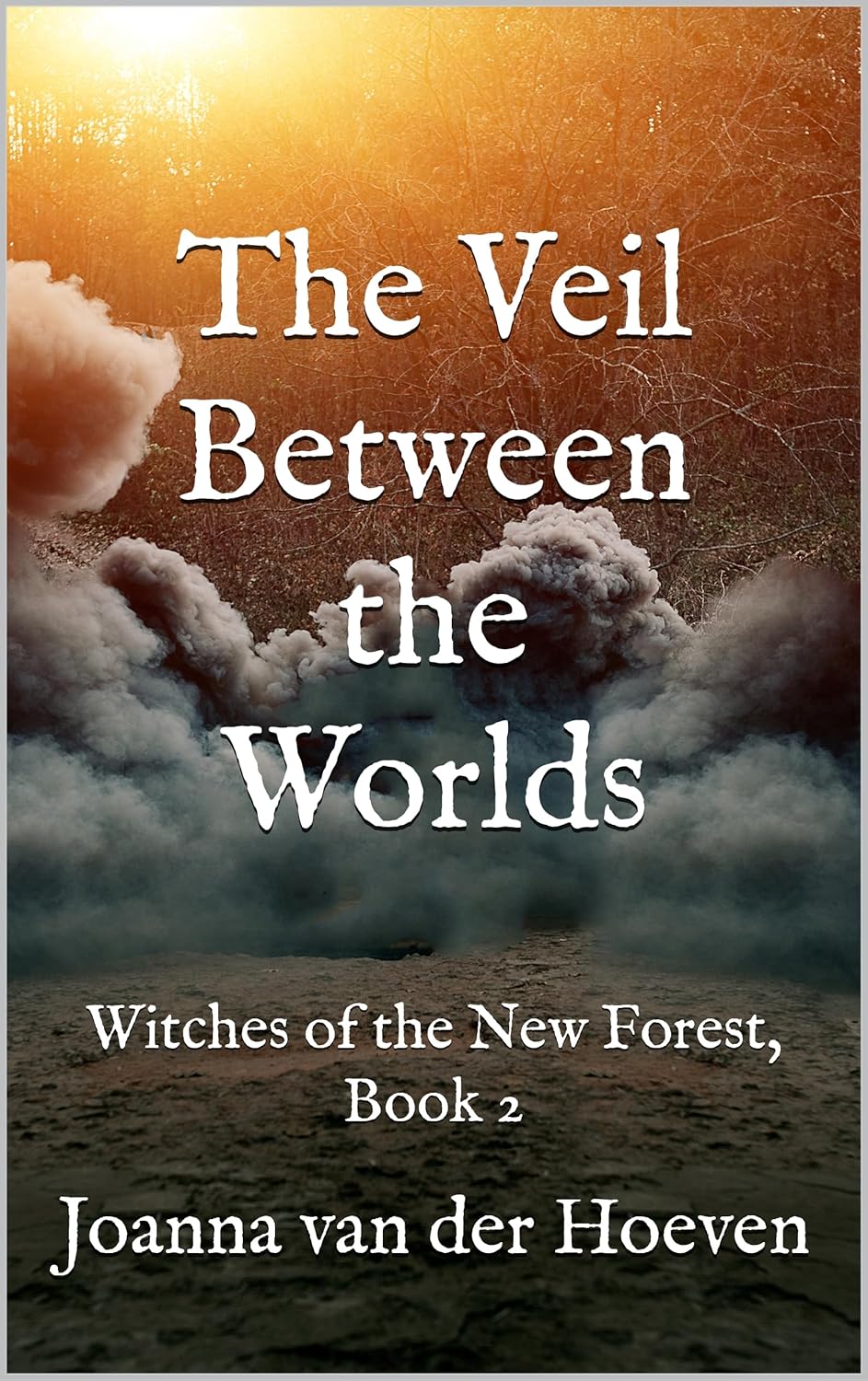
The Veil Between the Worlds will be here soon!

No, I know, Samhain has come and gone. But the second book in my new ficion series, Witches of the New Forest, is now available for pre-order on Amazon! This is only for the Kindle edition, but the paperback will be released the very same day. Both will be released on 1 December 2024. Order your copy now! And don’t forget, books also make wonderful holiday gifts 🙂

Synopsis

Hunter is dealing with the fallout that came from her last hedge riding ritual. Her world has been turned upside down, and now she must focus and throw herself into her studies in order avoid thinking about her relationship with Jack. She and her sister, Ryder, are currently thousands of miles away from home, in the little village of Burley deep in the New Forest of England. This quaint little tourist spot hides many magickal secrets, and is a liminal place where magick, myth and legend are very real. The sisters have already been confronted with many challenges as they learn more about their magickal heritage and legacy. However, now they have even bigger problems to hand.

   It seems that Hunter has made some powerful enemies, and she must keep her friends and family safe. As she learns even more about her heritage and what that means to her as a magickal practitioner, she grows in power. But is she using it wisely? And just what will happen when she finally does cross the veil between the worlds?

This is Book 2 of the Witches of the New Forest series, and is the second part of Hunter’s trilogy.

Praise for Hedge Witch, Book 1 of Witches of the New Forest series

“I have really enjoyed all of Joanna’s books and couldn’t wait to start this fiction one. Wow I wasn’t disappointed, I couldn’t put it down and escaped to the beautiful New forest with the wonderful characters with great dynamics. Her knowledge of witchcraft makes it one of the best and believable witchy books I have ever read. Can’t wait for the next instalment.” Amazon 5 star review (UK)

“The story is absolutely enchanting while also being quite educational. Trust me when I say that this book is entirely worth every cent it costs. I can’t wait for the next installment to come out.” – Amazon 5 star review (US)

“Highly recommended. A contemporary story about witchcraft [benign] set in The New Forest, England. Very readable, strong story line, a good sense of geographical place and interesting characters. A love story develops between two of the central characters, which features some intense erotic writing! When you have finished, you will definitely want to read the sequel!” Amazon 5 star review (UK)

https://www.amazon.co.uk/dp/B0D39L2TJT/ UK link

https://www.amazon.com/dp/B0D39L2TJT US link

The Struggle is Real

Pagan books sales have gone down radically in the last year and a half, despite the increasing number of books being made available. It seems to reflect what many of us authors have been worried about for several years now. The sales aren’t even made up with e-books, as those have dropped significantly as well. Audiobooks for non-fiction still aren’t that popular either, and the revenue from them has always been minimal. So why is there this sudden and sharp decline in books sales?

When I first started learning about and practicing various forms of Paganism in the early 1990’s, books and events were the go-to places to gather the information that I sought out. The choice of books available in the bookstores was only a handful stuffed somewhere in the “New Age” section. The internet didn’t exist, but you could order books from glossy catalogues that companies such as Llewellyn provided, which wasn’t too bad if you lived in the US but if you lived anywhere else, the shipping fees were astronomical. And so you just had to make do with what your local bookstore provided. If you were lucky to have a witchy type shop near you, the selection was a little better, but shelf space was always at a premium. And we didn’t even bother much with libraries back then, because they would never stock those sorts of books in the first place. Finding books to read was a real struggle, but such a joy when you did find one that resonated with you.

The coming of the internet was a huge blessing for the Pagan community who wanted to connect with others, talk about authors and books and find solace with others when the community was so small and so widespread. Books began to be marketed online, which was a real boon to the publishing industry. And yet, with more people online than ever before, what has happened to book sales lately? Surely they should still be increasing?

Nope. I’ve talked to my publishers, I’ve talked to other authors and everyone is seeing a real downturn in books sales. We’ve been scratching our heads, trying to figure out why. As book lovers ourselves, it’s difficult to fathom how this downturn has come about so suddenly. So here is my take on what’s going on, and how it could very well spell the end of non-fiction books in the coming future.

  1. People can get information for free online. As people are online more and more and there are so many different channels to get information from, why buy a book? You could watch a video, read a blog and receive a ton of information anywhere for free. I know that if I was a youngster just starting out, the majority of my information would be garnered from this form of transmission simply because it is free.
  • People don’t have spare cash to buy books right now. Everyone I know is hurting more and more financially, and if it comes down to buying your groceries for the week or buying a book, you will buy the food. I hope.
  • You can find pirated copies of pretty much anything online. Need I say more?
  • Attention spans are waning. It’s a fact. “In the early 2000s, she and her team tracked people while they used an electronic device and noted each time their focus shifted to something new—roughly every 2.5 minutes, on average. In recent repeats of that experiment, she says, the average has gone down to about 47 seconds.” https://time.com/6302294/why-you-cant-focus-anymore-and-what-to-do-about-it/ (I actually had trouble reading this article, not because of attention span but because four different pop-ups kept interrupting my reading. Oh, the irony.)
  • When a book is released, it is competing will millions of other books these days. With so much choice, it’s wonderful for the reader out there. But for the author? It seriously dilutes the sales. Unless you have a slick marketing team that works for you.
  • Authors can’t afford slick marketing teams. The shift in lots of publishing has been to place the onus of marketing up on the author, as the publishers have to make cuts somewhere just to stay competitive. Most authors aren’t marketers. I spent nearly a decade in marketing for a world-famous music venue here in England. That has seen me in good stead for the last ten years, but even now I’m struggling against a tide of everything that I’ve mentioned above.

The struggle is real, folks. I hope one day that books will have a resurgence, that cosying up with a book on a rainy day will replace hiding under your duvet with your smartphone. There is just something about a book, something that feels like an old friend you can turn to, something that you can hold in your hands, that ages even as you age, the feel of something material rather than something immaterial.

 Go analogue for a while. Slow down. Smell the books along the way. Because who knows how long they’ll be here?

The Season of Change

The Autumn Equinox is a brief moment in time where we are poised on the knife’s edge, about to tumble from summer into winter. It is a liminal time, where the transition from the long summer days to the long winter nights is keenly felt. The winds blow differently and stronger, the evenings are creeping in, the sun is not as high in the sky and offers a golden slant in the afternoons. The leaves are changing, the green is melting into golds and the riotous season of growth has ended. The deer have shed the velvet from their antlers and are fattening up, preparing for the rut. Acorns begin to ripen and fall from the oaks; beech nuts and hazelnuts too. Jays and squirrels are caching their nuts and badgers delight in the longer shadows and plentiful food.

For us humans, it is also a time of harvest. The apples are ripe and ready, the potatoes and onions form the second harvest after the cereal crops were gathered in August. Tractors rumble through the tiny village streets with loaded wagons full of produce, taking them to large storehouses or shipping trucks to dispense throughout the country. It is a busy time, with lots of dust in the air and the moon and sun often rising red in the lower atmosphere.

In an age when we can get almost any fruit and veg from a large superstore at any time of year, the importance of harvest is often lost to many. Why celebrate a harvest festival when we have supermarkets on our doorsteps? What need do we have to honour this important time of our ancestors? We live in the here and now, some may say. But all the food that is available in the supermarkets and stores comes from somewhere, from a place that had to work with the elements and seasons in order to grow the food, to take in the energy of that land to produce something that will sustain us. This is what is important, and why it is also important to remember this time for our ancestors of the not so distant past. It has only been in the last twenty or thirty years that all sorts of produce has become readily available throughout the year. When we forget the hardships of our ancestors, we forget a large part of their stories and where we came from, taking for granted many of the liberties that we live with today.

There’s a joy to be found in remembrance. There is also a joy in the turning of the seasons, from the light to the dark, from the harvest to the hunt, from summer to winter. Celebrating these turning points helps us to keep moving with the flow instead of getting stuck wishing that it was still summer. We allow the energy of the season to move freely through out bodies, as we should in any earth-based religion or spirituality. Nothing stays the same, and acceptance of that is perhaps the greatest gift that we can give to ourselves.

So honour this wonderful time. Celebrate the shift from shorts to jeans, drink all the pumpkin spice coffee you desire, wear hats and scarves and kick up autumn leaves on the path. Drink in the scent of woodsmoke and decay, feel the fresh breezes on your face. Settle in with a good book on the longer nights, light a candle and let your imagination roam. Think of the ancestors as you bite into that freshly picked apple, and honour all the changes that you yourself have undertaken.

Blessings of the Autumn Equinox, Mabon and Alban Elfed to you all.

The Mabon Debate

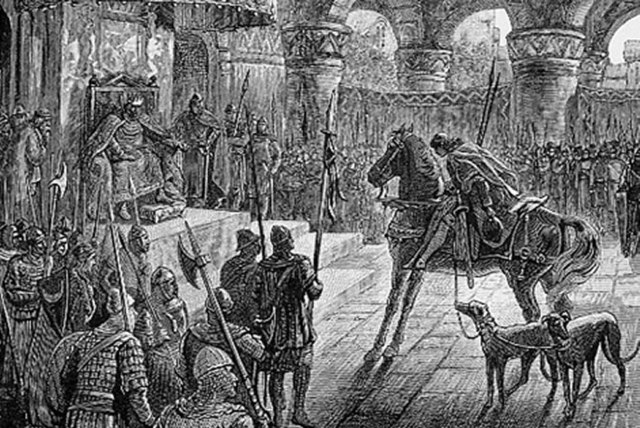
There is some debate in the Pagan community about using the word ‘Mabon’ to refer to the Autumn Equinox. In 1974, Aiden Kelly was looking for a name to put to the Autumn Equinox that had similarities to the descent of Kore or Persephone. He chose Mabon from Welsh literature, the son who was stolen away from his mother and which Culhwch was tasked to find to win the hand of the beautiful Olwen. With the aid of King Arthur he did indeed free Mabon from his imprisonment, as told in the Tale of Culhwch and Olwen in the Mabinogi.

At first glance, it would appear that Mabon’s disappearance and rescue has very little to do with the equinox, and the similarities between his story and that of Kore can appear tenuous at best. However, there are other aspects to Mabon that do very much relate to the Autumn Equinox, which I haven’t seen discussed anywhere (but that may just be because I live in a cave deep in the woods).

I think the most important aspect of Mabon is that it was said that he was the greatest hunter of all time. And when does hunting season begin? For the majority of hunted animals which here in the UK are birds, it is around the Autumn Equinox when the season really gets underway. Deer hunting technically starts at the beginning of August, but the deer are hard to find as they are still hiding away from the summer’s heat until it gets dark. It is around the Autumn Equinox when you are able to see them out again during the day, from late afternoon onwards.

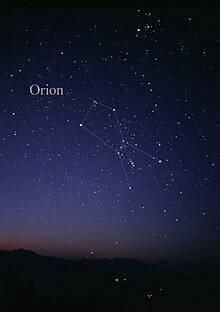
It is also when the constellation of Orion (The Hunter) becomes more visible in the night sky, albeit still in the east before dawn but slowly awakening and becoming more ‘upright’ so that he can stride across our skies followed by his hound during the winter months. As well, it’s when the temperature shifts, and the warmth leaves us as the cold northerly winds begin to blow, hinting at the Wild Hunt and winter’s reign to come. So yes, for me the honouring Mabon as the hunter does make sense at this time of year, though that may not have been the original intention.

Some argue that our ancient ancestors did not care about the autumn or spring equinox. To that, I would say look to our ancient megaliths.  In 1966, C. A. ‘Steve’ Newham found an alignment for the equinoxes at Stonehenge by drawing a line between one of the Station Stones with a posthole next to the Heel Stone. The equinox sunrise is beautifully framed by the Gossan Stones in the Wicklow Mountains, Ireland. Callanish in Scotland has an alignment with the equinox, and so does Newgrange in Ireland. Most of these places are famed for their solstice alignments, but they also do have other alignments which are not only solar, but lunar as well.

At the Autumn Equinox here in the rural British countryside we are also in the thick of harvest season, which begins at the start of August and runs through to the end of October. As such, some people argue that we should be celebrating Harvest Home. I love that name, but the origins are unclear. It may have been derived from Germanic Pagan traditions that have since been co-opted by the Christian Church, but we can’t quite be sure of its Pagan roots. Harvest Home services are held in many local, rural churches including the one in my own little village on the Suffolk Coast in the East of England. Today Harvest Home is now very much associated with Christianity. That’s not to say that we can’t incorporate it into our own festivals, because it’s what traditions from all over the world have done and still do over time. We learn, borrow and make stuff our own all the time. The Romans were masters at it. But that leads us to the argument of cultural appropriation.

The cultural appropriation argument against Mabon is that it is using a Welsh word/cultural hero and throwing it into ritual without awareness or regard for where it came from. And this is a wholly important thing to consider. However after you’ve done the research, and you find Mabon is known as the greatest hunter then the correlations to this time of hunting and harvesting make more sense, and seem less tenuous. As well, if we believe that we shouldn’t be using Welsh words in our Wiccan, Witchcraft, Druid [insert name of Pagan tradition here] then we really shouldn’t be using Samhain, or Beltane, or Imbolc, should we? We are using the words that have lasted through the years, but if we are not Irish or Scottish for instance, should we even be using these words in our traditions? I think of how many people today still say that Samhain is the Celtic New Year. On the flipside of that, I wonder how many people honour the god Belenus at Beltane? These are all Gaelic words that have been co-opted and given a different flair for various rituals in different Pagan traditions today that sometimes retain very little of the original source.

So should we rewrite all our traditions’ rituals and give them all new names?

Maybe.

But I still like Mabon.

The Three Realms of Druidry: The Land

A new video is now up on my YouTube channel, the first of a three-part series on the The Realms of Druidry (Land, Sea and Sky). I hope you like it!

July Musings

The hot summer sun beats down, and the humid air lies heavy all around. To go into the forest during the day would be to invite all the biting insects to a feast, and to sit indoor feels almost like sacrilege on these summer days. But it is so hot. The kind of heat where just moving makes you break out in a sweat. Sitting still seems to be the best thing to do. The cat knows and understands this, and so I take my cue from her wisdom of being.


Even the birds have stilled their song in the midday heat. Earlier, the cardinal sang his heart out to his love, who is always nearby. The crows still caw occasionally, but apart from that, all is still except for the long, drawn out trill of the cicadas cooling off. The mosquitoes are all hiding in the woods from the heat, and the black flies have mostly died off. It’s the heat of an August day, in the middle of July, and we have been in this heat wave for two weeks now. Everyone is tired.


Still, my love for nature calls to me. I seek out the shade, and listen and watch the life that exists all around me. It’s in my nature, and was a big part of my Druid training. Be still. Watch. Listen. Learn.


When we still the voices in our minds, those stories of the humans that are part of our lives, we are then open to receive the stories of the other than human world. Whether we are in a city or on a remote hillside overlooking a vast plain of grasses shimmering in the breeze, there are stories all around us. In the flora and fauna, we learn of the countless ecosystems, micro and macro, and how we fit into them as living beings. And hopefully how to do so with love and respect.


The cycle of the seasons is shifting, from the height of midsummer and the ectastic, dancing energy of the tide of highest light, to the slower, more thoughtful tread of the harvest. The wheat is ripening in the fields, the seeds hanging in the trees and the late summer flowers are blooming. The greening is no longer vibrant, but heavy with the responsibility of continuing the legacy of growth, death and rebirth.


What lessons can I take from this oppressive heat, this heavy time, this long outbreath after the days of midsummer? Lammas or Lughnasadh is fast approaching: the first harvest. But we are still in an in-between state; the calm before the storm. It feels like a time to rest, recoup and prepare for the heavy labour that lies ahead when we collect in our dreams of the winter and spring, and which we have brought out into the world and into the light of summer. It’s that morning cup of coffee before the kids awake, or that few minutes in the bathroom of the office where you just need to be alone and regroup. It’s a stroll along a lakefront, the heavy stormclouds gathering overhead.


And so I rest, here with my family, as best I can in the 30+ degree celsius heat. I have just under two weeks remaining to gather up my strength again and reap the harvest that I had planned and worked for all this year. The books are coming along nicely, and the fiction has been especially rewarding. Finalsing that text in August and September will be a joy, and in readiness possibly for a Samhain release.


The breeze blows softly through the leaves of the oak tree my grandfather planted in the backyard. Now huge, its overhang shades the house from the relentless southerly sunshine, as well as standing as a proud reminder of our heritage and our life here in this part of Canada. Many other trees that I grew up with have long since gone, having lived out their life span or destroyed by storms or harsh winters. But the tall oak tree still stands, its large green leaves and developing acorns towering over this end of the village, and looking out towards the great expanse of the valley that is hidden from us humans by a large cedar hedge. This oak tree is part of both worlds: that of the human family that has lived under its boughs for over 50 years, and also that of the surrounding landscape, with the forest and valley, the hills and clouds, the rain and sunshine, sleet and snow that has blessed this landscape since it was formed.


Settling into my roots, deep like the oak tree, I can find the sustenance I need to carry me through.

New Video: Self Belief

Between downpours I finally managed to get some filming done for a new video! Here you go 🙂 To see behind-the-scenes footage of all my videos, please consider joining my Patreon page 🙂

New Video: When No One Is Watching

What does your spiritual practice look like when no one is watching? 🙂