
I’ll be the “sofa guest” on BBC Radio Suffolk this Friday on the Lesley Dolphin show, talking with Matt about Druidry, 3-4pm. I love talking with these folks at Radio Suffolk – they’re always so lovely!

I’ll be the “sofa guest” on BBC Radio Suffolk this Friday on the Lesley Dolphin show, talking with Matt about Druidry, 3-4pm. I love talking with these folks at Radio Suffolk – they’re always so lovely!
 For me, Druidry is about living a life in service. Many people confuse the word service with subservient: being beneath someone else in a lower position, lowering yourself for others. Service has nothing to do with this, and everything to do with using your skills, wit and intelligence to benefit the world around you. Relationship is at the heart of Druidry, and service to Druidry requires good relationship. There is equality, a give and take, in order to maintain a sustainable relationship. We work to serve the whole: the ecosystem, our community, our families, our ancestors, our gods, our planet. Our work in Druidry is not just for ourselves.
To work in service requires an open heart, a sense of duty and discipline. Too often, when things are rough, people can lay aside their spiritual practice feeling that they need to just in order to survive, or that they simply can’t be bothered. When we do so, we are stating that the theory and foundation of our religion or spirituality is just that: a theory. It’s not something that needs to manifest. When something just remains a thought, a theory, then it is completely intangible, and unable to create change in the world. At these points in time, when we are stretched to our limits, when we are in pain, when the world seems to be crumbling around us, this is when we need our Druidry the most. We make not feel like doing ritual, but this may be exactly what we need. We may not want to meditate, but again, that may be just what clears up our thoughts in order to proceed, to find the way forward. This is where discipline kicks in, as well a duty. When we just don’t feel like it, we can remember our ancestors, remember their struggles, their fears, their failings, and know that we can do better, we can give back for all that we have received. With relationship at the heart of Druidry, we must learn what we owe to the world, and not forget this very important concept. Only then will we truly understand the concept of duty, and manifest it in the world, living a life in service.
I am blessed in so many aspects of my life. That is not to say that my lady Brighid does not throw me onto her anvil every now and then, and pound the heck out of me, stretching me and re-forging me anew. But in service to Her, I work with the gifts that she provides me, with the challenges that lie before me, and see them as opportunities to re-forge relationships, or to understand why they don’t work and walk away. I learn where I can be of service, where my skills and talents lie, and then use them to the best of my ability, living my truth. Above all else, Brighid keeps reminding me to live my truth.
In the midst of despair, when all seems dark, I stop and take a look around. I see the blackbird, singing in my garden at sunset, listening to his call that takes me beyond this world and into the Otherworld. I see the deer eating the birdseed that falls from my feeder. I watch the clouds turn from white to gold and then deepest pinks and orange, a wash of colour that delights the eye and feeds the soul. I remember to look for and see the beauty in the world, in the small things and the large. I remember that I am part of an ecosystem, and that I have duty to give back. This gives my life meaning, and is also the meaning of life.
As a Druid, I walk a life of service. This service provides my life with meaning. I owe it to the land that nourishes me to protect it, to give back for my many blessings. I owe it to my ancestors, without whom I would not be here today. I owe it to my gods, who provide me with such deep inspiration that words cannot even come close to projecting my relationship with them. Knowing what I owe, I walk the path of service in perfect freedom, for freedom is found when we release our self-centred perspective, and take the whole of nature into our hearts and souls. We are nature.
It’s not just for ourselves. It’s for all existence.
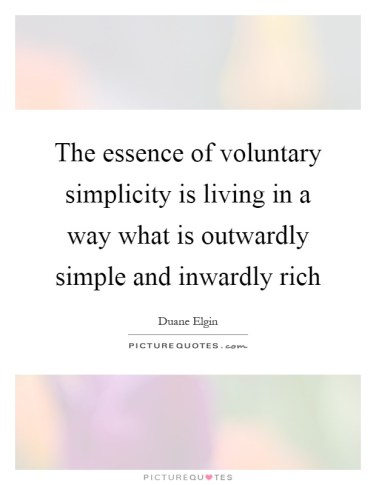 2017 is going to be the year where hopefully the words “voluntary simplicity” will be embraced by a wider range of people. I know that I have been incorporating voluntary simplicity in my own life for many years now, and that there is still many more ways in which I can follow a simpler, more efficient and ecologically sustainable way of being in the world. To do so, I am constantly informing myself, being conscious and mindful, trying to look at the bigger picture and taking personal responsibility for the world that I am leaving to our ancestors of the future. Now more than ever, we are at the crucial tipping point where we have to look beyond our own self-interest and look to the whole, to be more holistic in everything that we do.
I have incorporated Zen and Buddhism into my life for many years. For me, this brings a wisdom from both Eastern and Western philosophies that can blend together to form a holistic worldview and way of life. I feel that East and West need each other in order to understand the whole. Only when we understand the material as well as the spiritual can we bring them together to live fully in the here and now.
It’s important that simplicity, in terms of reducing consumerism, resources and living a better, cleaner more sustainable life, is voluntarily chosen. When it is not, we come across such suffering as poverty. Many people in the world do not have a choice to reduce, reuse, to choose. Here in the West, many of us can make choices, however small, in our daily lives that strive towards a more sustainable future for everyone. Where we can, we should voluntarily make that choice, in order to preserve a future for humanity. In doing so, we will also achieve a higher quality of life, and be able to truly flourish as a species. We are at that balance point, if we haven’t already gone too far, to either evolve into a higher consciousness and have that reflected in our actions, to come together as we realise that there is more to bind us together than tear us apart, or we can fall into divisiveness, fighting each other over the few differences and destroying not only ourselves, but a large portion of life on this planet in our downfall.
But what is simplicity? It is living in harmony with the world. Druidry is all about relationship, and this is also at the heart of simplicity. It is egalitarian. It sees through the illusions created by modern-day culture and society, the need to consume, the distractions of the media. It is about seeing what is really important in life: your family, your friends, your local environment. It is about living sustainably, so that our children and their children, as well as all the planet’s children, both human and non-human, have a good quality of life. It is about learning what is enough, rather than striving for more.
It is important to understand that simplicity is something that is for many of us a voluntary lifestyle. As stated above, many people lead lives in poverty and suffering because they do not have enough. We who do should learn just what is enough, and work towards achieving that understanding by informing and educating ourselves of our wants versus our needs. We must do this willingly, with an open heart. In doing so, we are also leading lives filled with compassion for all beings. It is not sacrifice, for we are only giving up the things that are unnecessary. Sacrifice is giving up the essentials. Many of thing things we consume or the activities we undertake are unnecessary. Many of them are distractions. Many of them only cause us to distance ourselves further from reality, each other and our place in the ecosystem. We are sacrificing ourselves by not following a simpler way of life.
We have to regard simplicity as a creative way of being in the world. Consumerism is not very creative. If we learn to live a simpler life, we rid ourselves of many distractions, thus enabling our own innate creativity to flourish. No longer are we kept under the pacifying drugs such a television, the media, advertising, and so on. We will embrace all that life has to offer, savouring each and every moment, willingly.
Gandhi said that we “choose to live simply so that others may simply live”. This is where we find compassion in a simpler life. This is where we see that we are a single thread among many in the tapestry or web of life. As human beings, homo sapien sapiens, the “beings who are aware that we are aware”, we understand the concept of a greater good for our species, and for the world as whole. Let’s use that knowledge wisely. Let’s create a world that we actually want to live in.
The concept of voluntary simplicity was begun by Richard Gregg, who was a student of Gandhi’s teachings. In 1936, he wrote about voluntary simplicity, stating that the purpose of life was to create a life of purpose. Let these words inspire you in your path towards voluntary simplicity. They can be a guiding beacon of light in a world of many illusory struggles and distractions. Create a life of purpose and meaning for yourself, using voluntary simplicity. It is the best way forward not only for your own life, but for the planet as a whole. Be creative. Druidry has a large focus on awen, on inspiration. Let us use that inspiration to live simpler lives filled with our creative potential to create a truly harmonious and sustainable way of life.
Mindfulness is a huge buzz word these past few years, and is a great tool in voluntary simplicity. We are living with intention, choosing our own path. We are conscious. We are aware that we are aware. Living an intentional life, as opposed to a reactive life, is one where we find a life of purpose. It really is that simple, yet is a challenging way to live. Being deliberate in everything requires us to evaluate and asses everything that we do, all our relationships: with other people, people we like and people we don’t like, with ourselves, with human and non-human animals, with the plant and mineral kingdoms. Like practicing Tai Chi, everything we do becomes a deliberate action, wholly understood and executed in a mindful manner, thus creating a beautiful flow.
Right now, we live in a world of crisis. Soon, the oil will become much more expensive, sea levels will rise, air quality will fall and the divide between those that have and those that have not will reach unprecedented proportions. We are currently living lives that sacrifice ourselves, each other and the planet. It can be utterly depressing when we view the world as such. Towards the end of 2016, an unusual pall of heaviness and depression hit me, as the weight of the suffering in the world fell all around me. I saw no hope for the future. However, voluntary simplicity has encouraged me that all is not lost. At this crisis point, we just might find profound opportunities to be creative, to be nourishing, to really change the way that we have been going the last few hundred years. This could be the unprecedented change necessary for our own survival. As the make or break point, this is where we could truly flourish as a species, to understand what has gone wrong, and to make amends right here, right now.
This requires personal responsibility. We cannot wait for governments to legislate for us. We cannot say that we will not undertake a simpler way of life until everyone else does. If we wait until everyone else decides to do this, or for it to be legislated, we could well be beyond the point of no return, where any action we undertake will already be too late. We must do this right now in our own lives, and let our lives be the example. We will not suffer because we are doing this, while others still live lives of disposable consumerism. We will not fall behind in the rat race. We will be living more intentionally, walking with a lighter footstep upon the planet, and knowing what really matters. Those who are not awakening to the benefit of voluntary simplicity are the ones who will suffer. Responsibility and duty have become dirty words in our society, and we must reclaim them for the very powerful values that they posses. We can change the world through everyday small actions. Like drops in a bucket, when we do so, even at tiny levels, it all adds up. We may not see the results straight away on a global scale, but we will see them in our own lives. We cannot wait any longer. We must take action now, in any way we can. No one will do this for us.
It’s also important to lay aside blame for the moment. If we participate in the world of consumerism, then we have only ourselves to blame. If we step outside of those bounds as much as possible, we will begin to understand the reasons why people do the things that they do, and in that understanding compassion will arise. For example, I know people whose kitchen cupboards are filled to overflowing. They don’t know what is in the back of those cupboards. There is food going to waste. But I also understand that there were many years where food was hard to come by for them, where every cent went to putting food on the table for their children. Full cupboards mean security. Though they might not be aware of this, I can certainly understand the behaviour, even if I don’t personally agree with it. I don’t blame them for creating the world that I live in, because I can change my own world in small and in large ways. If I lay all the blame for the world we live in on those who don’t share my own values, I can fall into an apathy and sense of separation from the rest of my fellow human beings that has absolutely no purpose or benefit in saving this planet or creating a new sustainable way of living. Instead, I will only live with anger and contempt, instead of working with compassion and integrity.
Every decision matters. The food we eat, the clothes we wear, the jobs we undertake and more. We are not powerless. We must remember this. It is essential to living a more simple way of life. We cannot change society until we change ourselves. Our biggest and often most important vote that we have in our consumerist society is how we spend our money. Tell the companies that you don’t want their latest product induced by media to increase low self-esteem by not participating in what they are trying to create. Instead, live a life of meaning, of intentional and mindful experience. The quality of life will increase, as opposed to the quantity of material goods. You will find creative ways of living. It is possible.
When we discover the things that really matter in life, life really matters. This is my understanding of voluntary simplicity.
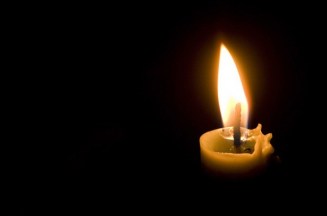 The longest night is upon us. For three short days, we have watched the watery sun rise and set in the same place on the horizon, barely skimming the treetops at its highest point, filmed over by hazy clouds. This morning, it was impossible to tell just when the sun had risen, and indeed even though it has been up for half an hour, it’s just as dark as before, with heavy overcast skies letting in only a small amount of light. I lit a candle in my lantern dedicated to Brighid just as the sun rose somewhere behind the clouds, and in Her name I lit my solstice flame. The candle’s flame burns very low, just barely alight as it struggles amidst a pool of wax and an insufficient wick. There is the tiniest amount of light at the tip, with a small blue aura beneath. I look at it even as I type these words, and its struggle portends much to come.
It has been a difficult year for many. Across the Western world, we have been rocked by unprecedented political change. There is not much hope for the future. Political leaders do not have the common good in mind, and greed runs riot. Things have not changed for the better. Across the globe, war, strife and unrest rage, with millions of innocent beings suffering. And there is still more darkness to come.
But even so, we can still take hope that the seasons change, the sun’s light will return. My candle is guttering now, in a valiant effort to stay alight. I have tried to help it, tipping out excess wax, but the wick and wax balance is not favourable. Just as in today’s political, economical and social climate, things do not look in our favour. But still we struggle on. We are a light in the darkness, no matter how small.
Somewhere, behind the clouds, the low sun is rising. We are the sun, we are the earth. We are the wind and the rain. We are the wild beasts and the tame. We are our neighbours and our enemies. We are our deeds. We are our poetry. We are our ancestors. The flame might go out in the physical, but it still shines in our hearts and minds. Where does a flame go when it dies? A flame is always there, simply needing the right conditions to manifest. So too with all of life. We all depend on conditions, yet we all have the flame within, waiting to manifest. The spark of awen, the spark of inspiration. To share this inspiration is at the heart of all that I do, in the hopes that my words inspire others not to give up hope, to remember their connection to each other, to all of nature. The flame that burns within our hearts and minds can never be extinguished. Instead, it kindles a new flame in the hearts and minds of others, and we tend that flame with all that we have, for our future ancestors.
The wick is barely glowing now in my lantern on the windowsill. But the flame of Brighid burns brightly in my heart. Though there is a long darkness ahead of me tonight, and a long darkness for many to come, there is still a light that shines. Even the smallest light shines in the deepest darkness.
And so, I will tend to my flame today. Today, I am a flamekeeper of Brighid. And should that flame go out, I will simply light another, and another, and I shall persist.
Blessings of the winter solstice to you all.
(Originally published today on my blog, Druid Heart, on SageWoman’s channel at Witches and Pagans.)
A momentous occasion! The Druid Network, as well as The Pagan Federation, have been accepted as full members of the Inter Faith Network! It’s been a long few years with some very dedicated people continuing to craft honourable relationship with the organisation and members of any and all faiths, and now The Druid Network and The Pagan Federation have had their religion recognised by the IFN in acceptance to the organisation. This means that there is even stronger legal footing for both organisations, as well as a broader acceptance of Druidry and Paganism (and other minority religions) into the whole. Well done!
The Wild Hunt published an article yesterday, read it in full by clicking HERE.
———————————————
 “The Druid Network (TDN) is ending 2016 on a high note after being accepted as a full member by The Inter Faith Network for the UK (IFN). Established in 2003 by prominent Druid Emma Restall Orr, TDN has gone from being a primarily web-based interface to establishing the Honouring the Ancient Dead (HAD) project, which aims to restore dignity to the human remains of those likely to be British Pagans, including those whose remains predate Christianity. TDN evolved further, becaming a charity and, most recently, the organization was granted full membership in the IFN, alongside the Pagan Federation.
TDN Media co-coordinator Joanna van der Hoeven says, “TDN now has an even greater legal standing, which others can follow, in having both legal and religious influence in the UK. There will also be greater communication between Druids and members of other religions, which is a wonderful thing to happen.”
The Druid Network was originally launched to bring together Druids from around the world, as well as others from similar Pagan/natural philosophy-based paths. The intention of the network was to allow people to exchange ideas and beliefs and, to this end, TDN has no hierarchical structure, other than what is needed for administration purposes.
TDN spans the continents of Europe, North America, South America and Oceania, and in 2010 was approved by the Charity Commission to apply for Religious Charity status. This was a major step toward Druidry becoming a recognised religion in the UK. Once TDN was approved by the Charity Commission, many members began discussing an application to the Inter Faith Network.
The Inter Faith Network for the United Kingdom (IFN) is itself a charity that was set up in 1987, the first of its kind in the world, as a way of promoting understanding and knowledge of different traditions in the UK. The organization’s aims are to highlight common ground, as well as educating the public about the distinguishing features of each tradition. Sixty different faith-based organizations were included in its initial set-up and over the years; this has expanded. In the 2013 report, almost 200 organizations were members.
IFN has worked tirelessly for over 25 years to promote its message and to advocate for understanding and education between communities. In an increasingly globalised world, IFN has also worked hard to support interfaith dialogue and good interfaith relations. However, the IFN had traditionally only represented people of majority religions. Those of minority practices, such as Druidry and Paganism, had found it difficult to become members of the IFN due to the previous membership criteria.
Phil Ryder, a member of The Druid Network, who has been spearheading the current IFN campaign, explains, “In the light of acceptance by the Charities Commission of Druidry as a valid religious practice, the thoughts were that it would be hard for IFN to reject (our) application.”
The first application, however, was rejected. “The reason given being that they only accepted the ‘big faiths’ as laid down in their constitution,” says Ryder.
TDN was wary of causing bad feeling with the IFN, as they did not want to jeopardise the solid links that had already been established. Ryder explains, “We clearly stated we would not be involved in any legal challenge, but put the case to IFN that their current membership policy was not acceptable in our pluralistic society and advised against allowing this to go to court.”
However, TDN’s ability to make its case for membership was also important. Ryder goes on to say, “We offered open and honest dialogue to argue our case and that of other minority groups currently excluded. This was the start of a lengthy journey of over two years with exchange of emails, phone calls and a face to face meeting that also involved the Pagan Federation…”
Continued HERE.
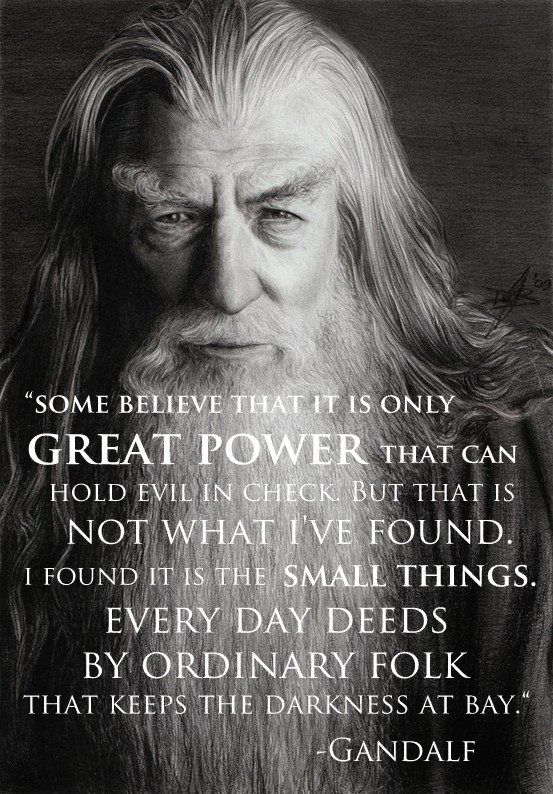
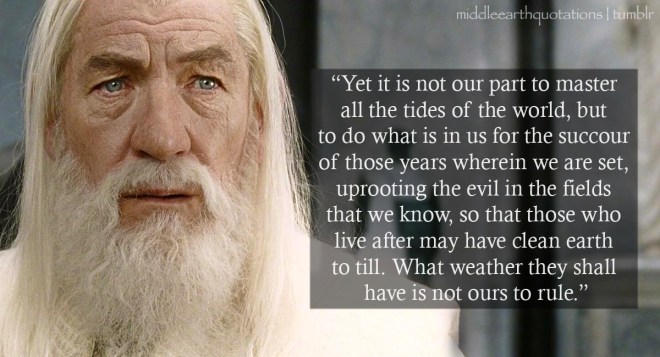
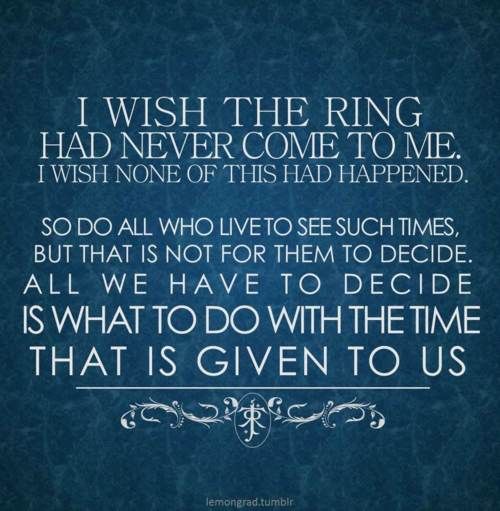
A lovely reader, Donal commented on my Make Tea post about how the US feels like they’re living in a Tolkein epic right now. It may indeed seem that all the forces of evil are set against us, overshadowing all. I was instantly reminded of my all-time favourite Druid, one of my greatest inspirations and heroes since I was a young lass: Gandalf. Tolkein was writing during some very dark times in his own day and age, and through Gandalf presented wonderful wisdom and awen. This got me through some pretty dark days in my own life, and still continues to inspire me each and every day. I hope that they can also inspire others. x
She lit the candles and incense, and sat down upon the cushions. Breathing deeply, she inhaled the fragrant scent, and allowed her gaze to wander over the items on the altar. She tried to focus, her gaze finally resting upon the image of Brighid, and the flame that the goddess held in her hands. As the darkness fell, both within and without, both figuratively and literally, she focused on the flame being offered. She took it within her heart, and for a brief moment it flickered, then died out as the darkness consumed it in a deep blanket of despair.
Breathe.
She focused once again on the image, this time on the watery vesica pisces symbol. Yet her mind would not focus, her thoughts filled with grief and anger, darkness and despair. She breathed through them, trying to remain in the present moment. But the darkness was overwhelming, and as she floundered, she cried out: “Help!”
The voice of the goddess spoke softly in her mind. “Make tea.”
She sat for a moment longer, determined to spend at least ten minutes at her altar. At last, she gave up and blew out the candles, allowing the incense to burn itself out. Make tea, the goddess had said. Alright. Let’s make some tea.
She went downstairs and put the kettle on. Let’s make tea, she said to herself. Mindfully. She prepared the small teapot with herbs known to lift the darkness and soothe the nerves: St John’s wort and skullcap. She also added some lemon balm, to ease tension and also for flavour. She inhaled the scent of the dried herbs, and mixed them together before placing them in the teapot. She looked out the window in the light of the setting sun, a small muntjac deer feeding alongside a magpie underneath the bird feeder.
She placed on a tray the teapot, strainer and saucer, as well as a small handmade earthenware cup. She brought these to the table, and laid them down with her full attention. The kettle had boiled, and she carefully filled her small iron kettle with the water, feeling the steam against her skin. She brought the iron kettle to the table, and placed it on a heat-proof mat. She sat down, her mind still battling the darkness around the edges, her thoughts seemingly not her own. She knew her hormones were swirling in a dance similar to that which she had experienced at adolescence, though now she was at the other end of the brilliant spectrum. She had to take care of herself, of her body as well as her mind.
She opened up the teapot and breathed. Mindfully, she took the iron kettle and filled the teapot with water, replacing the kettle with equal attention. She inhaled the scent of the herbs, and replaced the teapot lid. No other thoughts entered her mind, just these simple, small actions. Working with mindfulness, working with full attention to her actions, there was only the present moment.
She sat back and waited for the tea to brew. Slowly, she felt the darkness returning, crowding at her mind. Despair at the state of the world, at the constant struggle she faced with work, with others who could not do the simplest of tasks, with expectations from both strangers and friends, knowing that if she didn’t do something, no one would – stop. Breathe. Focus. Three minutes stretched to an eternity as the brew steeped in the teapot.
She took a deep breath, and the darkness receded an inch. She picked up the teapot, and concentrated on pouring the tea through the strainer into the small bowl. She kept up her concentration on her breath and on the pouring, and it filled her entire being. Nothing else mattered in that moment. Just pouring tea.
She put down the teapot and picked up the cup. The scent of the herbs brought back memories of a wonderful little shop called StarChild in Glastonbury. She allowed the brief memory to flicker, and then she refocused her attention on the cup in her hands. The heat radiated through the bowl, and she had to pick it up carefully, her fingers near the cooler end of the rim. Quietly, she took the first slurp, allowing the air to cool the hot water before it reached her tongue. She concentrated on nothing but drinking the tea, sitting alone in the dining room, with night falling outside.
She drank the first cup, and then brewed another in the teapot. She kept her mind focused on the present, acknowledging past wounds but not allowing them to flavour the present moment. She had worked hard to name them and transform them, and was working on it still. Three minutes again slipped past, and outside her dining room window she saw the Christmas lights from the house across the street go on.
She poured herself another cup, and drank it mindfully. A third cup was brewed and drunk, and when she finished she sat back and bowed to her tea set. She felt a little better, the darkness within relenting, though not wholly gone. She acknowledged and allowed the herbs to do their work on her body and her mind. With equally careful attention, she rinsed the kettle and washed the teapot, bowl and strainer, and then went upstairs with a lighter heart, to Skype with her mother and find even more comfort and peace, there in the moment, utterly in the moment.
What a lovely surprise in the post this morning from Moon Books! Available for pre-order now: http://amzn.to/2fSDGV5
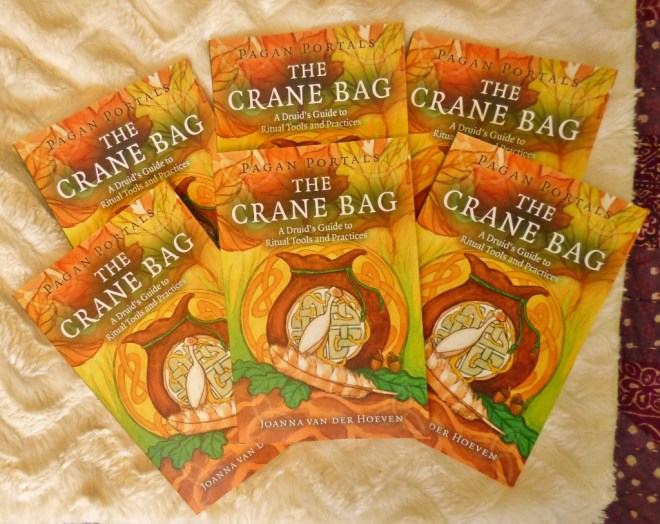
Pre-Order/Buy now on Amazon: http://amzn.to/2fSDGV5
Dark Moon Wisdom
You don’t have to shine to be powerful.
Release.
Release into the darkness, allow the night to fill your soul.
Find your sovereignty in the darkness.
Face the shadows, name the fears.
Then allow the dark moon to guide you further, deeper within, towards utter integration.
Feel the deep magnetic pull.
You don’t have to shine to be powerful.
© Joanna van der Hoeven
 For me, Druidry is mostly a solitary path, though I do belong to some Druid Orders and networks, and celebrate the seasons with a small group of friends. But the everyday Druidry, the currents of intention that flow through me and my home, through the landscape where I live, is my main focus. Like learning, I always preferred to do so on my own, rather than working with a group, for I found that my concentration was higher, and I could have a deeper level of experience than I could with the influence of others upon my work. Indeed, personal and private ritual is always more profound than most shared ritual, though there have been a few occasions where, such as at the White Spring in Glastonbury, there has been a mix of private ritual and group celebration with my best friends deep within the cavernous walls that house those sacred waters that have changed my life forever.
Of course, we are never truly solitary creatures, but in this sense I am using the word solitary with regards to other humans. I am never truly solitary, for I am always surrounded by nature and all its creatures every single second of my life. I am always a part of an inter-connected web of existence. Living this connection, weaving the threads of my life to that of my environment and all that exists within it, means that there is no separation, no isolation. Yet, when asked to describe my path, I use the word solitary in the sense that I prefer to find such connection on my own, without other human animals around. Why this should be so is perhaps due to my nature: naturally shy, and sensitive to noise, light, barometric pressure and other phenomena, it is just easier to be “alone” most of the time. My husband is much the same, so it is easy to be around him for most of the time, taking day-long walks with him through the countryside, with little words between us, for there is no need for unnecessary talk; just being with another being in a shared space is enough. We live in a small village near the coast, so it is easy to get away from humanity by just walking out the door and down the bridle paths, or simply stay in and enjoy our beautiful garden visited by all sorts of wildlife, from deer and pheasants to pigeons and blackbirds, and even a family of badgers one time!
The path of the mystic is much the same, a solitary path where personal connection to the divine is the central focus. Some would say that the mystic path is the search for the nature of reality. For me, Druidry is the search for reality within nature, and so the two can walk hand in hand down this forest path. There are many elements of mysticism in my everyday life, where the songs of the land and the power of the gods flow through me, the knowledge from the ancestors deep within my blood and deep within the land upon which I live, rooted in its soil and sharing its stories on the breeze. To hold that connection, day in and day out, to live life fully within the threads of that tapestry is what I aspire to do, each and every moment. Sometimes a thread is dropped, and it requires a deep mindfulness to restore it, but practice helps when we search for those connecting threads, becoming easier with time and patience both with the world and with your own self.
The dissolution of the ego can be seen as at the heart of many Eastern traditions. Druidry teaches us integration, our ego perhaps not dissolving but blending in with that of our own environment. The animism that is a large part of Druidry for many helps us to see the sacredness of all existence, and in doing so we are not seeking annihilation, but integration. We can perhaps dissolve the notions and out-dated perceptions that we have, both about the world and about ourselves, leaving the self to find its own edges and then blending in to the world around us, truly becoming part of an ecosystem where selflessness is not altruistic, but necessary for the survival of the system.
The flowing inspiration, the awen, where soul touches soul and the edges melt away into an integrated way of being, has always been at the heart of Druidry. The three drops of inspiration or wisdom from Cerridwen’s cauldron contain that connection; contain the awen that, with enough practice, is accessible to all. We have to spend time brewing our own cauldron of inspiration, filling it with both knowledge and experience before we can taste the delicious awen upon our lips. Some prefer to do this with others; some prefer to do so alone.
It is easier to quiet the noise of humanity, and of our own minds, when we are alone without distraction. Notice I said “easier” and not “easy”, because again it takes practice. But time spent alone, daily connecting and reweaving the threads that we have dropped can help us create a wonderful, rich tapestry that inspires us to continue in our journey through life, whatever may happen along the way. Though the solitary path might not be for everyone, having these moments of solitude can be a great tool for deep learning, working on your own as well as working within a group, Grove or Order. Sometimes we need to remove ourselves from the world in order to better understand it, and then come back into the fold with a new awareness and integration filled with awen, filled with inspiration.
 Down the Forest Path